An SMD-sponsored team has developed CloudCube—an instrument that uses three different wavelengths to probe Earth’s atmosphere. CloudCube data will be valuable for improving weather forecasts and climate models. Explore the technology enabling this new instrument
Powered by data, driven by discovery, made for everyone.
Joined September 2010
- From Moon joy to Earth joy, the journey continues. Before any great road trip, you start with prep: check the weather, tune the car, pack smart. Artemis III is no different. We’re building our science game plan, studying Earth’s atmosphere and how space affects the human
- The Moon joy didn’t stop after Artemis II — the science continued on Earth. 🌕✨ Teams are now analyzing postflight health data, organ chips from NASA’s AVATAR investigation, and a seven‑hour lunar observation campaign. More: go.nasa.gov/49PLmoN
- NASA Science repostedFunding opportunity!🚨 @NASAScience_ is seeking proposals from accredited U.S. universities or other grant-eligible orgs for research grants to begin no earlier than 2027. Each proposal must identify a grad student as a future investigator. Learn more: go.nasa.gov/FINESST25
- Science and exploration go hand in hand. Tune in this Tuesday as we meet the crew of Artemis III, helping advance the technologies and capabilities needed for future deep-space missions.
- NASA Science reposted🚨 We have some BIG NEWS! Roman is now scheduled to launch Aug 30 2026! Learn more:Our @NASARoman space telescope is officially slated to launch on Aug. 30! Get the details and follow Roman's journey on our new Roman Space Telescope blog: go.nasa.gov/3RQxDIc
- We’re inching closer to @NASARoman! The upcoming space telescope will open a new golden age of exploration -- surveying the cosmos, studying dark energy and dark matter, and uncovering new exoplanets along the way.Reflecting on the past, ready for the future ✨ @NASARoman engineers took one last look at the telescope's primary mirror, ensuring the observatory is ready to explore the universe. Next up? Packing Roman up and shipping to @NASAKennedy for launch! go.nasa.gov/4dNlZGI
00:00 - NASA Science repostedLater this year, @NASARoman will launch into orbit, where it will capture both the big picture and the finer details of the cosmos—observing distant celestial bodies with its wide view. Add Roman to your phone—download this free poster: go.nasa.gov/49wPwC2
- Why were “clumpy” galaxies so common in the early universe, and where did they go? Join the new Galaxy Zoo: Clump Scout II project and help scientists identify and study these giant star-forming regions in Euclid telescope images: go.nasa.gov/4fOyL98
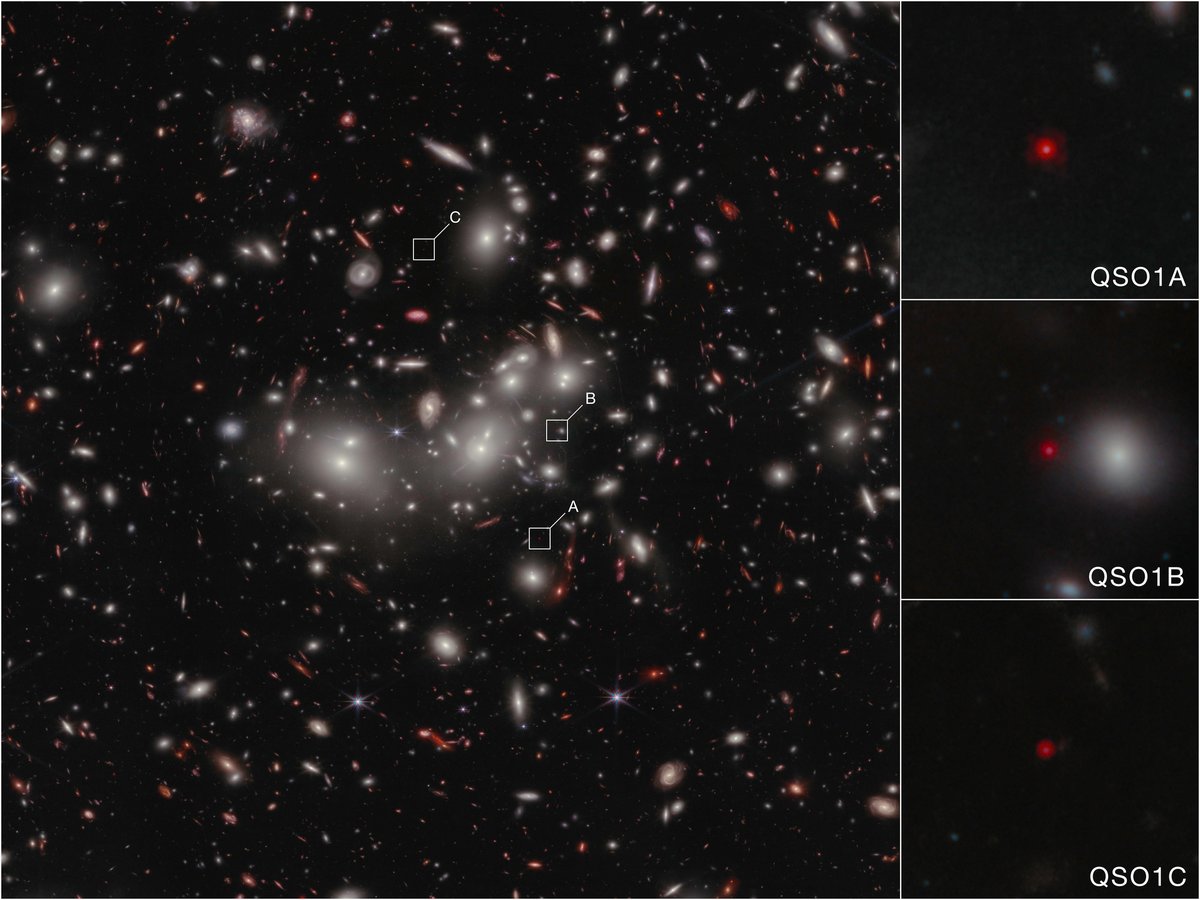
- NASA Science repostedThat's one big baby! New science from @NASAWebb suggests some supermassive black holes are born big, rather than forming gradually within a galaxy - possible evidence for kinds of black holes that have been theorized but never seen. go.nasa.gov/4dFyAeU