🗞️Our June issue is live!✨Read about the healthspan and lifespan effects of time-restricted feeding in mice, insights from mathematical models of aging, how R-loops drive the SASP, & much more nature.com/nataging/volum…
We're excited to launch @NatureAging today! The content of our first issue, "Aging in Unity", reflects the diversity of all communities working on aging: biologists, clinicians, social scientists, civil society and industry. Free to access for all here: nature.com/articles/s4358…
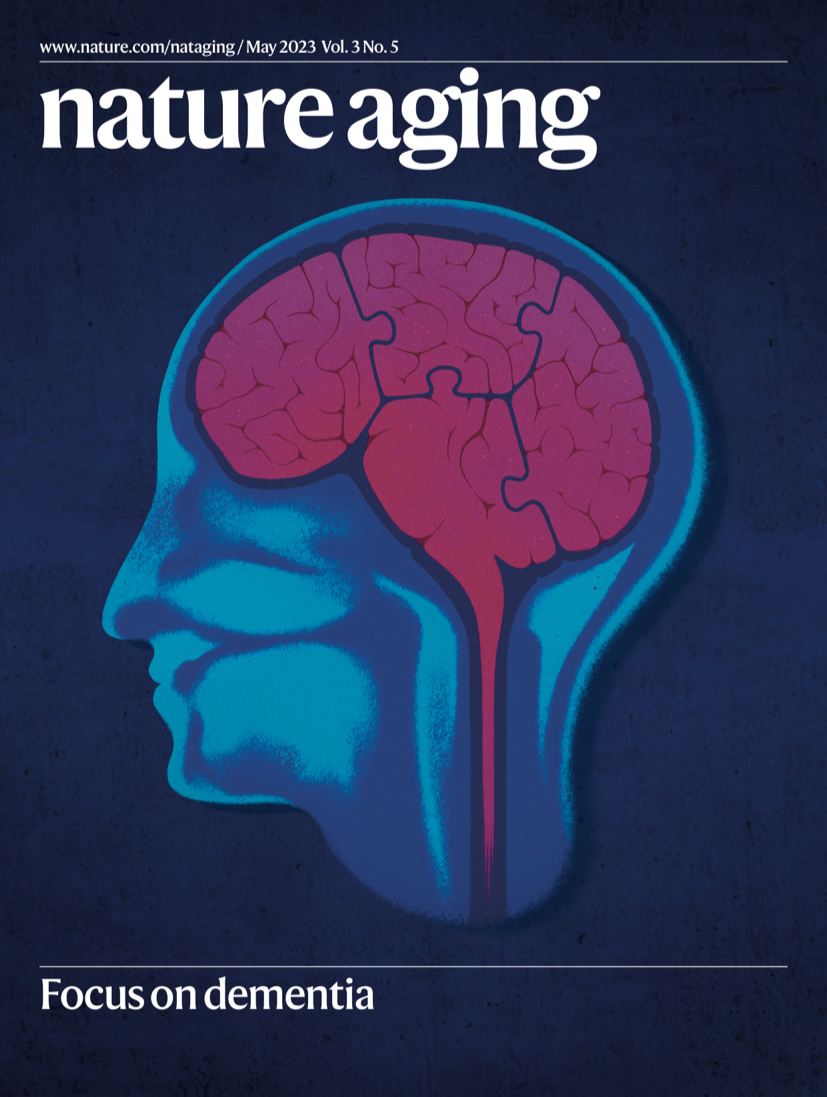
🗞Focus Issue! We bring together Reviews, Perspectives & Comments on the most recent advances in changing landscape of #dementia research. 🎨 Cover designed by Valentina Galata. nature.com/nataging/volum…
🗞️Our June issue is live!📷 This month, we're featuring work on editing epigenetic age, somatic mutation, senescence, Alzheimer’s biomarkers and much more. Read it all here: nature.com/nataging/volum…
NEW: Single-cell transcriptomic profiling of human blood from new-born, healthy young and old, and frail adults unveils frailty-specific immune cell characteristics with genetic signatures and regulatory molecules that underlie aging doi.org/10.1038/s43587…
Ahead of the launch of Nature Aging in January 2021, the editors have curated a collection of recent Nature Research articles on Aging, longevity and age-related diseases reflecting the increasing diversity of the field that we aim to support and feature
Online now! A new study uses proteomics data from over 50 000 adults without dementia in the UK biobank to predict the future risk of dementia, and highlights the importance of GFAP (rdcu.be/dyvQl)
doi.org/10.1038/s43587…
We hope that you’ll find a few treats in our December issue – formal presentation of the ITOA, reference centiles for #IC, LTC & healthy #aging in China, TANGO trial, #reprogramming, #senolytics for #COVID19, atherogenesis, mitophagy, refeeding, and more nature.com/nataging/volum…