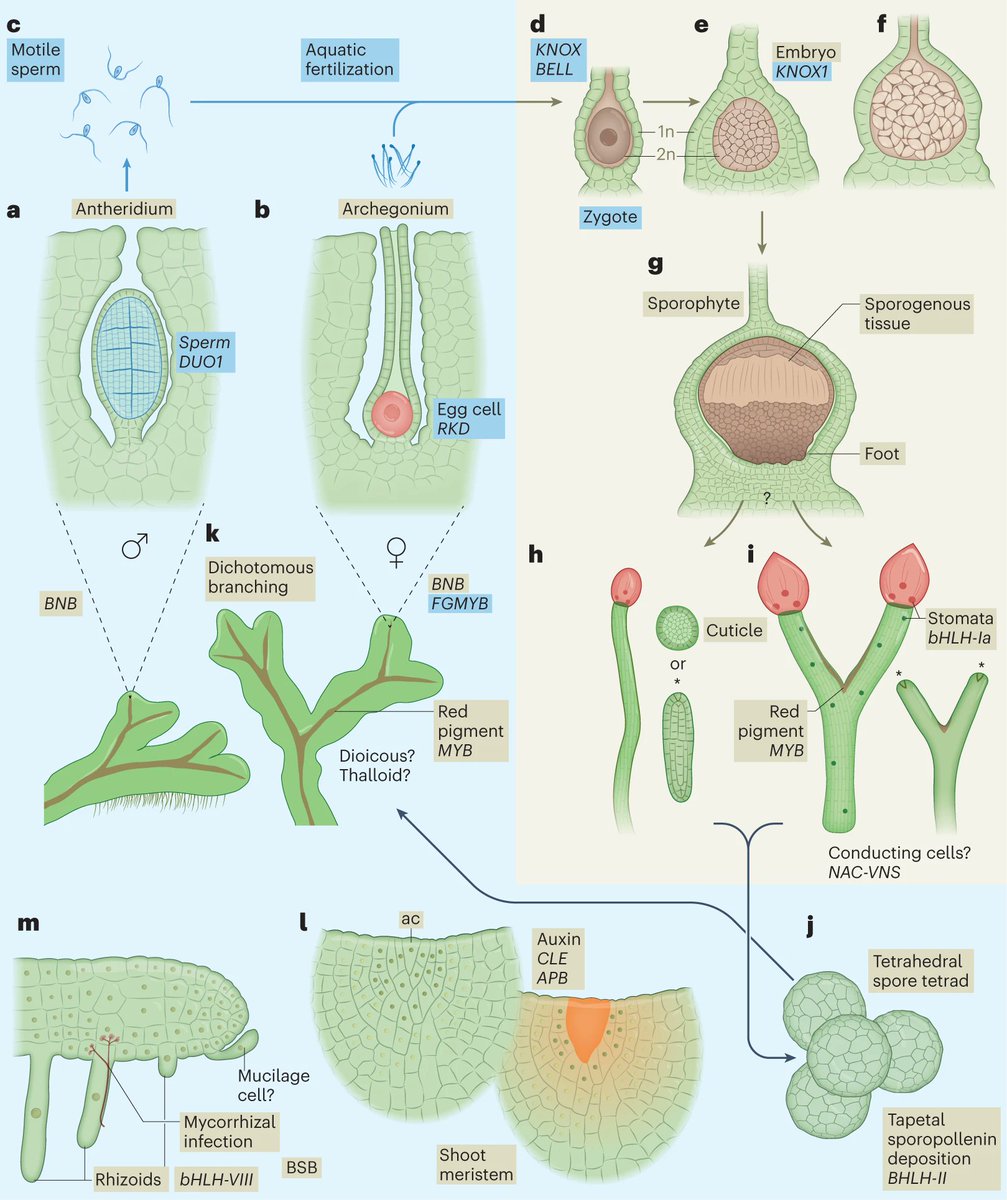
New Review: The origin of a land flora rdcu.be/c163Y
about the evolutionary transition from charophycean algae to embryophytes, from genomics and fossil records, with a focus on the progressive assembly of the embryophyte genetic innovations during terrestrialization.
New Letter: "Calcium dynamics during trap closure visualized in transgenic Venus flytrap" rdcu.be/b76jQ
A transgenic Venus flytrap expressing a fluorescent calcium sensor allows real-time live quantification of calcium waves triggered by sensory hair movement.
Today, the European Commission officially proposed to upgrade its rules from 2001 : gene edited plants with fewer than 20 edits will be exempt from GMO legislation in Europe in the future. Finally.
ec.europa.eu/commission/pre…reuters.com/markets/commod…
Detlef Weigel in the first talk at #ipmb2018 in Montpellier estimates that there are 20 billion spontaneous natural mutations every generation in a small field of wheat. But if you make a single mutation with CRISPR, your plant is GMO and must be regulated (recent ECJ decision).
New Review: "Technology-enabled great leap in deciphering plant genomes" rdcu.be/dBZXH
Analysis of 3,517 de novo assemblies from 1,575 plant species sequenced since 2000, including 793 newly sequenced species in the past three years, and a new database.
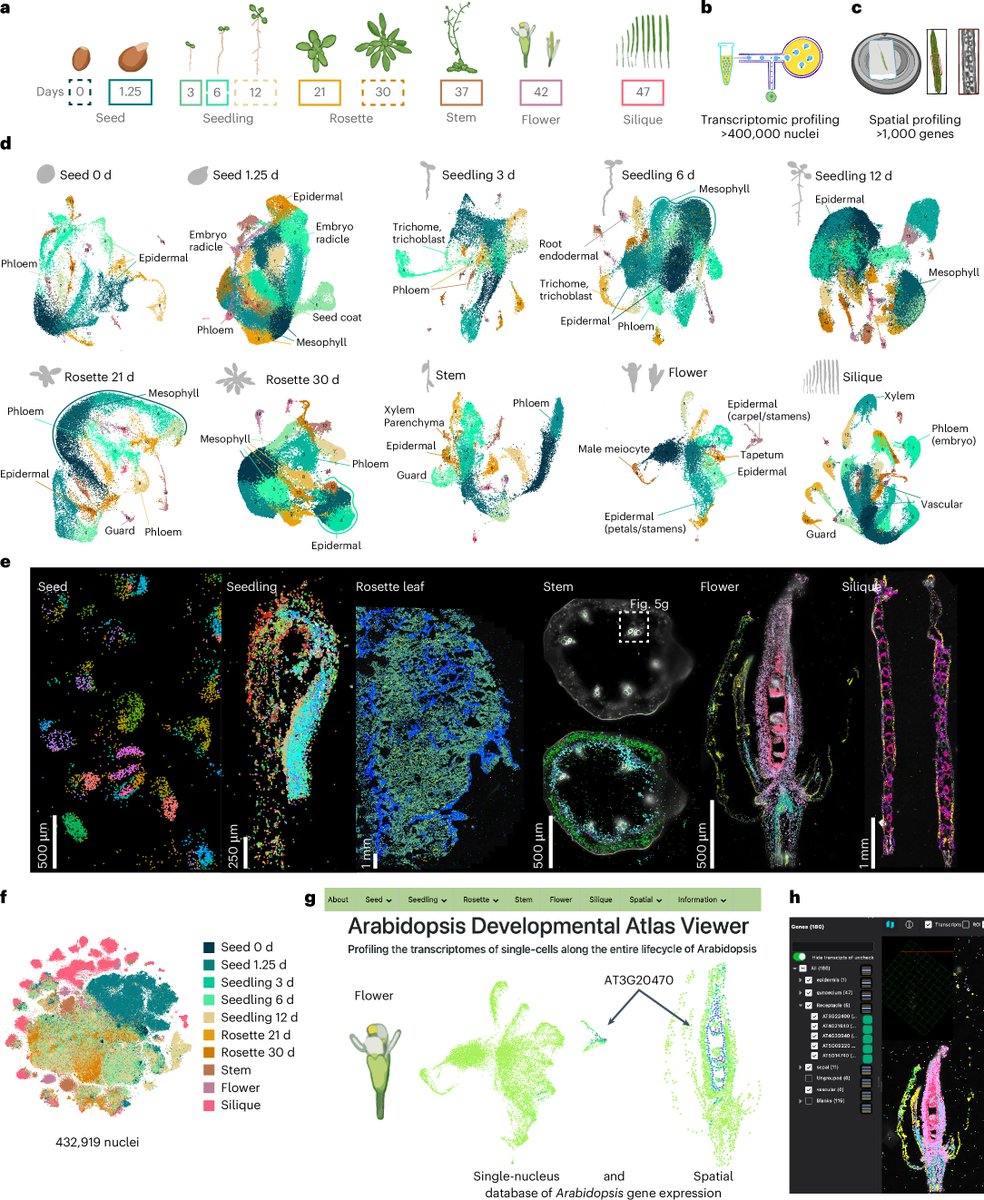
New OA Resource: "A single-cell, spatial transcriptomic atlas of the Arabidopsis life cycle" rdcu.be/eBmkU
An extensive single-nucleus and spatial transcriptomic atlas of the Arabidopsis life cycle that represents 10 developmental time points in 6 diverse organs.
We are thrilled to have our spatial single-cell atlas of the Arabidopsis lifecycle in @NaturePlants. It turns out that it is easy to generate aesthetic images when the spatial expression of 1,000 genes is available! 1/n
@NatanellaE@nobolly@JoeEckernature.com/articles/s4147…
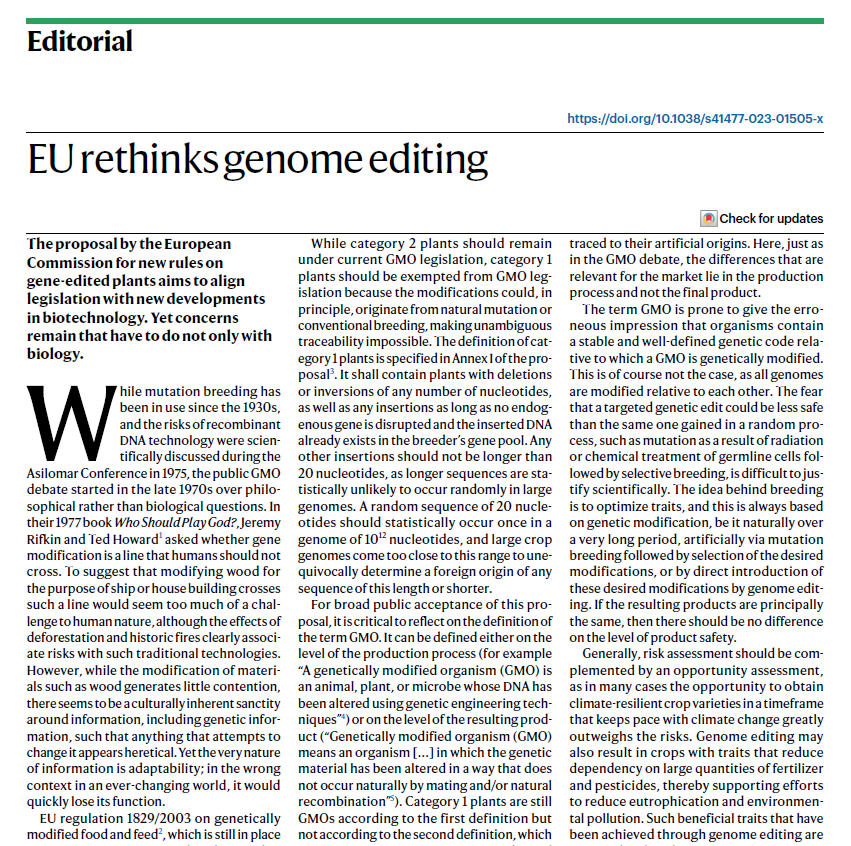
New Editorial: "EU rethinks genome editing" rdcu.be/dl2Gn
The proposal by the European Commission for new rules on gene-edited plants aims to align legislation with new developments in biotechnology. Yet concerns remain that have to do not only with biology.
The December issue is here on time for Christmas !
nature.com/nplants/volume…
Novel crop transformation techs, origin of land flora, chloroplast editing, plant resurrection from herbaria, cucurbit architecture, maize roots, chromatin, stomata, brassinosteroids, SWI/SNF, TPLATE...
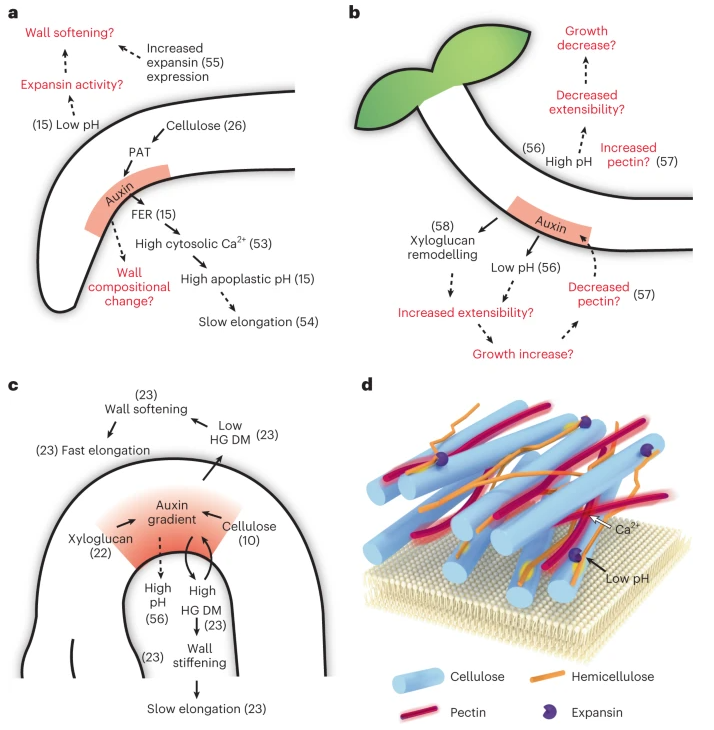
New Perspective: "Multiple mechanisms behind plant bending" rdcu.be/c2Gzi
Plants need to bend their organs. It is a complex process, and the different mechanisms involved are discussed in the light of recent findings about genes, signalling, modeling and biomechanics.