The Fraud of Breast Cancer Overdiagnosis
This thread is the most comprehensive and educational I've done on the subject.
If you find it valuable, please RT.
🧵
En 2018, l'année où j'ai été renvoyé de l'@Inserm pour la découverte des cancers causés par les mammographies, toute la médecine française était sous la tutelle du couple Lévy-Buzyn, Lévy étant lui-même sous la tutelle criminelle de Fauci.
1/
Le directeur d'Aviesan était Yves Lévy, également directeur de l'@Inserm. Il était à la tête de toute la recherche médicale française (Inserm + CNRS). Il avait été mis en place à cette position grâce au soutien de Fauci
x.com/daniel_corcos/…, un criminel.
1/
Fil sur mon renvoi de l’@Inserm pour la découverte des cancers causés par les mammographies par Yves Lévy, l’ami de Fauci.
Ce dernier était à la tête de la biodéfense américaine et c'est à lui nous devons la pandémie de Covid qui a fait des millions de morts.
🧵
1/
There were two ways to explain the increase:
1) Mammography detected cancers that would never have manifested (overdiagnosis).
2) Mammography itself created cancers because of X-rays.
The second explanation seemed excluded. Why? Because a commission of experts supervised by the U.S. military had evaluated that the risk associated with the radiation dose used for a mammogram was harmless.
There is no data to support this claim; on the contrary.
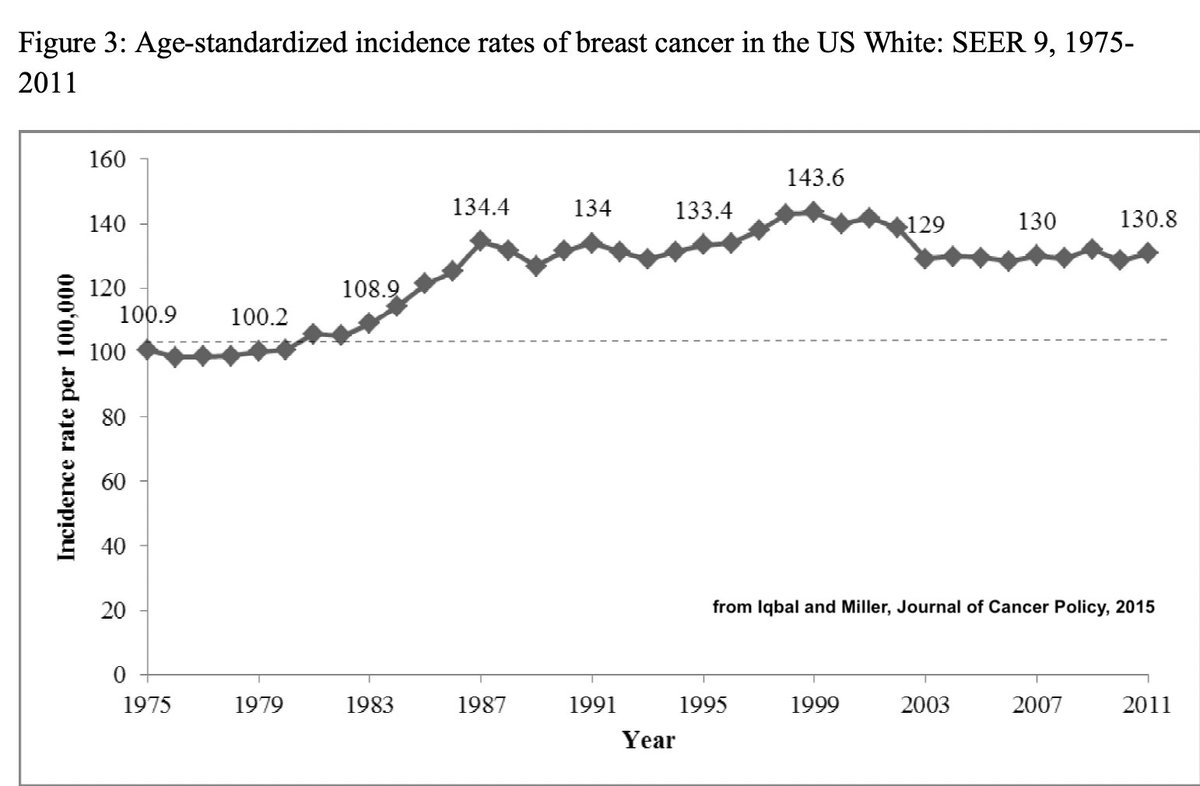
American women ended up with a higher risk of having breast cancer over their lifetime than before screening.
The same increase was observed in all countries that have used mammography screening.
In reality, the cancer risks associated with the medical use of X-rays had been identified as early as the late 1960s by John Gofman, who was in charge of studying the biological effects of radiation at the U.S. Atomic Energy Commission.
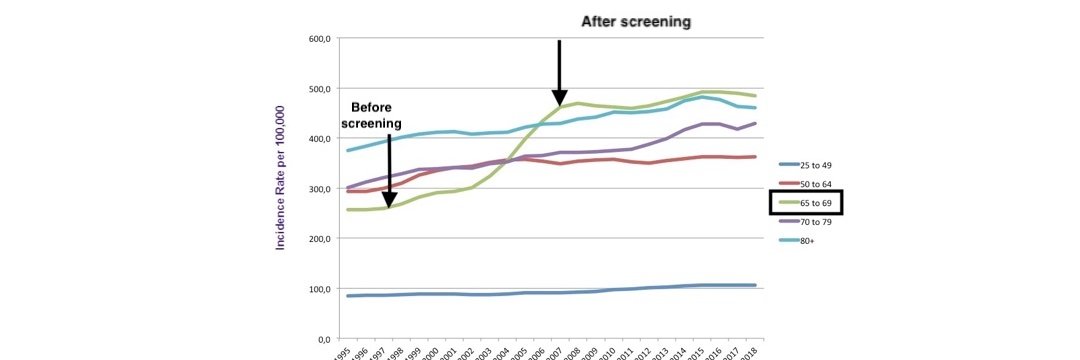
The implementation of the mammography screening program in the US was accompanied by a significant increase in the incidence of breast cancer. This is not surprising, as the goal of screening is to detect cancers years in advance.
La fraude du surdiagnostic du cancer du sein.
🧵
Ce fil est le plus complet et le plus didactique que j'ai réalisé sur le sujet.
Sa version anglaise à obtenu plus de 2 millions de vues.
Si vous le trouvez utile, merci de RT.
The problem is that this incidence has never returned to its initial level, far from it. However this should have occurred if it were simply a matter of advancing the diagnosis.
Later, in 1995, after gathering substantial evidence, Gofman published a book on the risk of radiation and breast cancer, which achieved some success but was met with complete silence from medical and scientific journals, except for negative reviews.
ratical.org/radiation/CNR/…
Towards the late 1990s, information emerged that should have served as a warning: mammography screening had not reduced breast cancer mortality in Sweden.