Log inSign up
Jennifer Kavanagh
6,020 posts
user avatar
Jennifer Kavanagh
@jekavanagh
Senior Fellow & Director of Military Analysis @Defpriorities. Formerly @CarnegieEndow @RANDCorporation. Tweets on U.S. defense policy & military strategy.
Washington, DC
defensepriorities.org/programs/milit…
Joined July 2012
600
Following
7,135
Followers
  • Pinned
    user avatar
    Jennifer Kavanagh
    @jekavanagh
    Dec 15, 2025
    Article 5-style guarantees to Ukraine are unrealistic, non-credible, & won't secure peace. My new report outlines Kyiv's best alternative & the most feasible path to a sustainable armistice: armed non-alignment that leaves Ukraine's military as its primary security guarantee.
    Image
    Image
    84K
  • user avatar
    Jennifer Kavanagh
    @jekavanagh
    Jun 18, 2022
    There is a legitimate debate to be had about the risks & benefits of a foreign policy based on restraint. But the argument that "the United States has, since the end of World War II, largely pursued a policy of restraint" is inconsistent w/ the data. 1/7
    Image
    U.S. Restraint Has Created an Unstable and Dangerous World
    From foreignpolicy.com
  • user avatar
    Jennifer Kavanagh
    @jekavanagh
    Feb 27, 2023
    "Washington is slowly waking up to the fact that Germany’s Zeitenwende is a mirage. German defense spending this year is expected to be about €50 billion, falling well short once again of NATO’s target of 2 percent of GDP."
    Image
    The truth about Germany’s defense policy shift
    From politico.eu
    72K
  • user avatar
    Jennifer Kavanagh
    @jekavanagh
    Jun 18, 2022
    Replying to @jekavanagh
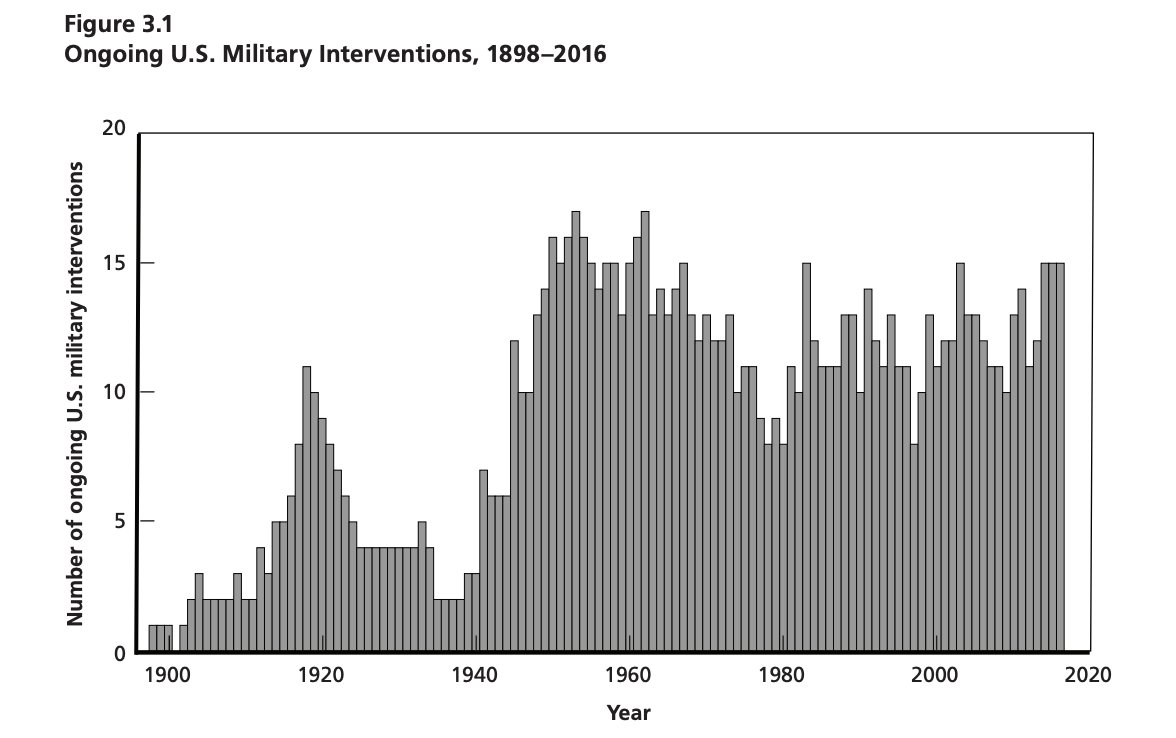
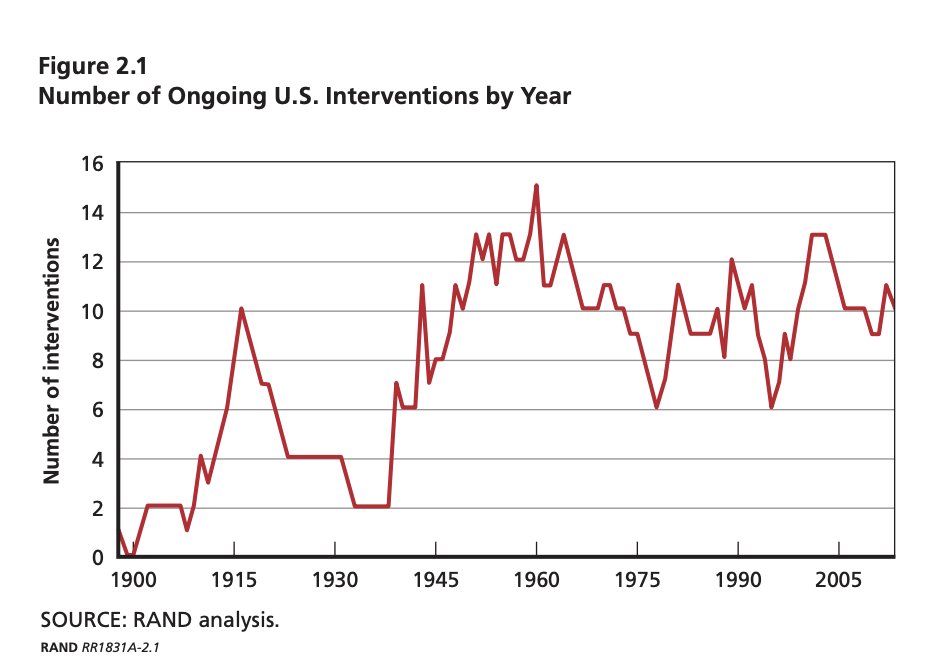
    This graph shows the number of ongoing U.S. military interventions (air, ground, naval) since 1898. We used a 100 person-year threshold for ground interventions and similar for air & naval. The U.S. has been consistently involved in ~15 interventions at a time since WW2. 2/7
    Image
  • user avatar
    Jennifer Kavanagh
    @jekavanagh
    May 19, 2024
    Highly recommend this great article on key capabilities that would affect the outcome of a war in the Taiwan Strait. Cool graphics & FINALLY an article on this topic that acknowledges the reality of limited U.S. access for ground-based missiles!
    Image
    The battlegrounds that could decide a US-China war over Taiwan
    From ig.ft.com
    50K
  • user avatar
    Jennifer Kavanagh
    @jekavanagh
    Jun 18, 2022
    Replying to @jekavanagh
    None of this looks much like a policy of restraint. Instead, the data suggest the U.S. has used military intervention extensively since WW2 and that the scope of these interventions has been expanding. 5/7
  • user avatar
    Jennifer Kavanagh
    @jekavanagh
    Jun 18, 2022
    Replying to @jekavanagh
    What if we consider only ground interventions? The story is largely the same. The number of ongoing U.S. ground interventions has been about the same since 1990 as it was between 1945-1970, and in both periods interventions have been more frequent than before WW2. 3/7
    Image
  • user avatar
    Jennifer Kavanagh
    @jekavanagh
    Jun 18, 2022
    Replying to @jekavanagh
    We also looked at the objectives of all these military interventions and how successful the U.S. has been at achieving them. We found that rates of success have fallen over time. Why? Partly because objectives have *expanded* in scope. 4/7
    Image
  • user avatar
    Jennifer Kavanagh
    @jekavanagh
    Nov 19, 2022
    With @RANDCorporation colleagues, we looked at this question of whether "doing nothing is worse than doing something." We found: 1. No clear differences in outcomes for nations where the U.S. intervened and comparable non-intervention cases.
  • user avatar
    Jennifer Kavanagh
    @jekavanagh
    Jun 28, 2025
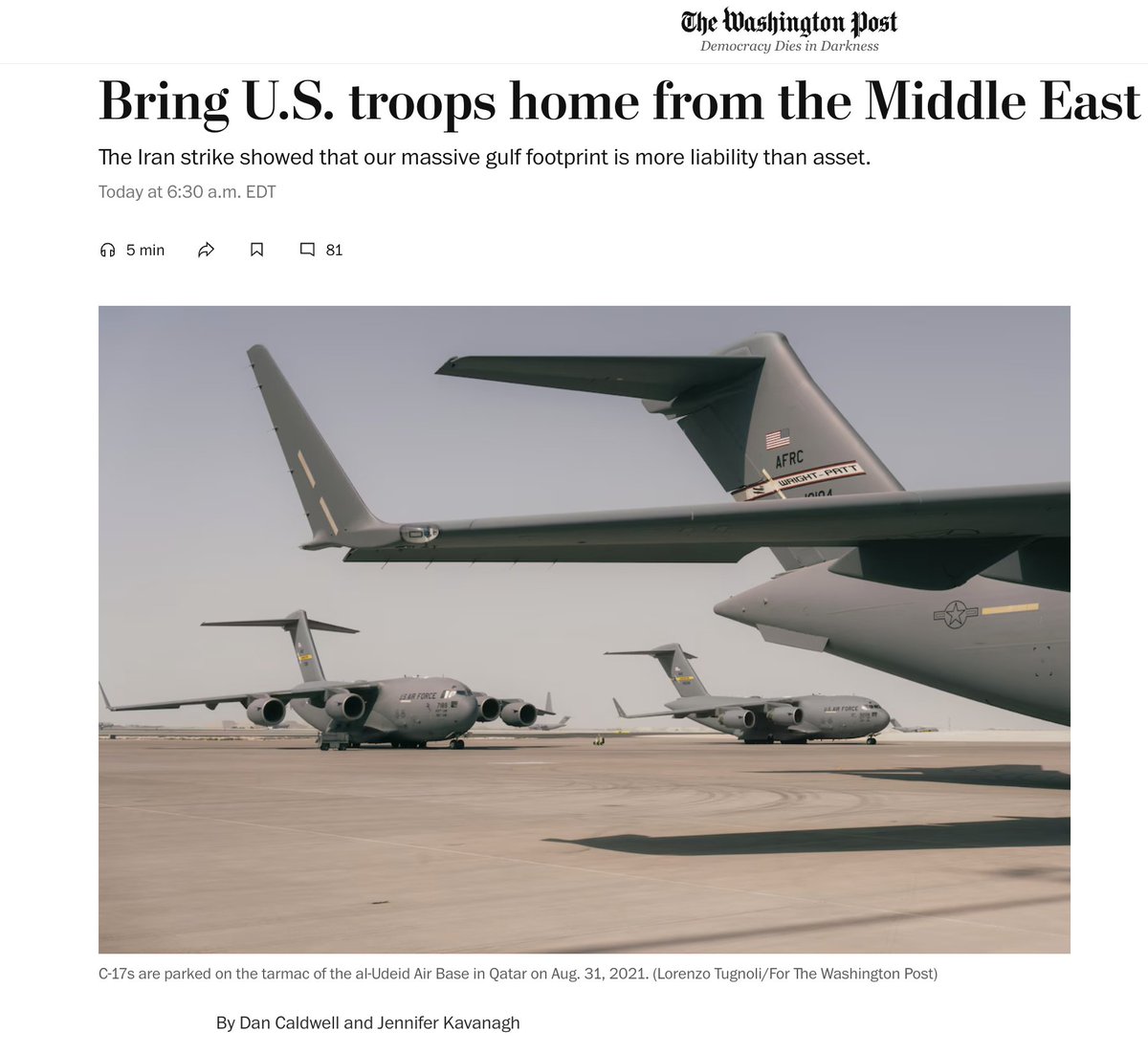
    The past 2 weeks underscored the risks that come w/ having U.S. military forces in the ME. They played little role in the U.S. strike on Iran, but became a costly vulnerability when Iran retaliated. @dandcaldwell & I argue in @washingtonpost that it's time to bring them home.
    Image
    24K
  • user avatar
    Jennifer Kavanagh
    @jekavanagh
    Nov 1, 2022
    This would be a mistake. DoD does not have the right types of expertise for this task & it is not organized to execute this task. Plus, DoD's bandwidth is already stretched. The push to securitize everything about the U.S.-China competition in this way is counterproductive.
  • user avatar
    Jennifer Kavanagh
    @jekavanagh
    Nov 4, 2025
    It's too late to "pivot to Asia" in my view. The admin's statements about achieving a "balance of power" in Asia acknowledge this reality.
    user avatar
    Ken Moriyasu
    @kenmoriyasu
    Nov 4, 2025
    On Trump's G2: Biden officials said the phrase instills fear among US allies in China's neighborhood. But restrainers see the concept as a natural development and an acknowledgement that the U.S. can no longer maintain dominance in Asia. @jekavanagh asia.nikkei.com/politics/inter…
    Image
    30K
  • user avatar
    Jennifer Kavanagh
    @jekavanagh
    Jun 18, 2022
    Replying to @jekavanagh
    The data here comes from these two reports: rand.org/pubs/research_… rand.org/pubs/research_… 7/7
  • user avatar
    Jennifer Kavanagh
    @jekavanagh
    Jun 18, 2022
    Replying to @jekavanagh
    There is much the U.S. needs to do to better protect U.S. interests from an aggressive China and a revisionist Russia, but it's not clear that building a bigger, more interventionist military with a larger budget is the answer. 6/7

New to X?

Sign up now to get your own personalized timeline!

Create account

By signing up, you agree to the Terms of Service and Privacy Policy, including Cookie Use.

Terms·Privacy·Cookies·Accessibility·Ads Info·© 2026 X Corp.
Don't miss what's happening
People on X are the first to know.
Log inSign up
Advertisement
Advertisement