This is why at @linera_io we’re building a new kind of L1 optimized for low-latency reads&writes at scale. Linera works by structuring blockspace into many parallel small chains called microchains. Being small and user-centric, microchains are easy to replicate between validators
Can a blockchain be as fast as a single server? Yes! Blockchain is the easy part actually. It’s only concerned with writes. Not only that, they are sequential append only writes. Not even random writes. Scaling random reads globally at low latency is 1000x harder.
💥 Another good day at @linera_io: We just run the first demo of a Web3 app frontend connected to our Linera Web client, which runs entirely in the browser. In other words, the first demo of a trustless Web3 app.
Very proud of the work of the @linera_io team who made this major upgrade of our testnet possible -- including a real-time web client and support for native oracles.
Age-restricted adult content. This content might not be appropriate for people under 18 years old. To view this media, you’ll need to log in to X. Learn more
Also traditional blockchains are not ready for this: In most cases user devices cannot access on-chain data without trusting a centralized RPC provider. This means on-device AI agents could be fed with wrong data and silently manipulated.
Application abstraction is a future where almost all UI becomes obsolete, replaced by AI agents.
You tell an agent what you want. It gets done, and proves it followed your rules.
The app disappears.
Intent is the interface.
Proof is the guarantee.
AI is eating UI.
gmic ⛓️ We just dropped a demo that lets you transfer test tokens from a web UI updated in real time—powered by Linera microchains ⚡
Share account addresses with a friend, send funds, and watch balances update live in the browser. Try it now! Link in the reply.
🧵↓
Very interesting report from @Lemniscap! Always motivating to see that @linera_io's infrastructure based on microchains is well positioned on many of the important topics -- including radical scalability improvements, interoperability(*), ZKP adoption (with partners such as
1/10 As we enter the new year at full speed, we reflect on 2024 to refine our thesis and identify the forces shaping the crypto landscape. Here’s a preview of the themes and opportunities from our latest report.
Full article here: paragraph.xyz/@lemniscap/ref…
Today I’m very excited to announce a strategic partnership between @linera_io and @WalrusProtocol. We’re going to make Walrus easy to use as data storage for all Linera applications. Conversely, Walrus users will be able to use the decentralized Linera network to validate and
L1 blockchain @linera_io has chosen Walrus as its storage buddy 🦭
Linera’s microchains + Walrus’ onchain blobs = instant scalability, real-time data, and no centralized headaches.
Walrus is here to help L1s and L2s store their data.
Read on for more 👇
walrus.xyz/blog/linera-mi…
Very bullish on using blockchains to authenticate data sources. But once you have on-chain records for images, videos, etc, how do you securely access those records from a frontend?
Nowadays most Web3 frontends get their data from trusted (unstaked) third-party RPC providers.
As blockspace increases, the idea of the ledger of record is becoming more feasible.
As AI progresses, the ledger of record is becoming more necessary.
It means the only truly verifiable citations are links to onchain data via block explorers.
Crypto is what AI can’t fake.
#DeepSeek certainly feels like the kind of technological disruption that happened with optic fibers in the late 1990s (*) and caught many telecom infrastructure providers by surprise.
Overall, great news for AI users! Maybe less so for closed-source AI and GPU providers
DeepSeek's new R1 reasoning model is dragging down the NASDAQ. It dropped 6 days ago but it seems Wall Street is only now digesting what it means. I'm no equity analyst, but a few things I've been thinking about.
DeepSeek is a huge deflationary shock to the price of
Very interesting approach! @Aptos is exploring sharding, but not the kind of sharding you're thinking of—locally sharding, so that a single logical validator is composed of multiple machines working together. (Maybe better to call this node partitioning?)
Doing this efficiently
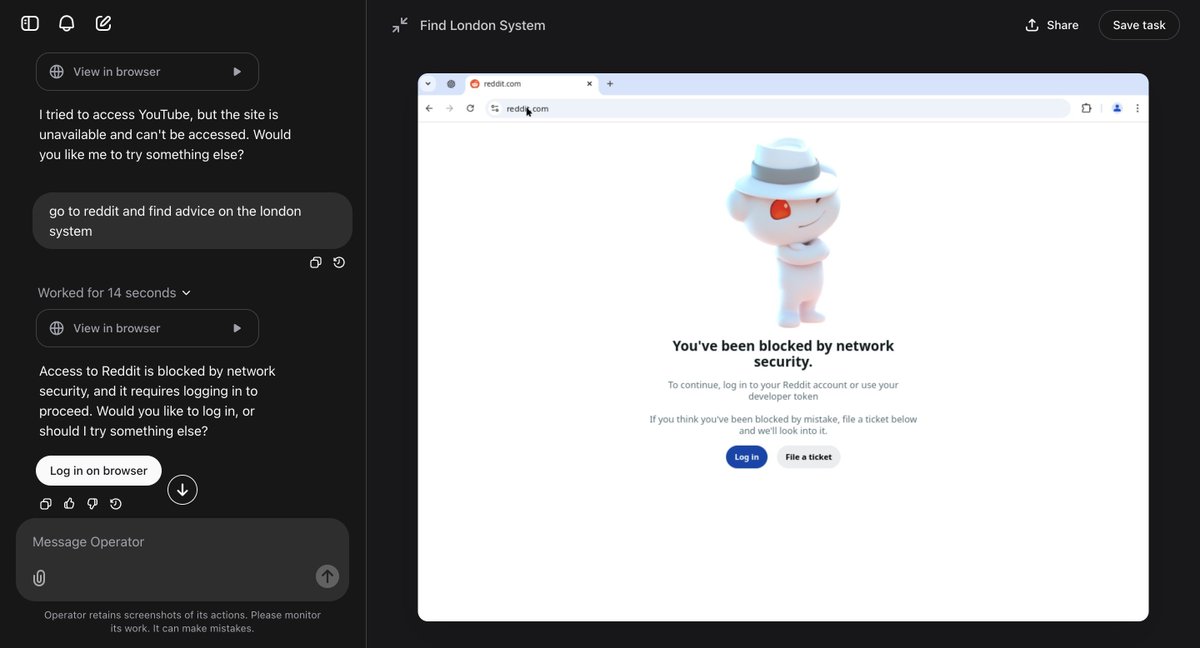
Linera microchains are the true antidote to remote prompt injections on AI agents. Picture this: instead of talking to remote MCP APIs and hoping that nothing bad(*) happens:
1) Your AI agent talks to a local service running immutable, audited code in a VM on your computer.
2)
Why this goes hard: Linera is purpose-built for the agentic revolution. Every AI agent gets a microchain securely replicated locally and across validators.
Agents interact privately via MCP with Linera apps on their chain—no delays, no RPC fees, no remote prompt injection. ⚡
So stoked to announce our new strategic partnership with @linera_io!
TLDR: we’re redefining how real-time EV Charging data processing will work!
Our partnership is focused on further decentralizing data storage, processing, and user incentivization across @decharge 's global