New wallet attribute: ⚓ 𝗟𝟭 𝗰𝗵𝗮𝗶𝗻 𝘃𝗲𝗿𝗶𝗳𝗶𝗰𝗮𝘁𝗶𝗼𝗻.
"Trust but verify" isn't real if wallets don't actually verify.
Walletbeat now rates wallets based on whether they verify L1 chain state by running a light client like Helios (by @NoahCitron).
Raising the bar.
You use Chrome. Imagine for a moment that Chrome sent 𝙚𝙫𝙚𝙧𝙮 𝙐𝙍𝙇 𝙮𝙤𝙪 𝙫𝙞𝙨𝙞𝙩𝙚𝙙 to g**gle.
That would be outrageous, right?
web3 is about doing better than this.
Well, what if your wallet did the very same thing? 👇
The solutions exist, we just need the collective will to implement them.
It's April 2026. I wake up in the morning and check Hacker News. "Hundreds of Starlink satellites burn up in the atmosphere." 🧵
New wallet attribute: 📡 𝗟𝟮 𝘄𝗶𝘁𝗵𝗱𝗿𝗮𝘄𝗮𝗹𝘀
Can you withdraw your funds from L2 without intermediaries?
Walletbeat now checks that wallets can do trustless L2 withdrawals on L1, and can broadcast these L1 transactions in a censorship-resistant manner.
Raising the bar.
While the technical aspect of it is fine, there's another angle where they screwed up here: not treating KYC user data as a liability.
IMO, this is not the right direction for a self-custody company to take.
Ledger should be doing everything it can to minimize this opsec attack surface, not increase it.
Instead, here is Ledger promoting its users to KYC themselves further, and handing over this data to a third-party custodian.
ledger.com/recover
In meatspace, events & communications are local and private by default.
The digital world evolved from the other direction, but cryptography fixes this.
Normalize cryptography.
Anything that isn't designed as private as possible should be criticized, for it betrays natural order.
you can always encrypt your data with a key that only you know. it is always allowed. it is always morally correct. it makes you a productive member of society who minimizes data risk and the spectre of surveillance abuse and maximizes freedom of yourself and others
"You have money in your bank account."
No, I am an unwilling creditor to a state-sponsored leveraged bond fund that has been repeatedly bailed out with my actual money.
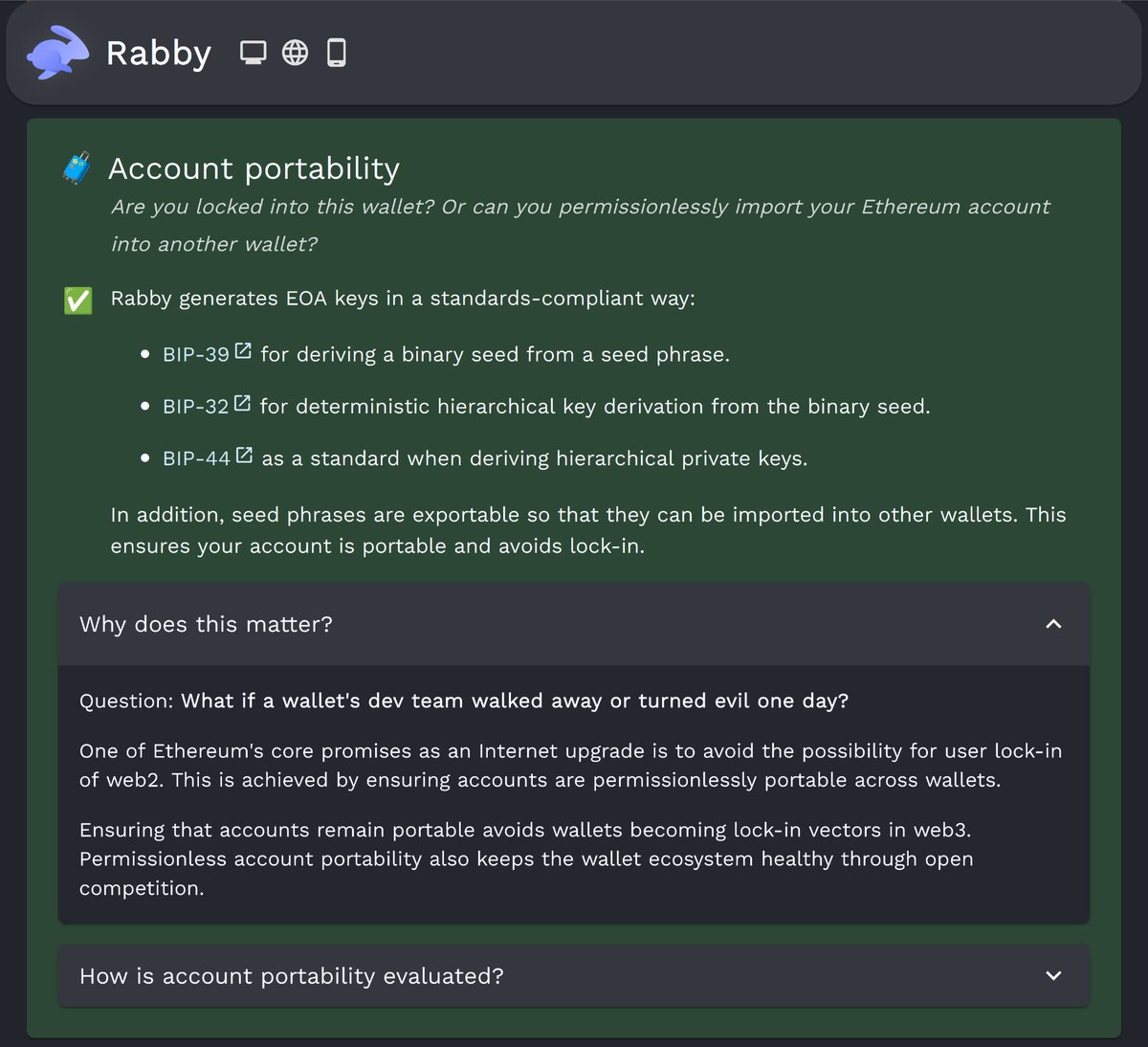
New wallet attribute: 🧳 𝗔𝗰𝗰𝗼𝘂𝗻𝘁 𝗣𝗼𝗿𝘁𝗮𝗯𝗶𝗹𝗶𝘁𝘆
web2 locks you in, web3 should not
You can check out any time you like, but can you ever leave?
Walletbeat now checks whether a wallet allows you to export your account or assets to another wallet.
Raising the bar.
The above screenshot is a network capture of a popular browser extension wallet.
Which wallet did I use in that screenshot?
That's not important, because 𝗽𝗿𝗲𝘁𝘁𝘆 𝗺𝘂𝗰𝗵 𝗮𝗹𝗹 𝘄𝗲𝗯𝟯 𝘄𝗮𝗹𝗹𝗲𝘁𝘀 𝘄𝗼𝗿𝗸 𝘁𝗵𝗶𝘀 𝘄𝗮𝘆 𝘁𝗼𝗱𝗮𝘆.
That needs to change.
𝙃𝙤𝙬 𝙙𝙤 𝙬𝙚 𝙜𝙚𝙩 𝙩𝙝𝙚𝙧𝙚?
Walletbeat is doing its part. 🫡
This is tracked as part of the 🔗 𝗔𝗱𝗱𝗿𝗲𝘀𝘀 𝗰𝗼𝗿𝗿𝗲𝗹𝗮𝘁𝗶𝗼𝗻 attribute.
It asks the question: Can a third-party correlate your Ethereum address with any other piece of personal information?