Below is a thread about the future of remote work after the COVID-19 pandemic is over. I predict that remote will go through a trough of sorrow due to hybrid not working out, and most companies will return to being office based. But many all remote companies will see success.
Sid Sijbrandij
7,221 posts
Co-founder & Executive Chair of GitLab. Co-founder of Kilo Code. I love economic mobility, remote work, new cities, big art, incentive design, and curing cancer
Joined March 2009
- On today’s earnings call, I announced my transition from @GitLab’s CEO to the Executive Chair of the Board. I want more time to focus on my cancer treatment and health. My treatments are going well, my cancer has not metastasized, and I'm working towards making a full recovery.
- .@paulg I always loved your tweet below 🙂 Today we announced our quarterly earnings and crossed over $100m of quarterly revenue. About 2.5 years ago this was under $100M annually. Thanks to all our customers, contributors, users, partners, and team members for making this happenA startup reported their ARR has reached $99.9m. I know two things from this: their ARR, and that they don't fudge their numbers.
- YouTube having a 2x speed playback function has probably done more to accelerate learning than some medium size universities.
- Google can search the entire internet in under 1 second but searching just my Google Drive always takes more than 5.
- Want to learn more about remote work? We published the the most comprehensive list of articles I've seen so far about.gitlab.com/company/cultur…
- Wonder what software we use at GitLab? We published our entire tech stack about.gitlab.com/handbook/busin…
- At GitLab with 650 people we don't have an asset we have to depreciate. Our depreciation limit is $5000 and we don't have a physical item that expensive or such a lease. All remote helps to prevent long term office leases and so far nobody needed a Mac Pro or Pro Display :)
- GitLab Inc. has grown from 407 people at the start of the year to more than 1000 today, welcome everyone! Last week we hired 35 people and we have hundreds of open vacancies to be hired in the three months remaining so please apply if you're interested
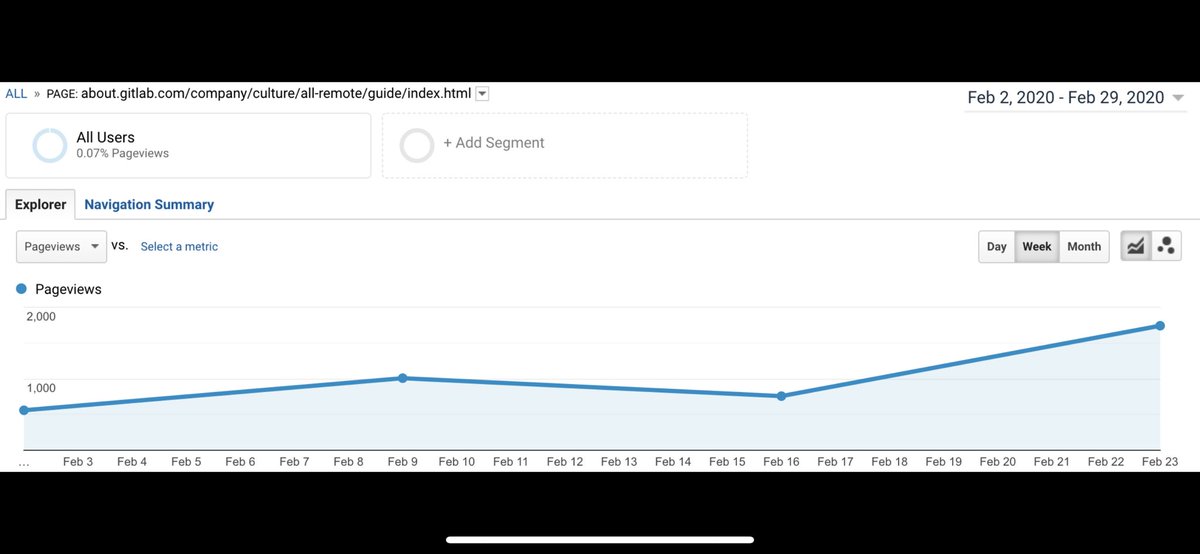
- Due to the Coronavirus we’re seeing a huge uptick in people visiting our guide on how to work remote like we do @gitlab. See the guide for yourself at about.gitlab.com/company/cultur… to prepare for what might be coming.
- When working remote it is important to formalize informal communication. Explicitly plan time to create, build, and maintain social connections and trust. In our handbook we list 15 methods about.gitlab.com/company/cultur… which I'll summarize in this thread.
- Replying to @sytsesAnd stop saying that all creative thinking needs a whiteboard. There are 2 advantages to a whiteboard (you can draw arrows and circles) but linked are 17 reasons why a shared Google Doc is better, including that everyone can write on it at the same time. about.gitlab.com/company/cultur…
- Replying to @sytsesAs Bretton Putter said in the linked tweet: "The majority of CEOs who ran office-based businesses before the pandemic and didn't invest in their culture unknowingly relied on their office space environment to hold their unwritten culture together".Replying to @BrettonPutter @sytses and 3 othersThe majority of CEOs who ran office-based businesses before the pandemic and didn't invest in their culture unknowingly relied on their office space environment to hold their unwritten culture together
- Replying to @sytsesSomehow the lesson that companies deduce from this isn't that that should go all remote, but that they should go hybrid, combining remote and co-located work. I think that hybrid is much harder and less likely to be successful. This thread will include examples of why it is hard.