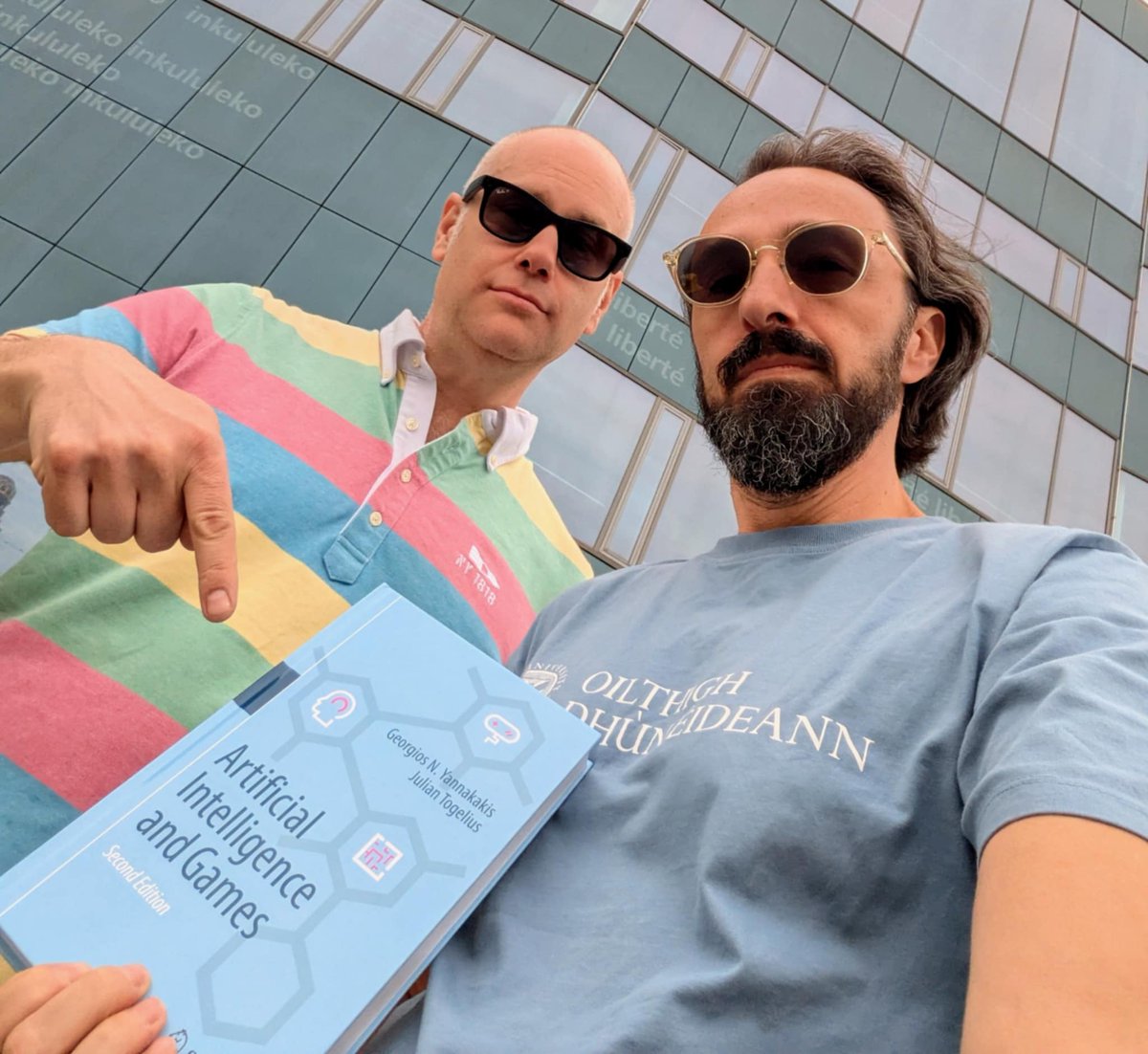
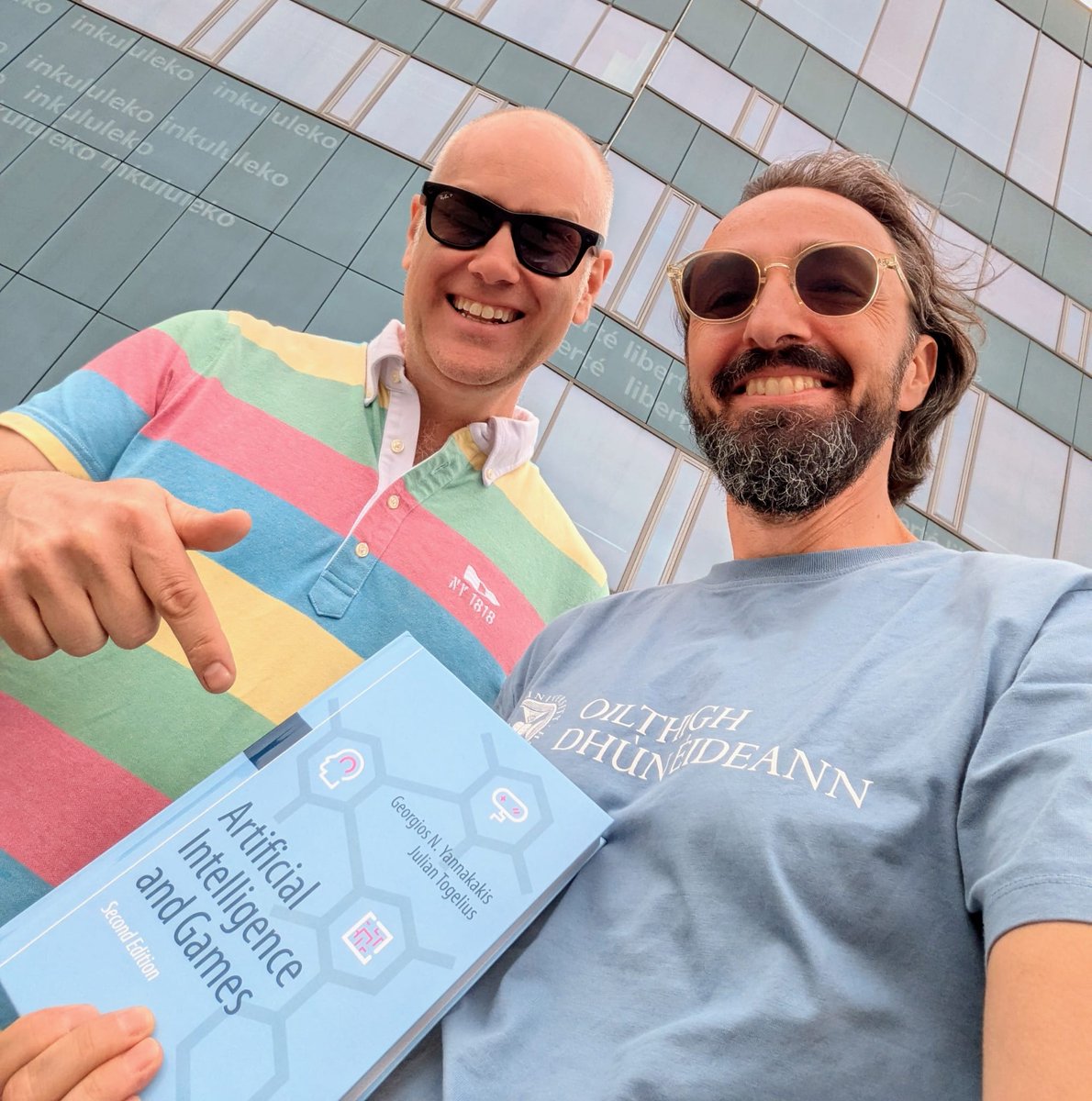
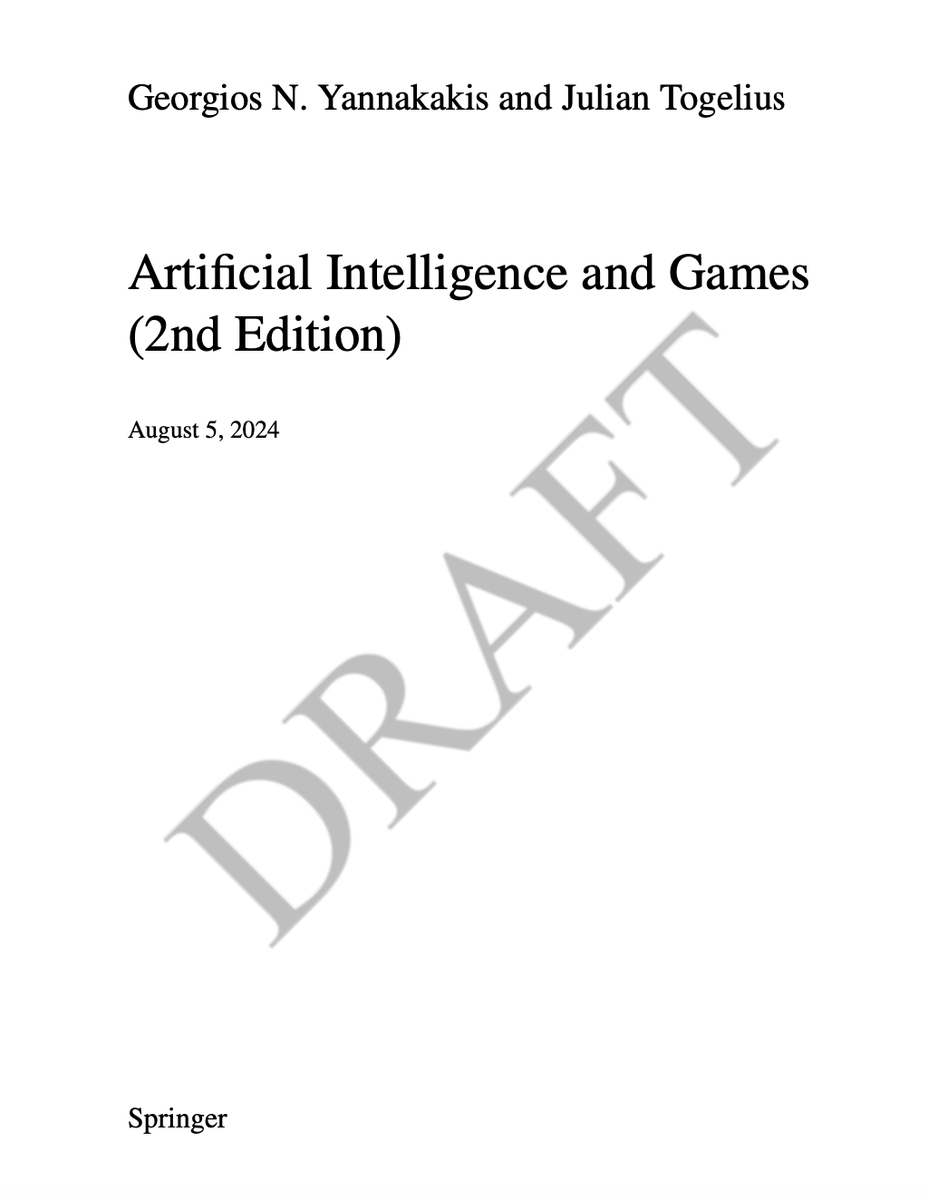
Guess what has arrived in physical form? The second edition of the Artificial Intelligence and Games book by @yannakakis and me! 530 pages of everything you wanted to know about AI for games and games for AI.
How can you do great AI research when you don't have access to google-scale compute? By being weird. The big tech companies are obsessed with staying nimble despite being big, and some succeed to some extent. But they can't afford to be as weird as a lone looney professor.
Today is the official release day for my little book on Artificial General Intelligence, published by MIT Press. It's available on the shelf of well-stocked booksellers, and I wrote it to be accessible to as large audience as possible; it's not really a technical book, even
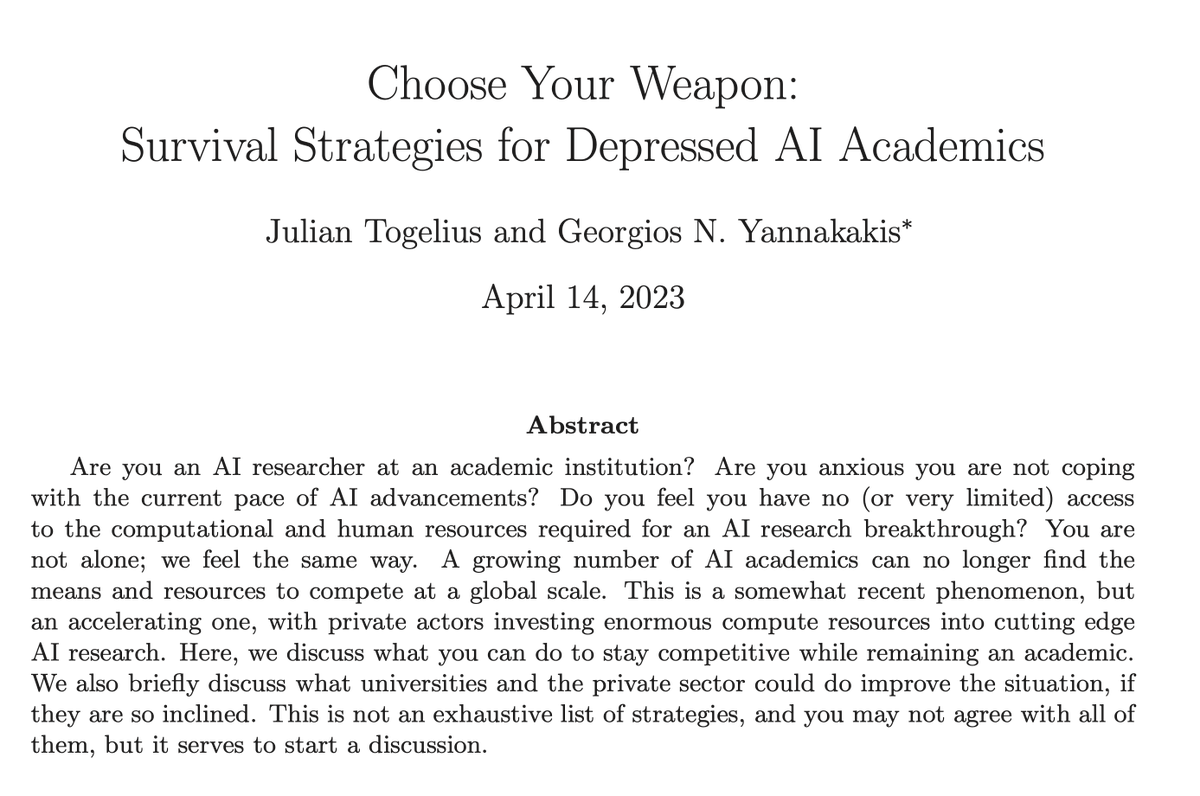
Not long ago, breakthroughs in AI research often came from lone academics or small teams using desktop hardware. These days, not so much. Are you anxious about how to stay competitive in AI as an academic?
@yannakakis and I wrote this piece for you:
arxiv.org/abs/2304.06035
So that paper about how GPT-4 could ace MIT's curriculum turns out to be deeply flawed in multiple ways. A great reminder that preprints are not peer-reviewed, but also that public volunteer review can be excellent (in this case, by a group of undergrads).
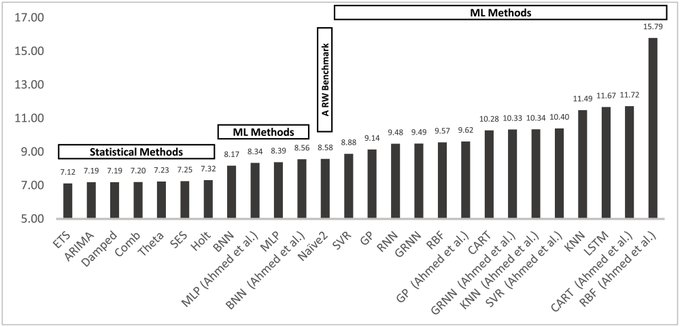
Simple statistical methods are shown to much better than fancy machine learning on a whole bunch of real-world sequence-prediction datasets. The reason: the time series used are tiny by ML standards, and all the ML methods overfit.
The journals.plos.org/plosone/articl… paper with its finding that the worse Stat forecasting method was more accurate than the best of the ML ones has passed the 100,000 mark of views/downloads. None of those who have read/downloaded it has challenged its finding. We are still waiting!
Six years ago, @yannakakis and I published a textbook on AI and Games. It has been used in universities across the world and become a standard reference for the field. Much has happened since, and it is about time for a second edition. Good news: we just put a draft online!
Sub-tweeting because I don't want to rain on a poor PhD student who should have been advised better, but: that paper about LLMs having a map of the world is perhaps what happens when a famous physicist wants to do AI research without caring to engage with the existing literature.
The constant barrage of awesome-looking AI results can induce panic in AI researchers. How could you and I possibly keep up, let alone compete? I try to remember the following:
* Most AI researchers oversell their results
* Most “breakthroughs” rely on existing well-known methods
It's 1985. Worried about the capacity of frontier software, and the unchecked spread of shareware and freeware, Reagan issues an executive order that producing any software larger than 1 megabyte requires a special license and reports to several different government agencies.
Reinforcement learning is a paradigm that will eventually be superseded. We just haven't figured out what the new, more generally useful, paradigm is yet. When we do, there's going to be a revolution. It will be very interesting.