Once you see it, you can’t really unsee it 👀 In Auvers, Van Gogh sketched an Egyptian-style sphinx above a gateway again and again, but with more life and expression each time.
He was fascinated by ancient Egypt’s ‘serene’ figures, and that look may have slipped into his
Van Gogh Museum
18.9K posts
Van Gogh Museum Amsterdam houses the world’s largest Vincent van Gogh collection: paintings, drawings, letters and more.
- In his final weeks in Auvers, Vincent van Gogh often returned to the wheatfields. Under stormy skies, he painted vast stretches of land, in his words holding ‘sadness, extreme loneliness.’ So it’s not strange that these landscapes are often perceived as dark or foreboding. But
- Without family, no Van Gogh Museum. Theo supported his brother (1) Vincent throughout his life, helping him continue to paint. After their deaths, Theo’s wife Jo van Gogh-Bonger (2) brought Vincent’s work to the world by organising exhibitions and publishing his letters. Their
- When Vincent wrote this, ‘modern life’ looked very different, yet the feeling is easy to recognise. He probably experienced anxiety as something in the air: not owned, but absorbed, shaped by the pace and pressures of the time. Perhaps that’s why the line still resonates. Not
- A room with a view… in this case, it’s from Vincent’s room in the psychiatric institution in Saint-Rémy. Perhaps not the most obvious place for inspiration, but Van Gogh still managed to turn it into something beautiful. From his window, he painted the same view multiple times:
- Women and children appear again and again in Vincent’s works. During his time in Auvers-sur-Oise, Vincent repeatedly painted and drew them, perhaps reflecting a quiet longing. At the time, he felt more alone than ever. Theo had just become a father, and life seemed to be moving
- A quiet garden, a few fluttering butterflies… and a big turning point for Van Gogh in Paris 🦋 Painted in 1887, this close-up view is seen from above – like he sat on a park bench and painted what was right at his feet. It shows a new way of looking: focusing on small details,
- Van Gogh’s birds 🐦 Sometimes painted with just a few swift strokes, other times rendered with great care: birds often appear in Van Gogh’s drawings and paintings. Because he worked so much outdoors, Vincent was constantly surrounded by them: fluttering above fields, perched on
- Vincent wrote to his brother Theo: ‘the Trinquetaille bridge with all its steps is a canvas done on a grey morning, the stones, the asphalt, the cobblestones are grey, the sky a pale blue, the small figures colourful […]’ Vincent captured one of those grey mornings perfectly in
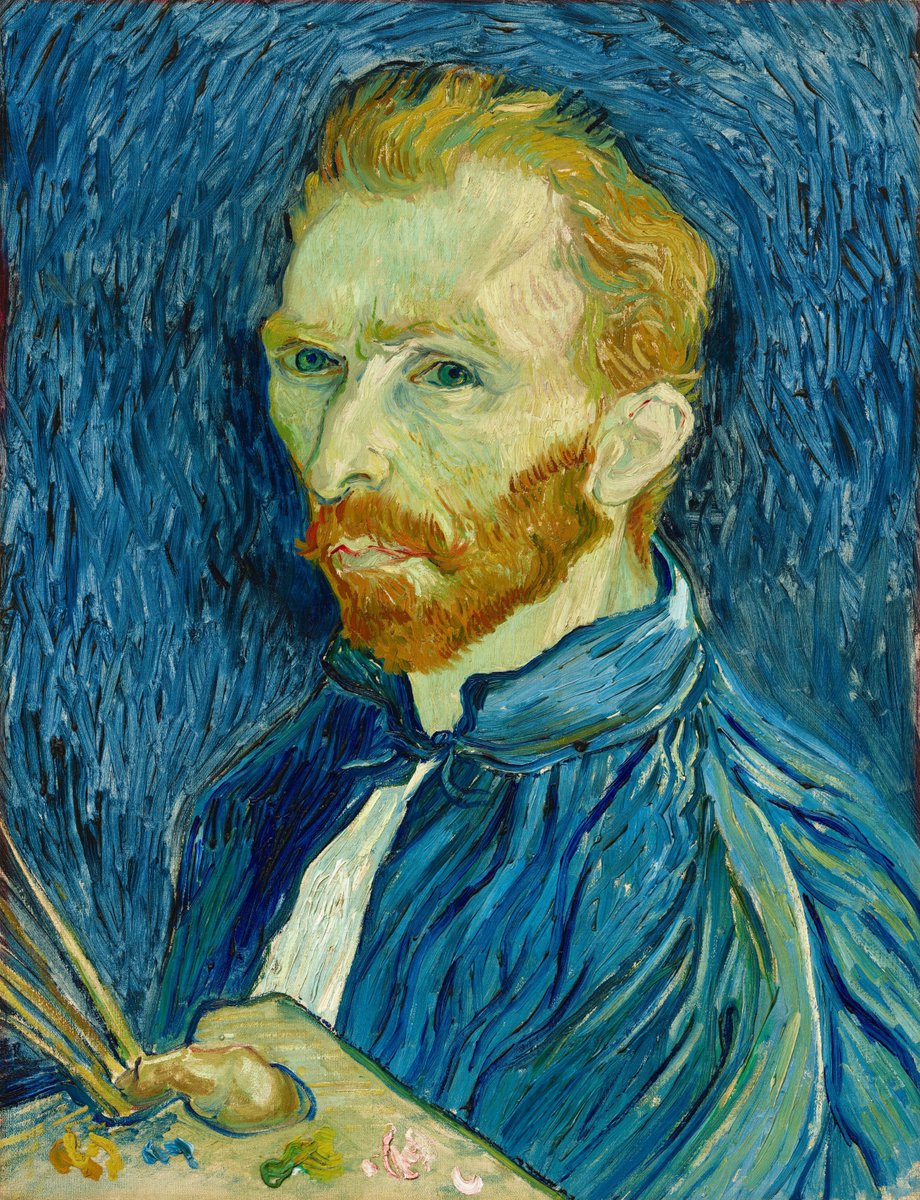
- Van Gogh’s final self-portraits, painted in 1889, offer a rare glimpse into a pivotal moment in his life. Created during his stay at the psychiatric institution in Saint-Rémy, these works move beyond likeness. They reflect a period of illness, recovery, and deep
- ‘You can see that some hard work has been done.’ Vincent van Gogh, Arles, 1888. Gardens, wheatfields, boats, portraits, listed one after another in a letter to Theo. This reveals not only quantity, but a period of intense productivity. Vincent worked rapidly, often finishing a
- Two chairs. Two artists. Van Gogh turned personalities into objects. He painted himself and Gauguin without showing either of them in person. Can you tell who is who?
- Theo’s support gave Vincent the chance to become an artist. While Vincent struggled to find his place in life, Theo believed in him, emotionally and financially. His encouragement and support allowed Vincent to fully focus on learning to draw and paint, long before anyone else
00:00