Can It Actually Work? Synthesizing Functional CAD Mechanisms
arXiv preprint · 2026
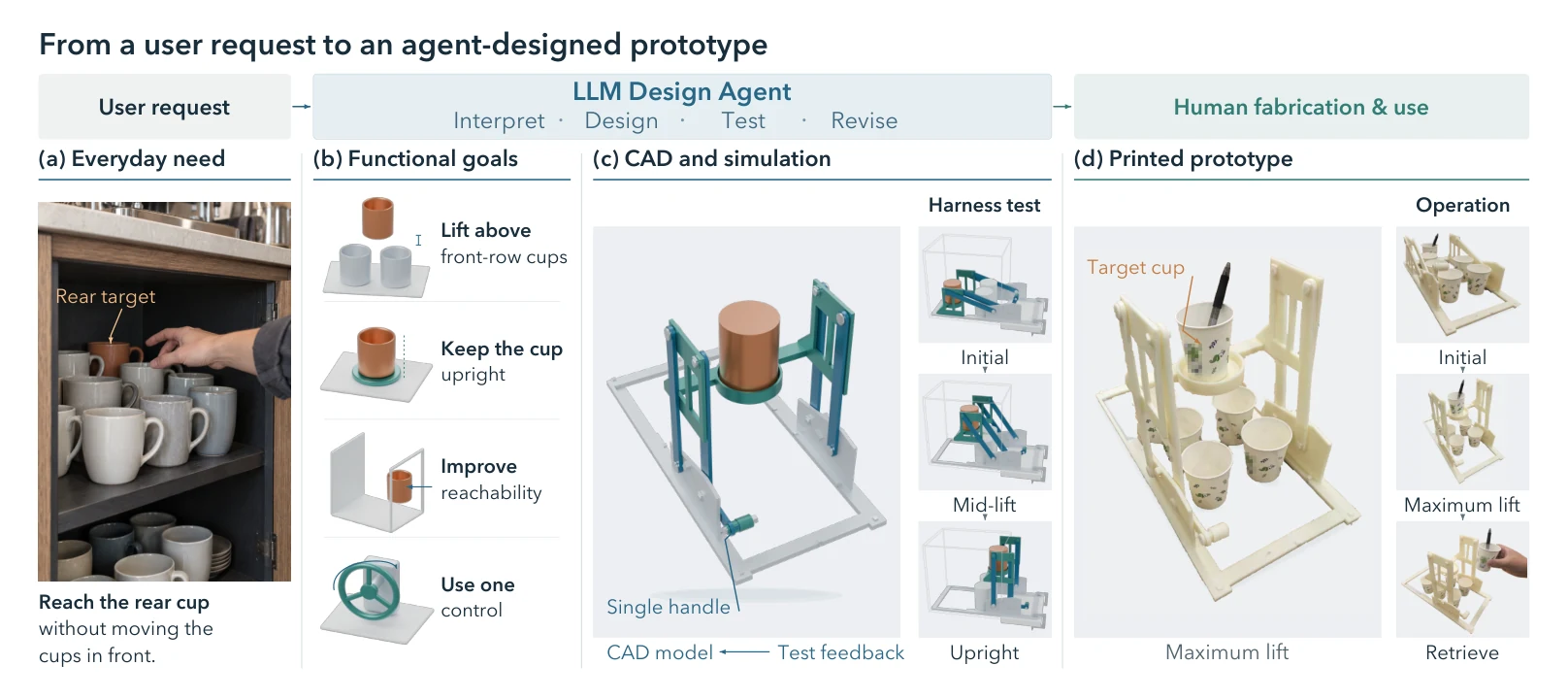
LLM agents design and revise functional CAD mechanisms using candidate-specific physics tests, evaluated across 46 mechanism families in FunCADBench.
I am a Ph.D. student at The Chinese University of Hong Kong, working with Weiyang Liu at Sphere Lab.
My research focuses on training and adapting foundation models, especially post-training, parameter-efficient adaptation, and model geometry. I study how models acquire new capabilities while retaining existing ones.

Previously, I worked on 3D vision and generative modeling, including research at NVIDIA. I received my master’s and bachelor’s degrees from Zhejiang University, where I worked with Deng Cai.
New preprint: FunCAD studies how LLM agents design working CAD mechanisms with physics feedback.
New preprint: DepthBench studies how residual connections enable effective computational depth.
PEFT-Arena accepted to EMNLP Findings; BesiegeField accepted to EMNLP Main (Oral).
Symbolic Graphics Programming accepted to TMLR.
AdaHuman accepted to ICCV. Recognized as an Outstanding Reviewer at CVPR.
arXiv preprint · 2026
LLM agents design and revise functional CAD mechanisms using candidate-specific physics tests, evaluated across 46 mechanism families in FunCADBench.
arXiv preprint · 2026
A controlled benchmark of how residual connections turn architectural depth into effective computation, comparing width–depth trade-offs under fixed parameter budgets and training recipes.
Findings of EMNLP 2026
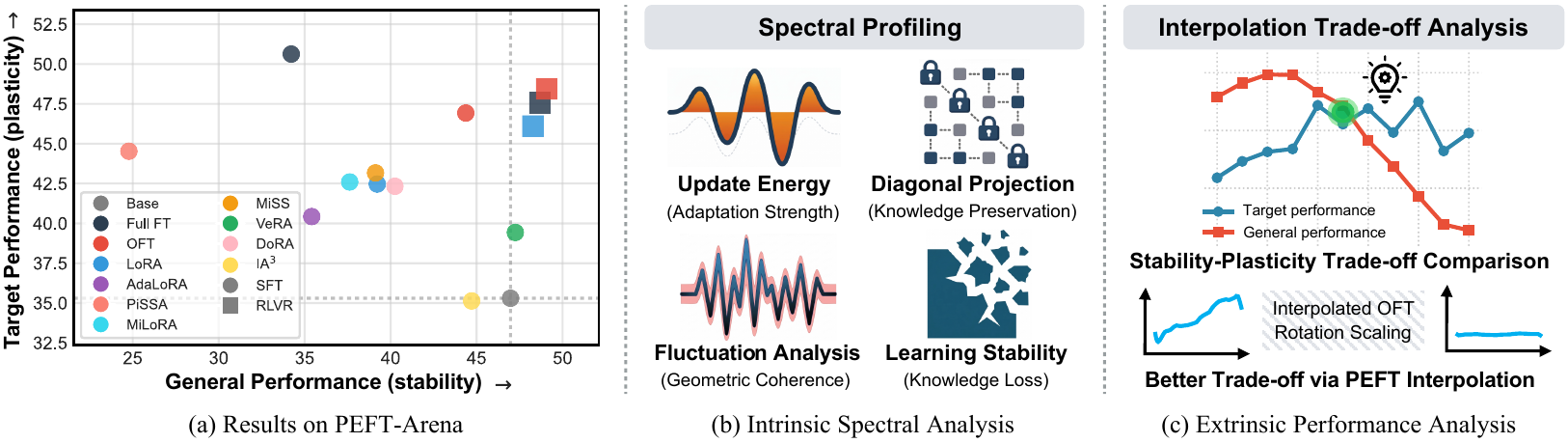
Evaluating what models learn and what they retain—and studying the geometry of parameter-efficient updates under supervised and reinforcement-learning post-training.
EMNLP 2026 · Main Conference · Oral
A physically grounded testbed in which LLM agents write machine-construction programs, simulate their behavior, and refine designs using physical feedback.
Open-source project · 2026
Deployment-aligned RL with a frozen low-precision base and trainable adapters, enabling trillion-scale post-training on a single GPU node.
TMLR · 2026
Benchmarking symbolic graphics generation and improving it with reinforcement learning from renderability checks and cross-modal visual rewards.
ICCV · 2025
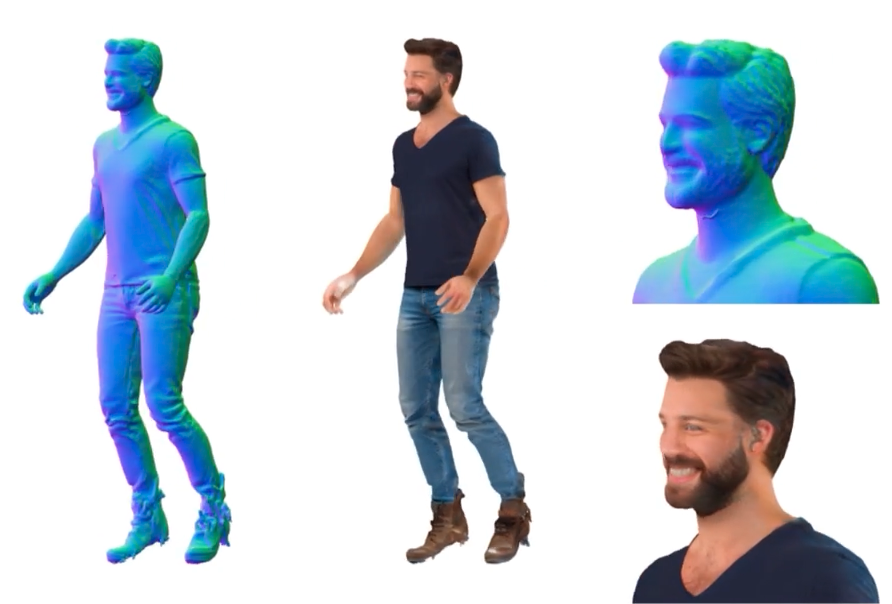
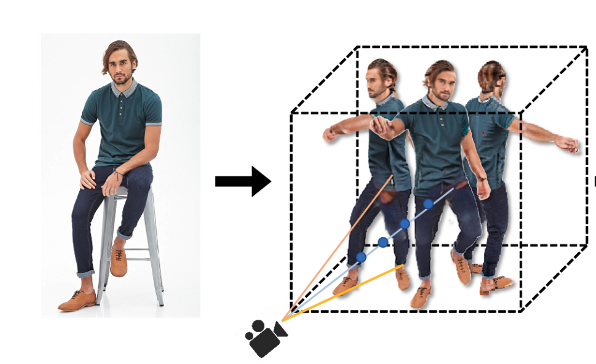
Detailed, animation-ready 3D humans from a single image using pose-conditioned joint diffusion and compositional 3D Gaussian refinement.
3DV · 2024
Reconstructing detailed, textured clothed humans from a single image with textual guidance and a personalized text-to-image prior.
CVPR 2024 · Highlight
Animatable Gaussian avatars with implicit mesh learning for text-driven 3D human generation.
3DV · 2024
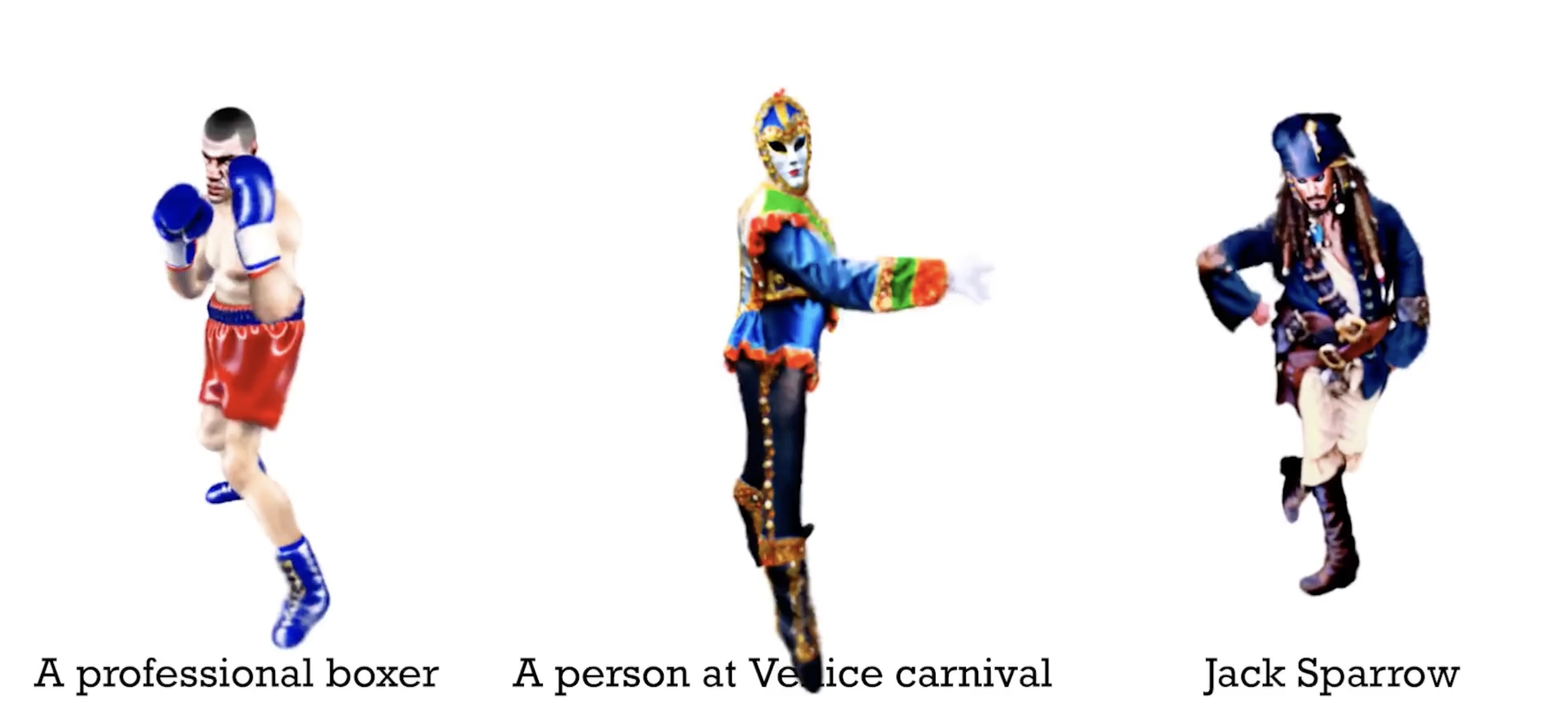
Expressive, animatable 3D avatars generated from text descriptions.
ICCV · 2023
One-shot animatable avatar reconstruction with geometric and semantic model-based priors.
Waymo Challenge · 2022
First-place solution in the 2022 Waymo Open Dataset Challenge’s camera-only 3D detection track.
ICCV · 2021
Fine-grained feature fusion in transformers for sharp, temporally coherent video inpainting.
Ph.D. student, Computer Science and Engineering · Advisor: Weiyang Liu
M.Eng., Software Engineering · Advisor: Deng Cai
B.Eng., Computer Science · Chu Kochen Honors College
Research assistant · Yandong Wen
Research intern · Ye Yuan and Umar Iqbal
Research intern, Creative AI · Hongwei Yi
Earlier research internship at SenseTime Research.
Outstanding Reviewer, CVPR 2025.
Reviewer for CVPR, ICCV, ECCV, BMVC, KDD, TVCG, SIGGRAPH, and ACM Multimedia.