
Face Features Detector: See What Your Face Actually Measures.
Free AI face analysis covering 8 features — face shape, eye shape, symmetry, color season, nose shape, lip shape, forehead shape, and skin tone. Upload a photo, get real measurements, not guesses. Nothing ever leaves your device.
Whether you’re choosing glasses, planning a haircut, matching a foundation shade, or just curious what an objective measurement of your face would actually say, Face Features Detector answers the specific question you’re actually asking — instead of one vague “beauty score” that doesn’t tell you anything useful.
Face analysis isn’t one question. It’s eight.
Most AI face analyzer tools online bundle everything into one vague “beauty score” or a single blurry result. Face Features Detector does the opposite: it treats face shape, eye shape, symmetry, color season, nose shape, lip shape, forehead shape, and skin tone as eight separate, independently measured questions — because that’s what they actually are. A hairstyle recommendation built for your face shape and a foundation shade built for your undertone are solving completely different problems, even though both start with the same photo.
That’s the entire premise behind this facial feature analyzer: precise, single-purpose measurement over one-size-fits-all guessing. Every tool runs its own dedicated analysis, and every result comes with the actual measurements behind it — not just a label, but the “why” underneath it.
Built for real decisions, not just curiosity
🛍️ Shopping for glasses or a new haircut
Face shape and eye shape are the two features with the strongest, most evidence-backed connection to which frames and cuts will actually suit you — this is where an accurate measurement pays off most directly.
💄 Matching foundation or building a color palette
Skin tone and color analysis solve the exact problem behind “why does this foundation shade look slightly off” — undertone is the biggest single factor, and it’s one most people have never actually measured.
💇 Stylists, makeup artists, and content creators
Having an objective, repeatable starting point for a client or an audience beats eyeballing it — especially for borderline cases where two people might genuinely disagree on a face shape by eye alone.
🔍 Anyone simply curious
Not every visitor has a purchase decision in mind — plenty of people are just curious what an objective read of their own face actually says, and that’s a completely valid reason to use any of these tools.
Three steps. No downloads, no account.
Upload or capture a photo
Choose any of our 8 tools, then upload an existing photo or use your camera directly in the browser.
AI maps your facial landmarks
A facial landmark model runs entirely on your device, measuring the specific ratios that define whichever feature you’re checking.
Get your measured result
See your classification or score, the exact measurements behind it, and personalized guidance built around your result.
8 Face Features
Each guide encompass detailed knowledge that contributes to your styling.
Face Shape
Oval, round, square, heart, diamond, oblong, or triangle — determined from forehead, cheekbone, and jaw width against face length.
Full guide →Eye Shape
Almond, round, hooded, monolid, upturned, downturned, and more — based on crease visibility, corner angle, and sclera.
Full Guide →Face Symmetry
How closely the left and right sides of your face mirror each other across eyes, brows, nose, mouth, and jaw.
Full Guide →Color Analysis
Your skin, hair, and eye coloring together, sorted into a flattering seasonal color palette for wardrobe and makeup.
Full Guide →Nose Shape
Bridge curve, tip angle, and base width, classified from a front and side profile photo.
Full guide →Lip Shape
Full, thin, wide, heart, round, top-heavy, or bottom-heavy — the feature with the most direct makeup payoff.
Full Guide →Forehead Shape
Height and width, feeding directly into your face shape result and useful for bangs or fringe decisions.
Full Guide →Skin Tone
Warm, cool, neutral, or olive undertone — the biggest single factor in whether a foundation shade actually matches.
Full guide →Dedicated Face Features tools.
Each tool below is purpose-built for one feature — not a repurposed general “face scanner” trying to do everything at once.
Face Shape Detector
Oval, round, square, heart, diamond, oblong, or triangle — determined from forehead, cheekbone, and jaw width against face length.
Try the Detector →Eye Shape
Almond, round, hooded, monolid, upturned, downturned, and more — based on crease visibility, corner angle, and sclera.
Try the detector →AI Age Calculator
A computer-vision detection layer finds and aligns your face, then a trained model estimates your age from it.
Try AI Analyzer →Face Shape Quiz
Answer 7 quick questions about your forehead, cheekbones, jawline, and chin to get an instant face shape suggestion
Try AI Analyzer →Nose Shape Detector
Bridge curve, tip angle, and base width, classified from a front and side profile photo.
Try AI Analyzer →Why people choose Face Features Detector
🔒 Genuinely private, not just “we promise”
Every analysis runs using on-device facial landmark detection. Your photo is measured locally in your browser and never transmitted to a server, stored, or shared — a structural guarantee, not a policy you have to trust. Most competing AI face analyzer apps upload your photo to a remote server for processing, which means your image exists somewhere outside your control the moment you hit submit. Face Features Detector was built specifically to avoid that trade-off entirely, even though it’s technically more difficult to build a tool this way.
🎯 Real measurements, not vague scores
Every result shows the actual numbers behind it — width ratios, angles, undertone readings — so you can see exactly why the tool reached its conclusion instead of taking a black-box label on faith. If your face symmetry score comes back lower than expected, you can see precisely which measurement drove that number, rather than being left to wonder what a flat percentage actually means.
💸 Free, with no account required
Because processing happens on your device rather than our servers, there’s no per-analysis cost to recoup — which means no paywall, no sign-up, and no limit on how many times you use any tool. Run the same tool ten times with ten different photos if you want to see how lighting or angle changes your result; there’s no meter counting against you.
📐 Honest about uncertainty
Face analysis isn’t always clean-cut — a meaningful share of results sit near the boundary between two categories. We show confidence breakdowns instead of forcing a single answer when the geometry genuinely doesn’t support one. A tool that always sounds completely certain is usually hiding how often real faces don’t fit neatly into one box.
The technology behind the results
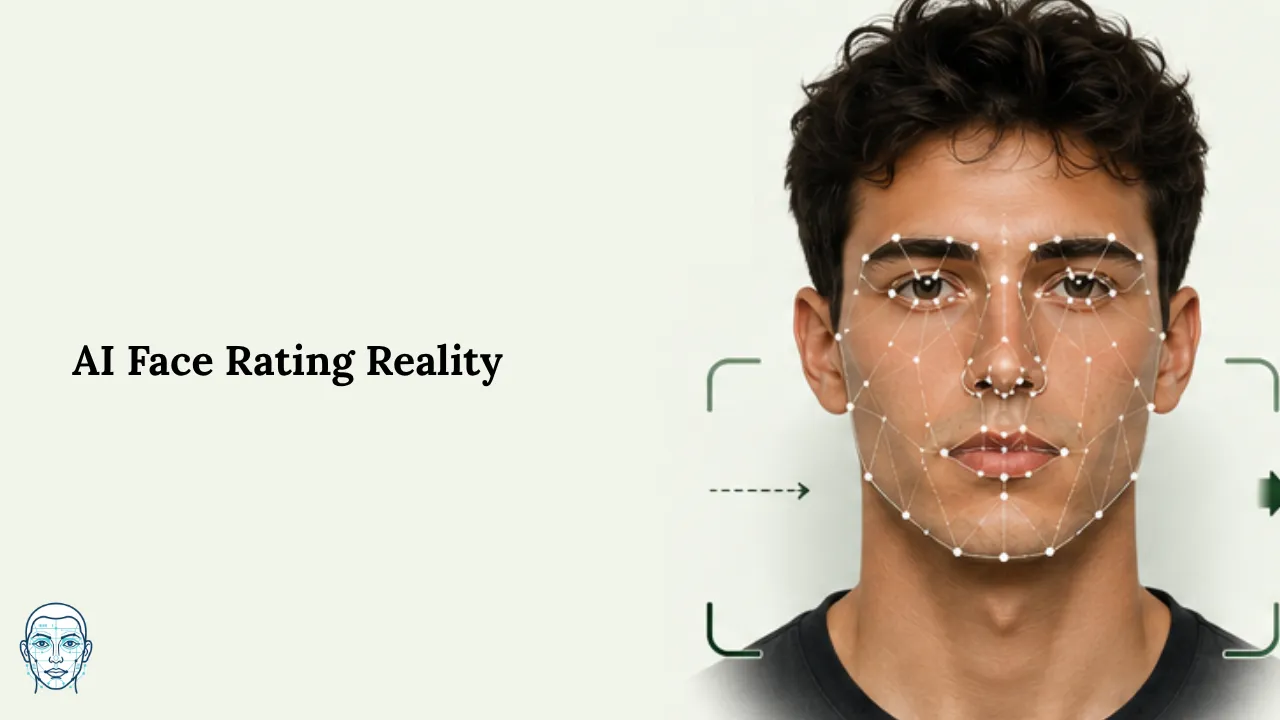
Every tool on Face Features Detector uses a technique called facial landmark detection — an AI model that places dozens to hundreds of reference points across a photographed face: the corners of your eyes, the width of your jaw, the curve of your cheekbones, the shape of your lips. Once those points are mapped, the underlying software calculates precise ratios between them and compares those ratios against known category definitions for whichever feature you’re checking.
This is meaningfully more consistent than judging your own face in a mirror, since the same measurement rules apply every single time, regardless of lighting, mood, or how tired you look that day. It’s also why we can show you a confidence score instead of just a flat label — the math naturally produces a spread across categories, and we show you that spread rather than hiding it.
The most important detail, and the one most AI face analyzer tools don’t advertise clearly: the best implementations of this technology run entirely inside your browser. That means the analysis happens on your own device, using your device’s own processing power — your photo is never uploaded anywhere for the AI to examine remotely.
It’s worth being upfront about what this technology can’t do, too. Facial landmark models measure position, not texture or soft tissue — which is why something like an eyelid crease or a hairline can be harder to detect reliably than a straightforward width or angle measurement. Where that’s the case, we say so directly in the result rather than presenting an estimate with more confidence than it deserves.
Not another one-size-fits-all “beauty score” app
Search “AI face analyzer” and most results fall into one of two categories: apps that upload your photo to a server for processing, or tools that reduce your entire face to a single overall score without explaining what actually drove that number. Neither approach answers a real, specific question.
Generic face scanners
Typically bundle everything into one attractiveness or “beauty” score, often upload your photo to a remote server, and rarely explain which specific measurements produced the result you’re looking at.
Face Features Detector
Eight separate, purpose-built tools, each measuring one specific feature with on-device processing and a visible breakdown of the exact numbers behind your result — built to answer the question you actually came with.
A few things that genuinely affect accuracy
Across all eight tools, the same handful of photo-quality factors matter more than anything else. A clear, front-facing photo with even, natural lighting consistently outperforms a filtered, angled, or dimly-lit one — this holds true whether you’re checking face shape, skin tone, or symmetry. Pulling hair away from your face and forehead helps every tool that depends on the outline of your face or hairline. Avoiding a strong smile keeps proportions closer to their resting state, since smiling shifts cheek and jaw positioning slightly. None of this requires special equipment — just a phone camera, a window for natural light, and a few extra seconds before you hit upload.
Guides for every result
In-depth explainers, comparison charts, and styling guides for every feature we analyze.
Frequently Asked Questions
What is Face Features Detector?
Face Features Detector is a free AI face analysis platform covering eight distinct facial features — face shape, eye shape, symmetry, color analysis, nose shape, lip shape, forehead shape, and skin tone. Each feature has its own dedicated tool rather than being bundled into one generic “face scanner.”
Is Face Features Detector really free?
Yes — every tool is free to use, with no account, sign-up, or payment required. Because analysis happens on-device rather than on a server, there’s no per-use cost that would otherwise require a subscription.
Is it safe to upload my photo?
Yes. Every tool processes your photo entirely within your own browser using on-device facial landmark detection — your photo is never uploaded to a server, stored, or shared with anyone.
How accurate is AI face analysis?
Landmark-based measurement is far more consistent than self-assessment in a mirror, since it applies the same rules every time. It’s still an estimate rather than a diagnosis — a meaningful share of results land near the boundary between two categories, which we show as a confidence breakdown rather than hiding.
Do I need to analyze all 8 features?
No. Each tool answers a different question, so most people only need one or two. For glasses or a haircut, start with Face Shape and Eye Shape. For foundation or building a color-coordinated wardrobe, Skin Tone and Color Analysis matter more.
Does Face Features Detector work on mobile?
Yes — every tool works directly in your mobile browser, using either an uploaded photo or your phone’s camera, with no app download required.
How is Face Features Detector different from other AI face analyzers?
Most AI face analyzer tools either upload your photo to a remote server or reduce your face to one vague overall score. Face Features Detector does neither — every tool processes your photo on-device and measures one specific feature at a time, showing the actual numbers behind each result rather than a single unexplained label.
Can I use Face Features Detector for professional purposes, like styling clients?
Yes, plenty of stylists and makeup artists use tools like this as an objective starting point before a consultation. Just keep in mind results are a measurement-based estimate meant to inform a conversation, not a substitute for professional judgment or a client’s own preferences.
What photo works best for accurate results?
A clear, front-facing photo with even natural lighting, hair pulled back from your face, and a relaxed, neutral expression gives every tool on this site its most accurate read. Side-profile photos are specifically needed for parts of the nose shape analysis.
See what your face actually measures.
Free, private, and built on real facial landmark measurement — not a guess. Pick any of the 8 tools and get your first result in under a minute.
Try FF-Tools Free →