Image

Take Tool Photo, Generate Custom Gridfinity Bin

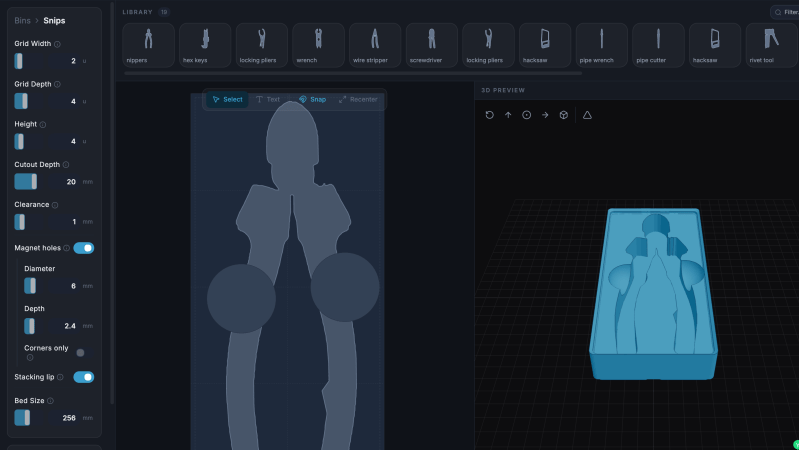
What if the organization and storage benefits of tool shadowing could be had and improved with a modular, semi-automated process? Tracefinity attempts that by generating custom Gridfinity bins from photos of tools, and has quite a few nifty features that are worth a look.

Image
Maintaining a library of tools makes it easy to create project-based custom layouts.

The basic workflow is this: place one or more tools on a sheet of paper, take a photo, then upload the photo and have the system trace and save the outline and add it to a private tool library. When one is ready to create some bins, use the library of saved tool outlines to generate custom Gridfinity layouts.

If you’re unfamiliar, Gridfinity is a modular system of standardized bins and baseplates designed with 3D printing in mind, making it an ideal match for highly-customized organization tasks and a particularly natural fit for a tool-tracing system like this one.

The idea of taking a photo of a tool and generating a custom bin is a compelling one, and a couple years ago we covered a project that did just that. Tracefinity seems like a natural evolution of the idea, and includes handy features like easy design adjustments, optional magnet holes, and we really like the concept of a tool library from which individual tools are scanned once then later selected to create specific, project-based layouts.

Tracefinity takes advantage of new software capabilities like machine learning to improve and streamline the tracing process, but that doesn’t mean it relies on any external services. It can be entirely self-hosted and by default uses a local, CPU-friendly object detection model for tool tracing. There is an option to provide a API key to use Google Gemini instead, but it’s not required. It can come in handy for especially complex tool outlines or dealing with non-ideal source photos, however.
Image

Print Your Own Standardized Wire Spool Storage

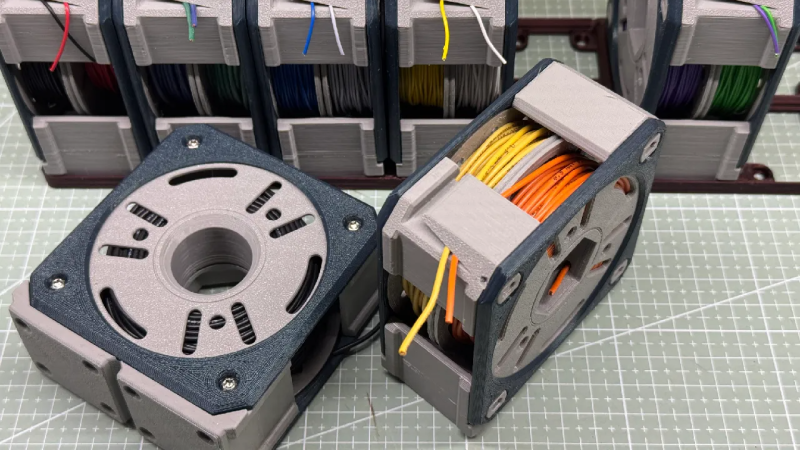
Hardware hackers tend to have loads of hookup wire, and that led [firstgizmo] to design a 3D printable wire and cable spool storage system. As a bonus, it’s Gridfinity-compatible!

Image
The slot to capture loose ends is a nice touch, and the units can be assembled without external hardware.

There are a lot of little design touches we love. For example, we like the little notch into which the wire ends are held, which provides a way to secure the loose ends without any moving parts. Also, while at first glance these holders look like something that goes together with a few screws, they actually require no additional hardware and can be assembled entirely with printed parts. But should one wish to do so, [firstgizmo] has an alternate design that goes together with some M3 bolts instead.

Want to adjust something? The STEP files are included, which we always love to see because it makes modifications to the models so much more accessible. One thing that hasn’t changed over the years is that making engineering-type adjustments to STL files is awful, at best.

If there is one gotcha, it is that one must remove wire from their old spools and re-wind onto the new to use this system. However, [firstgizmo] tries to make that as easy as possible by providing two tools to make re-spooling easier: one for hand-cranking, and one for using a hand drill to do the work for you.

It’s a very thoughtful design, and as mentioned, can also be used with the Gridfinity system, which seems to open organizational floodgates in most people’s minds. Most of us are pinched for storage space, and small improvements in space-saving really, really add up.

Hackaday Links Column Banner

Hackaday Links: July 27, 2025

Sad breaking news late this Sunday afternoon of the passing of nerd icon Tom Lehrer at 97. Coming up through the culture, knowing at least a few of Tom’s ditties, preferably “The Elements” or “Poisoning Pigeons in the Park,” was as essential to proving one’s bona fides as committing most Monty Python bits to memory. Tom had a way with words that belied his background as a mathematician, spicing his sarcastic lyrics with unusual rhymes and topical references that captured the turbulence of the late 50s and early 60s, which is when he wrote most of his well-known stuff. First Ozzy, then Chuck Mangione, now Tom Lehrer — it’s been a rough week for musicians.

Here we go again. It looks like hams have another spectrum grab on their hands, but this time it’s the popular 70-cm band that’s in the crosshairs. Starlink wannabe AST SpaceMobile, which seeks to build a constellation of 248 ridiculously large communication satellites to offer direct-to-device service across the globe, seeks a substantial chunk of the 70-cm band, from 430 to 440 MHz, to control the satellites. This is smack in the middle of the 70-cm amateur radio band allocation here in the US, but covers the entire band for unlucky hams in Europe and the UK. The band is frequently used for repeaters, which newbie hams can easily access using a cheap hand-held radio to start learning the ropes.

Continue reading “Hackaday Links: July 27, 2025”

Image

Create Custom Gridfinity Boxes Using Images Of Tools

Image
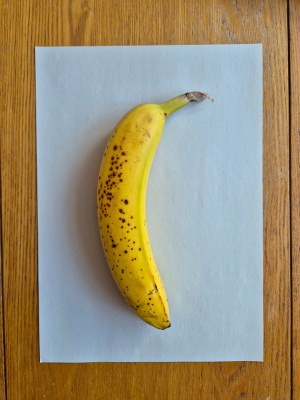
Exhibit A: A standard-issue banana.

We love it when a community grabs hold of an idea and runs wild with it despite obvious practicality issues. Gridfinity by YouTuber [Zach Freedman] is one of those concepts. For the unaware, this is a simple storage system standard, defining boxes to hold your things. These boxes can be stacked and held in place in anything from a desk drawer to hanging off the side of a 3D printer. [Georgs Lazdāns] is one such Gridfinity user who wanted to create tool-specific holders without leaving the sofa. To do so, they made a web application using node.js and OpenCV to extract outlines for tools (or anything else) when photographed on a blank sheet of paper.

The OpenCV stack assumes that the object to be profiled will be placed on a uniformly colored paper with all parts of its outline visible. The first part of the stack uses a bilateral filter to denoise the image whilst keeping edge details.

Image
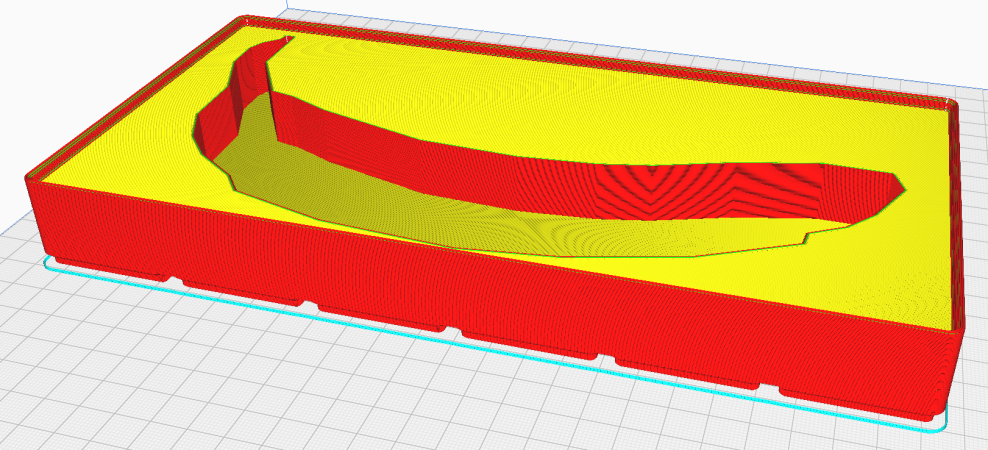
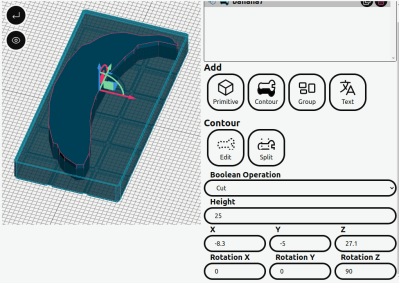
Make a base, then add a banana. Easy!

Next, the image is converted to greyscale, blurred, and run through an adaptive threshold. This converts the image to monochrome, again preserving edge details. Finally, the Canny algorithm pulls out the paper contour. The object outline can be given an accurate scale with the paper contour and paper size specified. The second part of the process works similarly to extract the object outline. The second contour should follow the object pretty accurately. If it doesn’t, it can be manually tweaked in the editor. Once a contour is captured, it can be used to modify a blank Gridfinity base in the model editor.

Continue reading “Create Custom Gridfinity Boxes Using Images Of Tools”