




















Follow us:
Advanced search
           
Browse all EVs
           
Browse all used cars
           
Sell your car, get paid fastFree inspection · fast payment Sell for a higher price Add paultan.org as a preferred source on Google Add
 

Perodua QV-E review - all the good and bad

Sell your car for a higher price, get paid in 24 hours

Latest Stories

  • 2026 Honda City facelift in Malaysia – RS petrol, e:HEV previewed; 10-inch touchscreen, 360-degree cam, BLIS

    2026 Honda City facelift in Malaysia – RS petrol, e:HEV previewed; 10-inch touchscreen, 360-degree cam, BLIS

    Following the opening of the order books for it at the end of last month, the 2026 Honda City facelift is now on the ground in Malaysia, with the B-segment offering making its first public appearance in the Klang Valley in its sedan form at a series of pop-up previews, which runs until Sunday. On show at the one-day showcase today at Alamanda, Putrajaya, was a RS petrol sedan example.

    First unveiled in India in May before making its Southeast Asian debut in Thailand a month later, it’s the second facelift for the fifth-generation version of the sedan, which arrived here in October 2020 before it was replaced by its first facelift, in August 2023.

    The exterior rework for the GN2 this round brings about a sharper front end, with slimmer headlights (bi-LED projectors, as shown by the RS) and a new bumper, with different lower profiles depending on model grades – on the RS, the central air intake has a sharper, upturned design, while the non-RS variants will come with a less edgier downturned styling, flanked by aggressive-looking air curtain elements finished in black.

    2026 Honda City facelift in Malaysia – RS petrol, e:HEV previewed; 10-inch touchscreen, 360-degree cam, BLIS

    The honeycomb grille has also been slimmed down, with the Honda logo now relocated from the grille to the upper part of the body-coloured ‘unibrow’ element. On the RS, there’s a light bar running across the width of the grille, which presumably won’t be seen on the lower grade models.

    Meanwhile, the logo itself continues with the old rectangular badge, not the automaker’s new ‘H’ mark, and interestingly, the unit on the e:HEV (shown at another pop-up display) doesn’t have the blue outline element that the company usually uses to distinguish its hybrids, the unit on the car having a full black background.

    At the back, the shape is a bit more familiar, but some changes dress up the car in a sportier manner, at least in the case of the RS. The trapezoidal tail light design has been carried over, but the unit on the RS now gets an ‘albino’ look, its internal design elements presented in a mix of clear and black, with in red when the lights are on).

    Elsewhere, there’s a redesigned rear bumper, that on the RS dressed with a black grille-like “mesh” centre, a diffuser-like insert, twin “tusks” and vertical reflectors. With plenty of black elements, in this case a trunk spoiler extension, door handles, shark fin antenna and side mirror covers, the RS mimics the Civic RS in visual approach.

    The RS also gets new wheels, in this case turbine-style 16-inch alloys – finished in Berlina Black with a darkened machined face, they are wrapped with 185/55 profile Toyo Proxes R57 rubbers.

    Unlike the exterior, there aren’t that many changes on the inside, but some upgrades have come about. The dashboard trim on the RS moves away from the all-red finish previously to a more textured silver finish (with a red accent line), and it also gains ambient lighting.

    2026 Honda City facelift in Malaysia – RS petrol, e:HEV previewed; 10-inch touchscreen, 360-degree cam, BLIS

    There is also a new, larger 10-inch Display Audio infotainment touchscreen, which we have been told will be found in the V variant onward, with the existing 8.0-inch DA continuing on elsewhere. The new 10-inch screen comes with the 360-degree camera system that was added to the City earlier this year and has now been updated with a multi-view angle and moving object detection interface.

    A switch has been added to the tip of the left steering column stalk to provide users with the ability to cycle through all the angles. Some observations about the floating touchscreen, as noted during the preview – visual clarity of the unit is good, but its angling does feel a tad too slanted.

    Meanwhile, the seat upholstery on the RS has also been revised in terms of presentation – the central stitching on the previous facelift’s front seats has been ditched, the unit now plain, and the reddish contrast perforation surface on the spine seen previously has been relocated, now placed on the sides.

    Elsewhere, the e:HEV RS gets a new wireless mobile charger located on the forward part of the centre console. However, the sports pedals on the new RS versions move to a two-piece set-up, losing the alloy footrest seen previously. Speaking of omissions, the Malaysian-spec City will not get the ventilated seats or sunroof seen in other markets.

    Safety-wise, the City facelift will continue to come equipped with Honda Sensing as standard. The driver assist suite includes autonomous emergency braking, adaptive cruise control with (e:HEV RS-exclusive) stop and go, lane centring assist, road departure mitigation, front departure alert and auto high beam.

    New to the 2026 car is blind spot monitoring with rear cross traffic alert, and this works with the existing LaneWatch camera – still accessible from the right steering column stalk – to now provide alerts to the driver on both sides (camera for left side, blind spot monitor for right side).

    There are no mechanical changes, and so powertrain options continue as they are from before. Petrol models will feature the familiar L15Z 1.5 litre DOHC i-VTEC four-cylinder offering 121 PS at 6,600 rpm and 145 Nm at 4,300 rpm, paired with an Earth Dreams CVT.

    Likewise, the i-MMD system on the e:HEV hybrid is unchanged. The system consists of a primary electric traction motor with 109 PS and 253 Nm providing drive through a single-speed transmission, with an Atkinson-cycle version of the 1.5 litre mill acting as a generator to recharge the battery. The engine, which has 98 PS from 5,600 to 6,400 rpm and 127 Nm between 4,500 and 5,000 rpm, can also clutch in to provide mechanical drive at higher running speeds.

    Some final notes about model grades. The current City facelift is available in five variants (petrol S, E, V and RS, and hybrid e:HEV RS), but word on the grapevine indicates that the range for the new car is set to be trimmed to four. With both RS petrol and e:HEV variants being shown at the pop-up previews, this likely means that one of the petrol variants won’t make the cut.

    2026 Honda City facelift in Malaysia – RS petrol, e:HEV previewed; 10-inch touchscreen, 360-degree cam, BLIS

    As for pricing, nothing has yet been suggested, but for reference, that for the outgoing car starts from RM84,900 for the S grade, moving up to RM89,900 for the E and RM94,900 for the V, with the petrol RS going for RM99,900. The City sedan range tops out with the e:HEV RS, which retails for RM111,900..

    Anoraks will have noted that the ASEAN debut of the City facelift saw the hatchback being launched alongside the sedan. The refreshed City Hatchback is set to make its way here, but it will get its own launch when the time comes.

    GALLERY: 2026 Honda City sedan facelift, petrol RS

    GALLERY: 2026 Honda City sedan facelift, e:HEV RS

     
  • Mitsubishi Pajero lineup to be expanded with two smaller models, including kei car, China-rivalling compact SUV

    Mitsubishi Pajero lineup to be expanded with two smaller models, including kei car, China-rivalling compact SUV

    During the world premiere of the new Mitsubishi Pajero, you might have caught a glimpse of the diamond brand’s plans for a revitalised lineup. President and COO Keisuke Kishiura said the company will offer two more models sitting below the Triton-based regular Pajero, which replaces both the Pajero Sport and the full-fat Pajero that was discontinued in 2021.

    Those models are a “compact SUV and a small SUV”, with silhouettes being shown on screen. The former appears to take the form of a kei car, marking the nameplate’s return to the city car segment since the Pajero Mini.

    This would enable Mitsubishi to field a rival to the Suzuki Jimny (as an aside, the one that we get, sporting fender flares, larger bumpers and a 1.5 litre naturally-aspirated four-cylinder engine in place of a 658 cc turbo triple, is badged the Jimny Sierra in Japan). However, it’s unlikely that the Pajero-badged model will be built on a similarly rugged ladder-frame chassis, instead likely sharing its unibody underpinnings with the existing eK.

    Mitsubishi Pajero lineup to be expanded with two smaller models, including kei car, China-rivalling compact SUV

    This Pajero Mini was the only Pajero kei car

    Of perhaps more importance is the “small SUV” that is expected to hold much more global appeal – a less massive, less expensive version of the new Pajero. This could take one of two forms, with the first being a shrunken-down ladder-frame model in the vein of the global Jimny and the new Toyota Land Cruiser FJ.

    This would retain a prodigious amount of off-road capability, meaning that the Pajero moniker loses none of its credibility. A body-on-frame model could also be twinned with the forthcoming Nissan Xterra, meaning that it may be offered in the US as the Montero. However, such a car would limit its appeal to outdoorsy types, and with fuel prices being as volatile as they are these days, efficiency is a massive consideration for mainstream buyers.

    As such, we could see the smaller Pajero move back to a unibody construction, perhaps utilising the Outlander and Nissan X-Trail‘s Common Modular Family (CMF) platform. This would put the car in the bustling C-segment, which includes not just traditional Japanese rivals like the Honda CR-V but also the horde of Chinese competition that Mitsubishi has ceded plenty of market share to over the past few years.

    Mitsubishi Pajero lineup to be expanded with two smaller models, including kei car, China-rivalling compact SUV

    The Pajero iO could form the template for a unibody SUV with rugged styling

    Again, Mitsubishi has had previous experience, offering the Pajero iO from 1998 to 2007. This Pininfarina-designed unibody soft-roader had full-sized Pajero looks but used the Lancer’s petrol engines. It was even offered in Malaysia at one point, replacing its larger sibling.

    A new version would thus enable Mitsubishi to capitalise on the resurgence of the ruggedly-styled SUV. Chinese examples like the electric iCaur V23 and especially the very popular Jetour T2 ape the designs of legacy 4x4s while offering consumers the comfort and efficiency of a unibody vehicle. With the Pajero’s brand equity still strong, the company could steal sales from those cars and transform its fortunes.

    Over to you now. Which form would you like the small Pajero to take – a tough, go-anywhere compact 4×4 or a passenger car-based model with all the looks but with a greater focus on on-road driving? Let us know in the comments below.

    GALLERY: 2027 Mitsubishi Pajero

     
  • Vietnam proposes gradual ban of petrol, diesel vehicles in Ho Chi Minh City low emissions zone from July 2027

    Vietnam proposes gradual ban of petrol, diesel vehicles in Ho Chi Minh City low emissions zone from July 2027

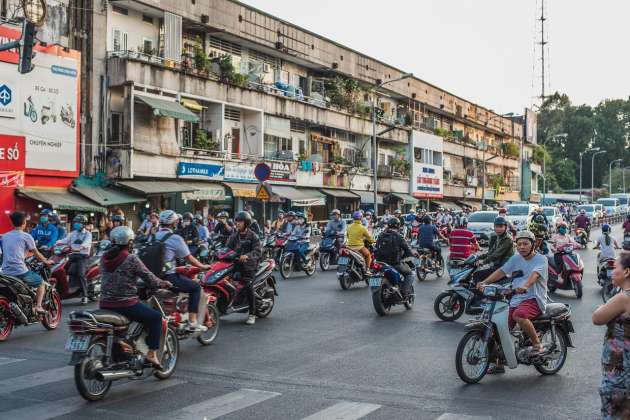
    Ho Chi Minh City in Vietnam has proposed a gradual ban of petrol and diesel-powered vehicles from downtown areas as part of a planned low emissions zone (LEZ) pilot programme from July 2027, reported Vietnamese newspaper Thanh Nien (via The Star).

    Under the proposal, the LEZ pilot programme would begin in the core downtown area and the new Thu Thiem urban area which covers around 390 hectares, according to the report.

    After a two-year pilot, the low emissions zone would be expanded to include the city’s Ring Road 2 from early 2029. This area already restricts heavy trucks and sleeper buses from the inner city during certain hours.

    Buses are the first group of vehicles required to convert, and these will need to be powered by electricity or clean energy when entering the LEZ from 2027. Buses will be followed by motorcycle taxis and delivery motorcycles, while other vehicle categories, such as taxis face later deadlines.

    This proposal for a low emissions zone in Ho Chi Minh City is subject to further review before it is formally approved, according to the report. In June, Hanoi planned to phase out petrol-powered ride-hailing motorcycles from low emissions zones, starting with voluntary restrictions before moving to a ban from January next year.

     
  • Geely to install 1,800 kW DC fast chargers to rival BYD Flash Charging – coming to global markets?

    Geely to install 1,800 kW DC fast chargers to rival BYD Flash Charging – coming to global markets?

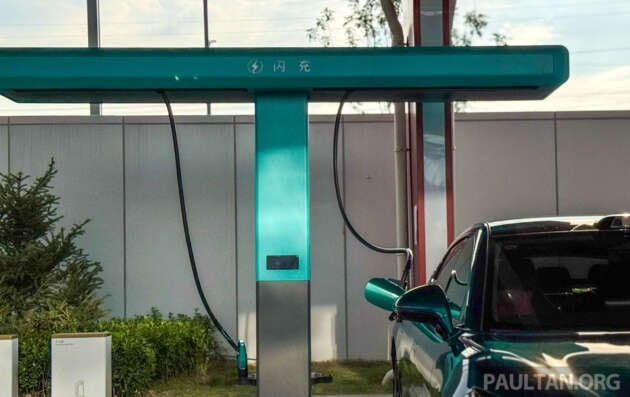
    It seems like Geely is not content with sitting at the sidelines watching BYD steal the headlines with its Flash Charging technology. The company is wading in with ultra-fast chargers of its own – and they could very well be headed to global markets, Autocar reports.

    Speaking to the British publication at the launch of the EX2 (known to you and me as the Proton eMas 5) there, country managing director Michael Yang said the UK was high on the priority list of overseas locations to receive the technology, given its status as a key market.

    “In China we are already developing an ultra-fast charging facility, where efficiency is rated at 1800 kW,” said
Yang. “And we also have Zeekr cars that are capable of ultra-rapid 900-volt charging on the roads, so the speed of development is very high.”

    Geely to install 1,800 kW DC fast chargers to rival BYD Flash Charging – coming to global markets?

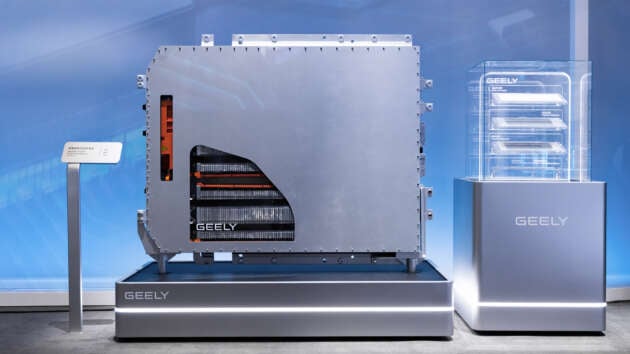
    A Geely solid-state battery shown at Auto China 2026

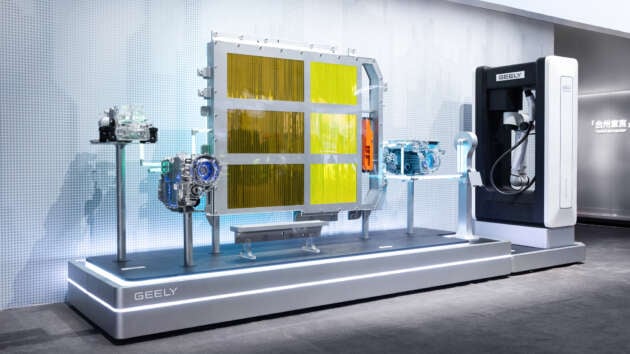
    The full potential of these chargers will be harnessed by solid-state batteries, which Yang said were “just a few months away” in China. This ties in with another report by CarNewsChina, which stated that Geely is set to begin pilot deployment of these batteries next year, boasting an energy density of 500 Wh per kg and enabling a range of over 1,000 km.

    More recently, the portal stated that Geely is working on a 1,000-volt electrical architecture that would help its cars surpass currently-achievable charging performance. The company is already touting BYD-beating charge times with a 900-volt Lynk & Co 10 sedan, which is capable of being charged from 10 to 80% in just five minutes and 32 seconds.

    Yang told Autocar not to expect these ultra-fast chargers to be rolled out in the UK so soon. “We are ambitious, but we also have to have a more pragmatic approach to the UK than China, because it’s very different.

    Geely to install 1,800 kW DC fast chargers to rival BYD Flash Charging – coming to global markets?

    BYD’s 1,500 kW Flash Charging is the current gold standard

    “First, we’re aiming to give as many people access to charging as we can, with a wall charger at home. And then we will work to introduce cars capable of ultra-fast charging, which will require us to bring ultra-high-kilowatt chargers here. To do that, we will first have to work with charging partners.”

    Geely’s 1,800 kW chargers will use a similar battery energy storage system (BESS) to BYD’s Flash Charging to enable the high speeds without straining the local grid. The technology will be rolled out by its partners and will be open to all EVs and not just Geely’s, because “a charging station is just like a petrol station, and no petrol station can make enough money by providing a service to only brand or model.”

    While BYD has earmarked Malaysia as one of the first ASEAN markets to receive Flash Charging, don’t hold your breath for Proton-branded 1,800 kW chargers anytime soon, because the national carmaker likely won’t have any models that can take advantage of them. Instead, any sort of local deployment will likely fall on the shoulders of Zeekr, as a competitor to Denza that is rolling out those Flash Charging stations here.

     
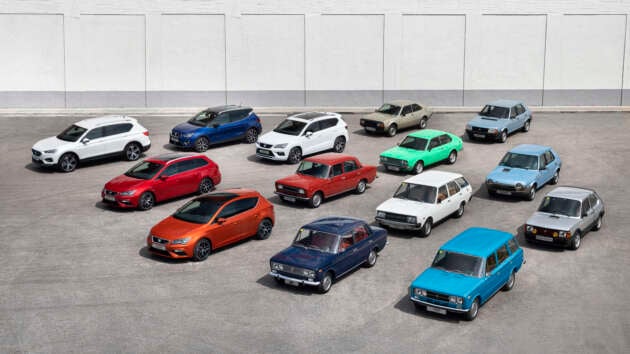
  • Seat to be axed by 2029 in favour of Cupra – report

    Seat to be axed by 2029 in favour of Cupra – report

    We all know Volkswagen has seen much brighter days, and now it looks like the latest casualty of its cost-cutting drive is going to be one of the group’s many brands. WirtschaftsWoche reports, citing sighted internal documents, that Seat could be discontinued by end-2029 and pass the baton to Cupra, its performance arm that became a separate brand in 2018.

    “The Seat brand will be phased out in an orderly and cost-efficient manner by the end of 2029 at the latest, while ensuring continued support for existing customers (e.g., service) and the fulfilment of existing obligations,” the VW document allegedly said, adding that “continuing Seat in its current form would tie up additional resources.”

    Seat and Cupra together sold a record 586,300 vehicles in 2025, but Cupra sales were up 33% while Seat’s fell 17% (how could they not when there are no new Seat models?), and VW reportedly wants Cupra alone to eventually shift 500,000-600,000 cars annually.

    Of course, Volkswagen is also going through a massive restructuring programme that could see four German factories close, as many as 100,000 jobs affected and annual production capacity cut from 12 million to nine million units.

    Seat to be axed by 2029 in favour of Cupra – report

    An acronym for Sociedad Española de Automóviles de Turismo, the Seat brand was born in 1950 as a joint venture between Spain’s Instituto Nacional de Industria, private banks and Fiat. Seat cars were pretty much rebadged Fiats until the Volkswagen Group acquired the brand from the Spanish government in 1986.

    The first road-going Cupra was the 1996 Seat Ibiza GTI 2.0 16V Cupra Sport, and in the years that followed, there were hot Cupra versions of the bigger Leon as well.

    The first stand-alone Cupra vehicle was 2018’s Ateca, followed by 2020’s Leon and Formentor, 2021’s Born EV, 2023’s Tavascan EV, 2024’s Terramar and 2026’s Raval EV. As for Seat, its last launches were 2020’s Ateca facelift and fourth-gen Leon.

    We do have to add that the VW Group’s latest release on the unanimous approval of Future Plan 2030 by the supervisory board mentions nothing about Seat being axed, but the number of models will be halved across the group.

     
  • Car thieves can steal cars in two minutes – Bukit Aman

    Car thieves can steal cars in two minutes – Bukit Aman

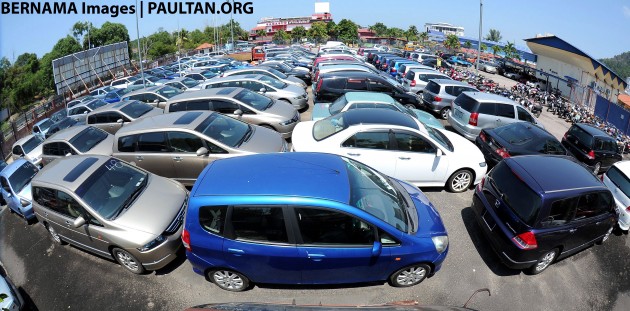
    The increasing sophistication of vehicle theft syndicates have resulted in thefts of high-value vehicles that can occur in two to five minutes, New Straits Times has reported.

    Vehicle theft syndicates were increasingly targeting vehicles with high market demand, said PDRM federal criminal investigation department director Datuk M. Kumar. These syndicates have been known to use rental vehicles and specialist electronic equipment in order to bypass vehicle security systems, he said.

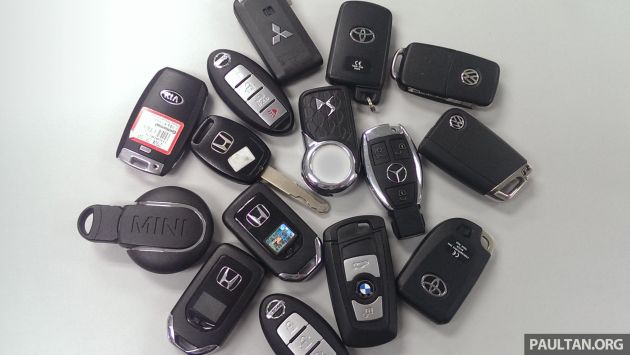
    “Among these are devices capable of programming or generating vehicle keys depending on the model and its security features. This shows that theft methods are evolving alongside technology,” the department director said.

    The destination of the vehicles stolen depends on the type of vehicle, and the syndicate’s objective, he said. Some, such as motorcycles and lorries, are taken to illegal workshops to be dismantled for parts, while three main patterns have been identified for the theft of cars.

    Car thieves can steal cars in two minutes – Bukit Aman

    Cars will be modified, including having their identities altered, dismantled for parts, and are also smuggled out of Malaysia, including to Thailand, Kumar said.

    The PDRM federal criminal investigation department director said that vehicle owners should not rely solely on factory-fitted security systems, and should instead adopt multiple safeguards against vehicle theft.

    These include ensuring that vehicles are always locked and never left unattended with the engine running, and to ensure that keys are kept securely, and use tracking and notification features where available, he said.

    Overall, vehicle theft in Malaysia has shown a downward trend, dropping 11.3% from 14,201 cases in 2024 to 12,599 cases in 2025, according to New Straits Times.

     
  • Mazda 3 1.5L High Plus gallery in Malaysia – fr RM121k; RM45k cheaper than 2.0L but no sunroof, less power

    Mazda 3 1.5L High Plus gallery in Malaysia – fr RM121k; RM45k cheaper than 2.0L but no sunroof, less power

    Here’s a full gallery of the Mazda 3 1.5L High Plus, a variant of the fully-imported-from-Japan C-segment model that was launched in November last year. The car pictured here is the hatchback (Mazda calls this body style a ‘Liftback’) version, although you can also get this variant as a sedan at no extra charge.

    On that mention, the 1.5L High Plus currently goes for RM120,620 on-the-road without insurance, which is RM1,000 more than when it was first introduced. This is as per the most recent price list on the official Mazda Malaysia website, which also includes the 2.0L High Plus Sedan/Liftback as well as the 2.0 High Plus SV Liftback – the latter referred to as the Ignite Edition.

    The 2.0L models see no change to their price tags, with the High Plus going for RM166,059 while it is RM175,059 for the High Plus SV. We should point out that the 2.0 High Sedan that was previously available at RM156,059 has been dropped from the line-up.

    Comparing the High Plus variants, the 1.5L version is cheaper than the 2.0L by RM45,439. Even with the lower price point, you aren’t giving up a whole lot unless it is power that you crave. This is because the Skyactiv-G 1.5 litre naturally-aspirated inline-four petrol engine in the 1.5L High Plus serves up 118 hp and 153 Nm of torque.

    By comparison, the 2.0 litre version of the Skyactiv-G mill in the 2.0L variants makes 162 hp and 213 Nm. A Skyactiv-Drive six-speed automatic transmission sending drive to the front wheels is the default pairing across the board, with other standard powertrain features being i-Stop (start/stop idling) and G-Vectoring Control Plus (GVC Plus).

    Aside from the engine, the only other difference between the 1.5L and 2.0L High Plus variants is that the former lacks a powered sunroof. Everything else is identical, including the 18-inch alloy wheels (silver for the sedan, grey for the hatchback) with 215/45R18 tyres, automatic LED headlamps with signature illumination, rain-sensing wipers, keyless entry and start, front and rear parking sensors, a seven-inch instrument cluster display and dual-zone climate control.

    The list continues with a head-up display (coloured, windshield-projected), 10-way powered driver’s seat with two-position memory function, leather upholstery (black for the sedan, burgundy for the hatchback), a 10.25-inch touchscreen infotainment system with wireless Android Auto and Apple CarPlay, eight speakers, a reverse camera, seven airbags and the usual array of passive safety systems (ABS, EBD, DSC, traction control, brake assist, hill start assist, EPB with auto brake hold).

    Same goes for the ADAS suite, which includes functions like steering-responsive headlamps (AFS), auto high beam (HBC), blind spot monitoring, rear cross traffic alert, lane departure warning, lane keep assist, driver attention alert, front and rear autonomous emergency braking (Smart Brake Support), Mazda Radar Cruise Control (MRCC) with stop and go and Cruising & Traffic Support (CTS).

    A five-year/100,000-km warranty and free maintenance (includes labour, parts and lubricants) package and Activ-e window tint film are included with each Mazda 3 purchased. Available colours are Soul Red Crystal, Platinum Quartz, Polymetal Gray, Jet Black and Machine Gray, with further options like Ceramic Metallic, Deep Crystal Blue and Snowflake White Pearl being reserved for 2.0L variants.

     
  • MATTA Fair, Sept 4-6 at MITEC – take the free Rapid KL shuttle bus from KL Sentral; save time and win prizes

    MATTA Fair, Sept 4-6 at MITEC – take the free Rapid KL shuttle bus from KL Sentral; save time and win prizes

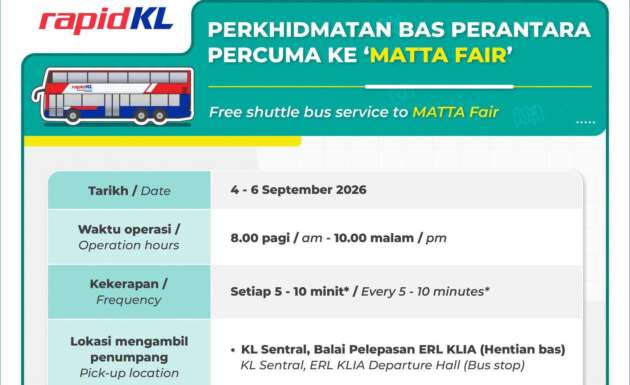
    The MATTA Fair is back and will be happening this weekend, starting today, September 4-6. Expect throngs of people heading to the Malaysia International Trade and Exhibition Centre (MITEC, it hasn’t been at PWTC for some time now) looking for travel and tour deals – the traffic congestion the event causes is infamous.

    The jam heading to the travel fair is one thing, looking for parking is another. If you want to join the crowd, you can at least chalk off one of those hassles by taking a free shuttle bus to MITEC. Provided by Rapid KL, it runs from 8am in the morning all the way to 10pm at night, on all three days of the show.

    Frequency is every five to 10 minutes subject to traffic conditions. The pick-up/drop-off area is KL Sentral’s ERL departure hall side – look for the bus stop.

    To further incentivise the use of the free bus, show organiser Malaysian Assocation of Tour & Travel Agents is offering ‘interesting prizes’. To join, scan the QR codes at the waiting areas or in the buses and follow the instructions. For the rest of us not partaking in the frenzy, be calm and drive safe.

     
  • Sime Motors leadership visits BYD Shenzhen HQ – drawing closer to potential CKD partnership in Malaysia?

    Sime Motors leadership visits BYD Shenzhen HQ – drawing closer to potential CKD partnership in Malaysia?

    The Sime Motors leadership team visited BYD headquarters in Shenzhen, China to “strengthen collaboration, facilitate knowledge transfer and in-depth discussions” to support the Chinese brand’s continued growth in the Malaysian market, according to Sime Motors’ post on LinkedIn.

    The visit by the Sime Motors leadership team “provided an opportunity for both teams to align on strategic priorities and identify areas of mutual interest in support of Malaysia’s growing mobility ecosystem”, and Sime Motors “remains committed to working closely with our partners to drive the continued development of the automotive industry in Malaysia”, it said.

    This could signal growing potential for a CKD (local assembly) partnership between Sime Motors and BYD.

    Sime Motors leadership visits BYD Shenzhen HQ – drawing closer to potential CKD partnership in Malaysia?

    In May, BYD’s VP and GM of Asia Pacific Auto Sales Division Liu Xueliang visited the Sime Motors Inokom plant in Kulim, Kedah, hinting at plans for Sime Motors to be BYD’s local contract-assembly partner. This would be in line with MITI’s new rules, which is for EV manufacturers to work more with local suppliers.

    Prior to this, the Chinese manufacturer initially stated August last year its plans for an assembly plant in Tanjong Malim, Perak.

    Progress for the BYD Malaysia Tanjong Malim plant appeared to have come to a standstill as of March this year, and this was followed shortly thereafter by a statement from MITI in response to claims on social media regarding MITI’s conditions for BYD’s manufacturing license as well as other related policies.

     
  • Carmakers urge US Congress to quickly pass law banning Chinese cars, given “scale and urgency”

    Carmakers urge US Congress to quickly pass law banning Chinese cars, given “scale and urgency”

    The Alliance for Automotive Innovation (AAI), which represents General Motors, Ford, Toyota, Volkswagen, Hyundai, Honda, Stellantis and other major carmakers, yesterday urged the US Congress to pass legislation barring Chinese vehicles before year-end, Reuters reports.

    “Right now, Chinese automakers are dumping subsidised vehicles ​with connected software and hardware around the world.

    “This hasn’t happened inside the US yet, but given the scale ⁠and urgency of this threat, we urge you to enact a Chinese vehicle, software and hardware ban before adjourning ​this year and make this policy the law of the land,” AAI president and CEO John Bozzella wrote Congress in a letter seen by Reuters.

    On July 22, the Senate commerce committee passed a bill – the Connected Vehicle Security Act – that proposes a ban on the import, production, sale and resale of vehicles from manufacturers in which Chinese shareholders hold more than 15% (funnily enough, this includes Mercedes-Benz). The bill is pending full Senate approval.

    Carmakers urge US Congress to quickly pass law banning Chinese cars, given “scale and urgency”

    Bozzella said passing the bill “will send a clear and bipartisan message that China’s strategy to dominate global automotive manufacturing will be met with a national security ​response from the American government.”

    In July, the AAI urged the committee to consider as part of the legislation explicitly prohibiting the commerce department from granting ‌specific ⁠authorisations to Chinese carmakers such as “BYD, Chery, SAIC Motor and others subsidised by the Chinese Communist Party to manufacture, sell or import connected vehicles to the US”, according to a previously unreported letter.

    Ohio Republican Bernie Moreno and Michigan Democrat Elissa Slotkin proposed legislation to codify a regulation imposed by the Biden administration that effectively ​bans all Chinese carmakers from ​selling or building passenger ⁠vehicles in the US and takes other steps to prevent China from entering the US light-duty market.

    In June, Polestar, which is majority-owned by Geely, announced that it would stop selling cars in the US from the 2027 model year. The Bureau of Industry and Security – an agency of the US commerce department – decided not to grant the Sweden-based carmaker an authorisation under the Connected Vehicle Rule. However, sister brand Volvo got an exemption in May, although it said it must still meet the rule’s requirements.

     
  • Proton exports highest since Jan 2011, includes Geely models built in Tg Malim for better economies of scale

    Proton exports highest since Jan 2011, includes Geely models built in Tg Malim for better economies of scale

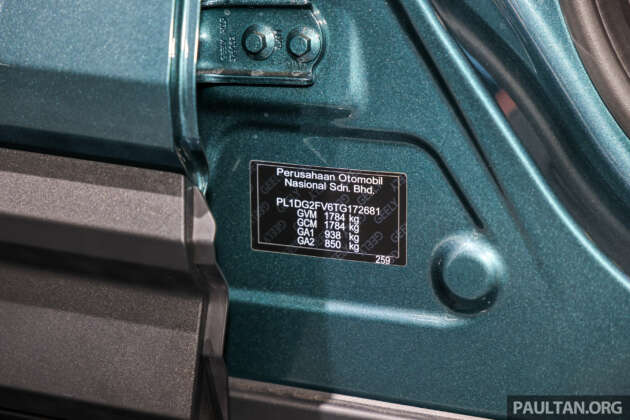
    In its press release of its overall sales performance for August, Proton also announced it had exported the most number of cars since January 2011. All told, the national carmaker sent out 2,477 units last month, raising year-to-date export sales to 6,059 units – more than what the company shipped out throughout the whole of 2025.

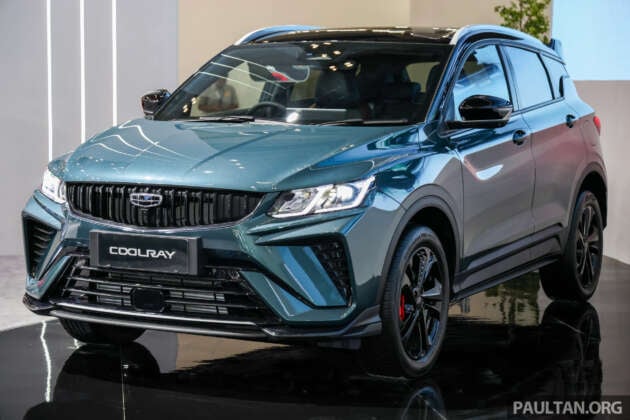
    The overall figure includes both Proton- and Geely-badged cars, all assembled in Tanjong Malim. The firm began building cars with Geely branding for global markets in late 2024, starting with Vietnam before expanding to South Africa, Indonesia and even Mexico this year. Current export models include the Coolray (X50), Emgrand (S70) and Okavango (X90).

    Proton said this measure helps it achieve greater economies of scale, as well as aiding its vendors by it buying more parts. It added that it expected more orders for the rest of the year, with the Saga set to be exported to the Philippines as a yet-to-be-named Geely model in the fourth quarter.

    Proton exports highest since Jan 2011, includes Geely models built in Tg Malim for better economies of scale

    “Proton assembling vehicles in Malaysia for Geely markets is one of the key focus areas [for] growing export sales. These activities boost assembly line utilisation at the factory while contributing to increased volume for Proton’s vendors and contributing positively to Malaysia’s balance of trade,” said deputy CEO Abdul Rashid Musa.

    As we’ve previously reported, this move is, in a roundabout way, a fulfilment of a promise Geely made to turn Proton into an export hub for the region and beyond – even if the scale turned out to be far smaller and the cars now wear Geely badges.

    GALLERY: 2026 Geely Coolray at GIIAS 2026

     
  • Not a Saga Cross – Volvo EX30 Cross Country spotted in transit; tougher-looking EV finally launching in Malaysia?

    Not a Saga Cross – Volvo EX30 Cross Country spotted in transit; tougher-looking EV finally launching in Malaysia?

    Click to enlarge

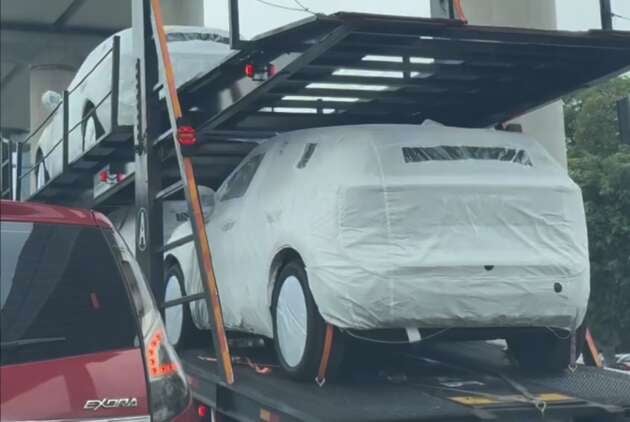
    Guys, not everything under wraps is the Proton Saga Cross. And this ‘Saga Cross OTW guys’ sighting by Miorsabri on Threads certainly isn’t the upcoming Saga-based budget SUV – the shape under the white wrapper looks far too good compared to the proportions of the AMA02 test mules seen so far.

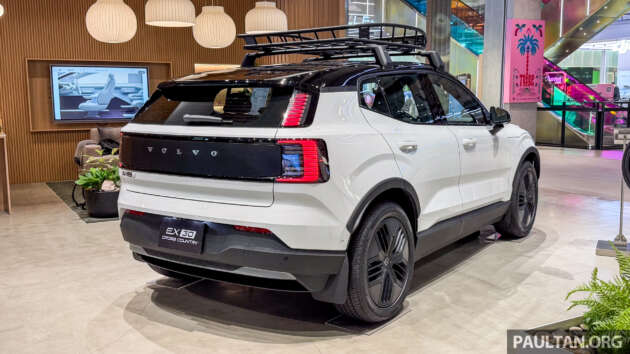
    Fortunately, the wrapper is quite thin and you can see the SUV’s tailgate design, which reveals its true identity. The black bar across the lights and the wordmark in the middle leaves us in no doubt that this is the Volvo EX30 Cross Country, the more rugged version of Volvo’s junior EV, the EX30.

    Not a Saga Cross – Volvo EX30 Cross Country spotted in transit; tougher-looking EV finally launching in Malaysia?

    Volvo Car Malaysia told us back in October 2025 that the EX30 Cross Country would be coming in early 2026, so there’s been a delay. But since units are in transit now, perhaps it’ll be launching soon?

    Cross Country revives a name from the ’90s that eventually evolved into ‘XC’ for Volvo’s SUVs. The EX30 CC sports a blacked-out section between the lights at both ends. Look closely at the front black piece and you’ll see artwork based on the topography of the Kebnekaise mountain range in Sweden – a cool and subtle nod to the brand’s home country.

    Elsewhere, the CC also wears plastic front and rear skid plates, wheelarch extensions and mudguards, plus a unique set of 19-inch wheels. The suspension has been raised slightly; together with marginally higher profile tyres, the EX30 Cross Country has a 19 mm ground clearance advantage over the standard car.

    Not a Saga Cross – Volvo EX30 Cross Country spotted in transit; tougher-looking EV finally launching in Malaysia?

    Inside, it’s largely the same as the regular EX30, but with fitting rubber overmats that allows you to wash dirt off easily. The boot floor has a rubber cover too, perfect for dirty gear from the trail.

    The taller suspension and chunkier styling comes at an aero cost. WLTP range drops from 450 km for the 428 PS/534 Nm dual-motor EX30 Ultra Twin Performance to 427 km for the similarly-powered Cross Country. The larger tyres also means a slightly slower 0-100 km/h time, but 3.7 seconds is still crazy.

    So, what do you think of the Volvo EX30 Cross Country’s tougher looks?

    GALLERY: Volvo EX30 Cross Country in Thailand

    GALLERY: Volvo EX30 Cross Country official images

     
  • Kedah JPJ seizes lorry in Jerlun, road tax expired 1997

    Kedah JPJ seizes lorry in Jerlun, road tax expired 1997

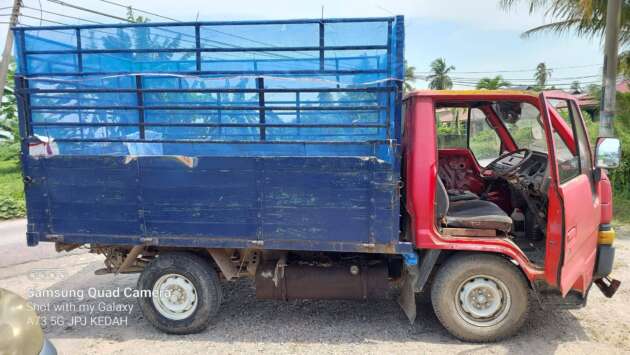
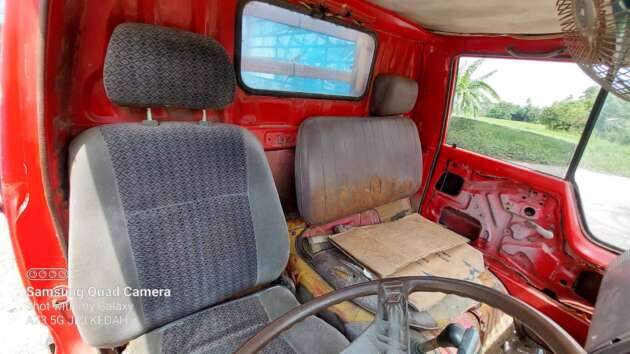
    Kedah Road Transport Department (JPJ) seized a commercial lorry after it was found to have committed several serious offences during an enforcement operation in the Jerlun area. Checks by enforcement officers found that the vehicle’s motor vehicle licence (LKM, or road tax) had expired since 1997.

    The lorry also did not have valid insurance coverage, while its mandatory Puspakom inspection had also expired. More significantly, the lorry driver was found to be operating the vehicle without a valid Goods Driving Licence (GDL).

    Kedah JPJ seizes lorry in Jerlun, road tax expired 1997

    JPJ Kedah said the seizure was carried out to prevent vehicles that do not meet the required eligibility and documentation requirements from continuing to operate on public roads. The department reminded commercial vehicle operators and drivers to ensure that their LKM, insurance coverage, Puspakom inspection and vocational licences remain valid before operating their vehicles.

    JPJ has stepped up enforcement against heavy and commercial vehicles in recent years, particularly over expired road tax, lack of valid insurance and expired periodic inspections.

     
  • Bank Negara maintains OPR at 2.75% after Sept 2026 meeting – hire purchase rates likely to stay unchanged

    Bank Negara maintains OPR at 2.75% after Sept 2026 meeting – hire purchase rates likely to stay unchanged

    For the fifth time this year, Bank Negara Malaysia (BNM) has maintained the overnight policy rate (OPR) at 2.75%. This was announced following its monetary police committee (MPC) meeting on September 3, 2026, with the central bank saying it considers the rate to consistent with the outlook of continued price stability and sustainable economic growth.

    The OPR at 2.75% has been in place since July 9, 2025, nearly 14 months ago, when it was reduced by 25 basis points from 3% then. This month’s MPC meeting is the penultimate for 2026, with the final one set to take place on November 5, 2026.

    Bank loans are affected by the OPR, with a lower rate making money less expensive to borrow and vice versa. With the OPR staying at 2.75%, borrowers are likely to enjoy largely unchanged financing rates for car loans (hire purchase typically). The lowest the OPR has been was during the Covid-19 pandemic when it dropped to 1.75% on July 7, 2020 and remained that way until May 11, 2022.

    According to the central bank, Malaysia’s economy expanded by 5.7% in the first half of 2026. This is despite a challenging global environment, with growth being driven by strong exports and sustained domestic demand. It added that headline and core inflation in the first seven months of the year averaged 1.8% and 2% respectively

    Here is BNM’s full statement:

    Monetary Policy Statement September 2026

    At its meeting today, the Monetary Policy Committee (MPC) of Bank Negara Malaysia decided to maintain the Overnight Policy Rate (OPR) at 2.75%.

    The latest indicators point to resilient global growth, supported by strong global tech expansion, improving supply conditions and stable labour markets. Inflation has edged lower in recent months but is expected to remain elevated given the lagged pass-through of energy costs to consumer prices. Going forward, while uncertainties surrounding the Middle East conflict will continue to weigh on global growth amid continued inflationary pressures, the impact is expected to be cushioned by sustained tech-related spending. Downside risks to global growth remain, stemming from prolonged geopolitical tensions, tighter global financial conditions and concerns over valuations in financial markets. Upside potential includes stronger tech spending, faster-than-expected recovery in supply chain conditions and pro-growth policy measures in key economies.

    The Malaysian economy expanded robustly by 5.7% in the first half of 2026, despite the challenging global environment. Growth was driven by stronger-than-expected export performance amid sustained domestic demand. The solid growth momentum is expected to bring 2026 growth to around 5%, and the economy’s sound fundamentals are expected to keep growth resilient in 2027. This will be driven by the external sector, which will be lifted by improved global prospects and robust demand for electrical and electronics (E&E) goods, as well as continued strength in tech-related non-E&E exports and sustained tourist spending. Stable labour market conditions and ongoing investment activity will remain supportive of domestic demand. This growth outlook remains subject to downside risks from a prolonged conflict in the Middle East and lower commodity production. Upside potential to growth could arise from better-than-expected global growth, stronger technology-related export demand and higher tourism activity.

    Headline and core inflation in the first seven months of the year averaged 1.8% and 2% respectively. Despite elevated costs and strong economic growth, the pass-through to consumer prices has been contained by domestic policy measures and stable demand conditions amid limited spillover of external sector strength to wages. Developments surrounding the Middle East conflict remain uncertain, as elevated global commodity prices continue to exert upward pressure on cost conditions. As these developments remain fluid, the MPC will remain vigilant to cost pressures and domestic demand conditions given their impact on the inflation outlook.

    At the current OPR level, the MPC considers the monetary policy stance to be consistent with the outlook of continued price stability and sustainable economic growth. The MPC will remain vigilant to ongoing developments and assess the balance of risks surrounding the outlook for domestic inflation and growth.

     
  • Xiaomi Auto to enter Europe in 2027 – MOUs signed with 8 German dealers, not Tesla-style direct sales?

    Xiaomi Auto to enter Europe in 2027 – MOUs signed with 8 German dealers, not Tesla-style direct sales?

    Xiaomi has taken its first concrete step towards selling cars outside China. At the IFA Berlin 2026 consumer electronics show, the company signed memoranda of understanding with eight German dealer groups, confirming that its official European market entry will happen in 2027, starting with Germany before expanding to other markets on the continent.

    The eight groups are Ernst Dello, Autohaus Dinnebier, Emil Frey Germany, Fett & Wirtz Automobile, Hahn Automobile, LUEG Mobility, Penske-Jacobs Innovation and SPT Avior – established names in German automotive retail, with Emil Frey being one of Europe’s largest dealer groups. The MOUs are non-binding for now, and Xiaomi has yet to disclose which models will be sold, local pricing, store counts or sales territories.

    “Xiaomi Auto is committed to long-term investment in Europe,” said Yu Liguo, Xiaomi vice president and head of its international business, adding that local partnerships are central to the company’s expansion strategy. The carmaker already has an R&D centre in Munich, and it launched its global automotive website and international social media channels in late August.

    The obvious candidates for export are the SU7 sedan – which has racked up over 500,000 deliveries in China since its launch – and the YU7 SUV, which famously logged 240,000 locked-in orders within 18 hours of going on sale.

    Also in the stable are the SkyNomad N70 and N90, extended-range electric SUVs that would sidestep Europe’s patchy charging coverage outside the big cities. In total, Xiaomi has delivered more than 700,000 cars in China to date.

    Dealers, not direct sales – and what that means for Malaysia

    Perhaps the most interesting takeaway isn’t the where, but the how. In China, Xiaomi’s retail network is a hybrid – it runs its own stores and delivery centres in major cities, supplemented by authorised dealer partners operating on an agency basis, with ordering and pricing controlled centrally by Xiaomi. For its first export market, however, it has gone straight to established franchised dealer groups – suggesting that Xiaomi is happy to lean on third-party retail partners abroad rather than building a capital-heavy, Tesla-style company-owned network in every new country it enters.

    Xiaomi Auto to enter Europe in 2027 – MOUs signed with 8 German dealers, not Tesla-style direct sales?

    Which brings us to our shores. Back in July, we spotted a Xiaomi job listing on LinkedIn for a government relations manager (automotive) based in Greater Kuala Lumpur – a role that involves dealing with MIDA, MITI, MARii and customs on tax incentives, and advising on “CKD & CBU market operations”.

    Group president William Lu has said Xiaomi will begin its global EV expansion by 2027, and with Europe now formally pencilled in for that year and groundwork seemingly being laid here, Malaysia may not be far behind.

     
  • Carro Care body & paint promo – 30% off full car respray from RM2,100, free naxPro kit worth RM270

    Carro Care body & paint promo – 30% off full car respray from RM2,100, free naxPro kit worth RM270

    Faded clear coat, swirl marks, that one scratch you’ve learned to ignore – paint is usually the first thing to make a perfectly good car feel old. A full respray fixes all of that in one go, returning that showroom shine for a fraction of what a new car would cost you.

    If you’ve been putting it off, Carro Care’s body & paint promo runs until October 31, 2026. A full car respray is going for 30% off, priced from RM2,100 – and every respray comes with a set of naxPro car grooming products worth RM270, so you can keep that fresh coat looking its best long after your car rolls out of the paint booth.

    Booking is simple – click here, fill in your name and contact details, and the Carro Care team will get in touch to sort out your quote and slot.

    The work is done at Carro Care’s dedicated body & paint centre in Taman Perindustrian Puchong.

    VIDEO: Perodua Myvi full car respray

    Still on the fence? Watch what a full respray did for this Perodua Myvi – the owner sent it in for the complete treatment, and the before-and-after speaks for itself.

    Remember, the 30% discount and free naxPro kit are only on the table until October 31, 2026submit your details here to lock in the promo price.

     
  • Proton sold 22,632 units in August 2026 – 22.7% up from July, best ever monthly domestic sales volume, YTD 141k

    Proton sold 22,632 units in August 2026 – 22.7% up from July, best ever monthly domestic sales volume, YTD 141k

    Proton has announced its sales numbers for August 2026, with the automaker reporting that total group sales (including exports as well as eMas and smart brands) reached 22,632 units, which the company says is its best overall monthly performance since January 2010.

    The automaker’s total domestic sales (without exports) for the month was also the highest ever achieved in its history. The difference can be explained by export numbers – it could be likely that Proton’s group sales in January 2010 was propped up by exports of the rebadged Youngman Gen2 models to China.

    In any case, the figure for August represents a 22.72% – or 4,190 units – increase from the 18,442 units the automaker delivered in July. Year-to-date (YTD) sales for the first eight months of 2026 are now 141,421 units, which is 40.2% higher than the corresponding period in 2025. It estimates that its overall market share to be 27.9% for the month, while its YTD volume stands at 25.6% of the total industry volume (TIV).

    In terms of model specific numbers, no surprise to find the Saga yet again continuing to lead the way for the brand, with 7,347 units shifted last month. While this was 467 units (or 5.98%) less than the 7,814 units accomplished in May, the YTD figure of nearly 60,000 units keeps the model 33.3% ahead of that managed during the same period last year.

    As for the S70, sales passed the 3,000-unit mark for the first time, with 3,235 units delivered in August, an increase of 378 units (or 13.2%) from the 2,857 units achieved in July. Last month’s numbers brought the model’s YTD figure to 17,953 units.

    Meanwhile, 2,274 units (19,910 units YTD) of the X50 were sold in August, a slight dip of 17 units (or 0.74%) from the 2,291 units sold in July. Sales of the X90 MC amounted to 471 units last month, an increase of 30 units (or 6.8%) over the 441 units delivered in July. The automaker said that while total sales is comparatively small in the overall scheme of things, the model remains 64% ahead of its 2025 numbers for the same period.

    As for the brand’s electrified products, combined sales of the eMas 5, eMas 7 and eMas 7 PHEV reached 6,047 units, bringing the YTD sales for the range to 27,860 units. The lion’s share came from the eMas 5, with the 4,818 units sold in August setting a new national record for monthly volume from a single EV model. The eMas 7 managed 613 units last month, while the eMas 7 PHEV contributed to the total with 616 units.

    “By achieving the highest monthly domestic sales volume in Proton’s history, we have reached an important milestone that reflects the confidence customers place in our products and services,” said Proton deputy CEO Datuk Abdul Rashid Musa.

    “At the same time, we are making strong gains in our export business, particularly in the area of assembling vehicles for our partner Geely, while on-going efforts by the eMas team have resulted in the brand taking a dominant market share in the EV market. As a result, Proton is well-placed to reach its year-end volume and financial goals, benefitting the entire local automotive ecosystem as a whole,” he added.

     
  • Hanging MRT grounding cable in Cheras damages cars, injures motorcyclist – train operations safe, unaffected

    Hanging MRT grounding cable in Cheras damages cars, injures motorcyclist – train operations safe, unaffected

    There was an incident in Cheras this morning, where an earthing cable was hanging from the MRT Kajang Line’s elevated track. The stray cable, between Sri Raya and Bandar Tun Hussein Onn stations, damaged a few vehicles passing below, according to Rapid KL.

    The public transport operator said in a statement that it was informed that a motorcycle rider was injured. The rider was given emergency assistance before being ferried by ambulance to Hospital Kajang for further treatment.

    Rapid KL said that upon receiving information about the incident, its technical team went to the location to inspect and take immediate action. The stray cable was moved to ensure that it no longer poses a risk to motorists. They found that the elevated track’s structure and systems involved in train operations were not affected, and the MRT Kajang Line was safe to operate normally.

    “Rapid KL is cooperating closely with the highway operator and authorities to get further information, and perform a through investigation on the matter. Early investigations at the location found that the earthing cable was cut, and there’s a possibility of cable theft.

    “Rapid KL takes this incident seriously and will give full cooperation in investigations. The safety of passengers, road users and the public are always our priority,” the company said in a statement.

     
  • 2026 BYD Atto 3 Performance teased for Malaysia – AWD with 449 PS, 570 Nm, 470 km WLTP, limited units only

    2026 BYD Atto 3 Performance teased for Malaysia – AWD with 449 PS, 570 Nm, 470 km WLTP, limited units only

    When the facelifted BYD Atto 3 was launched in Malaysia in June, it was missing the all-wheel-drive range-topper, instead being offered only in front-wheel-drive Ultra and rear-wheel-drive Premium trims. Well, it turns out the AWD was to be offered later, as teased by Sime Motors dealer Beyond Auto.

    The car, called the Performance, will make its public debut on September 10 at selected Beyond Auto showrooms, with only limited units being made available. It shares the Evo mechanical makeover with the Premium, with the addition of a front motor pushing outputs to 449 PS (330 kW) and 570 Nm of torque.

    This is 136 PS (100 kW) and 190 Nm more than the already plenty brisk RWD car, pushing this milquetoast electric SUV from zero to 100 km/h in a scarcely believable 3.9 seconds on its way to a top speed of 200 km/h.

    BYD Atto 3 Premium

    As per the Premium, the Performance has a 74.8 kWh Blade LFP battery, although the extra performance means its WLTP-rated range drops from 510 km to 470 km. Part of the under-the-skin revamp is an 800-volt electrical architecture, boosting DC fast charging power to 220 kW for a 10 to 80% top-up in just 25 minutes.

    Beyond the extra power, the Performance should be almost identical to the Premium, sporting the same exterior and interior tweaks and the Evo’s 18-inch turbine alloy wheels. If the European market is any indication, the car should receive a head-up display to go along with the 8.8-inch instrument display and 15.6-inch infotainment touchscreen.

    GALLERY: BYD Atto 3 Premium facelift in Malaysia

     
  • 2027 Mitsubishi Pajero detailed for Australia – Triton-based 4×4 fr RM199k, more expensive than Ford Everest

    2027 Mitsubishi Pajero detailed for Australia – Triton-based 4×4 fr RM199k, more expensive than Ford Everest

    Just a day after the new fifth-generation Mitsubishi Pajero was unveiled to the world, details and pricing for the Australian market have been released. Deliveries of this reborn 4×4 will kick off in December, a few months after it goes on sale in Thailand where it is built.

    A total of four variants will be offered Down Under – the GLS kicks things off in five- and seven-seater versions, priced at AU$68,490 (RM198,600) and AU$69,990 (RM202,900) respectively. The other two models are seven-seater only, these being the Exceed at AU$79,990 (RM231,900) and the GSR at AU$84,990 (RM246,400).

    This means the Pajero undercuts the Toyota Land Cruiser Prado that starts at AU$73,200 (RM212,300), but it’s also more expensive than the likes of the AU$58,990 (RM171,100) Ford Everest and the AU$65,990 (RM191,400) GWM Tank 500. Considering that both these rivals already cost well over RM300,000 in Malaysia, you’re looking at a seriously pricey SUV.

    2027 Mitsubishi Pajero detailed for Australia – Triton-based 4×4 fr RM199k, more expensive than Ford Everest

    All that money buys you a switch from the third- and fourth-gen monocoque construction to a ladder-frame chassis, using the bones of the latest Triton. Essentially, the latest model is a consolidation of the full-fat Pajero and the discontinued pick-up-based Pajero Sport, and its dimensions lay this bare.

    Despite the new model coming some 20 years after its predecessor, it’s only 20 mm longer (4,920 mm), 50 mm wider (1,925 mm) and 20 mm taller (1,910 mm), while its 2,870 mm wheelbase is 90 mm longer. Compared to the last third-gen Pajero Sport, the new Pajero is 95 mm longer, 110 mm wider and 85 mm taller and has a 70 mm longer wheelbase.

    The Pajero also uses the same engine as the Triton – a 2.4 litre 4N16 MIVEC four-cylinder turbodiesel, here with a revised variable geometry turbo and a water-cooled intercooler for a 10 Nm boost in torque to 204 PS and 480 Nm. It’s mated not to a six-speed automatic gearbox but a new eight-speed unit that is lighter and has a wider ratio spread. The engine adopts AdBlue injection and auto start/stop to reduce emissions and fuel consumption.

    2027 Mitsubishi Pajero detailed for Australia – Triton-based 4×4 fr RM199k, more expensive than Ford Everest

    Mitsubishi’s Super Select II four-wheel drive with a mode selector knob is fitted as standard, as are a low-range transfer case and a rear locking differential. You also get Lancer Evolution-style Super-All Wheel Control (S-AWC) torque distribution and Active Yaw Control brake-activated torque vectoring.

    The Pajero is suspended on double wishbones at the front and a five-link setup with a solid axle at the rear, plus coil springs all around. The frame is said to be significantly stiffer than the Pajero Sport’s, equipped with long-travel suspension with wider tracks, high-response dampers and anti-roll bars. Towing capacity reaches 3.5 tonnes braked, supported by Trailer Load Assist (TLA) that stabilises swaying through the throttle and brakes.

    Designed based on the “Grand Charisma” theme, the new Pajero certainly looks tough, inspired by the original model’s solidity. The upright body with prominent flared fenders features T-shaped lighting signatures at the front and rear, playing a welcome and goodbye animation on the top-spec GSR. The “roll bar” forms the C-pillars, aping the thick pillars and raised rear roof of the first-gen three-door.

    2027 Mitsubishi Pajero detailed for Australia – Triton-based 4×4 fr RM199k, more expensive than Ford Everest

    The strong horizontal theme continues on the inside, with chunky Pajero-branded grab handles on either side and a layered hand-stitched dashboard featuring a distinctive segmented design and a hidden upper glovebox. The instrument and infotainment displays, lifted straight from the Nissan Leaf, measure 12.3 or 14.3 inches, the latter incorporating a thin divider.

    The graphics are at least unique to the Pajero, with the centre screen featuring an off-road display with an altimeter and pitch and roll inclinometers, harking back to past Pajero models. You also get wireless Apple CarPlay and Android Auto, a 360-degree camera setup with a transparency view, a 27-watt USB-C ports and a 15-watt Qi wireless charger.

    Base models feature manual seats and water-resistant fabric upholstery, with the Exceed adding leather, power adjustment and heating; the GSR’s seats are ventilated and can be had in a camel (tan) colour scheme. The boot measures 519 litres with the third-row seats folded, with an additional ten litres of underfloor storage.

    The Pajero can also be had with a fridge, a panoramic sunroof, a digital rear-view mirror and a 12-speaker Yamaha Ultimate sound system. Extensive sound insulation and an acoustic windscreen and windows improve refinement.

    Safety-wise, the Pajero comes with eight airbags (including a driver’s knee airbag and a centre airbag) and MiPilot Level 2 semi-autonomous driving. Other driver assists include autonomous emergency braking front and rear, emergency stop assist, blind spot monitoring with collision prevention, front and rear cross traffic alert, front departure alert, pedal misapplication control, traffic sign recognition, a driver attention monitor and a rear seat reminder.

    Although the Pajero is set to be offered in 100 markets globally, don’t hold your breath for it to come to Malaysia. We missed the previous Pajero Sport, and elevated prices and a shrinking pick-up-based SUV market make the business case even harder to justify now. Even if it does get the green light, don’t expect it to arrive until at least a couple of years.


Sell your car for a higher price, get paid in 24 hours

Latest Fuel Prices

PETROL
BUDI 95 RM1.99
RON 95 RM3.82 (+0.05)
RON 97 RM4.30 (+0.05)
RON 100 RM6.35
VPR RM6.98
DIESEL
BUDI RM2.10
EURO 5 B10 RM4.72 (+0.05)
EURO 5 B7 RM4.92 (+0.05)
Last Updated Aug 27, 2026
Fuel price history →

Tools