Our World in Data is a free, nonprofit website with a mission to increase understanding of the world’s largest problems and drive informed action to solve them.
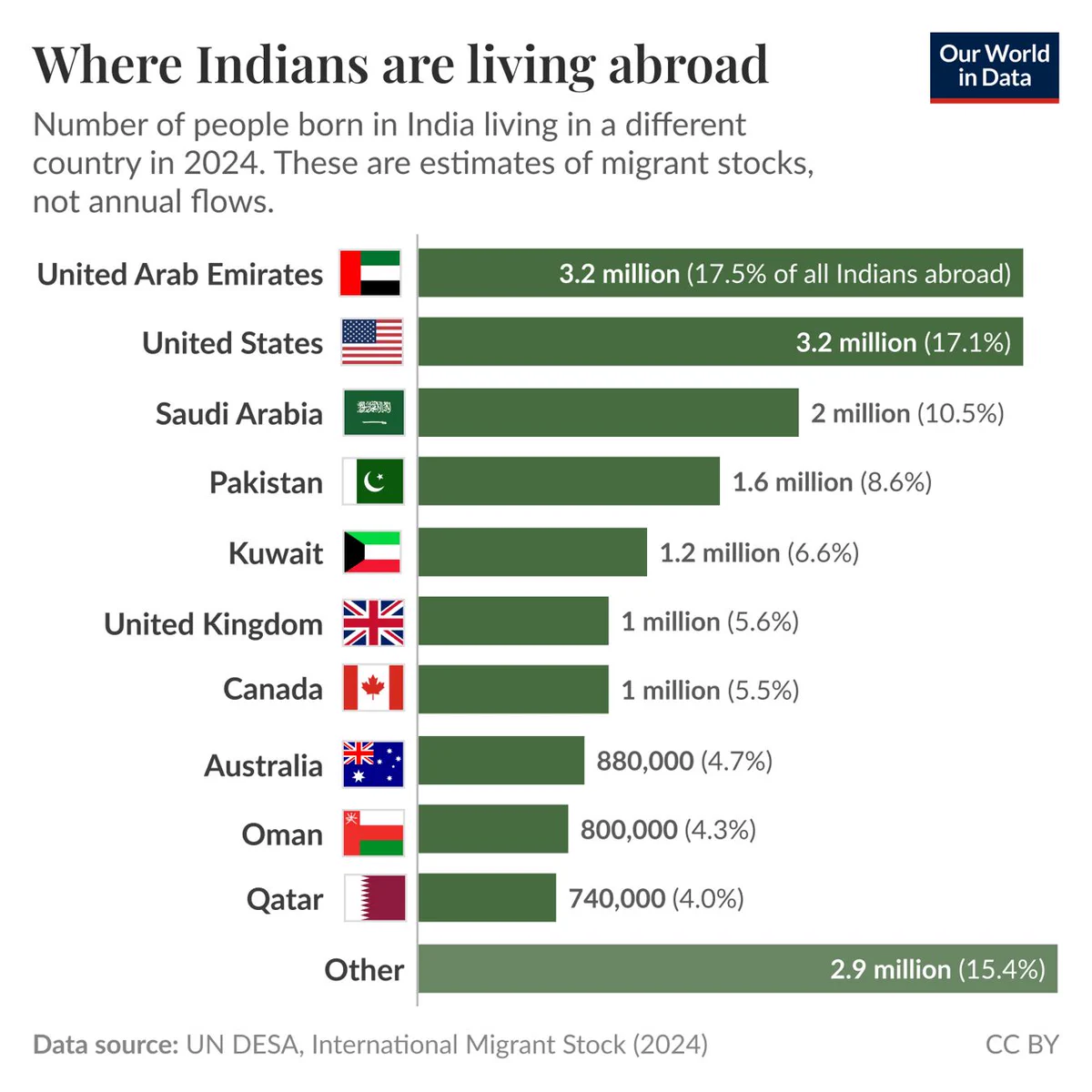
More Indians live in the Gulf states than in the US, UK, and Canada combined.
In 2024, around 18.5 million people born in India lived abroad. For the world’s most populous country, that’s not a lot: just over 1% of the population. This chart shows where they live, based on
Hannah Ritchie's second book, "Clearing the Air", is out in paperback in the United Kingdom.
After publishing "Not the End of the World" in 2024, Our World in Data’s Deputy Editor, @_HannahRitchie, published her second book last year.
"Clearing the Air: A Hopeful Guide to
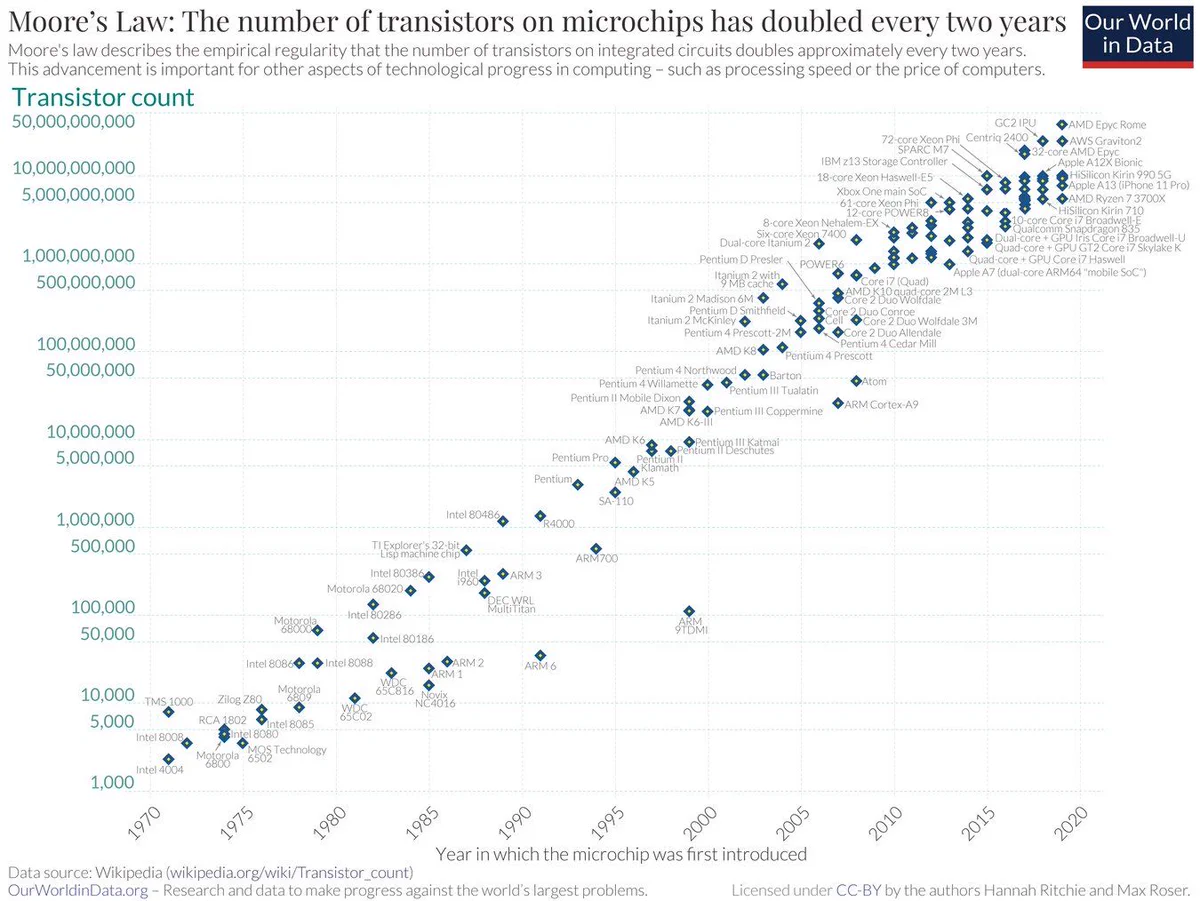
Moore’s Law is the observation that the number of transistors on computer chips doubles approximately every two years. It is not a law of nature, but an observation of a long-term trend in how technology is changing. Gordon E. Moore, the co-founder of Intel, first described it in
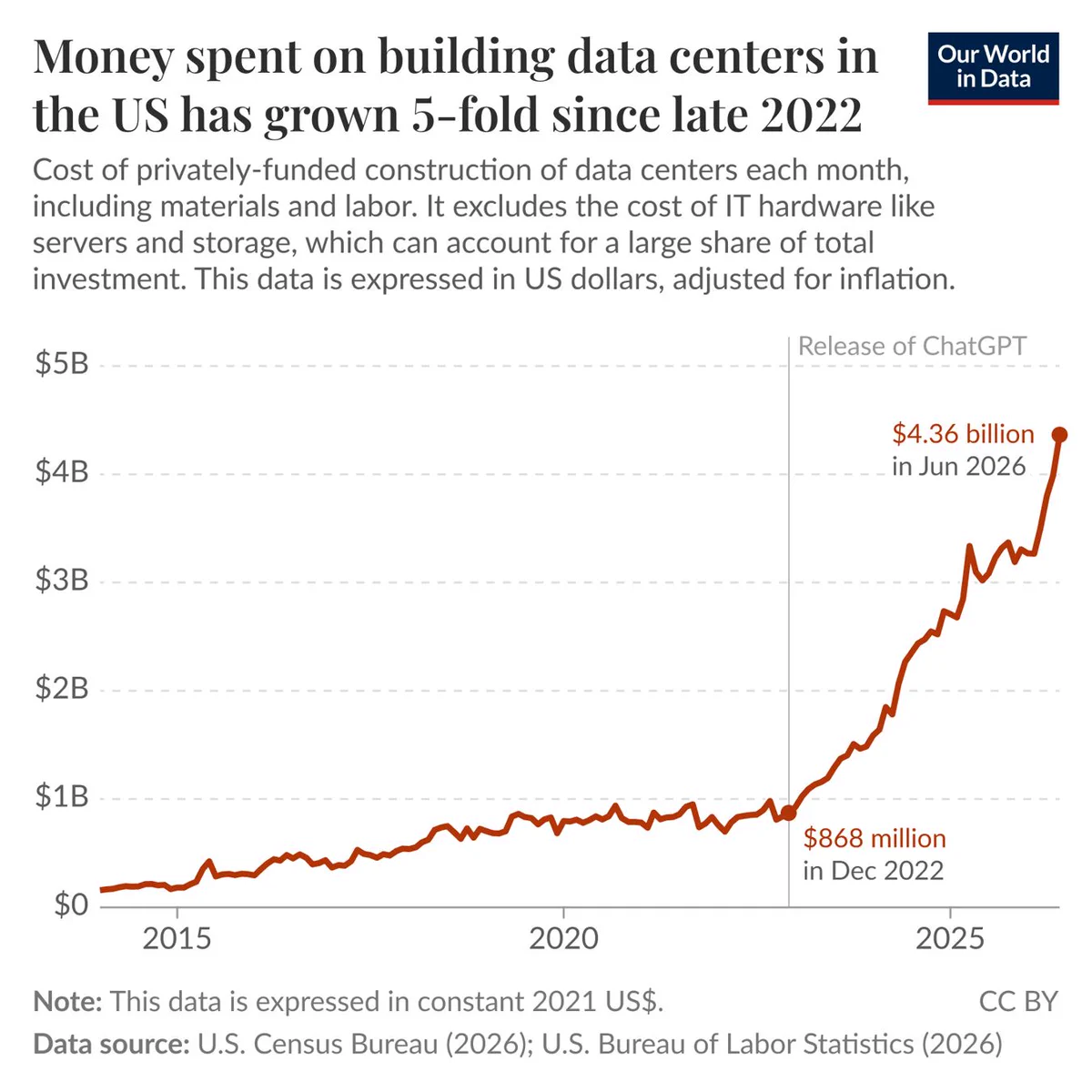
Money spent on building data centers in the US has grown 5-fold since late 2022.
The United States is home to thousands of data centers. They are part of the infrastructure that powers many digital services, including email, gaming, streaming, social media, and, increasingly,