Log inSign up
SLAC National Accelerator Laboratory
13.7K posts
SLAC National Accelerator Laboratory profile banner
@SLAClab

SLAC National Accelerator Laboratory

@SLAClab
Official account of the U.S. Department of @ENERGY's Silicon Valley national lab, operated by @Stanford. Verify: stanford.io/3P2sIAy
Menlo Park, CA
slac.stanford.edu
Joined November 2009
448
Following
28.7K
Followers
RepliesRepliesRepostsRepostsMediaMedia

Log in or sign up for X

See what’s happening and join the conversation

Continue with phone
or
Log in with username or email
Terms·Privacy·Cookies·Accessibility·Ads Info·© 2026 X Corp.
  • @SLAClab
    SLAC National Accelerator Laboratory
    @SLAClab
    2h
    Surrounded by wildlife at SLAC! 🦌 🦅 🐇 This National Wildlife Day, take a look at some of the candid shots taken by SLAC staff around the lab.
    A coyote is partially obscured by tall, dry grass and yellow wildflowers. Its attentive eyes are focused forward, blending into the surrounding natural habitat. Credit: Dan Gonnella
    A bird of prey perched on a moss-covered branch against a clear sky. Credit: Dan Gonnella
    A rabbit sits on a rocky terrain surrounded by sparse vegetation and small green plants, with a few dry twigs and a small shrub nearby. Credit: Chrsitina Pino
    Two deer standing on a sunlit grassy hillside with brown and green vegetation under a clear blue sky. Credit: Mi-Hee Mia Song
  • @SLAClab
    SLAC National Accelerator Laboratory
    @SLAClab
    Sep 3
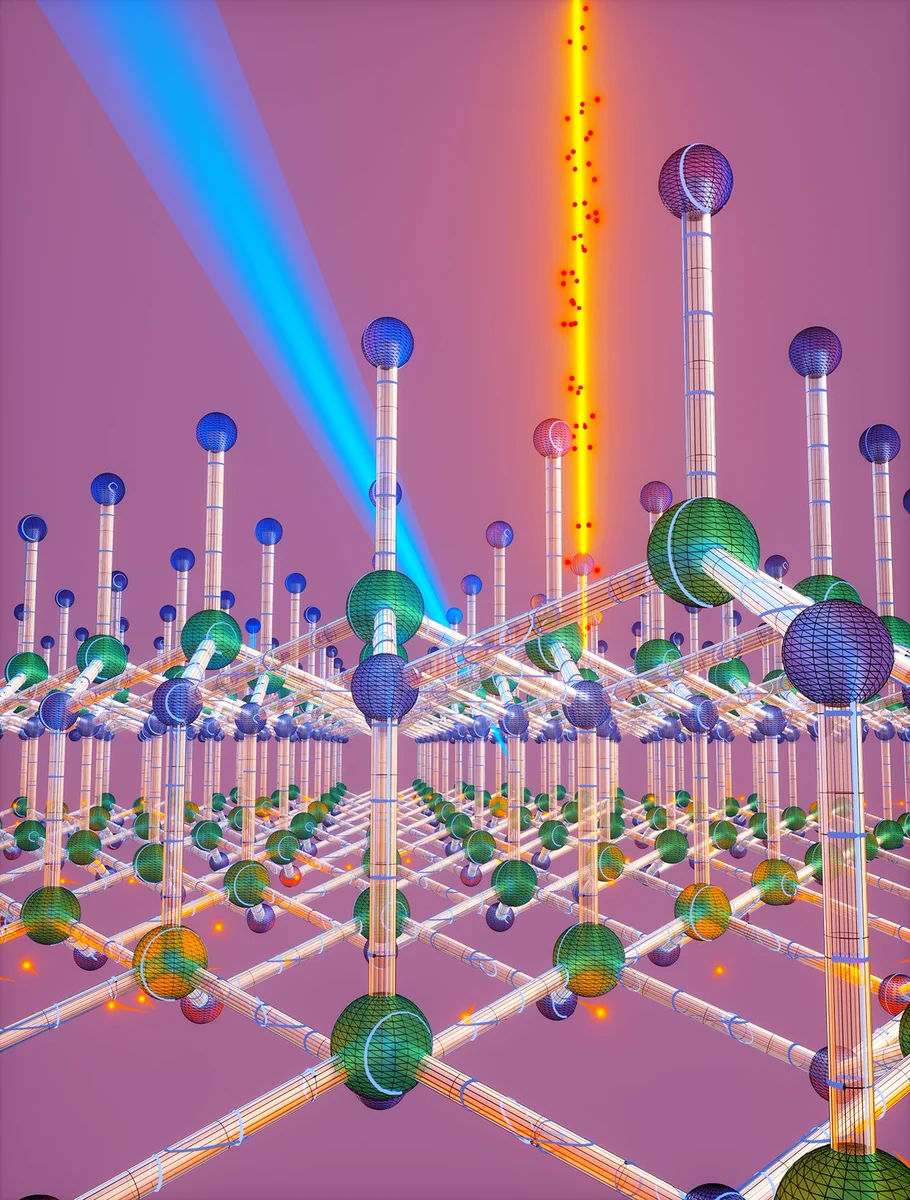
    Sensors that detect radiation often pick up on the iconic “glow” - but does another signal come first? A SLAC/@Stanford University research team used ultrafast electrons & lasers with semiconductor samples to find out, leading to unexpected results: stanford.io/3UCxzNB
    A high-energy electron excitation (orange) of a semiconductor (composed of atoms represented by purple and green spheres) induced an ultrafast nonlinear optical response that can be detected using a laser (blue). (Ella Maru Studio)
  • @SLAClab
    SLAC National Accelerator Laboratory
    @SLAClab
    Sep 1
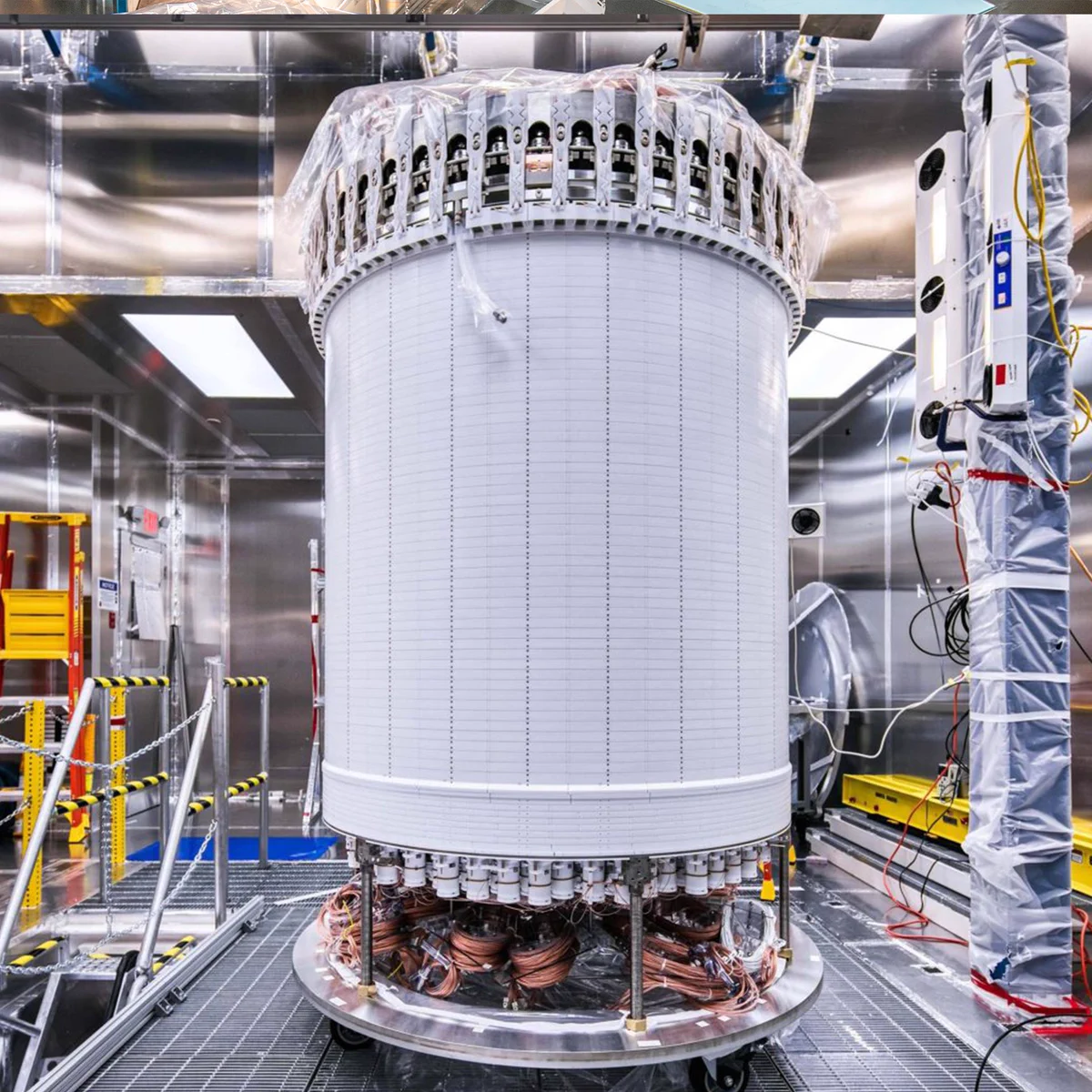
    Could this unexpected signal be our first detection of dark matter? The LUX-ZEPLIN experiment, world-leading dark matter detector, has observed a particle interaction that is the most compelling hint of dark matter reported by the experiment to date: stanford.io/4gvEi4D
    The LZ central detector in the clean room at Sanford Underground Research Facility after assembly, before beginning its journey underground.
Credit: Matthew Kapust/Sanford Underground Research Laboratory
    16
  • @SLAClab
    SLAC National Accelerator Laboratory
    @SLAClab
    Aug 31
    Starting small. This photo shows a small fuel cell inside of a sample chamber at our synchrotron. The conditions inside of the sample chamber can be tuned to various pressures, allowing scientists to study fuel cells and other active chemistry under more realistic conditions.
    This photo shows a small fuel cell inside of a sample chamber at SLAC's synchrotron, SSRL. This experimental station allows scientists to study fuel cells under more realistic conditions. Credit: Andy Freeberg/SLAC National Accelerator Laboratory
    1
  • @SLAClab
    SLAC National Accelerator Laboratory
    @SLAClab
    Aug 28
    Cracking the solid-state battery 🔋 Lithium-filled cracks can lead to short circuits & drain charge, but @Stanford & SLAC researchers found that compressing the battery material altered the formation & led to shorter charging times + longer battery life: stanford.io/4iAguO8
    A round shape with tree‑like pattern spreading outward from a dark central area, set against a blurred blue background. Researchers discovered a way to track and suppress harmful intrusions in dendrites that form in solid-state batteries. This top view of the electrolyte shows the dendrites that propagated horizontally.  (Greg Stewart, SLAC National Accelerator Laboratory)
Advertisement
Advertisement