After previously exploring the impact of vapor pressure on the drying of desiccant and more, the conclusion was essentially that in order to drive moisture that’s not directly on a material’s surface out of it, you pretty much have to heat up said material to make the process not take forever. Of course, we’d still want to retain the vacuum while doing said heating, which raises the question of how you best heat something that is inside a vacuum.
Fortunately, this is a solved problem, with commentators to the previous article helpfully pointing to the existence of devices like vacuum ovens. Of course, you can either buy such a device and not worry your pretty little head about the finer details, or you can defy convention and build one yourself because you’re a rebel and really want to know how their internals work.
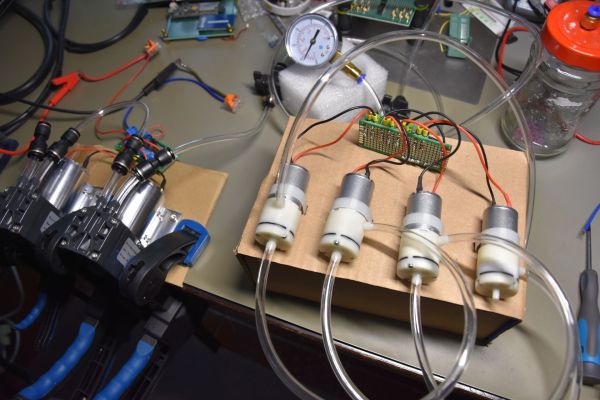
Thus in this article we’ll be taking a look at the finer details of generating thermal radiation and how to best heat up a sample inside a vacuum chamber without directly picking easy mode with microwaves.
Despite all the glamorous promises made about quantum computing, it’s hard to make the argument that today’s quantum computers hold a candle to the sheer practicality of classical computers, especially when qubits need to be cuddled at cryogenic temperatures inside a cryostat. This is worsened by the problem that regular semiconductor transistors do not really appreciate these same cryogenic temperatures, creating an awkward interfacing problem for the controlling electronics.
Now a new pitch here is to create superconducting transistors that will happily work at temperatures near absolute zero. In an article in IEEE Spectrum this start-up – called S-Transistors – and their concept are covered.
By being able to have the control circuits inside the same cryostat, one can forego the absolute mess of wiring that has to penetrate it, and with it one major failure point. Their proposed solution uses the same Josephson junctions (JJs) that are also used for qubits, using a high enough current to briefly make it non-superconducting, inducing a voltage pulse that can be detected.
In addition, JJ-based field effect transistors (JJFETs) are used, with this 2025 paper by [Yusheng Xiong] et al. detailing these structures. Here S–Transistors claims that they are now able to manufacture JJFETs at scale, which would be another major breakthrough that could bring quantum computing just a little bit closer.
They’d be competing with cryogenic CMOS (Cry-CMOS), which can use standard semiconductor production lines to create circuits that can withstand cryogenic temperatures, albeit not quite a the near-zero K level that these superconducting transistors and JJFETs would be capable of.
Although graphene gives diamond a solid run for its money when it comes to being the most useful assembly of carbon atoms, both have the distinct property of material scientists still trying to figure out all their properties and potential applications. This includes something like the melting curve of diamond and potential phases beyond this diamond lattice phase that occur when exposed to extreme pressures and temperatures. Such as those experienced on a planetary scale and during inertial confinement fusion (ICF).
In this research (paywalled) by researchers at the Lawrence Livermore National Laboratory (LLNL), it was investigated how close theoretical simulations were to physical reality by blasting diamond samples with a laser. This ablated the surface and sent a shockwave through the material that caused it to melt. Using X-ray diffraction data this entire process was followed, elucidating the exact melting temperature under such conditions.
This revealed that previous estimates based on earlier experiments had been off by many hundreds of degrees, giving a far better idea of how diamond responds to such extreme pressures and temperatures. Where such information is very relevant is in fields like planetary science where diamonds can occur naturally and being able to predict their presence can be essential.
The other application, and the primary reason why LLNL does this kind of research is for the sake of ICF at the national ignition facility (NIF), which is the best way to investigate the behavior of e.g. hydrogen isotopes under extreme conditions like those of nuclear weapons.
Unfortunately this research will have no impact on practical power generation using nuclear fusion, as the only viable path there involves forms of magnetic confinement fusion (MCF), but it’s still pretty rad to improve our understanding this carbon form.
How easy is it to build a simple demonstration at home that proves fundamental law of physics, such as Coulomb’s inverse square law, or Maxwell’s equations? This is one of those questions that always nagged at [Casual Physics Enjoyer] as they sought to find ways to develop a more intuitive understanding of these fundamentals with simple DIY-at-home experiments. Unfortunately this turned out to be rather tricky for Coulomb’s law.
Us H. sapiens – courtesy of a few bright individuals – have figured out many of the fundamentals that underlie this physical world over the past few thousands of years. Even if we still got some pretty massive fundamentals left today for equally bright-minded folk to bash their collective heads against, basics like Coulomb’s law or Maxwell’s equations ought to be a snap now for the average person to replicate since they were after all performed in an era before quantum mechanics, computers or even electrification.
To the dismay of the average physics student, experiments that demonstrate these fundamental laws of physics are still pretty hard to replicate without some solid time and monetary investment. This is demonstrated quite succinctly in the linked article, where the question of how to demonstrate the force between two charged particles, as in Coulomb’s law, and that it is an inverse square relationship is attempted.
Whereas the Wikipedia entry claims it to be a ‘simple experiment’ with just two identical spheres, in a DIY setting this is somewhat tricky, including the part where you have to charge up the spheres and measure the force. Using some aluminium foil and wires you can get the two ends to separate as you’d expect, but quantifying the force is a whole other matter.
We often see scientific breakthroughs in journals or other media that’s reported on as if it’s a revolutionary technology guaranteed to reshape human existence, only to never hear about it again. A more cynical reason for this phenomenon is a certain amount of clickbait or engagement farming, but the real culprit often tends to be the discovery of a process that can’t produce the new material or effect at a scale that makes sense for mass production. One of those are MXenes (“max-enes”), a two-dimensional material first produced over a decade ago, but new research into them has developed a much more efficient way of producing them.
Before this discovery, these materials were produced in a convoluted process involving the MXene precursor materials, combining them with an etchant, washing them off, and then repeatedly spinning them in a centrifuge to separate out unwanted byproducts. As one can imagine, this doesn’t produce material in an industrial quantity. But the new method uses a vapor deposition process which simplifies the precursor steps using less expensive materials, as well as skips the etching step. After that, the researchers have found that the MXenes can grow in a much more controlled way, allowing for greater production amounts and higher quality.
In the intervening years since their discovery and first synthesis MXenes have shown potential for wide-ranging applications, from battery production to antennas to water purification. Another interesting application is as a switchable Faraday cage, as we’ve covered in the past. Hopefully the slow plod of scientific discovery continues and we can start seeing more of these incremental gains improving our lives, even if we don’t get a sudden technological revolution from it.
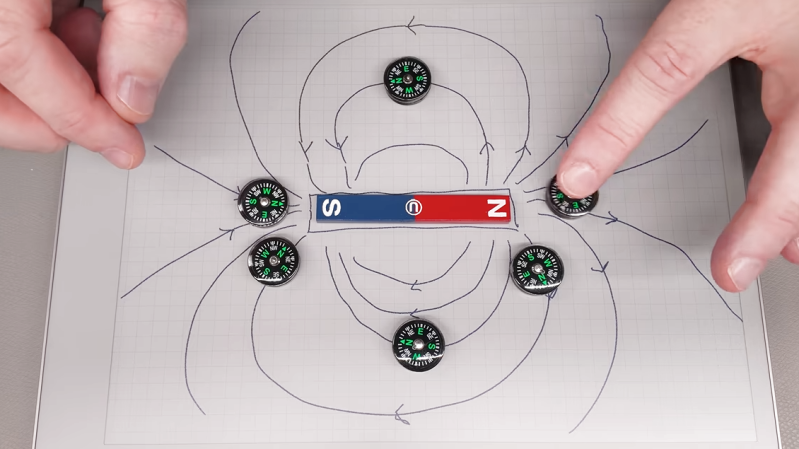
Every magnet has a north and a south pole, but which is which? Sometimes it matters. If a product one builds features a magnetic closure or other part, the polarity of those magnets should be consistent in assembly. So how does one ensure they never glue a magnet wrong again? [Clough42] shows several ways to identify a magnet’s north and south poles using things many of us probably have ready at hand, and goes into a bit of theory while he’s at it.
Probably the easiest way is to use a known-good and clearly labeled reference magnet. Same poles repel, and opposites attract. But if that’s not available, a simple magnetic compass can help. Because opposite poles attract, a compass’s north point will be attracted toward a magnet’s south pole, and vice versa.
A Hall effect sensor, or an electromagnet — the winding and current flow determine the polarity — are other ways to measure a magnet’s poles. And here’s where [Clough42] dives into some details of how magnetic fields actually act, because it explains some seemingly strange behavior.
For example, at around 4:08 he demonstrates a Hall effect sensor board that is documented as lighting an LED when the south pole of a magnet is held to its front. It does that, but it also lights the LED when the north end of the magnet is held to the sensor’s back. That’s because the sensor isn’t actually directly sensing the magnet’s pole, it’s sensing the orientation of a magnetic field. The lesson is clear: make sure you’re measuring what you think you’re measuring. Near the end of the video he demonstrates a similar experience with a handy mobile phone app that senses magnetic fields by reading the device’s internal magnetic compass; by waving a strong magnet around, the detected polarity flips back and forth even though the magnet’s orientation isn’t changed.
So what does one do after positively identifying a magnet’s north and south poles? Label it clearly for use as a known-good reference magnet in the future is our suggestion. Watch the whole video below, then take a few minutes to dive into the nitty-gritty of what magnets actually are and how they work.
Dumping of the barrels into the Atlantic. (Credit: Greenpeace, Pierre Gleizes)
Recently French and international researchers took a look at the state of the thousands of barrels of radioactive waste that were dumped into the Atlantic Ocean between 1950 and 1990, trying to ascertain the state of this waste and its effect on the ecosystem.
Although a lot of fuss is made of the spent uranium fuel and high-level waste produced by light water reactors and fuel reprocessing facilities, the overwhelming majority of nuclear waste is low- and intermediate-level waste (LLW and ILW) churned out by hospitals, laboratories and various industries.
Due to the sheer volume of this waste over the decades creative ways have been sought to dispose of it, which include burying in landfills and incinerating.
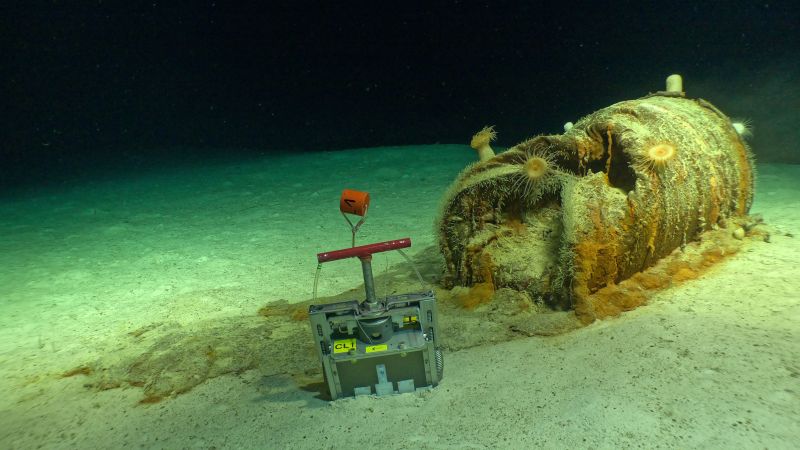
For a while tossing such waste into the ocean was also deemed to be an excellent destination for LLW and ILW, with the latter especially encapsulated in bitumen or cement. This was the poured into the barrels that many people have come to associate with nuclear waste in general. Since the approximately 200,000 tons of such barrels and similar were tossed into the Atlantic Ocean decades ago the question was where they ended up and their state.
The Radiocean mission site lists the objectives, including the mapping of the sites and identifying the elements of the ecosystems in addition to any radioisotope levels and their effect on said ecosystems. As it turns out, although the barrels have definitely degraded and their contents are slowly collapsing, the local ecosystems seem to have adapted well, treating the dump sites more as convenient shelters rather than a hazard. Some more photos can be found on the Bluesky account of [Javier Escartin].
None of this should come as a surprise if you are aware of just how much radioactive material is already dissolved naturally in the oceans, with much more uranium present in seawater than can be mined on-shore. Although the introduction of isotopes that are not part of the normal thorium and uranium decay chains into the ocean is of course undesirable, it’s good to know that this rather haphazard treatment of LLW and ILW has apparently just resulted in some Atlantic Ocean floor critters ending up with an interesting reef.