







Within 4 hours
A technical manager reviews your request, then confirms scope, stack, and seniority with you by email or a short call.
Services.
End-to-end product development — from AI prototypes to scalable web and mobile platforms.
View all services →Not sure where to start?
Book a free discovery call →Industries.
Domain expertise that shortens discovery and gets compliance right from day one.
View all industries →Not sure where to start?
Book a free discovery call →AI Agents.
Custom AI agents that take routine work off your team — built and deployed in weeks.
View all AI agents →Not sure where to start?
Book a free discovery call →Technologies.
A modern stack for every layer of your product — pick one or let us recommend.
View all technologies →Not sure where to start?
Book a free discovery call →Hire.
Vetted senior engineers who join your team in as little as 48 hours.
View all roles →Not sure where to start?
Book a free discovery call →Case Studies.
1540+ projects delivered for startups and enterprises in 82+ countries.
View all case studies →Not sure where to start?
Book a free discovery call →Resources.
Guides, live sessions and tools to plan your product and budget.
Visit the blog →Not sure where to start?
Book a free discovery call →Company.
The team behind 1540+ projects for 1000+ clients worldwide.
Get in touch →Not sure where to start?
Book a free discovery call →In Numbers
Enter to search·Esc to close
Hire ReactJS developers who have already passed the screening most vendors skip: production code review, a live architecture task, and reference checks with previous clients. Send your project requirements today. You get a shortlist of vetted React developers within 24 hours and a confirmed engineer writing code within 48.
Since 2014, LITSLINK has delivered 1,540+ projects for 1,000+ clients across 82+ countries, pairing US-based project management with senior European engineers who overlap your working day.

VETTING
React expertise is easy to overstate. A candidate may know the syntax and discuss hooks but lack experience maintaining production code under load. A mis-hire can cost 8 to 12 weeks in onboarding, replacement, and lost roadmap progress.
Our vetting closes that gap through four stages:
Only React.js developers who pass every stage join client teams. This means your interview focuses on team fit rather than basic qualifications.
You also receive protections marketplaces rarely provide: a defined notice period, a backup engineer when needed, and IP terms written for US clients.
Every engineer has shipped and maintained live web applications, so estimates come from experience. Accurate estimates are what keep a budget intact past month three.
Developers who design reusable components keep a codebase cheap to extend, because new screens assemble from tested parts rather than getting rebuilt each time a feature lands.
The same engineer can extend your product to iOS and Android, sharing logic between web and mobile apps and cutting duplicate work out of the budget entirely.
TypeScript, React Testing Library, CI/CD on every merge. These habits are the difference between flat maintenance costs in year two and a slow-motion rewrite nobody planned for.
HIRING GUIDE
However you hire React developers, the evaluation matters more than the channel. A wrong choice is expensive in ways an hourly rate never shows. When you hire dedicated ReactJS developers who will sit inside your team for months, the predictors of a good fit are concrete. Shipped products you can open in a browser. Architecture decisions the candidate can defend under questioning. Communication that survives a bad sprint. Testing discipline. The four checks below cover them in order.
Tutorial projects prove nothing about production readiness. Ask for links to live web apps and the story behind each one: team size, what the candidate personally built, and which complex challenges surfaced after launch.
One more filter worth applying: contribution history. A candidate who reviews other people’s code well is worth more to a team than a lone genius, and public pull requests show which one you are getting. Ten minutes on GitHub reveals more than an hour of rehearsed answers.
In the interview, hand over a real screen from your product and ask how they would break it down. Good answers cover props contracts, state placement, and when Context API beats prop drilling, the judgment calls that scalable web applications are made of. A budget angle is hiding in this as well. Interfaces built from well-designed parts cost less to test, less to document, and far less to hand over when the team changes, and those savings compound every quarter the product lives.
Async messages are enough for a one-off task. A dedicated engagement needs standups, sprint planning, and risks flagged before they harden into blockers, and that requires genuine overlap hours plus working English. Remote React developers vary on both, so ask candidates about actual working hours and hold one live call before signing.
A useful test: send a deliberately ambiguous ticket. The best React developers ask two sharp questions first. Weak ones deliver the wrong thing three days later. Across months, technical and soft skills carry equal weight. LITSLINK pairs US-based project management with senior European engineers, which gives teams from New York to Berlin overlap during their actual working day and answers during it.
Ask what the candidate’s last CI/CD pipeline ran on every merge. If the answer is a build step and nothing else, you are looking at future technical debt with a friendly face. Testing library familiarity, review discipline, and a habit of writing the failing test first are what protect code quality across a long engagement. This is also where you find out whether someone treats testing as a tax or as the reason they can refactor at all.
Hire ReactJS developers with genuine production experience, and the return shows up in numbers a CFO tracks. Development speed converts into revenue pulled forward. Interface quality converts into conversion rate. Architecture converts into a smaller maintenance bill three years out. React also helps on the hiring side. Plenty of the apps you already use daily are built with React. Here is how the technical strengths behind scalable web applications translate into outcomes you can defend in a board meeting.
Reusable components and experienced ReactJS developers compress delivery cycles, so the feature that took a sprint and a half now ships inside one. In most markets, arriving first beats arriving polished.
Interfaces built to WCAG standards lose fewer users at checkout and lower legal exposure, since US accessibility lawsuits now target ordinary web apps rather than only the giants.
Scalable web applications get their state architecture right early, which prevents the rewrite that stalls products at the exact moment traction arrives. Rewrites at that stage cost quarters, not sprints.
Clean component-based architecture keeps bugs isolated and fixes local, so future dev hours flow into features instead of archaeology.
A shared component library means new screens assemble from parts that already passed QA. The tenth feature ships far faster than the first, with the same quality.
Documented, standardized components hand designers, QA, and backend engineers a shared vocabulary, so work runs in parallel instead of waiting in a queue.
Experienced React engineers trim bundle size and cut wasted renders. The resulting high-performance web applications convert better and rank higher, because Core Web Vitals feed straight into Google’s ranking systems.
PROCESS
Most delays in hiring React developers come from vagueness. A structured hiring process removes that guesswork. Ours runs four steps, and it is the machinery behind the 48-hour promise: fast because every step has a fixed owner and a fixed deadline, thorough because the vetting is finished long before you arrive. By the time you hire ReactJS developers this way, you are choosing between finalists.
A 30-minute call covers your stack, the seniority you need, deliverables and milestones, and how much time zone overlap the role requires. We ask what the developer will own in their first month and what “done” looks like. Clear project requirements at this stage keep the shortlist tight, and stated project expectations keep it useful.
You get two to four profiles, each already screened for React fundamentals, component-based architecture experience, and where the role calls for it, mobile development background. Each shortlist comes from ReactJS developers already working with us. Each profile includes work samples, the software engineer’s seniority, and the name of the project manager who would support the engagement.
Run your own interview process however you like. A take-home task, a live pair-programming session, a system design conversation about how they would structure your app. Assess collaboration style at the same time. Good React JS developers welcome that kind of scrutiny. This step exists so you validate the shortlist yourself rather than trusting ours. Most clients spend under two hours in total interviewing our ReactJS developers.
Contracts, NDA, repository and CI/CD access, then a handoff call with your product owner and tech lead. The developer joins the current sprint with an assigned ticket instead of spending two weeks reading documentation. ReactJS developers who onboard this way bill for work rather than orientation.
A 30-minute call covers your stack, the seniority you need, deliverables and milestones, and how much time zone overlap the role requires. We ask what the developer will own in their first month and what “done” looks like. Clear project requirements at this stage keep the shortlist tight, and stated project expectations keep it useful.
You get two to four profiles, each already screened for React fundamentals, component-based architecture experience, and where the role calls for it, mobile development background. Each shortlist comes from ReactJS developers already working with us. Each profile includes work samples, the software engineer’s seniority, and the name of the project manager who would support the engagement.
Run your own interview process however you like. A take-home task, a live pair-programming session, a system design conversation about how they would structure your app. Assess collaboration style at the same time. Good React JS developers welcome that kind of scrutiny. This step exists so you validate the shortlist yourself rather than trusting ours. Most clients spend under two hours in total interviewing our ReactJS developers.
Contracts, NDA, repository and CI/CD access, then a handoff call with your product owner and tech lead. The developer joins the current sprint with an assigned ticket instead of spending two weeks reading documentation. ReactJS developers who onboard this way bill for work rather than orientation.
SERVICES
Hiring one engineer is just the beginning. LITSLINK’s ReactJS development services span the full arc of building web applications: frontend engineering, UI/UX implementation, mobile app development through React Native, and the unglamorous ongoing support that keeps products fast long after launch day. Take one service or combine several to match your scope, and change the mix as the product matures. Plenty of clients hire ReactJS developers for a single web application development task, then bring more development services in once the first delivery lands and the trust is earned.
The core offering. Responsive, fast web applications built around your product: a dashboard rendering fifty thousand rows without stutter, or interactive web applications with live collaboration baked in. Our React developers handle modern web development end-to-end, architecture through deployment, and treat page weight as a budget. Under the hood, that means server rendering or static generation where SEO depends on it, sensible caching, and honest limits on third-party scripts, the quiet killer of scalable web applications.
Design files become working, accessible React components. Our React.js developers work directly with your designers, or with our own product design team, to close the gap between a Figma frame and production code that survives a 320px screen. UI/UX handoff is where most web projects lose a week, so we treat it as engineering work.
The same team extends to mobile. React Native lets us reuse business logic, types, and parts of the component layer across web and mobile apps, which usually costs less than staffing separate iOS and Android teams. Cross-platform development also keeps feature parity from drifting between platforms, and React Native is one of the few mobile technologies that has aged well.
After launch, someone has to keep dependencies current, fix what breaks, and stop performance from sliding. We run audits, patch security issues, and tune render performance on web applications we built and on web apps we inherited from another vendor. Complex challenges in legacy React code are a large part of what these ReactJS developers handle.
Global brands like Healthread, Skyward, Willo, Mush, Rentfol.io, and startups choose LITSLINK to hire React.js developers.
TRUSTED BY STARTUPS AND ENTERPRISES WORLDWIDE






Ready to hire ReactJS experts for your product?
Tell us about your project goals. We will analyze your needs to find the best React JS developers.
Review our top candidates and interview them. Hire a ReactJS developer who perfectly fits your team culture and tech stack.
Integrate your new remote React JS developers and start working. We ensure a smooth kickoff within 48 hours.
Clients value our delivery predictability, clear communication, and engineering quality. Teams that hire top React JS developers through LITSLINK consistently meet product goals
Secure patient portals, telemedicine dashboards, and wellness apps with compliant, high-performance React.js interfaces for better care experiences.
High-converting product catalogs, personalized shopping experiences, and fast checkout flows powered by React.js frontends
Real-time financial dashboards, trading interfaces, and secure digital banking experiences built with React.js
Responsive order tracking, live courier maps, and optimized delivery management panels using React.js.
Interactive feeds, notifications, and real-time messaging experiences with scalable React.js architectures.
Property listing platforms with advanced filters, interactive galleries, and map-based search built on React.js.
Workout tracking dashboards, performance analytics, and subscription-based fitness portals using React.js.
Engaging learning portals with video lessons, quizzes, and progress dashboards powered by React.js.
High-performance React-based mobile apps with smooth navigation and a consistent cross-platform experience.
Tailored React.js web applications aligned with your business logic, scalability, and security needs.
Ongoing performance monitoring, bug fixing, and feature enhancements for existing React.js solutions.
Seamless migration from legacy stacks to React.js with zero data loss and minimal downtime.
Pixel-perfect, responsive React.js interfaces focused on usability, accessibility, and conversion.
Reusable React.js components and plugins built for flexibility, speed, and easy integration.
The Challenge
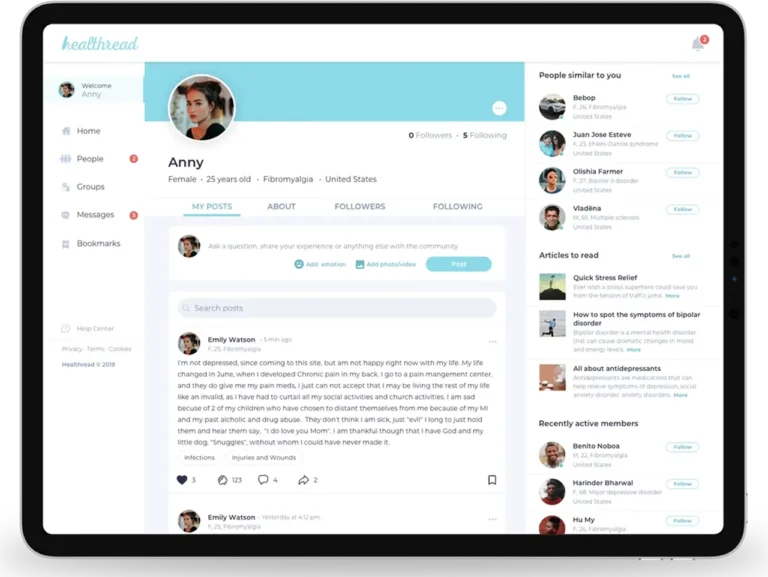
HealthRead needed a dedicated space where people with similar diagnoses could share experiences and find support. The platform had to protect user privacy, support accessible interactions, and deliver a consistent experience across mobile and web.
The Solution
LITSLINK built a connected health community with a React.js web app, React Native mobile apps, and an admin panel. Members can share health stories, exchange messages, and connect around common conditions. Shared backend services keep conversations and profiles consistent across devices, while accessibility features help people with disabilities participate.
The Impact
The Challenge
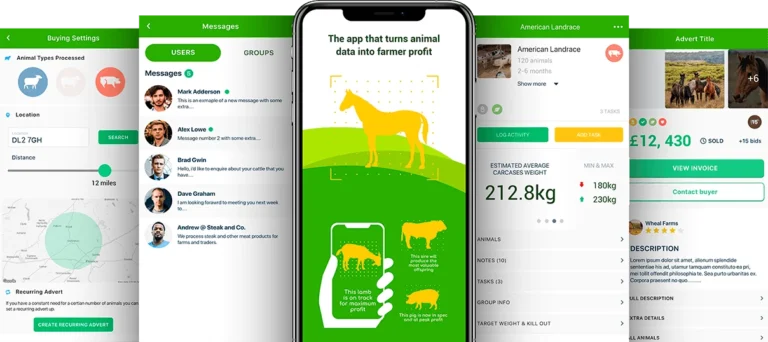
An animal production enterprise needed an integrated system to help farmers track livestock, evaluate performance, and manage sales. The goal was to bring shared farm data into one platform to support better decisions about animal growth, quality, and profitability.
The Solution
LITSLINK developed a web portal and connected mobile app that centralize animal records, breeding history, medication, health information, and weight tracking. Farmers can generate reports and transfer records when animals leave the farm through regulatory system integrations. Built-in marketing tools let users create promotional pages, showcase accreditations, and connect with processors and retailers.
The Impact
The Challenge
A Finnish rental expense calculator needed to evolve into a complete property management platform. The existing codebase could not support property listings, tenant communication, document storage, and service provider discovery, making a rebuild necessary.
The Solution
LITSLINK rebuilt Rentfol.io as a mobile marketplace for landlords, tenants, and service providers while preserving the original calculator logic. The app combines map-based property search, messaging, document storage, and rental expense tracking. Dedicated permissions support each user role, while manually verified landlord and service provider profiles help users assess whom they are dealing with.
The Impact

The Challenge
Younergy needed a user-friendly web application that would let customers and installers monitor solar energy systems remotely. Users needed a single dashboard to track energy consumption, imports, exports, and generation without being on-site.
The Solution
LITSLINK worked alongside Younergy’s team to design and develop the application’s frontend. The interface brings solar energy activity into one dashboard, helping users monitor their systems and manage energy generation and distribution through straightforward workflows. The web app supports the needs of individual users and businesses adopting solar power.
The Impact

A React JS developer is a front-end engineer who builds interactive user interfaces using React.js, JavaScript, and related tools. A typical ReactJS developer for hire understands component-based architecture, state management, and virtual DOM rendering for high performance. Businesses often hire ReactJS developers to create fast, scalable single-page applications and complex dashboards. Such specialists also collaborate closely with backend teams to integrate APIs and ensure smooth data flow
A React.js developer designs and implements reusable components, manages application state, and connects the UI to APIs. When companies hire a ReactJS developer, they expect them to optimize performance, reduce load times, and ensure responsive behavior across devices. These engineers frequently use tools like Redux, TypeScript, or Next.js to improve scalability and maintainability. Organizations that hire ReactJS programmers also rely on them to write tests, fix bugs, and keep the codebase clean and consistent.
You can hire dedicated ReactJS developers directly from LITSLINK, a software development company with a vetted pool of front-end engineers experienced in React.js. LITSLINK allows you to quickly hire ReactJS developers on a flexible basis, from a single specialist to a full dedicated team, depending on your project needs. The company handles candidate screening, technical evaluation, and onboarding so you can hire remote ReactJS developers and start development in days, not months. LITSLINK also provides project management support and smooth communication to ensure your ReactJS team integrates seamlessly with your internal workflows.
The cost to hire React JS developers varies based on experience level, region, and engagement model. Hourly rates for junior engineers are lower, while senior or top dedicated React JS developers command higher fees. Companies may hire ReactJS developers on hourly, part-time, or full-time contracts depending on project scope. Working with an agency often includes additional services like project management, quality assurance, and easy replacement built into the overall rate.
If a React.js developer is not a good fit, most vendors offer a quick replacement policy. When you hire React.js developers for hire through an agency, you can usually request another engineer without restarting the entire hiring process. Some partners provide a trial or evaluation period to ensure the developer matches your expectations. This flexibility lets you maintain momentum while still securing the right React.js talent.
With LITSLINK, you can hire ReactJS developers and start your project in just 48 hours after the initial requirements discussion. The company maintains a pre-vetted pool of React JS developers for hire, enabling rapid matching and onboarding without lengthy recruitment. Whether you need a single ReactJS developer or a full React.js development team, LITSLINK streamlines interviews and setup for immediate productivity. This fast-track approach ensures your ReactJS initiatives launch quickly with minimal delays.
Tell us about your use case, constraints, and goals. Our team reviews every inquiry and responds within 48 hours.
Next steps
LITSLINK specialist reviews your request and contacts you to discuss the details
If needed, we sign an NDA before moving forward
We send a project proposal – estimates, timeline, and team CVs included
After launch, we stay on for any updates your product needs
Thank you! Your request has been sent — our team will get back to you within 48 hours.

One of the most popular and potent JavaScript libraries for creating web applications is React.js. Developers can create quick, dynamic, and effective web applications…
8 min read
The responsive web design of applications and scalability are critical for many businesses. This is how a web page handles many users and traffic…
11 min read
The main difference between React and Angular lies in their structure and approach to front-end development. Both are popular JavaScript technologies used to build…
12 min read

