[syndicated profile] bookviewcafe_feed

Posted by Sara Stamey

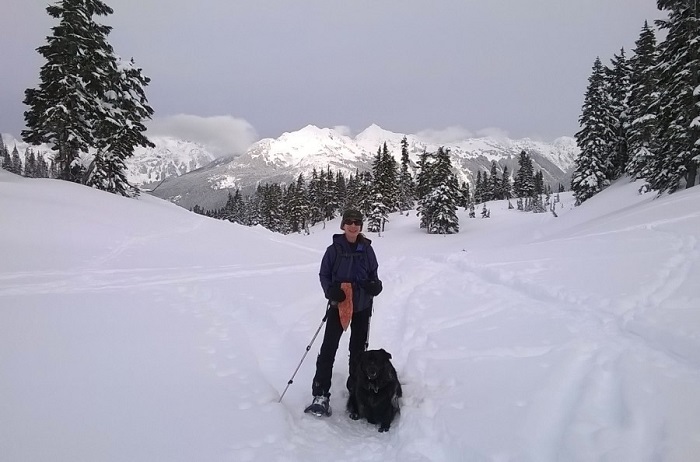
A lot of “life” going on right now for all of us, so if you need an escape, enjoy a virtual mountain outing with Thor, Bear dog, and me circa 2016.

I’m recovering from back surgery, so revisiting a memory of one of our winter escapes to our nearby Mt. Baker Wilderness for snowshoeing. Here’s to healing for all of us and our country!

We’re happy: Thor, Bear dog, and I wrapped in our reflective tarps as we perch on the snowy flanks of Mt. Shuksan, breathing in the crisp mountain air and listening to the quiet. We’re just the right amount of tired and hungry from our snowshoeing (and ecstatic doggy snow-whirling) and settling in for lunch and hot chocolate (and dog biscuits). I offer a silent Thank You for the privilege of living in the Pacific Northwest where we can carpe diem – this one a lucky midweek day off – and zip up to the mountain for a dose of wild.

Image

Growing up in this neck of the woods/mountains/sea before the area was put on the “destination” map by the likes of Outdoor Magazine, I took for granted “our” special wilderness getaways. And, since I’d been hiking and camping since my earliest memories, not to mention skiing, racing my horse along forest trails, and diving into any available body of water, I suppose I assumed that I’d always be fit as a fiddle and ready to go. Well, as a Baby Boomer, I now have to pause to take inventory of my various old injuries from my roughneck lifestyle, so the getaways require a bit more prep. This winter, Thor is still recovering full function after back surgery, and I’m almost healed from a hamstring pull. But the mountains were calling, and we said, “Yes!”

Image

I’m posting my complete blog entries on my author website at www.sarastamey.com, where you can finish this episode and enjoy all the accompanying photos. Please continue reading by clicking on the link below, then you can return here (use “go back” arrow above) to comment, ask questions, or join a conversation. We love your responses!

https://sarastamey.com/the-rambling-writer-rerun-snowshoeing-on-mt-shuksan/

*****

You will find The Rambling Writer’s blog posts here every Saturday. Sara’s latest novel from Book View Café is Pause, a First Place winner of the Chanticleer Somerset Award and an International Pulpwood Queens Book Club selection. “A must-read novel about friendship, love, and killer hot flashes.” (Mindy Klasky). It’s also a love letter to the stunning beauty of her native Pacific Northwest wild places. Sign up for her quarterly email newsletter at www.sarastamey.com

Image


Add two warm days and there they go

Feb. 28th, 2026 03:30 am
[syndicated profile] spindyeknit_feed

Posted by AlisonH

ImageFound this little guy going from blueberry flower to blueberry flower.Image

ImageThe Stella cherry looks raptor-footed.Image And here’s the Santa Rosa plum.

ImageThe flowers on the Babcock are so different from the others, the punk rockers of the peach world in their spikes of pink.

And in the where did *you* come from department, Wednesday evening I found a small forgotten pot left where the winter rains helpfully dripped off the roof and inside was an apricot that had had what I think of as first year syndrome–where they barely come up and then look dead and you think well that was that. And then the second year they suddenly take off like crazy. I didn’t plant any Anya kernels this year but here it is anyway; all I could guess was that someone out there needs their apricot tree and if I wasn’t going to grow one well then it would just have to grow itself from last year.

I moved it into this somewhat larger pot and it went from tiny scrunched up leaves to three distinct branches and more and much bigger leaves in two days. I could see the difference between morning and evening both days.

It’s going to need a bigger pot, fast. Cool!Image


[syndicated profile] scalziwhatever_feed

Posted by Athena Scalzi

ImageI used to eat sunflower seeds when I played softball as a kid, and I can’t say I’ve ever eaten them since. For some reason, I was getting advertisements for Smackin’ Sunflower Seeds on Instagram. In that moment, I thought, you know what, sunflower seeds sound kind of good to snack on right now.

I would say in my life I’ve only had regular sunflower seeds, ranch, and BBQ flavored, so when I saw Smackin’s array of flavors, I was certainly intrigued. I am someone who believes variety is the spice of life, so of course I couldn’t choose just one flavor. I went ahead and bought a variety pack that included all their flavors (except the OG Original), and my dad and I gave them all a try.

Image

I let my dad pick the first flavor we tried, and he chose “lemon pepper.” These definitely had a strong flavor, as advertised, and the taste actually reminded me a lot of a steakhouse. The peppery-ness wasn’t overwhelming, and my dad and I gave these ones a 6.5/10.

Up next, we went for a classic: Ranch. The ranch flavor reminded me a lot of a Hidden Valley Ranch seasoning packet, like the kind you mix into dips or salad dressings. Surprisingly, the ranch flavor was very subtle, which is certainly something that ranch never is. You get a Cool Ranch Dorito and that shit is RANCHED UP. In the case of these seeds, I could’ve used more ranch flavor. They were kind of weak, but the flavor that was present was good. These were a 6/10 from both of us.

We switched to a sweet flavor, their Cinnamon Churro. This flavor was actually really nice, it wasn’t just straight cinnamon, it had that nice churro-vanilla sort of flavor. I will say that the flavor wasn’t very long lasting, though. Like it wore off very quickly. The taste, while it lasted, was very nice and not too sweet, with just a little bit of saltiness to have a nice sweet-and-salty factor. This was a 7.5/10 from my dad and a 7/10 from me.

My dad wanted to get the Cheddar Jalapeno out of the way, since he feared it would be really hot and we’re not exactly known for loving spicy stuff. I’m happy to report that while these ones do have a real kick with a heat that lingers just a touch, it has a really nice actual jalapeno flavor and isn’t just hot to be hot. While there’s not so much of the cheddar flavor present, if you’re someone who likes a little bite in their snack, this one would be a great pick for you. I wouldn’t eat a whole bag, but they were pretty tasty. These were a 7/10 from both of us.

Onto Dill Pickle, which was one I was very excited for. Lemme just say, these bad boys were picklelicious. These had a super solid, bold pickle flavor that was very enjoyable and not too acidic, just had that nice dilly briny taste. These ended up being in my top two favorites overall, and we both gave them an 8.5/10.

Over to the Cracked Pepper, I was curious how this would compare to the Lemon Pepper. If you are someone who puts so much pepper on their steak or eggs that people around you are sneezing to high heaven, then this is the flavor for you. These were so peppery, like pretty overwhelmingly so. I honestly didn’t care for them, and gave them a 4/10, but my dad gave them a 6/10.

Next up was the Backyard BBQ. I do love barbecue chips, so I was looking forward to see how these compared flavor-wise. The BBQ was super bold! Just one seed was absolutely packed with BBQ flavor, and it was very tasty! More long-lasting flavor and very strong, these were super good and ended up being another favorite. My dad gave them an 8/10 and I gave them an 8.5/10.

Back to the sweet ones, we tried the Maple Brown Sugar. Like the Cinnamon Churro, they were really nice but not long-lived. They’re a bit subtle, like not a huge amount of maple flavor or anything, but still pretty good. My dad gave them a 7/10 and I went with a 6.5/10. The rating would be a lot higher if the flavor lasted longer or was stronger.

Starting to wrap up our sunflower adventure, Sour Cream and Onion was next. These tasted so classic and recognizable, like if you enjoy sour cream and onion chips, these are for you because they taste absolutely spot on. They honestly reminded me a lot of Philadelphia Cream Cheese Chive and Onion flavor. These were a 7.5/10 from both of us.

The final flavor before trying the mystery flavor was Garlic Parmesan. These were super garlicky, but didn’t offer up a whole lot of parmesan flavor. The garlic really stole the spotlight here, but it was still a tasty flavor, earning it a 7/10 from both of us.

Finally, the mystery flavor! I truly had no idea what to expect. Do you know how DumDums make their mystery flavors? Well, I can only assume that Smackin’ does the same thing, because the mystery flavor tasted exactly like the Cheddar Jalapeno and Ranch mixed together. It was like the Cheddar Jalapeno but less hot, and somehow even better! The mystery flavor earned an 8/10 from both of us.

Well, there you have it! Eleven flavors of sunflower seeds. The only one I didn’t get to try that I would’ve loved to is Cheeseburger! Honestly, these were pretty solid sunflower seeds. It felt kind of nostalgic to eat them, even if they are kind of tedious to get through. I felt like one of those dogs that has a “slow down” bowl because you can’t just plow through them like chips or crackers.

Anyways, if you’re interested in trying some for yourself, I have a 10% off code for you! Yippee!

Which flavor sounds the best to you? Do you eat sunflower seeds often? Let me know in the comments, and have a great day!

-AMS

The Bride And Groan

Feb. 27th, 2026 02:00 pm
[syndicated profile] cakewrecks_feed

Posted by Jen

Today's post is dedicated to all the engaged couples out there. That's right, lovebirds, I thought we might take this opportunity to consider the most important cake of your entire lives: your wedding cake.

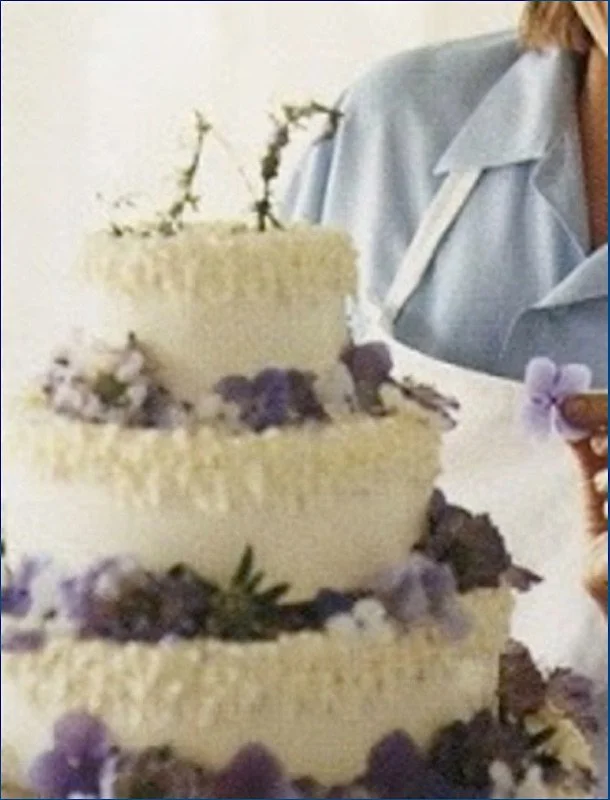
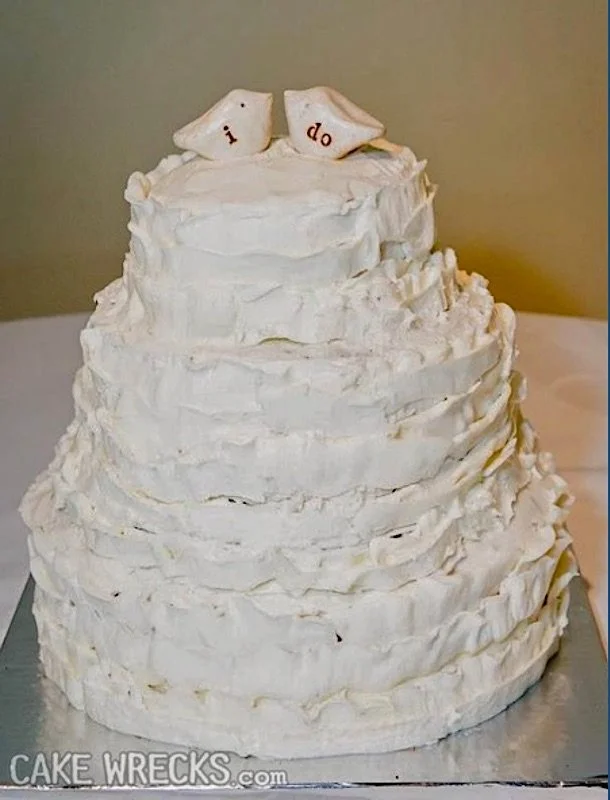
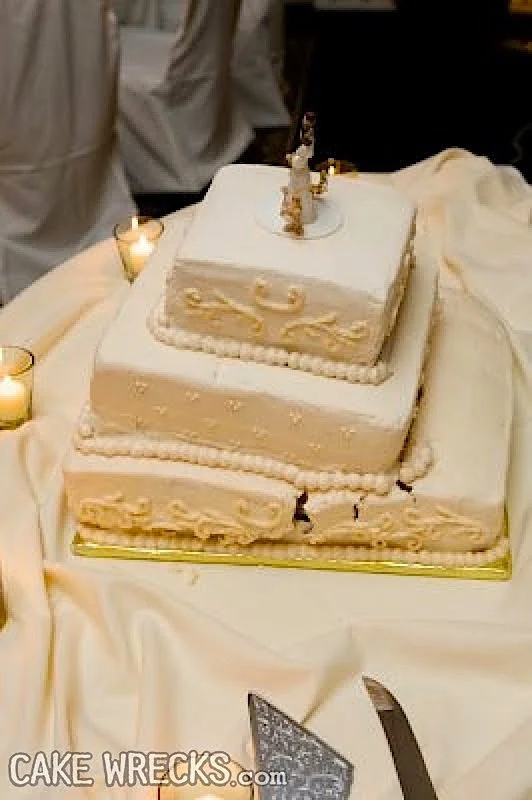
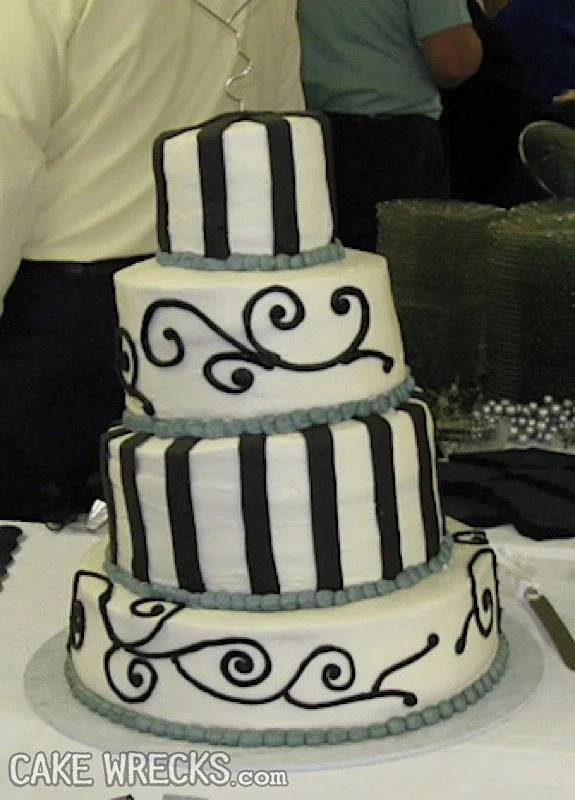
Now, I know I feature a lot of wedding wrecks, and I know a lot of folks will point out that asking for a fondant design recreated in buttercream is asking for disaster, but don't you worry. I'm here to help. After all, this is what Leah D. ordered for HER wedding cake:

Image


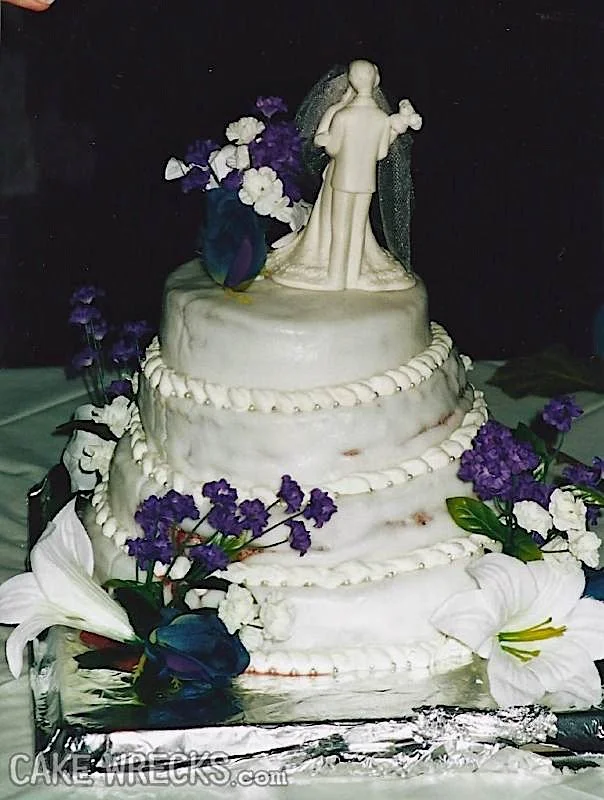
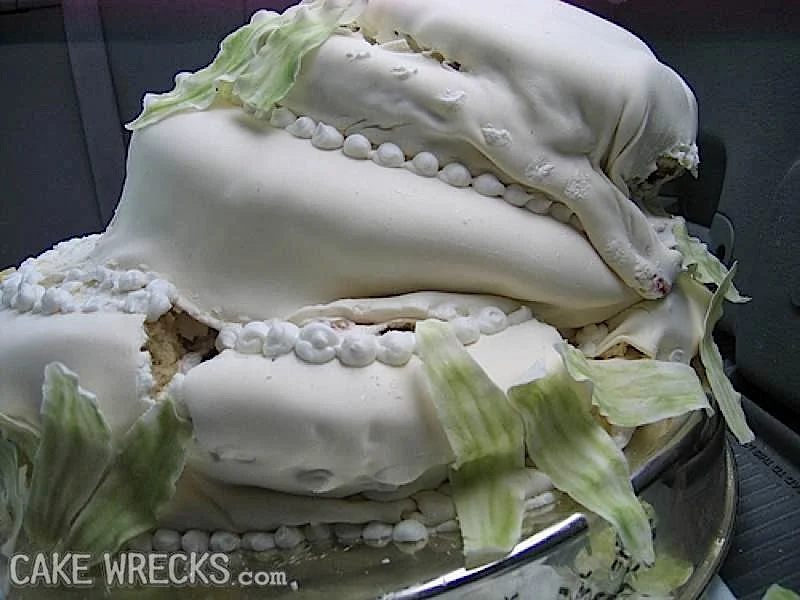
And look what she got!

Image

It's the tinfoil-covered cookie sheet that really sells it.


Ok, yes, it's a wreck. BUT - did you notice how the inspiration cake was all buttercream, and the wreck itself is fondant? I'm just sayin'. It works both ways.

Now, don't you feel better?

No?

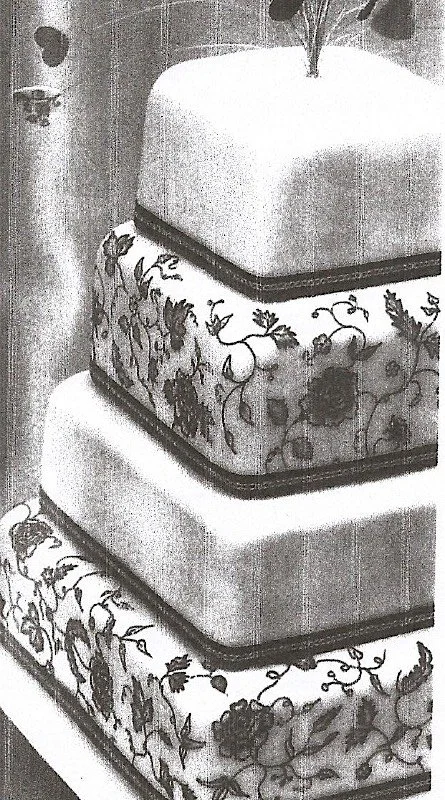
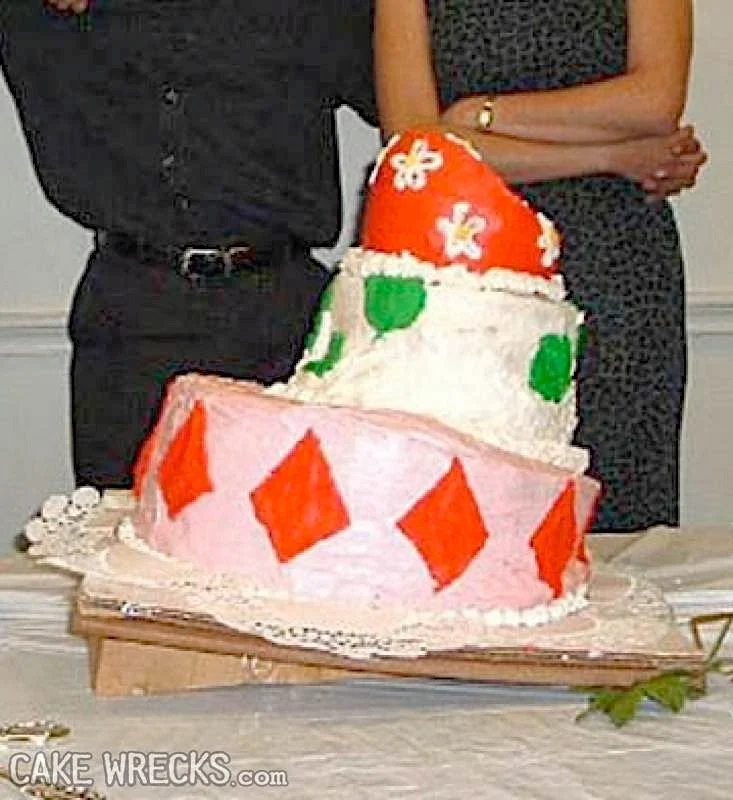
Ok, then how about what Susan A. ordered for her wedding? 

Image

Not a great picture (you don't see mimeographs much these days), but I think you get the general idea.

 And here's what Susan got:

Image

Granted, I'm not sure how this is supposed to make you feel better, but trust me, guys: the REST of us are feeling grrrrr-REAT. (John! Go make some popcorn! These are gettin' GOOD.)


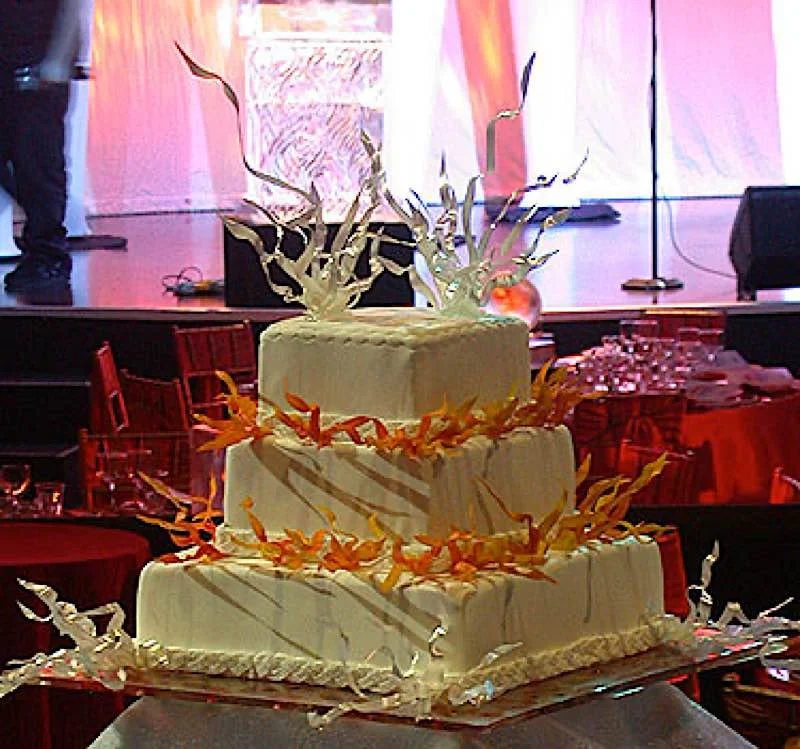
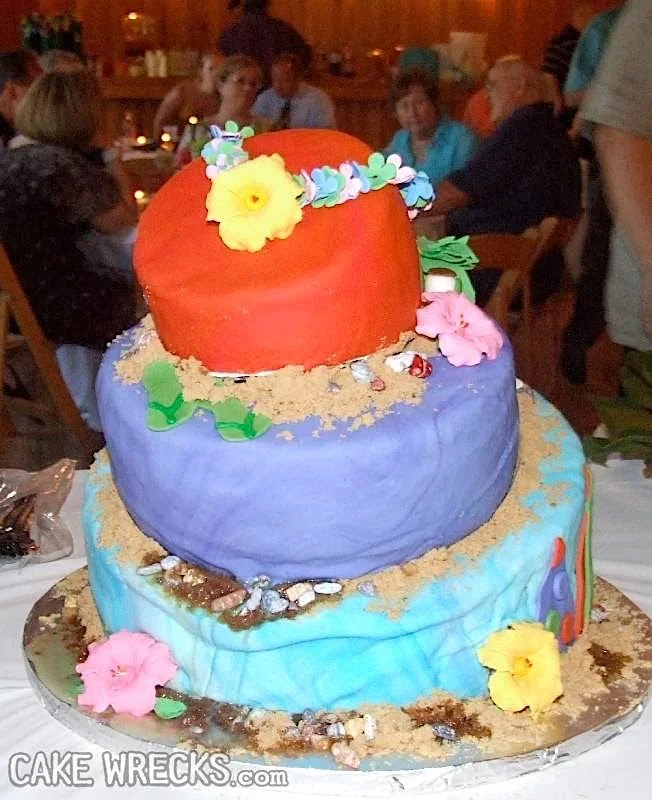
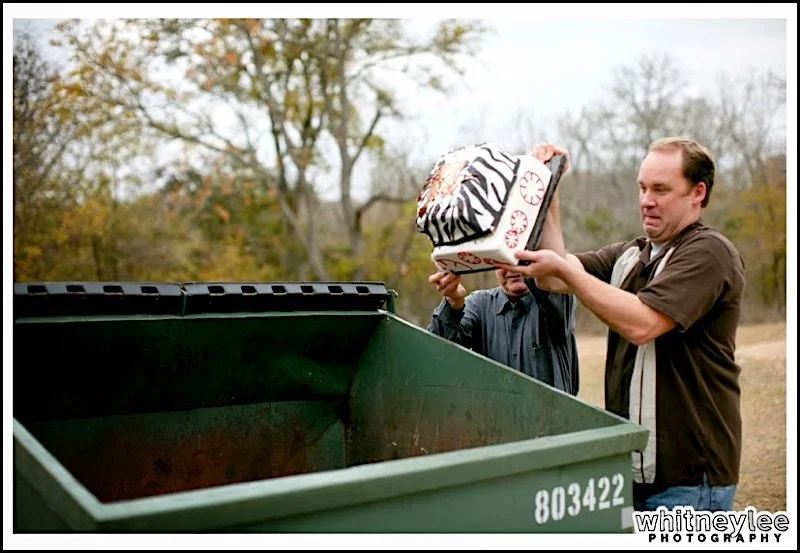
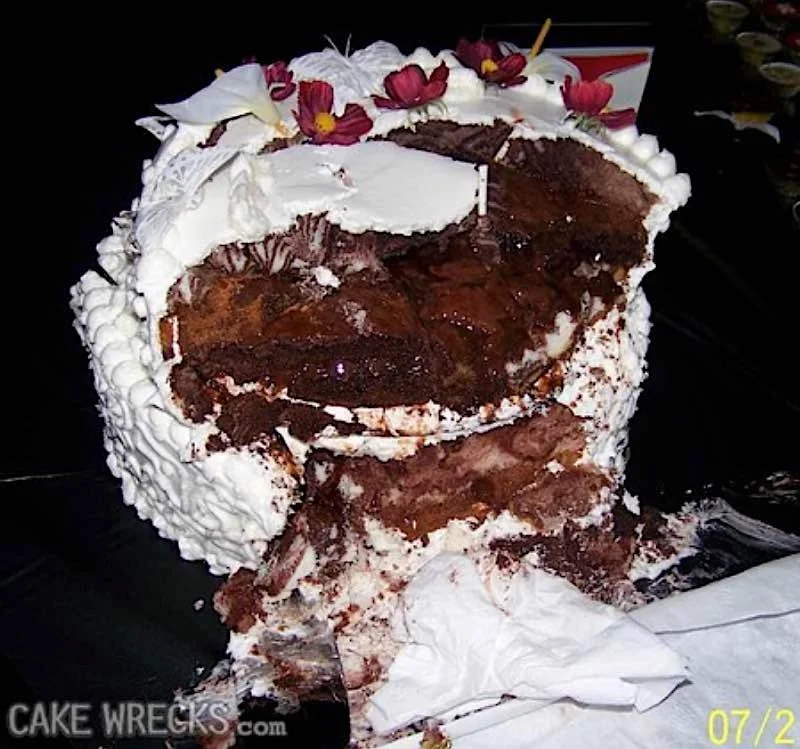
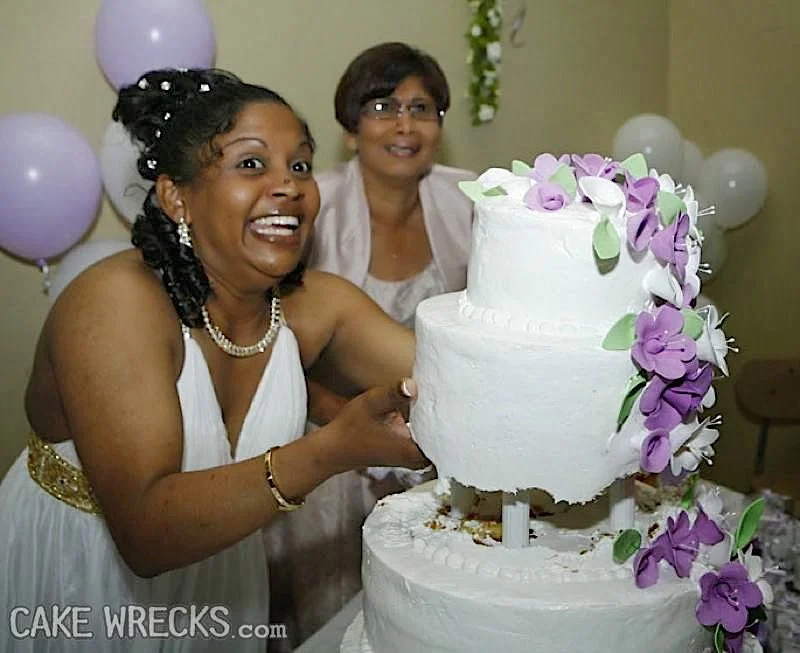
Sara M. wanted her wedding cake to be a hunk a' hunk a' burnin' love:

Image

The cake! The cake! The cake is on FI-YUR!


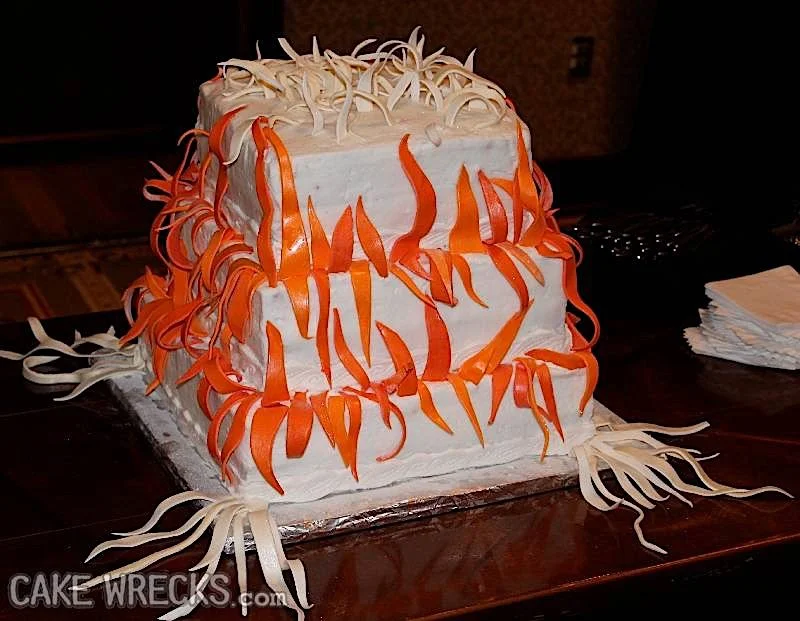
But instead, her cake just suffered from a mild burning sensation and performance issues:

Image

Wah-WAAAAH.

(That was my attempt at a slide-rule trombone effect. I know: I'm a veritable foley artist with words.)


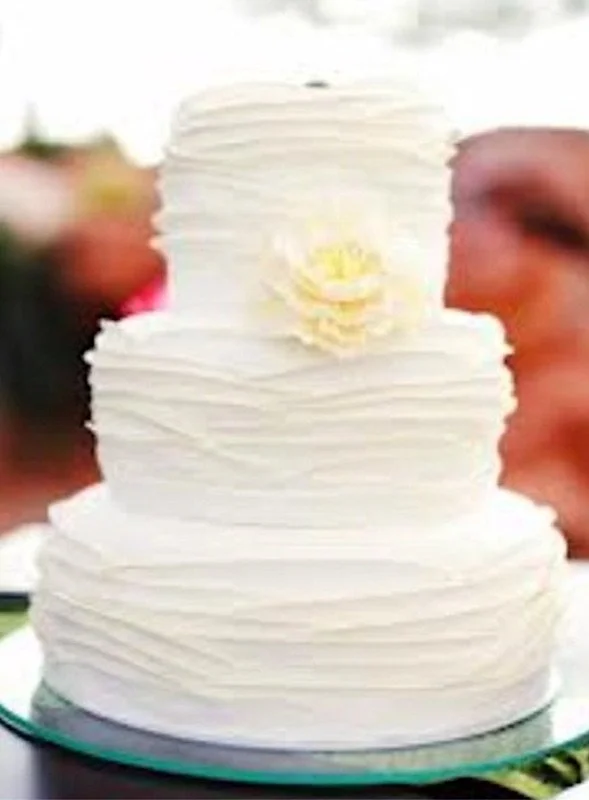
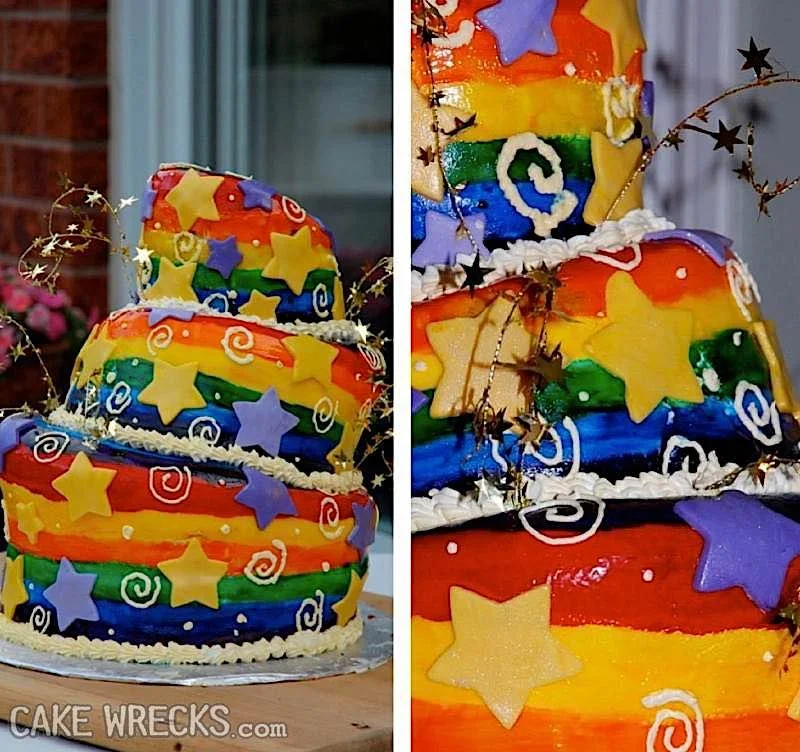
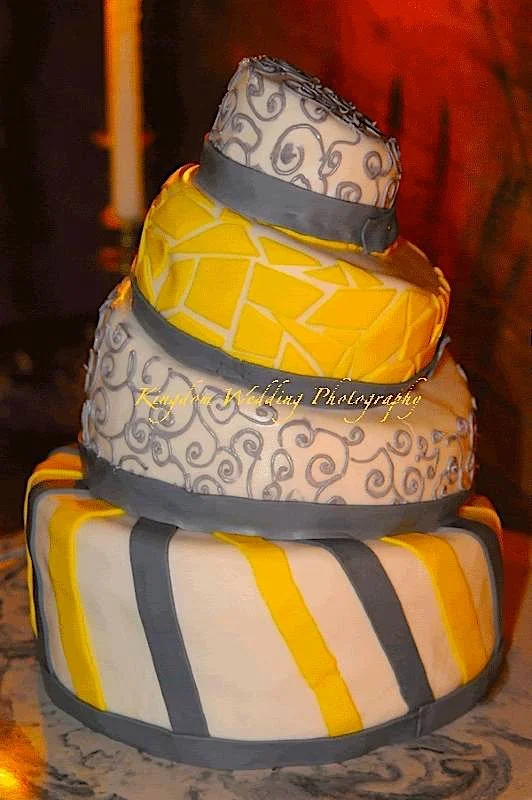
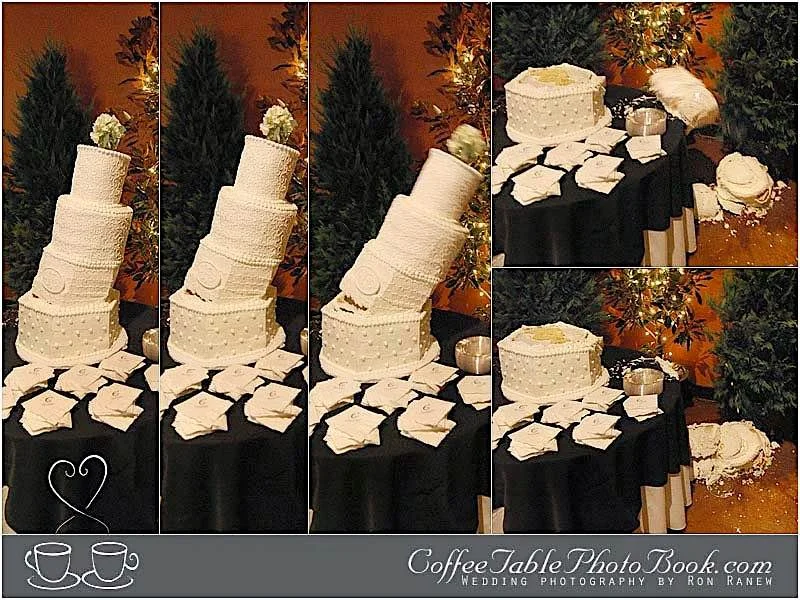
And finally, Elizabeth P. dreamed a dream of ribbon-wrapped sweetness for her big day:

Image


...but ended up with something only a mummy could love:

Image

Ouch. Uh...that's a wrap!


Thanks to all of today's brides and just remember, guys: wreck or Sweet, we're gonna need to see your wedding cake! (Oh, and we're all invited, right? RIGHT?!)

*****

P.S. When you don't have a cake to express yourself, there's always this:

Image

(Sorry I'm Late, I Didn't Want To Be Here T-shirt)

Comes in lots more colors and also mens' styles at the link.

*****

And from my other blog Epbot:

Image

Pepper grinder

Feb. 27th, 2026 05:10 am
[syndicated profile] spindyeknit_feed

Posted by AlisonH

ImagePart of me is quite sorry–any tree gone is a loss. ImageMost of me is relieved. It was an invasive planted who knows by whom in the wrong spot. The deed is done.

Turns out the core of the trunk was in very bad shape, crumbling to nothing, with the damage radiating out to the edges in a few places. We may well have dodged more than we knew.

The baby peach tree is going to do great there.Image

The Big Idea: Bernie Jean Schiebeling

Feb. 26th, 2026 09:11 pm
[syndicated profile] scalziwhatever_feed

Posted by Athena Scalzi

Image

Like blue eyes, height, or left-handedness, how much of our temper and ill manners can we contribute to our genetics? Author Bernie Jean Schiebeling explores the breakage of inherited anger, and what it’s like to fall victim to the temperament our parents passed unto us in the Big Idea for their newest novel, House, Body, Bird.

BERNIE JEAN SCHIEBELING:

My great-grandfather was not a good man.

Without getting into too many details, he was angry and abusive, so much so that my great-grandmother was able to divorce him in the late 1920s without too much trouble. After the divorce, my great-grandfather left—possibly fled—and then committed a string of burglaries across Kentucky and Tennessee while working as a door-to-door salesman. Many years later, my father met one of his ex-colleagues, who said the man had been incredible at sales. Less so at stealing, since he kept getting caught. “And,” he said, pointing at my dad’s breakfast plate, “I can tell you that you take your scrambled eggs the same way. So much pepper.”

Dad never met my great-grandfather (even Grandpa hardly knew him, since he was just a toddler during the divorce). But they both liked peppery eggs, and so do I.

Other echoes persisted too. Anger sometimes exploded from my grandfather, though less than the previous generation. My dad is calmer than his father, and I am calmer than him. Still, rage sometimes rises in me with the inevitable force of a king tide. I hear the ocean rushing in my ears—

—And I breathe through the impulse. I don’t have to do this. I don’t have to continue this tradition that—I hope—none of us wanted. 

Inheritance is never clean. We gather too much over the course of a life, too many objects imbued with too many memories, to ever pass on an uncomplicated story to our descendants. In most cases, this is a gift, the last we give to our loved ones. Sometimes, however, it is a weapon, sharp-edged and dangerous to hold, and we have to figure out how to carry it anyway, or how to put it down in a way that hurts no one else. This is the big idea of House, Body, Bird

The idea was larger than I expected. I didn’t mean for this to be a novella; I thought it would be a short story too long to sell to most markets, like most of the work I have in my drafts folder. I was about 15,000 words deep by the time I realized I was writing a book. 

In retrospect, I shouldn’t have been that surprised. Stories find their ideal length through their subject matter, and the more I thought about House, Body, Bird’s family and their home-slash-haunted-dollhouse-museum, the more I realized that the sheer amount of stuff in main character Birdie Goodbain’s inheritance—both dollhouses and the history behind those dollhouses—needed to show up on the page. I started including imagery wherever I could: descriptions of dolls, of difficult memories, of how haunted the body becomes from those memories. In the story’s earlier scenes, I wanted to crowd Birdie, make her tuck her elbows in as she navigated the rambling, watchful house.

Of course, this is only the first half of the difficult-inheritance-problem, the “Someone has willed me a weapon” half. I still had to find a good way to explore the second half of “Thanks, I hate it.” Birdie couldn’t stay scared. Thankfully, I had a solution; I just needed to reorganize some clutter.

When I first started writing the would-be short story, I had alternated between two point-of-views for Birdie, third-person limited and first-person. This created emotional whiplash as Birdie went from a meek third-person POV ruminating on the house’s creepiness to a furious first-person POV bashing through the walls with a meat tenderizer. By grouping all the third-person scenes together and following them with the first-person ones, Birdie had much cleaner character development. It’s relevant that the switch in perspective happens once Birdie commits to escaping and seizing her freedom. In that moment, she moves from third-person, where an unseen narrator observes and objectifies her (like a doll!), to first-person, where she narrates her experiences. While imagery had pushed up against the margins in the third-person section, Birdie’s opinions, observations, and memories pepper her own telling of the story. She gets space to breathe. 

In keeping with the novella’s spirit of excess, Birdie’s sections are interspersed with ones from the haunted house’s point of view. Originally, this was useful because it allowed me to reference the previous Goodbain generations with a level of detail that wouldn’t have been possible for Birdie, but the house eventually became the story’s second emotional heart. Although I worried about overwriting throughout the drafting process, a maximalist approach to storytelling was what I needed for House, Body, Bird. 

It’s funny—early on in the story, Birdie’s messed-up dad tells her, “We build, and build, and build.” The Goodbain family built and built and built their house as a way to create a family narrative worth passing on, as an attempt to build livelihoods and lives and love, and I did the same thing. I built and built and built the story to understand how Birdie’s family history loomed over her, and how she could create a new, more loving life in response to it. 


House, Body, Bird: Amazon|Barnes & Noble|Books-A-Million

Author socials: Website|Instagram|Bluesky

Oh, Look, an Airport

Feb. 26th, 2026 02:54 pm
[syndicated profile] scalziwhatever_feed

Posted by John Scalzi

Image

Strange how I keep ending up at one.

This time, however, not on business. Visiting friends because now that the novel is in I can do that. I’ll be traveling on business very soon, however, first to San Antonio and then to Tucson. The life of an author is strangely itinerant.

— JS

California Roots

Feb. 26th, 2026 04:01 pm
[syndicated profile] bookviewcafe_feed

Posted by Jill Zeller

Originally published in 2017

Between winter storms who trampled through the Puget Sound area like a stampede, leaving heaps of wet white stuff all over everything, I managed to get out of Seatac and land in Santa Rosa, Sonoma County, California. Did I mention I am a second generation Californian? No? Well, I am, my papa having been born in Los Angeles.

I love California. Just love it. The place names, when I hear them, stimulate my happy place. Griffith Park. Redondo Beach. San Lorenzo. Jack London Square. Street names in Los Angeles and San Francisco feel almost tasty: Sepulveda. Mulholland. Portola. Telegraph. Geary. So I landed in Sonoma County, which really was no more than a county I passed through on the way to visit my parents, driving from San Francisco to Lake County and Arcata. It was a relief to get north of Santa Rosa, breaking free from congested Marin County and climbing Mount Helena to Middletown, and then Lower Lake. Or zoom through Ukiah to Cloverdale to Garberville and points north.

Because of snow delays, I didn’t get to Santa Rosa until roughly 6pm. In the rain. And no way a good time to take Highway 28 over the coastal mountains to Mendocino, my final destination. I had a seat to myself on the flight down, because many people had canceled. I scored an Infinity rental because they were running low on cars. My choices were, the nice young lady told me, was the Infinity, a Cadillac and a Dodge Caravan. My choice was obvious. I’m sure she was betting on the Cadillac, as she eyed my white hair and industrially wrinkled-befreckled hands. That Infinity was a very fun drive.

Google led me to an old fashioned motel on the edge of Healdsburg, a chi-chi upscale village with many Infinities, Beamers, Audis and Teslas diagonally parked in front of $$$$ restaurants serving locally grown kale salad. The L & M is a sweet little place – just about in a normal price range but clean, cute, tidy rooms and the best breakfast I’ve had since South Africa: warm blueberry scones, a thoughtful bowl of hard boiled eggs for my protein, fresh juice and not bad coffee. Wendy the host, got me settled in my room, laughingly saying I was the last expected guest and now she could close the office. The tiniest Yorkie in the universe inspected my shoes as I registered.

Then it was my turn to test out my fancy are on the hairpin turns of Highway 28, passing numerous wineries. After an hour hike at a preserve overlooking the Russian River, I took the mountain road, having been reassured by my sister that CalTrans always sands it during the winter. Ice, you see.

Leaving Seattle at a balmy 20 degrees, the 40 degrees of California felt pretty good, but for that area that is on the cold side. When I get behind the wheel, I like to drive. Meaning: go fast. I wondered if I still had the chops to take the curves and sure enough, caught up to more cautious drivers who politely pulled aside to let me pass. No one in Washington does that. I got out of the way of one yoyo in a little low car who had some kind of important goal to make and zoomed past. I don’t like people on my butt.

I guess that all sounds like I’m an asshole behind the wheel but I’m much better than I used to be. Let’s just leave it there.

Mendocino was just as beautiful as ever. If I were rich and had a private plane, I would buy a house there. But I wouldn’t want to live there year round. Coastal fog is a bit of a plague and would depress the hell out of me. My sister’s home is in a community called The Woods, lovely acres of spiffy manufactured homes in a Redwood forest, bought, built and operated by Presbyterians. Cool.

We visited the Mendocino Art Center, viewing the work of local artists. That Art Center has been there since the 1960’s at least, because it was there when our family started vacationing in a nearby state park. It was established in 1959. We viewed the fabulous woodcuts of Emmy Lou Packard, who was buds with Frida Kahlo. I decided that to keep the great feeling Mendo generates in my heart, that I should wear handmade jewelry more often.

Mendocino is stopped in time. The city has strictly managed development, preserving the original wooden buildings of the logging town it once was. The rest of California, whose bones still rise and fall in the same places, is not there anymore. That is, not the California of my Dorothy. I haven’t been back to San Francisco for years, mostly bypassing it with my other sister and her husband, who live in Corte Made. From the Golden Gate Bridge I can see the sky line alter from decade to decade. But the hills are still there, and the Bay.

I can think about what is gone, but even Dorothy got to go home again. Too bad she didn’t get to keep those shoes.

Lean On Me

Feb. 26th, 2026 02:00 pm
[syndicated profile] cakewrecks_feed

Posted by Jen

Everybody clap your hands and sway a little, k?


Some guys and their wives
See only shame
See only sorrrrrow

Image


But if they are wise
they know that wrecks
Are so much more, oh!

Image


Lean on me
When you're stacked wrong!

Image


And I'll be your end
I'll mock you WITH this song

Image


For
It won't be lo-oo-ong
Until gravity

Image

Makes sure that you're cleeean gone!


Please, don't tell the bride
If it's a wreck, it needs no intro

Image


For
no one can tell; maybe she'll need
something sweet to throw!

Image


Lean on me!
When you're stacked wrong

Image

And I'll be your end
I'll mock you WITH this song


For
It won't be long
Until gravity

Image

Makes sure that you're clean gone!


You just call on your mother
When you need a hand

Image

These cakes need somebody to leeeean on!


I just might have a Pisa
That we never planned

Image

These cakes need somebody to leeean on!


Just faaaalll free!
(If you need to end)
Faaaaallll free
Oh, wreck it, now!

Image

Faa-AAA-aalll
free-ee-eeeeee!!


Thanks to Steve, Deanne M., James N., Rachel O., Jessica R., Carol Anne, Kat B., Richard B., Anony M., & Rebecca Z. for the wedding crash course.

[Get it? Instead of 'main course?' Eh? OH C'MON THAT WAS AWESOME.]

*****

P.S. Anyone want to bring vintage style pins back? Because this entire set of 7 lovelies is only $12:

Image

7 Pc Women's Brooch Set

OooOOOooh. I think the owl is my favorite. And the peacock. And the dragonfly.

*****

And from my other blog, Epbot:

Image
[syndicated profile] serialdiyer_feed

Posted by Christy

Welcome to this month’s edition of Furniture Fixer Uppers, amazing friends! I have a good one today. I’m sharing the prettiest antique dresser makeover! When I first spied this dresser at the thrift store back in the fall, I wasn’t sure if it was hideous or gorgeous, but what I did know is that I […]

The post The Prettiest Antique Dresser Makeover first appeared on Confessions of a Serial Do-it-Yourselfer.

The best peach there is

Feb. 26th, 2026 04:31 am
[syndicated profile] spindyeknit_feed

Posted by AlisonH

ImageIt came late afternoon yesterday. I plunked it in a pot with good soil and watered it and quick got dinner done and then went outside in the now-dark to take its picture. My phone said, Hold it steady…

The tree guy came today to give me a quote. He asked if I was in a hurry. I said I hoped to get it done before nesting season is underway.

And so the highly invasive Chinese pepper tree, the kids’ old climbing tree whose crotch is far too high now to get a foothold into and whose sticky sharp bark would shred a kid’s clothes in trying–as it did back then–and whose roots are doing damage, is going away tomorrow. It is less than my arm’s reach from the house. Its branches hang over it, a fire hazard that could get our insurance canceled. It’s time.

The new Kit Donnell peach will take its place. Far enough away from the fence. Far enough away from the house. Not too close to the fig. The arborist and I considered the thing and then marked the spot with a large rock.

We will have a living reminder of all those incredible peaches that Andy Mariani sold us of the variety that he and his late friend Kit created: the ones that were the most worth all of those drives to Morgan Hill and back on all those beautiful summer days.

They’ll be here now.

(Can you just hear the squirrels rubbing their paws in glee and going, Oh, it is ON!)

seven mary three come back

Feb. 25th, 2026 10:15 pm
[syndicated profile] wwdn_feed

Posted by Wil

This last weekend, I was in Pensacola, Florida. When I told my friend that, he said “what are you doing in Florida?” I said, “Trying to get out.” But I was actually there for Pensacon. It’s a convention that has invited me year after year, but hasn’t ever fit into my schedule until this year, so it was my first time.

Florida deserves the jokes we make about it, but my experience when I was there was quite lovely. Every person I interacted with was kind, friendly, helpful. I had an incredible piece of blackened gulf red snapper for dinner one night, my bed was comfy, and I did not have a single awkward or uncomfortable encounter with anyone at the show.

None of that is why this will be one of the most memorable conventions of my life, and I will now tell you why.

Holy. Shit.

I turned to my friend, Leah, who works with me at conventions to keep things running smoothly. “Dude, I have to come do this tomorrow.”

“Okay, we’ll take care of it,” she said.

So Saturday comes around, and I’m signing autographs at my table. Leah taps me on the shoulder and says, “it’s time to go downstairs.”

The excitement that surged inside of me threatened to explode out of my chest like Alien. I told the people who were in the line that I would be right back, I was going to fulfill a childhood dream.

We went downstairs to the photo-op area, and I apologized to the line I was cutting. They seemed to understand, my fellow fans of CHiPs, who also could not believe this was actually happening.

I bounced on the balls of my feet while I waited, and oh shit here comes Larry Wilcox. And he’s wearing a CHP uniform shirt with a name tag that says JOHN! I tried so hard to control my bouncing, but I’m pretty sure I failed.

We made eye contact and I said, “Hi, I’m Wil. I’m a huge fan and I am so excited to take a picture with you.”

“It’s so nice to meet you, I’m Larry.” We shook hands, and I didn’t keep shaking it like I did when I met Henry Rollins thank god.

There was a commotion around the corner, which could only mean one thing. Here comes Erik Estrada, much taller than I expected, and he is wearing a uniform shirt with a name tag that says PONCH.

Dude, it’s totally Ponch. Like, right there, right in front of me, are Ponch and John and I’m so excited I can’t tell if I’m going to burst into tears or throw up or what.

They take their positions on their marks, which are the same marks I had been using just a little bit earlier, and the photographer tells me that they are ready.

This is my chance. This is the one time I get to say this. I take a deep breath, and I say, “I don’t want to take up a ton of your time, so I’ll say this quickly. I grew up in Sunland-Tujunga, and you guys used to film in my neighborhood all the time.”

They looked at each other. “Sunland-Tujunga!” Larry Wilcox said. “We love Sunland-Tujunga!”

“Yeah, it was a great place to grow up. So I loved watching CHiPs, and I loved that I could see streets I recognized when I watched it.

“One day when you were filming, in like 1979, I think, my babysitter went to the set and came back with your autographs for me. I cherished them, until they were lost in a move probably 40 years ago.”

Erik Estrada’s eyes lit up and he flashed me that classic Ponch smile. I took a steadying breath.

“But this is really what I wanted to tell you: I had a rough childhood, with a lot of abuse an exploitation. I was sad and scared most of the time. But whenever you were on my TV, I was happy and I was safe. I loved CHiPs so much. You were the adults I wished I’d had in my life. You guys protected people, you stood up to bullies, and the whole cast felt like a group of people who were always there for each other. I desperately wanted that in my life, and watching CHiPs got me as close to it as I could get. So I really just want to say thank you for your work and for the joyful memories you gave me.”

“Oh, buddy,” Erick Estrada said, “thank you. Come here,” and he pulled me into a warm and loving hug.

“Thank you,” I said, “you have no idea.”

“I think maybe we do,” Larry Wilcox said, very kindly, with a warm smile. Maybe I’m not the first person to share a story like mine with them.

“Let’s take a great picture,” Erik Estrada said.

“Thank you. I’d love that,” I said.

I stood between them, they put their arms around me, and a dream came true for 9 year-old Wil.

img_20260221_1542178918006876817148513

They were such kind men. I felt seen and I felt special. All these years later, Ponch and John can still make this weird, sad, scared, little kid feel safe.

I will cherish this memory for the rest of my life.

I’m glad you’re here, and I hope you’ll come back to read more. If you’d like to get my posts in your inbox, you know what to do.

The Big Idea: Jeff Somers

Feb. 25th, 2026 05:01 pm
[syndicated profile] scalziwhatever_feed

Posted by Athena Scalzi

Image

Five funerals may seem like a lot, but this number is actually cut down considerably from author Jeff Somers’ original idea of 26 deaths. Put on your best black tie and follow along the Big Idea for his newest choose-your-own-adventure, Five Funerals.

JEFF SOMERS:

WHEN I was 14 years old—chubby, prone to wearing tie-dye t-shirts for no known reason, and gifted with inexplicable levels of confidence—I wrote a novel in just under three months. Nothing’s impossible when you have no job and live on a diet of Cookie Crisp cereal and RC Cola, and the whole writing thing is so fresh and new, you haven’t yet developed a nose for your own bad writing. Writing novels sure is easy, I thought, and for a long time I actually believed that.

35 years later, I was staring up at a poster of Edward Gorey’s The Gashlycrumb Tinies that I’ve had since college. If you’re unfamiliar with The Gashlycrumb Tinies, it’s a parody of old-fashioned alphabet books depicting how 26 blank-faced, Dickensian children die via gorgeous, intricate drawings and a series of simple rhymed couplets. I’ve been fascinated by it for most of my adult life, and I wondered what those doomed little urchins were like, how the full story of their freakish deaths would actually play out.

In other words, I wanted to write a novel about them. As with most of my thoughts, this seemed pretty brilliant to me (the inexplicable levels of confidence have only inexplicably increased with age), and somewhere in the background there was 14-year-old Jeff whispering yeah, and writing novels is easy!

Five years later, I’d filled a hard drive with trash.

It was a problem of structure: If you do the math, in this story, 26 people have to die in horrible, hilarious, darkly whimsical ways. Is 26 deaths in a single novel a lot? It is! Especially when each death needs to have unique elements and a lot of focus and page-time.

I tried structuring it like a detective novel, with one of the characters trying to figure out why all their old classmates were dying. But this quickly became repetitive—there’s a reason detective characters usually don’t investigate dozens of separate murders. You either wind up with a 1,000,000-word novel or you have to cut some corners.

I tried a draft where the deaths happened in chronological order. But this approach got tedious, because I was introducing characters just to kill them. While this was a lot of fun, it didn’t feel like a novel, like a complete story. The collapse of this draft did give me an idea, however: Short stories.

Anyone who has ever talked writing shop with me, or attended one of my Writer’s Digest workshops, knows that I am an enthusiastic short story writer (and reader), and that I regard short stories as the general cure for all writing woes. Any time I run into any sort of writing challenge, from writer’s block to Oh No I’ve Created an Insurmountable Plot Paradox (Again), my immediate solution is to stop trying to write a novel and start writing short stories about the universe and characters. This almost always works and, even when it doesn’t, I usually end up with some good short stories out of the deal. (As all working writers know, short stories are worth tens of dollars in today’s economy.)

So, I started writing stories about each character’s death, as an exercise. I didn’t worry about narrative cohesion, or pacing, or tying the story into the main novel at all. I just had fun writing 26 stories about people dying in variously hilarious, tragic, and sad ways extrapolated from Gorey’s work.

As I did this, I realized what the problem had been all along: Five Funerals isn’t a story about a bunch of kids who die and maybe deserve it. Well, it is that, but it’s also a story about loss. And memory. And how we hold people we’ve lost touch with in a kind of amber in our memories, unchanging and eternal. It was a story about that moment when you hear that someone you used to know—someone you maybe used to love—has died.

In those moments, we experience something strange: That person who’s been preserved in our head suddenly (and violently) transforms. After years or decades of being young and alive in your memory, they’re abruptly aged up—and gone. It’s a sobering, disorienting experience, and I realized that’s what I wanted Five Funerals to be—a funny, dark, hilarious story that mimicked that sense of the past rushing forward to catch up with the present. 

The short stories I’d been writing evolved into a choose-your-own-story engine, disrupting the reader’s groove and forcing them to reckon with the sudden, unwanted knowledge that this character had died. And since no one experiences time or loss the same way, readers can choose how they experience it here: When a name is flagged with a footnote in the novel, you can choose to flip to the story it’s pointing to—or not. If you do, you might find out how that character died, or discover a bit of funny or heartbreaking backstory.

You can keep following the chain of deaths, or you can return to the story where you left off. Or you can ignore all the footnotes and just read the book straight through, or randomly, or in sections. Just like we all grieve in our own way, you can read Five Funerals in your own way.

The end result, I think, is a book that explores how time slowly strips those yellowing old memories away, replacing them with the harsher truth of death and loss. Even if those losses are sometimes so weird and unexpected that you have to laugh.


Five Funerals: Amazon|Barnes & Noble|Bookshop|Apple Books|Kobo|Ruadán Books

Author socials: Website|Instagram|Bluesky|Threads

Additional links: Animated cover on Instagram and on Bluesky.

The Labor of Love

Feb. 25th, 2026 02:00 pm
[syndicated profile] cakewrecks_feed

Posted by Jen

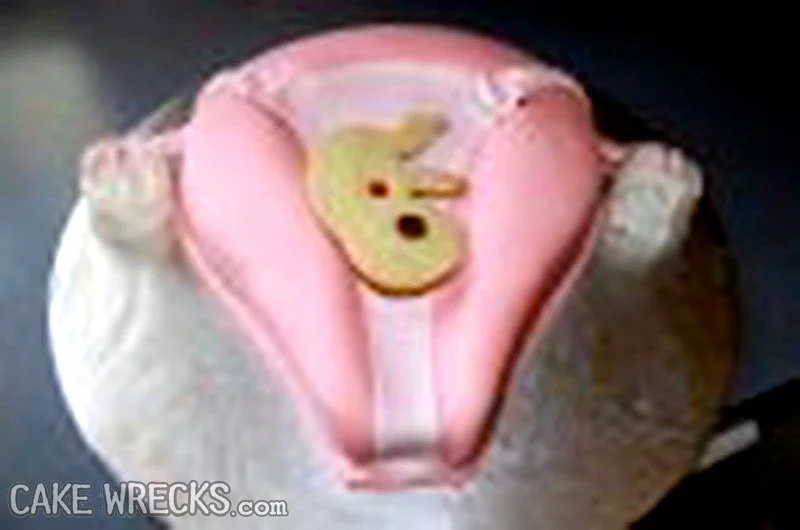
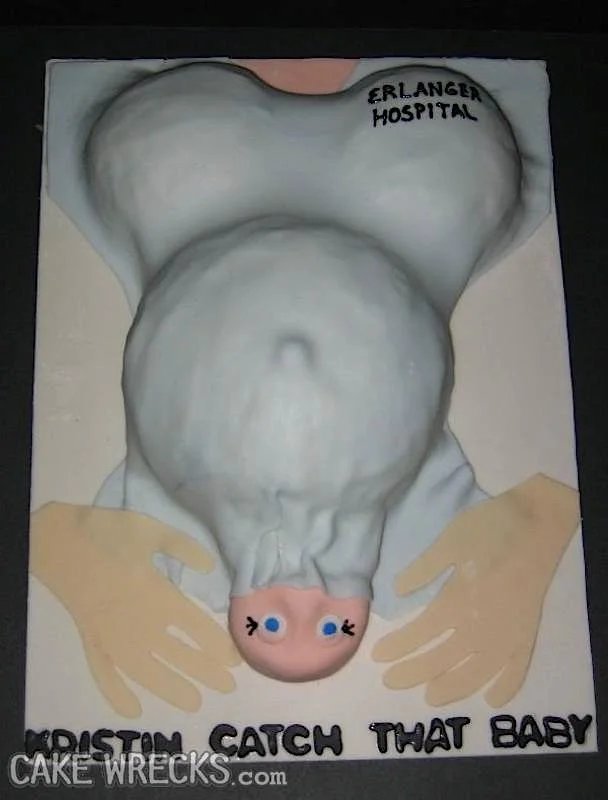
Sure, you could go with rubber duckies and baby blocks, but that's sooo last decade. Today's shower cakes are all about the biology of baby-making: tasty and educational!

Image


And while you're at it, why not congratulate dad, too?

Image


Of course, mom also did her part:

Image

Whoah, whoah, whoah! TMI, Dad, TMI!


You could even illustrate the whole process with the aid of disturbing plant analogies:

Image

Raise your hand if you're going to have nightmares about daisies sprouting Alien-style from your midsection tonight. Anyone? Anyone? Just me? Alrighty, then.


Granted, the process doesn't always start exactly the same way:

Image

Thank goodness that cup is labeled. Otherwise, we'd have some concerned coffee drinkers on our hands right about now.


And what does all this love math equal?

Image

(No, your eyes do not deceive you: that IS a Fetal Bite cookie in that there uterus cake. Excellent.)


And that brings us to the Big, Life-Changing Moment!

Image

AAAAAAUUUGGGHHHH!!


Yep, I'm changed for life.


Casey D., Heidi D., Hillary M., Kristin J., Jess, Shari W., & Tiffany D., when you're ready to have "the talk" with your kids, feel free to come back here for visual aids.

*****

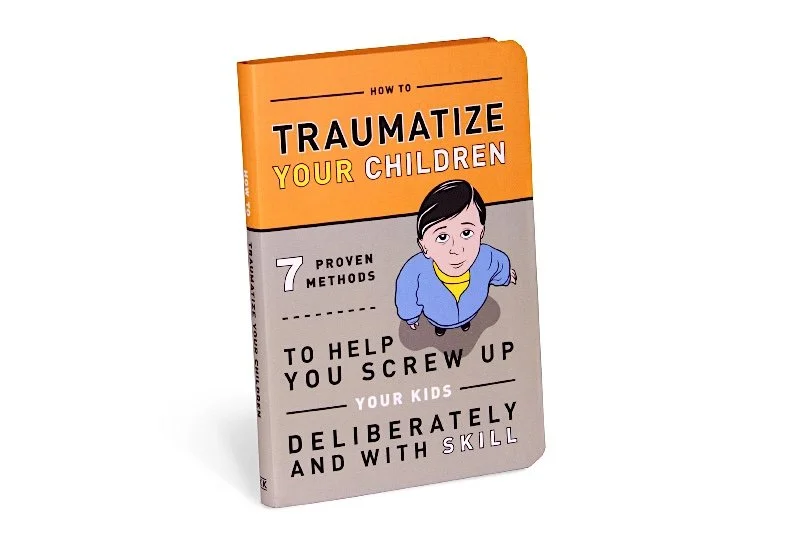
This book has over 2,000 5-star reviews and looks absolutely hysterical, definitely bookmark it for the new parents in your life:

Image

How to Traumatize Your Children: 7 Proven Methods to Help You Screw Up Your Kids Deliberately and with Skill

*****

And from my other blog, Epbot:

Image

Uh, uh, uh

Feb. 25th, 2026 04:22 am
[syndicated profile] spindyeknit_feed

Posted by AlisonH

Still randomly laughing. He didn’t say, but I bet his wife had thoughts on the subject…

Last week I offered the surgeon his choice of a few hats. Another one was on my needles just then–he knew I’d made them.

He hesitated and his face looked as if I’d put him on the spot so I assured him, You don’t have to. It took him a moment but okay, he found a shades-of-brown Rios one and let me give it to him.

And I thought to myself, You’re thinking skiing and Tahoe and adequate warmth and I’m sure you do have some synthetic thing more windproof than these. No sweat. The irony is that the one he did take was the least warm of them–although, the easiest to tuck away.

Today was a post-op follow-up and I’m the one driving at the moment.

I almost laughed (don’t, don’t, I didn’t) when the guy near the end stopped and turned away from inspecting stitches to me and asked me about his new hat. With quite a bit of enthusiasm. He told me how much he loved it. How he keeps it in his pocket (which he patted.) It was so soft! Was it wool? ..Merino? (Said hesitatingly, apparently unsure that I would know what merino meant. Oh you sweet summer child.)

I told him yes, merino, that it was super wash treated so you could run it through the laundry but it would fuzz out so if you don’t want that then hand wash, and that it was hand dyed (let’s not get into the granularity of kettle dyeing descriptions.)

He very much appreciated it.

And I so wanted to tell his wife thank you. Still laughing. He’s a quick and willing study, for sure.

The Big Idea: Danielle Girard

Feb. 24th, 2026 06:05 pm
[syndicated profile] scalziwhatever_feed

Posted by Athena Scalzi

Image

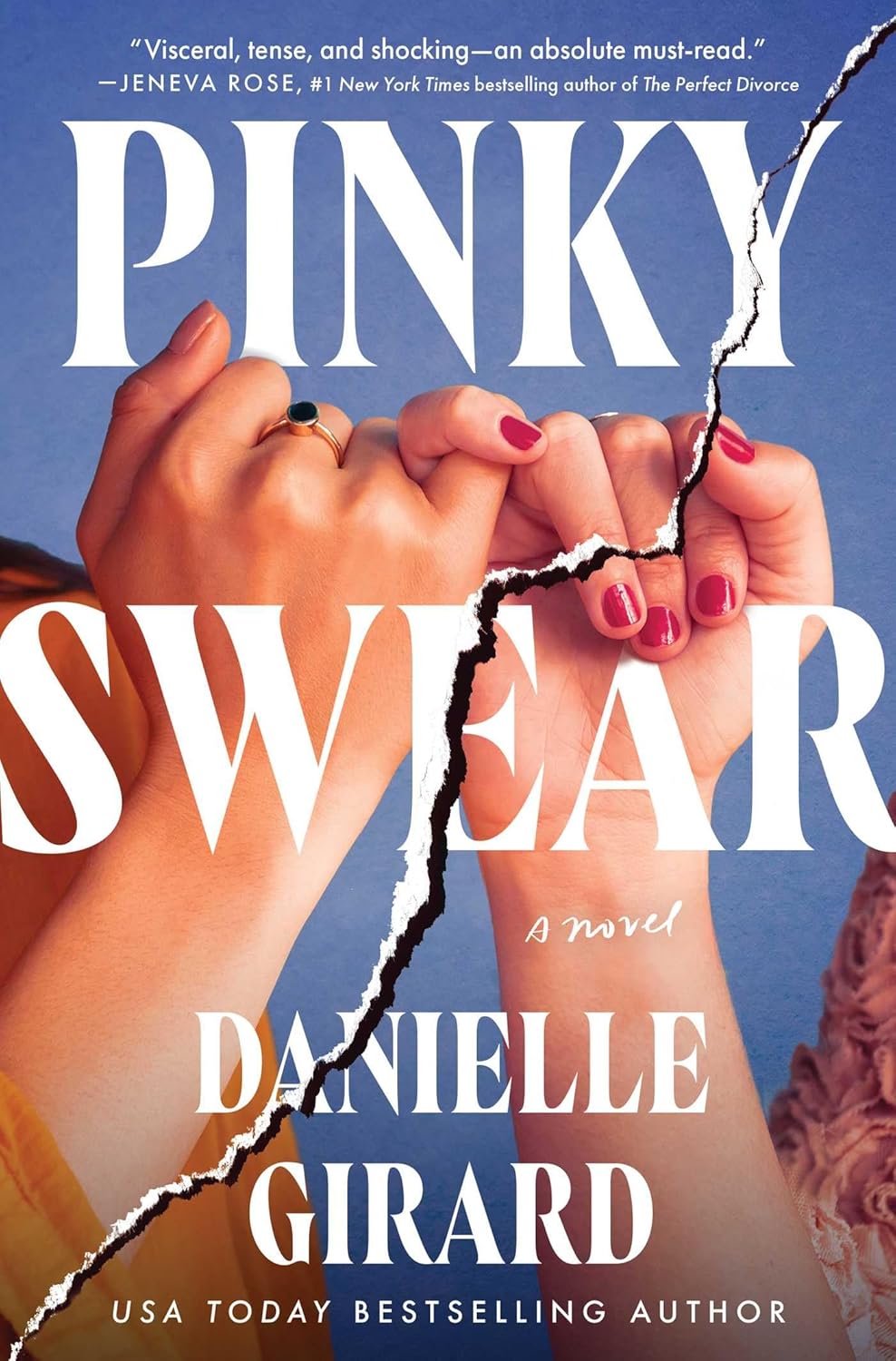
Motherhood is a term that has many meanings, and looks a little different for everyone. It is also something that comes with a lot of questions, and though she may not have all the answers, author Danielle Girard explores these ideas in the Big Idea for her newest novel, Pinky Swear.

DANIELLE GIRARD:

Most of my novels have begun with a dramatic, explosive scene—gunfire, explosives, or at the very least, a murder. But the premise that caught me by the throat for my latest novel, Pinky Swear, was quieter and in so many ways, much more terrifying.

Pinky Swear is a story about a woman whose best friend agrees to be her surrogate and then, four days before the baby is due, disappears. It was the emotional immediacy of that hook that made it so compelling to write. Not only is the protagonist confronting her fear of losing a child (and one she’s never met) but also the abandonment of her best friend, and the persistent doubts about whether their decades-long friendship was a fraud.

What I didn’t expect initially was how the story opened up issues of motherhood itself. The most obvious ones are the grief of infertility and the question of what motherhood really means when biology refuses to cooperate. But beneath those is the larger theme of what makes a woman a mother? Is it biology? Pregnancy? Blood? Or is it intention, sacrifice, love, and the willingness to show up no matter the cost?

My father was an OB/GYN and, when I was growing up, babies and pregnancies were everyday dinner conversations—the joys and also the heartaches. Today, we seem to live in a culture that often defines womanhood and motherhood by a body’s ability to conceive, carry, and give birth. Infertility can feel like the unspoken failure at every baby shower, in every passing comment and well-meaning reassurance that doesn’t quite land.

In Pinky Swear, the protagonist has already endured that loss. Her inability to carry a child isn’t just a medical fact; it’s an emotional wound that reshapes how she sees herself and her place in the world. Turning to surrogacy is an act of hope, but also an act of profound vulnerability. She must trust another woman not only with her future child, but with her deepest wish.

In this dynamic, the story, rather unexpectedly to this author, became a conversation between devotion and betrayal, selflessness and selfishness. The pregnancy, like motherhood itself, carries an undeniable power, binding the two women together in ways that are both intimate and irreversible. The surrogate’s disappearance forces both the protagonist and the reader to confront uncomfortable truths: that love can coexist with resentment, that good intentions can sour, and that even lifelong promises—such as pinky swears made in childhood—can break under the weight of adult realities.

Writing this book meant sitting with uncomfortable questions. If you can’t carry your own child, are you somehow less entitled to motherhood? If another woman brings your baby into the world, where does ownership of that child’s love begin and end? And if a child is taken from you at the last possible moment, can you still call yourself a mother?

Pinky Swear asks readers to sit with the ache of unmet expectations and the messy, often painful reality of female relationships. It asks us to reconsider the stories we tell about motherhood, and to expand them beyond biology into something more human, more forgiving, and truer — that being a mother isn’t about carrying a child inside your body, but about the deep, resilient power of love, no matter the cost.

As I hope readers will do when they read Pinky Swear, I found myself asking not just what I hope I would do in such circumstances, but who I would be. Bitter or resilient. Closed off or open-hearted. Defined by loss or transformed by it. When the story ends, I believe the protagonist finds herself exactly where she was meant to be, and I hope readers will agree.

—-

Pinky Swear: Amazon|Barnes & Noble|Bookshop

Author socials: Website|Facebook|Instagram|YouTube 

Face, Meet Palm

Feb. 24th, 2026 02:00 pm
[syndicated profile] cakewrecks_feed

Posted by john (the hubby of Jen)

Image
Image
 
Image
Image
 
Image
Image
 
Image
Image
 
Image
Image
Image
Image


Thanks to Ellen K., Kathryn E., Julie V., Louise H., Alexander O., Jessica D., and Lauren H. for today's self-confidence booster.

*****

P.S. My "related searches" kind of got away from me today, but I think you'll approve:

Image

"Hiss" Punny Cats Parody T-Shirt

Lots more colors and shirt styles available at the link.

*****

And from my other blog, Epbot:

Image

Gold and Glass Lamp Set Makeover

Feb. 24th, 2026 08:55 am
[syndicated profile] serialdiyer_feed

Posted by Christy

Hello, lovelies! I have a quickie gold and glass lamp set makeover to share with y’all today! I have been working behind the scenes on a large piece for Thursday, so this little set was perfect to share with you since it took me no time at all to redo! I paid $7.99 each for […]

The post Gold and Glass Lamp Set Makeover first appeared on Confessions of a Serial Do-it-Yourselfer.

[syndicated profile] bookviewcafe_feed

Posted by News Editor

Murder at the Brighton Inn by Alicia RasleyMurder at the Brighton Inn
Regency CSI #1
by Alicia Rasley

Their secret meeting at the Brighton Inn is interrupted by a man from the past…. and a murder unsolved. Can she rely on a man she has never trusted?

It’s a decade after Napoleon’s defeat, but the war still haunts even the victors. Linked by family and by grief, divided by social class, Russian widow Natasha and navy doctor Matthew have lived for years in mutual distrust. But when she’s suspected of killing a man from her past, she reaches out to Sir Matthew for help. It takes both his medical training and her intuition to solve the mystery of the murder at the Brighton Inn– and the secret of her own troubled past.

Regency CSI Book 1
____
Had she a choice, Alicia Rasley would be living in an English village in 1816, writing with a quill pen, and solving mysteries. Unfortunately, she actually lives in Indiana in the 21st Century, types on a laptop, and teaches college students the mysteries of grammar. Her books have received numerous awards, including the RITA for Best Regency Novel.

Buy Murder at the Brighton Inn at BVC Ebookstore

Read a Sample:
Chapter One: An Urgent Request

Sussex, May 1826

This had all the makings of a dirty evening— a dim sun, a low yellow horizon, a grey blankness in the east. Back in the war, Matt Holt had been a ship’s surgeon, so he knew the signs of a storm, and this might be a batten-down one. If he’d had any sense, he would have stayed in his own library by the fire, a good kidney monograph in hand and a great brandy in the glass. But instead, he was dismounting in the walled yard of the old Brighton Road inn, handing his reins to a stammering stable boy, and setting off to rescue a woman he didn’t even like.

As he stepped across the threshold, he felt in his pocket for the note a groom had delivered. Matt, darling, it began, and it meant something that she was as cynical as he, to call him darling when she didn’t like him any more than he liked her. No, she was more cynical, because she had confidence that a stupid endearment could bring him out on an evening with a storm gathering in the east. And she was right, wasn’t she, because here he was.

Natasha was sitting on a bench in the inn’s front hall, a single leather bag by her feet, composed amidst the bustle of the travelers and staff. After he wended his way through the crowd, he called out her name, and she rose, as gracefully as if she owned the place. But then she gave him a lopsided smile and said, “I am so glad it is you!” He didn’t have time to ask her who else it would have been, considering she’d summoned him, as she added rapidly, “I was on my way to the King’s fête in Brighton. But I was stranded. I did try to find your house.” She gestured to her hem. There was three inches of dust on the grey merino.

“You walked?”

“Miles and miles. In circles around this town. All roads, it seems, lead to Trome. You know,” she added, her expression growing steely, “in Russia, there are lovely long straight roads.”

“Yes, I hear those long lovely straight Russian roads led Bonaparte right into Moscow.”

She scowled at him, and then must have remembered she was meaning to ask him for a favor, because her face smoothed out and she didn’t look like Lady Macbeth anymore. In fact, she looked beautiful and tragic, and he grew wary.

They hadn’t seen each other since Twelfth Night, when the entire remaining Danford clan had gathered for the holiday, and Matt, seeking a refuge from his late wife’s living relations, found Natasha in the nursery with all the children, including his own. He’d been wary then too, for his children had lived with her after their mother’s death, and he had never quite overcome the suspicion that she’d take them back if she could.

Now, however, the children were far away and safe with their minders, and there was only the two of them, not counting of course the dozen or so staff and guests milling around them in this hall. “Matthew,” she started.

“You need money.” It seemed just as implausible as when he first read her note. “Why do you need money? Charlie left you well-fixed.” He knew precisely how well-fixed, as he was trustee of his friend’s fortune, and guardian to their son. “And what are you thinking, traveling alone like this?”

And she scowled at him again and launched into a long explanation of taking her son back to his tutor, and proceeding on the main road towards Brighton and the King’s week-long birthday fête, and of a coachman and an Abigail who fell rather suddenly in love and eloped, leaving her here at the inn.

He took her arm and led her deeper into the hall, where at least there was a fire, and a proprietor at the counter. “Taking the carriage with them.”

“And,” she said, “my purse. It was very romantic.”

“Trust you to find felony romantic. I gather you didn’t bother to call the constable.”

She made an airy gesture. “It was a hired carriage. I’ve no doubt the owner will send for a constable.”

“When there is no chance of tracking their passage.” He shook his head. “So finding yourself penniless, you went looking for my house?” He glanced around at the crowded hall, at all the fête-bound others who had stopped here also to shelter from the coming storm. “You could, no doubt, get a seat with one of those.” The half-smile curving her mouth told him that she wasn’t interested. “You don’t want to attend the fête any longer?”

Immediately the smile vanished. “Of course I do. It promised to be the most vivid event to end the season. The invitation said exactly that. Vivid. I am desolated to miss it. And I am desolate here.” There was the one flash of pleasure when she used the same word two different ways— English was her third language, and occasionally still a novelty. But then she composed herself and looked tragic and lost again, and he gestured for her to continue before he made any stupid promises.

She said, “But I haven’t my trunk or my fête dresses, and I remembered you lived near Trome. But I couldn’t find it from here.” Her scornful gesture took in the whole of the South Downs and its twisting country lanes. “And I realized it was for the best, for it wouldn’t be proper, would it, for me to come to your abode” (he read her prim tone as a critique of the absurdity of English propriety, which was fair enough) “and I came back here. But the gentleman landlord—” this was said with the sort of acid that probably sounded better in her native Russianized French— “refused me room.”

The gentleman landlord was gazing at the door slamming closed after a little maid. He said distractedly, “Offered you room. Offered you the cottage out back, in fact, where my own mother stays. Safe and quiet, away from the hubbub. But you hadn’t the rent.”

Natasha ignored this and said to Matt, “My purse was gone.”

“So you thought of sending for me,” Matthew marveled. “I’m flattered.”

“You should be. It was extremely difficult for me.” She touched her ear, where sparkled something diamond and blue and expensive. “First I offered him my earbobs, but he refused.”

Matthew looked over at the landlord, who had the stubborn red face so common here on the Downs. “You realize one of those could have bought you a new stable.”

“King’s currency is plenty good enough, this being the kingdom,” the man said. “And I’ll take some now, if you want to get a room for your lady friend.”

“She is not my lady friend. She’s my—” He didn’t know what to call her. She was his best friend’s widow. She was his late wife’s best friend. Their spouses had been twins. They were family, somehow. Certainly. Somehow. So he resorted to the all-purpose term country folk used for kin. “She’s my cousin.”

The man’s eyes flickered at the title, but he said sturdily, “Well, your cousin’s room will cost a florin. Not an earbob. There’s another lady sent ahead she’s coming in, and she will have coins, I wager.”

There was a line gathering behind them, headed by a young dandy in buff and yellow who was muttering something about the blasted storm and the blasted delay. Matthew shot him a grim glance, and slid a couple shillings across the counter, where they disappeared quickly into the till.

The landlord added, “We run a respectable inn here,” as if Matt had disputed this. “You’ll have to sign the ledger, milady, and—” his voice dropped warningly, “with your own name.” He pushed his leatherbound book towards Natasha, and without demur she used the attached pencil to dash off her name at the bottom of the list.

Her smile told him that she was doing something mildly wicked, so Matt glanced at what she was writing. Not Lady Danford, that was certain. Or rather she’d written those words, but in that Russian alphabet, what did they call it, Cyrillic, the letters oddly familiar but completely alien. As the landlord called to the gangly stable lad to carry her bag out to the cottage in the back, she dropped the pencil and closed the book and turned to Matt. “Let me at least,” she said, slipping a hand on his arm and tugging him away, “give you supper before you head back home.”

“You are penniless, remember?”

She smiled at him. “Only you must add it to my account.”

“Perhaps you should just give me your earbobs as payment.”

“Not now that I know how dear they are! And here Charles told me they were just well-crafted paste.”

Matt laughed. “I was with him when he purchased them, and I can assure you, they’re not paste.”

“You were with him? Why, then, did he tell me they were false?”

“So you would accept them, I suppose. He was always besotted with you, eager to please you. And he knew you were not one for expensive fripperies.”

“That is true,” she said, and she fell silent then.

Just as well, for the landlord was behind them, brandishing his towel, avowing that this was a coaching inn, mostly for the mailcoach, and he hadn’t fancy facilities for nobs, much less lady nobs, and the supper wasn’t fit for the likes of them.

This diatribe kept up until they were in the supper room, a low-beamed place with a scattering of locals, none of whom Matt recognized, fortunately, at the long tables. He’d never been here, hard as it was to believe, as he lived not three miles over the ridge. But this was across the main road from his own town, and not in the way of his usual medical rounds. He liked to think if he’d ever doctored anyone in this house, the innkeeper would be more forthcoming.

From the far door came a billowing of steam, followed by a woman in a pristine apron and a fierce expression and wooden spoon. The wife and cook, apparently. She fastened her gaze on them and smiled, her face suddenly transformed by the pleasure, and she came bustling over just as Matt brushed off the landlord’s protest. “You are on the Brighton Road, man,” Matt said. “You have to have had a lady in here once or twice. You said you did, for you kept that back cottage for ladies. If you give her room, you have to give her supper. That’s the law.” He was a physician, not a barrister, and didn’t know if there was any law to that effect, but if not, there should be. At least Natasha, for once, didn’t object.

The landlord sullenly allowed that he’d had one or two ladies here in his time, and his wife broke in gaily, “Had one just sent her driver to secure a place for her to wait out the storm! But she waren’t quick enough for the lady cottage if your ladyship has it. Ladies are most welcome here, and safe too, we make good sure of that, I tell you.” She shot a sharp glance at her husband and said with a beam at Matthew, “You’ll be snug in the snug, I’ll warrant, you and your lady wife.”

Matt didn’t bother to protest again that she was not his lady wife, and Natasha did no more than cast a smile back at him and follow the woman to the little walled booth near the kitchen. The landlord, however, was made of stronger stuff. “She hain’t ’is lady wife,” he grumbled, to them, his wife, or the room at large, Matt couldn’t tell. But the old man was just getting started. “We got no truck with wasters here, no matter how much the nob they come over—”

His wife interrupted him again. “Aye, and no riff-raff of the sort that would trouble a lady, don’t you frash none on that. Just slip in there, milady, and milord too, and Tuppen here will send a bottle of our best claret round, and the supper too.”

“’At’ll cost you,” the landlord muttered, and added, “And don’t be expectin‘ that fancy cookin‘. We do plain and simple Sussex food.”

“And that will be just delightful,” Natasha interposed, sliding into the dark snug. “A candle, however, would be useful.”

The innwife gave her husband a sharp prod, and he went off scowling to attend to what he clearly considered the unreasonable expectations of nobs. His more ambitious wife, however, gave them a smile, and promised to send the serving maid over right quick.

It wasn’t until they were settled in the snug, candle flickering, hidden just a few feet away from locals playing cards in the taproom, that he remembered what he’d wanted to say since he’d got her note. “You should not be travelling alone.”

“I was not alone. I told you. I was with—”

“A coachman and Abigail. Who ran away together. Yes, I am going to write that up as a melodrama for Drury Lane.” He liked to say things that made her scowl that way. She had a pretty frown, no doubt, and a prettier smile. But the scowl was the most amusing of all. “You are a lady alone. You shouldn’t be on the road at all, without a chaperone.”

Now she glared at him. “Matthew, I am old enough to be a chaperone for others. I can certainly chaperone my own little self. It is not as if Charlie’s maiden aunt Ella would be much use in a fight with highwaymen. And I am hardly some naif who has never travelled beyond Surrey. I was, after all, born in Russia.”

He inclined his head at this undoubted fact, but gamely kept trying to defend the good name she was not herself willing to defend. “You should remember your reputation.”

“I haven’t a toss for reputation. Goodness, I would be confined to home if I worried about my reputation— and why would I? I am not some deb on the prowl for a husband, and anyway, I wouldn’t want one who would be frightened away by a bit of gossip.”

He couldn’t argue with that, and couldn’t imagine her on the prowl for any husband at all. “You still must have a care for those who would see you out unchaperoned and want to cast aspersions.”

She shook her head. “You see— I mean, you do see. But most people do not. See me, that is. I am nothing to them, not a pretty maiden about to be married off. No longer the wife of an important man. To the world, I am quite invisible, which is, of course, precisely agreeable to me.”

He regarded her closely, for what she said sounded so very sad, even in that amused voice of hers. But she did not seem sad, looking back at him with that faint defiance, and he forbore saying that she was of course important, if no one else, to their children. Just as well he held that back, true as it was, for it would have sounded as if they had children in common. So he contented himself with what even he had to admit was the most pro forma mention of the danger of the open roads. He might have known she would toss her head and mention, of course, who else—

“Lady Hester Stanhope.” She brandished this name triumphantly. “I am in correspondence with her, and I assure you, she has told me of travels far more hazardous than the Brighton Road. She traveled through Arabia. She dressed in men’s clothing to hide her identity!”

“Lady Hester Stanhope has much to answer for,” Matthew said, “putting so many errant ideas into female heads.”

“That they can have adventures too? What, the excitement should be reserved only for men?”

He thought of the years he’d spent in the Navy at the height of the war, another year as a physician to the ship with the prisoner Bonaparte, and the official racketing about the continent afterwards, as consultant to the ambassador rebuilding the broken Europe. After all that, he’d decided he’d had enough excitement to suit him for the rest of his life. But Natasha was regarding him with those sable-dark glittering eyes, and he felt something he’d assumed faded and dead stir to life. He felt a moment of danger, but quashed it quick. Natasha wasn’t his charge, fortunately, and anyway, he just wanted his supper and a return to his home and his book and his fire, and the quiet life that had taken so much to attain but had not heretofore required great effort to maintain. To steer the conversation back into safe channels, he asked, “So what is your plan, if you are determined to forge your path alone through the coming storm?”

“I must, of course, hire a carriage on the morrow. That much is clear.” She frowned a bit, and he took this to mean that, independent lady though she was, she’d rather assumed he would take care of the arrangements. And he probably would, though not without tormenting her first.

“I don’t know if I recall how that’s accomplished, hiring a carriage, now that I have attained the ranks of nobhood, with a coach of my very own.”

“I am sure it will come back to you in good time,” she retorted. “After all, I am set here for the night, and shan’t need the carriage in any haste. And tomorrow perhaps I will spare you the trouble of hiring, and just borrow yours.”

“Oh, but there’d be no adventure in that!”

Before Matthew could tease her with questions of the type of coach desired and the marital status of any prospective coachman, the landlord passed by their table, halting just a moment to look not at them but at the bare table before them. “M’daughter,” he grumbled, “she’ll be here with your food soon enough.” But the glance he cast back at the door was wary and annoyed, and he called out sharply, “Bess! In here! Now!”

Matt, who had a daughter of his own, felt an unwilling sympathy as the errant maid trailed in from the back hall, all flushed and distracted, her apron askew and her gaze dreamy. Natasha caught his eye and mouthed Just been kissed, which would indeed account for the disarranged fair hair and plumpened lips, not to mention the landlord’s annoyance. The girl snapped to attention when she saw her father’s abrupt gesture, and with a murmur of apology, dashed into the kitchen.

She couldn’t escape the scolding even so; the landlord left them and went through the swinging door, and a moment later they heard his harsh voice. His Sussex dialect had got so deep that even Matt, who had grown up near here, could make out little but the name of Wat and walking out with the lads and some terms a man should perhaps not call his daughter. When the girl came out with two plates, her face was still flushed, but now there was a streak on one cheek where she’d wiped her tears.

“Are you not glad,” Natasha said when the girl had left their soup before them, “that Nora isn’t yet so old?”

She’d spoken his thoughts exactly. “Soon enough, though,” he said.

And then, very serious suddenly, she said, “I would not be a girl of that age again for all the world.” When she caught his curious glance, her mood changed, and she said lightly, “That is, I distantly recall being so young.”

At least they were hidden here in the snug, which was fortunate, as Matt from his perspective had seen pass by a few people he might have recognized, an elderly lady who had once talked to him for a quarter hour about her songbird’s lame leg, as if he were an animal minder, and that worthless St. James wastrel in yellow breeches, and more he supposed of the king’s fêters taking refuge from the storm. They wouldn’t see him here behind the confines of the booth, and more to the point, they couldn’t see Natasha without actually entering this private room and peering over the half wall. “You don’t seem to care a rip about your reputation.”

“And what of yours? Imagine the damage it would do to your consulting physician’s image if you were to be seen here with me.”

Matt shook his head, smiling, refusing to be baited. “My professional image, such as it is, was all the result of luck, happening to treat a sailor who turned out to be rather important.”

Very important,” Natasha agreed, her dark eyes dancing. “And it wasn’t luck. You were called in precisely because the admiral knew you could save Prince William’s arm. So perhaps you were right— your reputation was made unassailable years ago.”

“Many years ago. Before the war ended,” Matt said, but it was true enough. Among those who mattered— the physicians who referred the difficult cases to him, the wealthy and well-connected who wanted their doctor to have a title and a royal patron— a reputation once established could last forever. And even a taproom supper with a dark-eyed lady would not cause much damage. He was, at any rate, no more than a superior servant, consulted only when he was useful and ignored otherwise, which was, he supposed, precisely as he preferred.

But she was not anyone’s servant, however superior. She was a society lady, invited to balls and ridottos and king’s fêtes, and presumably just as easily uninvited. He was about to remind her of that hazardous position, but then, in a gracious but still somehow abrupt way, Natasha asked about his children. It was in that particular protective tone she took when she spoke about them. He should have, he supposed, been grateful that she cared so, but then it reminded him of her assumption of possession, and grew stern. “They are well enough. You needn’t worry.”

“I am not worried. But they are my concern, surely. My son’s cousins, and my nephew and niece.”

“That is all they are. No more than that. And only by marriage.” That angered him, that she would, after so long, assert some ownership or whatever it was. “You take too much on yourself when you think otherwise.”

She exclaimed, “Matthew, truly, you can’t think I meant them harm when I took care of them.”

They had never actually had this out, not in all the many times they’d met at those incessant Danford family gatherings. After so many years at war, he supposed, he’d learned to keep the peace. But tonight he was feeling restless and bemused, and she was so unapologetically herself, expecting that whatever she wanted was, perforce, the right.

This was, of course, why they had never liked each other. It was always this between them— her high-handed ways, his resentments— and for a moment they were there the two of them again, alone in this room with their animosity. Then he said, “I knew you wouldn’t hurt them. But to come back and discover them abducted—”

“They weren’t abducted, no matter what that nurse you hired said.” Natasha turned her face pugnaciously towards him. “They should have been with their family, that was all, and that was my son and I.”

He recalled arriving home seven years ago from that disastrous posting abroad, still half-mad from the loss of his wife, and finding his children gone too, and the sullen nurse muttering only about the “furrin lady” who had taken them. Of course, he’d known then who it was, and that had decreased the anxiety if not the anger. And to find her unrepentant, even defiant, and proposing— well. To take his children from him for good. He said, “They were, you forgot, mine.”

“They were their mother’s too. And—” She broke off, but the implication was clear. She was saying she knew what Amy would have wanted.

“You presume too much,”

“Perhaps so.” Then she gave him that look, not quite up to the point of wicked, but menacing in its way. “I might have been presumptuous, but I was right. And it worked.”

“It worked? How is that?”

“Well, you retired from the Navy, and came home, and bought the house, and settled the children there. And resumed your family life.” She added in a steely tone, “As Amy would have wanted.”

That was all true. But he didn’t need to be reminded, did he? After traveling the world, he had ended up where he’d started, rearing his children in the next town from where he’d been born, setting up a consulting practice, and quitting his destructive ways. “If you’re waiting for me to thank you—”

“No.” Her smile was brighter now. “It’s enough if we have forgiven each other.”

That was just like her, to present that they were equally culpable and in need of forgiveness.

But finally he let it go. It was so long ago, and he gave up the long suspicion that this had been her presumptuous grab for a family not her own. “I suppose you meant for the best.”

She smiled again, as if she knew he didn’t entirely mean that. “Friends again, then?”

It was no use saying that they hadn’t been friends in the first place, that only chance and their spouses’ twinship ever brought them together. And, of course, the loss. He took a deep breath, and was about to agree. But his still somewhat grudging words were interrupted by the taproom door opening and slamming shut. Then came a burst of speech from the cardplayers, hidden away in the corner— a garbled request, a swift and bitter denial, a short silence, and finally the slap of cards on the table.

Matt was, in the end, a man all too used to combat, and instinctively he rose and looked over the top of the snug wall into the tap room. There were the cardplayers gathered around an oak table, but two were standing, their backs to the others. One was a powerful man in a silver coat, as inappropriate for this setting as the other man’s yellow breeches. The yellow-breeched one spoke something calm, and the other responded sharply back. The exchange was audible, but the words were not clear. Another language? Matt couldn’t hear enough to tell for sure which. The one in the yellow breeches— a fête-bound wastrel, no doubt— walked away, and the other man sank down into his chair and took up his cards.

It was nothing special as far as taproom encounters went, the nascent conflict descending not into a battle— which might have been entertaining— just a hasty retreat. Still, something had intrigued Natasha, for she had inclined her head to listen harder. What was it? Matt didn’t ask as he retook his seat. He knew her well enough to know that she wouldn’t, or perhaps couldn’t, explain. But something had alerted her, for she straightened, alert, wary. But now with the argument faded, she subsided, taking up her spoon. She held it up, still listening, but when she caught his questioning glance, she gave a little laugh and turned back to him.

“That was Russian, wasn’t it?” he said.

She tilted her head and gave him a wary look. “Was it? We spoke mostly French, of course, in St. Petersburg.”

“Even to your servants?”

But there wasn’t time to speculate, for the landlord returned with a dusty bottle of claret, and Matthew was pouring it, about to pursue his question, when she asked in her sudden way, “Has it got better for you?” She meant, of course, their common loss: Charles and Amy, twins to the last, dying within hours of each other when influenza swept across the south coast.

He shrugged. He didn’t want to talk about this, but she clearly didn’t want to talk about the overheard conversation. “Sometimes.”

She played idly with the fork, crossing it over the knife, and observed, “Eight years, and we neither of us ever married again.”

“I suppose we never quite saw the point of it. It’s nature’s way, to fall in love when you’re young, and to marry and beget. But once that’s done, why bother with the aggravation?”

“You are a cynic, Matthew Holt. Or so you’d like me to think.”

“And you don’t think that?”

She tilted her head to the side. “I won’t say. It would only embarrass you.”

She didn’t say it, but she didn’t have to— he knew what she would have said. That little smile of hers told him that she knew him too well.

They had known each other for a very long time. He and the local lord’s grandson Charlie had been unlikely friends all their lives, joined only by common age and proximity, and allowed by both sets of parents to ignore the difference in their stations. They had run off to sea together at 13, Charlie ending up years later a sea-captain, and Matt a Navy physician— he hadn’t, after all, been able to escape the fate his father had planned for him. And he’d always known he would marry Charlie’s sister Amy, though she was several steps above him in social class and wealth.

Natasha was the newcomer, and he had never quite learned how Charlie had found her. He’d just come back from a voyage with this exotic Russian wife. She wasn’t Matthew’s sort, but then she didn’t have to be. More intriguingly, she wasn’t Charlie’s sort either. But he’d been, true enough, besotted, and loyal Amy took to her like a true sister. So of course Matt and Natasha could never speak their mutual antipathy out loud, not once the Danford clan had closed ranks like that. Danfords stuck together, and Natasha was Lady Danford now.

The only communication he and Natasha had for the first years came during the times they sat on the edges of the family gatherings, making cynical wagers— which of the aunts would first sniffle at the portrait of their late sainted mother, and which uncle would start the snoring, and which cousin would beg an emergency loan from Charles. Matthew, who had grown up in the market town a stone’s throw away, usually won, but Natasha, he had to admit, provided an entertaining commentary in her fluent but accented English.

Something about the memories of that happier time, and something about that lingering resentment and shame of their just-concluded argument, and something about this dark room and the flickering candle on the scarred oak table, and something about the second bottle of wine, and something about the way she smiled to herself made him speak aloud the thought he’d never spoken, not even to Amy, certainly not to Charlie: “I never thought you loved him enough.”

It was a cruel thing to say, which was why he’d never said it before, and it was none of his business besides. Charlie had been his own man, and made his own choices, and he had not been like Matt, to fall in love early with the girl next door and never imagine another life. But Matt had always thought that as much as Charlie loved his lady, she’d never loved him back. Not that much. Not enough.

Here it was, eight years too late, eight years after that terrible year of loss, and this was no time to be casting that up to her. He wouldn’t blame her if she—

But she didn’t. She just reached out her finger and touched the candle flame, and kept touching it until Matthew swore and knocked her hand away. “Are you mad? You’ll burn yourself.”

“Yes,” she said, and he thought at first she meant about the flame. But then deliberately, she turned her hand and gazed at her finger, then held it up for him to see— unburnt. Untouched. “You are right, of course.”

“About what?”

“I never loved him enough.” She held her hand again above the flame, but soon let it drop. “I wanted to. It was the wrong time for that. I was still… broken.”

Matthew had never known anything about her past, only that she was Russian and clearly noble, but without the intricate and interfering family connections that usually came with nobility. It was 1813 when Charlie had found her, and that would have been just after Bonaparte’s invasion and the burning of Moscow. But she’d never spoken of it, and Charlie, usually so quick to confide, hadn’t either. Perhaps he’d never known.

Strange, wasn’t it, how well Matt could know someone— know from long acquaintance that she would tilt her head just that way, and stroke the stem of her glass just that way— and yet know so little, and still he went on, all those years knowing her, never asking. “I didn’t mean that.”

“It is all right. It is all true. I don’t think I could love very well then. But I could let him love me. That was something, n’est-ce pas?”

“Of course.”

“No.” Now she seized his hand and pulled it away from the wineglass. “Tell me it was enough. For him.”

She was so fierce, her grip so tight, that he reacted instinctively and yanked away. But then he listened to the echoes of what she said. “What is it that you want to hear? He was happy with you?”

“Do not lie to me. It does not truly make this better.”

“I am not lying.” And he was surprised to find that was true. “He was happy with you.”

“Perhaps.” She sighed. “I loved him as much as I could love anyone.” After a moment, she added, “I could love him now. It is sad, is it not? One of life’s little ironies. After losing him, I could love him.”

“You have nothing to regret,” Matthew found himself saying, and meaning. “It is all long done. You were— he was— very young.”

“We all were,” she said, as if it were decades ago, and not just a few years, that they were all so young.

A sudden burst of wind set the window rattling next to them, and the air outside the window was unsettled. By the time they rose and went towards the front hall, there was still the slam of the wind. They stood for a moment at the window, watching the barley stalks blow across the dark innyard, and the stable boy struggling to close the huge gates. “Matt,” she said, “you cannot mean to ride home in this. There’s a storm coming.”

He looked up over the gate, at the dark sky to the east. “The rain will not get here till dawn.”

“Such a very English sort of storm,” she said, and he knew what she meant— there had been dark clouds all day, and now would be a gathering wind most of the night, a long slow polite buildup to the rain.

He was more accustomed to storms at sea, which came up suddenly and did their damage quite soon. But this was indeed a polite slow-moving storm, and he could be home in his own bed long before the clouds broke if he left just now. He did not, alas, want to leave just now.

There above the treeline, lightning flashed, still far, far away. Natasha said firmly, “That settles it. With lightning about, you cannot ride.”

“I fear my horse will balk at every step.” He calculated quickly. His children were both safe, and his servants would not expect him to attempt the ride home on a night like this, with a storm coming on. “I will get a room.”

The landlord wasn’t there at the desk. He was helping two older ladies, a hunched-over one with a bandbox in each hand, and an imperious one. Natasha turned to her and said, “Lady Balfour!” in a welcoming voice. But Lady Balfour just gave Natasha a glance and then looked away. The cut direct, and here in this rural inn, and to Natasha, a lady born and bred. She must have offended this other one at some time, the one with the abundant gray hair and grim mouth. Or perhaps the old lady was just automatically offended by Natasha, she with the shining sable hair and continental elan.

Natasha could be imperious herself, and after an instant, ignored the older lady and her snub to turn a blinding smile on the companion. She patted the companion’s hunched shoulder and relieved her of one of the bandboxes, as if they were bosom bows of longstanding. She exclaimed something welcoming— Matthew couldn’t understand it, for she’d put on some heavy foreign accent, far more than was customary for her. But he could tell she was ignoring the older lady quite as hard as the lady was ignoring her.

Unheeding, the Lady Balfour had swept on. The landlord’s wife was escorting her to the staircase— this must be a banner night for the Brighton Road Inn, with all these nobs thwarted in their ambition to get to the King’s fête, and taking refuge here in this drover’s respite. The companion followed, blushing and waving back at Natasha. Matthew was about to return to the desk to book himself a room, when the swinging door to the supper room banged open. Just emerging was the foreign man, with tight curly hair and pale eyes, and he was stuffing coins into his pockets. He must have won the cardgame. Now he stopped short in the doorway when he saw them.

Natasha stopped too, her hand half-raised. She stared at the man, her eyes widening, and almost spoke. But then she started forward again, moving past the man without an apology. “Princess,” he said, and she stopped for a second, and he reached out and took her hand. But when he spoke another few words in that foreign tongue, she drew in her breath and stepped back, then rushed out to the back of the hall.

Matthew followed her, puzzled, and oddly protective of her now. He caught up with her and stopped her with a hand on her arm. “He called you—”

But before he could say it, she’d pulled him into the shadows under the staircase and pressed him against the doorframe, and she was kissing him, whatever he’d been about to say burned off by the sweet heat of her mouth.

Buy Murder at the Brighton Inn at BVC Ebookstore

‘Snow big deal

Feb. 24th, 2026 05:25 am
[syndicated profile] spindyeknit_feed

Posted by AlisonH

USPS said last Thursday that my package from Colourmart had arrived in the US.

And then it vanished off the pending list.

I went to look up the tracking number…

Till it dawned on me that everybody on the east coast reading this is smacking their forehead and looking out at the multiple feet of snow and thinking how-did-you-think-it-was-going-anywhere thoughts. (Sorry.)

So I finished the hospital Piuma cowl just to prove I was ready when it’s ready, even though (looking at the queue) I’m clearly not.

Stay warm, you guys.

[syndicated profile] scalziwhatever_feed

Posted by Athena Scalzi

I can honestly say I’ve never heard of Bolo Gelado de Brigadeiro, or any of the words that make up this Brazilian dessert’s name, but when I came across the reel of Ash Baber making it on Instagram, I knew I wanted to give it a whirl.

ImageDetermined to try this chocolatey confection for myself, I went over to his website and took a look at the recipe. When you first look at this recipe, it looks very long and decently complicated. There’s three different sections, each with their own list of ingredients. While there are a lot of ingredients, if you look at them individually they’re really not that wild, it’s just that there’s a lot of them. What is wild is that there is butter, eggs, and oil, as well as white sugar, brown sugar, and sweetened condensed milk, so it really ends up feeling like you need a ton of stuff to make one cake.

You have to make the brigadeiro, make the cake, make the milk soak, and put it all together.

So, was it worth the hassle? How long did it really take? And, of course, how many dishes did I make in the process?

Let’s start with the cost of ingredients. Like I said, nothing was too out of the ordinary, so everything was easily attainable from my local Kroger. The only thing I would say I don’t regularly have on hand on this list is buttermilk, and it’s a 50/50 chance on whether or not I have heavy cream on hand. However, I happened to be out of a lot of things I normally have, so I had to buy some stuff for this recipe I generally would’ve just had.

I bought two cans of condensed milk, and I buy the Eagle brand one, so those were $3.49 each. Usually I have at least one can of sweetened condensed milk on hand, but I still would’ve had to buy one anyways since the recipe calls for two. I only bought a pint of the Kroger brand buttermilk, so it was just $1.29. For the Kroger brand heavy cream, I went ahead and bought a quart, so that was $5.99. Normally I have plenty of butter, but I was completely out so I got two 2-stick packs of Vital Farms Unsalted Butter. I also normally have vegetable oil, but I was down to about one tiny splash, so I bought a new 40oz Crisco Vegetable Oil for $4.79.While I did have eggs, the recipe calls for six (which seems like a lot) so I had to buy a new pack, and I bought Pete & Gerry’s Organic Free Range eggs for $6.99, but you could easily cut down on this cost by buying the Kroger brand large white eggs for $1.79. Also, this one is optional, but I bought Simple Truth Chocolate Sprinkles for $2.69.

All of that came out to $28.73. Not horrible but not cheap, either.

After acquiring the ingredients, it was time to make the brigadeiro:

Two cans of Eagle Brand sweetened condensed milk, a pack of Vital Farms unsalted butter, Ghirardelli cocoa powder, and a quart of Kroger brand heavy whipping cream.

I know this is only the first photo of many, but I forgot to include the actual chocolate in the photo. It was Ghirardelli. And then upon making I came extremely close to forgetting to put in the condensed milk. I was very scatterbrained apparently.

This part, while easy, was definitely time consuming. I felt like it took longer than I expected for the mixture to thicken up, but I also feel like maybe I didn’t make it hot enough at first. I think I was nervous to burn the cream so I tried to keep it pretty medium-low, but it wasn’t really thickening up much until I turned it up a bit. Technically the recipe doesn’t say how long it takes, but it took me about thirty minutes, and I was constantly stirring it, so that was tedious.

After it had thickened up to the point that I can only describe as “probably good enough,” I set it aside to cool a bit before putting some cling wrap over top and putting it in the fridge to chill.

Here’s the layout of ingredients for the cake portion:

Arm & Hammer baking soda, King Arthur unbleached all-purpose flour, Domino light brown sugar, Pete and Gerry's organic free range eggs, instant espresso powder, Crisco vegetable oil, Domino granulated sugar, Kroger buttermilk pint, Vital Farms unsalted butter pack, Ghirardelli cocoa powder, and white vinegar.

Thankfully, this was basically just “throw everything in your stand mixer bowl and whip it together.” I put the cocoa powder and instant espresso powder (I know the recipe calls for instant coffee, but I assume this recipe can only benefit from the substitution) in the bottom of the stand mixer bowl first, then poured the hot water over it and whisked it into a smooth, thick paste:

My stand mixer bowl with a thick chocolate paste at the bottom.

I tossed everything else on top of it and got to mixin’. Here’s what we were looking like before the addition of the eggs and the buttermilk:

A chocolatey goopy mixture in my stand mixer bowl.

This was pretty damn gloopy, and weirdly grainy.

And after the addition:

A very full stand mixer bowl filled with a light chocolatey batter.

The mixture was much more airy and light now, more like a fluffy texture. Almost mousse-like, but not quite at that level of lightness.

I opted to mix the flour in myself rather than with the stand mixer, because the bowl was honestly really full and it was a lot of flour. I didn’t want it to go exploding everywhere in the stand mixer.

When I started mixing the flour in, tiny clumps of flour started appearing all throughout the batter, like they didn’t quite mix in right. Definitely was starting to wish I had sifted the flour. I beat the clumps out best I could and poured it into the cake pan, then put it in the oven for one hour at 350 degrees Fahrenheit. There was so much batter in the pan that I was worried not even an hour would cook the cake all the way through, but when I used a knife to test it fresh out of the oven, it came out perfectly clean.
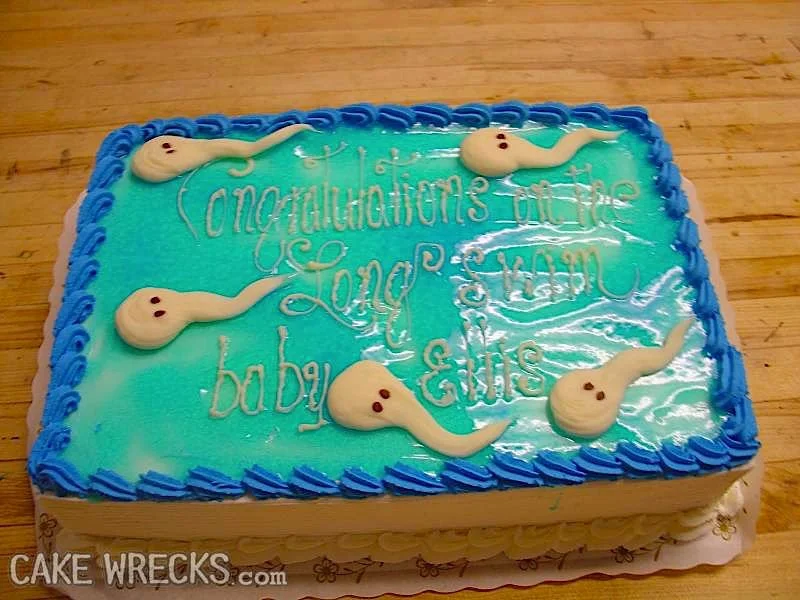
Putting that aside to cool, it was time to make the milk soak, which is just milk, cocoa powder, and sugar.

Once the cake and milk soak were both cooled, it was time to take the brigadeiro out of the fridge and put the whole dang thing together. Here’s the brigadeiro all thickened up:

A bowl full of thick, chocolatey, fudgy brigadeiro.

Gawd dayum was this thicc. Rich and fudgy and oh so chocolatey. It was honestly incredible, but I was sure I was about to bend my spoon trying to mix it around. Handle with caution.

The cake cut in half easily, as it was very tall and made two very nice layers. I put the bottom layer in the cake pan I had baked it in, then poured half the milk soak over it. Scooped half the brigadeiro onto the first layer and smoothed it out over the surface, then slapped the top layer on top and poured the rest of the milk soak over it (I docked the top a bunch with a fork so the milk could go into the holes), and slathered that bad boy in the rest of the brigadeiro. There was so much brigadeiro on top, the cake pan could barely even contain my creation, the fudgy topping starting to spill over the sides.

The instructions say to let this puppy sit in the fridge overnight, and though it was hard not to slice right into it, I managed to let it rest in the fridge.

Once I took it out (it was heavy) and put sprinkles on top, it was glorious:

A big ol' chocolate cake covered in chocolate sprinkles.

In the moment, I thought that was plenty of sprinkles, but looking at it now, I totally could’ve put more. It looks a little sparse.

I was eager to cut into it, and here’s the cross section:

A cut of a two layer chocolate cake, layered with the fudgy brigadeiro and sprinkles visible on top.

My parents and I tried this cake at the same time and oh my gosh. It was probably the best chocolate cake I’ve ever had. I don’t even really like chocolate cake that much, but this one was so moist and rich, dense and fudgy and absolutely decadent. It was the kind you could only take a small slice of, and even then I needed some milk with it. It is not for the faint of heart, but it is for the fat of ass.
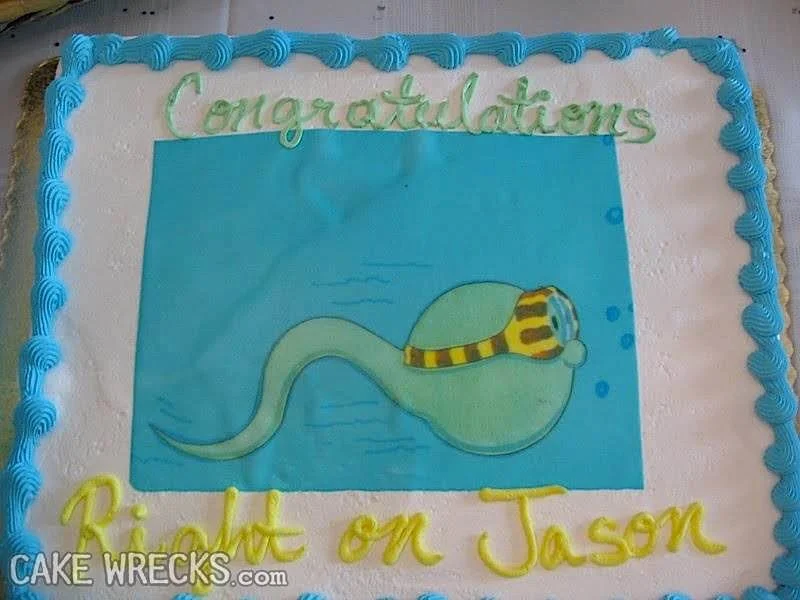
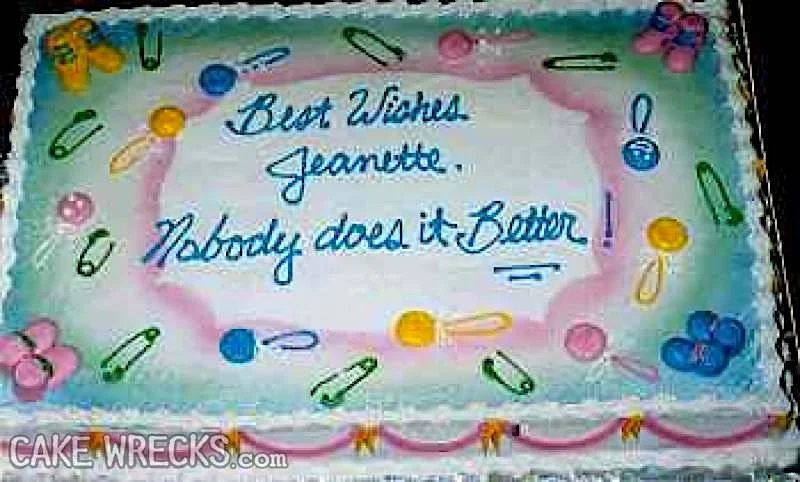
I had four of my friends try this cake and they all said it was incredibly banger, and even “dangerously good.” I was feeling pretty good that this turned out so yummy.

I will say this cake slides around a lot. The layer of brigadeiro in between the top and bottom cake layer make this thing slip and slide all over itself, and you can end up with a very slanted, divided cake if you aren’t careful. Cutting into it is messy, frosting it is messy, divvying it up into Tupperwares to give to other people is messy. But boy is it delicious.

For the dishes portion of this recipe test, this recipe is unique because it isn’t measured with cups and the like. You can measure everything on a digital scale, which made everything so much easier and made me use considerably less dishes. I used one bowl to weigh the brigadeiro ingredients in, one pot to cook the brigadeiro in, a rubber spatula to mix it, and another bowl to put in the fridge after it cooked. For the cake I used my stand mixer bowl, one attachment of the stand mixer, one whisk, a teaspoon, a tablespoon, and one rubber spatula to put it into the cake tin. I guess you can also count the cake tin in that, too. Oh, and a bowl for the eggs because I always crack eggs into a separate bowl first instead of straight into the cake batter. Finally, I used one small pot for the milk soak, a tablespoon, and another rubber spatula.

So, was it all worth it? The large ingredient list, the time that went into it, the dishes, and the cost (roughly, prices will vary for you, obviously).

I think yes! But this is definitely something to make for special occasions, or maybe for something like the holidays, when you need something to feed a lot of people. This cake makes a lot of cake.

I honestly liked making this cake and I’m very happy with the result. The dishes really weren’t so bad, and the praise you’ll get for how good this tastes outweighs the considerable effort of making it.

Have you heard of this dessert before? Do you usually like chocolate cake? Let me know in the comments, and have a great day!

-AMS

Profile

alix: (Default)
alix

August 2017

S M T W T F S
  12345
6789101112
13141516171819
2021222324 2526
2728293031  

Most Popular Tags

Style Credit

Expand Cut Tags

No cut tags
Page generated Mar. 1st, 2026 03:57 am
Powered by Dreamwidth Studios