iPhone
/
iPhone Air


All about iPhone Air
Table of Contents
The iPhone Air is a separate product from the standard iPhone and iPhone Pro that offers a bit of both worlds. A few features are left out to prioritize thinness, but it's a premium experience with a powerful A19 Pro chipset.

It launched separate from the 17 lineup, though it technically replaced the precious "plus" model. Since the name lacks the numerical moniker, it likely won't get updated annually, though rumors differ on this.
The main roster is still four iPhones, with a standard model, a pair of Pro versions, and a new iPhone Air. Apple is expected to release an iPhone 17e in the spring for budget-conscious consumers.
Once the iPhone Fold is introduced, if it ever is, Apple is expected to shift to a twice yearly release cycle that places premium iPhones in the fall and entry models in the spring.
iPhone Air 2
Rumors indicate Apple is working on the iPhone Air 2 and it could include vapor chamber cooling, a second rear camera, and improved battery life. However, that updated model isn't expected in 2026.
 iPhone Fold expected to have iPhone Air design
There hasn't been a delay of the product. The lack of the "17" in its name seemingly indicates that Apple didn't intend for the iPhone Air to be an annual product, or at least not one that belongs in the main lineup.
There's a chance Apple will release an iPhone Fold in 2026, which may resemble two iPhone Air models joined by a hinge. The iPhone Fold would be positioned as a unique design with compromises made to reach the form factor, which sits above the iPhone Air in the lineup, not iPhone Pro.
If iPhone Fold is delayed, again, it shouldn't affect the future iPhone Air release.
Rumors suggest that the iPhone Air could move to a spring release, staring in 2027. It would launch alongside the base iPhone 18 and the budget iPhone 18e.
iPhone Air design
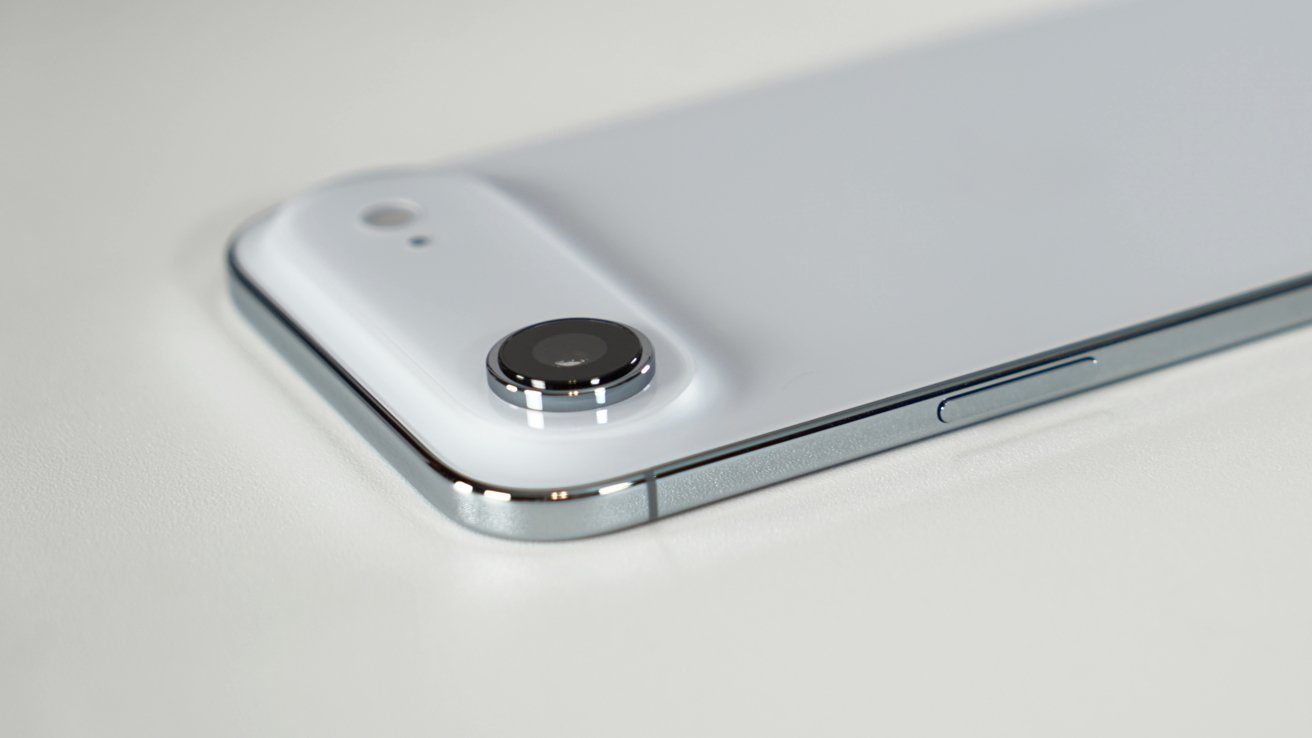
As the name heavily implies, the iPhone Air is the thinnest model in the range. At just 5.6mm thick, it's about two millimeters thinner than the iPhone 16 and iPhone 16 Plus it replaces.
To get so thin, Apple uses titanium, a material previously used in the Pro range. It also uses Ceramic Shield 2 with improved antireflection, scratch resistance, and four-times crack resistance for the rear glass.
 iPhone Air breaks from Apple's usual design philosophy in favor of thinness
For the longest time, Apple has tried to design the iPhone and portables like the iPad as if you're holding a piece of glass. With the iPhone Air, it seems Apple's getting extremely close to that idea.
Apple spent a lot of the keynote emphasizing how durable the iPhone Air is, in spite of its thinness. The inevitable bend tests that took place after release proved Apple reinforced the frame adequately — you'll need a machine press to bend the iPhone Air.
The thinness is something to experience firsthand. The display size doesn't convey "thin and light," so when you pick it up, it feels like a fake that doesn't match your expectations of reality.
 The iPhone Air is incredibly thin
The shined titanium frame makes the device sturdy, though heavier than it needs to be. It's very light of course, but could be lighter with aluminum, though that may increase its bendability.
Apple made a tradeoff and it seems to be the right one.
Super Retina XDR Display
While thin, it's still a sizable device, equipped with a 6.5-inch all-screen OLED display. Its resolution of 2,736 by 1,260 still gives it a great pixel density of 460 pixels per inch.
 Apple didn't hold back on display specs for the iPhone Air
That screen is a ProMotion panel, borrowing the feature previously limited to the Pro models. In fact, every fall 2025 iPhone has a ProMotion display for the first time.
It means it has an adaptive refresh rate going up to 120Hz and enables features like always-on mode. When the iPhone is locked, the clock and some data is still visible.
For brightness, the iPhone Air can go up to 3,000 nits at its peak. The contrast ratio is 2 million to one, with it also supporting Wide Color (P3), Haptic Touch, and True Tone.
A19 Pro
Driving the iPhone Air is the A19 Pro chip, the same one used in the other iPhone 17 Pro models. It's Apple's fastest CPU in any iPhone, combined with a five-core GPU with second-generation dynamic caching and unified image compression.
Naturally, the AI has been improved with neural accelerators working in each GPU core.
Fusion Camera
Since the iPhone Air is so slim, there had to be some compromises, and one of those is the camera. While the standard model has two cameras and the Pro models have three, the Air only has one.
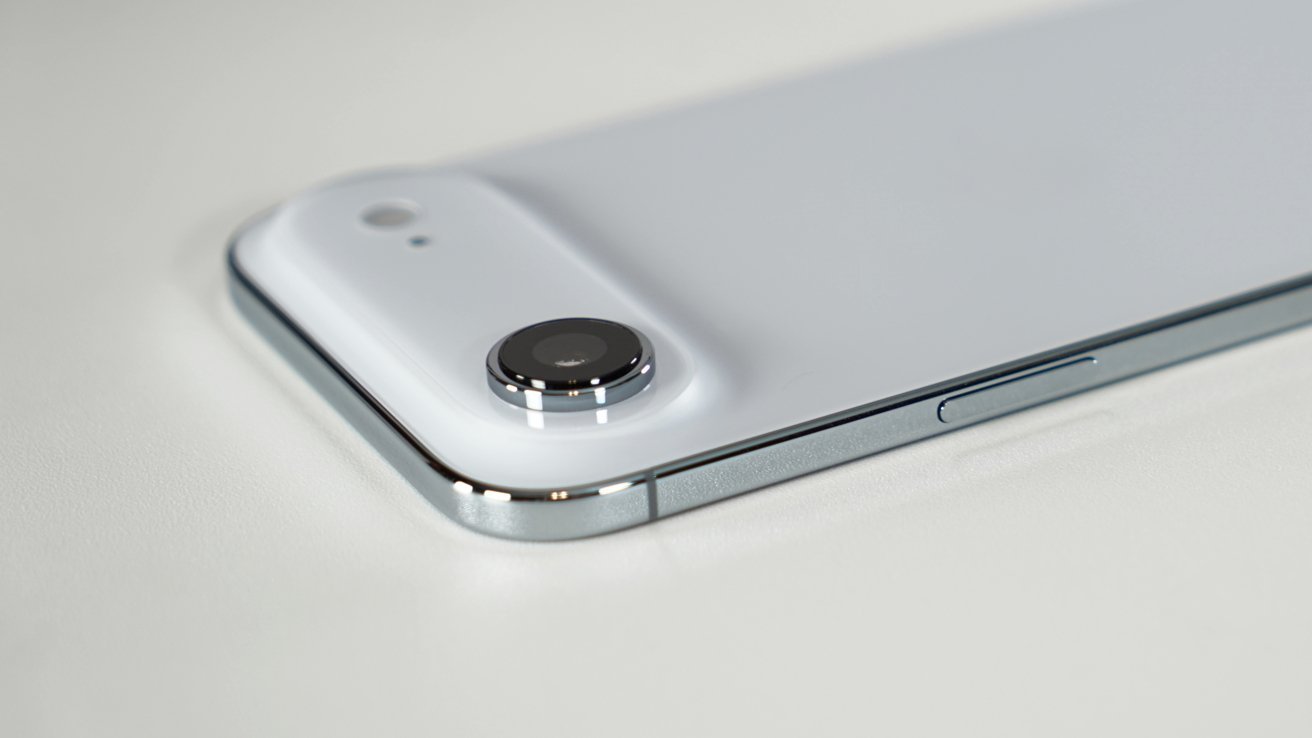
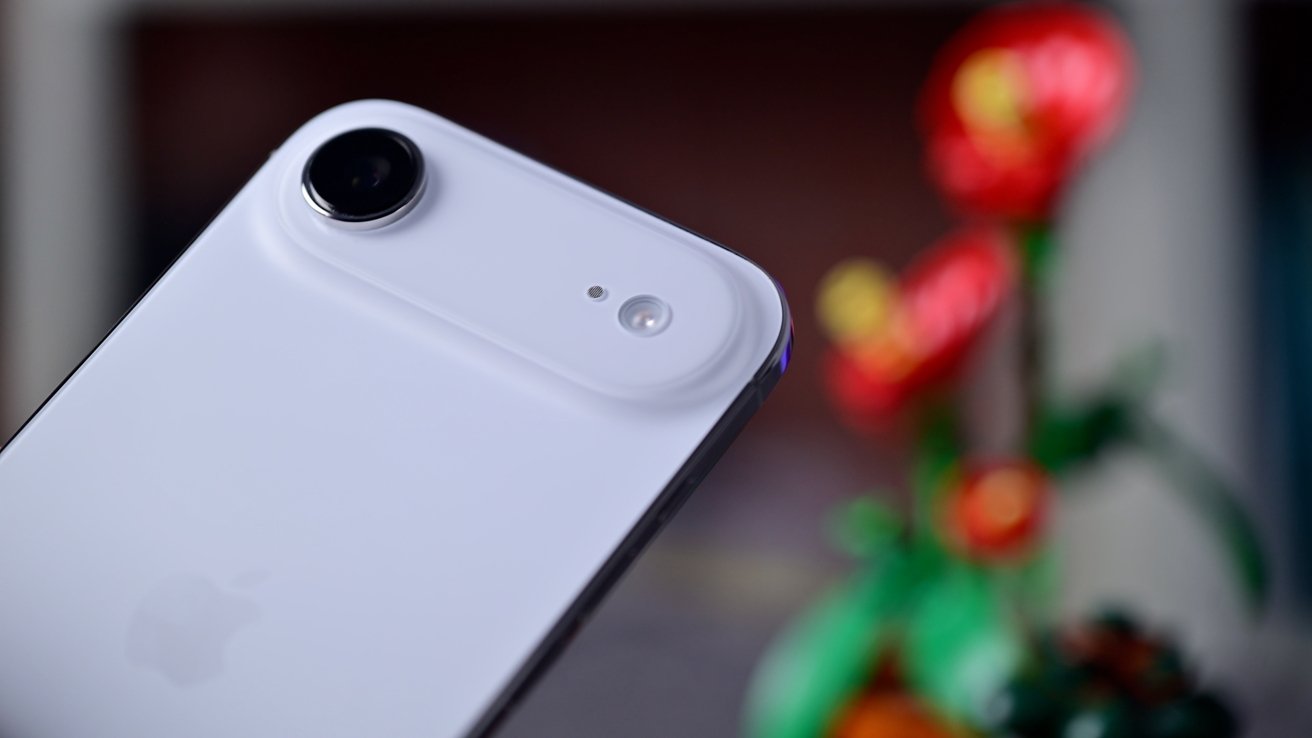
 The camera bump is extra thick to ensure the phone stays thin
The rear shooter is a single 48-megapixel Fusion camera, a Wide camera that doesn't have Telephoto or Ultra Wide counterparts. Sensor Shift optical image stabilization is also included.
That said, Apple is still including two "cameras" in the Camera app. It's pulling off its image cropping trick to create a virtual 12MP 2x optical zoom level, while still using only one camera sensor.
While the rear has one less camera, the front continues to use a TrueDepth camera array, complete with a new 18MP sensor and depth mapping. This time it has Center Stage support, as well as a sensor design that can allow users to go from portrait to landscape orientation shots without rotating the iPhone itself. It can even reframe automatically if more people join the shot.

When it comes to video, there's Dolby Vision support, at up to a 4K resolution at 60fps. Slo-mo video goes to 1080p 240fps.
Battery and connectivity
Battery life is now even longer despite rumors about the thickness killing battery capacity. Apple claims "all-day" battery life, with up to 27 hours of video playback.
If that's not enough, there's also a MagSafe Battery revival, which extends the life to 40 hours.
 Expand battery life with the exclusive MagSafe Battery
Connectivity is handled by two chips, with the N1 handling WI-Fi 7, Bluetooth 6, and Thread. The Apple-designed C1X modem is twice as fast as the C1.
Continuing the trend, there's no SIM card slot in the iPhone Air. Instead, you will have to contend with eSIMs, a technology Apple has used in its products for quite some time. Losing the SIM tray does offer one advantage: More physical space for the battery.
While there is a USB-C port in the base for charging, it's only operating at USB 2 speeds, not USB 3. You're not going to get the bandwidth for data transfers as you would get on the Pro models.
iPhone Air price and release date
The iPhone Air starts from $999 for 256GB rising to $1,399 for 1TB, with preorders open from September 12, 2025. Availability started from September 19, 2025.
Everything below this point was written about the rumored slim iPhone prior to the September 2025 Apple Event. It is preserved here for historic reference.
iPhone 17: Air, Pro, Max
As has been the case for generations, Apple will continue to offer its iPhones in two tiers, with a standard pair accompanied by two Pro models. Each pair will be differentiated by size, but will have similar core specifications.
 iPhone 17 could look similar from the front
Due to ongoing low proportional sales of the Plus models versus the rest of the group, Apple is rumored to switch it out for a new concept. Instead of just making a larger Plus version of the standard release, Apple could instead bring out the iPhone 17 Air.
As the name indicates, the Air will be a thinner version, though no-one knows exactly how thin. For reference, the iPhone SE is 0.29 inches whereas the M4 iPad Pro is 0.20 inches thick.
 iPhone 17 could get thinner the same way iPad Pro did
References to a screen resolution that matches a rumor from Ming-Chi Kuo suggest Apple is indeed working on the middle-sized iPhone 17 Air. However, nothing about the name or form factor was included in this small discovery.
Because of the thin enclosure, there's a higher potential for the Air model to bend compared to thicker versions. Rumors point to the use of a titanium-aluminum alloy to add strength to the frame.
iPhone 17 Displays
Normally, Apple will use two different screen sizes for its flagship smartphones. With the introduction of the Air, that may change to three.
Rumors have said that, alongside the 6.1-inch screens of the iPhone 17 model, and the 6.9-inch of the Pro Max, the Air will be between the two. Thought to be closer to the Pro Max sizing, it's expected to be 6.6 inches in size.
Other changes to the display have also been offered, affecting all of the range.
 iPhone 17 should have a more scratch-resistant screen
For example, Corning is allegedly working on new harder glass that can perform better than Ceramic Shield displays in withstanding scratches. These same glass panels may also be more anti-reflective than previously produced.
Always-on displays, a trait of the iPhone 15 Pro models, may also move over to the standard editions, meaning all models will offer always-on functionality.
There has also been the claim that ProMotion will finally be available on all iPhone 17 models. However, since this is often referred to as a Pro-specific feature, that seems dubious.
iPhone 17 Cameras
So far, rumors about the new models have been about smaller features rather than major changes to the arrangement from the iPhone 16 generation.
The exception is the iPhone 17 Air, which is proposed to have only one camera, instead of the two or three of the other models. This is due to the constraints of creating a thinner device that still needs to fit in the same components as a slightly thicker model.
 iPhone 17 Air may have a new camera bump
A seemingly obvious report claims that the tetraprism lens used for the Telephoto camera won't make its way to non-pro iPhone 17 models, and definitely not the iPhone 17 Air.
A leaker suggested Apple would shift to a horizontal bar on pro models with three cameras going across, but that was quickly shot down by more reliable sources. Instead, Apple will likely stick with the triangle shape, but still on a longer camera bar.
 A sketchy photo showing the supposed camera bar rumored for iPhone 17
Leaked images shared in January show two iPhone backs in a plastic bag. They appear to show large camera modules on the rear with a large single cutout and a bar-shaped bump — these could be the rumored iPhone Air.
However, it seems odd that Apple would drop down to one camera on a new flagship device when it is heavily promoting shooting spatial video. Sure, Apple Vision Pro is a niche product with a big price tag, but every iPhone was advertised as capable of shooting spatial video in 2024, and this would be a regression.
That is, unless Apple somehow figures out how to generate spatial video using one camera, LiDAR, and software.
The front camera may also get a few upgrades. Instead of a 12-megapixel sensor, the front could use a larger 24-megapixel version.
 The camera bump could turn into a camera bar
Reliable leakers have begun corroborating the camera bar rumors, so it's possible that Apple is going to use the design in iPhone 17. The iPhone 17 Pro and iPhone 17 Pro Max would retain the triangle camera formation, but the bump would extend into a bar across the entire back of the iPhone.
If Apple does go with this significant design change, it would likely be for space consideration. More space for improved camera technology and more space for the battery and other components.
iPhone 17 A19
Following the established pattern, Apple will use a "Pro" variant of its A19 chip with its Pro models, and the A19 for the standard edition smartphones.
Apple may also switch out the lens arrangement for a new one, going from a five-element plastic lens to a six-element edition.
 A motherboard change could reduce the weight of the iPhone 17 generation.
To end users, the difference could mean one or two more cores in the Pro chip versus non-Pro, or some other form of performance or feature boost.
The A19 is anticipated to be the first to be released using TSMC's 2-nanometer production process. The die shrink offers multiple benefits, including power savings, improved heat dissipation, and a physically smaller size.
To go with the new chip, Apple could improve te amount of onboard memory. While the iPhone 16 uses 8GB of memory, the iPhone 17's Pro models may be upped to 12GB.
iPhone 17 Release Date and price
Apple revealed that there will be an event on September 9, 2025 dubbed "awe inspiring." It will be where the iPhone 17 lineup, new Apple Watches, and other accessories are revealed.

There is a lot of uncertainty around pricing at the moment due to extreme tariffs levied against nearly every country in the world by the United States. There is a lot of back and forth and no clear strategy with the tariffs, so there is no telling which ones will be in place or how high when Apple reveals the new models.
Estimates suggest Apple could increase the price of some models by $50 or more to compensate for tariffs.
