Comprehensive Analysis of C++ Data Types: A Deep Guide from Memory Layout to Performance Optimization

Comprehensive Analysis of C++ Data Types: A Deep Guide from Memory Layout to Performance Optimization

C++ is an efficient system-level programming language, and its data type system is the foundation for building complex programs. 1. The Memory Essence of Basic Data Types 1. Memory Layout of Integer Family C++ provides a complete integer system from <span>short</span> to <span>long long</span>, and its memory usage follows the “increasing length” principle: #include <iostream> … Read more

Parsing XML with Matlab

Parsing XML with Matlab

In the fields of research and engineering, XML has become the “universal language” for data exchange and storage due to its clear structure and cross-platform compatibility. How can Matlab, as a mainstream tool, efficiently parse XML data? This article systematically breaks down the core technical paths based on official documentation and engineering practices. 🔄 1. … Read more

In-Depth Analysis of Python Descriptor Protocol: Implementing a Cached @property with 70% Memory Reduction!

In-Depth Analysis of Python Descriptor Protocol: Implementing a Cached @property with 70% Memory Reduction!

In-Depth Analysis of Python Descriptor Protocol: Implementing a Cached @property with 70% Memory Reduction! As a Python developer, you are likely familiar with the <span>@property</span> decorator. It cleverly disguises class methods as properties, making the code both elegant and safe. However, have you ever encountered the issue where complex calculations are repeatedly executed every time … Read more

Memory Optimization in C: Methods to Reduce Memory Usage

Memory Optimization in C: Methods to Reduce Memory Usage

In C programming, memory management is a crucial topic. Effective memory usage not only improves program performance but also avoids potential memory leaks and crashes. This article will introduce several methods to reduce memory usage in C programs, demonstrated with code examples. 1. Use Appropriate Data Types Choosing the right data type is the first … Read more

Detailed Explanation of Grouping Technology in Assembly Language

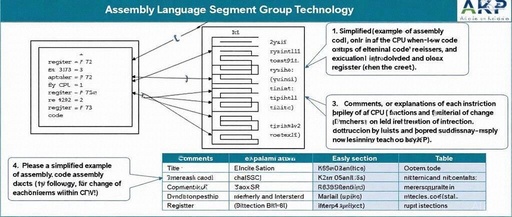
Detailed Explanation of Grouping Technology in Assembly Language

Concept and Function of Grouping Grouping (Group) is a technique in assembly language that combines multiple logical segments into a single physical segment, addressing the issue of frequently switching segment registers in the 8086/8088 architecture. Through grouping, programmers can treat multiple logical segments as one large physical segment for access, thereby simplifying code writing and … Read more

A Detailed Explanation of Linux Core Dumps: From Basics to Practical Applications (Part 2)

A Detailed Explanation of Linux Core Dumps: From Basics to Practical Applications (Part 2)

Hello everyone, welcome to Lixin Embedded. In Linux development, core dumps are powerful tools for debugging program crashes. However, on devices with limited storage space, core dump files that can be several megabytes in size can take up a lot of space. In the previous article, we discussed the principles and generation mechanisms of core … Read more

Breaking Through Bottlenecks: The Embedded AI Neural Continuous Learning Engine – Replay4NCL

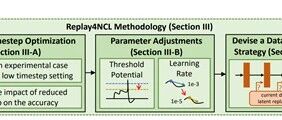
Breaking Through Bottlenecks: The Embedded AI Neural Continuous Learning Engine - Replay4NCL

Researchers from the University of the Emirates, New York University Abu Dhabi, and the National University of Sciences and Technology in Pakistan have jointly launched an efficient memory replay method called Replay4NCL to address the challenges of continuous learning in embedded AI systems within dynamic environments. It is worth mentioning that this research has been … Read more

Intermediate PLC Functions: Dynamic Data Allocation Increases Memory Efficiency by 60%!

Intermediate PLC Functions: Dynamic Data Allocation Increases Memory Efficiency by 60%!

🔥 The fatal pain point of traditional PLC programming: memory waste and low efficiency! Do you also face such troubles? Is your PLC program running slowly, and is the efficiency of complex process handling low? Is memory insufficient, always causing headaches due to hardware limitations? Is the cost of hardware upgrades high, leaving your budget … Read more

Next-Generation Neural Processing Unit Architecture in 4nm Mobile SoC

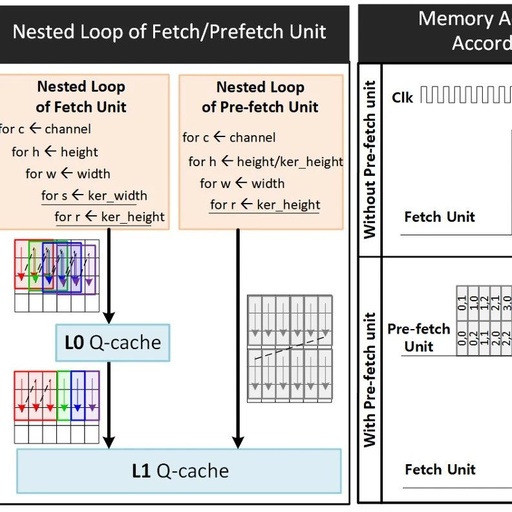
Next-Generation Neural Processing Unit Architecture in 4nm Mobile SoC

Introduction The field of artificial intelligence is rapidly evolving, with on-chip AI capabilities shifting from traditional Convolutional Neural Networks (CNNs) to transformer-based generative AI models. This article explores the cutting-edge Neural Processing Unit (NPU) implemented in the Samsung 4nm Exynos 2400 System on Chip (SoC), designed to meet the stringent requirements of both traditional and … Read more