


(no subject)
Feb. 21st, 2026 04:28 pm![[personal profile]](https://www.dreamwidth.org/img/silk/identity/user.png) oursin
oursinBooks and screens: Everyone is panicking about the death of reading usefully points out that panic and woezery over reading/not-reading/what they're reading etc etc is far from a new phenomenon:
We have been here before. Not just once, but repeatedly, in a pattern so consistent it reveals something essential about how cultural elites respond to changes in how knowledge moves through society.
In the late 19th century, more than a million boys’ periodicals were sold per week in Britain. These ‘penny dreadfuls’ offered sensational stories of crime, horror and adventure that critics condemned as morally corrupting and intellectually shallow. By the 1850s, there were up to 100 publishers of this penny fiction. Victorian commentators wrung their hands over the degradation of youth, the death of serious thought, the impossibility of competing with such lurid entertainment.
But walk backwards through history, and the pattern repeats with eerie precision. In the 18th and early 19th centuries, novel-reading itself was the existential threat. The terms used were identical to today’s moral panic: ‘reading epidemic’, ‘reading mania’, ‘reading rage’, ‘reading fever’, ‘reading lust’, ‘insidious contagion’. The journal Sylph worried in 1796 that women ‘of every age, of every condition, contract and retain a taste for novels … the depravity is universal.’
....
In 1941, the American paediatrician Mary Preston claimed that more than half of the children she studied were ‘severely addicted’ to radio and movie crime dramas, consumed ‘much as a chronic alcoholic does drink’. The psychiatrist Fredric Wertham testified before US Congress that, as he put it in his book Seduction of the Innocent (1954), comics cause ‘chronic stimulation, temptation and seduction’, calling them more dangerous than Hitler. Thirteen American states passed restrictive laws. The comics historian Carol Tilley later exposed the flaws in Wertham’s research, but by then the damage was done.
I'm a bit 'huh' about the perception of a model of reading in quiet libraries as one that is changing, speaking as someone who has read in an awful lot of places with stuff going on around me while I had my nose in a book! (see also, beach-reading....) But that there are shifts and changes, and different forms of access, yes.
Moving on: on another prickly paw, I am not sure I am entirely on board with this model of reading as equivalent to going to the gym or other self-improving activity, and committing to reading X number of books per year (even if I look at the numbers given and sneer slightly): ‘Last year I read 137 books’: could setting targets help you put down your phone and pick up a book?:
As reading is increasingly tracked and performed online, there is a growing sense that a solitary pleasure is being reshaped by the logic of metrics and visibility. In a culture that counts steps, optimises sleep and gamifies meditation, the pressure to quantify reading may say less about books than about a wider urge to turn even our leisure into something measurable and, ultimately, competitive.
Groaning rather there.
Also at the sense that the books are being picked for Reasons - maybe I'm being unfair.
Also, perhaps, this is a where you are in the life-cycle thing: because in my 20s or so I was reading things I thought I ought to read/have read even if I was also reading things for enjoyment, and I am now in my sere and withered about, is this going to be pleasurable? (I suspect chomping through 1000 romances as research is not all that much fun?)
Swimming through these long-forgotten lands
Feb. 21st, 2026 09:22 amsovayTo rewind a hot semi-linear second, I had just meant to complain that it feels almost superfluous for Cooper's The Grey King (1975) and Alan Garner's The Owl Service (1967) to be geographically as well as mythologically neighbors. Given their mutual setting in the valleys of North Wales, it finally occurred to me to check when a location in one novel turned up in the production history of the television version of the other. As anyone from the area could have told me, Tal-y-llyn and Llanymawddwy are about half an hour's drive from one another. As I noticed a couple of years ago, The Grey King is the only one of its sequence whose mortal and mythical layers are rigorously double-tracked instead of sewn back and forth through the great doors of Time: thanks to the machinations of the Light and the woman who hinges them as if fixed within a pattern of her own, the royal and terrible truth of Bran's parentage cannot be uncovered without simultaneously drawing out the tragedy of the previous generation in the present day, a sadder, messier, only locally legendary triangle whose fallout has nonetheless marked the valley as indelibly as the Arthurian stamp of Cader Idris. "I wanted to keep you free of it. It was over, it was gone, I wanted to keep you away from the past. Ah, we never should have stayed here. I should have moved away from the valley at the beginning." But the past is an event horizon, there's no escaping it in three days or fifteen centuries or eleven years, and when the power of the Brenin Llwyd has been broken and a human mind with it and the milgwn have all drowned themselves in a headlong rush of ghosts—when the Dark has given up the valley—the haunting of its human grief and loss remains. "Then the mist closed over Llyn Mwyngil, the lake in the pleasant retreat, and there was a cold silence through all the valley save for the distant bleat, sometimes, of a mountain sheep, like the echo of a man's voice calling a girl's name, far away." You see how dangerously a narrative imprints itself on a landscape. I discover that a person can go up the Dysynni Valley and stay in an Airbnb called the Shepherd's Hut and my first thought is that I don't care how nice a view it has of Craig yr Aderyn, I am not interested in tripping over a warestone while glamping.
Cooper's nonfiction came into it when I was thinking about the centrality of time to her work and Garner's, specifically the tradition of ancient and simultaneous ages in the land. It had made dawn-over-Marblehead sense when I finally learned that the "J. B." and "Jacquetta" to whom she dedicated The Grey King were Priestley and Hawkes. I had never gotten around to reading her biography of the former and was immediately distracted by it. As a portrait, it is analytical and awed by turns; she calls its subject a "Time-haunted man" and supports her argument with reference to his novels, plays, and nonfiction as well as the ghost-history that she differentiates from nostalgia for some idealized pre-WWI Eden overlapping the end of his adolescence, identifying it instead as a bitterly vivid awareness of all the possibilities smashed by the war onto the rails of the twentieth century we actually got. He sounds more than slightly Viktor Frankl about it, which I am guessing accounts for the parallel evolution with Emeric Pressburger. I was never able to figure out if it was plausible for the nine-year-old Cooper to have seen A Canterbury Tale (1944), but she wouldn't have needed to if she had the vector of Priestley. "And because there was enchantment in the life it offered, the hideous transformation scene that took place when the enchantment vanished in a cloud of black smoke, and came out grimed and different on the other side, was enough to leave a young man of the time very vulnerable to visions of a lost Atlantis—especially a young man who was to become gradually more and more involved, as he grew older, in theories of a continuum of Time in which nothing is really past, but everything which has ever been is still there . . . If there is, in effect, a fifth dimension from which one can observe not only the present moment but also everything which runs before it and behind—then things which seem lost have never really been lost at all." By the time she got around to writing the Lost Land of Silver on the Tree (1977), she would be able to explain it more poetically: "For Time does not die, Time has neither beginning nor end, and so nothing can end or die that has once had a place in Time." In terms of lineage, I can also get mildly feral when she discusses his wartime broadcasts which relied again, not on the wistfulness for an unmarred past, but the determination to build something stronger on the scars. Describing one in which he imagined himself explicitly choosing the second, harder work when offered the choice by the thought experiment of a great magician, the assertion that "the thing which is pure Priestley is the implication of an almost Arthurian destiny . . . and the vision it offers is one not of a misty Avalon but of a better Camelot" naturally makes me think "For Drake is no longer in his hammock, children, nor is Arthur somewhere sleeping, and you may not lie idly expecting the second coming of anybody now, because the world is yours and it is up to you." I keep finding reasons to argue with the last decision of The Dark Is Rising Sequence and yet another would be that it is demonstrably difficult to build a workable future on a past that's been erased. In fairness, she would get the balance right in Seaward (1983). I didn't react to the final pages of Cooper's biography of Priestley, however, because of any dot-to-dots I could draw from them to her own prose. They make a book-ending "picture" of the Omnibus programme which aired in 1969 as a tribute to Priestley on his seventy-fifth birthday, wrapping up what Cooper had until then considered a pretty marginal viewing experience with:
a condensed version of the last act of Johnson Over Jordan; and again there was an awkwardness, for this more than any of his plays translates badly to the medium of television, needing the depths of a craftily-lit stage to suggest the immensities of spaceless time in which it takes place.
But then, like the moment Priestley once celebrated 'when suddenly and softly the orchestra creeps in to accompany the piano', the magic that one had been hoping for all along suddenly came filtering through this television programme; for the part of Robert Johnson was being played here by the man for whom it had been written some thirty years before, Ralph Richardson, and Richardson and Priestley between them, actor and dramatist, magicians both, wrought a spell that produced, despite all handicaps, the real thing. Time had made one of those curious spiralling turns, for Richardson had grown older to meet the play, and fitted easily now into the role for which he had once had to draw in an extra couple of decades on his face; he played it without a false move or a marred inflection, and by the time he turned to walk into infinity, Everyman in a bowler hat, leaving one dimension for another unknown, I had forgotten the deficiencies of the small screen and could indeed hardly perceive its outlines at all. I had never seen Johnson Over Jordan in the theatre, but it had always moved me even as a written play, and I had never expected to have the chance of seeing Richardson act the part which had been so subtly tailored to his talent and voice. Now, however inferior his surroundings, I had. I blew my nose rather hard, and glanced across at Priestley.
I don't know what I expected him to offer us: a non-committal snort, perhaps; a rumble of technical criticism; at the most, a bit of knowledgeable praise for Richardson. But Priestley sat silent for a moment, gazing into space, looking unusually small in a very large armchair; and then he rubbed his eyes. 'I shed tears,' he said, rather gruff and low, 'not for what I have seen, but for what I have been remembering.' Then he hoisted himself up, and was his proper height again.
For a moment, he had been caught by a spell himself; caught by Time, by his own magic, and by that of his friend, and transported on to that other dimension where still there is playing the first production and every production of Johnson Over Jordan—and of As You Like It and The Cherry Orchard and Arms and the Man and all the rest—and where a younger Richardson is turning to walk not into the shadow of a cramped television studio but into the glitter of stars and the blue-dark cosmic depths that Basil Dean had created on a great stage, while Benjamin Britten's triumphant finale sounded out over the audience. Priestley wasn't really remembering, not really looking back; he was looking outward, into the level of Time where there is no forward or backward, no youth or age, no beginning or end. Like all the great enchanters, he has always seen it plainer than the rest of us yet can.
Obviously, I assumed at once that Richardson's televised performance survived only in the residually haunted sense that the space-time continuum never forgets a face, even one whose owner once unfavorably compared it to a hot cross bun; it would have been ironically on theme and characteristic of the BBC. To my surprise, the programme does seem to exist in some archivally inaccessible fashion and I could theoretically experience its time travel through the ordinary machinery of a telerecording, which would make a change from just about everything else Richardson was stage-famous for. I wouldn't be sitting next to Susan Cooper or J. B. Priestley, but the thing about art its that its audience is not bound by time any more than its maker. The author's bio for J. B. Priestley: Portrait of an Author identifies Cooper as the writer of Mandrake (1964), Behind the Golden Curtain (1965), and "two novels for children," which by publication dates must be Over Sea, Under Stone (1965) and Dawn of Fear (1970). She has not yet begun work on The Dark Is Rising (1973). She is not yet known herself as a magician of time. By my childhood she was firmly established as one and I checked out this book because I was interested in her stratigraphy as much as its subject and was so struck to find her interpreting him in the same language which I would use to discuss her, which Priestley had died before anyone coined as hauntology, although I am not sure from this portrait that he would concede that a future which had failed to materialize was existentially lost. By that logic, the profanity being all inside my head may or may not prevent it from reaching the genizah of time.
![[syndicated profile]](https://www.dreamwidth.org/img/silk/identity/feed.png)
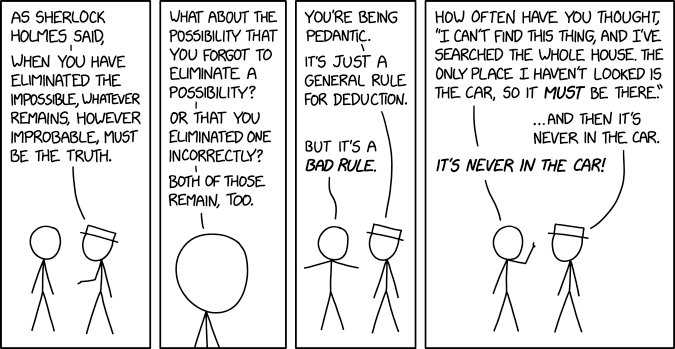
'The present generation is doing mating habits all wrong!!!'
Feb. 20th, 2026 04:04 pmoursin(Okay, I have an essay-review coming out on several works which deal with moral panics around coffeebars and jazz clubs and so forth in the 1960s - 'the monkey walk was good enough for us'....)
But on the one hand wo wo the yoof of today are not even getting into leg-over situations, though the evidence for this as far as the UK goes dates to the NATSAL 2019 report based on survey undertaken 2012.
And if they do, The death of the post-shag sleepover: Why is no one staying over after sex anymore?
Okay, very likely - I dunno, is the '6 people I spoke to in a winebar last week' cliche still valid or has this migrated to some corner of social media, but amounting to pretty much the same thing as far as statistical sociological validity goes?
But while it may be all about anxieties around sleep hygiene rituals, or looks-maxxing practices, which will not sit happily alongside unrestrained PASSION and bonkery -
- there is also mention that, individuals in question are living with room-mates and one does wonder whether they actually have RULES about overnight guests who might hog the bathroom wherein they perform their wellness things (apart from any other objections such as noise....)
Yes, my dearios, I am already doing the hedjog all-more-complicated flamenco about this, and thinking about a narrative theme of the 1960s of young women rising from beds of enseamed lust in order to go home to the parental roof and sleep in their own chaste bed so that they can be plausibly awakened therein. (And is there not a current wo wo narrative about young people still living with PARENTS???)
Stores with rancid vibes
Feb. 20th, 2026 03:01 pmcimoreneNow that we live in the country, I'm still closer to the Turku city center than many people are who live in a North American metro area. I can walk to the bus stop (5 minutes, unpleasant scenery) and take a bus that puts me down near the center in about 50 minutes. But that trip feels excessive for a shopping expedition.
There's a big shopping center called Skanssi between us and Turku that is more convenient, about 35 minutes by bus, but the bus doesn't actually stop that close to it so you have to walk like ten minutes (it is very much designed to be visited by car, unlike the city center). And the mall itself just has RANCID VIBES. I hate being there! It's something about the interior architecture and the lighting maybe? The actual finishes are nice, the decor is fine, the lighting isn't UGLY. It is pretty dim inside, which has to be on purpose, but it's more like they were trying for a cozy or intimate or restful light instead of glaring? But instead it's oppressive in there. I always just want to get out. The K-Citymarket hypermarket attached to it is our closest Citymarket*, and it's much more brightly lit but still feels looming, oppressive, suffocating, sullen, and unwell. And I honestly do not know why! Maybe it's not actually the light, maybe it's sounds outside the regular hearing range or something?
So I've been thinking for a week whether it's preferable to go to this rancid-vibed mall, 35m by bus + 10-15m walk, or all the way to Turku, 50m by bus + 5-10m walk. The former SHOULD make me feel better because of the walking and fresh air, and I usually prefer less time on the bus because it's less chance to get trapped near someone's perfume; but would the rancid vibes counteract that?
*The other stores vary in vibes, but none of the ones near us are even close to this bad. Citymarkets Kupittaa and Länsikeskus are both reasonably Ok, and Prisma (Citymarket's competitor, the other Finnish grocery chain) Tampereentie is a little worse, while our closest Prisma at Itäharju is mostly nice, with some bad vibes in one end of the supermarket side. The nicest hypermarket near us is Citymarket Ravattula, Littoinen. I like this one so much more that I ALMOST would go to it instead (it's nearly 40 minutes by car, instead of 15 or so to Itäharju).
Barely even human body parts will give yourself away
Feb. 20th, 2026 04:27 amsovaytheseatheseatheopensea has been writing incredible fills for prompts that I left in ![[community profile]](https://www.dreamwidth.org/img/silk/identity/community.png) threesentenceficathon, most recently the one I threw out originally for an episode of TNG I hadn't seen since childhood. The latest pebble rushthatspeaks has brought me from the internet is a black cat Tarot whose particular standout is the Hanged Man. fleurdelis41 sent me Jewish dance cards and ashlyme a suite of Stanley Myers' The Martian Chronicles (1980). spatch introduced me to Beans. I have been re-reading Robin Scott Wilson's Those Who Can: A Science Fiction Reader (1973), the anthology in which Le Guin explains how her brain plotted out the characterization of her novelette "Nine Lives" (1969) without bothering to let her know in advance:
threesentenceficathon, most recently the one I threw out originally for an episode of TNG I hadn't seen since childhood. The latest pebble rushthatspeaks has brought me from the internet is a black cat Tarot whose particular standout is the Hanged Man. fleurdelis41 sent me Jewish dance cards and ashlyme a suite of Stanley Myers' The Martian Chronicles (1980). spatch introduced me to Beans. I have been re-reading Robin Scott Wilson's Those Who Can: A Science Fiction Reader (1973), the anthology in which Le Guin explains how her brain plotted out the characterization of her novelette "Nine Lives" (1969) without bothering to let her know in advance:Together with this glimpse of the situation, the character of Owen Pugh presented itself, complete and unquestionable, and indeed, at that very point, pretty enigmatic. Having a character really is very like having a baby, sometimes, except that there's a lot less warning, and babies don't arrive full-grown. But one has the same sense of pleased bewilderment. For instance, why was this man short and thin? Why was he honest, disorderly, nervous, and warmhearted? Why on earth was he Welsh? I had no idea at the time. There he was. And his name was Owen Pugh, to be sure. It was up to me to do right by him. All he offered (just like a baby) was his existence. Any assurance that this highly individualized, peculiar, intransigent person really was somehow related to my theme had to be taken on trust. A writer must trust the unconscious, even when it produces unexpected Welshmen.
I don't think anyone has ever made a Morden-and-the-Shadows vid to the Pack a.d.'s "Cardinal Rule" (2011) and it's a crying shame.
Two Purrcies; Two weeks in books
Feb. 19th, 2026 01:46 pmmecurtin
Purrcy and I were just waking up from a nap, and he was looking *exactly* like a loving kitty whose tummy was only a little bit of a trap. But totally worth it, I swear.

Two weeks of books, because last week got away from me.
#25 The Raven Tower, Ann Leckie. Re-read. Because I needed to read something I'd read before where every sentence is *good*.
#26 Inventing the Renaissance: The Myth of a Golden Age, by Ada Palmer.
What an excellent way to write history! It's very much based on Palmer's teaching, on what she's learned about what works to reach people, on coming at questions from a variety of directions and styles to get students/readers to get both a feeling for the past, and a feeling for how our understanding of the past has changed.
For instance, one of the stylistic techniques Palmer uses is giving various people a Homeric-type epithet, so that it's easier to remember them and keep them sorted: Sixtus IV (Battle Pope), Innocent VIII (King Log), Julius II (Battle Pope II!); French philosopher Denis Diderot, with whom Palmer feels a particular mental connection across the centuries, is always "dear Diderot", and so on. Honestly, I really wish a historian of China would do this, it would make keeping the names straight SO much easier.
So it's a truly excellent approach to history in general and the Renaissance in particular, but I had to knock my five-star rating down to 4, because the last part of the book includes Palmer including as one of her refrains something that's a pretty obvious mistake, and *someone* should have spotted it & taken it out.
The mistake is stating that cantaloupe is a New World food, like tomatoes, and that discovering these fruits which didn't conform to the established hierarchy of which fruits are good/valuable/noble helped undermine the idea of a great chain of being, next stop! French Revolution. No. Cantaloupe is *not* a New World introduction, and people were suspicious of it & remained so for a long time because they thought it was "too cold and watery" or "distorted the humors" ... but was probably related to the fact that today cantaloupe is the item in the produce department most likely to be contaminated with Salmonella, wash it when you get it home.
It's really a pity that an obvious, checkable mistake was left in & repeated, because it detracts so much from the value of the whole book (at least for food historians). Maybe it can be fixed for a later edition. I've mentioned it to Palmer, we'll see if she ever speaks to me again ...
#27 Pretenders to the Throne of God, by Adrian Tchaikovsky
The finale of the Tyrant Philosophers series, sticking the landing while leaving the world completely open. Ties up threads from all 3 previous novels, though it can be confusing especially since most characters we've seen before aren't traveling under their previous names.
As I think about it, the most curious thing about the series is that we really don't know much about the Pal's *philosophy*, what kind of Right Think they're trying to impose. Is Palaseen anti-theism where their martial success comes from, because they decant every magical or religious item they get their hands on for its power? Which of course means their whole culture is powered by a non-renewable resource their success is rapidly running them out of, whoops, which I thought was going to be more of a plot point in the series overall.
One of the constant pluses of this series is how it's focused on people who aren't rulers or bosses or the ones who get books written about them afterwards. It's the small people, the ones who don't run things (or not for long), the stretcher-bearers and soup-stirrers. Yasnic/Jack is a small man with a small god, yet he's the vector of great changes. It's not really that he's small-*minded*, except in the way he thinks only about the people (or gods) in front of him, not the "big picture" other people keep yapping about. He's a Holy Fool, but he really is holy (even when he claims he isn't).
#27 Project Hanuman, by Stewart Hotston
Big Idea SF, with contrast between humans living in a virtual worlds and those in physical reality, and machine intelligences in both, and the quantum nature of information, but the prose just ... sits there. I'm not invested enough to diagnose why the sentences seem so flat to me, but they are. Very hard for me to get through because of it.
Then over this past weekend I binged the Hilary Tamar series by Sarah Caudwell, which I'd somehow missed when it was new:
#28 Thus Was Adonis Murdered
Quite amusing, comedy-of-manners murder mystery, told for the most part in *letters!* by gad, written in that joyous era of free-floating bisexuality so aptly associated with the original Edward Gorey cover, before the Plague Years arrived. The murder plot was implausible, but the book is *fun*.
#29 The Shortest Way to Hades
Amusing enough, but I didn't LOL as I did at some of the other Hilary Tamars. Possibly because I had too much sympathy for the first victim, and I felt as though no-one else did. I think there's a British class thing going on there.
#30 The Sirens Sang of Murder
I startled my family by the volume of my LOLs. There's actually serious stuff mixed in there, along with the froth of a comedy of manners and tax law. Peak Hilary Tamar!
#31 The Sibyl in Her Grave
Yeah, this one didn't work for me. Too much of the action and the plot hinges on Maurice, an experienced CofE vicar, not having the experience or resources to deal with a mentally disturbed parishioner. But mentally disturbed parishioners who fixate on the vicar (priest, iman, rabbi) are par for the course, they happen literally all the time. Maurice is a social worker, he should be able to actually *help* Daphne, and he should have people around him to be an effective buffer against her.
Or does this reflect English society of the 90s? That Daphne is supposed to read as merely one of those "odd, unstoppable people"? Because to me she *clearly* reads as someone who's been horribly abused all her life and needs some real, *serious* therapy to become a functioning member of society.
#32 Sense and Sensibility, Jane Austen.
This re-read was prompted by reading about the reception history of Jane Austen, and how at the time and for much of the 19th C readers found Austen's heroines not "feeling" enough: they really wanted heroines who were more like Marianne, less like Elinor.
Although Elinor is in many ways the most admirable of Austen's heroines, she's also the one who changes least, I think, and that makes her fundamentally the least interesting. To *grab* as a character we'd have to see Elinor change and struggle more--which is why the Emma Thompson movie is the extremely rare example of an Austen adaptation that's *better* than the book. There, I said it.
More bits and bobs
Feb. 19th, 2026 06:04 pmoursinHampstead’s retro cafés fight back against a revamp:
“London is a muddle” as EM Forster once observed — but one whose complexity is enjoyed by inhabitants. This bitter row over cafés, with small operators objecting to a tendering process that rewards a chain, has pitted the Corporation’s efforts to modernise facilities against those who feel protective towards their homeliness.
....
But as the campaigner Jane Jacobs, who championed haphazard urban environments, pointed out, city life is inherently messy. Imposing more rigid schemes can destroy its vitality, what she called “the intricate social and economic order under the seeming disorder of cities”.
***
Shop windows tell the story of London’s revolutionary illustrated newspapers:
Printing on the Strand in the 18th century was a major hub of London’s popular print culture, characterised by vibrant publishing activity that wasn’t constrained by rules affecting printers within the City of London.
Key sites included Bear Yard, near present-day King’s College London, which hosted significant printing and publishing operations, and a King’s College exhibition, which is free to view through the shop windows, tells their story.
The printers moved away when the area was redeveloped, hence the exhibition title, the Lost Landscapes of Print, which is a mix of objects and stories from the printers’ trade.
Although Fleet Street is synonymous with the newspapers, two of the most popular newspapers of the 19th century were printed on the Strand, not Fleet Street. They were the Illustrated London News and rival The Graphic, both trading on their revolutionary ability to print pictures in their pages.
***
More and “Better” Babies: The Dark Side of the Pronatalist Movement - we feel this is the darker side of an already dark movement, really.
***
Apparently this was found to be missing recently from Le Guin's website but has now been restored: A Rant About “Technology”:
Technology is the active human interface with the material world.
But the word is consistently misused to mean only the enormously complex and specialised technologies of the past few decades, supported by massive exploitation both of natural and human resources.
***
And talking about people getting all excited about 'technology' me and a load of other archivists and people in related areas were going 'you go, girl', over the notes of cynicism sounded in this article about the latest Thrilling New Way Of Preserving The Record (it is to larf at): Stone, parchment or laser-written glass? Scientists find new way to preserve data.
Admittedly, I can vaguely recollect an sf novel - ?by John Brunner - in which an expedition to an alien planet found the inhabitants extinct but had left records in some similar form.
Or as much dignity as you can with a walrus mustache
Feb. 19th, 2026 06:37 pmcimorene‘Sir,’ intoned Dr. Fell, drawing the napkin from his collar and sitting up in dignity, ‘let me assure you I have been listening with far closer attention than my admittedly cross-eyed and half-witted appearance would seem to indicate.'
—John Dickson Carr, The Dead Man's Knock (1958)
(I rate this book 2/5, however.)
I wrote another HR fic
Feb. 20th, 2026 01:18 ammificI finished this a week ago, then vacillated about posting it after reading other stories by far more skilled writers, but I just finished the final edit and hit post, on the principle of "MORE CAKE!"
It's my attempt at writing something a bit like sex pollen in HR. Weird tropes are a lot easier in Stargate, where they're either already in canon, or can be explained away by alien tech and alien plants!
when you have to go there - about 13,000 words, Ilya/Shane, Ilya's POV.
Star Trek: Starfleet Academy 1.07
Feb. 19th, 2026 11:34 amselenak( Spoilers want to watch meteor showers as well… )

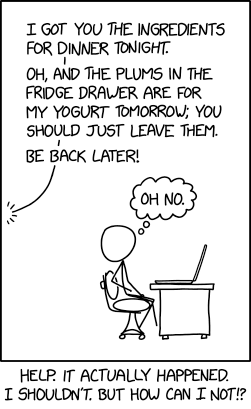
Wednesday has fixed the date for doing the condom talk
Feb. 18th, 2026 07:26 pmoursinWhat I read
Finished Imperial Palace, v good, by 1930 Enoch Arnold had got into the groove of being able to maintain dramatic narrative drive without having to throw in millionaires and European royalty and sinister plots, but just the business of running a hotel and the interpersonal things going on.
Then took a break with Agatha Christie, Dumb Witness (Hercule Poirot, #17) (1937) - I slightly mark it down for having dreary old Hastings as narrator, but points for the murderer not being the Greek doctor.
Finished Grand Babylon Hotel, batshit to the last.
Discovered - since they are only on Kindle and although I occasionally get emails telling me about all the things that surely I will like to read available on Kindle, did they tell me about these, any more than the latest David Wishart? did they hell - that there are been two further DB Borton Cat Caliban mysteries and one more which published yesterday. So I can read these on the tablet and so far have read Ten Clues to Murder (2025) involving a suspect hit and run death of a member of a writers' group - the plot ahem ahem thickens.... Was a bit took aback by the gloves in the archives at the local history museum, but for all I know they still pursue this benighted practice.
Have also read, prep for next meeting of the reading group, Dorothy Richardson, Backwater (Pilgrimage, #2) (1916).
On the go
Recently posted on Project Gutenberg, three of Ann Bannon's classic works of lesbian pulp, so I downloaded these, and started I Am a Woman (1957) which is rather slow with a lot of brooding and yearning - our protag Laura has hardly met any women yet on moving to New York except her work colleagues and her room-mate so she is crushing on the latter, who is still bonking her ex-husband. But has now at least acquired a gay BF, even if he is mostly drunk.
Have just started DB Borton, Eleven Hours to Murder (2025).
Have also at least dipped into book for review and intro suggests person is not terribly well-acquainted with the field in general and the existing literature, because ahem ahem I actually have a chapter in big fat book which points out exactly those two contradictory strands - control vs individual liberation.
Up next
Well, I suspect the very recent Borton that arrived this week will be quite high priority!
March Meta Matters Challenge 2026 Returning!
Feb. 17th, 2026 04:43 pmyourlibrarian posting in dreamwidth_meta
March 1 is just weeks away, so that means the kickoff to this year's March Meta Matters Challenge will be taking place soon! The challenge involves locating and copying over meta you've created to a second site in order to ensure its preservation, plus there will be some prompts for creating new meta.
Feel free to ask questions here about the challenge, locations, etc. Otherwise subscribe to
marchmetamatterschallenge and look for our opening post on March 1!Clearly I should only do Stuff to the fire while wearing leather gloves with long gauntlet cuffs
Feb. 18th, 2026 01:58 pmcimoreneI have seen sturdy black plastic tubs that are about that size and larger at hardware stores - they're used in construction, to mix concrete and thinset and mud and stuff in. Not sure that would be a sensible purchase though (it's so big!). My current idea is that I could wash blankets in one of our biggest size of plastic storage bins. The problem is all of them are full of stuff being stored and I'm not sure which one would make the most sense to temporarily borrow.
Another consideration: drying. Drying takes AGES when it's cold. Wool absorbs a lot of water and therefore takes a long time to dry, and sweaters have to dry flat. I suppose we can put the things in front of the stove and light a fire, but we can't keep it going until they're dry. I suppose I have to do this one wool object at a time.
ETA: I should just wait until it's spring and I can dry the blankets outside. The sweaters are more urgent than that, but they are also smaller. I'll just have to try to dry them by the fire.
