
Resources
What Is a Context Layer? The Missing Layer in Enterprise AI
Main Takeaways What is a context layer? A context layer is an infrastructure component that sits between enterprise data and AI applications. This layer connects the retrieved data to the
read more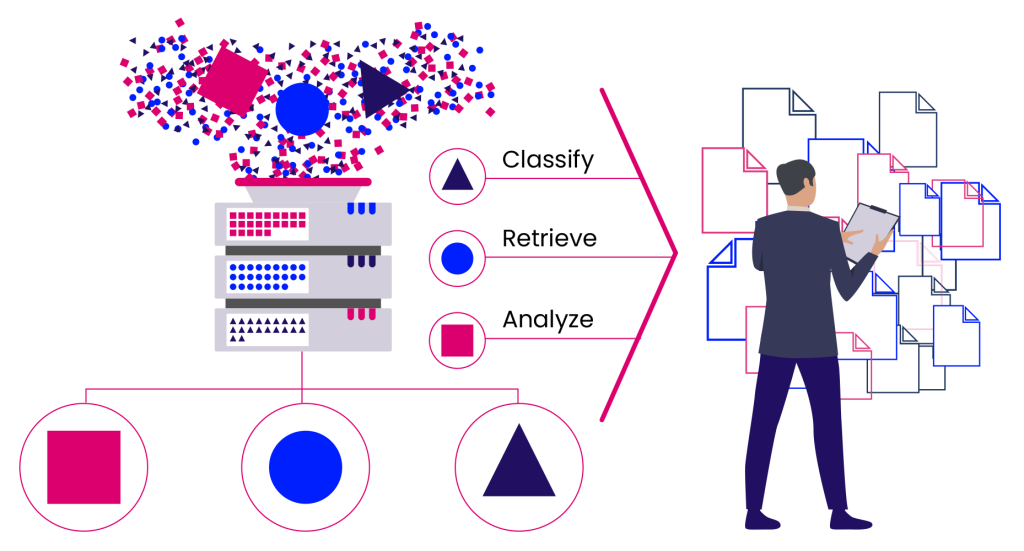
Applications and Use Cases of Natural Language Processing (NLP)
Natural language processing becomes most useful when language is connected to a specific task, such as interpreting a voice command, extracting clinical information, or analyzing customer sentiment.
read more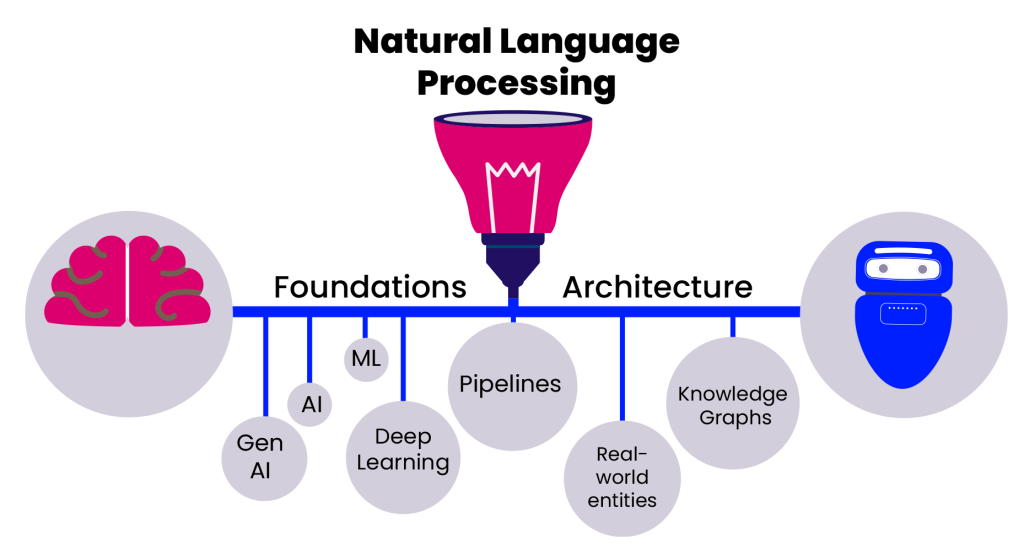
Natural Language Processing (NLP) Explained: Foundations and Architecture
Processing human language is difficult for machines because meaning depends on context, grammar, intent, domain knowledge, and ambiguity.
read more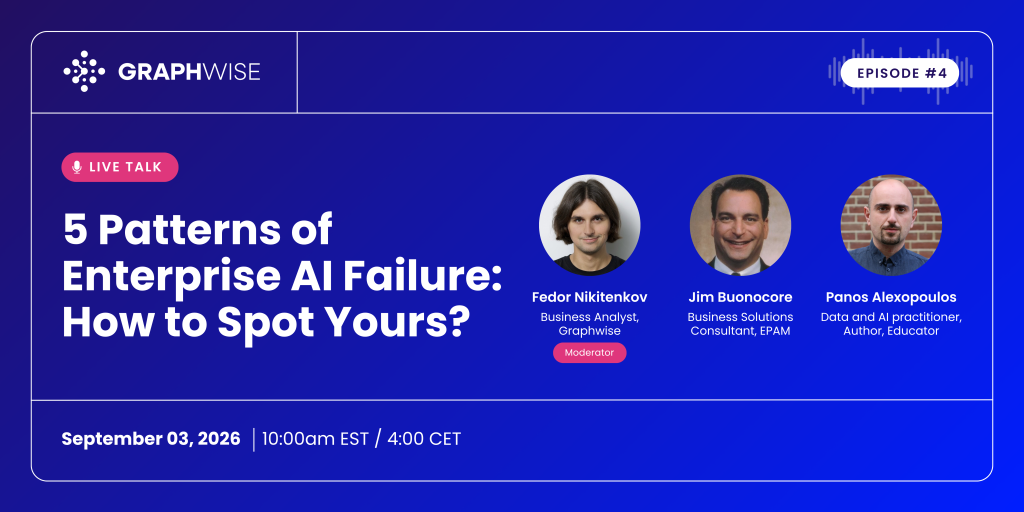
Graphwise Talk #4: 5 Patterns of Enterprise AI Failure: How to Spot Yours?
In our fourth Graphwise Talk, data and AI practitioner Panos Alexopoulos and Jim Buonocore of #EPAM_Systems join Graphwise to unpack why enterprise AI projects stall: the failure patterns behind stuck pilots, why scaling is a data problem in disguise, and what it takes to build AI that compounds instead of stalling out.
read more
The Context Layer: The Emerging Stack for Context-Aware AI
Watch the replay of our Data Science Connect roundtable on the emerging context layer, then a Q&A with Andreas Blumauer.
read more
What is an LLM Hallucination?
A Large Language Model (LLM) hallucination is when a LLM generates factually incorrect or senseless information that looks grammatically correct and feels confident.
read more
Two Paths to Self-Improving AI Agents and Why One Works
Disconnected data is silently breaking enterprise AI agents. Alan Morrison compares two fixes: GraphRAG vs. recursive self-improvement, and what each means for your team.
read more
Graphwise Talk#3: Under the Hood of Trustworthy AI: Memory, Meaning, Infrastructure
In our third Graphwise Talk, ontologist Kurt Cagle joins Graphwise to get under the hood of trustworthy AI — how ontologies encode meaning, how semantic memory makes AI auditable, and what it actually takes to build systems that can explain themselves.
read more
Making Product Knowledge AI-Ready: Lessons from KAESER
Product data locked in SAP and siloed systems stops AI initiatives in their tracks. KAESER and PANTOPIX reveal how they built a unified semantic backbone to turn complex product knowledge into a live, AI-ready application.
read more
AI-Assisted Taxonomy Creation: Tools, Workflows, and Where Do Humans Fit In?
AI is changing how taxonomies are built, but what does that actually look like in day-to-day practice? This webinar reveals where AI speeds up taxonomy building, where human expertise is non-negotiable, and how both collaborate effectively.
read more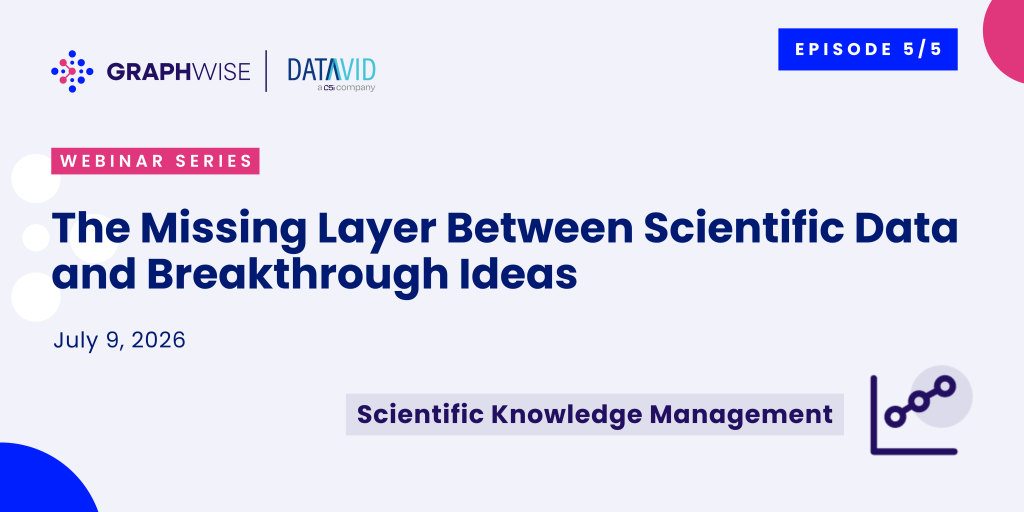
The Missing Layer Between Scientific Data and Breakthrough Ideas
R&D teams spend too much time searching systems instead of making breakthroughs. Graphwise and Datavid show how a semantic backbone unifies fragmented research data without requiring a costly infrastructure overhaul.
read more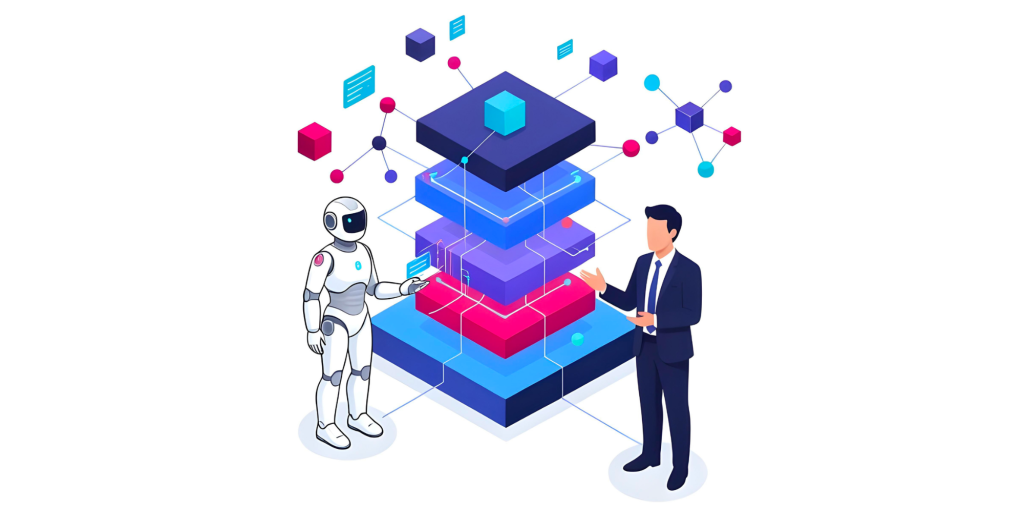
The Enterprise Semantic Backbone: A Foundation for Reliable and Scalable Agentic AI
Learn how a Enterprise Semantic Backbone is a good foundation for reliable and scalable Agentic AI.
read more