Image

Why Raindrops Make For Pretty Good Antennae

A good rule of thumb is that everything that can interact with electromagnetic (EM) radiation is an antenna, which includes our mostly-salty-water-containing bodies and also raindrops and moisture in the air. This can be both a benefit or a curse, depending on whether you’re trying to broadcast a signal in rainy weather or operating a weather radar. Here it’s essential to understand what kind of antenna a raindrop really is to optimize for either scenario, which is where a video by [Marshall Bruner] provides a solid primer.

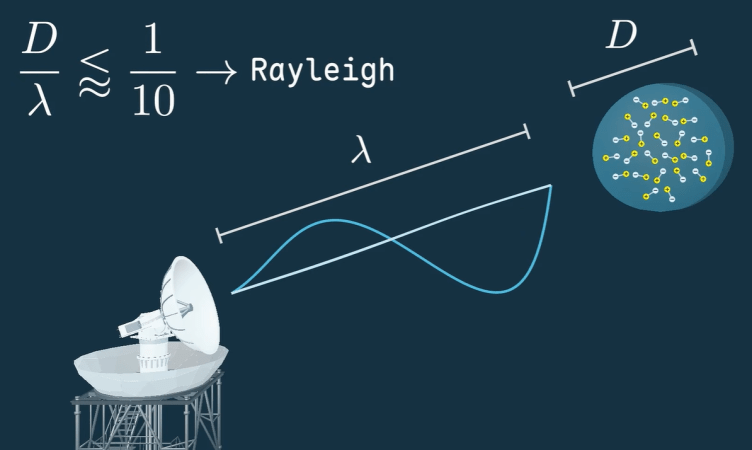
The video focuses on the Rayleigh regime, which may be familiar from atmospheric Rayleigh scattering that also affects EM radiation in the visible spectrum, giving those of us gifted with retinas capable of color vision those nice blue skies.

As the EM radiation passes through these little droplets in the air, their neutral alignment gets disrupted and causes them to turn into dipole antennae, moving along with the incoming frequency. The backscatter part of this event is what returns to the emitter, such as a weather radar. Here the volume and permittivity of the moisture sphere determines the strength of the signal, which is great if you’re actually operating a weather radar and wants to map out the moisture in some clouds, including the presence of snow.

There’s quite a lot of mathematics involved which is covered in the video and expanded upon in a related Python notebook.

Continue reading “Why Raindrops Make For Pretty Good Antennae”
Image

Determining The Body Temperature Of Tyrannosaurus Rex

One of the most fun challenges in paleontology is determining characteristics of long-dead species like their behavior and body temperature based on nothing but some fossils and traces that are usually millions of years old. Something that has long vexed the paleontological community for example has been the question whether non-avian dinosaurs like the well-known Tyrannosaurus rex was cold- or warm-blooded, and if the latter, what temperature this was. Cue a recent study by [Randon J. Flores] et al. in Science Advances in which they seek to answer this question.

Although modern-day dinosaurs in the form of birds are all warm-blooded – meaning capable of regulating their body temperature – species like crocodiles, who also lived alongside non-avian dinosaurs, are cold-blooded and have to cycle between sun-basking and a cool dip in a nearby river to maintain their body temperature.

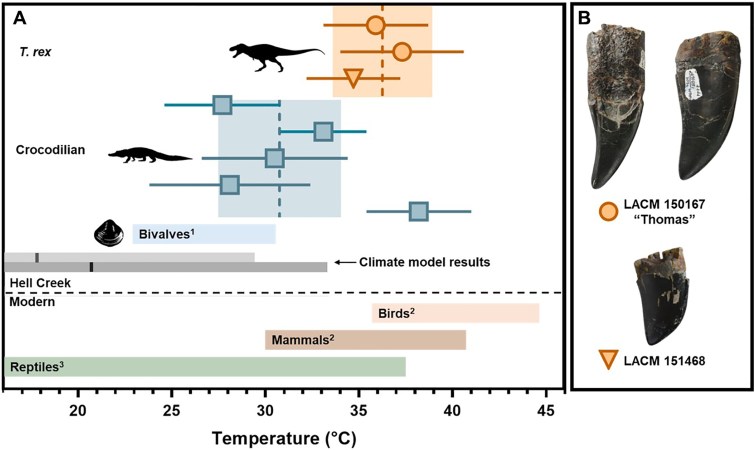
By looking at the temperature-dependent formation of carbonate clumped isotopes in three T. rex teeth from the Late Cretaceous Hell Creek Formation, they were able to deduce that these dinosaurs had a body temperature of 36.3 ± 2.5°C, comparable to modern-day endotherms. This was also much higher than that of contemporary crocodilian teeth found in the same area.

When popular dinosaur movies like Jurassic Park showed T. rex and other non-avian dinosaurs as being active, warm-blooded hunters, this was pretty much based on cutting-edge science at the time. Fortunately for its creators, later paleontological findings have largely confirmed that portrayal, although these days non-avian dinosaurs have often gained more feathers and other details – even outside of feathered theropods that became birds – that were absent in these early 90s reconstructions.

Image

New Research Suggests That A Neutrino Laser Is Impossible

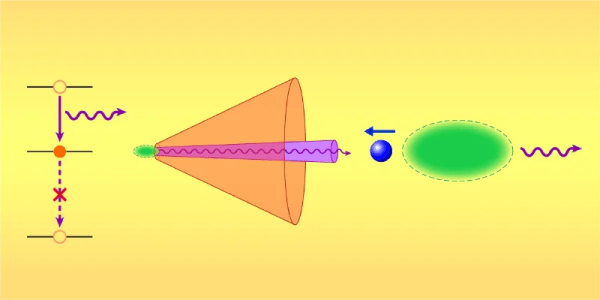
As cool as it would have been to wield lasers that produce a beam of neutrinos, recently two papers were published by MIT researchers that seem to dampen the likelihood of such lasers being at all possible. In a review paper by [Ana Maria Rey] et al. these two papers are investigated in more detail.

Although the concept behind a neutrino laser is rather simple, using the same superradiance effect involving a Bose-Einstein condensate (BEC) that allows for stimulation by photons to result in a synchronized direction of emitted photons, the idea of using a BEC of radioisotopes that naturally emit neutrinos in this fashion has now been effectively shot down.

The problem lies in taking the leap from photons with a BEC and applying this to a BEC of radioisotopes. Whereas photons are relatively low-energy at a mere 1 eV, a neutrino with 1+ MeV has a much greater kinetic effect on the particle that emitted it. Unlike a photon emitted by an atom, this leaves precious little time for the other particles in the BEC to be affected.

This first scenario is covered in the (paywalled) paper by [Yu-Kun Lu] et al. with their calculations showing that superradiance cannot occur with neutrinos in a BEC and thus a laser is impossible. In the (also paywalled) second paper by [Hanzhen Lin] et al. the question is asked whether the assumption that a BEC of a radioisotope will at all enhance radioactive decay, to which the answer is a curt ‘no’.

Although it’s impossible to prove a negative with the scientific method, these two studies have slammed close a couple of doors on the concept of a neutrino laser.

Image

Searching For Dark Matter With A Levitating Magnet

Much of science is performed through inference, with the readings on instruments, a flash of light in heavy water, or the results of parsing through terabytes of sensor data after a particle accelerator collision either backing up a proposed scenario or weakening its foundations.

Image

In the case of so-called dark matter, this is even more relevant, as we are talking about a proposed form of matter whose most pertinent feature is that it doesn’t interact with anything else except through gravity. This is where the wiggling of a levitating magnet may be the key to detecting it.

In this experimental setup by Rice University and Dutch researchers at the Leiden Institute, a tiny permanent magnet the size of a grain of sand is levitated above a superconductor, surrounded by highly sensitive detectors that should be able to spot even minuscule movements. So far, they have collected a month’s worth of data, with no conclusive results yet.

Even if they don’t detect any ‘knocks’ on this tiny levitating magnet, it will still help refine existing models of what dark matter’s properties might be. For the next phase of this research, they’ll add more of these sensors, which will also make it easier to distinguish background noise from any unusual readings.

We’ve previously talked about [Vera Ruben]’s contributions to the hunt for dark matter and the mysteries that prompted the idea that it might exist.

Image

Making A Copper-Oxide Photodetector From Scratch

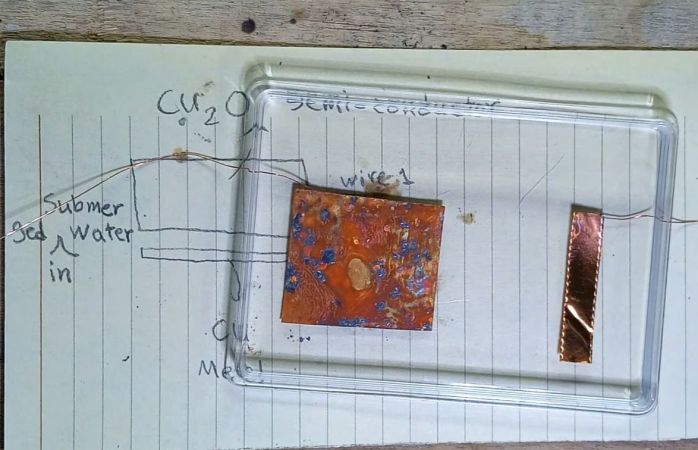
Photodetectors come in a wide variety of constructions and materials, with the Cu2O-based photodetector that [Mad Scientist Creations] demonstrates in a recent video being a good example of a photodetector that can be created at home using nothing but some copper and a heat source.

Of the two copper elements in a salt water cell, one element is heated to the point where a copper oxide layer forms, specifically Cu2O, which acts as a semiconductor and provides the photosensitive layer. Even a fairly crude sensor created with a regular gas stove produces enough of a current that it can be used in a simple light detection circuit.

Although copper-oxide photodetectors may seem quaint, they are getting a lot of interest as they feature a very narrow bandgap at 1.2 eV. In a 2019 study by [Hyeon-Joo Song] et al. as published in Scientific Reports such a sensor is enhanced with an optimized grain structure that improves its performance, with much higher sensitivity and faster response times.

As demonstrated by [Andrzej Kwiatkowski] et al. in a 2024 paper in Solar Energy Materials and Solar Cells these copper-oxide sensors can also be used for gas detectors, though they used advanced gas deposition to produce the thin films instead of sticking a bit of copper tape into a natural gas flame.

Even if DIY copper-oxide sensors aren’t quite as exciting as what one can do with access to a well-equipped (semiconductor) lab, it’s still a pretty accessible material that lends itself for easy experimentation.

Continue reading “Making A Copper-Oxide Photodetector From Scratch”

Image

Using Azo Photoisomerization To Alter Semiconductor Film Properties

Generally semiconductor devices like transistors have fixed properties, but using an azobenzene (Azo) compound it’s possible to optically alter these properties by exposing them to UV light. This is demonstrated in a recent paper by [Jaehoon Ji] et al., as published in Science Advances, with accompanying coverage by Princeton University.

Building on previous research on e.g. flakes of MoS2 with photochromic Azo molecules, a functional semiconductor device was created. This uses a transition metal dichalcogenide (TMD) monolayer combined with the Azo compound, with the latter altering the electrical and optical properties of the structure.

In both n- and p-type FET semiconductors it was demonstrated using visible and UV light that this can alter the carrier densities in the material, effectively altering the FET’s behavior.

While this is of course just a proof of concept, it does show that by using (Azo) molecules that can respond to certain electromagnetic radiation frequencies, electric fields, temperature, etc. semiconductor devices can be created whose behavior dynamically changes with these factors. This could potentially provide new ways to make programmable circuits and sensors.

Image

Heat Domes: Meet The Quiet And Oppressive Take On The Thunderdome

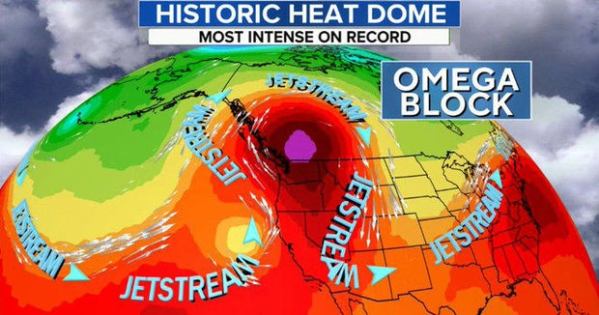
One of the nice things about the weather is that even if it’s bad right now, it’ll definitely be changing soon and maybe even for the better. There is one exception to this rule, however, and that comes in the form of heat domes, which are weather systems whereby a region of air becomes isolated from the surrounding systems. This creates effectively a greenhouse, with hot air remaining trapped and moisture unable to get in.

Although until recently not very common, this weather phenomenon poses a major challenge to any flora and fauna that finds itself trapped in a heat dome. With nights being about as hot and stifling as the days with their blue skies unbroken by any cloud cover and no rain for potentially weeks on end, it poses severe hydration, cardiovascular, and other challenges to any affected lifeforms.

Continue reading “Heat Domes: Meet The Quiet And Oppressive Take On The Thunderdome”