Image

Making A Digital Music Player For Cassette Decks

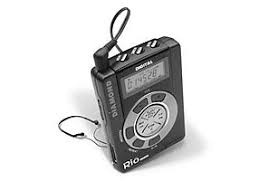
In the cross-over between the era of tapes into that of MP3s, you’d see quite a few of those special cassette tapes that were actually digital music players inside. Some simply provided a 3.5 mm input, while others were complete MP3 players or Bluetooth receivers that just happened to also output to the magnetic read head of a cassette player. Recently [Jonathan Rowny] decided to make his own version of the latter.

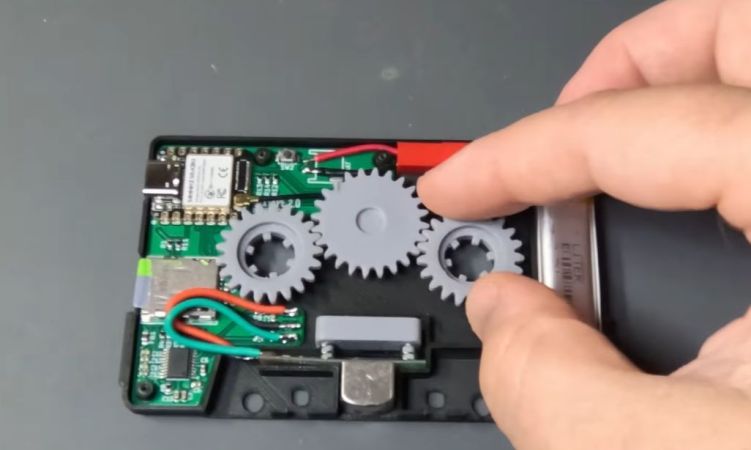
Although getting the actual audio signal into the read head is easy enough – requiring little more than its equivalent being used as a write head on the cassette side – actually interfacing with the player’s mechanisms like auto-stop, reverse and so on requires the use of some gearing that detect motion on what would be the tape spools, as well as transfer the motion from the take-up spool to the other spool so that features like the auto-stop mechanism don’t get triggered.

A lot of inspiration here can be found in e.g. the videos made by [Clint] of [Lazy Game Reviews] who looked at a number of examples – including their internals – over the years, with various levels of functionality. For this particular implementation an ESP32-S3 module is used for the brains, along with a microSD card reader for music and a PCM5102 I2S audio codec to create the analog audio signal.

The gears were printed using an SLA printer and seem to work all right. Unfortunately he didn’t realize the importance of the capstan as the mechanism that actually transports the tape, so its motion was not measured as is done in the better cassette adapters. This will likely be corrected in a future iteration, however.

Continue reading “Making A Digital Music Player For Cassette Decks” →
Image

Child-Friendly Music Player Uses RFID

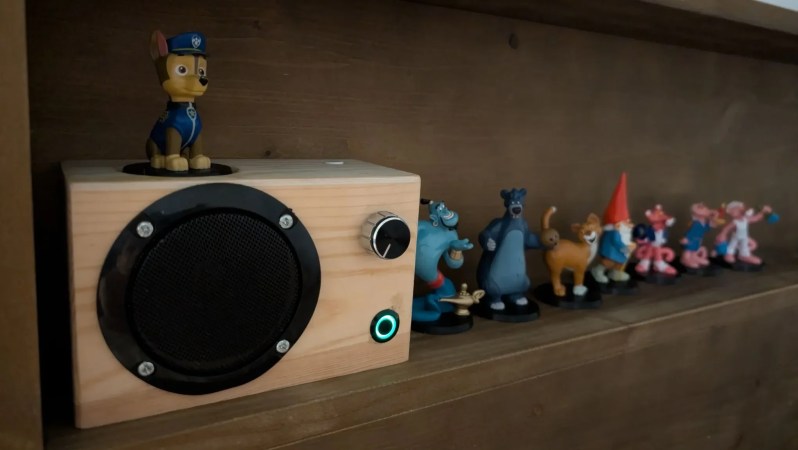
[David] has a young child who is clever enough to use a computer to play music, but he doesn’t quite want to hand over the mouse just yet. Thus, he set about building an electronic music player that could be operated in an altogether simpler fashion. 

The build is based around an Arduino Nano — its job is to read RFID tags via an RC522 reader, with the tags themselves embedded in a series of small dolls belonging to [David]’s daughter. Upon reading the tag, the Arduino Nano chats over serial with a DFPlayer Mini module, which reads a playlist of MP3 files off of an SD card and plays them over a small 4 ohm speaker that [David] had laying around. It’s a simple build, with the components all neatly wrapped up in a handsome wooden case with a volume control and a skip button for if any one song becomes too annoying for a repeat listen.

We’ve featured other builds in this vein before, too. There’s something satisfying about a music player with such a simple interface—no delicate media to fiddle with, just pop the toy on top and get the playlist you were looking for. If you’re creating your own little musical builds at home, we’d love to see them on the tipsline.

Image

Know Audio: Lossy Compression Algorithms And Distortion

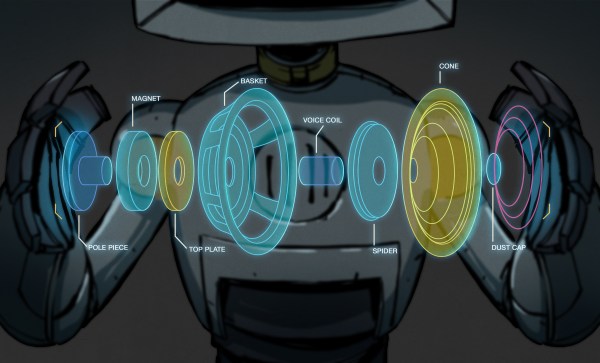
In previous episodes of this long-running series looking at the world of high-quality audio, at every point we’ve stayed in the real world of physical audio hardware. From the human ear to the loudspeaker, from the DAC to measuring distortion, this is all stuff that can happen on your bench or in your Hi-Fi rack.

We’re now going for the first time to diverge from the practical world of hardware into the theoretical world of mathematics, as we consider a very contentious topic in the world of audio. We live in a world in which it is now normal for audio to have some form of digital compression applied to it, some of which has an effect on what is played back through our speakers and headphones. When a compression algorithm changes what we hear, it’s distortion in audio terms, but how much is it distorted and how do we even measure that? It’s time to dive in and play with some audio files. Continue reading “Know Audio: Lossy Compression Algorithms And Distortion” →

Image

Unreleased Amiga Hardware Plays MP3s

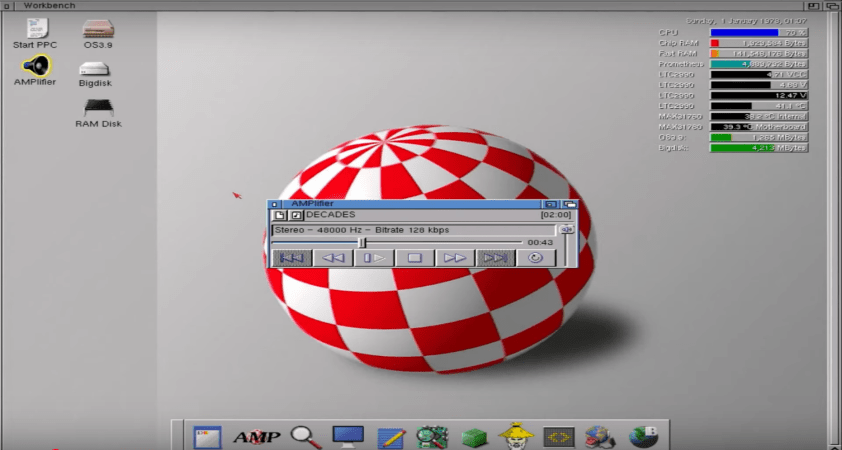
The MP3 file type has been around for so long, and is supported by essentially all modern media software and hardware, that it might be surprising to some to learn that it’s actually a proprietary format. Developed in the late 80s and early 90s, it rose to prominence during the Napster/Limewire era of the early 00s and became the de facto standard for digital music, but not all computers in these eras could play this filetype. This includes the Amigas of the early 90s, with one rare exception: this unreleased successor to the A3000 with a DSP chip, which now also has the software to play back these digital tunes.

The AA3000, developed as a prototype by Commodore, was never released to the general public. Unlike the original A3000 this one would have included a digital signal processing chip from AT&T called the DSP3210 which would have greatly enhanced its audio capabilities. A few prototype boards did make it out into the hands of the public, and the retrocomputing scene has used them to develop replicas of these rare machines. [Wrangler] used one to then develop the software needed for the MPEG layer 2 and 3 decoder using this extra hardware, since the original Amiga 3000 was not powerful enough on its own to play these files back.

If you want to follow along with the community still developing for this platform there’s a form post with some more detail for this specific build (although you may need to translate from German). [Wrangler] additionally points out that there are some limitations with this implementation as well, so you likely won’t get Winamp-level performance with this system, but for the Amiga fans out there it’s an excellent expansion of this computer’s capabilities nonetheless.

Thanks to [Andy] for the tip!

Continue reading “Unreleased Amiga Hardware Plays MP3s” →

Image

All-Band Radio Records Signals, Plays MP3s

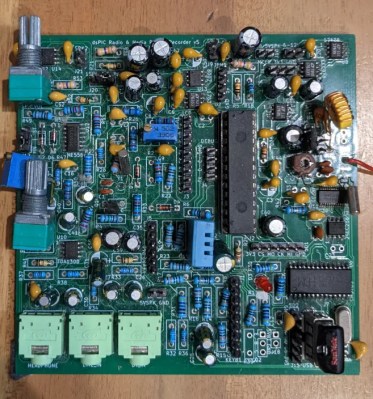
In these days of everything-streaming, it’s great to see an old school radio build. It’s even better when it’s not old-school at all, but packed full of modern ICs and driven by a micro-controller like the dsPIC in [Minh Danh]’s dsMP3 build. Best of all is when we get enough details that the author needs two blog posts — one for hardware, and one for firmware — like [Minh Danh] has done.

This build does it all: radio, MP3 playback, and records incoming signals. The radio portion of the build is driven by an Si4735, which allows for receiving both in FM and AM — with all the AM bands, SW, MW and LW available. The FM section does support RDS, though because [Minh Danh] ran out of pins on the dsPIC, isn’t the perfect implementation.

Image
Just look at that thru-hole goodness.

The audio section is a good intro to audio engineering if you’ve never done a project like this: he’s using a TDA1308 for headphones, which feeds into a NS8002 to drive some hefty stereo speakers– and he tells you why he selected those chips, as well as providing broken-out schematics for each. Really, we can’t say enough good things about this project’s documentation.

That’s before we get to the firmware, where he tells us how he manages to get the dsPIC to read out MP3s from a USB drive, and write WAVs to it. One very interesting detail is how he used the dsPIC’s ample analog inputs to handle the front panel buttons on this radio: a resistor ladder. It’s a great solution in a project that’s full of them.

Of course we’ve seen radio receivers before, and plenty of MP3 players, too — but this might be the first time we’ve seen an electronic Swiss army knife with all these features, and we’re very glad [Minh Danh] shared it with us.

Continue reading “All-Band Radio Records Signals, Plays MP3s” →

Image

Yaydio, A Music Player For Kids

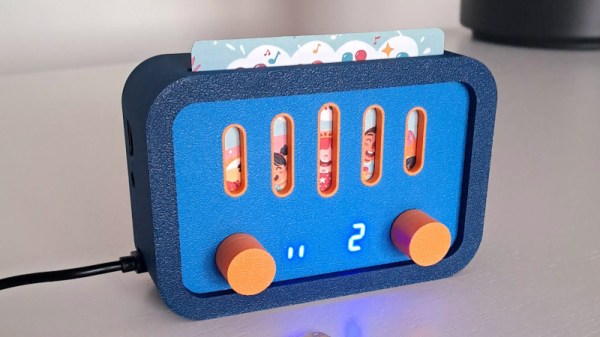
Music consumption has followed a trend over the last decade or more of abandoning physical media for online or streaming alternatives. This can present a problem for young children however, for whom a simpler physical interface may be an easier way to play those tunes. Maintaining a library of CDs is not entirely convenient either, so [JakesMD] has created the Yaydio. It’s a music player for kids, that plays music when a card is inserted in its slot.

As you might expect, the cards themselves do not contain the music. Instead they are NFC cards, and the player starts the corresponding album from its SD card when one is detected. The hardware is simple enough, an Arduino Nano with modules for MP3 playback, NFC reading, seven segment display, and rotary encoder. The whole thing lives in a kid-friendly 3D printed case.

Some thought has been given to easily adding albums and assigning cards to them, making it easy to keep up with the youngster’s tastes. This isn’t the first such kid-friendly music player we’ve seen, but it’s certainly pretty neat.

Image

Freed At Last From Patents, Does Anyone Still Care About MP3?

The MP3 file format was always encumbered with patents, but as of 2017, the last patent finally expired. Although the format became synonymous with the digital music revolution that started in the late 90s, as an audio compression format there is an argument to be made that it has long since been superseded by better formats and other changes. [Ibrahim Diallo] makes that very argument in a recent blog post. In a world with super fast Internet speeds and the abstracting away of music formats behind streaming services, few people still care about MP3.

The last patents for the MP3 format expired in 2012 in the EU and  2017 in the US, ending many years of incessant legal sniping. For those of us learning of the wonders of MP3 back around ’98 through services like Napster or Limewire, MP3s meant downloading music on 56k dialup in a matter of minutes to hours rather than days to weeks with WAV, and with generally better quality than Microsoft’s WMA format at lower bitrates. When portable media players came onto the scene, they were called ‘MP3 players’, a name that stuck around.

But is MP3 really obsolete and best forgotten in the dustbin of history at this point? Would anyone care if computers dropped support  for MP3 tomorrow?

Continue reading “Freed At Last From Patents, Does Anyone Still Care About MP3?” →