Latest
-

Don’t blame harm reduction for the overdose crisis
A closer look at Seattle, Burlington, and Vancouver challenges the claim that harm reduction caused their overdose crises.
-
Flight cancellations and delays show dire state of US air traffic control
Simple failures caused over 1,000 flight cancellations, 6,000 delays, and negatively impacted tens of thousands of passengers.
-
States must publicly track and show how they spend Meta’s settlement money
Meta has agreed to pay up to $18 billion to resolve a lawsuit alleging that Facebook and Instagram were designed in ways that harmed children and teenagers.
-
The private-sector is adding more space-launch capacity
Plus: The fatal Miami cargo plane accident, TSA airport security modernization unravels, Canada looks to privatize airports, and more.
-
Youth vaping has collapsed, but lawmakers want $500 million to fight it anyway
As youth vaping drops to its lowest level in 12 years, the Preventing Opportunities for Teen E-Cigarette and Tobacco Addiction Act is largely redundant.
-
Preparing the Texas workforce for artificial intelligence
Texas should let workers and businesses adapt to AI while keeping workforce training flexible and responsive.
-
Policy for short-term rentals: Balancing property rights and community preferences
Short-term rental restrictions do little to improve housing affordability and often impose sweeping burdens on responsible hosts, guests, and platforms.
-
New York should adopt reforms to prison sentences by expanding its good time and merit time statutes
House Bill 1085 provides incarcerated people with robust incentives for good behavior and program participation, but lacks some common-sense safeguards.
-
The Ratepayer Protection Act protects against higher household energy bills when data centers connect to the grid
The bill offers an economically rational approach to federal advisory standards for a new class of energy customers larger than those seen before.
-
Mileage-based user fees: Lessons from state programs
Mileage-based user fees restore the users-pay, users-benefit relationship disrupted by electric vehicles by charging drivers based on the miles they actually drive.
-
-
Government agencies must be held responsible for negative outcomes from their use of AI
Government agencies must pair artificial intelligence deployment with clear rules, human oversight, and enforceable accountability for internal and vendor use.
-
Indiana moves to right-size public schools, streamline services
In Indiana, more than one in five of publicly funded students attended schools other than their assigned one via charter schools, open enrollment, and private school scholarships during the 2025-26 school year.
-
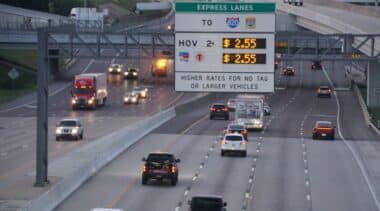
What do public-private partnerships add to priced managed lanes?
Comparing the attributes of government ownership and public-private partnership ownership of managed lanes.
-
Key considerations for states developing mileage-based user fee pilot programs
States considering replacing gas taxes with mileage-based user fees can learn from pilot programs in Hawaii, Michigan, California, and Texas.
-
Concession fees for express toll lanes
Plus: The future of the Highway Trust Fund, new findings on truck user fees, and more.
-
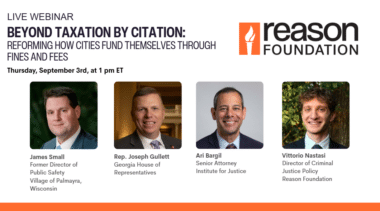
Webinar: Reforming how cities fund themselves through fines and fees
A recent Reason Foundation webinar explored how local governments across the country raise billions of dollars a year through court fines, fees, and forfeitures.
-

Automated license plate readers require scrutiny—and due process
A response to Charles Fain Lehman’s “In Defense of Flock” article.