
No products in the cart.
 Blog
Blog3285 Clone Movement: What It Changes in a GMT-Master II
You can tell a lot about a GMT movement without opening the watch. Unscrew the crown. Set the...
Super clone watches sit in a different category from cheap, one-size-fits-all replicas. They're built to copy particular luxury watch references, and that changes how they should be compared. Brand matters, sure. Model matters more.
People who buy super clones don't judge Rolex, AP, Patek, or Richard Mille as a single block. They look at each watch on its own. What matters on one model might barely register on another, because the points people scrutinize shift from piece to piece: case construction, bezel shape, movement layout, bracelet feel, and the tiny visual cues that only start to stand out after the bigger stuff is already close.
Browse super clone watches by brand, model and factory, including Rolex, Audemars Piguet, Patek Philippe, Omega and other popular collections.


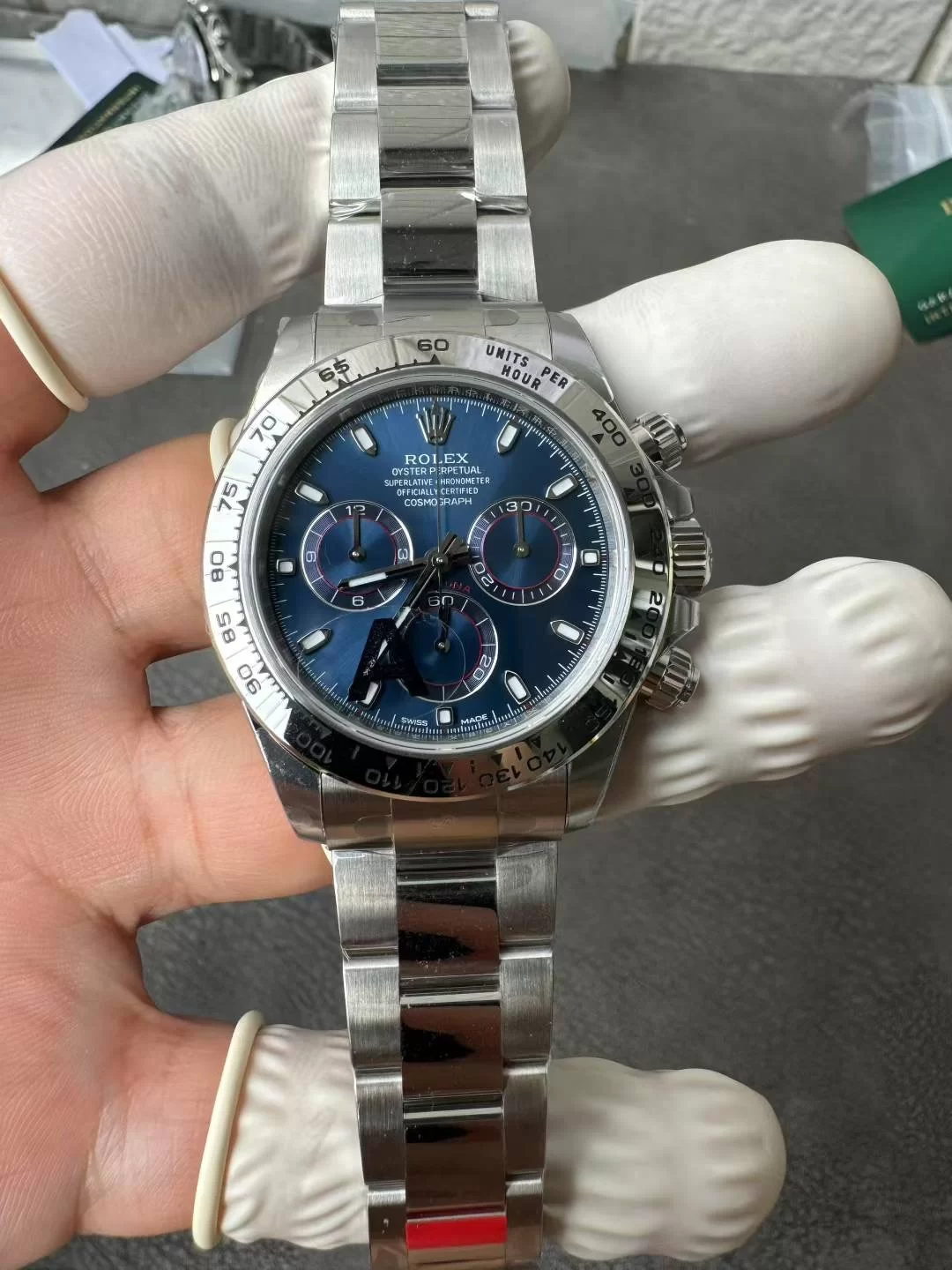

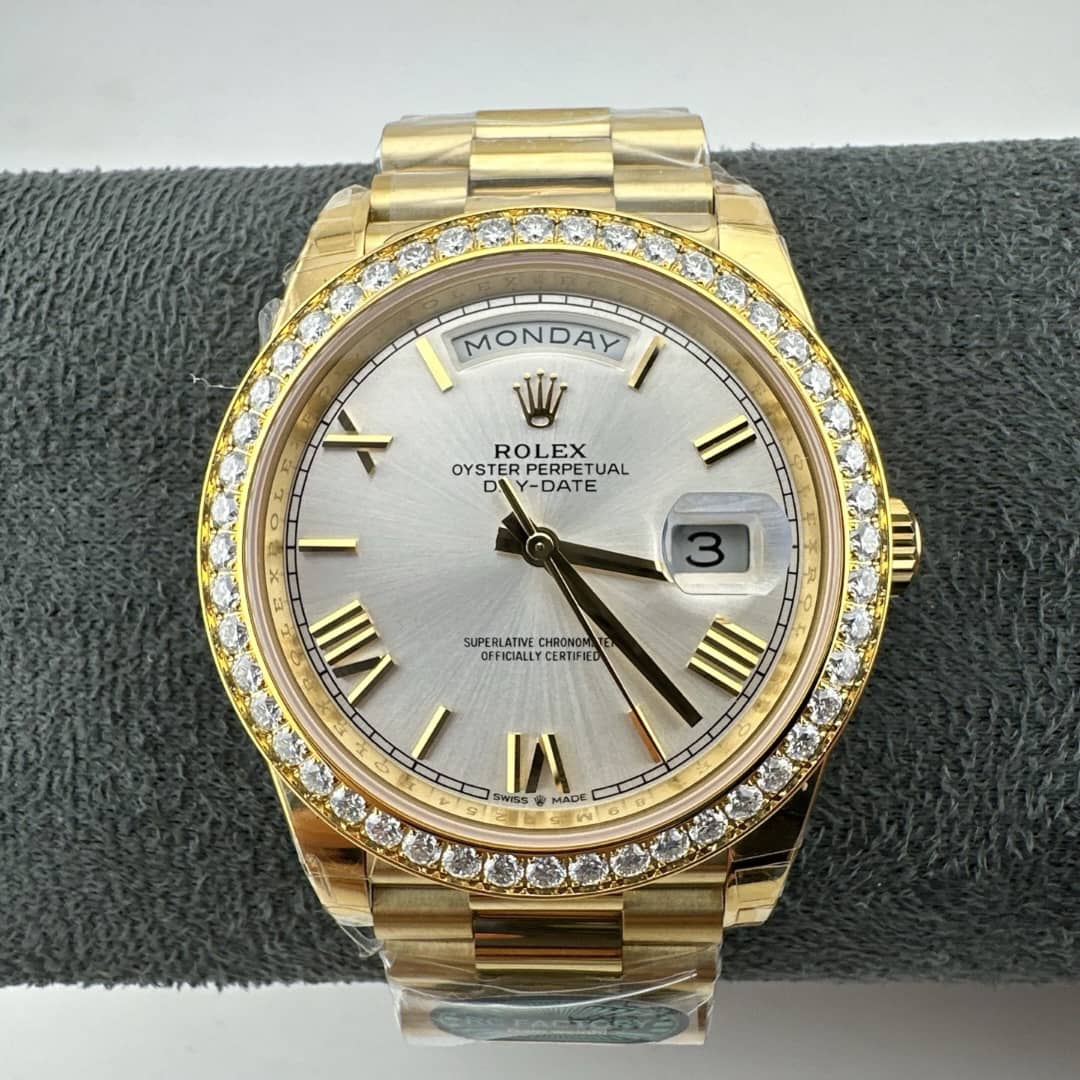


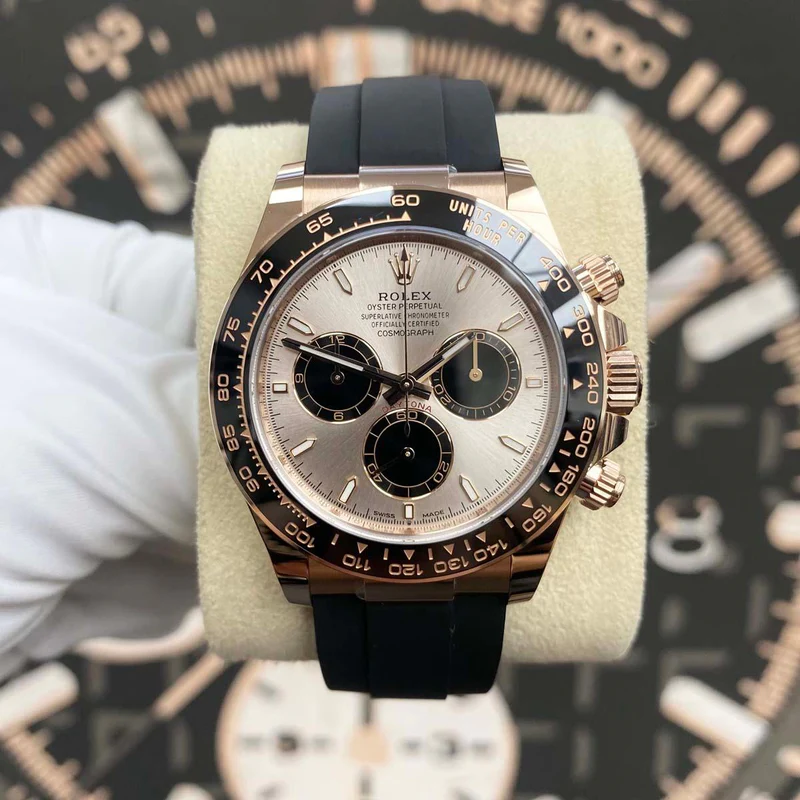
Case, dial, bracelet, movement and finishing checked before shipment
See the exact watch selected for your order before it is dispatched
If a piece does not meet our standards, we reject it and source another
Replacement links, clasps, bracelet parts and support available after delivery
Most people start with Rolex, but the comparisons get specific quickly. A Submariner is judged differently from a Daytona or Datejust, while GMT-Master II buyers tend to notice the bezel, date window and movement much more closely.
Our Rolex super clone collection brings the main models together so you can compare designs, factory options and available configurations in one place.

Real feedback from customers who have ordered, reviewed QC, and received their watches.
Before dispatch, each selected watch is checked for visible finishing, alignment, bracelet and clasp condition, movement operation, and overall function. QC photos are provided so buyers can review the actual piece before it ships.
"Very happy with absolutely everything. Packaging, delivery, the watch, timing was spot on. Very well done! I'm already looking for the next one!"
"I'm really happy with the product, and the communication with Matt was great. Watch quality is amazing. I'd rate it 10/10."
"Completely met my expectations in a timely and professional manner. The product is beautiful and as represented."
"Great communication and help from Matt all the way through. Arrived sooner than estimated. Will buy from Matt again — really pleased with the product."
"Great service and amazing product. I am happy with the product and service. I asked a lot of questions, and the customer service person was very friendly and helpful. I will be ordering again."
"Simply wow — very happy with the two watches. Communication was easy, clear and responsive. One of the watches we wanted was not on the website, but Matt was able to check, source and supply the paved Day-Date for us. The watches are truly beautiful."
Practical articles covering super clone watch factories, movements, QC, case and bracelet quality, new releases, and the details buyers should compare before choosing a watch.
BlogYou can tell a lot about a GMT movement without opening the watch. Unscrew the crown. Set the...
 Blog
BlogAsk around about the best Submariner replica factory and the conversation turns into VSF versus Clean almost immediately....
 Blog
BlogI wouldn’t swim with a VSF Submariner until that specific watch passes a pressure test. That’s the whole...
 Blog
BlogPeople ask this before buying a VS Factory watch for a reason: how long is it actually going...
People love asking which factory makes the best super clone watches. I get it. They want one name, one answer, and a clean way to avoid a bad purchase. Reality is messier than that.
A factory can turn out consistent work without making every watch from every run equally good. One Submariner may look right at a glance. The next may have a date sitting a little low, a bezel marker pulling your eye for the wrong reason, or end links that never sit quite flush with the case. A ranking post won't catch those differences.
Most of the time, it isn't that a factory suddenly became bad. It's that this individual piece isn't as clean as the one people were praising last month.
So the factory label comes after the watch itself. Start by looking at the complete thing in front of you, not the sticker on the packaging.
Does anything look wrong from normal viewing distance? Sometimes your eye catches a problem before you can name it. The dial may feel slightly lopsided. The date may sit low in the window. One marker may draw attention while everything around it falls into place. If the watch already feels off on first glance, enlarging the photos usually confirms why.
Dial work deserves attention, though buyers get tripped up by judging it from one flattering photo. A close-up taken under bright dealer lighting can make nearly any dial look more convincing than it does in a normal room.
Blue and green dials create the most confusion. Light shifts their tone quickly. A dial that appears bright and saturated in a dealer image may look darker indoors, where the surrounding light is weaker and less direct. The crystal changes the impression too. Reflections can sharpen an edge in one shot, then wash out printing or make a color look flat in the next.
I wouldn't trust a single angle for a color dial. Ask how it looks under more than one kind of light. A straight-on studio shot, a tilted shot, and an ordinary room-light image reveal more than ten nearly identical close-ups.
The bracelet deserves the same scrutiny. Plenty of people fixate on dial printing and barely look at the place where the first links meet the case.
On some super clone watches, that connection tells you more than a close-up of a coronet or a line of text. If the end links sit awkwardly, the first links fall at an odd angle, or a gap appears around the lugs, you'll see it as soon as the watch is worn. It changes the profile of the entire case.
The center section of a bracelet may look perfectly fine while the edges give the watch away. That lug area is where the fit either looks settled or looks unfinished.

Then look at the bezel. On a Submariner or GMT-Master II, a small alignment issue becomes hard to ignore once you notice it. The flaw doesn't need to be dramatic. It only needs to sit a little outside what your eye expects from the rest of the layout.
The date window works the same way. A Cyclops may be present and roughly the right size, yet the watch still reads wrong if the date is high, low, or slightly off-center. Nothing obvious is missing. The parts simply aren't working together.
That is the point buyers miss when they shop from specification lists. Appearance comes from the way details line up as a whole, not from checking off every expected component.
None of these checks are difficult. Avoiding tunnel vision is the hard part.
A sharply printed dial won't repair poor bracelet fit. A bracelet that photographs well won't make a crooked marker disappear. And a respected factory name isn't a reason to wave through every individual watch without taking a proper look.
I'd rather identify the weaker piece than pretend every watch in a batch is interchangeable.
That's how I approach super clone watches before deciding whether a piece is worth approving. Begin with the full watch at a normal distance. If something feels wrong, don't talk yourself into “close enough” before you've worked out what you're seeing.
After that, get closer and inspect the details that affect the way it looks and wears: dial placement and color, the crystal's effect on visibility, spacing around the lugs and end links, plus bezel or date alignment. The list changes a little by model, but the order is useful.
Sometimes you don't need another factory at all. You need a better individual watch from the same source.
If bracelet fit is the part you want to inspect more closely, our guide to bracelet quality goes further into end links, articulation, clasp feel, and the small fit issues that become annoying over time.
People choose a Rolex first, then reach for a shortcut. They hear that a factory is consistent and assume its output will suit every reference equally well.
That assumption falls apart quickly.
With super clone watches, a factory can be excellent at one reference and merely passable at another. The watch design tells you where to look; the factory name only helps narrow the field after that.
A Submariner and a Daytona don't ask for the same inspection. Once you're looking at a Datejust, dial color, bezel choice, bracelet choice, and the way the case sits on a wrist start carrying more weight than the name printed on a bag or card.
So I do the boring part first: decide which model I actually want to own. A good factory recommendation for the wrong configuration is still a poor recommendation.
The Submariner looks clean, which is exactly why errors show quickly. There isn't much on the dial to hide behind, and the layout leaves nowhere for a misplaced detail to disappear.
On a 126610LN, inspect the date window and its placement, the Cyclops magnification, bezel alignment, and the way the Oyster bracelet meets the case. Those are the areas your eye keeps returning to. A slightly awkward end link can bother you more than a tiny printing variation nobody would see without magnification.
The 124060 changes the priorities. There is no date window and no Cyclops, which is the whole attraction for many people. The dial becomes even cleaner, so marker alignment, bezel position, rehaut appearance, and the case-to-bracelet transition have nowhere to hide.
VSF Submariners come up constantly, and there is a reason that reputation persists. Still, a VSF Submariner shouldn't be treated as an automatic approval. Current images of the exact watch are more useful than confidence borrowed from somebody else's purchase.
Even a usually consistent run can carry tiny details you'd prefer to spot before the watch leaves the bench. Buying a factory promise and buying a specific watch are two different things.
The Daytona is nearly the mirror image of the Submariner. More is happening on the dial, and all of it has to occupy limited space without looking crowded or uneven.
Subdials, markers, text, and hands share the same area. A mismatch that might slide by on a simpler watch becomes easier to see on a Daytona once you know the layout. Subdial placement, hand length, and the relationship between the markers and printed text all affect the result.
Movement behavior belongs in the conversation here as well.
The 4130 versus 4131 discussion is useful when it leads to function rather than listing language. A caliber name is only a starting point. What deserves attention is the chronograph: does it start and reset cleanly, do the pushers feel consistent each time, and does the movement behave properly instead of merely matching a spec sheet?
Those checks tell you more than a line of product copy. A Daytona asks you to look at its face closely, then use the complication that made you choose it.
The Datejust trap is treating it as one watch. It isn't. The same reference can feel completely different depending on its bezel, dial, and bracelet combination.
Fluted or smooth bezel. Jubilee or Oyster. Blue, green, silver, black, Wimbledon, then the combinations built from each of them. Two watches from the same source may share a case reference while feeling like different pieces once the dial-and-bracelet pairing is in front of you.
Blue dials are the easiest example. One dealer photo can make a dial look vivid and bright. Indoors, that same dial may seem darker and flatter. Put it near a window and it shifts again. A single image is a starting point, not proof of how a color will look in every setting.
That is one reason I wouldn't judge a Rolex super clone from a studio photo alone. A Datejust is unusually dependent on its overall pairing, and lighting changes the personality of a color dial more than people expect.
Jubilee versus Oyster isn't a minor swap. It changes how the watch reads and how it sits. Buyers sometimes spend days comparing dial shades, then realize after wearing the watch that the bracelet is what decides whether they actually enjoy it.
Look at the whole configuration, not only the model name. A Datejust with the right dial but the wrong bracelet for your taste is still the wrong Datejust.
With a GMT-Master II, begin with what you notice right away. Bezel color gets attention fast, especially on Pepsi, Batman, and Batgirl setups. It should; those colors are a large part of why people choose the model.
Don't stop at the bezel. Check date placement, magnification, the hand stack, and the movement functions. A GMT can look convincing in a still photo while giving you trouble as soon as you set the local hour or use the extra hand.
Clone movements in the 3285 family pushed the GMT discussion toward function rather than appearance alone. That was useful. The movement name still doesn't settle whether the watch is good, though. The entire piece needs to hold together.
Here is the pattern that keeps coming up with super clone watches: one factory may get a particular reference very close and produce another reference that is only okay. Let the model tell you what to inspect. Compare factories after you've settled on the actual watch you want.
A single checklist won't cover a Submariner, Daytona, Datejust, GMT-Master II, and Day-Date. They are built differently, and your attention should move with the design.
The better question is simple: which Rolex reference do you actually want?
Once that is settled, the rest of the comparison becomes much less noisy.
You can browse our Rolex super clone collection by model, factory, and available configuration.

Factory names are useful, but they are not a verdict. People treat them like law, which is where the comparison gets lazy.
VSF and Clean appear constantly in Rolex discussions. Look further and other names show up too: QF, ZF, APSF, plus names associated with only a few references. That range tells you something. If one factory were clearly right for every model, the discussion would be much simpler.
I don't shop by allegiance. “I only want VSF” and “I only want Clean” are weak starting points. Start with the reference, then narrow the factories worth comparing for that specific watch.
That approach applies directly to super clone watches. Factory praise usually comes from certain references, not a universal level of quality. A factory might do a convincing Submariner and disappoint on a Daytona, GMT-Master II, or Day-Date.
Even within one model line, the outcome isn't frozen. Crystals get changed. Bezel inserts change. Dials appear in different runs. Bracelets can sit looser or tighter against the case depending on the batch in front of you.
When somebody says, “This factory is the best,” my follow-up is simple: best at what, exactly?
Ask that question and much of the noise drops away. Then stop arguing about labels and compare the watches. Put the photos beside each other under similar conditions. Check the date window in the same light. Look at bezel alignment. Compare how the bracelet and end links sit against the case.
If one piece looks cleaner to my eye, I won't reject it because a ranking post says another factory should have won. Reputation earns a spot on the shortlist. It doesn't make the final call.
People get surprised after ordering because online discussion makes every piece from a factory sound identical.
They aren't.
Two watches carrying the same factory name can look different. One may have a date that sits a touch better. Another may have smoother bezel action. A third may have a bracelet that hugs the lugs more tightly. Sometimes the difference is obvious; sometimes it appears only when two images are compared side by side.
QC photos are useful when you use them for the right purpose. Don't hunt for a microscopic flaw just to win an argument. Look for the things that affect the watch at normal viewing distance.
With super clone watches, start broad. Does the layout look balanced? Is the date placed properly? Does the bezel sit straight? Do the end links fit the case cleanly? Is there anything that keeps pulling your attention back every time you look?
Once that quick pass is done, go smaller. Order matters. Spending ten minutes enlarging one letter while the bracelet fit looks wrong from three feet away is backward.
There is another reason not to build a purchase around old factory ranking threads: those lists age badly.
Factories revise parts, swap components, change movement choices, and alter finishing. A comparison that made sense for one version of a watch can become inaccurate once the actual product changes.
People repeat old recommendations because the factory name remains the same. The version being sold may not be the version people originally praised.
I would rather look at what is available now and what current QC photos show than treat an old forum verdict as a permanent rule. The date on a recommendation matters more than people admit.
This gets even clearer when comparing replica watches across brands. A factory praised for Rolex builds may not be the factory to watch for a Royal Oak or Nautilus case. Those designs expose different weak points. A Royal Oak bracelet and case finish present a very different inspection from a Submariner bezel and Cyclops.
My order stays simple: Reference first. Factory second. The actual piece last.
The final step still has to pass my eyes. Yes, it takes longer than buying whichever factory name is popular that week. It also avoids the familiar mistake of getting attached to a label while ignoring what arrives at your door.
For super clone watches, the factory name gets you into the right area. The individual watch decides whether you should stay there or move on.
If you want more background on one of the names that appears constantly, see our VSF Factory watch guide .
Listings love numbers. They'll drop “3235,” “3285,” “4130,” or “4131” into the description as if that settles the argument. I understand the appeal. Those codes sound like pedigree, and buyers want the movement to match what the original reference was designed to do.
A caliber label is only the doorway. It leaves out the things you'll notice on day one and again a week later.
Look at physical behavior: how the crown winds, whether hand-setting feels firm and direct rather than loose or springy, and whether the date changes cleanly. These are plain checks, but they affect ownership far more than a line of movement terminology.
Most listings stop before that boring part because it doesn't make attractive photos. With super clone watches, it is exactly the part worth asking about.
On a Submariner or Datejust, sellers usually mention power reserve, automatic winding, and hand-setting positions. Fine. I care more about consistent crown action, a date that flips without hesitation, and movement behavior after several days of use rather than only right after unboxing.
Specs read well. Ownership usually doesn't.
A GMT watch adds more moving parts to an ordinary routine. That is why 3285-style clone movements are discussed so much in GMT builds.
Here's the problem: you can't hide behind a movement name once the watch is on your wrist. The useful question is whether the local-hour and GMT functions behave properly while you are setting the time.
Start with the crown in each setting position. Each step should feel distinct rather than blending vaguely into the next. Pay attention to the hour hand as well. It should move correctly without lag, hesitation, or the irritating sense that something isn't engaging cleanly.
Switch between functions more than once. Is the action crisp and repeatable, or is there an in-between zone where the crown never quite does what you expect? You will use those controls repeatedly. A clumsy feel on the first day tends to remain a clumsy feel later.
A movement code can't answer that for you.

The Daytona becomes more demanding because a chronograph isn't quietly ticking in the background. The owner starts it, stops it, and resets it. Every part of that cycle needs to respond properly.
That is why discussion around clone 4130 and 4131 movements is more useful as a reason to check the functions than as a debate over which code wins. The chronograph should begin cleanly, stop cleanly, and reset with the hands landing where they should.
Pushers deserve attention too. If they feel inconsistent from one press to the next, you will notice it every time you use the watch. A chronograph is tactile in a way a three-hand watch simply isn't.
Buyers skip this more than they should. They inspect the appearance, inspect the bezel, zoom in on the coronet, and then treat the movement as one line in a specification table.
With Daytona super clone watches, that order feels backward. If the chronograph is part of why you chose the watch, check it. Don't hand the decision over to a printed caliber name.
Power reserve gets marketed heavily as well. I don't ignore it, but one advertised figure isn't proof that a movement is healthy.
Winding behavior is a more useful clue. Pay attention to how the watch takes a wind and how steadily it runs. Even rotor noise can tell you something. If it suddenly sounds rough or much louder than expected, it deserves attention.
What happens after the watch sits overnight is another useful signal. Mechanical watches don't live in a laboratory. Positions change, and your wearing schedule changes. A watch lying flat overnight may behave differently from one that spends the day in motion.
So if somebody gives you one timing number and calls the movement perfect, file it as one datapoint rather than the final answer. The same is true for genuine mechanical watches and replica watches.
I keep coming back to the same idea: the movement should suit the watch, not merely the listing.
On a Submariner, judge reliability, date behavior where applicable, and whether winding and setting feel solid. On a GMT-Master II, the extra hour function is the point, so set it and see whether it works as the model should. On a Daytona, run the chronograph through a full cycle and judge whether it operates as one system rather than a group of parts.
Buyers shouldn't choose super clone watches by chasing the longest specification list. A caliber label can narrow the search, but it cannot replace the checks that show whether the model does its job.
If there is a date, test the date. If there is a complication, use it. If it is a chronograph, run start, stop, and reset. If there is a GMT hand, set it.
The movement earns its place by doing the work, not by having the expected digits in a listing.
For a deeper comparison, see our clone movement vs Swiss ETA guide .
You're not imagining it: two watches can look the same online and still feel different once they arrive. It is frustrating, but photos do not show a watch the way your eyes do.
Dealers use crisp images and flattering lighting. A black dial, similar case profile, and matching bracelet style can all look nearly identical in a controlled shot. High resolution encourages you to zoom until you're studying whatever that one photo happens to show best.
Then daylight hits. The dial sits differently than expected. Reflections appear where the product image showed none. The crystal catches glare that never appeared in studio lighting. Bezel insert color can shift near a window even if it looked dead-on in the listing.
None of that automatically means someone is trying to mislead you. Cameras and eyes handle reflections, color, and depth differently. Still, the mismatch matters more when comparing super clone watches, because your first visual impression is already being asked to carry too much weight.
Most differences don't announce themselves as obvious. They show up while the watch moves. Color dials make the point well: photograph the same blue or green dial twice and the shade can change with angle, camera settings, and whatever is reflecting around it.
If a seller calls a dial too dark or too bright based on one image, I wouldn't treat that as proof. Ask for another angle and, if possible, a shot in ordinary room light. That gives you something worth comparing.

People discuss crystal quality as if it were one checkbox. It isn't. The crystal changes the way the dial reads.
A dial can be perfectly acceptable while looking dull because reflections dominate the surface. Change the lighting and angle, and that same dial can look sharply defined on camera. Straight-on photos give you only the most favorable version of the watch.
That is why I am wary of judging super clone watches from straight-on images alone. Tilting the watch shows how glare behaves, how quickly reflections overtake the dial, and whether the date window still looks natural outside its most flattering position.
Don't overlook the date. The Cyclops needs the same attention. A date can be approximately the right size and still feel wrong because it sits slightly high, low, or to one side. Once your eye catches it, it is difficult to stop seeing it.
Listings lean heavily on specifications because specifications are easy to paste into a product page. Stainless-steel grades, sapphire crystal, ceramic bezel inserts, and similar claims appear across pages as if materials alone decide the outcome.
Materials count, sure. The finish is what you actually see.
Start with transitions. Where does the watch move from polished to brushed? Check the case edges, inspect the clasp, and look at the sides of the bracelet links rather than only their top surfaces. That is where differences stop being abstract.
A listing can say what material should be present. It cannot reliably show how the metal was shaped, brushed, polished, and assembled on the exact watch being offered.
This is where replica watches get discussed in an unhelpful way. Specifications fit neatly into a comparison chart. Finishing takes closer attention, and even then photos only go so far.
You can see whether brushing appears even and whether edges look rough. You can see where polished and brushed areas meet. What a screen cannot give you is the bracelet's feel in your hand or the way the clasp closes.
Photos remain useful for narrowing options. They can rule out a bad piece, help compare two decent candidates, and tell you what deserves inspection after delivery. They cannot guarantee the way a watch will look or feel on your wrist.
With super clone watches, the gap between “looks right” and “looks right to you” deserves more attention than one more perfectly lit photo.
Day one is inspection day. You stare at the dial, tilt it under light, test the bezel repeatedly, and take photos you probably won't look at again.
After that first burst of curiosity, the question changes. You start asking whether the watch feels right on your wrist instead of whether it looked right in a product shot.
Case thickness is usually the first surprise. A watch can look proportionate in a straight-on image but ride higher than expected once worn. Sometimes that is fine. Other times it keeps brushing a cuff, and by the third day it is already irritating.
Weight can mislead too. A heavier watch may feel more substantial at first, but more mass does not automatically make it better. If the weight sits in the wrong place, especially with a bracelet that does not counterbalance the case, the watch may lean toward one side of the wrist.
Then the novelty wears off, and you are left with the fit.
With super clone watches, photo-first comparisons fall apart here. A watch may photograph beautifully and still feel top-heavy after a couple of hours.
The bracelet tells on itself. The question isn't whether the end links look tidy in a listing. It is what happens when you move your wrist through a normal day.
Watch how the bracelet behaves. Does it swing smoothly, or does one section feel stiff? Does the clasp sit flat, or does it ride up? An edge that begins to feel sharp after a few hours is a real problem.
Photos hide that easily. A bracelet can look properly finished and still have one irritating spot you cannot ignore once you begin wearing it.
Clasp position gets less attention than it should. A watch can feel fine while you are standing, then press into the underside of your wrist as soon as you sit at a desk.
Don't skip sizing. One extra link can leave the watch sliding around. Too few links can make it feel tight later in the day after your wrist warms up.
Micro-adjustments can solve small fit issues on some models. They won't repair a bracelet design that fails to balance the case properly.
I don't judge super clone watches on appearance alone. Comfort belongs in the comparison. A watch that looks great on camera but spends most of its time in a box isn't a win.
Mechanical behavior becomes more obvious after you have handled the watch enough to stop actively testing it.
Start with the crown. Rough winding once is easy to dismiss. Feel the same resistance every time you use it and you will remember it every day.
Clasp feel can become just as noticeable. So can bezel action: how smooth it is, whether it remains consistent, and whether it develops odd resistance at certain points.
Rotor noise is another example. Some people hear it and move on. Others notice it whenever their wrist shifts, and it becomes background noise they cannot un-hear.
Noise alone isn't proof of a broken movement. It comes down to what you care about after the novelty fades. The same goes for sharpness. A tiny rough area near a clasp or bracelet link may disappear in QC photos, then occupy your attention after eight hours of wear.
That is why replica watches are difficult to judge from listings alone. You can assess alignment, proportions, and plenty of finishing details. You cannot know how the watch feels after constant wear.
I'd rather know the watch stays consistent all day than chase a dial detail that looks flawless under magnification. Listings rarely capture that part of super clone watches. Eventually, you stop inspecting and simply live with the watch. That is when you find out which details mattered to you.
There is a point where quality control turns into obsessive image zooming. People reject a watch over a letter that appears slightly thick only at extreme magnification, then approve another watch with a clearly misplaced date because nobody noticed the larger issue early enough.
My first question is simple.
Will it bother me at normal distance?
If the answer is yes, treat it as a real defect rather than a harmless quirk.
Dial layout problems belong near the top of the list. A crooked marker that grabs your eye every time you look down matters. So does bezel alignment that is visibly off from the start. A date window sitting too high or too low belongs in the same category.
The bracelet-to-case relationship matters too. An end link that leaves an awkward gap against the case is something you will notice in daily wear. I would not write it off with “maybe you'll get used to it.”
Those are the issues worth catching before approving super clone watches for shipping, especially with Rolex models where the date, Cyclops, and bezel receive close attention.
Printing quirks go in a different bucket. If you need a macro lens, controlled lighting, and a side-by-side reference just to establish that a tiny flaw exists, it does not belong beside a defect visible from your wrist.
Small details still count. They need context. The context is the way the watch looks and feels while you use it, not the way one letter looks when it fills half a screen.
QC images can trick your eyes. Dust on a dial can look like a real mark. Reflections can make straight indices appear crooked. The watch angle changes how the rehaut reads. Even a date can seem slightly different depending on the camera's position relative to the Cyclops.
So I don't make a final call from one questionable frame. If something appears off, request another photo. A new angle, and different lighting if possible.
Look for confirmation, not a one-off scare. Sometimes the concern disappears in the next image. Sometimes it holds up. The second case is the one worth pursuing.
This is especially relevant with a Rolex super clone, because Cyclops clarity, date placement, bezel alignment, and dial markers are among the details buyers inspect most closely—and camera angle can distort all of them.
You need enough evidence to separate a real issue from a photographic one. Not twenty photos. Just enough to stop guessing.
There are a few things I don't talk myself into accepting.
If the date is obviously badly positioned, request another piece. If an index is visibly crooked at ordinary viewing distance, ask again. If the bezel alignment is clearly wrong and you know you will see it every time you wear the watch, don't pretend it will vanish from your mind after a week.
Bracelet fit is another hard stop. A noticeable gap around the end links, or first links that sit strangely against the case, changes the appearance of the whole watch. A good dial does not rescue poor fit around the lugs.
Then there is the movement, which can end the discussion quickly. If a Daytona chronograph does not reset correctly, the GMT function fails to behave properly, or winding and setting feel obviously inconsistent, deal with it before the watch ships.
That is what QC is for: catching the individual watch that does not live up to the rest of the batch.
I would not reject super clone watches simply because tiny differences appear only under extreme magnification. Put the macro photo away and look at the complete watch.
Does it look balanced? Does it function properly? Is there anything obvious that keeps dragging your attention back? Would you enjoy wearing it?
Those questions carry more weight than whether somebody on a forum can locate a microscopic difference in one letter. No factory name, price tag, or product photo guarantees that every watch from the same run will be identical. With super clone watches, every batch can vary.
The practical order is straightforward. Choose the reference you want. Work out which factory makes sense for that specific reference. Then inspect the actual watch offered to you.
If something genuinely looks wrong, don't bargain with yourself because the factory has a good reputation. That is where I draw the line.
If you're reviewing an actual piece before shipment, our QC photo guide goes deeper into what deserves attention and what usually doesn't.
If you're still working through the wider buying process, the super clone watch buying guide covers model selection through QC.
Direct factory instant savings applied to all 1:1 Swiss clone collections.
