Botpress Engine
Why is this different from other AI engines?
Every AI platform uses LLMs. But that doesn’t mean they all provide the same quality of AI to their customers.

Don't take our word for it. Measure it yourself.
We ran the Botpress Engine on a cheap LLM, then compared it to the industry standard running on an expensive LLM. (Yeah, we’re that confident.)
AI-first since 2017.
We started off building LLMs.
Now we use that deep technical expertise to help you serve your customers better.
Replaces tool-calling with direct code execution for every agent action.
A schema library that tells the LLM exactly what to expect from every tool.
Learns from human feedback to improve agent accuracy over time.
LLMz framework
Code execution, not tool-calling
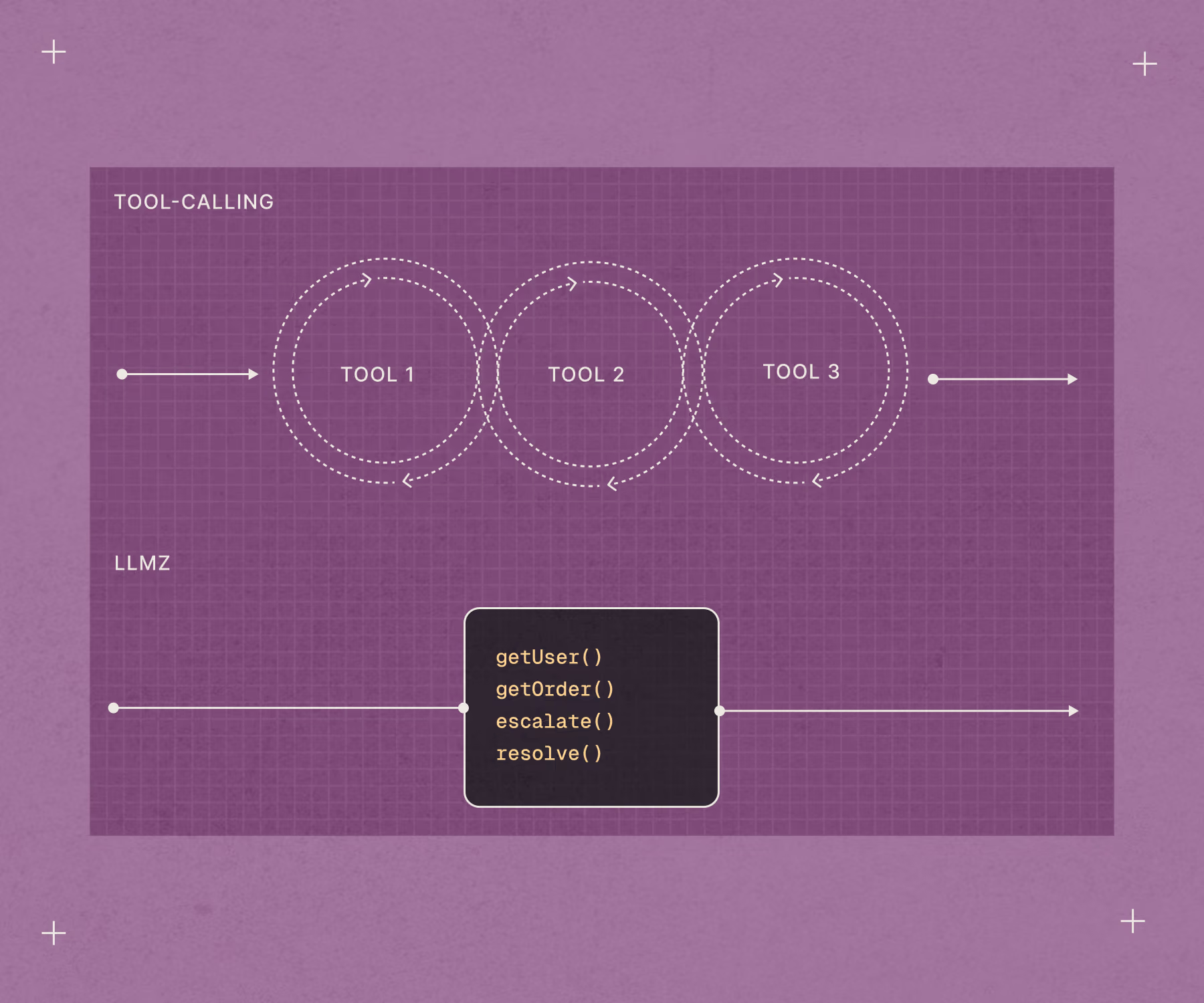
Most AI agents interact with the world through tool-calling: the LLM selects a tool (when looking up an order or fetching a customer record), gets a response, then picks the next tool, and repeats.
We don’t do this.
Why? Because LLMs are way better at writing code than tool-calling.
So instead of tool-calling, on the LLMz Framework, your plain langauge instructions are turned into code. Specifically, into Typescript.
That means if your request has multiple components (like fetching a customer record and then looking up an order status), we chain all those requests into one, rather than a bunch of separate tool calls.
What does that mean for our customers?
More cost-efficient
Obviously, one execution per request is cheaper than separate requests for every action in the request.
(Don’t ask us why our competitors don't do this. We don’t know either.)
Safer reasoning
Because it’s one big request made of code, the LLM can catch and correct errors as it goes, rather than making an assumption in Step 1 that becomes an error in Step 3.
ZUI Library
Exact outputs, not best guesses
Your AI agents use tools to help your customers — like using a CRM to fetch a customer record.
When a request involves multiple tools (like fetching a customer record and then checking an order status), LLMs sometimes guess at what the tool will return.
And when you're chaining 10 tool steps together, those guesses stack up and can become failures.
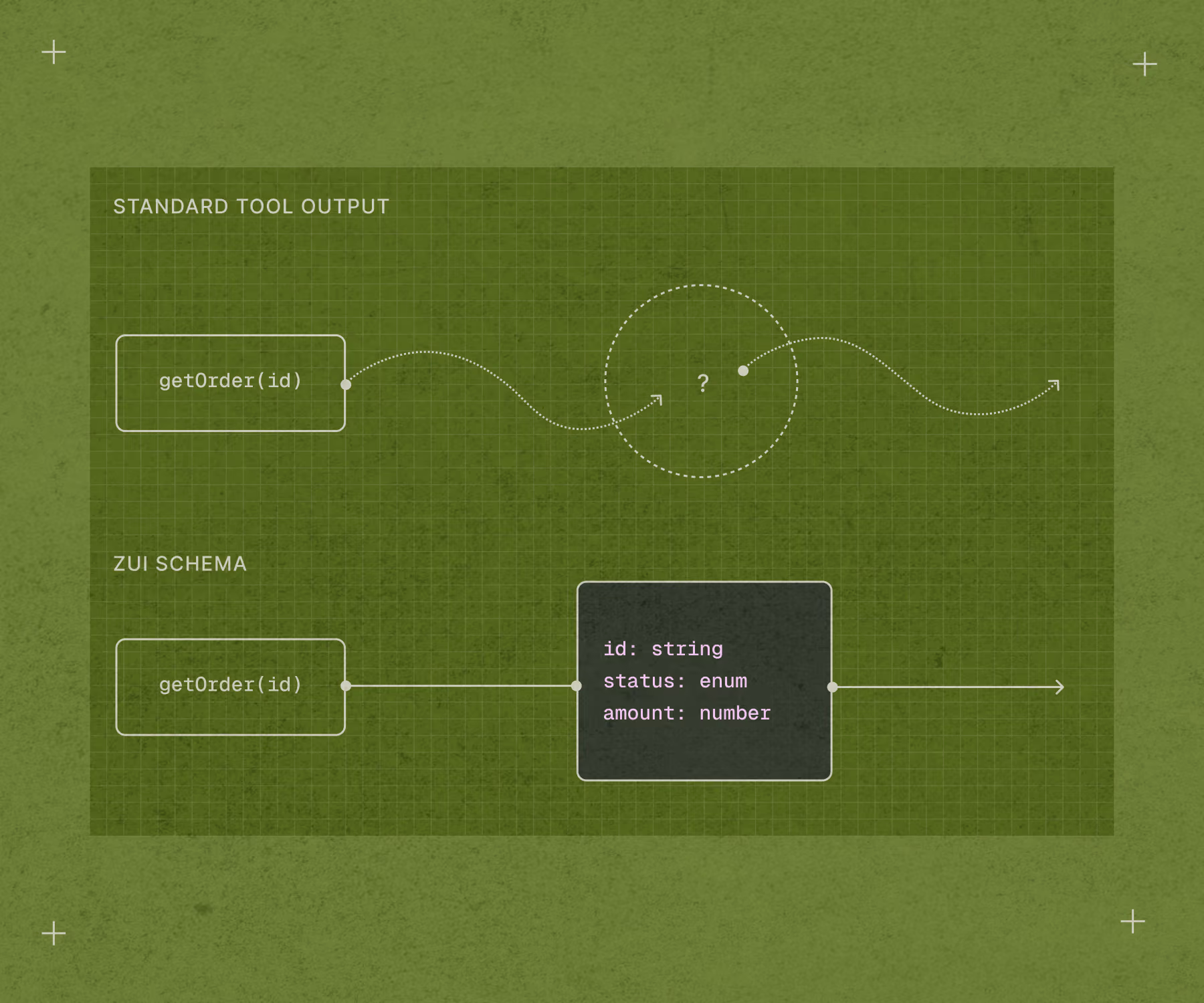
What the ZUI Library does is enforce a strictly defined output on every tool. So the LLM always knows precisely what it's getting back.
That means your AI agent can — very reliably — take care of requests that involve more than one step.
And, honestly, most requests involve multiple steps. That’s why we’re serious about getting it right.
Tool-calling vs. the ZUI Library
Standard LLM output
The LLM guesses at what a tool returns. Across multiple chained actions, those guesses compound — wrong inputs get passed downstream, errors stack up, and the agent fails in ways that are hard to diagnose.
With the ZUI Library
Every tool has a precisely defined output the LLM can rely on. Actions chain together cleanly, the model always knows what it's working with, and complex multi-step tasks execute reliably.
ZAI Learning Loop
Feedback that compounds
Most AI platforms have no real mechanism for your AI agents to tangibly improve over time.
But Botpress has a feedback layer built into every component: the ZAI Learning Loop.
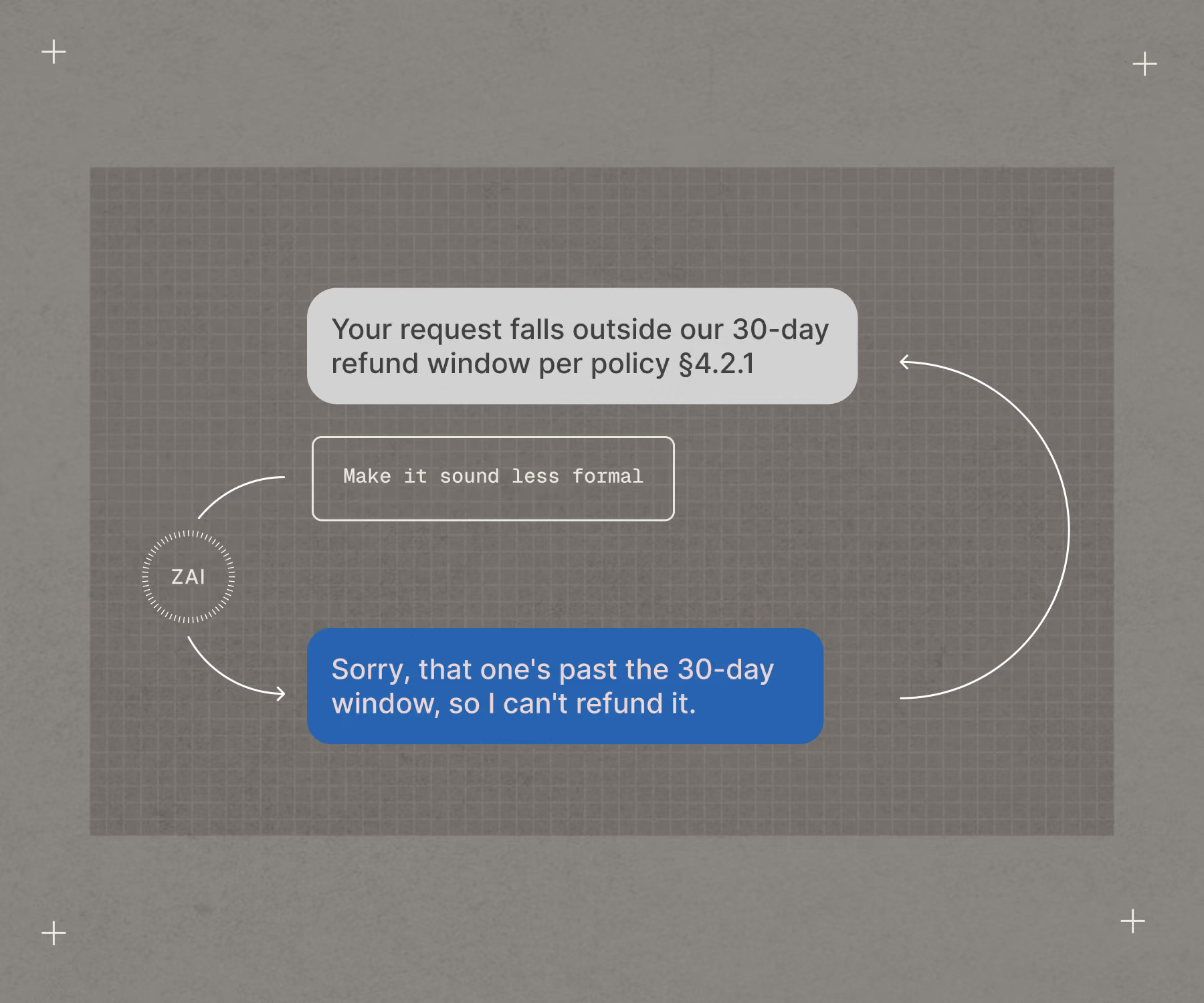
Our Learning Loop takes natural language feedback (like “That sounds too formal” or “Only update the CRM after you process the refund”) and injects it back into the system you’re working in.
In practice, the ZAI Learning Loop means that:
You see real improvements as soon as you give your feedback.
Your AI agent gets better and better over time.
Your AI agent never makes the same mistake twice.