





Key Takeaways
- AI tutor chatbots are transforming teaching procedures in the USA. Schools, universities, and institutions are building these chatbots to answer students’ frequent queries.
- The core features to include in these chatbots are quizzes, Q/A, conversational tutoring, NLU, and instant feedback. These help students learn complex topics more easily.
- AI Tutor Chatbot must be built with security, compliance, and a scalable architecture to avoid legal issues and expand the services as required in the future.
- The AI tutor chatbot development cost ranges from $30,000 to $150,000 depending on complexity, features, security, and maintenance.
The primary reason for adopting an AI tutor chatbot is its greater cost-effectiveness than traditional methods. The AI tutor can provide personalized support by solving complex queries. These assistants are supported by RAG, LMS integration, and privacy & security to generate accurate responses.
The U.S. Department of Education has made these chatbots valid for student leadership. Chatbots are 24/7 assistants that help K-12 students with homework, conceptual learning, and learning about doubts beyond school hours.
Businesses should know there is a significant monetization opportunity for AI tutor app development. A no-code platform such as OpenAI can be used to create the solution. The platform offers interactive options for users while enabling businesses to earn through pay-per-use tutoring and other monetization models.
If you are confused about which solution to create, then browse this guide on how to build an AI chatbot for education, its features, and which technologies support this platform.
AI Tutor Chatbot Market Statistics 2026-27
The growing adoption of artificial intelligence through chatbots is creating opportunities for businesses to earn more. Many organizations are planning to develop a multilingual chatbot to improve user experience as well. We have conducted in-depth research with Grand View Research and found that the chatbot market is expected to reach USD 41.2 billion by 2033. This highlights the significant advancements in artificial intelligence technology.
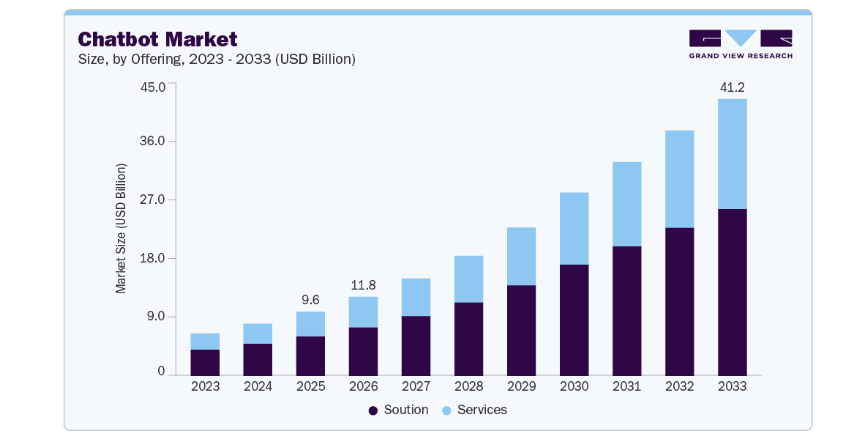
Some of our key findings include:
- E-commerce, healthcare, and banking are the top industries that are rapidly adopting AI tutor chatbots. This is helping individuals to understand patient care and customer expectations in detail.
- AI tutor chatbot market size is expected to grow at a CAGR of 19.6% by 2033. This data shows the market is expanding, driven by machine learning, AI models, NLU/NLP, and other technologies.
- In the United States, mobile applications continue to dominate, supporting the importance of a mobile-first approach.
- An AI education chatbot is prioritized because it provides context-aware responses to students to improve their academic performance.
Why do Businesses Invest in AI Tutor Chatbot Development?
Businesses invest in AI chatbot development solutions for a variety of compelling reasons, including the ability to improve user experience, streamline processes, and improve educational outcomes. Here are five major reasons why firms decide to invest in AI instructor chatbots:
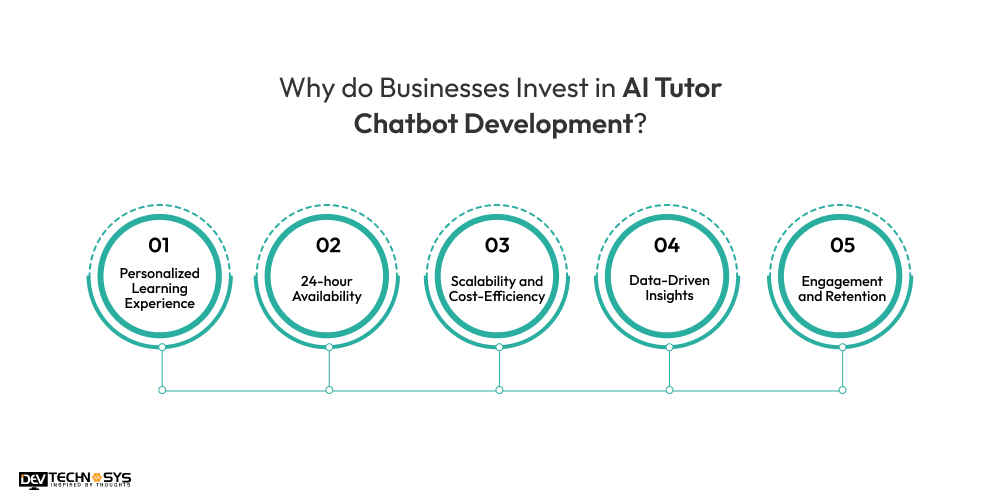
1. Personalized Learning Experience
AI-powered tutor chatbots provide personalized learning experiences by responding to each user’s specific needs and progress. Businesses can improve learning environments by evaluating student performance and altering content or explanations. Personalization promotes deeper comprehension and retention, resulting in greater outcomes.
2. 24-hour Availability
Unlike traditional teachers, AI tutor chatbots are available 24/7. This means that students can seek assistance at any time without having to wait for a tutor’s availability. This ongoing access increases customer pleasure and flexibility, particularly in worldwide markets where time zones may differ.
3. Scalability and Cost-Efficiency
AI instructor chatbots can handle a large number of learners at the same time while maintaining service quality. This scalability is advantageous for businesses seeking to broaden their reach. Furthermore, AI chatbots eliminate the need to hire additional human tutors, making it a cost-effective choice for businesses looking to provide affordable education or training.
4. Data-Driven Insights
AI tutor chatbots collect information on students’ progress, learning behaviors, and areas of difficulty. Businesses can use this data to get useful insights into how students learn, find patterns, and enhance content and teaching methods. As we discussed earlier with education app development company, these insights allow for continual enhancement of the learning experience.
5. Engagement and Retention
AI tutor chatbots engage users using interactive tactics such as quizzes, gamification, and rapid feedback. By offering real-time responses and individualized help, these chatbots increase retention rates, ensuring that learners remain engaged and continue to use the platform.
How to Build an AI Tutor Chatbot?
Businesses that choose to develop a chatbot from scratch must know the steps and development approach to experience scalable solutions. If you are partnering with an experienced AI chatbot development company, then the team follows some of these crucial steps:
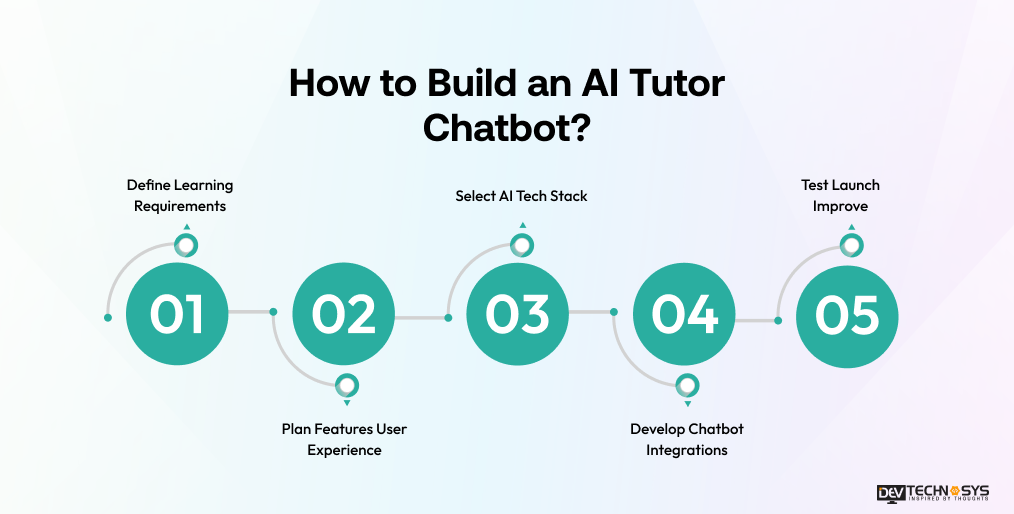
1. Define Learning Requirements
It is not necessary that the target audience will always be students. Most tutor chatbots are built for teachers, professors, or learners who conduct effective research for a thesis. Thus, the first step is to clarify the requirements. This helps to decide which AI model will be best, the features, and the total time the project will take.
2. Planning User Experience
Simple navigation and interactive features are something that modern users need. Adding conversational tutoring, voice interaction, and multilingual support is important. Beyond these, businesses can add additional UX features depending on their budget.
3. Selecting an AI Tech Stack
To develop an AI chatbot platform like Poe, businesses need to select the right technology stack. This allows developers to build a secure, scalable, and reliable solution that generates long-term revenue without performance issues. APIs, RAG, and NLU/NLP are important technologies to include for context awareness in an AI chatbot.
4. Development of AI Tutor Chatbot
In this phase, hire developers integrate the frontend, backend, security, and cloud infrastructure so that all features & functionalities are visible to users. Compliance is also implemented in this phase to maintain data privacy and to incorporate Government IT Solutions. Businesses can choose to build an MVP first so that any changes can be handled easily.
5. Test and Launch
The final step of the development process is to test the solution. AI tutor chatbot is checked for errors, performance issues, speed, responsiveness, accessibility, and quality. Engineers ensure device compatibility, monitor learner feedback, and then launch the chatbot.
Dev Technosys has helped us add value to our business.
Recommended Tech Stack for AI Tutor Chatbot
US businesses must always collaborate with firms that build Government IT solutions to avoid any legal issues. Their experts have the knowledge to use the right stack. The list below comprises the top technologies to use when developing an AI tutor chatbot.
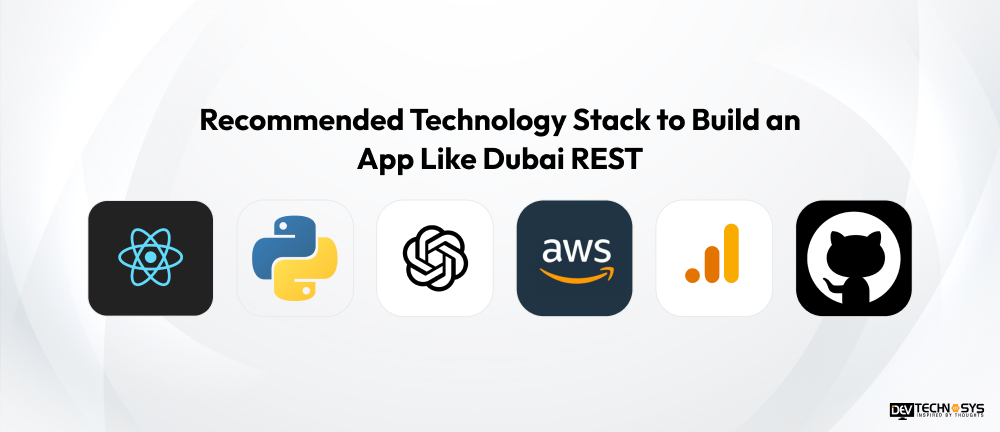
Technology Layer |
Recommended Technologies |
| Frontend | React.js, Next.js, React Native |
| Backend | Python, FastAPI, Node.js |
| AI Models | OpenAI GPT models, Anthropic Claude, Google Gemini |
| AI Frameworks | LangChain, LlamaIndex |
| Knowledge Retrieval | Pinecone, Weaviate, pgvector |
| Database | PostgreSQL, MongoDB |
| Cloud Infrastructure | AWS, Microsoft Azure, Google Cloud |
| Authentication | OAuth 2.0, OpenID Connect, Auth0 |
| Analytics | Google Analytics, Mixpanel, Amplitude |
| Voice AI | OpenAI Realtime API, Azure Speech, Google Cloud Speech-to-Text |
| DevOps | Docker, Kubernetes, GitHub Actions |
10 Must-Have Features of AI Tutor Chatbot
An AI tutor chatbot can significantly enhance learning experiences by providing personalized, interactive, and accessible education. Here are 10 must-have AI chatbot features for tutoring:
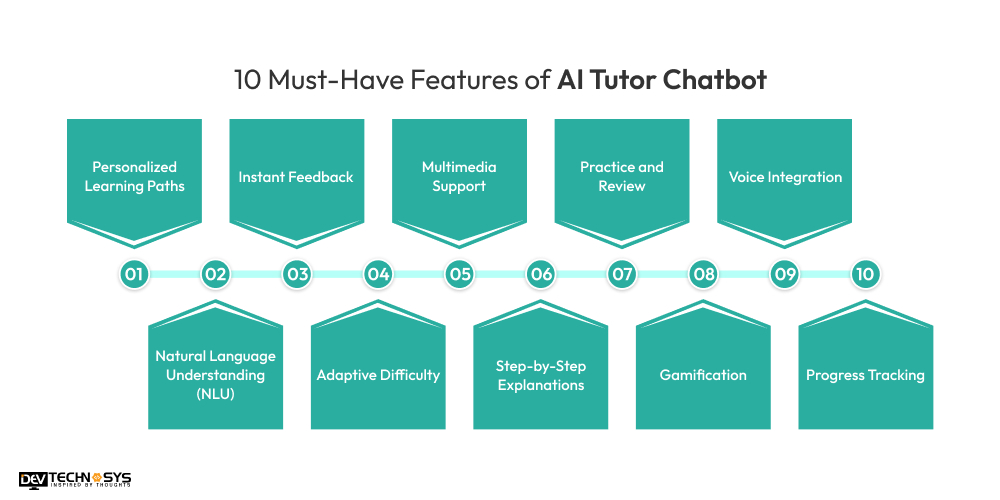
1. Personalized Learning Paths
Personalized learning paths tailor lessons and content based on individual progress, strengths, weaknesses, and learning preferences, ensuring a customized and effective learning experience.
2. Natural Language Understanding (NLU)
Capable of comprehending diverse student queries, including complex and conversational inputs, to provide accurate responses.
3. Instant Feedback
AI chatbot for education offers real-time feedback on quizzes, exercises, and tasks to reinforce learning and correct mistakes.
4. Adaptive Difficulty
Adjusts the difficulty level of problems and topics based on the learner’s progress and performance.
5. Multimedia Support
Incorporates images, videos, diagrams, and links to external resources for diverse learning experiences.
6. Step-by-Step Explanations
Breaks down complex concepts into smaller, digestible steps to make learning more understandable.
7. Practice and Review
The educational apps like Masterclass allows students to practice problems, revisit past lessons, and test their knowledge repeatedly to strengthen learning.
8. Gamification
Gamification integrates rewards, challenges, and competitions into learning, motivating students through fun, interactive, and engaging educational experiences.
9. Voice Integration
AI-powered tutoring chatbot supports voice-based interaction, allowing hands-free learning and providing a more natural conversational flow.
10. Progress Tracking
Monitors student progress and provides reports, helping learners visualize their improvement and areas that need focus.
How Much Does it Cost to Build an AI Tutor Chatbot?
The tutor app development cost ranges from $30,000 to $150,000 for a basic to an enterprise-grade solution. The maintenance price is around 15% of the total budget. Additional costs can include analytics, cloud hosting, and security frameworks.
AI Tutor Chatbot Type |
Estimated Cost |
| Basic AI Tutor Chatbot | $30,000–$50,000 |
| Advanced AI Tutor Chatbot | $50,000–$100,000 |
| Enterprise AI Tutor Platform | $100,000–$150,000+ |
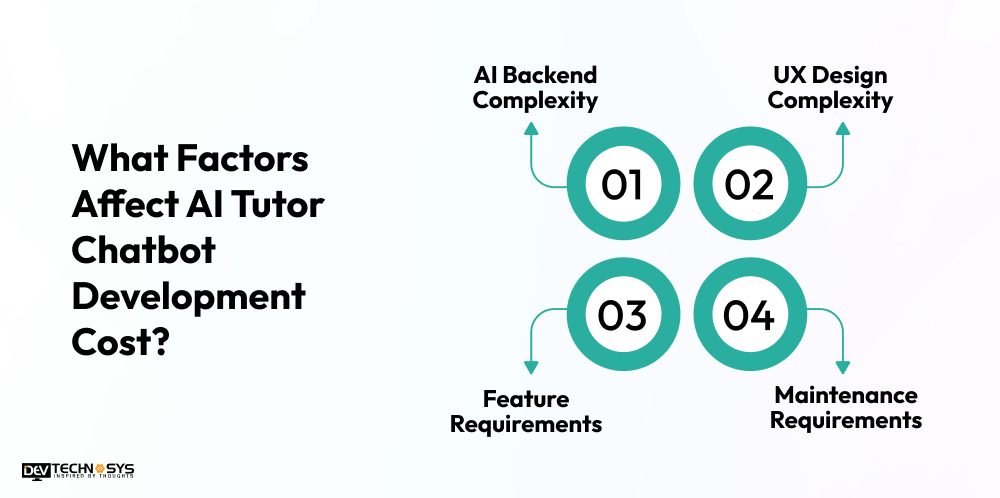
What Factors Affect AI Tutor Chatbot Development Cost?
Businesses must understand the cost drivers before choosing to develop a modern enterprise chatbot. This helps include required features and create a good investment plan.
Cost Factor |
Cost Range |
What Affects the Cost? |
Cost Impact |
| AI Backend Complexity | $10,000–$50,000+ | LLM integration, RAG, vector databases, AI memory, APIs, cloud infrastructure | Advanced AI architecture requires more development resources |
| UX Design Complexity | $5,000–$20,000+ | Custom interfaces, dashboards, responsive design, voice UI, interactive learning screens | Complex learner experiences increase design and development effort |
| Feature Requirements | $10,000–$60,000+ | Personalized learning, quizzes, assessments, progress tracking, voice tutoring, LMS integration | More advanced features increase development complexity |
| Maintenance Requirements | $5,000–$20,000+/year | AI optimization, security updates, content updates, bug fixes, API upgrades, infrastructure monitoring | Ongoing improvements increase annual operating costs |
How to Make Money From an AI Tutor Chatbot?
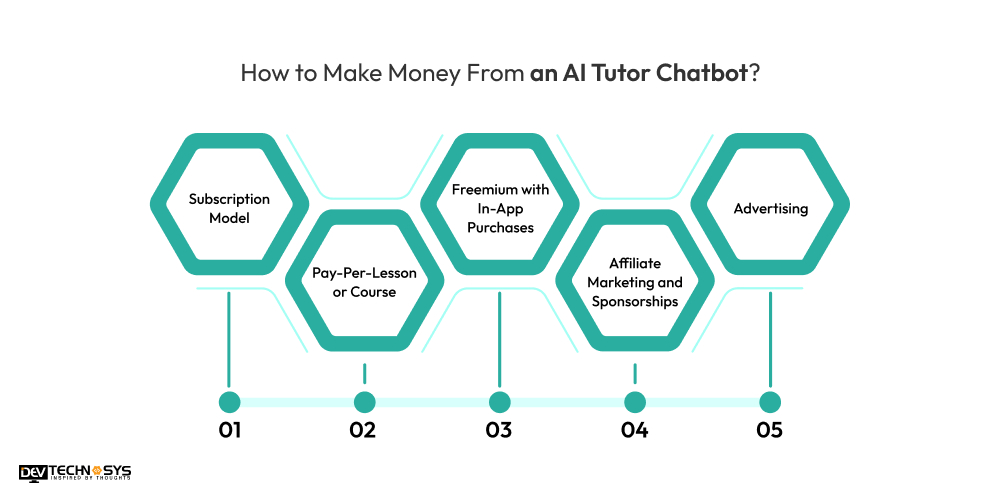
Monetizing an AI tutor chatbot can be a lucrative opportunity, especially in the growing field of online education. Here are 5 ways to make money from an AI tutor chatbot:
- Subscription Model
- Pay-Per-Lesson or Course
- Freemium with In-App Purchases
- Affiliate Marketing and Sponsorships
- Advertising
1. Subscription Model
One of the most common ways to monetize an AI tutor chatbot is through a subscription-based model. You can offer users access to a basic version of the chatbot for free, while providing premium features like personalized learning paths, real-time feedback, or advanced lessons behind a paywall. Charging monthly or yearly fees for premium access ensures a recurring revenue stream.
2. Pay-Per-Lesson or Course
For learners seeking specific help, a pay-per-lesson or course model can be effective. Charge users for individual lessons, tutorials, or subject-specific courses that the chatbot offers. You could also offer packages for bundles of lessons on a particular topic. According to the tutor app development company, this model works well for focused, niche subjects where users are willing to pay for targeted knowledge.
3. Freemium with In-App Purchases
Offer a free version of the chatbot with basic features, and monetize through in-app purchases. These can include extra practice questions, personalized tutoring sessions, or access to premium content like videos or special lessons. This approach gives users a taste of the chatbot’s capabilities while encouraging them to pay for additional value.
4. Affiliate Marketing and Sponsorships
Partner with educational institutions, online course platforms, or textbook publishers and earn commission on referrals. Your AI tutor chatbot can suggest relevant courses, tools, or resources to students, and you can earn money through affiliate marketing. Similarly, sponsors in the education sector may pay to have their products or services advertised within the chatbot.
5. Advertising
If your chatbot attracts a large user base, you can sell advertising space to educational companies, tech brands, or other relevant sectors. The ads can be integrated into the conversation flow, offering users products or services that align with their learning goals. However, ads should be non-intrusive to avoid disrupting the user experience.
Security Compliance for AI Tutor Chatbots
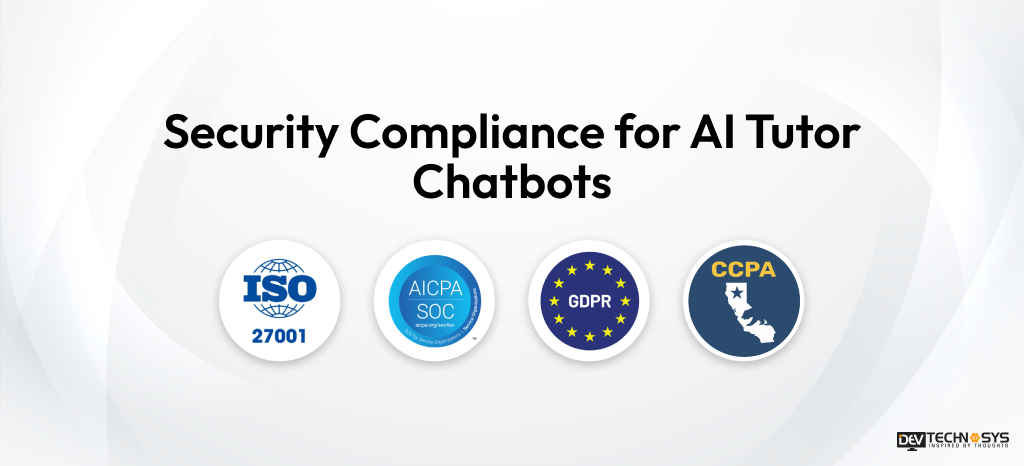
Businesses must consult a guide to GDPR, ISO, or other relevant certifications before developing an AI chatbot. This is because these solutions save user history, which is prone to security vulnerabilities. But business leaders must also know that implementation of ISO 27001, CCPA, or other compliance may add to the total development cost.
Security Compliance |
How It Protects AI Tutor Platforms |
Estimated Cost Impact |
| ISO 27001 | Establishes an information security management framework for protecting student data, AI systems, infrastructure, and access controls. | $8,000–$20,000+ |
| SOC 2 | SOC 2 strengthens controls around security, availability, confidentiality, and data handling for cloud-based AI tutor platforms. | $10,000–$30,000+ |
| GDPR | Supports privacy requirements for users in the EU, including consent, data access, deletion, and privacy management. | $5,000–$20,000+ |
| CCPA | Helps AI tutor platforms meet California privacy requirements involving consumer data collection, disclosure, access, and deletion. | $5,000–$15,000+ |
Conclusion
Let’s finish this blog with final thoughts. We explored with you how to build an AI tutor chatbot and what factors can affect the overall development cost. Investing in the AI tutor chatbot development is one of the lucrative opportunities for entrepreneurs to grow and expand their businesses to the next level. It allows students to ask complex and basic questions and get an instant response with full clarification.
Are you looking to create an AI tutor chatbot? If yes. Then, you can consult with the best AI development company to receive cost-effective AI-based development solutions.
Planning a Chatbot Project?
Get a tailored development cost estimate in a few simple steps.
- 3 quick steps
- 100% free
- Reply in 1 business day
2 Minutes Read
Frequently Asked Questions
Find answers to the most common questions related to this article.
The cost to build an AI tutor chatbot ranges from $30,000 to $150,000+ depending on complexity, features, development team, and ongoing support, with advanced functionalities increasing the overall cost.
Make an AI tutor chatbot typically takes 3 to 9 months, depending on complexity, features, and team size. Simple chatbots can be developed faster, while advanced features like personalized learning and NLP take longer.
The cost to hire AI developers typically ranges from $15 to $25 per hour, depending on their expertise, location, and the complexity of the project, with senior developers commanding higher rates.
An AI tutor chatbot is not limited to a particular subject; it can solve students' complex queries on any topic. This feature/functionality is integrated by the developers using subject-specific prompts, RAG pipelines, and curriculum-aligned content. This improves response quality for each subject.
Since voice interactions are trending, voice capabilities are added to the chatbot using speech-to-text and text-to-speech technologies. These allow students to speak their queries, avoiding the time required to type long text.
Natural Language Processing
Machine Learning
Python
Google Cloud Speech
Deep Learning