
Fulbright’s Mission and Management
The Fulbright Program is an international academic exchange program founded in 1946 with an ambitious goal — to increase mutual understanding and support friendly and peaceful relations between the people of the United States and the people of other countries. Today, the U.S. government oversees an extensive suite of fellowships and scholarships in partnership with more than 160 countries worldwide.

India to U.S., 2019
Funding
The primary source of the Fulbright Program’s funding is an annual appropriation from the U.S. Congress to the U.S. Department of State’s Bureau of Educational and Cultural Affairs. Participating governments and host institutions, corporations, foundations, and alumni in partner countries and the United States provide direct and indirect support.
South Africa to U.S., 2021
Fulbright Program Management
The U.S. Department of State’s Bureau of Educational and Cultural Affairs (ECA) directs the global Fulbright program, manages priorities, allocates resources, and funds the Fulbright program’s administration by non-governmental organizations that serve as implementing partners in the United States. Fulbright’s implementing partners include the Institute of International Education (IIE), World Learning, IREX, and Amideast. The Presidentially-appointed Fulbright Foreign Scholarship Board sets program policies and priorities, selects participants, and promotes the Fulbright Program to audiences around the world.
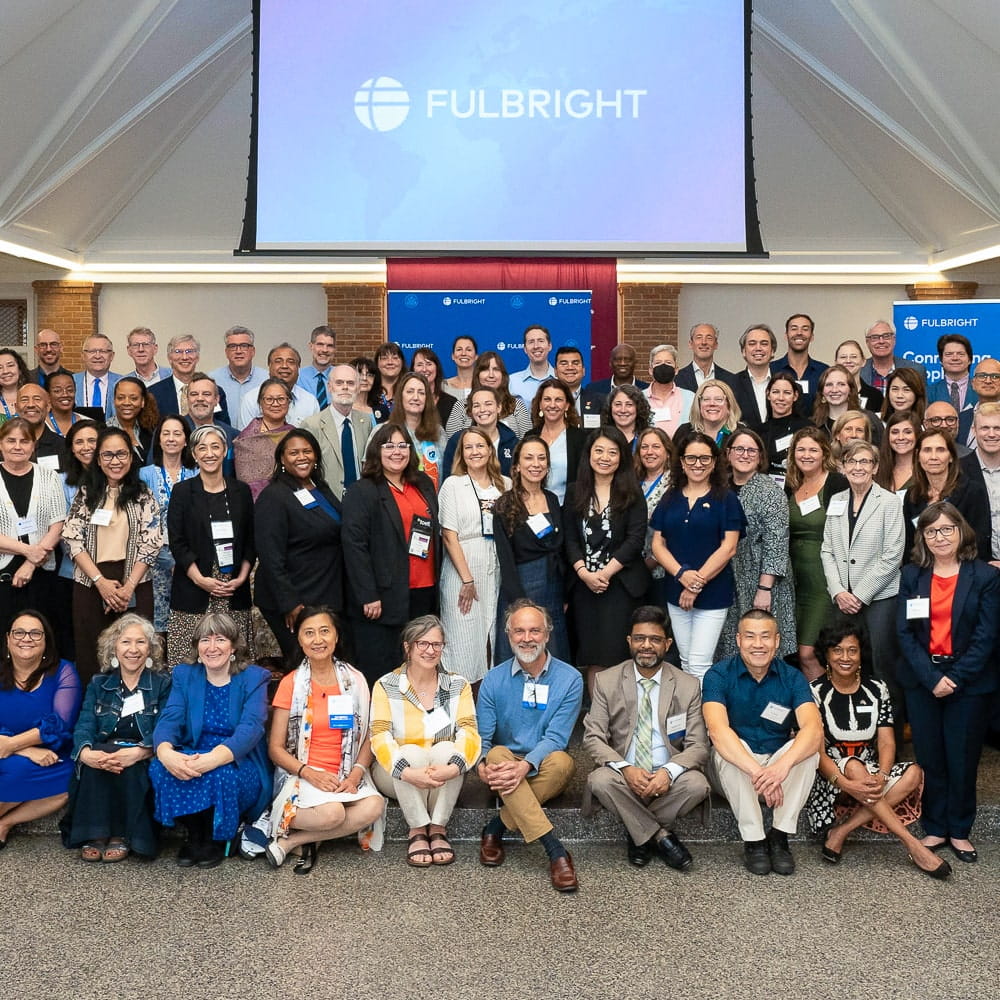
New Orleans, Louisiana, 2024
Management Outside of the United States
In 49 countries worldwide, independent binational Fulbright Commissions, most of which are funded jointly by the U.S. and partner governments, plan and implement Fulbright educational exchanges; develop priorities for the program; recruit and nominate candidates; identify local educational institutions to host U.S. Fulbrighters; engage alumni; support incoming U.S. Fulbrighters; fundraise; and operate an information service for the public on study in the United States. Where Fulbright commissions do not exist, the program is administered by U.S. embassies in cooperation with host country governments.

Fulbright Belgium
Higher Education Institutions
Colleges, universities, and research institutions, both in the United States and abroad, play an important role, serving as hosts and sharing costs to support the academic and professional development of Fulbrighters.
Tanzania and Morocco to U.S., 2021
1946
1946
The Fulbright Program Is Established
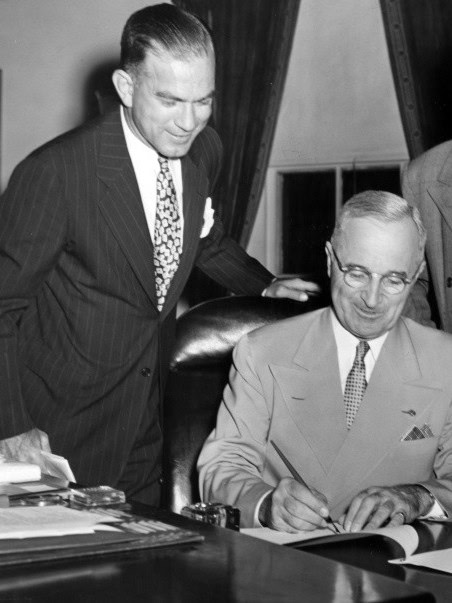
On August 1, 1946, President Harry S. Truman signed the “Fulbright Act” into law, establishing a framework for an academic exchange program that continues to shape the world today. The act was named for Senator J. William Fulbright of Arkansas, who sponsored the legislation.
1954
1954
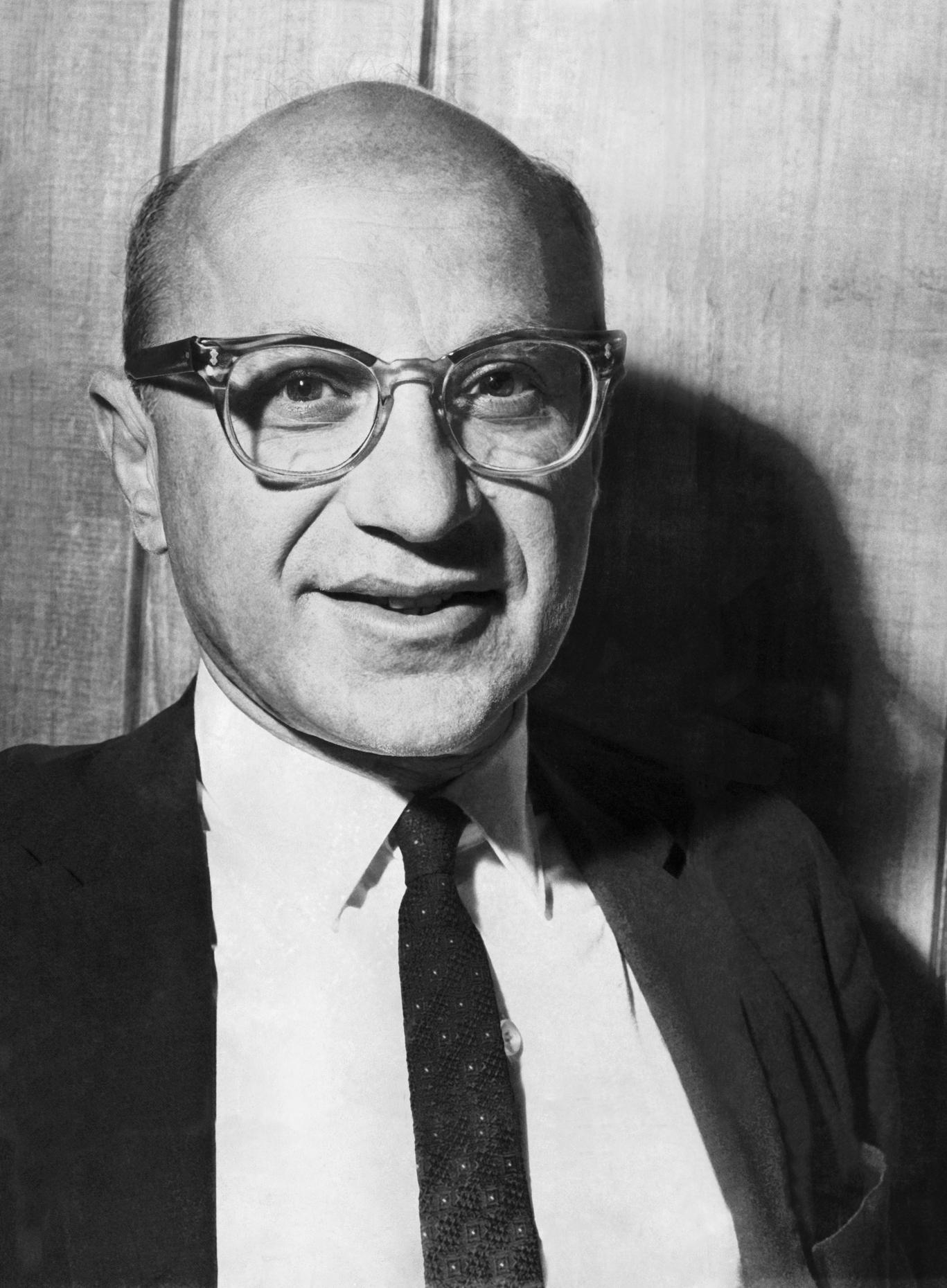
Future Nobel Prize Laureates Receive Fulbright Awards
Free market economist Milton Friedman was among six future Nobel Laureates who were Fulbrighters in 1954, along with physicists Philip Anderson, William Fowler, Roy Glauber and Hannes Alfvén, and immunologist Niels Jerne. More than 60 Fulbrighters have received Nobel Prizes.

1958
1958
First Fulbrighter with a Disability
Jeff Davis Duty, Jr. began his Fulbright at the London School of Economics in 1958. During his legal career, he successfully argued to allow guide dogs in the U.S. Supreme Court. The State Department supports exchange participants with disabilities through the National Clearinghouse on Disability and Exchange (NCDE).

1972
1972
Fulbrighter Walks on the Moon
Apollo 17 astronaut and 1958 Fulbrighter to Norway Harrison “Jack” Schmitt is the only scientist and the last person to have walked on the Moon. He was later elected as U.S. Senator for the State of New Mexico.