DB Securities is building STO and real-world asset infrastructure for Jeju on the OP Stack. More on why they picked infrastructure they can own, from @jinglejamOP below.
A top-3 US exchange kept $75M in sequencer revenue in H2 2025 by running its own chain on the OP Stack. Rent space on someone else's and that money is theirs. Own it and 100% of the revenue stays yours, along with the customization to set your own fees and block space.
Your USDC is earning yesterday's rate.
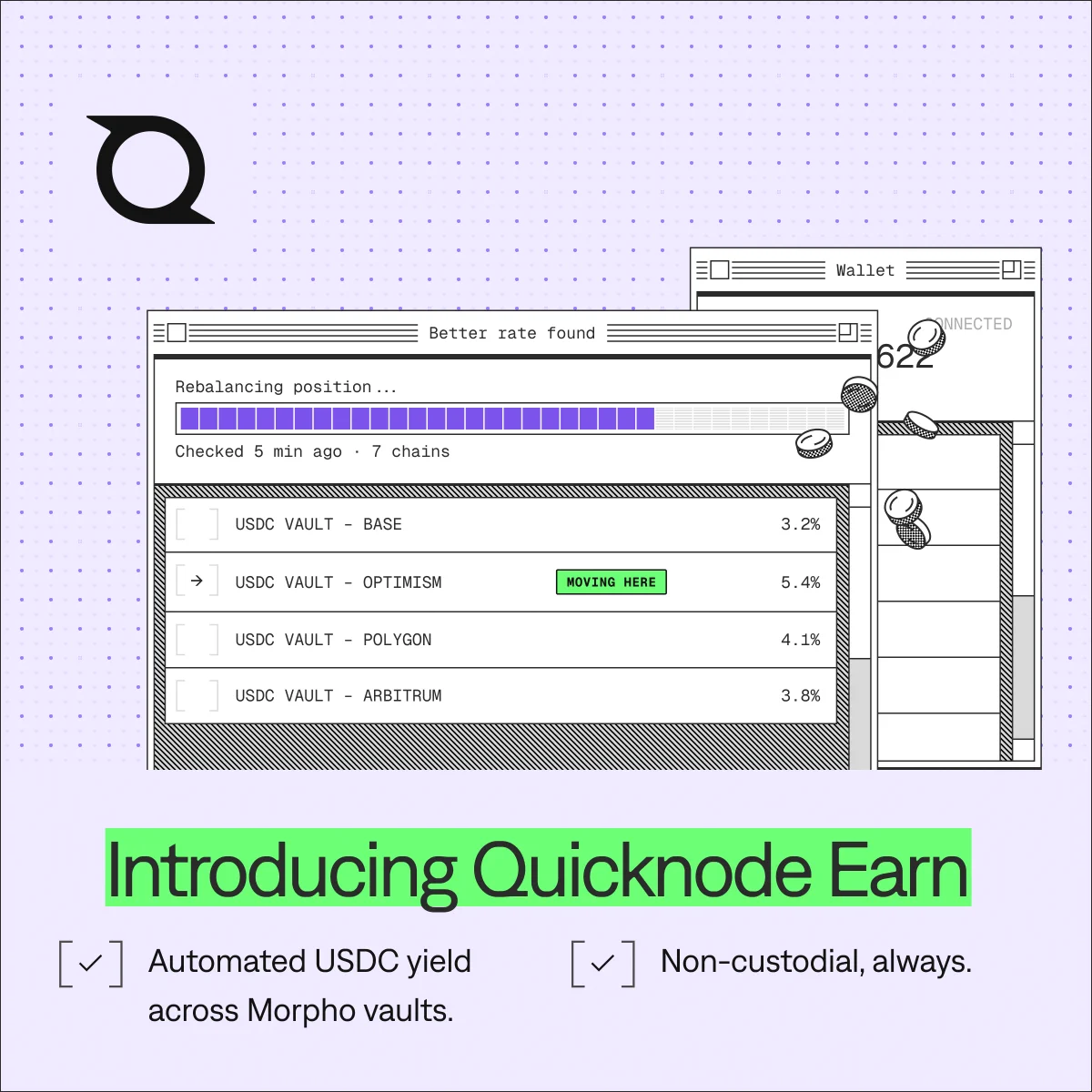
Introducing Quicknode Earn: a non-custodial yield optimizer that moves your USDC into the top-paying Morpho vaults across 7 chains, automatically.
Your keys, always. 🧵
Quicknode Earn is a third-party application that is not owned or controlled by the Optimism Foundation. This announcement is for informational purposes only and is not an endorsement or a solicitation to invest your own capital. Participation in digital asset protocols is
The Ethereum Ecosystem has come a long way in terms of apps.
New contract deployments by EOAs - past 7 days:
▸ Robinhood Chain: 54k
▸ Base: 32k
▸ OP Mainnet: 22k
▸ Ethereum L1: 12k
▸ Polygon: 9k
▸ Arbitrum One: 5k
▸ Celo: 1k
▸ Unichain: 1k
▸ MegaETH: 0.77k
... the list
Ink is right about how onchain finance scales: through apps people already trust, with the chain out of view. That only holds if the settlement layer underneath stays dependable at volume, which is why @inkonchain runs on OP Enterprise Fully Managed.
Onchain finance scales when it reaches people who never set out to use a blockchain.
They open an app they already trust, fund an account, and the assets settle onchain, most of them never learning the chain is there.
Kraken already works this way, with products like DeFi Earn.
Citi says $5.5T in assets go on-chain by 2030. The blocker between regulated money and that number is privacy. On a public chain, anyone can see your balances, payments, and trades. So Sunnyside Labs, an OP core dev, built confidential payments into the OP Stack. Here's the case: