
Sessions
Opening keynote
Join CEO Linda Tong to kick off Webflow Conf 2026 with a look at what’s ahead, from the evolution of the web and the creative teams shaping it to the latest innovations from the Webflow team.

Building for an audience of bots and humans at the same time
Greenhouse and Happy Cog migrated a 1,000-page site to Webflow to give their marketing team full ownership of the web. Then AI search changed the rules. Now they're standing up agentic content workflows, optimizing for answer engines, and working out where human editorial judgment still belongs when AI can produce at infinite scale. Leave this session with a clear picture of what AEO and agentic content look like as real disciplines — what's working, what required more governance than expected, and what they'd do differently.


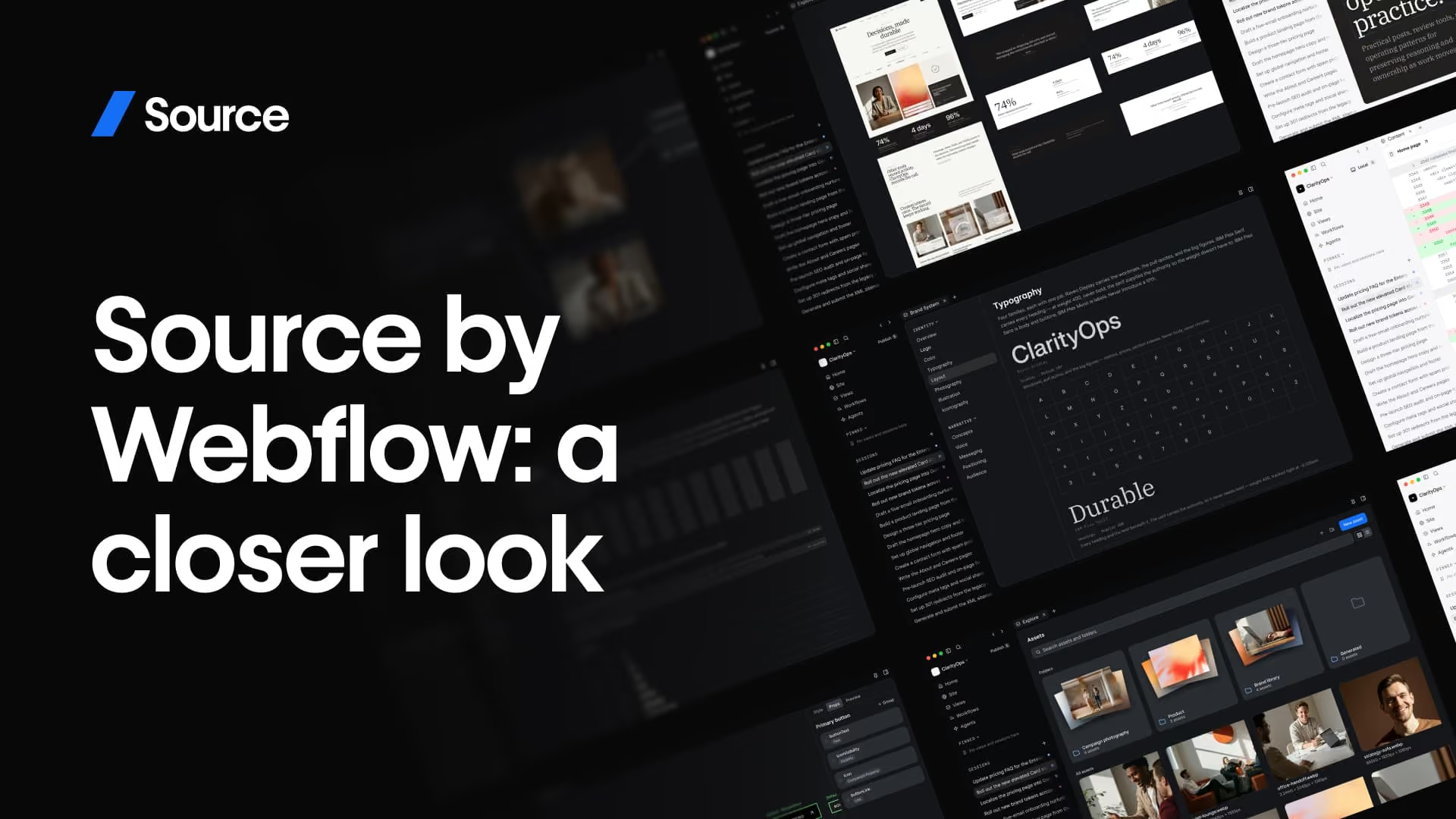
Source by Webflow: a closer look
We're not going to tell you what this is yet. But we'll tell you what it changes: how teams think about the future of web marketing. Come early, this is the session people will be talking for the rest of the conference.



Kill perfect
The marketing director role was built on one assumption: being wrong is expensive. It isn't anymore. AI has collapsed the cost of building, testing and killing an idea. What was a quarter of scoped work is now an afternoon. The constraint has moved from production cost to judgement, taste and the willingness to play. Perfectionism stopped being a risk-management tool and became the most expensive stance in the building, and most marketing leaders have not yet noticed. Now is the time to become a creative thinker, choose the irrational choice and be the solution maker, not the implementor or executor. Not 'playing' is now the most expensive mistake you can make.

Build it live - an agentic Webflow workflow, start to finish
We're not going to tell you what's possible with AI. We'll show you! Join Stefan's Session and walk with him through a real agentic build from prompt to published. Including moments where agents get it wrong and what guardrails you need to set. Learn about Webflow's new AI features, sharpen your mental model of what's possible, and get inspired to add new agentic workflows to your everyday work.

The always-on conversion loop
Most sites get optimized in bursts — an audit, a redesign, then eighteen quiet months. This session is about replacing the burst with a loop: Analyze telling you where visitors stall, Optimize testing the fix, and agents running the cycle continuously, so improvement becomes a property of the site rather than a project. We'll show the real workflow, the prompts, and the numbers from teams already running it. No dedicated analyst, no testing backlog, no quarter of runway required.


Builder keynote
This year, we have so much to announce we couldn’t fit it all in the opening keynote. Join us for a rapid-fire session dedicated to new quality of life improvements for the designers, developers, and content creators building in Webflow every day.


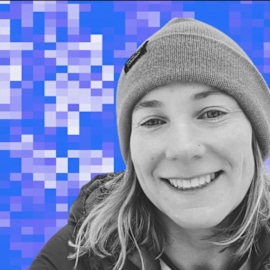


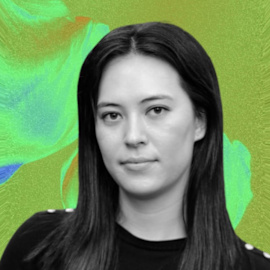

What 30 years of web development actually teaches you about AI
Every major tech shift opens with the same fear: this one ends us. The printing press. The internet. The iPhone. It never plays out the way anyone predicts, and Marc Debiak has been through enough cycles to recognize the shape of it.
His read on AI is that it's coming for the work we already commoditized. Templates, off-the-shelf components, two-week builds. We optimized ourselves into interchangeable parts. AI just put a date on it.
Here's the part most people skip: clients aren't hiring you for your coding agent. Shipping faster isn't value, it's just shipping faster. Webflow already hands you the canvas and AI hands you the hours, but those hours only count for something if you spend them on the work nobody can buy off a shelf. Sitting with a client's business. Asking better questions. Real research, real creative exploration.
This session is a challenge. Stop optimizing your process into obscurity and start using what Webflow and AI give back to push past what you thought you could build and deliver work your clients didn't know to ask for.
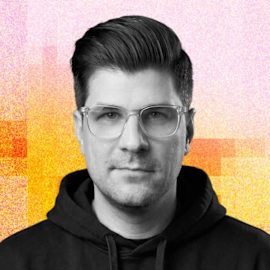
From Sketch to Shipped: How Design Intent Travels Through Agents
What if teams could preserve not just the final design, but the reasoning that produced it? Today, reasoning gets re-explained at every step: conversation, brief, canvas, prototype, production. When AI enters a creative workflow, the real bottleneck isn't generation speed, it's context: what matters, why it matters, and for whom. Drawing on real R&D and prototyping work at Amazon's Brand Innovation Lab, this session explores how design intent, decisions, and constraints can become shared context that travels between people, agents, and tools. We'll explore what's worth automating, what still needs human judgment, and how reducing reconstruction gives teams more room to explore, refine, and apply judgment.

How to earn the trust (and data sharing) of your customer's digital twin
Two shifts are rewriting how the web handles personal data. First, as sites move from clicks and boxes to conversation, consent to share data stops being a checkbox and becomes intent expressed in dialogue, which changes both how you earn it and what it lets you do. Second, the visitor in that conversation is increasingly a customer's digital twin, carrying their full history from long before they reach you. Blake Brannon shows how this inverts the old model: instead of tracking forward from a visitor's first click, the companies that earn a twin's trust can understand a customer from before they ever knew the brand existed, while the ones that over-collect get shut out. For builders and marketers who want their site to be one a digital twin opens up to.
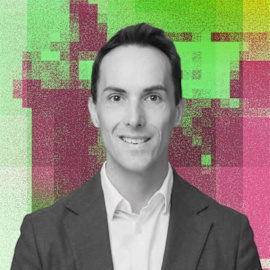
A fireside chat with a top agency mind
A candid fireside chat between Adrian Rosenkranz, Webflow CRO, and Henry Cowling, Chief Innovation Officer at Monks, on what it takes to run an agency when the work itself is being redefined. This conversation digs into what AI is doing to the creative process, what craft means when execution is cheap, and where the web goes from here.

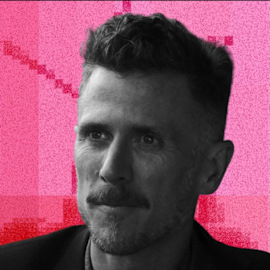
A first look at Campaigns
Webflow Campaigns takes you from brief to live campaign in hours. Build your brand system once, generate on-brand variations on the canvas, publish and push straight to channel, and tie conversions back to pipeline. Kate Johnston, who runs demand gen at Webflow, put it into production first and launched a full paid campaign in under an hour, work that previously took precious design resources. She and Cari Bonilla, the PM who built Campaigns, will walk through launching a campaign in Webflow.


Agility at Enterprise Scale: Korn Ferry's Digital Rebuild
When Korn Ferry decided to move off AEM, they weren't just choosing a new platform, they were betting on a different way of working. Six months after migrating to Webflow, marketing is moving faster than ever while enabling design and engineering to focus on bringing new experiences to the table. This session will unpack how they got there: from the buying decision through design, engineering, and implementation, to the operating model they run today. Iron Horse and Korn Ferry's marketing and engineering leads will share what drove the switch, how they built a digital experience optimized for both brand and demand, what surprised them along the way, and what they're building toward next.


A conversation on how enterprises can succeed with AI
A candid conversation on what separates the enterprises getting real value from AI from the ones just adopting it. Alon Krifcher spends his days at Anthropic inside these deployments, watching which ones pay off and which ones quietly stall. Ben Haefele has made many of the same calls while bringing Webflow natively into the AI world. Together, they get into where leadership, not the model, decides which side of that line a company ends up on.
The platform bet paid off. Now what?
Purpose Brands consolidated five fitness brands onto a single Webflow platform across 50+ countries. That was the starting point. Now Ameen Kazerouni, CTO of Purpose Brands, is working on the harder problems; the ones that only show up once the infrastructure stops being the thing you're fighting. What does web governance actually look like when 40 countries worth of franchise operators all want more control over their local experience? How do you compound AI discoverability across an entire portfolio without rebuilding your content strategy brand by brand? And what does it mean to make infrastructure decisions today that have to scale with the intended growth of the portfolio. This is the session for enterprise leaders who have made the platform bet and are now figuring out what comes next.

From bottleneck to in-house agency: how a global bank rebuilt its web team
Mizuho's Americas marketing team had the ambition to build like a modern digital agency. Their legacy CMS made every landing page a five-week project. Moving 6,600 pages to Webflow across four regions, with no code freeze and a live site that couldn't go dark, was harder than they planned. This is the honest story of what went wrong, why their partner Shadow Digital was the difference between shipping and not, and what they're building toward now: a leaner site, a faster team, and a marketing function that can finally say yes to the business.

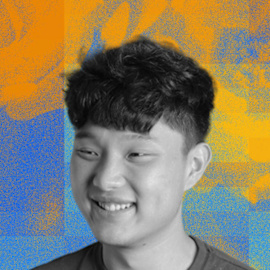

The decisions behind the design
When a creator with a distinct visual identity hands off their web presence to a design agency, one of two things happens: the brand gets diluted by the handoff, or it gets sharpened by it. In this panel, three creator–agency pairs — Corporate Bro and OFF+BRAND, CatGPT and Jack Redley Design, Timothy Goodman and Website Squirrel — go behind the scenes of each newly launched Webflow site to show exactly how that creative handoff unfolded.
You’ll hear where each creative brief started, how it evolved, and which decisions shaped the collaboration. This is more than a portfolio showcase. It’s an honest account of what it actually takes to translate a creator’s voice — built over years of content and audience trust — into a site that can hold its own without a caption explaining it.


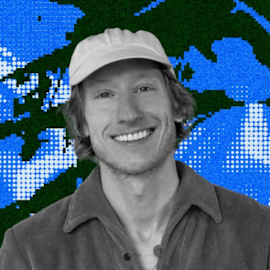


Beyond Visibility: Retaining and Growing Trust with AI agents
Agents evaluate and surface brands in different ways and at machine speed. They look for contextual proof, topical authority, and content that reduces inference.
Most teams are building separate strategies for machine visibility and human acquisition. The ones winning are building single content strategies that power both. Your conversion success with human customers is today’s credibility signal and tomorrow’s amplified context for agent-to-agent interactions. Gaining, retaining and growing AI agent trust will drive tomorrow’s commerce conversions.
This session walks through an AI agent persona and how to optimize your content for commerce conversions today, building a practical foundation for what is to come.

A first look at Assets
AI has made creative easy to generate and hard to trust. Most output comes back close but it's never quite right. To nail the brief, agents need context, but most teams have no practical way to give it. Jay Vira and Prakhar Sharma show a first look at Webflow's new Assets prodduct, which uses the brand system, approved assets, and site context already in Webflow to adapt an approved asset for a new customer, product, and placement.
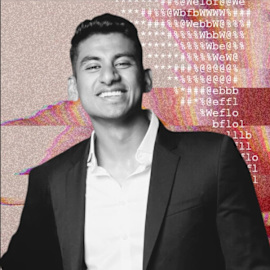

Beyond Web Analytics: Building a Website Intelligence Hub powered by Webflow Analyze and AI
Most marketing teams have their website traffic and user behaviour data, but few know what is actually helping them close deals.
This session introduces the concept of Website Intelligence currently being developed at Flow Ninja. It’s a structured approach that goes beyond what web analytics alone can show.
By using Webflow Analyze as the data foundation, which already captures and tags behavioral events on the website, and combining it with CRM pipeline data, Google Search Console, and AI-powered analysis, we are building a unified Website Intelligence Hub that answers questions analytics never could: Which content attracts your best-fit customers? Which website investments actually close revenue?

What Stays Human on an Agentic Marketing Team
CMOs get specific about org design, hiring and quality control when part of the team is software.
Execution keeps getting cheaper. Production, variants, first drafts and landing pages cost a fraction of what they did a couple years ago, and most marketing teams have already felt it. Orchestration, expertise, intuition and judgement are still moats. Three marketing leaders will walk through what they have restructured, what they tried and rolled back, how they are hiring differently and where a human still reviews the work before it ships.

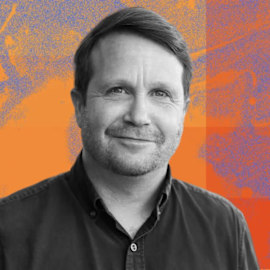


Owning the second layer of AI search. How to turn LLMs into advocates for your brand
For twenty years, "traffic" meant humans clicking blue links — and every website, every CMS, every marketing team was built around that assumption. James Cadwallader, Co-founder & CEO of Profound, argues that assumption is now wrong: AI agents have become an essential visitor to the web, reading hundreds of pages a human never would, synthesizing answers before a person ever lands on your site. This isn't a new SEO channel to bolt on — it's a fundamental change to discovery. Cadwallader will make the case that this is the largest shift in the history of the internet and how to act on it.

Built to scale: How a 2-person web team runs a 24-market digital presence
IONITY is Europe's leading EV charging network, operating across 24 countries. Managing a digital presence at that scale with a team of two meant hiring wasn't the answer. Building the right system was. By leaning into automation, AI-driven localization, and daily content syncs, IONITY now runs a full 24-market operation without a traditional translation management system or a developer queue. The result isn't just speed. It's a blueprint for what the modern marketing team looks like when scale is designed in from the start.



Build anything you can describe with AI Code Components
Fetch from a third-party API. Transform the response server-side. Bind it to a component's props. Handle the user's input with an action, write back, re-render. That loop — the one that used to mean a serverless function, a proxy for your API keys, and a custom code embed — now runs natively in Webflow. This session covers the full model: how data sources handle fetching and auth, how actions run your logic, how AI code components consume both, and what the boundaries are (execution, rate limits, what stays client-side). Written for people who will read the docs after — this is the session that makes the docs make sense.

AI Won't kill craft, it will only make it more exciting
Every panic cycle about AI in design ends the same way: someone asks what happens when everyone has access to the same tools. The honest answer is that a new creative elite emerges. When AI democratizes design, it doesn't flatten it. It raises the floor, which raises the ceiling. Designers are now building live projection mapping experiences without a dev team. Screenwriters are producing full visual concepts without a single shoot day. The people who will define the next era of creative work aren't hiding from these tools. They're already doing things that weren't possible two years ago. This session is a hopeful argument that craft doesn't disappear when AI shows up. It just gets more ambitious and more exciting.

The Claude connector is not a productivity tool. It's an accountability tool.
The connector is being sold as a way to ship faster. That framing is what's getting agencies in trouble. The teams shipping it on real client work without regret are the ones who treat it like a junior developer they're accountable for, not a magic button. Same six months, same five prompts I run weekly, but the through-line is the guardrails and the accountability model behind them. This is the practitioner talk, aimed at builders already using the connector who need to professionalize how they run it.

Agents in production: who approves, who ships, who's accountable
The question isn't whether agents can build — it's whether you trust them to. This session is for everyone whose next thought after an AI demo is "but is it safe in practice?" We'll walk through the control Webflow gives teams working with agents: guardrails that keep agents inside the lines you set, presence that shows exactly what an agent is doing on the canvas and when, and releases that put a review gate between agent work and your live site. You'll leave knowing precisely how much control you keep and how teams are moving faster because of the guardrails, not despite them.

Your video bottleneck isn't production. It's everything after.
Teams have spent years optimizing the shoot and the edit. Meanwhile, the real bottleneck has moved downstream: turning one video into all the content and campaigns needed to actually drive results.
In this live session, watch one raw video become a complete marketing campaign in under 30 minutes. Starting with a single recording, we'll create a polished video, social cutdowns, a landing page experience and the assets needed to launch—all powered by AI behind the scenes. You'll leave with a practical workflow you can apply to your own team on Monday.
The takeaway? AI isn't just making video production faster—it's making everything that happens after production dramatically easier.

AEO, one year in: what the data killed
A year ago everyone had an AEO opinion. Now we have early, real data, and many of those hot takes don't survive. Some tactics were overapplied and failed. Many dashboards were misleading. "Everything changed" was oversold. Join some of the top names in AEO who will mythbust what doesn't work and share original data about what is actually driving business impact from answer engines.



AI's impact on the internet
This talk introduces one of the first large-scale studies measuring AI-generated content across the open web and social media. Here’s one counterintuitive result from the study: when explicitly asked, people can’t distinguish between AI and human-produced content anymore. And yet, they increasingly feel that the web is getting flatter and less credible. We'll unpack the implications of this for anyone building and publishing online. You'll leave with a better sense of where the web is heading, as more of it is produced and read by AI agents, and on how to make your content stand out.

Agentic site ops is your new superpower
Most agentic demos are about building new things. This session is about the other 90% of the job: running the site you already have. See how marketers and content teams connect Webflow to the agents they already use — updating content, auditing pages, pulling performance data from Analyze, and closing the loop between insight and fix, all from a conversation. We'll cover the setup, the real workflows, and the judgment calls agents still can't make for you. No tickets, no dashboard degree, no waiting on a designer.

The future of the web is cinematic
The web is becoming more cinematic. As products and brands become more and more similar, experience and story are the differentiators, and the best websites won’t just communicate information, they create anticipation and momentum.
We'll talk about how we use motion and story as a system at OFF+BRAND. and how you can create sites that can be experienced not just read.


What it actually feels like to run an agency in Europe right now
A candid conversation with European agency leaders on what's genuinely different — and genuinely exciting — about building for the web in Europe right now. We'll talk about what it means to make work that has to hold across markets, languages, and rules that keep moving. This panel gets into how European agencies are thinking about creativity under constraint, what AI changes about that, and why some of these leaders are more energized about this market than they've been in a decade.



Encoding taste: how agents learn what good looks like
Agents don't have taste — but they can borrow yours, if you know how to lend it. This session is the practical craft of that transfer: turning brand judgment into agent instructions that actually constrain output, building skills that encode how your team designs, and structuring your design system so agents compose within it instead of around it. We'll show real before-and-afters — the same prompt with and without encoded taste — and the review habits that keep quality from drifting as volume grows. The teams shipping the most agentic work aren't the ones with the best prompts. They're the ones who made their standards machine-readable.
The website OS: Veo's operating model for marketing ownership
Most marketing teams ship their website and move on. Veo treats theirs like an operating system — one that has to localize across eight markets, personalize across 140+ experiences, and keep moving without a dev queue. Rebecca Busk (Kvalifik) and Eva Panduro (Veo) share the CMS architecture, governance model, and organizational decisions that made that possible. You'll leave with a blueprint for building web infrastructure that gives marketing the speed to actually use it.


Design anywhere, build in Webflow: the agentic development workflow
Your design lives in Figma. Your agent lives in Claude or Cursor. Your site lives in Webflow — and now they all talk to each other. This session walks through the agentic workflow end to end: connecting external agents to Webflow through MCP, setting up agent instructions so your agents build the way your team builds, and moving from prompt to published without leaving your flow. We'll close with the workflow everyone defers — migrating a site from a legacy CMS into Webflow, agentically. You'll leave with a setup you can recreate Monday morning, and a reason to stop dreading your replatform.

System Therapy: Live interventions for broken website systems
In this interactive session, we'll diagnose real examples submitted by attendees and unpack the hidden causes underneath the symptoms. Together we'll identify patterns, challenge assumptions, and explore practical ways teams can create systems that support growth instead of slowing it down.
This will be a highly interactive session. I'm open to ideas on how to deliver it.

Breaking free from a limited CMS. Building Rick Rubin's digital library on Webflow.
Rick Rubin's Tetragrammaton is his digital home for a creative philosophy spanning 40 years. The site lived on a custom-built, impossible-to-maintain Squarespace instance -- one giant content bucket with no real structure, slow performance, and a backend that made it difficult for the team to grow the library. 8020 led the migration to Webflow: a pixel-accurate rebuild, full CMS restructure into five distinct content collections, a moon phase animation powered by an astronomical formula, a Substack integration built without a public API, and a client team with zero Webflow knowledge walking away self-publishing within weeks.

The job isn't gone. It's just not yours anymore.
The comfortable version of "agents and humans working together" assumes the human keeps doing what they've always done, just faster. Prasanna Venkatesan's own experience — replacing chunks of his product management workflow with an orchestrating agent — suggests something less comfortable: the work doesn't get augmented, it gets reassigned, and the human ends up owning a different, smaller, stranger job than the one they started with. This session names what that job actually is at Microsoft today, for people building agentic products right now — and asks whether "different job" is a story teams are ready to tell themselves.

A conversation with today's top marketing leaders
A candid conversation with senior marketing leaders on what it takes to lead a marketing organization through a moment of rapid change. Moderated by Webflow's Dave Steer, this panel gets into the decisions, tradeoffs, and blind spots facing marketing leadership right now — and where the smartest teams are placing their bets next.



Autonomy without guardrails is chaos: what Cotality learned consolidating four websites into one
Cotality had four regional websites, a CEO deadline, and a rebrand that couldn't wait. When Dylan Wagner joined mid-migration as a first-time Webflow user, his mandate was straightforward on paper: one website, five countries, 50 contributors who'd never shared a platform. The launch went fine. What came after didn't. This session is the honest account of what happens when you give a global enterprise team content autonomy before the governance exists to support it — what broke, what the platform's own constraints ended up solving, and what you have to build before you hand people the keys.


AEO: From insight to execution, at scale
You know your search rankings. Do you know how often an AI recommends you? For most teams the honest answer is "not yet" — and that's the opportunity, because almost nobody is measuring it well. This session makes it measurable, then improvable: how answer engines choose their sources, how to baseline your share of voice in AI answers, and the content and structural changes that move it. We'll walk through running a real AEO program in Webflow, including what's coming next in the product. A primer for teams who'd rather run the program than read another think piece about it.
Fireside Chat with Ethan Mollick
Prof. Ethan Mollick is the bestselling author of Co-Intelligence, a New York Times bestseller and a best book of the year from The Economist and Financial Times, and the forthcoming Co-Existence (on sale in October). He is the Ralph J. Roberts Distinguished Faculty Scholar, Rowan Fellow, and Associate Professor at the Wharton School, where he directs the Generative AI Lab and studies the effects of AI on work, entrepreneurship, and education.
He was named one of TIME Magazine's Most Influential People in Artificial Intelligence. In addition to his research and teaching, Ethan is the Co-Director of the Generative AI Labs at Wharton, which build prototypes and conduct research to discover how AI can help humans thrive while mitigating risks. Prior to his time in academia, Ethan co-founded a startup company, and he advises numerous organizations.
Mollick received his PhD and MBA from MIT's Sloan School of Management and his bachelor's degree from Harvard University.

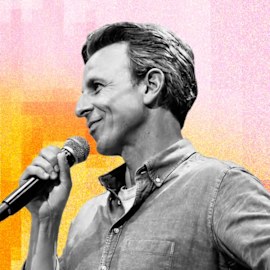
A Conversation with Seth Meyers
Most people know him as the host of Late Night. But over the past two decades, he’s done something few people in media have: stayed relevant through every major shift.
From SNL and Weekend Update to late night, books, podcasts, and standup, he’s kept earning new audiences while staying unmistakably Seth and picking up 35 Emmy nominations along the way.
What changes are worth chasing? Which ones aren’t? And how do you know the difference?
That’s what we’ll explore in a conversation with Seth Meyers.