Showing posts with label covid19. Show all posts

Friday, December 30, 2022

2022 Pacific political upheavals, elections eclipse Tongan volcano

Image
Popular original 1987 coup leader Sitiveni Rabuka . . . back as prime minister in Fiji
but with promises of a more democratic and transparent era. Image: FIJIVILLAGE

2022 PACIFIC REVIEW:
By David Robie

The Pacific year started with a ferocious eruption and global tsunami in Tonga, but by the year’s end several political upheavals had also shaken the region with a vengeance.

A razor’s edge election in Fiji blew away a long entrenched authoritarian regime with a breath of fresh air for the Pacific, two bitterly fought polls in Papua New Guinea and Vanuatu left their mark, and growing geopolitical rivalry with the US and Australia contesting China’s security encroachment in the Solomon Islands continues to spark convulsions for years to come.

It was ironical that the two major political players in Fiji were both former coup leaders and ex-military chiefs – the 1987 double culprit Sitiveni Rabuka, a retired major-general who is credited with introducing the “coup culture” to Fiji, and Voreqe Bainimarama, a former rear admiral who staged the “coup to end all coups” in 2006.

It had been clear for some time that the 68-year-old Bainimarama’s star was waning in spite of repressive and punitive measures that had been gradually tightened to shore up control since an unconvincing return to democracy in 2014.

And pundits had been predicting that the 74-year-old Rabuka, a former prime minister in the 1990s, and his People’s Alliance-led coalition would win. However, after a week-long stand-off and uncertainty, Rabuka’s three-party coalition emerged victorious and Rabuka was elected PM by a single vote majority.

Monday, January 3, 2022

‘Secret plots’, sovereignty and covid challenges face Pacific for New Year


Image
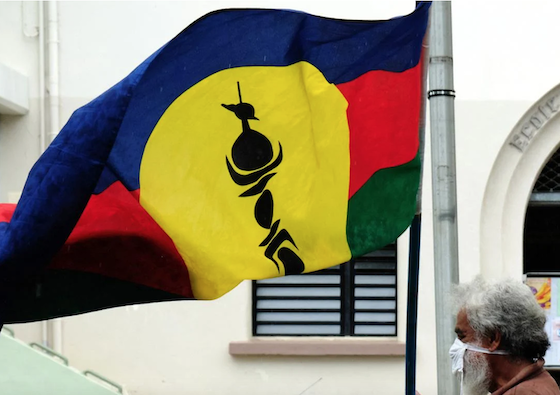
Independence and self-determination in the Pacific ... contrasting referendum experiences
between Bougainville, Kanaky New Caledonia and West Papua.
IMAGE: Screenshot of the Kanak flag in Middle East Eye

ANALYSIS: By David Robie in Auckland

THE PACIFIC year has closed with growing tensions over sovereignty and self-determination issues and growing stress over the ravages of covid-19 pandemic in a region that was largely virus-free in 2020.

Just two days before the year 2021 wrapped up, Bougainville President Ishmael Toroama took the extraordinary statement of denying any involvement by the people or government of the autonomous region of Papua New Guinea being involved in any “secret plot” to overthrow the Manasseh Sogavare government in Solomon Islands.

Insisting that Bougainville is “neutral” in the conflict in neighbouring Solomon Islands where riots last month were fuelled by anti-Chinese hostilities, Toroama blamed one of PNG’s two daily newspapers for stirring the controversy.

“Contrary to the sensationalised report in the Post-Courier (Thursday, December 30, 2021) we do not have a vested interest in the conflict and Bougainville has nothing to gain from overthrowing a democratically elected leader of a foreign nation,” Toroama said.

The frontpage report in the Post-Courier appeared to be a beat-up just at the time Australia was announcing a wind down of the peacekeeping role in the Solomon Islands.

Friday, November 26, 2021

Journalism education ‘truth’ challenges in an age of growing hate, intolerance and disinformation


Image
Four months ago Papua New Guinean journalists had been warning about increasing tensions over misinformation about COVID vaccines and a lack of clear communication from health authorities.
IMAGE: Screenshot Guardian Pacific Project

By DAVID ROBIE

IN RESPONSE to the escalating COVID-19 coronavirus pandemic in mid-February 2020 came a warning by the World Health Organisation (WHO) Secretary-General, Dr Tedros Adhanom, who declared that “we’re not just fighting an epidemic; we’re fighting an infodemic”. He added that fake news “spreads faster and more easily than this virus” .

The following month, in March 2020, UN Secretary-General António Guterres identified the “new enemy” as a “growing surge of disinformation”. However, the term “disinfodemic” – which I much prefer – was adopted by the authors of a policy brief for UNESCO to describe the “falsehoods fuelling the pandemic”.

This disinfodemic has been rapidly leading to upheavals in many countries – including in Australia and Aotearoa New Zealand in the weeks with protests, civil disobedience and attacks on health officials, medical staff and frontline workers.

Such assaults and violent confrontations have taken particular nasty turns in some of our neighbouring microstates of the South Pacific – notably Fiji and Papua New Guinea, the largest countries and biggest economies in the region.

Saturday, April 24, 2021

A Palestinian prayer for Ramadan: May the voices of the oppressed be heard

Image
The struggle of the Palestinians is integral to a larger struggle for fundamental human rights
that can be witnessed throughout the Middle East. IMAGE: France 24

By RAMZY BAROUD

COVID-19 cases in Palestine, especially in Gaza, have reached record highs, largely due to the arrival of a greatly contagious coronavirus variant which was first identified in Britain.

Gaza has always been vulnerable to the deadly pandemic. Under a hermetic Israeli blockade since 2006, the densely populated Gaza Strip lacks basic services like clean water, electricity, or minimally-equipped hospitals. Therefore, long before covid-19 ravaged many parts of the world, Palestinians in Gaza were dying as a result of easily treatable diseases such as diarrhoea, salmonella and typhoid fever.

Needless to say, Gaza’s cancer patients have little fighting chance, as the besieged Strip is left without many life-saving medications. Many Palestinian cancer patients continue to cling to the hope that Israel’s military authorities will allow them access to the better equipped Palestinian West Bank hospitals.

Alas, quite often, death arrives before the long-awaited Israeli permit does.

The tragedy in Gaza - in fact in all of occupied Palestine - is long and painful. Still, it ought not to be classified as another sad occasion that invokes much despair but little action.

Sunday, May 3, 2020

Jailing of Jakarta Six fuels virus fears over Papuan political prisoners

Image
A past protest in London demanding the release of Papuan political prisoners. Image: Survival International
PACIFIC PANDEMIC DIARY: By David Robie, convenor of Pacific Media Watch

THE JAILING of the Jakarta Six – five Papuans and the first Indonesian to be convicted for a Papuan protest – in Indonesia last month has focused global attention on the plight of political prisoners in the face of a failing struggle against the coronavirus pandemic.

Already several analysts are warning that both Indonesia and Papua New Guinea are at risk of becoming coronavirus “failed states” and this will be of concern to Australia and New Zealand.

While Papua New Guinea has had only eight confirmed covid-19 cases so far – a spike is expected this month in spite of the state of emergency, Indonesia already has 10,843 cases with 831 deaths and the real toll is feared to be higher and climbing.

READ MORE: Tough coronavirus controls threaten Pacific, global media freedom


Coronavirus
ASIA PACIFIC REPORT CORONAVIRUS UPDATES

Friday, April 24, 2020

Tough coronavirus controls threaten Pacific, global media freedom

Image
Reporters Without Borders has just published its annual World Press Freedom Index ranking
countries over censorship. Video: Hannah Cleaver/DW

PACIFIC PANDEMIC DIARY:  By David Robie

Against a backdrop of many governments using tough controls under cover of fighting the covid-19 coronavirus pandemic to strengthen “creeping authoritarianism”, a global media freedom watchdog has signalled draconian virus reactions as a major threat.

From Papua New Guinea where media briefings have been curtailed with a lockdown of the national information and operations “nerve centre” at Morauta Haus, to Fiji where media personalities have been arrested, to the Philippines where state troll armies “weaponise” disinformation on social media, and to Indonesia where street artists have stepped in fill an information void, the signs are really worrying for defenders for media freedom.

The pandemic is “highlighting and amplifying the many crises”, already casting a shadow on press freedom, says the Paris-based Reporters Without Borders watchdog, which released its annual World Media Freedom Index this week.

READ MORE: The Reporters Without Borders 2020 World Press Freedom Index

While China and Iran have been singled out for strong criticism for suppressing details of the coronavirus outbreak early in the crisis, several countries traditionally strong on media freedom in the Asia-Pacific region have slipped down in the rankings – including Australia, New Zealand and Papua New Guinea.

Friday, April 17, 2020

How the ‘chief covidiot’ has blocked world health unity with WHO freeze

Image
President Donald Trump ... deflecting the blame for the US coronavirus pandemic crisis onto WHO.
Image: Al Jazeera screenshot

PACIFIC PANDEMIC DIARY: By David Robie

Donald Trump’s sabre-rattling freeze on funding for the World Health Organisation at a time when many countries are pulling together for a global response to the coronavirus pandemic has surely earned him the epithet of the “world’s chief covidiot”.

The US President’s efforts at deflecting the blame for his country’s national public health crisis by pointing the finger at WHO and announcing that Washington would pull funding as the largest donor has shocked the world, triggering widespread condemnation from leaders and public health experts.

The impact of this shock decision is bound to be felt in the Pacific region with some countries and territories clinging precariously to their Covid-19-free status, while others – such as the US territory Guam, New Caledonia and French Polynesia – have already become hotspots.

Image
ASIA PACIFIC REPORT CORONAVIRUS UPDATES
American funding to WHO provided more than 15 percent of the international body’s 2018-19 budget of $4.4 billion.

While Richard Horton, the editor-in-chief of the Lancet medical journal, denounced Trump’s decision as “a crime against humanity” and an “appalling betrayal” of every scientist, health worker and citizen – and of global solidarity, the second largest WHO donor, Microsoft’s Bill Gates of the Gates Foundation, described the move “as dangerous as it sounds”.

Sunday, March 29, 2020

How Ardern’s coronavirus kindness theme can become contagious


Image
Shelf-Isolation. Cartoon: ©Malcolm Evans/The Daily Blog
PACIFIC PANDEMIC DIARY: By David Robie, self-isolating in Auckland under New Zealand’s Covid-19 lockdown as part of a new Pacific Media Watch series.


A South African celebrity jingle that has gone viral at the end of this week could easily have been a theme song for New Zealand when Prime Minister Jacinda Ardern declared a lockdown on Monday for midnight on Wednesday.

Several of South Africa’s most popular artists, such as Madjozi, Zolani Mahola and Francois van Coke, teamed up with the national groceries retailer Pick n Save to produce the rollicking “Don’t Panic Buy” in a bid to prevent stockpiling.

The lyrics urge shoppers to only buy what they really need and save the rest for fellow consumers, who may need it far more.

>>> Popular Café Pacific Posts