I wrote earlier this month about pervasive corruption and fraud in Minnesota’s Medicaid program.
Now that the issue has become big national news (I first started writing about Medicaid scams more than 12 years ago), let’s take a more detailed look at the problem.
The national Medicaid problem is exacerbated by state policies.
And Minnesota is among the worst of the worst.
As illustrated by this map, it has the second-highest per-capita spending in the country (keep in mind that federal taxpayer pick up almost two-thirds of cost of Medicaid).
When I look at this map, the first question that springs to mind is why Minnesota is spending about twice as much, per recipient, as a state like Florida?
Is it because of differences in the amount of illegal fraud?
Or is it simply a matter of some states having responsible governance while states like Minnesota are poorly run?
Regarding the last question, the Wall Street Journal has an editorial comparing Minnesota and Indiana. The Minnesota analysis is depressing.
Minnesota’s great welfare heist is…”staggering industrial-scale fraud,” Assistant U.S. Attorney Joe Thompson said. “When I look at the claims data and the providers, I see more red flags than I see legitimate providers.” Mr. Thompson estimates fraud losses since 2018 could top $9 billion. …The state’s Medicaid spending has increased by nearly two-thirds in six years. Mr. Walz says his administration has begun to inspect Medicaid claims more closely. But because the feds pick up most of the Medicaid tab, Minnesota and other states have less incentive to identify fraud and waste. Medicaid spending nationwide has increased by some $380 billion since the beginning of the pandemic as providers and beneficiaries dine out on the all-you-can-eat buffet.
By contrast, Indiana lawmakers have actually sought to save money for taxpayers.
The inexorable spending growth spurred Indiana Republicans this spring to impose reforms, including more rigorous eligibility checks and guardrails to prevent excessive billing. Last week the state said it expects to save $466 million on Medicaid over the next two years compared to its spring projections. Medicaid enrollment has declined by some 11% thanks to eligibility checks. …Indiana’s Medicaid spending is expected to grow 3.2% this year versus its 9.5% forecast.
I’ll close today’s column with my recommendations, all of which are contained in my 2011 video on Medicaid reform.
If you don’t have a spare five minutes to watch, here’s all you need to know.
Replace the federal entitlement with a block grant, copying the success of welfare reform in the 1990s while also eliminating the perverse incentive for both federal and state lawmakers to expand the program.
Phase out the block grant so that states ultimately are fully responsible for providing health care to low-income citizens. – including both raising the revenue and deciding how it gets spent.
In other words, it’s time to end the Washington redistribution racket. If Tim Walz thinks it is politically beneficial to turn a blind eye to fraud, let’s at least make sure only Minnesota taxpayers are bearing the burden.
I’m a big fan of the Constitution and the Bill of Rights. I like the restrictions on government power that are being enforced, and I like the restrictions on government power that I wish were being enforced.
And I think we have to be very vigilant against politicians who want to erode our constitutional freedoms, which is the message of this video about the 1st Amendment from John Stossel.
My view on the issue is very straightforward.
There are people who engage in disgusting, inaccurate, and dishonest speech. But restricting odious speech – or any other type of speech – is not the proper role of government.
To understand the importance of free speech, especially in a historical context, I urge everyone to read this article by Jay Cost of the American Enterprise Institute.
For purposes of today’s column, I’m going to focus on how governments continue to attack free speech.
This was a problem during the Biden Administration, as noted in this 2023 column in the Wall Street Journal by Philip Hamburger and Jenin Younes.
Court-ordered discovery in Missouri v. Biden has already revealed that the White House strong-armed platforms into more censorship than they considered justified—prompting the judge to declare that the administration had made “arguably the most massive attack against free speech in United States’ history.” The new documents go further, showing that the administration drove much of Meta’s censorship. …At the government’s behest, Facebook also adopted a policy of removing posts discussing the lab-leak theory. …The company’s vice president in charge of content policy responded that “we were under pressure from the administration and others to do more” and continued with regret: “we shouldn’t have done that.” The First Amendment prohibits the government from “abridging the freedom of speech.” Supreme Court doctrine makes clear that government can’t constitutionally evade the amendment by working through private companies. The newly released documents paint a clear picture of an administration run
And it remains a problem under the Trump Administration, as explained by Steven Greenhut in this column for Reason.
Trump continues his attacks on free speech through a variety of disreputable strategies. Multiple lawsuits he’s filed against media operations are “chilling attempts to convert Trump’s complaints about press coverage into causes of action are legally baseless and blatantly unconstitutional,” notes Reason‘s Jacob Sullum. He used as an example Trump’s recent social-media post after MSNBC cancelled a TV show: “Fake News is an UNPARDONABLE SIN! The whole corrupt operation is nothing more than an illegal arm of the Democrat Party. They should be forced to pay vast sums of money for the damage they’ve done to our Country.” …Trump’s interim U.S. attorney for the District of Columbia, Ed Martin, …threatened criminal investigations of members of Congress and the media who have criticized Elon Musk and his team of DOGE budget-cutters.
The problem is even worse overseas.
The British government’s actions are particularly disturbing. Here is some of what Charles Cooke wrote in National Review about his native country.
In England, …the police deliberately arrested a man who was flying in from the United States because he had expressed views on Twitter that the British government does not like. England — not North Korea, or Russia, or China. England — the land of John Stuart Mill and Thomas Paine and Monty Python. For tweets on transgender issues. Tweets — not threats of imminent violence, or a credible vow to blow up the airport upon arrival. …Since I moved to the United States in 2011, I have been chronicling the increasingly illiberal attitude to free expression that has been adopted in my country of birth. But this one, I will confess, surprised even me. …This one was egregious on an entirely new scale.
Now let’s shift to Germany.
Here are some excerpts from a column in Reason by J.D. Tuccille.
…members of the AfD aren’t alone in being targeted for voicing disapproved ideas; across Germany, the U.K., …declining respect for liberal norms is breeding censorship and arrests for offending politicians. …Putting the main opposition party under an “extremist” designation subject to surveillance is a frightening step for a democracy. …David Bendels, an AfD-associated editor, was sentenced to seven months’ probation for posting a mocking meme of former German Interior Minister Nancy Faeser holding a sign digitally altered to say the German equivalent of “I hate freedom of speech.” …Faeser has a censorious reputation; she banned Compact magazine as “extremist” just last summer. …nationalist “extremists” aren’t the only targets of Germany’s censors. …Last November, a Bavarian man was investigated for referring online to then- Deputy Chancellor Robert Habeck with a pun that roughly translates as “idiot.” Police raided the home of a Hamburg man for calling a local politician a “pimmel” (dick). …And Irish protesters in Germany were forbidden to speak in Gaelic because police wouldn’t be able to tell if they were saying verboten things.
And here are some passages from a report in the Washington Post by Terrence McCoy and Marina Dias about Brazilian tyranny.
“I make jokes about everything and everyone,” the comedian Leo Lins said during his set in mid-2022. “What show could be more inclusive? I even hired a sign language interpreter just to be able to offend the deaf-mute.” By the end of his act, which quickly went viral and has collected more than 3 million views on YouTube, Lins had made fun of Black and Indigenous people, obese people, elderly people, gay people, Jews, northeastern Brazilians, evangelicals, disabled people and those with HIV. Now he faces eight years and three months in prison. …The decision, which the comedian plans to appeal, marks the latest effort by the Brazilian judiciary to place limits on freedom of expression, especially on social media. In recent years, the country’s Supreme Court has repeatedly moved to block and remove the online accounts of people it alleged were spreading misinformation that could endanger Brazilian democracy. …Prosecutors have opened thousands of criminal cases; penalties have been stiffened.
Since I agree with the analysis from Tuccille and Cooke, I don’t have much to add, other than there’s no way to trust governments. If politicians and bureaucrats get the power to restrict truly odious speech, they inevitably will use that power to restrict speech that is disliked by the establishment.
Indeed, people from all parts of the political spectrum should contemplate my Fifth Theorem of Government before deciding they want government to control and limit speech.
Why? Because I understand that a trade deficit is merely the flip side of a capital surplus. In other words, when foreigners earn dollars, they often think investing in the American economy is the best use of that money.
I also understand that the United States has a much bigger and much richer economy than our trading partners, so of course Americans can afford to buy more from them than they buy from us.
Needless to say, Trump has a different perspective on trade deficits. He thinks they are a sign that America is getting “ripped off.” Indeed, he is so distraught about the balance of trade that he has unilaterally imposed huge tax increases on Americans who buy imports.
So is that policy working? The bad news is that prices are higher, the economy is less efficient, domestic investment is weak, and jobs are being lost. But, from Trump’s perspective, is it okay to suffer all that collateral damage because at least the net effect is a smaller trade deficit?
Well, not exactly. Here’s a chart comparing trade balances for the first three quarters of 2024 and 2025. As you can see (and as I predicted back in January), the trade deficit this year has increased. It’s now more than $100 billion larger.
The bottom line is that Trump has destabilized the American economy and the world economy and the net effect – according to the metric he cares about – is a bigger trade deficit.
By the way, some readers may be tempted to dismiss the above chart because nine months of data might simply be an anomaly.
Since I’ve repeatedlywarned about not drawing big conclusions from small slices of data, I agree that some skepticism is warranted.
But now let’s look at four years of data from Trump’s first term. Lo and behold, we see the exact same pattern of higher trade taxes and higher trade deficits.
Incidentally, I’m not claiming that higher trade taxes cause higher trade deficits. My only point is that Trump’s policy has not produced the result he wants.
Sooner or later, when there are too many people riding in the wagon and too few people pulling the wagon, this will cause an economic crisis.
But some people are impatient. They want crisis, bankruptcy, and decline to happen right away.
These are the people pushing a state wealth tax. They don’t say they want bad things to happen quickly, but that will be the inevitable result if they get their proposal on the ballot and California’s foolish voters approve the measure
For background, here are some excerpts from a New York Timesreport by Ryan Mac, Theodore Schleifer and Heather Knight.
Billionaires including Peter Thiel, the tech venture capitalist, and Larry Page, a co-founder of Google, are considering cutting or reducing their ties to California by the end of the year because of a proposed ballot measure that could tax the state’s wealthiest residents… The moves are being driven by a potential California ballot measure from the health care union, Service Employees International Union-United Healthcare Workers West… The proposal calls for California residents worth more than $1 billion to be taxed the equivalent of 5 percent of their assets. If the measure gains enough signatures to reach the state ballot in November and wins approval, it will retroactively apply to anyone who lived in California as of Jan. 1, 2026. Those with $20 billion in assets who resided in the state on that date would face a one-time tax of $1 billion… For Mr. Page, whose net worth is estimated at $258 billion, the measure could result in a one-time tax of more than $12 billion. The tax bill for Mr. Thiel, whose net worth is around $27.5 billion, could be more than $1.2 billion.
But the potential exodus involves a lot more people than just Thiel and Page.
David Lesperance, a tax and immigration adviser for high net-worth individuals, said it would be a “process” for people to successfully claim nonresidence in a state. …Because of the potential ballot measure, “almost all of my clients are taking steps as quickly as possible both to sever California residence and to move assets outside of the state,” Mr. Lesperance said… Brett Harris, a high-end real estate agent in the Miami area, said he had been contacted recently by five California billionaires who planned to make Florida their home so they could “offset their risk of exposure to the billionaire tax.”
Interestingly, California’s left-wing governor, Gavin Newsom, opposes the measure. Perhaps a sign that he’s irrational, but not completely irrational.
But here’s the part of the article that deserves attention. California’s budgetary bureaucrats apparently understand the Laffer Curve!
California’s Legislative Analyst’s Office and Department of Finance have estimated that the state “would collect tens of billions of dollars from the wealth tax” in onetime payments. But they added that state income tax revenues would also fall over the long term by hundreds of millions a year if billionaires decided to move away.
The bottom line is that a wealth tax would be an economic disaster for California.
But that’s economic analysis. What about political analysis?
I think there’s an analogy to the 2017 debate in California over whether to adopt a government-run, single-payer heath system. Even though the left controlled all the levers of power in California, state politicians ultimately realized it would be crazy to double the burden of government in one fell swoop, so the legislation died.
I’m guessing that California’s misguided voters will have a similar epiphany and realize that it’s not a good idea to chase away the geese with the golden eggs.
Though part of me would be happy if they voted yes. After all, it helps to have bad examples when teaching economics. Actually, California already is a bad example. Enacting a wealth tax would make it a catastrophic example.
As explained in my four-part series (here, here, here, and here) and in this clip from a recent interview, Javier Milei’s first two years have been amazingly successful.
There are two points in the interview that deserve emphasis.
Second, we can expect even more success in the future because Javier Milei’s libertarian party (La Libertad Avanaza) won a landslide victory two months ago in Argentina’s midterm elections. As I noted in the video, the victory was especially shocking since most observers expected voters would revert to their post-WWII pattern of voting for leftism.
So the first two years of Milei-ism have been extraordinarily successful.
Now let’s hope there is additional progress the next two years.
According to a report in the U.K.-based Financial Times, that is likely to happen. Milei’s government is especially focused on labor law reform. Here are some excerpts.
Argentina’s government sees 2026 as its “golden opportunity” to pass major economic reform…according to the minister tasked with enacting President Javier Milei’s ‘chainsaw’ deregulation agenda. …having more than doubled its congressional bloc at those elections, the government believes it can now pass labour and tax overhauls, as well as a hardline new penal code. Such reforms have long been resisted by the country’s leftwing Peronist opposition… “There is a new political climate,” deregulation minister Federico Sturzenegger, who wrote many of the planned reforms, told the Financial Times. “The rest of the political system is looking to the party that won 40 per cent and that will make it easier to deal with congress.” …The first target is Argentina’s labour market, where the number of formal private sector jobs has been almost flat for 14 years. Roughly half of workers are employed off the books. Businesses blame high payroll taxes, sometimes outsized severance payments and national level wage agreements…that can override company-level talks. The proposed labour bill would reduce union dues paid by non-members, limit labour courts’ discretion on severance payments and make company wage negotiations supersede nation-level accords. It would also allow a working day of up to 12 hours and limit the right to strike by expanding the category of jobs deemed essential. Sturzenegger said the changes would “correct the rigidity that has expelled people from the formal labour market”. Greater flexibility in wage negotiations, he argued, would allow smaller companies and those in poorer regions to hire more and fuel a 15-20 per cent increase in formal jobs. …Sturzenegger has also led Milei’s efforts to slash Argentina’s labyrinthine regulations — and says he has cut or overhauled 13,500 articles using various executive powers.
To understand why it’s important to liberalize labor markets, here’s the one-minute video released by the Center for Freedom and Prosperity back in July.
Milei already has taken big steps toward his goal of making Argentina the world’s freest economy. Let’s hope 2026 sees even more economic liberty.
P.S. What makes Argentina’s success even more enjoyable is that 108 left-wing economist signed a letter back in 2023 warning that Milei’s agenda would “cause more devastation.” I wish we could have similar “devastation” in the United States!
I sometimesblame the federal reserve, but it seems like Ron Paul does it all the time, so here’s an end-the-Fed start to today’s libertarian-themed Christmas.
Next, the occupant of the White House could be called the Grinch who stole free trade, and the National Taxpayers Union estimates that consumers are paying more than $10 billion this holiday season because of his unilateral tax increases.
And Trump’s trade taxes have given Gavin Newsom an opportunity to pretend he cares about household budgets.
Here’s one more on trade taxes.
The Tax Foundation has the data on how millions of dollars are being taken from consumers when they buy Christmas lights and Christmas decorations.
Let’s close, however, on an optimistic note about the number of toys under the Christmas tree.
Fortunately, that’s a good description of what’s been happening in the United States. And this chart from Gale Pooley is a good example. Average worker could afford far more toys in 2024 than in 1978.
Sadly, because of Trump’s protectionism, this wonderful trend may now be in reverse.
For what it’s worth, I think readers should watch at least 13 minutes of the video, because that’s when you get to the part about the economy not being a fixed pie.
This is a point I made a couple of years ago when speaking in Poland.
And the data from the U.S is a good example. Today’s Americans are far richer than their ancestors.
In other words, our friends on the left are wrong to think the economy is a zero-sum game (though it will become that way if their policies are adopted!).
P.S. In a voluntary form of recycling (far better than the government version), John Stossel created the above video by combing thesethreevideos from 2021.
As they say at tennis matches, that’s game, set, and match. Or a slam dunk if you prefer basktball.
By the way, let me preempt pedantic comments by nothing that Baltimore is run by leftists rather than socialists. After all, there is no government ownership of the means of production in the city, no central planning in the city, and no government-dictated prices in the city.
Instead, you have old-fashioned left-wing vote buying combined with a never-ending search for ways to fleece residents.
But that kind of system isn’t stable. The city is going downhill because there are too few people pulling the wagon (i.e., taxpayers) and far too many people riding in the wagon (i.e., tax consumers like government bureaucrats and welfare recipients).
But my criticisms were not based on partisanship. I praise both Republicans and Democrats when they expand economic liberty and I condemn both Republicans and Democrats when they expand the burden of government.
Having established my bona fides, let’s now look at whether Trump’s policies are helping or hurting ordinary people.
We’ll start with the latest Employment Cost Index from the Bureau of Labor Statistics.
And we’ll augment that with this chart from the Real Earnings report, also from BLS.
The main takeaway is that both data sources show modest increases in income, adjusted for inflation.
And that’s definitely an improvement over what happened at times during the Biden years.
But does “modest improvement” merit a good grade or merely a passing grade.
In a new editorial, the Wall Street Journal is not very impressed. Here are some excerpts.
Paychecks are barely keeping pace with rising costs. …72% of Americans rate the economy as fair or poor, essentially unchanged from when Mr. Trump entered office. Mr. Trump is right that he inherited the inflation mess from Joe Biden, but Americans don’t feel that their situation is improving. Job growth has stalled since the spring, and more important is that incomes after inflation haven’t been rising fast enough. The Bureau of Labor Statistics reported on Thursday that real average hourly earnings for all employees have increased only 0.8% over the last 12 months. That’s down from a 1.4% 12-month rate a year ago and 1.4% in April before most of his tariffs hit. …The President is betting on the benefits of his tax bill kicking in next year. Its expensing provisions could lift business investment… But his tariff barrage is creating uncertainty and adding costs for businesses.
In a column for the U.K.-based Telegraph, Melissa Lawford highlights other problems in the Trump economy.
Donald Trump’s surprise address to the nation on Wednesday night saw him insist everything in the economy is just fine. …America’s affordability squeeze is hitting low income workers hard, a phenomenon that has been well documented. But it is also increasingly choking the middle classes too. …polling shows housing costs are the second biggest affordability concern for Americans after groceries. It was cited by 38pc of people as the most challenging thing for them to afford… Voters’ anger towards the president around affordability is building, says Republican pollster Brent Buchanan. …Trump also said he would soon announce a new chair of the Federal Reserve “who believes in lower interest rates by a lot”. But there is a risk this could backfire. Mortgage rates are not determined by the Fed rate but by yields on 10-year government bonds. If bond investors think there is a threat to Fed independence, which would impede the central bank’s ability to control inflation, they will demand higher returns on Treasuries. In turn, this would drive up mortgage rates.
Here’s a chart from the Telegraph column.
There are two points I’ll add to this analysis.
First, Trump is undermining himself (and undermining the GOP) with protectionism. And I think the data from the Bureau of Labor don’t fully capture the problem. The key thing to understand is that protectionism doesn’t cause inflation (look at the Federal Reserve if you want to assign blame). Instead, Trump’s taxes on trade are causing the economy to become less efficient and less competitive. So protectionism doesn’t effect the overall price level, but it does hamper income growth and it does make some things more costly. The net effect is that people are more likely to feel like their stuck on a treadmill.
Which was the problem that plagued Biden.
Second, the column in the Telegraph raised a very important point about the downside risk of Trump wanting the Federal Reserve to lower interest rates. What Trump is really saying is that he wants an easy-money policy from the Fed. That approach might temporarily lower interest rates, but the long-term consequences – higher prices and higher interest rates – are very damaging.
P.S. The WSJ editorial pointed out that Trump inherited the inflation problem from Biden. Fair enough, but it should have pointed out that Biden inherited an inflation problem from Trump.
Next, regular readers know that I’m definitely not a knee-jerk Trump defender (especially on trade!), but I definitely agree with @seamus_coughlin’s response to Kamala Harris.
Reminds me of what I wrote about Mitt Romney in 2012.
For our third item, I’m going to share a wonky cartoon strip that points out that labor and capital are complementary factors of production. In simpler terms, workers earn more with more capital.
Or even the Barro Curve since Professor Robert Robert Barro from Harvard graphed the relationship between government spending and economic growth in variousacademic articles 35 years ago.
I don’t care who gets credit, though. What matters is that there is a wealth of evidence (even from surprisingsources) that more government spending is correlated with less prosperity.
But not just correlation. There’s a causal relationship. As government gets bigger, that weakens economic performance.
Today, let’s add some additional academic evidence by looking at some findings from a scholarly study in the Journal of Economic Policy Reform by Professors Michael Connolly and Cheng Li.
They look specifically at the economic impact of redistribution spending. Here are some relevant passages.
Given the high levels of public social spending in the OECD, clearly exacerbated by the financial crisis of 2008–2009 where real GDP fell on average in 2009, it is worthwhile to empirically estimate the effects of public social spending on economic growth in these countries. We analyze annual panel data from 1995 to 2011 for 34 OECD countries to examine how each of the three categories of government spending might affect economic growth. …Public social spending…has a small but significant negative effect on subsequent economic growth. A one percentage point increase in public social spending as a percent of GDP leads to 0.09% lower growth rate in GDP in the next year, suggesting that increased public social spending inhibits economic growth in the OECD countries. …increased public social spending may inhibit economic growth: that is, the OECD countries may be on the “wrong side” of the Barro-Laffer curve in growth with respect to entitlements.
Incidentally, here’s a table from the article showing how they define redistribution spending.
The bottom line is that the the welfare state is far too big in the United States and other developed nations.
Moreover, all the academic evidence confirms Thomas Sowell’s wisdom on the issue. Simply stated, government is punishing people for being productive and rewarding them for being unproductive.
Of course such policies will undermine prosperity.
P.S. Since we’re on the topic of the Rahn Curve (i.e., the size and scope of government), here’s a visual I saw on Twitter that is worth sharing.
The “narrow corridor” is where government should be, providing some core public goods but not oppressing citizens.
This image doesn’t say anything about the appropriate size of government, to be sure, but it does highlight the challenge of how you give government the power to do good things without giving it the power to do bad things.
Back in January, I shared a “Feel-Good” map from the American Legislative Exchange Council showing how school choice was spreading around the country.
Today, let’s review another feel-good map, in this case from EdChoice’s newest edition of The ABCs of School Choice. As you can see, there are now school choice programs in 34 states, which is amazing progress.
Indeed, there are actually 75 different school choice programs, with some being unfortunately limited.
But in a few states – notably Arizona, Arkansas, Florida, New Hampshire, and West Virginia – the programs are universal.
Here’s a chart showing the growth of school choice over the years.
And here’s a chart showing the number of students directly benefiting (all students benefit to some degree since academic research shows that school choice leads to better performance by government schools).
I expect next year’s version of this map and these charts will look even better.
Victory for students (and Milton Friedman) over teacher unions!
Or will they seek to increase the trend line of revenue by taking more money from the productive sector of the economy?
The bad news is that polls sometimes show support for higher taxes. Consider this new data from the Cato Institute, which shows (circled in red) that a majority of people support various tax increases to deal with Social Security’s massive shortfall.
But there’s also good news. Notice the fourth poll, the one showing that only a small minority of Americans would be willing to pay more than $1,300 per year.
Here’s some more data from the Cato poll. As you can see, there’s a huge drop in support for tax increases between $600 per year and $1,300 per year.
And why is this data significant?
Because, as the report explains, the average worker would have to pay about $2,600 per year to prop up the current system.
When asked what types of tax increases Americans would support in general terms, solid majorities say they would favor raising “income taxes” (58%) or “payroll taxes as much as necessary” (63%) to keep benefits intact. More specifically, a majority (55%) say they support raising payroll taxes from 12.4% to 16.05%. But framing tax increases in dollar amounts produces a very different response. Most Americans don’t think in terms of percentages. When asked in concrete dollar amounts if they would be willing to raise their own taxes by $1,300 per year to maintain current benefits, an overwhelming majority (77%) say no. Yet, the realistic tax increase needed for the average worker is roughly $2,600 more per year, far above what the public is willing to pay. …These patterns hold across income levels. For instance, Americans earning more than $150,000 per year are about as unwilling as a person earning less than $30,000 per year to pay an additional $2,600 per year in payroll taxes (75% and 78%, respectively). Strong majorities of both Democrats (73%) and Republicans (86%) also oppose tax increases at the projected $2,600 level needed to maintain benefits.
I’ll close with two comments.
First, our friends on the left will try to avoid opposition from middle-class voters by proposing to “tax the rich.” Their go-to option will be busting the wage-base cap for payroll taxes, but other class-warfare taxes would be on the table as well. A big problem with this approach, however, is that there are big Laffer-Curve effects when politicians try to raise taxes on people with substantial control over the timing, level, and composition of their income. As such, they’ll have to target the middle class at some point.
Second, the aforementioned Cato research reminds me of the data I shared in 2016 showing that even left-wing voters were willing to pay only a tiny fraction of how much tax would be needed to finance Bernie Sanders’ plans for a bigger welfare state. And let’s not forget that there is also academic research showing that politicians avoid tax increases in election years.
Actually, I’ll add a third comment.
The left has a political problem in that you can’t finance a big welfare state without taxing lower-income and middle-class taxpayers, but the right also has a problem in that big government Republicans like Trump are unwilling to deal with entitlements. And that inevitably will mean massive tax increases.
Now it’s time for more. The 2025 version of the Human Freedom Index has been released and Switzerland has the world’s highest combination of economic and personal freedom.
Here are the world’s top-20 nations, with Denmark and New Zealand winning silver and bronze and the United States at #15.
What about the world’s worst nations? Which countries combine bad economic policy and don’t respect human liberty?
Syria is the worst of the worst, followed by Iran and Yemen. Venezuela is in the bottom 10 (no surprise), and Russia and China also rank poorly.
I’m a big believer in looking at trends, so I went to the HFI database and calculated the biggest changes this century.
Nicaragua is the worst of the worst, followed by Venezuela and Egypt. It’s also very sad to see how much Hong Kong has dropped.
Meanwhile, Iraq, Liberia, and Angola have improved the most, though they started so low that they should still be viewed as unfree nations.
I’ll close with a final observation about the superiority of enlightenment values.
Notice that the world’s freest nations are in North America and Western Europe.
I should hasten to add that this has nothing to do with race. Japan and Taiwan both get very high scores, as did Hong Kong before China’s crackdown. And there are African and Latin American nations in the top 50 as well.
The point is that libertarian (or classical liberal) values are most common in western nations and it would be wonderful if those values spread throughout the world.
In Part I of this series, I explained that modern welfare states are in deep trouble because of falling birth rates.
The core of the problem is that entitlement programs generally tax young people to subsidize old people. And fewer babies today means fewer workers (i.e., taxpayers) in the future.
And that’s a recipe for fiscal crisis because there will be a growing number of old people expecting various benefits.
Here’s a look at some data for the United States.
This startling chart shows the average amount of taxes paid by age, which is grim news for working-age people like my children. But the worse news is that older people like me are very expensive because of programs like Social Security and Medicare.
This chart might be less scary if there many more young people than old people, as shown by a traditional population pyramid.
And that was the case for much of the 20th century. Indeed, I pointed out in my video on Social Security that there were more than 5 taxpayers for every Social Security recipient when I was born.
Unfortunately, today there are only about 2.6 workers per beneficiary.
In other words, America’s population pyramid is become a cylinder. A very expensive cylinder.
Which led Russ Greene to describe America’s system of “Total Boomer Luxury Communism.” Here are some excerpts from his article in The American Mind.
Total Boomer Luxury Communism (TBLC)…is driving every aspect of American decline—from skyrocketing national debt and the erosion of our defense industrial base to the despair of young people. …The essence of TBLC is that it redistributes wealth from younger families and workers to seniors, who are on average much richer. America has achieved the Marxist paradise… Only it looks more like golf in the morning, horseback riding in the afternoon, drinks at the social club in the evening, and a restful night’s sleep in a million-dollar home—all thanks to the largesse of the U.S. government. …There’s six times as much wealth redistribution happening in America as in China. That’s the “communism,” but only for the “Boomers.” The “luxury” part comes in how the government distributes these benefits. Perversely, retired millionaires have become the greatest recipients of government aid. Max Social Security benefits in the U.S. are 3-4 times what seniors can ever hope to achieve in other developed nations, such as Britain, Canada, and New Zealand. …Democrats and Republicans agree on at least 85% of federal spending, mostly because they both support a massive wealth transfer from young workers to seniors. There is no political debate… American politicians have let Social Security grow on autopilot. New Zealand, Canada, Germany, and Sweden all reformed their versions of social security… The money is running out. The only question is who will bear the burden. Each day that passes means Gen Z and Millennials pay more of the price for Boomer irresponsibility.
I have three comments.
First, at the risk of being pedantic, what we have isn’t communism, but Total Boomer Luxury Redistributionism.
Second, Greene is completely correct that the U.S. faces a fiscal crisis if we leave the system on autopilot.
The Paris-based bureaucracy is dominated by Europe’s left-leaning welfare states, so it unsurprisingly has a statist policy agenda (especially on fiscal issues, as seen here, here, here, here, and here).
But the OECD is nonetheless a good source of data and the economists who work in Paris occasionally publish some interesting research. For instance, there’s a new study by Sebastian Barnes, Boris Cournède, and Fred Hanmer entitled Assessing government spending in OECD countries and searching for savings.
The report is noteworthy because it acknowledges that excessive spending is a problem for OECD nations.
What I found most interesting, however, were the charts showing which nations had above-average spending in different categories.
For instance, Figure 13 shows that Finland, France, and Denmark have very high spending levels for “old age” (what Americans would list as Social Security) and “social protection” (welfare payments).
The United States also has some above-average spending for “defense” and “public order and safety.”
If you look at the footnote, you will see that Switzerland gets a special mention because it has no above-average spending in any category (another sign that it is the world’s best-governed nation).
Next, Figure 14 slices the data differently, adding “aggregate spending” as one of the variables (the U.S. is excluded because our numbers apparently are calculated differently).
You’ll notice considerable overlap, with Finland, Denmark, France, Austria, and Hungary being profligate in both charts.
Last but not least, Figure 18 shows how the burden of government spending could be reduced if nations merely reduced various budgetary categories to the OECD average.
I’ll close with two observations.
First, average spending in the OECD (the benchmark used for the above graphs) is far too high is almost every category. As such, the “potential savings” should be viewed as merely a start.
P.S. In a 2019 column, I compared OECD nations based on total outlays for various types of social welfare spending.
P.P.S. In a 2016 column, I cited an earlier OECD study that showed the significant economic benefits some nations could enjoy if they reduced their spending burdens to the OECD average.
Today, let’s contemplate how to solve this looming crisis.
The good news is that some politicians are finally realizing that changes are needed.
In a report for the Washington Post, Chico Harlan documents how a few governments are trying to address the problem. Here are some excerpts.
After years of people having fewer children, Europe is on the brink of a great contraction. …That trajectory has raised alarms about shrinking workforces and the possibility of economic insolvency. So governments of every political stripe are scrambling to test whether some mix of perks, incentives and ideology might spark a baby boom. …governments are rolling out generous financial incentives for potential parents — while also extolling traditional families. …But the lesson so far from Europe is that even enormous government programs might yield just fractional change. …Until the 1960s, most of Europe maintained fertility rates above 2.1 births per woman, the level needed to sustain a population. …But now, …5 of 27 E.U. countries have birth rates above 1.5, and none is above 1.9. The E.U. fertility rate stands at a record low 1.38 births per woman. …Thirty years ago, across Western Europe, there were four adults younger than 65 for every one senior. Now the ratio is about 3 to 1. By 2050, it’ll be less than 2 to 1. And by 2100, according to United Nations projections, Western Europe will have more people age 85 than 5.
And that means a fiscal crisis, probably sooner rather than later.
But can that fate be avoided by convincing families to have more children?
The article points out that this approach has not been successful, even in Hungary where the government has a very aggressive policy to increase birth rates.
…No country better embodies the ambitions and limitsthan Hungary… The country now spends 5 percent of its gross domestic product on family policies… For a while, Hungary’s policies looked like a clear triumph. Orban started introducing incentives about 15 years ago, just after Hungary’s population had fallen below 10 million for the first time in decades. Its fertility rate, 1.25, stood among the lowest in Europe. Over the following decade, global fertility plummeted even faster than demographers had anticipated. But Hungary defied the trend: By 2015, its fertility rate had climbed to 1.45. By 2021, 1.61. Then, the direction reversed — all the way down to 1.39 by 2024, almost exactly the E.U. average.
Here’s a look at fertility (left axis) and births (right axis) in Hungary.
Tim Carney, in a column for the Washington Examiner, takes a close look at Hungary’s birth dearth.
In Budapest eight months ago, I heard many hopeful Hungarian conservatives point out that Hungary had risen from the bottom of European birth rates to almost the top. They credited the administration of Prime Minister Viktor Orbán, who had implemented all sorts of pro-family policies, including lots of cash, accommodations, and tax breaks for parents. But…there were reasons to worry whether Hungary really was resisting the global collapse in birth rates. In 2024, its birth rate had fallen and was closer to the middle of the European pack than the top. The 2025 numbers so far are dreadful. Hungary’s total fertility rate is down to 1.30 babies per woman, way down from 1.51 in 2023, which itself is far lower than the United States. Compare Hungary to its neighbors — Slovakia, Slovenia, Austria, Croatia, Serbia, and Romania. Among those countries, Hungary is tied for the lowest birth rate with Austria. …Hungary’s 10-year fertility drop, which includes many years of family policy, is 10%, worse than five of its six neighbors.
Tim explains in the column that maybe the subsidies simply caused families to have kids earlier, but not to have more kids.
That hypothesis seems plausible, and a 2023 story in the New York Times also shows that government efforts to boost birth rates have only temporary effects.
As in Sweden.
And Australia.
The bottom line, as I explained in 2017, is that governments lack to ability to substantially increase birth rates.
So it’s noteworthy that the Trump Administration, in its recently published National Security Strategy, warns that Europe faces “civilizational erasure.”
The section on Europe is only three pages (25-27) and is worth reading. But it also can be summarized by this excerpt.
The larger issues facing Europe include activities of the European Union and other transnational bodies that undermine political liberty and sovereignty, migration policies that are transforming the continent and creating strife, censorship of free speech and suppression of political opposition, cratering birthrates, and loss of national identities and self-confidence.
The document in in part a criticism of the European Union, but also very critical of some of the choices made by various national governments in Europe. And it’s obvious that the Trump Administration thinks that large-scale immigration is a threat to Europe.
The Wall Street Journaleditorialized about the report, largely to say that there should have been more focus on bad economic policy. Here are some excerpts.
The Administration’s National Security Strategy last week stirred outrage by warning that America’s European allies face “civilizational erasure.” Mr. Trump’s foreign-policy panjandrums mean primarily that mass immigration and deepening political illegitimacy are sapping Europe’s vim and vigor. …Messrs. Trump and Vance have a point. The European Union does too many things (foreign policy, environmental regulation and the like) badly that it shouldn’t do at all. What it’s supposed to do, such as creating a Continent-wide free-trade bloc, it does poorly. …But the Trump diagnosis ignores the biggest threat to Europe’s well-being. That is Europe’s generous social-welfare states and the cascading fiscal, economic and social ills they create. Government social expenditure in…France the figure was 30.6%, in Germany 27.9%, and in Italy 27.6%. This share will rise as populations age. …This fact explains much of what ails Europe. Large welfare states require large tax bills to fund them… That level of taxation saps incentives for innovation and entrepreneurship. Generous welfare states also discourage work, which partly explains why Europe’s labor markets are so sclerotic. …The question is why Messrs. Trump and Vance stress migration and culture more than these fiscal and economic facts. Perhaps because Mr. Trump doesn’t want to reform America’s own entitlement state. Mr. Vance often speaks as if he wants to expand the government’s role, as if welfare checks and bureaucracy can restore national elan and social unity.
And the editorial correctly notes that the Trump Administration is very weak on the issue of entitlements, which may explain why the report downplays that issue.
For what it’s worth, I think it is reasonable to be concerned about both issues – mass migration and bad economic policy.
And the European Union makes both problems worse. Indeed, Nile Gardiner of the Heritage Foundation thinks the E.U. is hopeless. Here are some passages from his recent column in the U.K.-based Telegraph.
Increasingly, the EU stands for despotism, socialism, mass migration, the suppression of free speech and the destruction of national sovereignty. Many senior US officials and Members of Congress rightly view the European Union as fundamentally undemocratic, run by power-hungry unelected bureaucrats with practically zero accountability. …The EU is a real problem for the United States and for the transatlantic alliance. It is dominated by big government, Left-wing ideology, and is sinking under the weight of decades of open-borders policies, threatening the very future of Western civilisation. …the United States cannot unilaterally abolish the EU… But it can actively back the cause of national sovereignty and self-determination across Europe, challenging the power of Brussels, and stand with European movements that seek to throw off the shackles of the EU machine. To his great credit, Trump has been a huge supporter of Brexit… And just as the United States stood with the brave and fearless dissidents of the Soviet Union who fought against the tyranny of Moscow, the world’s superpower should back those in Europe who wish to see democracy and sovereignty restored across the continent and power taken away from Brussels. …The days of the US supporting the European Project are over, and the transatlantic alliance will be far better off when the EU is consigned to the dustbin of history.
But I worry that the anti-E.U. movement in the rest of Europe is less worthy of support. Anti-E.U. politicians in places like Germany, France, and Hungary seem primarily concerned about mass migration.
I think that concern is legitimate, but I hardly view such people as allies when they support big welfare states so long as benefit payments are limited to native-born residents.
And many of these politicians are hypocrites in that they complain about Brussels yet they anxiously gobble up the various handouts distributed by the European Union.
Last but not least, here are some excerpts from Christopher Caldwell’s column in the New York Times. He argues that Trump is defending Europe and that the report is pushing European politicians to do likewise.
The president’s 2025 National Security Strategy, released last week, sent a message to the continent that shocked the world. Drowning under mass migration, mismanaged and bullied by the European Union’s leaders, increasingly incapable of producing children, Europe’s ancient nations, the document argues, face not just economic decline but also the prospect of imminent “civilizational erasure.” …President Trump’s detractors on both sides of the Atlantic blamed him for rupturing the NATO alliance and for straying into matters far removed from national defense — such as migration, culture and demography — that are the province of racists and xenophobes. That is the wrong way to understand the document. Read carefully, in fact, the passages about Europe sound more like a defense of the continent. …Few of those outraged by the document have bothered to distinguish between Europe…and the European Union, a 33-year-old experiment that aims to replace the continent’s nation-states with a novel form of transnational governance based in Brussels. In certain quarters the European Union has become synonymous with a postdemocratic permanent ruling class of regulators and bureaucrats. …the Trump administration sees…the European Union as a danger to the United States — albeit for its incompetence rather than its antipathy.
Building on the first three installments in this series (available here, here, and here), let’s start Part IV with a video from an Australian think tank.
Javier Milei’s economy minister can be proud of what’s been accomplished.
To illustrate what’s been achieved in Milei’s first two years, let’s look at a new article by Juan Ramón Rallo in Schweizer Monat. Here are some excerpts, starting with four achievements.
To gauge the magnitude of the changes…, it is worth recalling the starting point: a country trapped in annual inflation of 160 percent, a discredited currency, an exchange-rate system fractured by dozens of capital controls and a state on the verge of insolvency. …The first achievement—and perhaps the most evident—is the collapse of inflation. As noted, in November 2023 the year-over-year rate exceeded 160 percent and was still climbing. Today it hovers around 30 percent and continues to fall. …The second major indicator is the country’s risk premium, that is, the extra yield Argentina must pay to borrow on international markets relative to comparable U.S. debt. At the end of 2023, this premium exceeded 2,500 basis points, implying interest rates 25 percentage points higher than in the United States. It reflected a state widely perceived as insolvent. Today that premium is around 600 basis points…a drastic reduction… Closely related is the disappearance of the exchange-rate gap… Until 2023 two currency markets coexisted: an official one, heavily rationed, and a parallel one where the dollar traded at almost three times the official price. This distortion was the product of capital controls and absolute distrust in the peso. Today the gap has fallen to zero. …The fourth achievement is…fiscal clean-up.
There are obviously way more than four achievements, but the above list is a good start.
Now let’s look at the benefits of economic liberalization that are mentioned in the article.
…the economy has entered a recovery phase. …Month by month, economic activity in September 2025 exceeds that of November 2023 by 5 percent… It is unusual for an economy to grow during such a deep fiscal adjustment. …there are 330,000 more people employed than two years ago. In the private sector, employment has increased by 667,000 workers, while public-sector employment has fallen by 367,000. For the first time in a long while, Argentina is creating net jobs in the productive sector and reducing an inflated and inefficient state payroll. …Before Milei took office, poverty exceeded 41 percent of the population… Today it is about to fall below 30 percent. …Central government spending has fallen from 21.3 percent of GDP in 2023 to 16.5 percent in 2025, its lowest level since 2008. A fiscal consolidation of five percentage points of GDP in two years is something rarely seen in history… In two years, the Argentine president has…laid the groundwork for rebuilding a country devastated by decades of economic mismanagement.
The article has a very uplifting conclusion.
…he has promised to turn Argentina into the freest and most prosperous country on the planet. To reach that goal, the path is clear: deepen spending cuts, lower taxes, privatize state-owned enterprises and dismantle the regulatory thicket that continues to strangle activity. Less state, more market and more freedom.
I’ll close with two comments.
First, I almost feel sorry for the left-wing economists like Thomas Piketty and Gabriel Zucman. They signed a letter in 2023 warning that Argentina’s economy would suffer deeper pain if Milei got elected.
Well, Miilei won and it turns out that the 108 leftist economists were wildly wrong. Not that I’m surprised.
In recent years, I’ve looked at how two cities (Los Angeles and Chicago) dramatically boosted spending on government schools, yet in both cases educational outcomes declined.
I also wrote about similar evidence, on a statewide level, from New Hampshire.
Now let’s look at another state.
Courtesy of the Great Lakes Policy Center, here are two charts. The first one shows an ever-increasing pile of tax dollars getting thrown at government schools (way beyond what was needed to keep pace with inflation), even while the number of students is declining.
What matters most, of course, is whether all this additional spending produced a positive rate of return.
In other words, did the spending lead to better educational outcomes?
Needless to say, the answer is a resounding no. Here’s the second chart.
It was embarrassing to have only one-third of students proficient early last decade. Having less than one-fourth proficient today is an utter disgrace.
Should be an easy decision. Unless, of course, you’re a politician who is willing to toss kids overboard in exchange for campaign cash from teacher unions.
Today, let’s add to the collection with this image from the Committee to Unleash Prosperity that compares twenty states, all of which had no income tax back in 1960.
The red line shows the share of U.S. income earned in 11 states that imposed income taxes at some point after 1960. The blue line shows the share of U.S. income earned in the 9 states that have avoided that mistake.
The changes in relative prosperity are amazing (and confirm some research I shared in 2012).
To be sure, there are many policies that determine long-run growth, so the above chart is not just about state income taxes.
Back in 2018, I wrote about Trump’s foolish protectionism backfiring against American farmers. But rather than reverse the mistake of higher taxes on trade, Trump decided to take more money from taxpayers and give it to farmers.
Sadly, Trump didn’t learn from that blunder in his first term. He’s once again imposed higher taxes on trade. Once again, that foolish step has backfired against America’s agricultural sector.
And, once again, Trump is compounding his mistake with more farm welfare.
Here are some details from a report in the New York Times by Alan Rappeport, Ana Swanson, and Kevin Draper.
President Trump rolled out a $12 billion bailout for struggling farmers on Monday as he looks to shore up the finances of some of his most loyal supporters whose financial fortunes have been hurt by his trade war. The rescue package, which was unveiled at an event with farmers at the White House, comes as Mr. Trump’s trade policies have hurt America’s agriculture sector. While Mr. Trump’s plan to raise tariffs was intended to spur domestic production and open export markets it has actually closed off sales for many U.S. farmers. …the money will go to producers of corn, cotton, sorghum, soybeans, rice, wheat and other row crops. The payments to the farmers will be made by the end of February. The Trump administration will initially distribute $11 billion and is reserving another $1 billion to support growers of fruits and vegetables as needed. …A $12 billion bailout would cover only a third of farmers’ losses.
But I also think there is a limit to how much taxes change behavior.
To give an example, the Straits Times in Singapore has a story about a very weird development in China.
The government is imposing a tax on birth control in hopes of boosting birth rates. I’m not joking. Here are some excerpts.
China will impose a value-added tax on contraceptive drugs and devices – including condoms – for the first time in three decades, its latest bid to reverse plunging birth rates that threaten to further slow its economy. Under the newly revised Value-Added Tax (VAT) Law, consumers will pay a 13 per cent levy on items that had been VAT-exempt since 1993, when China enforced a strict one-child policy and actively promoted birth control. …The country has also announced guidelines to reduce the number of abortions that are not deemed “medically necessary” – in sharp contrast to the coercive reproductive controls of the one-child era, when abortions and sterilisations were routinely enforced. …The extra cost quickly sparked debate on Chinese microblogging site Weibo, with some users worrying not just about the potential for unplanned pregnancy, but also whether sexually transmitted diseases could spread more quickly if people were using fewer condoms. …Others mocked the tax as ineffective – arguing that higher prices would do little to change attitudes toward childbearing. “If someone can’t afford a condom, how could they afford raising a child?” one person asked.
Restrictions on abortion presumably would have a bigger impact, though obviously this would be very controversial.
My two cents is that birthrates are probably not very sensitive to changes in government policy. So demographic decline may be irreversible (in China and elsewhere).
The obvious conclusion is that it is very important for nations to shift away from tax-and-transfer entitlement programs that are predicated on lots of households having lots of children.
P.S. If you want to be depressed, peruse my five-part series on demographic change and fiscal crisis (here, here, here, here, and here).
Unfortunately, bad fiscal policy has become worse fiscal policy.
First, some background from an editorial in the Wall Street Journal.
The backdrop is Germany’s long-brewing retirement crisis. A rapidly aging population means the “statutory pension” costs some €360 billion per year, or 8% of GDP. Payroll tax revenue is insufficient to fund benefits, forcing Berlin to tap into general tax revenue to fill a gap of €96 billion for the social-insurance system as a whole last year. Left unchecked, this single entitlement will require escalating tax increases to fund… The legislation up for a vote this week doesn’t fix this. The main provision guarantees that the pension payout will be maintained at 48% of the average wage until 2031, meaning benefits will increase automatically as wages grow. When it was first introduced a few years ago, this “stabilization” provision overruled a prior formula that increased benefits more slowly. Extending the higher benefit level is a costly concession to the center-left Social Democratic Party (SPD)… lawmakers associated with the CDU’s youth wing…demanding bigger reforms as the price for their votes. Mr. Merz and the SPD need that support to pass anything through the Bundestag with the coalition’s 12-seat majority.
For more background, here are some passages from a report in the U.K.-based Telegraph.
…the so-called “young rebels”…are fighting tooth and nail against proposed changes to Germany’s pension system. They say the cost of these changes will put a €200bn (£175bn) burden on the taxpayers of their generation, funding the generous pensions of German baby boomers. …These changes will cumulatively add to government spending, heading north of €15bn a year. By 2040, the extra spending is expected to total €200bn, which a shrinking pool of working-age taxpayers must bear. Germany’s fertility rate of 1.39 is one of the lowest in Europe. …“Merz’s pension package would add 0.2pc of GDP to German pension spending by 2028. In 2035, pension spending would be 0.4pc of GDP higher than in a constant policy scenario.”
Here’s a chart from the article, showing the increased burden of government spending.
So what happened?
Did the rebels block the additional spending?
Nope. Merz and his socialist friends got their way. Here’s some of what ABC reported.
Germany’s parliament on Friday approved a pension reform package that had prompted a rebellion in the ranks of Chancellor Friedrich Merz’s party… A group of 18 young lawmakers in Merz’s center-right Union bloc — a larger number than his coalition’s parliamentary majority — had balked for weeks at a provision that said after 2031, the pension level would be slightly higher than under current law. They argued that that would cost up to 15 billion euros ($17.5 billion) per year, and that this would come at the expense of young people. Merz’s junior coalition partners, the center-left Social Democrats, were adamant that the package be approved unchanged. Merz backed that. …Friday’s result saved him from the potential embarrassment of getting the measures passed thanks only to abstentions by the opposition Left Party.
The final sentence in the excerpt deserves more attention.
Merz’s Christian Democrat Party is in a coalition with the Social Democrat Party. The Left Party is basically former communists, even more statist than the Social Democrats.
So the bottom line is that Merz was able to increase spending by cooperating officially with the socialists and unofficially with the communists.
It shows that many European nations have enormous long-run liabilities for their Social Security systems.
It’s an understatement to observe that Spain, Austria, and Italy have very grim fiscal futures.
Keep in mind that this chart just measures government old-age retirement obligations (the red bars) and does not count spending for healthcare and other programs.
So the overall fiscal outlook is much worse that indicated by the chart.
Notice, however, that not all European nations are alike.
Countries with significant pink bars have private or semi-private Social Security systems (i.e., systems that are “funded” with mandatory private savings).
And I also need to dedicate a full column to Greece, which has recently adopted private retirement accounts. That country will be digging out of a deep hole, but it’s worthy noting that the burden of Social Security spending will actually decline over the next few decades (explained in a study I co-authored late last year).
For American readers, I have to acknowledge that we can’t throw too many stones since we’re in a glass house. Social Security’s 75-year cash-flow shortfall is nearly $66 trillion. Not billion, trillion.
Not as bad as some European nations, but still grim news (and our fiscal data is downright scary when you include the unfunded promises for Medicare and Medicaid).
I get a good amount of feedback on my Theorems of Government, including many suggestions that I turn them into a book (a semi-appealing idea, but I’m a bit discouraged that my last book didn’t have the impact I hoped).
Other people ask me to identify my favorite theorem, or most important theorem.
That’s easy, because I think my Sixteenth Theorem is the one I wish everyone in Washington (and elsewhere) would understand and internalize.
I like this theorem because it correctly observes that the private sector is the primary source of prosperity and government is the main impediment.
But this theorem is also my favorite because it makes clear that you don’t need Libertarian Nirvana to enjoy progress. So long as there is some constraint on government, we can get richer over time (albeit at slower rates if government expands).
I’m discussing my theorems because one of my buddies, Jim Carter, has a new column that summarizes what they mean.
Here are some excerpts.
Dan Mitchell’s “20 Theorems of Government” land not as abstractions but as reminders of truths America’s founders understood almost instinctively. The theorems…capture the recurring failures of centralized authority and the virtues of free people operating in free markets. …They are explanations of what government always does when left unchecked and how society always suffers when the state’s reach exceeds the citizen’s grasp. …the larger the government becomes, the more incompetent and unresponsive it grows. Bureaucrats answer to political pressure, not consumer choice, and the results are inevitable: waste, rigidity, and indifference. …Worse, when dependency becomes a norm, the cultural foundations of liberty erode. A nation that forgets how to rely on itself cannot long remain free. …Taken together, Mitchell’s 20 Theorems point to a conclusion Milton Friedman drew decades ago: The problem is not the quality of the people in government; the problem is the nature of government itself. …If Americans wish to preserve both prosperity and freedom, they will have to internalize these theorems as practical truths, not relics of libertarian theory.
By the way, most of my theorems are not breathtakingly original. Economists like Milton Friedman (and the Public Choice crowd) made similar points, in some cases before I was even born.
My contribution is to simply come up with pithy ways of expressing important truths.
I’ll close with two final observations. First, there are actually 23 theorems, but I was slack in updating that part of the website.
Second, I didn’t start creating theorems until 2015, which means my Golden Rule (unveiled in 2011) does not count as a theorem.
However, it would rival the Sixteenth Theorem as the one that is most important (and my 20th Theorem tries to get across the same point).
P.S. If pressed to select a secondary favorite, it would probably be the 8th Theorem, which exposes the real goal of those who focus more on inequality rather than poverty.
And for American audiences, I tell them to copy Colorado’s Taxpayer Bill of Rights (TABOR), a provision in the state constitution to prevents government spending from growing faster than population plus inflation.
I’ve writtenseveralarticles about TABOR restraining the growth of government in the Rocky Mountain State. The net effect has been very positive for Colorado households.
Unfortunately, the vast majority of states have been increasing spending faster than inflation plus population.
Which helps to explain with Sam Aaron of the South Carolina Policy Council has a column in National Review that urges the rest of the country to enact spending caps.
Here are some excerpts.
For years, the federal government’s unprecedented pandemic spending spree masked structural problems in state budgets. …states are about to feel the weight of federal withdrawal. To prepare, state governments must get serious about their own spending… The solution is simple: States across the country must adopt responsible spending frameworks that restrain year-over-year growth… This is not a red-state or a blue-state issue. …Politicians from both parties tend to spend nearly all the revenue they have available each year, and, without codified limits in place, states will continue ratcheting up spending until fiscal disaster strikes. That is why states should adopt a..responsible spending limit. The limit is calculated by indexing the previous year’s general fund and multiplying it by population growth plus inflation, ensuring that spending does not grow faster than taxpayers’ ability to afford it. …Spending limits also have broad bipartisan appeal among the voters. In South Carolina, 77 percent of Republicans and 56 percent of Democrats said that they would support a spending cap tied to population growth and inflation.
The article specifically cites polling data in South Carolina because Mr. Aaron’s group is pushing for TABOR-style reforms in the Palmetto State.
The South Carolina Policy Council just released a report, co-authored by Aaron and Vance Ginn, that looks at the benefits of state spending restraint.
Here’s a chart that summarizes the problem. Spending growth hasn’t utterly reckless, but the state budget has been growing faster than inflation plus population. And that unfortunate trend adds up to a lot of money over time.
The solution is clear.
South Carolina enters Fiscal Year 2027 with…growing fiscal risk. …Over the past decade, recurring spending has outpaced population growth plus inflation. The Americans for Tax Reform’s Sustainable Budget Project estimates that in 2024, South Carolina’s state-fund expenditures exceeded population growth plus inflation by $6.8 billion and all-fund spending by $9.9 billion—nearly $36 billion in cumulative overspending since 2015. …Voters are ready for disciplined, transparent budgeting that prioritizes people over programs. The South Carolina Responsible Budget answers that call. It establishes a clear rule—government spending shall not grow faster than the average taxpayer’s capacity to fund it… By adopting this approach, South Carolina can transform record surpluses into a disciplined mechanism for long-term prosperity—eliminating the personal income tax within a decade. …dedicating 30 percent of surpluses could eliminate the personal income tax by FY 2032 and the corporate income tax by FY 2033. …Adopting this approach…would likely improve the Tax Foundation’s ranking of state tax competitiveness from 33rd to the top 15, aligning it with regional leaders like Florida and Tennessee while preserving fiscal stability.
Venezuela has a despicable and evil government. It is dead-last in the latest edition of Economic Freedom of the World and a miserable #159 (out of 165) in the latest edition of the Human Freedom Index.
But rankings don’t capture the extent of the misery created by the socialist government of Nicolás Maduro.
I want the people of Venezuela to be freed from the shackles of socialist tyranny. Indeed, Maduro deserves the same fate as Nicolae Ceaușescu.
Given this level of hostility, one would think I would applaud Donald Trump’s saber-rattling and threats against Venezuela’s dictatorship.
However, lacking evidence of a threat to America’s national security, I’m not a fan of U.S. military action and foreign intervention.
That’s my philosophical position.
I also have a practical you-break-it-you-buy-it concern. The United States will be responsible for any shortcomings of a new Venezuelan government, which will be seen – fairly or unfairly – as a lackey of Washington.
My specific concern is that the Trump Administration might overthrow (or otherwise force out) Maduro and then empower a new government that has a pro-U.S. orientation but no interest in the sweeping economic reforms that are desperately needed.
And when the economy continues to languish, the people will blame capitalism – even though it hasn’t been tried.
That’s the bad news.
The good news is that it’s possible, perhaps even likely, that María Corina Machado might be the new leader if Maduro is deposed. And as the Washington Posteditorialized last month, she seems to have the right ideas.
With sticks and carrots, Trump hopes to compel Maduro to abdicate power without taking the United States into war. What happens if he succeeds? María Corina Machado, the leader of the opposition, has been giving that question a lot of thought. She has bravely remained in her homeland, living underground, even as almost 8 million of her fellow Venezuelans fled Maduro’s dictatorial rule over the past decade. …The winner of this year’s Nobel Peace Prize has written a thoughtful and important “Freedom Manifesto”… Machado puts particular emphasis on the need to protect property ownership as a fundamental right. She directly links political freedom with economic prosperity. To reawaken the economy, she proposes privatizing state-owned enterprises and “restoring the development of our oil and gas sectors to the ingenuity of free men and women.” Instead of “unduly interfering,” she wants the government to “provide the conditions to create a free and competitive economy.” Amen to all that. …It only took one generation for socialism to ruin Venezuela and impoverish most of its people. The damage caused by Maduro and Hugo Chávez before him won’t be quickly undone, but it’s possible. …Of course, there’s no guarantee that a post-Maduro Venezuela immediately becomes a thriving, free-market democracy, but we commend Machado for imagining a better future for Venezuelans to rally around.
And here are some excerpts from Ms. Machado’s aforementioned Freedom Manifesto.
A renewed Venezuela will guarantee the right to own property, and to reclaim what was stolen. Property is not a privilege of the elite; it is a fundamental right; the physical manifestation of a person’s lifetime of labor and ingenuity. Instead of unduly interfering, the government will provide the conditions to create a free and competitive economy. Venezuela’s prosperity depends on its citizens’ freedom. History has proven that when government exerts a heavy hand on the marketplace it suppresses the human spirit that provides genuine vitality for growth. …The wealth of Venezuela will never again be concentrated in the hands of a single, centralized power. …A nation where each citizen can engage in commerce without government restriction, think independently, and receive fair compensation from their inventions and the fruits of their labor. Such is the promise of a self-reliant people — people free to build, to prosper, and to lead. …history has proven, when individuals are prosperous from their labor, all other human rights follow.
Here’s the bottom line: Notwithstanding my libertarian principles, I might cheer for Maduro’s overthrow if Ms. Machado is another Javier Milei. I just don’t know if that’s the case.
With taxpayers, consumers, and businesses bearing the cost, of course.
Unfortunately (but perhaps predictably), politicians oftentimes defend fraud for self-interested reasons, either because money is being stolen by their voters or their campaign contributors.
For instance, I wrote 10 years ago about horrific Medicaid fraud in Texas.
Now let’s travel northwards for an equally atrocious report.
The New York Times has a remarkable story exposing jaw-dropping levels of welfare fraud in Minnesota.
Here are some excerpts from the report by Ernesto Londoño.
The fraud scandal that rattled Minnesota was staggering in its scale and brazenness. …Over the last five years, law enforcement officials say, fraud took root in pockets of Minnesota’s Somali diaspora as scores of individuals made small fortunes by setting up companies that billed state agencies for millions of dollars’ worth of social services that were never provided. Federal prosecutors say that 59 people have been convicted in those schemes so far, and that more than $1 billion in taxpayers’ money has been stolen in three plots they are investigating. …Minnesota’s fraud scandal stood out even in the context of rampant theft during the pandemic, when Americans stole tens of billions through unemployment benefits, business loans and other forms of aid, according to federal auditors.
Here’s one of the scams.
The first public sign of a major problem in the state’s social services system came in 2022, when federal prosecutors began charging defendants in connection to a program aimed at feeding hungry children. …The prosecutors focused on a Minneapolis nonprofit organization called Feeding Our Future, which became a partner to dozens of local businesses that enrolled as feeding sites. …State agencies reimbursed the group and its partners for invoices claiming to have fed tens of thousands of children. In reality, federal prosecutors said, most of the meals were nonexistent, and business owners spent the funds on luxury cars, houses and even real estate projects abroad. …The program’s annual cost ballooned to more than $104 million last year, the authorities said, from a budgeted projection of $2.6 million when it began in 2020.
Here’s another one.
In another program, aimed to provide therapy for autistic children, prosecutors said providers recruited children in Minneapolis’s Somali community, falsely certifying them as qualifying for autism treatment and paying their parents kickbacks for their cooperation.
The most disturbing part of the story is how politicians overlooked the fraud because Somalians are a big voting bloc (helped by the fact that Somalians learned to play the race card).
Mr. Pacyga, who also has represented other defendants in the fraud cases, said that some involved became convinced that state agencies were tolerating, if not tacitly allowing, the fraud. “No one was doing anything about the red flags,” he said. “It was like someone was stealing money from the cookie jar and they kept refilling it.” …Kayseh Magan, a Somali American who formerly worked as a fraud investigator for the Minnesota attorney general’s office, said elected officials in the state — and particularly those who were part of the state’s Democratic-led administration — were reluctant to take more assertive action in response to allegations in the Somali community. “There is a perception that forcefully tackling this issue might cause political backlash among the Somali community, which is a core voting bloc” for Democrats, said Mr. Magan.
The state’s incompetent governor, Tim Walz, obviously deserves primary blame for this catastrophe.
But he’s just the tip of the iceberg, as illustrated by this tweet.
Let’s now look at the issue from a taxpayer perspective.
For some examples of how the government managed to waste so much money, here are some excerpts from an article in City Journal by Ryan Thorpe and Christopher Rufo.
Minnesota is drowning in fraud. Billions in taxpayer dollars have been stolen during the administration of Governor Tim Walz alone. Democratic state officials, overseeing one of the most generous welfare regimes in the country, are asleep at the switch. And the media, duty-bound by progressive pieties, refuse to connect the dots. In many cases, the fraud has allegedly been perpetrated by members of Minnesota’s sizeable Somali community. Federal counterterrorism sources confirm that millions of dollars in stolen funds have been sent back to Somalia, where they ultimately landed in the hands of the terror group Al-Shabaab. …If you were to design a welfare program to facilitate fraud, it would probably look a lot like Minnesota’s Medicaid Housing Stabilization Services program. …It was designed with “low barriers to entry” and “minimal requirements for reimbursement.” Nonetheless, before the program went live in 2020, officials pegged its annual estimated price tag at $2.6 million. Costs quickly spiraled out of control. In 2021, the program paid out more than $21 million in claims. In the following years, annual costs shot up to $42 million, then $74 million, then $104 million. …Joe Thompson, then the Acting U.S. Attorney for the District of Minnesota, went even further, stating that the “vast majority” of the HSS program was fraudulent.
From $2.6 million to $104 million. Sounds like a typical government program.
Meanwhile, another program jumped from $3 million to $399 million.
…autism claims to Medicaid in Minnesota have skyrocketed in recent years—from $3 million in 2018 to $54 million in 2019, $77 million in 2020, $183 million 2021, $279 million in 2022, and $399 million in 2023. Meantime, the number of autism providers in the state spiked from 41 to 328 over the same period, with many in the Somali community establishing their own autism treatment centers, citing the need for “culturally appropriate programming.” By the time the fraud scheme was exposed, one in 16 Somali four-year-olds in the state had reportedly been diagnosed with autism
If this was merely a case of Minnesota politicians wasting the money of Minnesota taxpayers, I probably would not have cared that much.
But all of us are paying for this wretched fraud. Medicaid is mostly financed by Washington (meaning all of us) and and the federal government also kicks in big shares for other redistribution programs.
So there are two lessons to be learned from this grotesque episode.
P.S. Speaking of Tim Walz, I can’t resist sharing this tweet from whistleblower bureaucrats from Minnesota’s Department of Human Services.
I feel confident in asserting that Minnesota’s DHS is not staffed by rabid libertarians. Indeed, I suspect that employees overwhelmingly lean to the left.
But there are good and honest folks on the left who may be naively wrong on whether we should have big government (they are wrong, needless to say), but at least they don’t approve of fraud.
The left put a referendum on the ballot to impose a national death tax and the people of Switzerland overwhelmingly voted against the class warfare initiative.
Every single canton in every single region voted no. More than 90 percent of voters said no in the best cantons (Schwyz and Appenzell Inner Rhoden), while the margin was 2-1 against in the worst canton (Basel City).
The Wall Street Journaleditorialized in favor of the outcome.
Here are some excerpts.
The right-left wave of hate-the-rich politics that is riding high in the West hit an iceberg on Sunday in Switzerland. Some 78% of voters rejected a 50% inheritance tax on the country’s wealthiest residents. …a majority of Swiss voters in every canton opposed the referendum sponsored by a group known as the Young Socialists. …The sponsors pitched the tax as hitting only some 2,500 people in the country, or the top 0.03% of the population. They also said the money would be used to fight climate change, which is popular in Europe. But voters across the Continent are figuring out that climate money merely goes toward ideas that do little for the climate. Many of the richest Swiss taxpayers vowed to emigrate if the referendum passed. Switzerland has prospered over many decades as a refuge for the wealthy looking to escape punitive taxation. …Various forms of wealth tax are gaining support in France and such progressive American states as California. The Swiss public has offered voters in those places a lesson in economic common sense.
And the Washington Post, now with more sensible leadership, also opined that Swiss voters made the right choice.
So much bad economic policy comes out of Europe that it’s notable when a good decision gets made somewhere on the continent. That’s what Swiss voters did Sunday when they robustly rejected a proposed inheritance tax. …The Young Socialists party that proposed the new law says the money would be used to fight climate change. Yet it was so resoundingly rejected that it may deter others on the continent from following suit. …the electorate made a rational decision to keep what helps make the country so wealthy: a stable and predictable business climate with relatively low taxes. The Swiss understood that taking that away would hurt even those without huge inheritances.
P.P.S. I can’t resist sharing some passages from an article in the U.K.-based Times about the economically illiterate student who launched the referendum.
Thanks to its low taxes and safe, stable environment, Switzerland has long been a haven for the world’s wealthy… Their Alpine idyll has come under threat, however, from a 26-year-old student who has emerged as the face of a proposal to impose a 50 per cent tax on the inheritances of the super-rich. …Mirjam Hostetmann, the head of the youth wing of the Socialist Party, which initiated the vote, has been thrust into the middle of the debate, receiving hate mail and even death threats. …A native of Obwalden, one of Switzerland’s most rural and conservative cantons, Hostetmann has been unpleasantly surprised by the response she has received, including serious threats, not just online but also in letters delivered to her parents’ home. “I wouldn’t have thought at the beginning that people would get so emotional about taxes,” she said. …Since the Young Socialists began gathering the 100,000 signatures needed to bring about a national referendum in Switzerland, their opponents have been fighting back. …Instagram and TikTok videos…have been produced for the Free Democratic Party by Elisa Strebel, a 21-year-old economics student and influencer, which have attracted more than 1.5 million views. “The wealthiest 1 per cent of our population already pay the majority of our taxes,” she told me. “Punishing them again would be counterproductive.”


…The state’s Medicaid spending has increased by nearly two-thirds in six years. Mr. Walz says his administration has begun to inspect Medicaid claims more closely. But because the feds pick up most of the Medicaid tab, Minnesota and other states have less incentive to identify fraud and waste. Medicaid spending nationwide has increased by some $380 billion since the beginning of the pandemic as providers and beneficiaries dine out on the all-you-can-eat buffet.

 copying the success of welfare reform in the 1990s while also eliminating the perverse incentive for both federal and state lawmakers to expand the program.





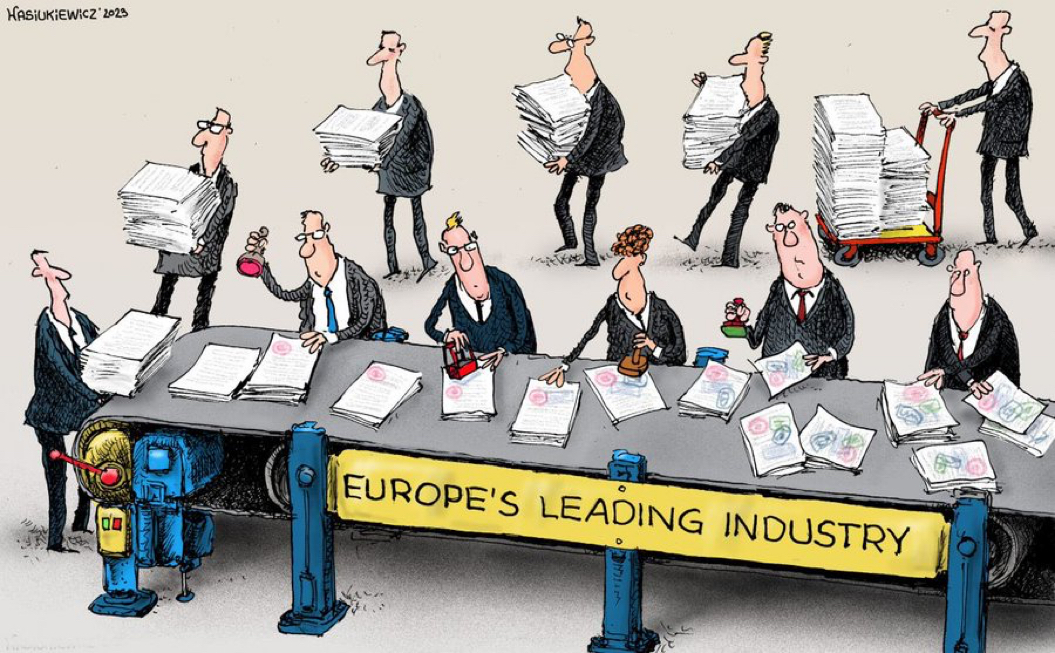


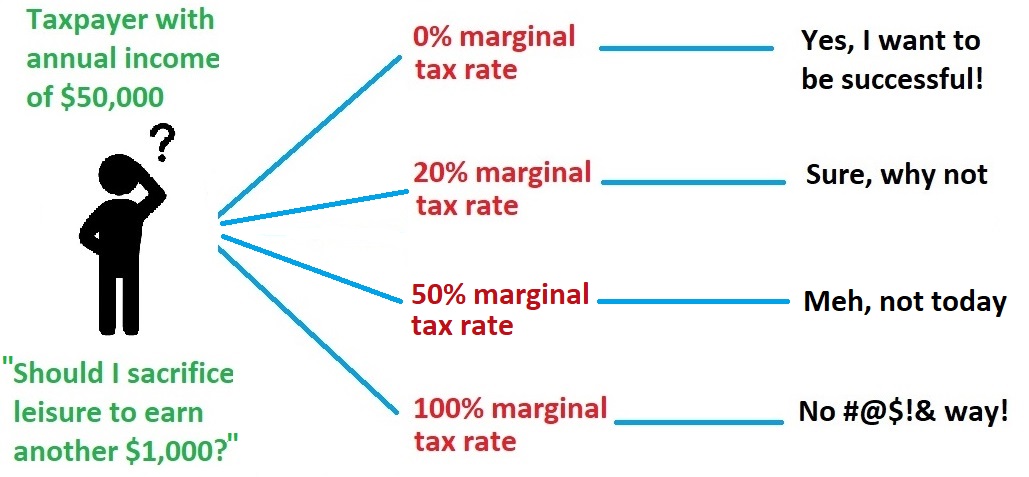

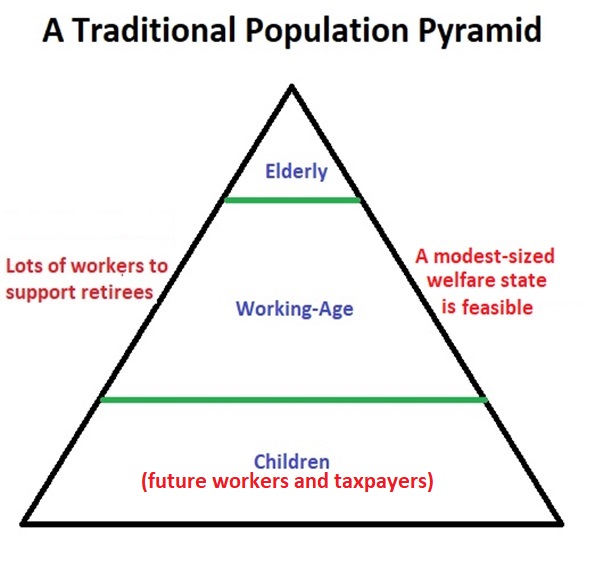
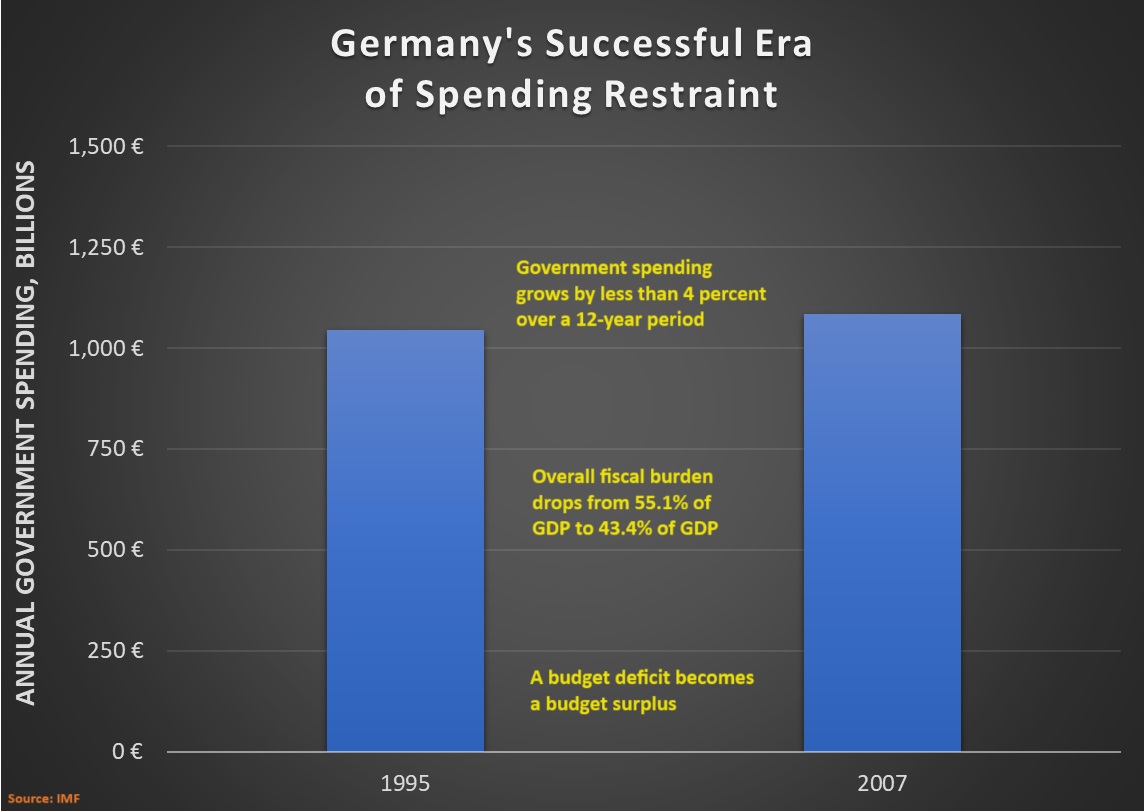


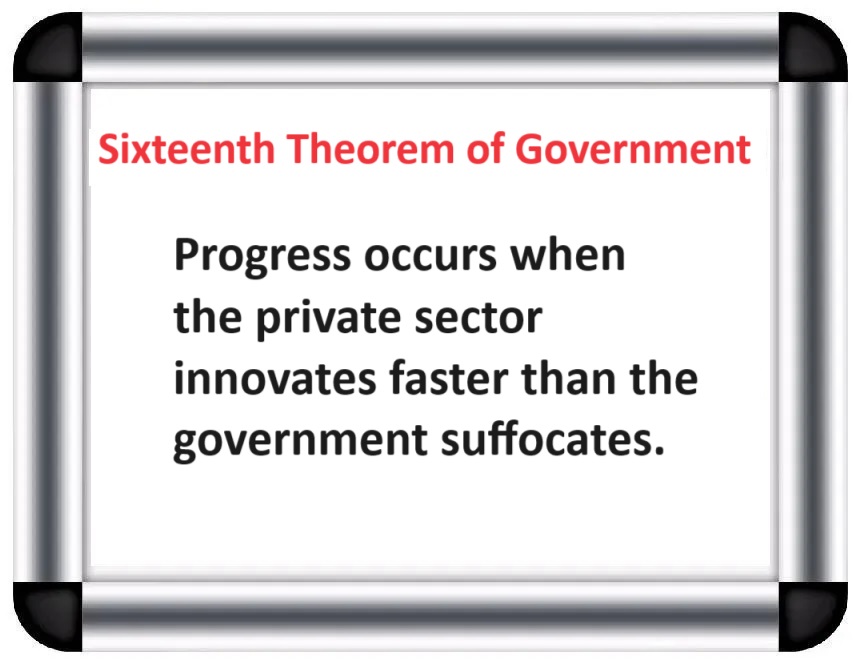


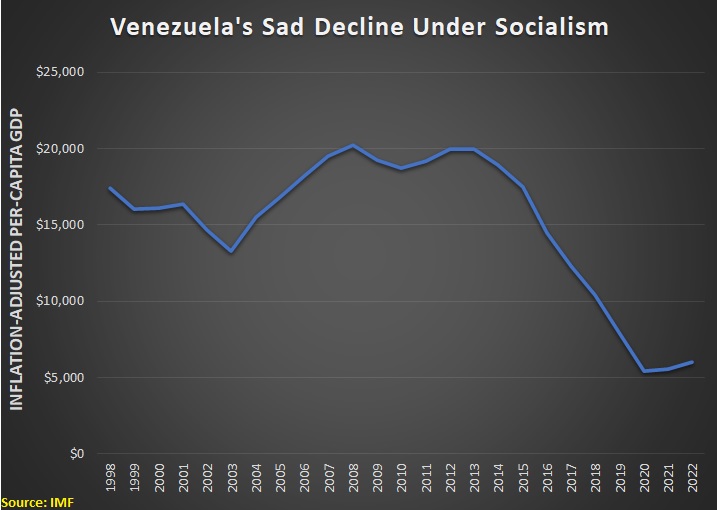


 International Liberty

