Showing posts with label Random House. Show all posts

Saturday, January 3, 2026

TEJU COLE'S PAGE: KNOWN AND STRANGE THINGS; TREMOR; EVERY DAY IS FOR THE THIEF

Image

KNOWN AND STRANGE THINGS: Essays
TEJU COLE

Random House (non-affiliate Bookshop.org link)
$5.99 ebook, available now

Rating: 4* of five

The Publisher Says: A blazingly intelligent first book of essays from the award-winning author of Open City and Every Day Is for the Thief

With this collection of more than fifty pieces on politics, photography, travel, history, and literature, Teju Cole solidifies his place as one of today’s most powerful and original voices. On page after page, deploying prose dense with beauty and ideas, he finds fresh and potent ways to interpret art, people, and historical moments, taking in subjects from Virginia Woolf, Shakespeare, and W. G. Sebald to Instagram, Barack Obama, and Boko Haram. Cole brings us new considerations of James Baldwin in the age of Black Lives Matter; the African American photographer Roy DeCarava, who, forced to shoot with film calibrated exclusively for white skin tones, found his way to a startling and true depiction of black subjects; and (in an essay that inspired both praise and pushback when it first appeared) the White Savior Industrial Complex, the system by which African nations are sentimentally aided by an America “developed on pillage.”

Persuasive and provocative, erudite yet accessible, Known and Strange Things is an opportunity to live within Teju Cole’s wide-ranging enthusiasms, curiosities, and passions, and a chance to see the world in surprising and affecting new frames.

I RECEIVED A DRC FROM THE PUBLISHER VIA NETGALLEY. THANK YOU.

My Review
: Teju Cole says clearly and distinctly: "I am a novelist, and my goal in writing a novel is to leave the reader not knowing what to think. A good novel shouldn't have a point." This is true; though he does not say a word about a novel not being pointed. All of his very much are; so are his essays collected here.

Fragments might be a better term for the shrapnel in this collection. None of them dig into their topic, develop a theme to a conclusion. It's more postmodern than that. I was "treated" to the horrors of mob justice in Nigeria; the fact of colorism, a strain of racism, in Brazil; the shame that's missing from the US's reckoning with its sin of racism and its ugly consequences; the horrors of Israeli apartheid (pre-2025):
The reality is that, as a Palestinian Arab, in order to defend yourself against the persecution you face, not only do you have to be an expert in Israeli law, you also have to be a Jewish Israeli and have the force of the Israeli state as your guarantor…Israel uses an extremely complex legal and bureaucratic apparatus to dispossess Palestinians of their land, hoping perhaps to forestall accusations of a brutal land grab.
An unsparing gaze, always roving, roaming wherever he is. Quite a bit of the shards are centered on the photographic, framed for visual images, moments and techniques. He is making himself Isherwood's camera: "I am a camera with its shutter open, quite passive, recording, not thinking," only adding the thinking back, more in the vein of James Baldwin.

It is, I suppose, unsurprising that Author Cole expends a lot of his energy on thinking about race in the US, as the Obama years were recent as this collection was taking shape. As those years radicalized the lowest of the low into the actions whose disgusting fruits we're being served now, his meditations on Obama's shortcomings as president feel...true, but not really the point. (He was, in my estimation, the best Republican president since Eisenhower. Measured as a Democrat, he was abysmal.) The fact that Author Cole lived half his life in Nigeria (at the point he was writing these pieces) meant he was looking at the US reaction to a Black man as our president with detached, slightly bemused, incomprehension.

More to my own personal taste was the selection of literarians Author Cole engaged with, eg Naipaul and Walcott. Both men were still living, both were being fêted, and both are now receding from the popular literary conversation into more academic renown. It is the course things take, so I can't say "boo hoo" very convincingly. It was a pleasure to re-engage with them through the author's intense, admiring (on balance) gaze.

I'm not that confident this is a collection of enough enduring insight to survive the long test of time. It was enjoyable to me, an adult in the Aughties, an Obama voter, a reader of Naipaul; it might not reach too much lower on the age ladder to find a large audience.

Erudite, pleasant reading, in a vein of early-internet pieces that don't go as deep as the old-fashioned word "essay" implies. Solidly four stars for me; maybe different for younger folk.

++++++++++++++++++++++++++++++++++++++++++++++++++++++++++++++++

Image

EVERY DAY IS FOR THE THIEF
TEJU COLE

Random House (non-affiliate Bookshop.org link)
$5.99 ebook, available now

Rating: 3.75* of five

The Publisher Says: A young Nigerian writer living in New York City returns to Lagos in search of a subject—and himself.

Visiting Lagos after many years away, Teju Cole's unnamed narrator rediscovers his hometown as both a foreigner and a local. A young writer uncertain of what he wants to say, the man moves through tableaus of life in one of the most dynamic cities in the world: he hears the muezzin's call to prayer in the early morning light, and listens to John Coltrane during the late afternoon heat. He witnesses teenagers diligently perpetrating e-mail frauds from internet cafes, longs after a woman reading Michael Ondaatje on a public bus, and visits the impoverished National Museum. Along the way, he reconnects with old school friends and his family, who force him to ask himself profound questions of personal and national history.

Over long, wandering days, the narrator compares present-day Lagos to the Lagos of his memory, and in doing so reveals changes that have taken place in himself.

I RECEIVED THIS BOOK AS PART OF A PROMOTION. THANK YOU.

My Review
: A personal story of alienation, of reckoning with social and societal change, and the shifting bonds of family, we're in Lagos in the Aughties. We're following an unnamed narrator as reacclimates to life in Lagos after years spent in New York City.

It's autobiographical, or I'll eat my hat. Details have likely been massaged...reality doesn't often lend itself to this level of dramatic tension...but it's a roman à clef for his scoobygroup and autofiction for us on the outside. The level of social critique involved in observing his homeland, for it still very much is that to him, is all-consuming. Nothing, and I mean nothing, is done in Lagos to benefit anyone but the self. It's a prescient, if unintentional, alarm klaxon for the world of 2026's kakistocratic enshittification of the US: "What the trip back from the airport makes me think, and what is confirmed over the course of the following days, is the extent to which Lagos has become a patronage society". Everything old is new again....

Author Cole views this hypercapitalist dystopia with a level of humorous detachment that floats on a deeper pool of disillusionment. In many ways I felt I was reading a journalist's too-long think piece about homegoing, rejected by an editor who wanted 1000 words not 30,000. It's a novella-length work of self-analysis, working through the hurts inflicted by choosing outsiderhood over ill-fitting conformity. In no way is this Manhattanite going to submerge without a ripple back into the pool he climbed out of. Having experienced this myself, I was completely in tune with the narrative's driving force and direction.

I can't offer a fifth star because the double whammy of brevity, lack of space to develop the others in the story beyond foils for narrative reflection and amplification as outlines not rounded people, and an outsider-plus sense of superiority inherent in this return from a wealthier world.

It's an enjoyable story, if not a full novelistic reading experience.

++++++++++++++++++++++++++++++++++++++++++++++++++++++++++++++++

Image

TREMOR
TEJU COLE

Random House (non-affiliate Bookshop.org link)
$6.99 ebook, available now

Rating: 4.75* of five

The Publisher Says: A powerful, intimate novel that masterfully explores what constitutes a meaningful life in a violent world—from the award-winning author of Open City

Life is hopeless but it is not serious. We have to have danced while we could and, later, to have danced again in the telling.

A weekend spent antiquing is shadowed by the colonial atrocities that occurred on that land. A walk at dusk is interrupted by casual racism. A loving marriage is riven by mysterious tensions. And a remarkable cascade of voices speaks out from a pulsing metropolis.

We’re invited to experience these events and others through the eyes and ears of Tunde, a West African man working as a teacher of photography on a renowned New England campus. He is a reader, a listener, a traveler, drawn to many different kinds of stories from history and epic; stories of friends, family, and strangers; stories found in books and films. Together these stories make up his days. In aggregate these days comprise a life.

Tremor is a startling work of realism and invention that engages brilliantly with literature, music, race, and history as it examines the passage of time and how we mark it. It is a reckoning with human survival amidst “history’s own brutality, which refuses symmetries and seldom consoles,” but it is also a testament to the possibility of joy. As he did in his magnificent debut Open City, Teju Cole once again offers narration with all its senses alert, a surprising and deeply essential work from a beacon of contemporary literature.

I RECEIVED A DRC FROM THE PUBLISHER VIA NETGALLEY. THANK YOU.

My Review
: Rejecting tradition..."{I} wanted to give myself a chance to make something that could fail. I don’t know that people are doing enough with their freedom as writers—to keep doing this 19th-century thing bores me"...is often risky, even when you work inside the established alternatives to "the 19th-century thing" like modernism and its cousins. Here Tunde, our PoV character, is followed through a format I'd call braided stories around a stream-of-consciousness heart. Tunde's PoV third-person narrative shifts to fourth-wall-breaking first person at times, then into the satanic-second person as he addresses someone over our shoulder somewhere.

It's a complex read. It does little heavy lifting for you. It's your job as The Reader to supply your own thoughts about the purpose of Tunde's telling us his stories, giving us a story-mooning of his ass as we decide how to feel about that..."Tunde is startled out of these thoughts by {his wife}'s's return from work. They talk for a moment. She remains downstairs. He moves upstairs to her study. The room is lit by a single lamp and he continues reading" tells its own punch of a story about intimacy's failures and his failings in an introductory moment...we're launched into Tunde's trenchant observations: "It was in a shop among the unrelated treasures white people had collected by fair means or foul from across the globe. In the West a love of the "authentic" means that art collectors prefer their African objects to be alienated so that only what has been extracted from its context becomes real. Better that the artist not be named, better that the artist be long dead. The dispossession of the object's makers mystically confers monetary value to the object," on the eternal nexus of culture, cultural appropriation, and colonialism.

Without a guide.

Tunde tells you what's what. From his position inside the colonizer/appropriators' world. Is he aware he's not reckoning with his own foothill of privilege adjacent to and causally connected to the mountains of privilege he's commenting on? I don't know. We're not told.

If you're going to experiment with style, do it interestingly. Build the maze and trust me to find a way out. Notice: A not The. I think this sums up the experience of reading this novel:
On his return he thought he was thinking of a photograph but he realized that he was thinking of a photographic negative, the colors inverted and left and right flipped. But it became clear to him that what he was actually thinking of was a photographic negative that had been made but had gone missing before it could be printed. And finally he realized that no, the negative had not even ever existed, it was all in the imagination or it was all in the future and he was thinking of a picture that existed only in the mind of the one who was thinking it. The more he tried to describe it the more elusive it was. It was there but it could not be looked at directly. At best it could only be seen out of the corner of the mind's eye and this was the way one might begin to speak of the city.
You're going to think this is a more interesting read after you've developed the negative, the text on the page, in your mind's developer bath. You're participating in framing the shot, in selecting the size...north-south, east-west, all or nothing on these meanings for a city's future (this only makes sense after reading the book)...and saturation of the print.

It's not easy but it's involving, it's exciting in the right mood, and it's using the 19th-century thing to mold a 21st-century object, a European art to draw an African subject. Did it fail?

Only a little around the middle saggy bits. Overconfidence in the reader leads some parts to feel unsatisfyingly undeveloped; untrusting of the readers' cultural background leaves other a mucky slog through extremely specific details that were not mission critical.

So, no full-five from me; but a half-star above "good" is "very good" and my three-quarters star is "very good indeed." It will be a read you invest in or bounce hard off; make your acquisition decisions carefully, try a sample or use the library; I hope you'll at least give it a try.

Thursday, December 4, 2025

AN ORAL HISTORY OF ATLANTIS, Ed Park's story collection spanning 25 years-plus

Image

AN ORAL HISTORY OF ATLANTIS
ED PARK

Random House
$13.99 ebook, available now

Time's The 100 Must-Read Books of 2025 selection

Rating: 4.5* of five

The Publisher Says: A deadpan, wildly imaginative collection of stories that slices clean through the mundanity and absurdity of modern life, from the author of the Los Angeles Times Book Prize–winner and Pulitzer Prize finalist Same Bed Different Dreams

In “Machine City,” a college student’s role in a friend’s movie causes lines to blur between his character and his true self. In “Slide to Unlock,” a man comes to terms with his life, via the passwords he struggles to remember in a moment of extremis. And in “Weird Menace,” a director and faded movie star discuss science fiction, memory, and lost loves on a commentary track for a film from the ’80s that neither seems to remember all that well.

In Ed Park’s utterly original collection, An Oral History of Atlantis, characters question the fleetingness of youth and art, reckon with the consequences of the everyday, and find solace in the absurd, the beautiful, and the sublime. Throughout, Park deploys his trademark wit to create a world both strikingly recognizable and delightfully other. All together, these sixteen stories have much to say about the meaning—and transitory nature—of our lives. And they are proof positive that Ed Park is one of the most insightful and imaginative writers working today.

I RECEIVED A DRC FROM NETGALLEY. THANK YOU.

My Review
: What I have not highlighted that could make a difference to your pleasure...or not...is something I didn't notice until after I read the whole collection: There seems to be interconnection of settings and/or characters in many of the stories. As these stories have appeared over the course of years, this must reflect Author Park's real interests. It does indeed show. A collection sure to please Park fans and anyone who likes a laugh with their "hmm" sci fi. I mean, who among us does not love "His thoughts were shrouded in rumor, perfumed with adventure and abstruse interlinear controversy" as a quotable quote? One knows one's own.

Comme d'habitude, these sixteen stories will be dealt with by the Bryce Method of general remarks followed by brief responses to each one below.


A Note to My Translator is the funniest takedown of the Culture Industry℠'s bizarre effort to translate the work of an author into a local cultural property, thus causing huge misunderstanding and much ill-will:
Page eight, a little lower down: The doctrine of transubstantiation has nothing to do with pinball.
Page nine: Solomon Eveready reappears, smoking cut-grade reefer and imitating a trout. Explain this to me. Explain also the presence of scuba gear that "reeks of melon."
Honestly, I've read translations that felt as though they must've been the subject of a correspondence much like this.

It was hilarious to me, and sets an irreverent, mischievous tone I batten on. 5*

Bring on the Dancing Horses's unnamed narrator hit me with "Penumbra College in Vermont" and made me cackle, then his girlfriend's name "Tabitha Grammaticus"...and that housecoat...! Seriously, I'm still trying to sketch it to understand the topology.

The story itself, well, what a sad little incel this guy is, if I didn't know better I'd say he was fever-dreaming it all. You know what...maybe he is. 3.5*

The Wife on Ambien sketches anomie in cold relief as "the wife on Ambien" does things our Prufrockian putz of a narrator would never dare to do, I half expected her to eat a peach for gods' sake. I wished the refrain wasn't quite so Lucy-Ellmanly.
The wife on Ambien recites the poetry of T. S. Eliot, sings the music of the Jesus and Mary Chain, calculates how much we need to save to retire. Her figures vary. The wife on Ambien also tells me it doesn’t matter, that the sun will swallow the earth exactly eight billion years, or thirteen weeks, or twenty-four hours from now. The wife on Ambien hails Uber after Uber. The cars stream toward us like a series of sharks. It’s four a.m. Drivers from many countries gather on the corner, fling curses at our window, break out the booze, and promise each other their children in marriage. The wife on Ambien hacks into my Facebook account and leaves slurs on the pages of my enemies. Get a life, you’re a joke. She joins political causes directly opposed to her own. I spend an hour every morning cleaning up the digital trail.
3.5*
Machine City makes that film-student friend into a last gasp of the end-of-adolescence pretentiousness. Bethany Blanket...sounds like a manic pixie girl, right?...puts "Ed" in her student film requiring him to be honest and natural with the girl he just got broken up with by her also-Korean parents objecting to his ancestry. Now, of course, he's a lawyer with a fancy life thinking about les jadis. Not fascinating but oddly...compelling...familiar maybe. 4*

An Accurate Account proves that drama is easy, comedy is *hard*. A stand-up routine that, for me, was a real misfire...like a less-offensive Matt Rife set. 3*

The Air as Air is elegiac in tone, is the air's testator, is clearly about the processing of profound sadness, grief, loneliness: "The jukebox kicked in. Some song I used to hate, but at the moment it made me sad. It pinned me down."

It pinned down the entire mechanism of gaining, painfully and slowly, perspective. The narrator (PTSD and all) and his father, whom he calls "The Big Man" at the man's insistence:
"So you know about Uncle Buck," he said. "The movie?" "What movie? I’m talking about your Uncle Buck. He went on that show where they give you a makeover. It was Lindy’s idea, the whole stupid TV thing. She has connections. You know Buck. He dresses worse than I do. He dresses like he smeared rubber cement on his chest and rolled around in a pile of undershirts. So they show the episode and it went a little too well, if you get my gist."
Sad, funny, unfortunately very relatable...they're not communicating or connecting even a little bit. 4.5*

Seven Women has a therapist elucidating the long and grueling self-confrontation of therapy from her point of view, the way she thinks about the deep-dives into other people's emotions. "Sometimes people tell stories and they leave out the feelings—My job is to show them where the feelings are." 5* for that insight alone...Hannah the patient's a really crappy human being.

The Gift offers me a course I really want to take: "Advanced Aphorism" though not with Dublinski necessarily. The letter to the alumni magazine being written says it was never offered again. I demand a retake on all my school years so I can take this course! Fun wordplay, slight idea. 4*

Watch Your Step is a log-line for a technothriller that feels like it was being fleshed out; as the story progresses, I was trying to think of reasons Author Park left it here, when there's enough, to my story-ear, to support a novella. What gives? 3.5* because it's marooned without coming into port.

Two Laptops does nothing for me because the "man loses family through no fault of his own" trope bugs me. The wife and son he's misplaced live close but...never mind, no point really, as he is reduced to a skype face to the son, I realized he deserved it. 3* for choice of subject matter.

Weird Menace stresses the role memory can't help but play in our relationships to our past, to the people in our lives, and to this weird idea we think is a reality called the self. It's all dialogue, all the time, and all the more fun for that, since I like "Toner Low" as the director's name. DVD commentary was never like this when I was watching horror movies! 4*

Thought and Memory centers transness, but managed to make me wince by leaving in "transgendered" which ain't a good thing. I wish it had not been there like a turd in the punchbowl. Still, a decent and overall surprisingly good effort for someone not trans. 3.5*

Well-Moistened with Cheap Wine, the Sailor and the Wayfarer Sing of Their Absent Sweethearts didn't really excite me much...Tabby doesn't inspire sympathy as she is presented here...and her career is very amusing indeed, but doesn't make up for the sour note of the narrator's overall dissatisfaction, his dislike and disdain for so many around him. "My girlfriend, Tabby, reviews science fiction for a living, which just goes to show you that America is still the greatest, most useless country in the world," sums it up on the tone front; not my fave but very well-written, with some humor that broke through my dissatisfaction. 4*

Eat Pray Click might hit you differently than it did me...my boyfriend is in Chat psychosis so the way the machine comes alive, sort of, and what it does, just did not feel fictional, while feeling mentally disturbing. No rating.

Slide to Unlock might be the most unnerving story in here...almost horror...memory problems scare me leaky. It's a modern problem, trying to keep clear in one's mind the very complicated ways we're required to interface with a world gone digital...in fact, it's not much more complicated than the past, only the medium's changed from speaking to a fallible human to fallibly humanly speaking to a system made by fallible humans. I got the wry humor in here in my bones. 5*

An Oral History of Atlantis isn't so much a story as a proof of concept...every emotional register, every techno-detail, every beat in this collection gets its bones into this stew. What I couldn't find was a through-line to make me invest in it the way MtPR was meant to. 3.25*

Saturday, November 1, 2025

MINOR BLACK FIGURES: A Novel, latest from Booker finalist Brandon Taylor

Image

MINOR BLACK FIGURES: A Novel
BRANDON TAYLOR

Random House (non-affiliate Bookshop.org link)
$14.99 ebook, available now

One of Electric Literature’s Best Novels of 2025!

Rating: 4* of five

The Publisher Says: From the Booker Prize finalist and bestselling a perceptive novel about a gay Black painter navigating the worlds of art, desire, and creativity

A newcomer to New York, Wyeth is a Black painter who grew up in the South and is trying to find his place in the contemporary Manhattan art scene. It’s challenging. Gallery shows displaying bad art. Pretentious artists jockeying for attention. The gossip and the backstabbing. While his part-time work for an art restorer is engaging, Wyeth suffers from artist’s block with his painting and he is finding it increasingly difficult to spark his creativity. When he meets Keating, a white former seminarian who left the priesthood, Wyeth begins to reconsider how to observe the world, in the process facing questions about the conflicts between Black and white art, the white gaze on the Black body, and the compromises we make – in art and in life.

As he did so adeptly in Booker finalist Real Life and the bestselling The Late Americans, Brandon Taylor brings to life in Minor Black Figures a fascinating set of characters, this time in the competitive art world, and the lives they lead with each and on their own. Minor Black Figures is an involving and tender portrait of friendship, creativity, and the connections between them.

I RECEIVED A DRC FROM THE PUBLISHER VIA NETGALLEY. THANK YOU.

My Review
: A Black, queer iteration of My Dinner with Andre. That means I loved it, if you're wondering.

Wyeth and Keating are talking machines, and since I was interested and involved in what they were talking about, I was very gruntled indeed. I can imagine that, if you're not interested in two people connecting to each other with ideas about Life, Culture, and maleness, you'll be bored stiff.

Keating, being white, does not see...and more importantly, does not see that he does not see...important truths about being Black. I've whacked into that wall more than once. If you have too, apologize to your Black friend immediately, and hope they care enough about you to educate you. That is the most generous gift I have ever received, being shown how my on blinkered perceptions are not reality for anyone but me. (Thank you, Rob, thank you Nicole, y'all are excellent teachers.)

I was slightly nonplussed by the use of third person narration in such a Wyeth-centered story, and filled with many omniscient descriptions of Wyeth's thoughts...I get that it's like Louis Malle's camera from the films, but the point of a novel feels different than the point of a film. No matter. I think the ideas in the book, the conversations these men navigate, the channels they create with their flowing words, are fun and fascinating.

They won't be to people seeking action, events, or even simple changes in the characters...they are themselves, they don't so much alter as reshape their borders and boundaries to fit up against the other's more comfortably.

Are you, like me, in the early-winter mode of contemplation, of examination, of making sense of this wild and precious life we're (mostly) wasting? Here's us a book.

Recommended because it is exactly what it says it is, a rare gift in the literary world of hyperbole.

Friday, August 15, 2025

THE GODS OF NEW YORK: Egotists, Idealists, Opportunists, and the Birth of the Modern City, 1986-1990, wasn't that a time?

Image

THE GODS OF NEW YORK: Egotists, Idealists, Opportunists, and the Birth of the Modern City, 1986-1990
JONATHAN MAHLER

Random House (non-affiliate Bookshop.org link)
$13.99 ebook, available now

A New York Times 100 Notable Books of 2025 selection

Rating: ?5*?1*?

The Publisher Says: A sweeping chronicle of four years in 1980s New York, a crucible that would transform the city and leave it more divided than ever—a rollicking, real-life Bonfire of the Vanities featuring larger-than-life personalities of Donald Trump, Spike Lee, Ed Koch, Al Sharpton, Rudy Giuliani, and countless others

New York City entered 1986 as a city reborn, with record profits on Wall Street sending waves of money splashing across Manhattan and bringing a once-bankrupt, reeling city back to life.

But it also entered 1986 as a city divided. Nearly one-third of the city’s Black and Hispanic residents were living below the federal poverty line. Thousands of New Yorkers were sleeping in the streets—and in many cases addicted to drugs, dying of AIDS, or suffering from mental illness. The manufacturing jobs that had once sustained a thriving middle class had vanished. Long-simmering racial tensions threatened to boil over.

Over the next four years, a singular confluence of events—involving a cast of outsized, unforgettable characters—would widen those divisions into chasms. Ed Koch. Donald Trump. Al Sharpton. The Central Park Five. Spike Lee. Rudy Giuliani. Howard Beach. Tawana Brawley. The Preppy Murder. Jimmy Breslin. Do the Right Thing, Wall Street, crack, the AIDS epidemic, and, of course, ready to pour gasoline on every fire—the tabloids. In The Gods of New York, Jonathan Mahler tells the story of these convulsive, defining years.

The Gods of New York is an exuberant, kaleidoscopic, and deeply immersive portrait of a city in transformation, one whose long-held identity was suddenly up for Could it be both the great working-class city, lifting up immigrants from around the world and the money-soaked capital of global finance? Could it retain a civic culture—a common idea of what it meant to be a New Yorker—when the rich were building a city of their own and vast swaths of its citizens were losing faith in the very systems intended to protect them? New York City was one thing at the dawn of 1986; it would be something very different as 1989 came to a close. This book is the story of how that happened.

I RECEIVED A DRC FROM THE PUBLISHER VIA NETGALLEY. THANK YOU.

My Review
: That was the Manhattan I fell in love with. Not the one where St. Vincent's is a yuppie hutch. I watched the enshittification happen then; I was apparently ineffective in resisting it; now it's the entire country it's happening to, and I still feel ineffective.

Still slugging, though.

Michael Stewart, he of The Man Nobody Killed, kicks us off on our journey through the world that grew Felonious Yam into a cultural icon (mostly spite-driven because we all laughed at him then). After Ed Koch's second term ended, Giuliani became mayor, and shit went downhill fast.

If you know, you know.

The times were a-changin' and the seeds of the political hellscape of today were there and scaring some of us. I still feel bad we didn't stop it. Reading this year-by-year, carefully non-partisan reminder of my generation's abject failures on stages large and small did not fill me with ebullient glee. Fauci's horrific inaction during the AIDS crisis, lack of empathy and flexibility, reminded me of how loud the haters got when he was doing a much better job during COVID. If they'd been around for the ACT UP years....

This isn't history to me, the way it will be to all y'all who didn't live it; it's my past retold. I'm glad I read it. I got closure-sobs for things I'd forgotten I'd forgotten. It's not fun to live in interesting times...but who ever does not? The way the world works is upheaval and change and rage and hate simmer, then boil, then simmer...eternal cycles of it.

I'm so sorry we did not do better when there was a chance to stop the scum from rising above their capacity to understand basic morality. Mea culpa.

Saturday, August 2, 2025

SAME BED DIFFERENT DREAMS, just-barely-too-long alt-Korea novel

Image

SAME BED DIFFERENT DREAMS
ED PARK

Random House (non-affiliate Bookshop.org link)
$5.99 ebook, available now

Rating: 4* of five

The Publisher Says: A wild, sweeping novel that imagines an alternate secret history of Korea and the traces it leaves on the present—loaded with assassins and mad poets, RPGs and slasher films, K-pop bands and the perils of social media.

In 1919, far-flung Korean patriots establish the Korean Provisional Government to protest the Japanese occupation of their country. This government-in-exile proves mostly symbolic, though, and after Japan’s defeat in World War II, the KPG dissolves and civil war erupts, resulting in the North-South split that remains today.

But what if the KPG still existed now, today—working toward a unified Korea, secretly harnessing the might of a giant tech company to further its aims? That’s the outrageous premise of Same Bed Different Dreams, which weaves together three distinct narrative voices and an archive of mysterious images and twists reality like a kaleidoscope, spinning Korean history, American pop culture, and our tech-fraught lives into an extraordinary and unforgettable novel.

Early on we meet Soon Sheen, who works at the sprawling international technology company GLOAT, and comes into possession of an unfinished book authored by the KPG. The manuscript is a mysterious, revisionist history, tying famous names and obscure bit players to the KPG’s grand project. This strange manuscript links together figures from architect-poet Yi Sang to Jack London to Marilyn Monroe. M*A*S*H is in here, too, and the Moonies, and a history of violence extending from the assassination of President McKinley to the Soviet downing of Korean Air Lines Flight 007.

Just as foreign countries have imposed their desires on Korea, so too has Park tucked different dreamers into this sprawling bed of a novel. Among them: Parker Jotter, Korean War vet and appliance-store owner, who saw something—a UFO?—while flying over North Korea; Nora You, nail salon magnate; and Monk Zingapan, game designer turned writing guru. Their links are revealed over time, even as the dreamers remain in the dark as to their own interconnectedness. A thrilling feat of imagination and a step forward from an award-winning author, Same Bed Different Dreams begins as a comic novel and gradually pulls readers into another dimension—one in which utopia is possible.

I RECEIVED A DRC FROM THE PUBLISHER VIA NETGALLEY. THANK YOU.

My Review
: GLOAT now enters my lexicon as an acronymic shorthand for "evil bastard corporate actor" alongside its sixtyish ancestor CHOAM from Dune. As Soon, the character who works at GoogleGLOAT, drifts in and out of the narrative, I thought I was supposed to attach meaning to these time-shifts into either the *Korea MS or Parker Jotter the SF writer manqué's PoV...but there was not something I could find that reliably sent me off to another narrative strand. It could be that I'm just not sophisticated enough, or attentive enough, to identify it; nonetheless its invisibility to me (whatever the cause) cost me fluid readability.

I'm not proficient in Korean history so I went into the read expecting to need St. Wiki's help untangling what/when/who nexuses. Author Park offers clues that feel very helpful. The problem is these clues aren't terribly well signposted. By which I mean I think he went out of his way to bury them in odd places.

"Flounder" is my verb for this read. I floundered from the beginning to the end. I splashed in a kiddie pool that floated into the Indiana Natatorium. I'm pretty sure most of the time I was listing perilously in the diving well...deep but not lethal.

I'm giving you the impression that this wasn't fun, but oh boy was it! Like being in a giant playtank without adult supervision always is! Splash into the Korean Provisional Government's truly jaw-dropping existence; then to the Korean War vet (my dad was one, too) Parker's awful struggles, Soon's crisis of conscience; the story didn't help me figure out where I was or who I was with. Author Park trusted me to figure it out.

How often do you get that experience? I'm not sure when I was last left alone by a US writer to slug through a learning curve. It was heady stuff. As was its quiet-part-aloud disdain for crony capitalism. The main reason people rise in the current capitalist hellscape is mostly down to who they know and how much they can spend on the crappy people who gatekeep access to the ocean of money (fake, fiat money has no logical reason for scarcity) need to do...anything...hence GLOAT.

It won't be everyone's jam. If you found Cloud Atlas impenetrable, this isn't your book. OTOH, if you're into bibimbap already, the food references will feel like horrible torture unless you live near a Korean place. Hanjeongsik is in my very near future if I have anything to say about it...but that's beside the point. You need to have a willingness to keep going in spite of wondering what this or that person's name is, this or that historical event's factuality is, and be ready to accept the "aha!" moments as they come.

A strong anti-crony capitalist theme in a book that allows me to learn things for myself. Had it been 100pp shorter I'd be full-five-starring it. But at 520-plus pages it felt bloated, slightly self-indulgent. A story I recommend with mild reservations, not a "just READ it gorram you!" shove.

Thursday, July 24, 2025

THE MOTHER CODE: My Story of Love, Loss, and the Myths That Shape Us, including the one you don't look at: Privilege

Image

THE MOTHER CODE: My Story of Love, Loss, and the Myths That Shape Us
RUTHIE ACKERMAN

Random House (non-affiliate Bookshop.org link)
$13.99 ebook, available now

Rating: 2* of five

The Publisher Says: In this propulsive memoir, an award-winning journalist blends history, science, and cultural criticism, to uncover whether motherhood outside of society's rigid rules and expectations is possible—and whether she fits the mold for what a mother should be.

For so long, Ruthie Ackerman believed that the decision not to have children was a radical act. She'd grown up being told that she came from a long line of women who had abandoned their children. Plus, Ruthie feared she would pass on her half-brother’s rare genetic disorder. Haunted by this generational inheritance, she goes searching in the twists and turns of her DNA to decide once and for all whether she should become a mother. When a geneticist leaves her at a dead end, she chooses to marry a man who doesn’t want children—only to realize that, despite everything, she desperately does. When Ruthie’s strained marriage ends, her quest for a new vision of motherhood begins.

She eventually finds an image of radical motherhood where women have an opportunity to see their role not just as fulfilling but as powerful. This new mother code goes beyond children and focuses on actively working towards stronger communities and happier, less-stressed parents. But by the time Ruthie meets the right partner and is ready to have the baby she so desperately desires, she learns she can't use her own eggs. Now, Ruthie has to evolve this new mother code as she navigates the scientific, philosophical, and intimate questions about what it means to both create–and nurture–a life.

The Mother Code unravels how we’ve come to understand the institution of motherhood, offering a groundbreaking a new a mother code that goes beyond our blood lines and genetics, and instead, pushes us to embrace inheritance as the legacy we want to leave behind for those we love.

I RECEIVED A DRC FROM THE PUBLISHER VIA NETGALLEY. THANK YOU.

My Review
: More Momaganda. "I changed my mind after most of my life is passed, and Became A Mother extremely expensively and in spite of thinking about it for decades and deciding against it" is a HUGE pile of privilege. It is unexamined in any critical way.

Adopt.

I was not well-treated by my mother, and as a direct result do not belong to the Cult of Mother. One does not dare to speak out about this pervasive cult because (like the Spoiler Stasi) there are great heaving seas of angry partisans who will NOT allow anyone to publicly question Their Choice.

Usually it's religious nuts to the fore, though not always. These people having the overlap in group membership that they do, I don't know how I'll escape another round of insulting nonsense for saying this, but here goes:

Your belief that something is good and right and necessary does not stop its being exploitive, manipulative, and wrong.

Monday, March 24, 2025

TWIST is Colum McCann's latest, aptly titled, exploration of communication and its breakdowns

Image

TWIST
COLUM McCANN

Random House (non-affiliate Amazon link)
$13.99 ebook, available now

Rating: 4.5* of five

One of Publishers Weekly's Best Books of 2025!

The Publisher Says: A propulsive novel of rupture and repair in the digital age, delving into a hidden world deep under the ocean—from the New York Times bestselling author of Apeirogon and Let the Great World Spin

“Everything gets fixed, and we all stay broken.”

Anthony Fennell, an Irish journalist and playwright, is assigned to cover the underwater cables that carry the world’s information. The sum of human existence—words, images, transactions, memes, voices, viruses—travels through the tiny fiber-optic tubes. But sometimes the tubes break, at an unfathomable depth. Fennell’s journey brings him to the west coast of Africa, where he uncovers a story about the raw human labor behind the dazzling veneer of the technological world. He meets a fellow Irishman, John Conway, the chief of mission on a cable repair ship. The mysterious Conway is a skilled engineer and a freediver capable of reaching extraordinary depths. He is also in love with a South African actress, Zanele, who must leave to go on her own literary adventure to London.

When the ship is sent up the coast to repair a series of major underwater breaks, both men learn that the very cables they seek to fix carry the news that may cause their lives to unravel. At sea, they are forced to confront the most elemental questions of life, love, absence, belonging, and the perils of our severed connections. Can we, in our fractured world, reweave ourselves out of the thin, broken threads of our pasts? Can the ruptured things awaken us from our despair?

Resoundingly simple and turbulent at the same time, Twist is a meditation on the nature of narrative and truth from one of the great storytellers of our times.

I RECEIVED A DRC FROM THE PUBLISHER VIA NETGALLEY. THANK YOU.

My Review
: Setting your repair story at the mouth of the Congo River is asking for Joseph Conrad comparisons. On a craft level, Author McCann is *streets* ahead of Conrad. On an imaginitive axis, he's at the fatal disadvantage that time presents us all. Somebody else did it a century-plus ago. That isn't always a problem since, after all, nothing's original after The Tale of Gilgamesh.

This story is focused more on Kurtz, sorry Conway, and his South African actress lover Zanele, than on Fennell the journalist covering Conway's really, really interesting role in maintaining the infrastructure we're so completely dependent on for modern life. I was captivated by the bits of the story that featured the underwater cables and their care, the hazards that beset them, and the clever, dangerous ways we use to maintain and repair them.

This is Colum McCann's métier: Metaphor. Underwater cables carrying all the world's information, all the connections between people, the vast accumulation of meaning enabled by them; the threat to them in the story is natural and requires huge, dangerous effort by multiple people; the man whose job it is to tell us about it is, unsurprisingly, in crisis of the same sort.

Because Fennell is the PoV man doesn't make him the center of the action, necessarily, and the argument that Conway's the main character is possible to make. All the action centers Conway. Every physical thing done of any consequence is done by Conway. His are the skills...freediving! ZOMG...that will repair the vital cable. Fennell has to learn all this data, and so we have an excuse to learn it with him. He is us...Conway is the action hero doing the stuff to make us more comfortanle, safer, in our cocoons. Fennell is there to tell us his story.

And Fennell himself? He's got the whole world in his head. He needs the same repairs as the cables. His ex, and his son, can tell you stories of the man who tells stories and yet has no emotional facility; no facility at moving the emotional data through the wildly pressurized cables of his emotional system out into the places they're needed. On this assignment, he's doing everything he can from miles away to understand and present to his audience the facts of the situation when, in reality, he's trying to explain how communication is invisible until it's broken. This is a central-to-life human fact.

What makes the men at the center of this story do what they do is women. That's a dreary, heteronormative reality. The actress...note her profession's essential artifice...that Conway and, though less blatantly, Fennell desire is a professional dissimulator who presents emotional realities in an unreal, fictional way to illuminate their truth.

Acting is Orwellian...lying to create truth. Like writing, an artifice, an epicyclic system humans have created.

This is McCann's métier. He's operating within nominal parameters. He's found a story to tell that makes its mark by taking all Conrad's colonial-era concerns and trimming them to fit a twenty-first century audience's blind spots. He then uses the people he's created to fulfill the archetypal duties once held by Marlow and his blank-spaces-on-maps fascination, Kurtz, and the largely forgettable women Kurtz acquires. It's got verve, it's stylish, and it's built on foundations that have withstood the test of time. All that is the basis of a five-star rating, surely! Yes, but...the novella length is notably absent. This is a novel in full, not to say a maximalist one; but novels allow a scope that can lead the ambitious into temptation of prolixity. Author McCann's succumbed to this fiction-fever. The ending of the story is not the end of the novel. It goes on a bit. Not long enough to get boring but long enough to feel baggy as an old, well-loved cardigan.

So I'm recommending it to all y'all who want a solid, involving story that is not perfect but is delightful and successful at revivifying a classic story that can never get stale.

Tuesday, December 31, 2024

QUILTBAG ROUNDUP: LAST NIGHT IN NUUK; THE BOOK OF AWESOME QUEER HEROES: How the LGBTQ+ Community Changed the World for the Better; OUR EVENINGS

Image

OUR EVENINGS
ALAN HOLLINGHURST

Random House (non-affiliate Amazon link)
$13.99 Kindle edition, available now

NOMINATED for the 2026 Dublin Literary Award...a longlist of twenty will be announced in February 2026, the shortlist of six in April 2026, the winner(s) in May's festival.

Rating: 4.5* of five

The Publisher Says: From the internationally acclaimed winner of the Booker Prize, a piercing novel that envisions modern England through the lens of one man’s acutely observed and often unnerving experience, as he struggles with class and race, art and sexuality, love and violence.

Did I have a grievance? Most of us, without looking far, could find something that had harmed us, and oppressed us, and unfairly held us back. I tried not to dwell on it, thought it healthier not to, though I’d lived my short life so far in a chaos of privilege and prejudice.

Dave Win, the son of a British dressmaker and a Burmese man he’s never met, is thirteen years old when he gets a scholarship to a top boarding school. With the doors of elite English society cracked open for him, heady new possibilities lie before Dave, even as he is exposed to the envy and viciousness of his wealthy classmates, above all that of Giles Hadlow, whose worldly parents sponsored the scholarship and who find in Dave someone they can more easily nurture than their brutish son.

Our Evenings follows Dave from the 1960s on—through the possibilities that remained open for him, and others that proved to be illusory: as a working-class brown child in a decidedly white institution; a young man discovering queer culture and experiencing his first, formative love affairs; a talented but often overlooked actor, on the road with an experimental theater company; and an older Londoner whose late-in-life marriage fills his days with an unexpected sense of happiness and security.

Moving in and out of Dave’s orbit are the Hadlows. Estranged from his parents, who remain close to Dave, Giles directs his privilege into a career as a powerful right-wing politician, whose reactionary vision for England pokes perilous holes in Dave’s stability. And as the novel accelerates towards the present day, the two men’s lives and values will finally collide in a cruel shock of violence.

This is “one of our most gifted writers” (The Boston Globe) sweeping readers from our past to our present through the beauty, pain, and joy of one deeply observed life.

I RECEIVED A DRC FROM THE PUBLISHER VIA NETGALLEY. THANK YOU.

My Review
: Vignettes from the privileged and fortunate life of a mixed-"race" (useless term, divisive and ill-defined, but lacking an appropriate alternative one here) queer man and his circle of friends of his youth as they move through the stages of life, change partners, grow, and grow old, in the UK of our recent past.

Details are as synopsized by the publisher above; my reading of it was undertaken because Author Hollinghurst has never failed to give me the very agreeable experience of following him through a logical and internally consistent plot led by the loveliest sentences creating relatable, heightened-into-beauty situations and images.

Job done again. I'm in the contented majority of readers who felt well-served by this outing (!) into Hollinghurst's familiar-but-better reality. I even had the thoroughly unpleasant duty of feeling the humanity of a political-right radical and Brexiteer.

Enjoyable, all of it, but not new or freshly imagined by the author of The Line of Beauty, hence that missing half-star.

++++++++++++++++++++++++++++++++++++++++++++++++++++++++++++++++

Image
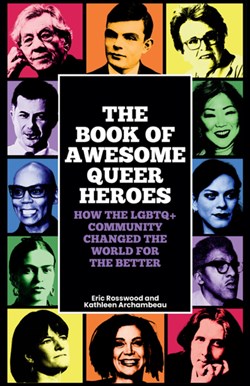
THE BOOK OF AWESOME QUEER HEROES: How the LGBTQ+ Community Changed the World for the Better
ERIC ROSSWOOD, KATHLEEN ARCHAMBEAU, KATE KENDELL, Esq.

Mango (non-affiliate Amazon link)
$14.99 Kindle edition, available now

Rating: 4.5* of five

The Publisher Says: Discover how gay, lesbian, bisexual, and trans people have changed the world into the one we know and love in this riveting history book.

Historic Icons in the LGBTQ+ Community

Discover how gay, lesbian, bisexual, and trans people have changed the world into the one we know and love in this riveting history book.

Pride across the ages. The LGBTQ+ community has made countless positive impacts throughout history as scientists, world leaders, athletes, and entrepreneurs, and each one of them deserves to be celebrated in The Book of Awesome Queer Heroes. Going into the history and achievements of famous queer icons, this LGBTQ+ book is a love letter to those who have brought love, positivity, and advancement into our society. Let author and activist Eric Rosswood and Kathleen Archambeau guide your discovery of amazing facts about each historical figure and how their lives have shaped ours in more ways than one.

How they are still inspiring us today. The Book of Awesome Queer Heroes doesn’t just cover what so many LGBTQ+ people have accomplished; it also shares how we can achieve our dreams by learning from their persistence. Learn about activists such as Marsha P. Johnson, X González, Sylvia Rivera and many more in their fight for progressive change against discrimination.

Meet heroes and world-changers you may have heard of, with biographies about:
Star athletes such as Esera Tuaolo and Billie Jean King
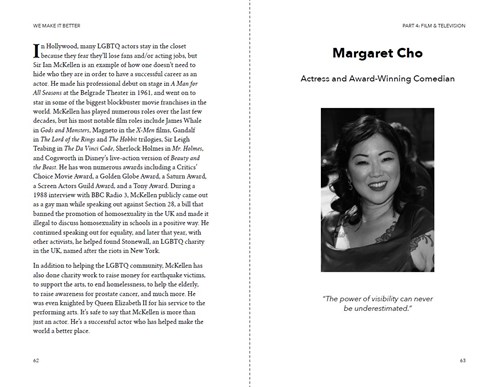
Entertainers like Sir Elton John, Margaret Cho, Daniela Vega, and RuPaul
Government and military officials such as Eric Fanning and Leo Varadkar
Trailblazers in science and technology including, Alan Turing and Lynn Conway
Other historic icons like Oscar Wilde and Bayard Rustin
If you enjoy LGBTQ+ books and memoirs such as Hollywood Pride, The House of Hidden Meaning, or Karma, then you’ll love The Book of Awesome Queer Heroes.

I RECEIVED A DRC FROM THE PUBLISHER VIA EDELWEISS+. THANK YOU.

My Review
: I deliberately left publishing this review until after Yule because, I'm sad to say, there are families (of a sort) where a young adult could be in trouble if this book was given to them. I still think any queer kid over, say, thirteen would hugely benefit from receiving this book as a way of being reassured that they're not the first queer person, nor the only one who had a tough road to follow into adulthood.

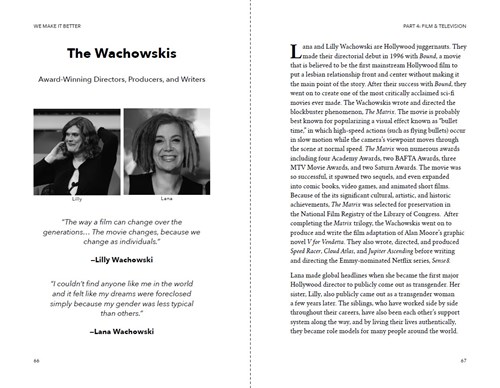
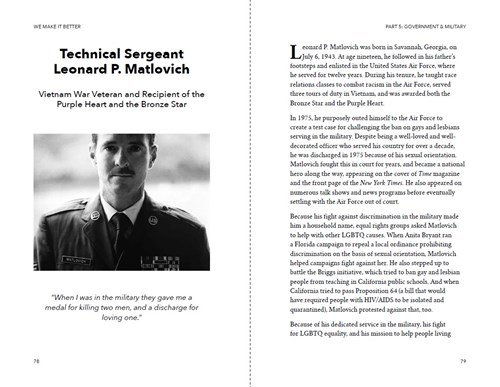
Brief biographical sketches and images of the ancestors of their own people will encourage a young soul in need of the security and reassurance of belonging to a lineage.
Image Image Image Image Image Image Image Image
At under $15, the modest price will more than repay your investment in a young queer kid's anchor into reality. I don't know how much longer these books will be available, so I'll recommend this one as a gift to give now while They still don't make it ever-harder to procure.

+++++++++++++++++++++++++++++++++++++++++++++++++++++++++++++++

Image

LAST NIGHT IN NUUK
NIVIAQ KORNELIUSSEN

Black Cat/Grove Press (non-affiliate Amazon link)
$9.99 Kindle edition, available now

Rating: 4* of five

The Publisher Says: A witty and fearless debut from a stunning new voice, Last Night in Nuuk is a work of daring invention about young life in Greenland. Through monologues, emails, and text exchanges, she brilliantly weaves together the coming of age of five distinct characters: a woman who’s “gone off sausage” (men); her brother, in a secret affair with a powerful married man; a lesbian couple confronting an important transition; and the troubled young woman who forces them all to face their fears. With vibrant imagery and daring prose, Korneliussen writes honestly about finding yourself and growing into the person you were meant to be. Praised for creating “its own genre” (Politiken, Denmark), Last Night in Nuuk is a brave entrance onto the literary scene and establishes her as a voice that cannot be ignored.

I RECEIVED A COPY AS A GIFT. THANK YOU.

My Review
: I got one of these eight years ago from a friend now vanished into the internet's anonymity. I'd heard of it on Lambda Literary's reviews site.

There's always a novelty factor when someone from a place less frequented (to self-centered monoglot Anglophone readers) writes about their home place. It's new, it's fresh, it isn't a place you went on holiday in your teens. Extra exciting when the author's somewhere on the QUILTBAG spectrum and sets a queer story of five people in different gradations of outness in a place where that is not the first thing that comes to mind as a probability.

I had never once in my life considered the presence of QUILTBAG culture existing at all in Greenland.

A book of stories about different members of that community, deeply enmeshed in each others' lives, felt irresistible, and I was eager to dive in...then Life got in the way, my treebooks got relocated for me (much against my will), and it never happened until now. This is my last read of 2024. It's not a fat book so I thought it might be okay for me to hold.

Not a good choice. Much pain, three days to read under two hundred pages, an actual new gouty tophus formed from the exercise.

Yet I heartily enjoyed the novelty factor, I was on board with the use of this generation's epistolary style of texts and emails and social-media posts, since the characters are all young adults and this is their cultural landscape. Their landscape overlapped with mine of the same era in my life with its deeply predictable drunken sex and bewildering rage coming at them from unexpected places, aka bullying.

I don't think I'd've loved it more if I'd read it in '18. I didn't adore it now. I fell under its spell of novelty, enjoyed the reminder of how very powerful a force lust was in my past and how much fun it all was, and in the end was mildly glad I'd read it.

Won't pick it up again, will put it in the Little Free Library come spring, and might read the author's next book.

Equally might not.

Either outcome is fine.

Wednesday, November 15, 2023

DAY: A Novel, growing up is hard, growing old isn't

Image

DAY: A Novel
MICHAEL CUNNINGHAM

Random House
$28.00 hardcover, available now

Rating: 4* of five

One of Literary Hub's Best Reads od 2023!

One of Harpers Bazaar's 45 Unputdownable Books of 2023!

The Publisher Says: As the world changes around them, a family weathers the storms of growing up, growing older, falling in and out of love, losing the things that are most precious—and learning to go on—from the Pulitzer Prize–winning author of The Hours

April 5, 2019 : In a cozy brownstone in Brooklyn, the veneer of domestic bliss is beginning to crack. Dan and Isabel, troubled husband and wife, are both a little bit in love with Isabel’s younger brother, Robbie. Robbie, wayward soul of the family, who still lives in the attic loft; Robbie, who, trying to get over his most recent boyfriend, has created a glamorous avatar online; Robbie, who now has to move out of the house—and whose departure threatens to break the family apart. Meanwhile Nathan, age ten, is taking his first uncertain steps toward independence, while Violet, five, does her best not to notice the growing rift between her parents.

April 5, 2020: As the world goes into lockdown, the brownstone is feeling more like a prison. Violet is terrified of leaving the windows open, obsessed with keeping her family safe, while Nathan attempts to skirt her rules. Isabel and Dan communicate mostly in veiled jabs and frustrated sighs. And beloved Robbie is stranded in Iceland, alone in a mountain cabin with nothing but his thoughts—and his secret Instagram life—for company.

April 5, 2021: Emerging from the worst of the crisis, the family reckons with a new, very different reality—with what they’ve learned, what they’ve lost, and how they might go on.

From the brilliant mind of Pulitzer Prize winner Michael Cunningham, Day is a searing, exquisitely crafted meditation on love and loss and the struggles and limitations of family life—how to live together and apart.

I RECEIVED A DRC FROM THE PUBLISHER VIA NETGALLEY. THANK YOU.

My Review
: A novel about liminal spaces, a story about transitions, endings, startings-out, and ultimately survival. So, status quo ante for Author Cunningham. As one expects from him, the prose is just beautiful, the characters appealing, the story, while slow paced, one that compels the reader's attention.

The fact of the matter is that novels about the COVID pandemic...a distinct class from pandemic novels, which can be set at any time...are going to need a certain timelessness to be anything other than nonce books. Cunningham's track record suggests that he's well-aware of his task (The Hours was an epidemic novel on several levels and has survived the epidemics it was set during). How better to address this than to focus on the family?

The great, consuming monster that is family, made or found, genetic or simply relational.

The Big Lie of postwar culture was that falling in love with someone meant that one should feel fulfilled, completed, and Happy with them as a partner. The divorce rates of the 1960s and 1970s gave that a thorough debunking. What happens in the made family that, in US culture, goes by the apt name "Nuclear" is often, inevitably more akin to fission than fusion. Dan, the husband, is an almost-was musician turned househusband. Isabel, the mother, is frustrated that she never got the life she expected with the husband she wanted. Robbie, the gay uncle, is their relief valve. They rely on him way too much to jell their emotional experiences of life together. He's living in their attic...which metaphor I'll leave unexplored... while he sorts out his own tangled love-life and career. There's also Dan's brother, his brother's platonic babymama, and their child. Dan and Isabel have two kids, and the kids are unaware of how much this life they've all lived together can change.

For a novel that takes place on three days albeit ones separated by one year from each other, this felt from the get-go to me like an overabundance of points of view. Nothing that happened changed my mind. The brother/babymama drama left me wondering how the lummox didn't see this coming, nor were his family members innocent in not discouraging him from being a sperm donor. He wasn't emotionally prepared for fatherhood so shouldn't have consented. There lies my first bleat of irritation. Isabel, during the pandemic, decides to write Violet, her traumatized daughter, a letter detailing her emotional unraveling and the end of her marriage to Dan to the fifteen-years-older Violet. Since Robbie is at that point in Iceland living his online masquerade life as Wolfe (it actually makes sense in the book) she had to express her disillusionment with her life choices to someone. May I just say that, as someone who was waaay overshared with by his parents (to put it mildly), I say without hesitation that this is a truly terrible idea. There is no point at which a child needs to know what led Mom to not wanting to be mom anymore. If they ask, parents are well advised to deflect.

Robbie, the fulcrum of the levers shoving these people ever-farther apart, is a case-study all by himself in how not to be in relationships. He's crafted...with Isabel, his sister...an Instagram persona that is an extrapolation of himself into omnicompetence, an unattainable goal for flesh-and-blood people, and is seducing others into accepting it as real not just the extra-curated version of himself. There's an element of catfishing in this; it's dishonest at the minimum. The fact that Isabel is both a co-conspirator in and, bizarrely, a victim of, this weird catfishing says a lot about the fundamental performative nature of family life. Aren't we all constructing and curating personas within a family, in fact a relationship of any sort? There's an entire sociological concept devoted to this idea.

If this is to be a lasting artwork explaining the COVID pandemic to us and our heirs, it has to get something otherwise unavailable from the pandemic setting. Here's where I falter in my appreciation for Author Cunningham's dramaturgical eye. I got my expected frisson of lovely-language-gasm. I got my soap-opera needs met with the dynamics of the family decohering and then showing signs of coalescing into other forms. But did any of this illuminate the pandemic's unique social upheaval?

On balance, yes but in a curious way no. This family was always going to undergo fission...people who can't, or don't, or won't communicate clearly and honestly with each other will always fail as a system...and that is just accelerated by the pandemic. That the family is made up of generationally appropriately queer-friendly people is just recognizing realities that are the source of the screeching angst of the change-intolerant religious nuts. The parts of the story that I felt illuminated the pandemic were the grace notes of style, using the forms and format of social media, to make the point that life moved on even while reality stopped. I think some people saw this as a bug, but I believe it's a feature. Insta will, goddesses willing, be long dead by the time pandemic babies are old enough to read this novel, but they'll see how deep and unquenchable life's demand for love and conncection really was back in the quaint pre-wearable-quantum devices days of Mom and Dad's youth. They'll see that the familys they live in were new, slightly scary, ideas yet to develop into what they accept as normal. They can get from this read a sense of the liminality of forced change and its many many echoes.

I think this novel will, like The Hours, stand up to the passage of time. Of course, I'll be dead by the time the verdict is rendered. But I feel good about my chances of being right.

Friday, August 19, 2022

DJINN PATROL ON THE PURPLE LINE, a scary-but-fun trip through an unimaginably huge world

Image

DJINN PATROL ON THE PURPLE LINE
DEEPA ANAPPARA

Random House
$18.00 trade paper, available now

Rating: 4* of five

The Publisher Says: In a sprawling Indian city, a boy ventures into its most dangerous corners to find his missing classmate. . . .

Through market lanes crammed with too many people, dogs, and rickshaws, past stalls that smell of cardamom and sizzling oil, below a smoggy sky that doesn’t let through a single blade of sunlight, and all the way at the end of the Purple metro line lies a jumble of tin-roofed homes where nine-year-old Jai lives with his family. From his doorway, he can spot the glittering lights of the city’s fancy high-rises, and though his mother works as a maid in one, to him they seem a thousand miles away. Djinn Patrol on the Purple Line plunges readers deep into this neighborhood to trace the unfolding of a tragedy through the eyes of a child as he has his first perilous collisions with an unjust and complicated wider world.

Jai drools outside sweet shops, watches too many reality police shows, and considers himself to be smarter than his friends Pari (though she gets the best grades) and Faiz (though Faiz has an actual job). When a classmate goes missing, Jai decides to use the crime-solving skills he has picked up from TV to find him. He asks Pari and Faiz to be his assistants, and together they draw up lists of people to interview and places to visit.

But what begins as a game turns sinister as other children start disappearing from their neighborhood. Jai, Pari, and Faiz have to confront terrified parents, an indifferent police force, and rumors of soul-snatching djinns. As the disappearances edge ever closer to home, the lives of Jai and his friends will never be the same again.

Drawing on real incidents and a spate of disappearances in metropolitan India, Djinn Patrol on the Purple Line is extraordinarily moving, flawlessly imagined, and a triumph of suspense. It captures the fierce warmth, resilience, and bravery that can emerge in times of trouble and carries the reader headlong into a community that, once encountered, is impossible to forget.

I RECEIVED AN ARC FROM THE PUBLISHER. THANK YOU.

My Review
: One of my take-aways from living through the twenty-first century as an immigrant to its reality is that there are a *shocking* number of souls that just...vanish...with no explanation, no investigation, and no closure for their families or friends. Author Anappara knows this...she is a journalist, she hears the howls. The question I have is the same one I had when the Ciudad Juárez femicides first came to light: What the actual fuck are the police doing?

That being an unanswerable question without delving into immense mountains of sociopolitical research and studies, I'll go to the next part of the issue raised in the story: Caste and sectarian animosities and prejudices come in for scary, extra-believable spotlighting in here. It's like the awfulness I really wasn't privy to before Katherine Boo's book came out (whatever the criticisms Boo gets, I for one hadn't heard anything about these issues before I read it) sprang to life in the eyes of a nine-year-old boy. He's the only one who cares that Bahadur has gone missing...as much, that is, as the child's mother cares.

Very much raised by TV while being resentfully and carelessly monitored by his gifted older sister (a quietly important strand is the terrible, sexist manner that the capitalist system exacerbates her mistreatment, the not terribly bright but terribly endearingly bumptious and energetic Jai gets a scooby-group of kids together to seek out Bahadur. What unfolds is proof that kids are great narrators, if lousy cops. The scooby-group is convinced (well, two-thirds convinced) that there's a Djinn on the eponymous Purple Line of the city's subway. No, there isn't; if you came hoping for a fantasy read, go in peace. What they do discover is, however, very relevant.

There are things in the telling of the story that didn't work well to make it into a satisfying read: The neglected sister who watches Jai does something that removes her from sympathy to distaste. It's not pretty, it was perfectly understandable, but it actually made the central search more complicated and showed that adolescents are not the best choices of parent subsitiutes. The final solution of the mystery at the heart of the book is desperately sad; it's also not what was signaled as one of the book's themes, the complicity of the capitalist world in the destruction of families and ways of life, as well as exacerbating the existing sectarian horrors plaguing India. In my view, this was a narrative error, since it took the wind out of the sails of at least half the book's points. And, perhaps most tellingly, the multiplicity of narrative voices was less an enrichment of the story than a lessening of tension. This is very often the case in crime fiction.

This explains a lot of why this carefully crafted and involvingly told story didn't get all five stars from me.

What was so enriching in this read was the manner of making evident the luxury of a safe, secure childhood anywhere not already rich. What made me think the hardest was the additional, personal light shone on the family of a disappeared child, the struggles of parenting while extremely poor, the harshness of communities that, under threat, are coldly calculatedly indifferent in their actions if not always their hearts...they simply can't afford to be fully realized communities such as existed before capitalism fastened its teeth in India's neck.

Monday, May 23, 2022

HOW FASCISM WORKS: The Politics of Us and Them is just flat terrifying

Image

HOW FASCISM WORKS: The Politics of Us and Them
JASON F. STANLEY

Random House
$17.00 paperback, available now

Rating: 5* of five

The Publisher Says: NEW YORK TIMES BOOK REVIEW EDITORS’ CHOICE • With a new preface • Fascist politics are running rampant in America today—and spreading around the world. A Yale philosopher identifies the ten pillars of fascist politics, and charts their horrifying rise and deep history.

As the child of refugees of World War II Europe and a renowned philosopher and scholar of propaganda, Jason Stanley has a deep understanding of how democratic societies can be vulnerable to fascism: Nations don’t have to be fascist to suffer from fascist politics. In fact, fascism’s roots have been present in the United States for more than a century. Alarmed by the pervasive rise of fascist tactics both at home and around the globe, Stanley focuses here on the structures that unite them, laying out and analyzing the ten pillars of fascist politics—the language and beliefs that separate people into an “us” and a “them.” He knits together reflections on history, philosophy, sociology, and critical race theory with stories from contemporary Hungary, Poland, India, Myanmar, and the United States, among other nations. He makes clear the immense danger of underestimating the cumulative power of these tactics, which include exploiting a mythic version of a nation’s past; propaganda that twists the language of democratic ideals against themselves; anti-intellectualism directed against universities and experts; law and order politics predicated on the assumption that members of minority groups are criminals; and fierce attacks on labor groups and welfare. These mechanisms all build on one another, creating and reinforcing divisions and shaping a society vulnerable to the appeals of authoritarian leadership.

I RECEIVED A DRC FROM THE PUBLISHER VIA NETGALLEY. THANK YOU.

My Review
: The reason I want to review this right now is the 14 May Buffalo mass shooting and its root cause, the idiotic and racist replacement theory. It is a pernicious and evil set of beliefs demanding that white people remain in power forever because it's theirs by right, as Author Stanley explains. Colonialism and racism and fascism are in lock step, and their grip on the unintelligent, badly educated, and ill-informed is only strengthening.

I make no apologies for my opinions, or for expressing them in strong and probably insulting terms, as those who subscribe to these idiotic beliefs make no apologies for theirs or their own method of expressing them. I oppose these views. I oppose their open, uncontested expression. I oppose people who make their own need to control others, body, mind, and soul, their purpose for public action. And no, demanding that these True Believers NOT be allowed to dictate the continued lives, personal liberties, and rise to political power of those who are not them, is not at all the same thing.

This book is a compendium of pithily expressed, carefully researched, and very well-sourced conclusions that are not readily dismissable based on modern evidence. I cede the floor to Author Stanley:
Fascist politics does not necessarily lead to an explicitly fascist state, but it is dangerous nonetheless. Fascist politics includes many distinct strategies: the mythic past, propaganda, anti-intellectualism, unreality, hierarchy, victimhood, law and order, sexual anxiety, appeals to the heartland, and a dismantling of public welfare and unity.


On fascism's roots:
In book 8 of Plato’s Republic, Socrates argues that people are not naturally led to self-governance but rather seek a strong leader to follow. Democracy, by permitting freedom of speech, opens the door for a demagogue to exploit the people’s need for a strongman; the strongman will use this freedom to prey on the people’s resentments and fears. Once the strongman seizes power, he will end democracy, replacing it with tyranny. In short, book 8 of The Republic argues that democracy is a self-undermining system whose very ideals lead to its own demise. Fascists have always been well acquainted with this recipe for using democracy’s liberties against itself; Nazi propaganda minister Joseph Goebbels once declared, “This will always remain one of the best jokes of democracy, that it gave its deadly enemies the means by which it was destroyed.” Today is no different from the past. Again, we find the enemies of liberal democracy employing this strategy, pushing the freedom of speech to its limits and ultimately using it to subvert others’ speech.

–and–

In a 1922 speech at the Fascist Congress in Naples, Benito Mussolini declared: We have created our myth. The myth is a faith, a passion. It is not necessary for it to be a reality….Our myth is the nation, our myth is the greatness of the nation! And to this myth, this greatness, which we want to translate into a total reality, we subordinate everything. Here, Mussolini makes clear that the fascist mythic past is intentionally mythical. The function of the mythic past, in fascist politics, is to harness the emotion of nostalgia to the central tenets of fascist ideology—authoritarianism, hierarchy, purity, and struggle.

On racism's roots and branches:
“Check your privilege” is a call to whites to recognize the insulated social reality they navigate daily.

–and–

Hutu power movement was a fascist ethnic supremacist movement that arose in Rwanda in the years before the 1994 Rwandan genocide.

–and–

Nixon’s chief of staff, H. R. Haldeman: “You have to face the fact that the whole problem is really the blacks,” Haldeman quoted Nixon as saying in a diary entry from April 1969. “The key is to devise a system that recognizes this while not appearing to.”

–and–

Mussolini denounce{d} the world’s great cities, such as New York, for their teeming populations of nonwhites. In fascist ideology, the city is a place where members of the nation go to age and die, childless, surrounded by the vast hordes of despised others, breeding out of control, their children permanent burdens on the state.

See also my review of Cockroaches for extra and personal information about the racist roots of Rwanda's genocide. See my review of The Man Who Lived Underground for a prescient prefiguring of the Othering that racism relies on's horrific costs.

Author Stanley doesn't, I think I've shown, pull punches. He also sources his claims with admirable clarity. There are dozens of notes in each chapter; there are dozens of reputable scholars cited. In his Epilogue, Author Stanley considers the hazards and risks we're running simply by normalizing (or really continuing to normalize) the ongoing fascist politicizations we see around us now.
Pratap Mehta wrote: 'The targeting of enemies—minorities, liberals, secularists, leftists, urban naxals, intellectuals, assorted protestors—is not driven by a calculus of ordinary politics….When you legitimize yourself entirely by inventing enemies, the truth ceases to matter, normal restraints of civilization and decency cease to matter, the checks and balances of normal politics cease to matter.'

–and–

In fascist politics, women who do not fit traditional gender roles, nonwhites, homosexuals, immigrants, “decadent cosmopolitans,” those who do not have the dominant religion, are in their very existence violations of law and order. By describing black Americans as a threat to law and order, demagogues in the United States have been able to create a strong sense of white national identity that requires protection from the nonwhite “threat.”

–and–

The dangers of fascist politics come from the particular way in which it dehumanizes segments of the population. By excluding these groups, it limits the capacity for empathy among other citizens, leading to the justification of inhumane treatment, from repression of freedom, mass imprisonment, and expulsion to, in extreme cases, mass extermination.

What's happening now is not the Will of the People. It's not the inevitable outcome of "them" becoming a threat. This is proof of "...a growing body of social psychological evidence substantiates the phenomenon of dominant group feelings of victimization at the prospect of sharing power equally with members of minority groups. A great deal of recent attention has been paid in the United States to the fact that around 2050, the United States will become a 'majority-minority' country, meaning that whites will no longer be a majority of Americans," threatening “...the lengthy history of ranking Americans into a hierarchy of worth by race, the “deserving” versus the “undeserving.” And I feel confident I need not say directly that deserving = white for you to get the full, appalling picture. If you're up for more, there's On Tyranny, which I've reviewed; it's another, and shorter, work of synthesis and explication.

Where do we go from here? How do the majority of US citizens resist this ever-worsening attack on our bodies, our minds, our freedoms and rights?

First, VOTE. Second, read and learn from the folks farther along the trail through the thickets of trouble and outrage meant to scare and dishearten you. Nothing about the fascism threatening reason and freedom in the US is inevitable or unstoppable or, most importantly, right and correct. You've watched The Handmaid's Tale and read Christian Nation...you know what's at stake for women, and every single one of you knows a woman; also for QUILTBAG folks, and if you're reading this you know at least one of those (me). Act like this is an emergency.

Because it very much is.

Thursday, January 20, 2022

JOAN IS OKAY, the title's a complete lie; & THREE APPLES FELL FROM THE SKY, a fairy/folk tale of the Armenian Genocide

Image

JOAN IS OKAY
WEIKE WANG

Random House
$27.00 hardcover, available now

One of NPR's Best Books of 2022!

Funny how Life works out, isn't it? This wasn't *meant* to be a pandemic novel, says Weike Wang.

LONGLISTED for the 2023 Andrew Carnegie Medal for Excellence in Fiction!


Rating: 4* of five

The Publisher Says: A witty, moving, piercingly insightful new novel about a marvelously complicated woman who can’t be anyone but herself, from the award-winning author of Chemistry

Joan is a thirtysomething ICU doctor at a busy New York City hospital. The daughter of Chinese parents who came to the United States to secure the American dream for their children, Joan is intensely devoted to her work, happily solitary, successful. She does look up sometimes and wonder where her true roots lie: at the hospital, where her white coat makes her feel needed, or with her family, who try to shape her life by their own cultural and social expectations.

Once Joan and her brother, Fang, were established in their careers, her parents moved back to China, hoping to spend the rest of their lives in their homeland. But when Joan’s father suddenly dies and her mother returns to America to reconnect with her children, a series of events sends Joan spiraling out of her comfort zone just as her hospital, her city, and the world are forced to reckon with a health crisis more devastating than anyone could have imagined.

Deceptively spare yet quietly powerful, laced with sharp humor, Joan Is Okay touches on matters that feel deeply resonant: being Chinese-American right now; working in medicine at a high-stakes time; finding one’s voice within a dominant culture; being a woman in a male-dominated workplace; and staying independent within a tight-knit family. But above all, it’s a portrait of one remarkable woman so surprising that you can’t get her out of your head.

I RECEIVED A DRC FROM THE PUBLISHER VIA NETGALLEY. THANK YOU.

My Review
: First things first: I think Joan's neurodivergent. There. I said it.

What else is Joan? A disappointing daughter, who isn't going to give her mother the expected grands. An annoying sister, who is resolutely unimpressed with her brother's lavish getting-and-spending lifestyle. A breathtakingly good, effective ICU doctor at the outset of the Plague. A clueless, oblivious object of somewhat diffident romantic interest...utterly unrequited...for her neighbor. And most of all, most satisfyingly and unbreakably, Joan is herself.

If you don't like to read "women's fiction" because it's about men (how to catch), read this book. It's about Others (how to evade), when it's about anyone not Joan. And that was exactly why I enjoyed the read so much. Joan's struggles are typical for an atypical person, and her intelligence isn't a problem but a solution, making her an extra delightful companion for this reader. As everyone around her tries to make her feel she's missing out, lacking something, somehow wanting for something, and until she decides for herself what she thinks, she remains upset and at sea. In her enforced idleness (bereavement leave? for a father she felt little connection to still less affection for, shouting abuser that he was?) she loses the armor of being too busy to deal with all the mishegas of ordinary life.

It is great to read about the woman lead's sense of self being explored and resolved without a boyfriend at the beginning, middle, or end of the process. It is bracing to read the genuinely painful experience of the first-generation American in attempting to come to a happy resolution to a parent's desires when these are rooted in a wildly different world. But then, as the visibly different as well as culturally different as well as neurologically different (this last is not explicit in the text, but its factuality is the hill I'll die on) Joan thinks, "Why try to explain yourself to someone who had no capacity to listen?" She thinks this in a different relationship's context but the truth is, it is Joan all the way. She's not going to do the same thing a dozen...even, I suspect, a pair of...times expecting or hoping for different results. What kept me from giving it all five stars was, however, that very thing: I felt Joan was harshly judgmental from beginning to end, despite questioning herself and her responses as we went through the story. I think that's a bit unbelievable, it seemed to me she would've adjusted some of her private judgments...still, not a fatal flaw since I liked her from giddy-up to whoa.

In fact, in just over 200pp, I fell in love with Joan as she is. I think you might do the same. Give her a few of your hours. She's a good companion.

++++++++++++++++++++++++++++++++++++++++++++++++++++++++++++++++

Image

THREE APPLES FELL FROM THE SKY
NARINE ABGARYAN
(tr. Lisa C. Hayden)
OneWorld Publications (non-affiliate Amazon link)
99¢ Kindle edition, available now

Rating: 4* of five

The Publisher Says: The Russian bestseller about love and second chances, brimming with warmth and humour

In the tiny village of Maran nestled high in the Armenian mountains, a place where dreams, curses and miracles are taken very seriously, a close-knit community bickers, gossips and laughs, untouched by the passage of time. A lifelong resident, Anatolia is happily set in her ways. Until, that is, she wakes up one day utterly convinced that she is dying. She lies down on her bed and prepares to meet her maker, but just when she thinks everything is ready, she is interrupted by a surprise visit from a neighbour with an unexpected proposal.

So begins a tale of unforeseen twists and unlikely romance that will turn Maran on its head and breathe a new lease of life into a forgotten village. Narine Abgaryan's enchanting fable is a heart-warming tale of community, courage, and the irresistible joy of everyday friendship.

THIS WAS A FREE DOWNLOAD VIA BOOKBUB. I THINK. ANYWAY, THANK YOU.

My Review
: A clever little folk-tale that mimics the forms of earlier tales with modern, relatable trappings. It’s meant to be a means of processing the upheavals of Armenia as it bumpily traveled from tsars to commissars to…chaos, pure capitalism, as part of Russia then on its own with no stops at any rational place anywhere along the way. We’re not given much information but the wretchedness of the people to use as a calendar. The main event is World War I's Armenian Genocide, there was much suffering; there was much suffering throughout, but the weird thing about it is how little of it seemed to penetrate the inner lives of the characters, really better called "survivors" given how many die in the course of the story. Their village, isolated and insulated all together, goes on, despite the horrific events that unfurl between and around them.

Is that realistic? What do I, fat comfortable American that I am, know about that; I know the author chose the fairy-tale/folk-tale structure and tenor for a reason. The Armenians have a saying:
As has been established in Maran legends since time immemorial, the night will drop them to earth from the sky:
And three apples fell from heaven:
One for the storyteller,
One for the listener,
And one for the eavesdropper.

Welcome, fellow eavesdropper, to the juicy apple of Narine Abgaryan's bestselling Russian-language tale of Armenia's wild ride through the 20th century. Strap your helmet on a little tighter. You're going to meet a lot of people, and not all of them have names you'll be able to pronounce. It does not matter a whit. Love them for who they are, not how they sound in your monoglot's ear. Anatolia, the woman at the actual center of the story, is one of the world's readers-cum-librarians so she merits our rapt attention. It's not hard to give.
Little by little, thanks to intuition and innate taste, she learned to distinguish good literature from bad and fell in love with Russian and French classics, though she came to hate Count Tolstoy, unequivocally and forever, as soon as she finished Anna Karenina.
Happen I agree...but the less said of her shelving preferences the better. Her travails, those of her fellow villagers, are deeply experienced in the author's (and translator's, what a great job Lisa Hayden did on this book! I honestly forgot it was a translation most of the time, and that is meant as a compliment) open, honest, and still lyrical prose:
For eight long, unbearable years, the war reaped a harvest of restless souls around the world, but one day it sputtered out and retreated, howling and limping and licking its bloody paws.
–and–
Anatolia suddenly grasped that there was no heaven and no hell: happiness was heaven and grief was hell. And their God was everywhere, all over, not just because He was all-powerful but also because He was the unseen threads that connect them with each other.

The other feature of the prose you'll have discerned by now is the simple, direct wisdom of it. The author and translator have taken care to make sentences that sound like they've rolled around simple peoples' minds and mouths for long enough to become weighty with meaning and light of touch:
“There’s nothing more destructive than idleness,” his father had loved repeating. “Idleness and leisure deprive life of purpose.”

Vasily now understood the truth of his father’s words. Life does, indeed, lose its purpose at the very instant a person ceases bringing benefit to those around him.

Which is a truth that many of us, disabled and/or retired, learn at a very high cost in self-esteem and peace of mind. It's not, youthful imaginings to the contrary, at all fun to be idle. So what is one meant to do? Find something useful to do! Me, I write book reviews...how about you?