Zantac Lawsuit

Image

Researching drug company and regulatory malfeasance for over 16 years
Humanist, humorist
Showing posts with label gsk. Show all posts

Thursday, January 25, 2024

Families Lodge Complaints Over Seroxat, Citing Adverse Reactions Leading to Tragic Outcomes


Image

Romain Schmitt, 16

Last week, Radio France ran a heartbreaking story about two young men who tragically died after taking the controversial antidepressant paroxetine. Paroxetine is more commonly known by its brand names, including Seroxat (UK), Paxil (US & Canada), and Aropax (Australia & New Zealand). The bereaved families are fighting to establish the link between the taking of Seroxat and these two suicides.

The story, investigated by journalists Par Rozenn Le Saint and Benoît Collombat, can be read in full here. 

Vincent Schmitt and Yoko Motohama, parents of Romain, who was 16 years old when he tragically ended his life in September 2021, are now seeking justice. Convinced that their son's death is linked to the use of Seroxat, they have filed a complaint for involuntary manslaughter, focusing on the potential connection between the young man's suicide and the Seroxat he was prescribed.

The parents assert that their son's behavior underwent a transformation between 2-3 months after taking Seroxat, an SSRI marketed and manufactured by GSK, which exacerbated his anxiety. "It was hell," Vincent Schmitt recounted. Adding that Romain began engaging in gambling and obsessively focused on football games. His behavior became increasingly worrisome, and he directed anger towards them.

Most notably, the teenager seemed to lose all sense of danger. "One day, he impulsively swam in a lake without regard for safety. His rescue came thanks to a pedal boat," Vincent Schmitt recalled.

Around 3 months after being on Seroxat, Romain's sleeping cycle was completely reversed. His parents complained to the prescribing doctor, and bizarrely, his Seroxat dosage was increased. What started as a 10mg daily dosage, ended (by 31/2 months) to 40 mg/day. The prescriber then added Tercian to the mix before taking a 1-month vacation. Tercian, also known as Cyamemazine or cyamepromazine, is a typical antipsychotic drug. When combined with SSRIs, it increases the risk of extrapyramidal adverse effects. Extrapyramidal effects refer to involuntary movements that cannot be controlled. An example of this is akathisia.

For years, GSK has steadfastly denied any connection between their best-selling SSRI and suicide completion. Despite reaching numerous out-of-court settlements with victims' families, they maintain that Seroxat is safe and effective. 

Over the years, this blog has extensively documented Seroxat-related suicides, with particular emphasis on the tragic case of Sara Carlin, a young Canadian girl who tragically took her own life. Sara's story also holds a prominent place in my book, 'The Evidence, However, Is Clear...The Seroxat Scandal.'

Sara's death at the hands of Seroxat prompted a series of recommendations at her inquest, a list that can be read here.

I reached out to Romain's mother, Yoko, to learn more about her son, Romain and what happened on that fateful day. She told me:

"I was sitting on the bench at the entrance of the station, enjoying the end of the summer's sun while waiting for Romain. It is such a tiny station, not even 10 meters away. Little did I know that Romain was already on the platform.

"From where I sat, I could see the school's entrance. It was after school, and all the kids were leaving. I heard a loud noise, possibly a train, followed by a strange silence and people reacting oddly. I started to worry that we might be late for our appointment with the psychiatrist for Romain.

"Teachers rushed to the station, and I noticed signs indicating that the train was delayed. Concerned about our appointment, I decided to call Vincent to request a car pickup. As I dialed his number, I began searching for Romain and approached a teacher to inquire about my son's whereabouts. The teacher asked for his name, and I replied, 'Romain Schmitt.' To my surprise, she abruptly left without saying a word, which struck me as strange.

"Soon, ambulances arrived, and a sense of unease began to intensify. Many firefighters gathered around me, and a man in a white coat approached. He delivered the devastating news that Romain was dead.

"For me, this marked the beginning of a profound sense of despair and loss. This is my story of that tragic day, a day that would forever be associated with suicide."

I asked Yoko what Romain was diagnosed with, she told me:

"That is also part of the question we are asking. Actually, no doctor gave us any official diagnosis. Romain liked sports and was very healthy. He liked footballers, like Christian Ronaldo. So, like many other boys of his age, he started muscle training. At the same time, he started doing a kind of special diet.

"Getting quite escalated and obsessed, his eating habit became painful to our family. Removing all fat parts, juice, sauce on the plate, and requesting a specific product, etc. But I could not really discuss with him, and he did not listen to me. He also needed to take a shower before football. He was not good at waking up in the morning to prepare for school and was always late for dinner because he needed to do muscle training just before eating, etc.

"Anyway, witnessing his new eating habits, we started seeking some help from specialists. But nothing was helpful. At the same time, I was searching on the internet what a disease could be. And we found that it can be an obsessive-compulsive disorder.

"The first psychiatrist we saw didn't believe Romain had OCD so we took him to see another. Within 20 minutes of seeing the 2nd psychiatrist, we were told that Romain's habits were a "serious disorder". Romain was then started on Seroxat."

Approximately one month later, Romain's eating habits seemed to level out, he became less obsessed with his previous dietary regime. However, he seemed to be sleeping most of the time. This, according to Yoko, was during the Covid lockdown. Things became estranged between Yoko and Romain and shortly after his dietary obsession returned.

Romain, nor his parents were informed by the prescribing psychiatrist about Seroxat's propensity to induce suicidal thinking. His father, Vincent, did, however, read the patient information leaflet where, hidden amongst the minor side-effects, was the warning about increased suicidality when taking Seroxat, particularly for patients of Romain's age.

Yoko told me, "On Friday, the morning prior to his death, he planned with his good friend to participate in some sports, and then do some homework together over the weekend. At the canteen, Romain had lunch with many friends and laughed a lot while sharing a banana."

Hours later, Romain, at the age of 16, tragically ended his life by stepping in front of a moving train.

After his death Romain's parents researched the link between Seroxat and suicidality, it was then they learned of many others who had taken their lives whilst taking GSK's powerful, mind-altering antidepressant.

Too little, too late for them but they want to warn others.

--

Gilles and Giusiana Mannoni have, along with Yoko and Vincent, also filed a complaint after their 20-year-old son, Florian, hanged himself. His father told the France Bleu website, “We learned on Thursday evening around 10 p.m. that Florian had hanged himself."

"A week later, when we gained access to the apartment, we found a prescription with a drug based on paroxetine. Florian's psychiatrist explained to us that he did not have a problem with his family or his friends, but just a problem with a rumbling in his stomach, that he was not depressed. I asked her why she prescribed the antidepressant, and she told us she prescribed it to everyone.”

Florian was due to go on a skiing trip with his parents.

Both Giles and Giusiana contacted GSK after the death of their son. They were, somewhat, callously told, adverse effects, such as suicidality, appear in the medication leaflet.

Maître Jean-Christophe Coubris, the lawyer representing both families, issued the following statement:

'Like most of us, I will never read a notice in its entirety.' He laments that most people prescribed antidepressants will not have the correct information regarding the increased risk, possibly triggering an irreversible action, which is two to three times higher. 'It's a gigantic umbrella that the laboratories open. You could even call it a parasol. I fear that no one is informed about the risks of over-suicide while taking antidepressants in all age categories."

--

Commentary

Since 2006, I've been researching GSK and Seroxat. In the case of Romain, GSK will argue that Tercian, also known as Cyamemazine, caused the changes in his behavior. This is a classic move that drug companies, and even prescribers, make when their products come under fire. They will blame anything and everything other than the product they are defending. They, along with the prescribing psychiatrist, might even suggest that Romain's apparent OCD pushed him over the edge, along with his strained relationship with his parents.

If this case goes to trial, attorneys will focus on Romain's parents and their friends, attempting to imply that Romain took his life due to their parenting skills. This situation bears a resemblance to what happened to Wendy Dolin when she filed a lawsuit against GSK. Below is an excerpt from an exclusive interview I conducted with Wendy:

"I knew when I filed this lawsuit, it was going to be a very difficult process. But I was unprepared for the sheer number of depositions and subpoenas GSK demanded. I was told this was a record number of requests. I understood the need for certain information, but it became very clear early on that GSK's goal was to send a powerful message to me: That is, when you have the audacity to challenge GSK, all attempts will be made to harass everyone you care dearly about. GSK also repeatedly tried to humiliate me. For example, depositions that should have been a few hours became eight hours in an attempt to wear people down. GSK asked the same question over and over and over again hoping to manipulate, confuse and take people's comments out of context.

"Some of the irrelevant but personal questions GSK asked me included, "How many times do you go to temple? Are you dating anyone? Who are my partners at work?" They even requested Stewart's high school transcripts. All were totally irrelevant and useless questions posed by attorneys from King and Spalding and Dentons. They were calling my friends, not identifying themselves and trying to get people to somehow say terrible things about my relationship with Stewart. There was nothing to say, of course, and GSK's attorneys just embarrassed themselves. It became a joke amongst my friends as to who would be called next and who did GSK think they were dealing with that they thought their sweet talking female attorney was somehow going to get information?"

There is a substantial amount of publicly available history regarding Seroxat on the internet, offering abundant resources for family lawyers to investigate. Unfortunately, such resources were not accessible to other families who lost loved ones to Seroxat over the years. This blog has covered many of these cases, and I'm aware that Yoko has downloaded a significant portion of my work here. It's encouraging to know that Yoko has also reached out to David Healy, who is an expert in SSRI-related issues and has historically been a thorn in GSK's side.

To be frank, I'm astonished that Seroxat is still being prescribed, given its atrocious track record of ruining lives. To give a 16-year-old 40mg of this mind-altering drug is, in my opinion, tantamount to gross negligence.

The journey ahead for both families is bound to be lengthy and filled with numerous obstacles. This endeavor is not driven by a pursuit of financial gain; rather, it's about raising public awareness so that no family has to endure the suffering that the Mannoni's and Schmitt's are currently experiencing.

No parent should ever have to bury their child, especially when such a tragedy could have been prevented, as in both of these cases.

I'd like to thank Vincent and Yoko for helping me clarify the events. It can't have been easy for them reliving such a traumatic experience.

It's worth noting that no formal case has been filed against GSK at this point. Both families have lodged complaints of involuntary manslaughter and these complaints are now being investigated.

If successful, the families could pursue lawsuits against the prescribers, the French regulatory authorities, and even GSK. The complaints are currently in the hands of the prosecutor.

--

Yoko has now created a website that you can view here (https://antidepeffects.wordpress.com/)

A photo album of Romain can also be viewed here (https://romainschmitt.wordpress.com/)

For updates and to offer your support, please follow Yoko's Twitter (X) account here (https://twitter.com/antidepeffects)


Bob Fiddaman

Tuesday, October 17, 2023

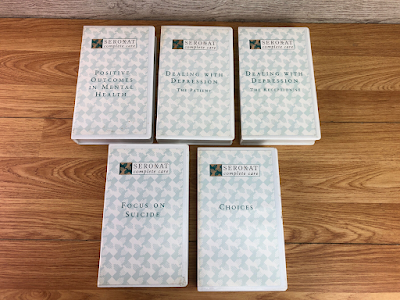
Seroxat Complete Care VHS Set ~ Choices


Image

Fig 1


The following is number 1 in a series of 5 blog posts where I will aim to exclusively post 5 videos that have came into my possession.

The videos, which run for approximately 12-15 minutes, were produced by Dragon Communications Limited (now dissolved) on behalf of SmithKline Beecham Pharmaceuticals (Now known as GSK). They were all part of an attempt by GSK to educate GP's in the UK back in 1992. Seroxat, by the way, was first licenced in the UK in 1990.

Although the brand name 'Seroxat' isn't mentioned in the videos, we can see by the accompanying VHS cases (Fig 1) how GSK subliminally and, it has to be said, successfully, convinced prescribing GPs in the UK that Seroxat should be the 'choice' of drug when treating depression, anxiety, and sleep disorders.

Dragon Communications Limited, as mentioned above, have now dissolved. They and GSK also teamed up to create a Hepatitis-B educational video. The video, published in 1986, was called, 'Hepatitis-B : it doesn't happen here'.

They also wrote a 4-volume book for Pfizer regarding Inflammation and arthritis. When I say 'wrote' they probably just wrote what Pfizer told them to.

The 5-set videos were purchased on Ebay by my very good friend, Brian Daniels of CCHR UK. He, in turn, converted them into a digital format so I could, firstly, watch them and, secondly, distribute them so others  could draw their own conclusions.

Remember, it was 1992 in the UK when GP practices would have received these videos. At the time, Prozac had a stranglehold on the UK antidepressant market and GSK were desperately trying to knock it off the perch. It was also a time when Tricyclic antidepressants were coming to their end because of side-effects associated with them, something GSK really drive home in the 'Choices' video below.

Since 1992, Seroxat has been the subject of many lawsuits, it's been through the courts (in the US) and evidence has come to light that it causses severe withdrawal problems, suicidal thinking, suicidal actions and birth defects. There are links at the foot of this post that I've covered previously on my blog.

Okay, without further ado, here's the video. Be sure to pay attention to the clever marketing tricks they use without crossing the line. They are all but telling GPs that depressed and anxious people have a chemical imbalance...without actually uttering the term. The 'sciency' type graphics in the video were, I believe, created as a distraction when you listen to the narrative played over them.

Terms such as:

"It is thought"

"It may"

"Likely to be of importance"

"The theory provides support"

"Are thought to be important"

"Could increase"

"May result"

"Sleep and wakefulness are thought to be controlled..."

"It's thought that serotonergic neurons..."

"The role of serotonin in depression, anxiety and sleep disorder, suggest..."

"May be a useful approach"

"It seems evident"

"Various minds of evidence" 

Anyway, here's the video. I make no apologies for the acting performances.


Seroxat and homicide

Tuesday, October 03, 2023

Netflix, Painkiller & the GSK Connection


Image


Netflix hit on a gem when they launched Painkiller, the story of the Sackler family owned Purdue Pharma and the outrageous promotion of the painkiller, Oxycontin.

It's compelling viewing, even for those who have little understanding about pharmaceutical reps and their persuasive ways to get doctors to prescribe something that really isn't safe at all.

Each show starts with a member of the public making the disclaimer, “This program is based on real events. However, certain characters, incidents, locations, and dialogue have been fictionalized for dramatic purposes.” They then hold up a photo of a loved one lost to Oxycontin addiction.

Episode 5, Hot, Hot, Hot, hit home for me, particularly. It shows how Richard Sackler, played by Matthew Broderick, ignores the news that many hundreds of thousands had died of overdosing on OxyContin. Undeterred, he walks onto a stage, complete with sunglasses, to a mass of Purdue Pharma reps, in the main, good-looking females. They break into a frenzy as Sackler announces, "We are burning up the competition with sales of OxyContin, it is now the number one opioid brand in the country." Adding, "We are not stopping."

In reality, however, it wasn't Sackler who addressed the gushing Purdue Pharma reps, it was an executive named 'Mark'.

This from the website MotherJones:

"You know, it’s always hot here in Palm Springs. That’s why it’s a perfect place to have our meeting … because we’re hot … we’re burning up the competition with our sales of OxyContin! Do you know it’s now the number one prescribed opioid brand in the U.S.?"

“Now, you’re probably wondering what else can be done to sell even more OxyContin,” Mark went on. “There are also some things we’re cooking up for the coming year to help you and OxyContin and the whole pain market as well.” These initiatives allegedly included collaborating with the American Pain Society to develop materials that would “be distributed to hospitals across the country” and “weekly feature stories about pain and its management in newspapers.” The goal, said Mark, is to “raise awareness of undertreated pain” and to “Make the whole pie bigger, not only for us but for our competition as well.”

Mark concluded:

"I hope you enjoy your stay here in Palm Springs, I know I will. Enjoy the weather … because let me tell you, OxyContin’s continuing success, is going to make every part of this country from Seattle to Detroit to New Orleans as hot as it is here in Palm Springs this winter for every one of you. You are the force for the future … let’s make it happen!"

It could have been Mark Timney who, at the time, was a CEO for Purdue. This is just speculation on my part. 

GSK Advair

In 2012, British pharmaceutical giant, GlaxoSmithKline (GSK), agreed to pay $3 billion in a fraud settlement.

The three criminal charges involved Paxil, Wellbutrin and Avandia and included a criminal fine of $1 billion. The remaining $2 billion involved fines in connection with a civil settlement over the sales and marketing practices of the blockbuster asthma drug Advair and several other drugs.

Before Advair’s approval, a Glaxo scientist told the FDA that it wasn’t appropriate for patients with mild asthma. The agency agreed but it took five years to make that clear on the drug’s label. Advair, an asthma drug, generated more than $80 billion in global revenues. 

GSK has faced hundreds of lawsuits and claims brought by people whose relatives died while taking Advair.

So, why do I bring this up?

Well, the Department of Justice (DOJ) publicly released many exhibits from the 2012 fraud settlement, one of which was a video that shows an eerily similar scene as depicted in the Netflix mini-series, Painkiller.

If you've already watched Painkiller, you'll know what I'm talking about.

Watch the video from Advair’s Las Vegas product launch. Advair’s product manager, Jim Daly, asks the crowd, “Who wants to be a millionaire?” He adds, “There are people in this room who are going to make an ungodly sum of money selling Advair.”


Bob Fiddaman


Tuesday, November 23, 2021

Podcast with Akathisia Stories


Image

Akathisia Stories, a co-production of MISSD and Studio C, is a podcast series that features interviews and news concerning the adverse drug reaction akathisia and medication-induced suicide. 

MISSD, the Medication-Induced Suicide Prevention and Education Foundation in Memory of Stewart Dolin, is a unique non-profit organization dedicated to honouring the memory of Stewart and other victims of akathisia by raising awareness and educating the public about the dangers of akathisia. MISSD aims to ensure that people suffering from akathisia's symptoms are accurately diagnosed so that needless deaths are prevented. The foundation advocates truth in disclosure, honesty in reporting, and legitimate drug trials.

On this episode, we hear from author, blogger, researcher, and self-described humanist and humourist Bob Fiddaman.  His eponymously titled blog has focused on drug company and regulatory malfeasance since making its debut in 2006.  At the time, Bob, an Englishman living in Birmingham, was taking himself off of Seroxat, a GlaxoSmithKline-produced antidepressant known here in America as Paxil.  After making a protracted attempt at tapering off of the drug, he eventually decided to go cold turkey, a course of action he strongly advises against. 

Full show here

Podcast extra here


Bob Fiddaman


Tuesday, June 11, 2019

GSK Whistleblower Documents Released


Image


Longtime friend and fellow activist, "The Truthman", is taking the bull by the horns on his excellent blog, GSK: Licence To Kill.

Today sees Truthman release just one of many documents pertaining to allegations made by Thomas Reilly who was sacked by GSK after bringing to their attention a staggering number of compliance issues. It seems to be a standard tactic for GSK to sack employees who bring compliance issues to their attention. Hamrick, Thorpe, Kumar are past whistleblowers of GSK who all met the same fate when making complaints to senior staff at GSK. In fact, I've yet to see anyone kept on by GSK who has made a complaint about their compliance procedures.

According to the documents, released via Pacer earlier today, Reilly claims that GSK's entire global manufacturing business has been running on defective IT systems putting their products at high risk of contamination. These products may include, but are not limited to, over-the-counter cold & flu remedies, sports drinks, dietary supplements, tubes of toothpaste. Also, prescription drugs manufactured by GSK, including their antidepressants Seroxat (Paxil) and Wellbutrin (bupropion). Many other products manufactured by GSK could also be at risk of contamination. For a breakdown of GSK products, visit here (last updated in 2013)

It's basically CIDRA on a global scale!

I'm not up to scratch with Reilly's allegations so here's Truthman to explain what has been alleged.

The Most Scandalous Case In Pharma: GSK’s Manufacturing Cover Up Puts Millions At Risk Of Harm.


Bob Fiddaman


Thursday, May 02, 2019

UK Seroxat Litigation - Adjourned - The Blame Game


Image


Court is adjourned today and will resume Tuesday.

As I understand, part of GSK's defence in the UK Seroxat litigation trial currently being heard in the High Court in London is, they claim, the surge of Seroxat reports regarding a withdrawal problem was down to a series of programmes aired by the BBC. There were four in all (Videos below)

Isn't this like blaming Amazon or Trip Advisor because people say bad things about products and hotels?

It's a strange argument and one, it seems, they have a history of making, as confidential internal documents show.

In 1998 they didn't have consumers or the media to blame, instead, they blamed Eli Lilly for the Seroxat withdrawal problem. Lilly is the manufacturer of Glaxo's direct competition, namely; Prozac.

A 1998 internal memo highlights this in great detail and it's well worth reading. One also has to remember here who GSK blamed in the Dolin trial. The FDA, Dolin's doctor, Dolin's 'state of mind.'

Here's the document where they blame Lilly for Seroxat's withdrawal problem.

Here are those Panorama programmes GSK claim resulted in more reports of Seroxat withdrawal.

THE SECRETS OF SEROXAT (2002)
The Secrets of Seroxat elicited a record response from the public as 65,000 people telephoned the BBC helpline and 1,300 people emailed Panorama directly.


SEROXAT: EMAILS FROM THE EDGE (2003)
The second Panorama programme on Seroxat, Emails from the Edge included a report of the survey to which the 239 people responded. It showed widespread experiences of suicidal feelings and other severe reactions, very bad withdrawal symptoms and lack of warnings from doctors. After the broadcast users/survivors and Mind protested outside the offices of the MHRA.


TAKEN ON TRUST (2004)
Taken on Trust highlighted the incompetence of MHRA figures as well as hearing from GSK spokesperson, Alistair Benbow. This episode sees Benbow infamously blame patients for reading the Seroxat patient information leaflet incorrectly.


SECRETS OF THE DRUG TRIALS (2007)
On 29 January 2007, the fourth documentary of the series about the drug Seroxat was broadcast. It focused on three GlaxoSmithKline paediatric clinical trials on depressed children and adolescents. Data from the trials show that Seroxat could not be proven to work for teenagers. Not only that, one clinical trial indicated that they were six times more likely to become suicidal after taking it. In the programme, Panorama revealed the secret trail of internal emails which show how GlaxoSmithKline manipulated the results of the trials for its own commercial gain.


Bob Fiddaman


Tuesday, January 08, 2019

Supreme Court Analyzes Merck's Ambiguous Wording


Image


I'll admit it: I'm a legalese geek. But unlike certain companies peddling certain products, if I was too self-conscious to admit such, my failure to do so wouldn't hurt anyone.

Lately, I've been keeping a close eye on the court proceedings regarding Merck's Fosamax. Fosamax is a drug used in the treatment and prevention of postmenopausal osteoporosis. Ironically, Fosamax has been causing bone fractures in some consumers just as SSRIs can and do cause "depression," anxiety and akathisia in some consumers. But many Fosamax lawsuits haven't been heard by juries because Merck claims the company informed the FDA regarding bone fractures and the FDA failed to act by changing, or agreeing to change, the labeling.

The Merck case which was heard yesterday by the Supreme Court bears striking similarities to the GSK vs Dolin case. GSK also argued that it informed the FDA about the suicide links related to its Paxil product. (Paxil is an SSRI "brain pellet" that wreaks havoc among users while reaping billions in GSK profits. GSK claims it did everything to warn the public and doctors about Paxil-induced suicide risks. However, just as in the Fosamax case, GSK claims the FDA failed to agree to update the label.

Reading yesterday's Supreme Court transcript is fascinating and I highly recommend you download the 50-page transcript which is linked at the foot of this post. It provides an up-close look at how drug companies use the FDA's impotence to their advantage. Not only does the FDA fail to protect consumers, it proactively protects drug makers by serving as a revolving-door employment agency between pharma, the FDA and back again. Drug companies and the FDA create ambiguity and seem to enjoy a mutual understanding that this ambiguity will later be used to avoid lawsuits, protect shareholders and keep consumers in the dark regarding adverse drug effects.

Déjà vu: Dolin vs GSK

Wendy Dolin filed suit after her husband, Stewart, died when he jumped in front of a Chicago train. Stewart was taking a generic version of Paxil made by Mylan Pharmaceuticals, but GSK, the original manufacturers of Paxil, was responsible for the labeling and any subsequent label updates.

GSK tried to weasel its way out of a trial by citing the circumstances that Merck is now using as a defense in the Fosamax trials. GSK failed and the Dolin trial was heard by a jury who found for Dolin. Not only did the jury find that GSK was responsible for failing to warn consumers of the increased suicide risks created by Paxil, the jury also recognized that Paxil caused Stewart to suffer from akathisia, an adverse drug effect, prior to his death. Dolin was awarded compensation for both Stewart's Paxil-induced death and for Stewart's Paxil-induced suffering prior to his prescribed demise.

The Dolin trial, which lasted six weeks, ended with the jury awarding Wendy Dolin $3 million. But GSK appealed and the jury's decision was later overturned by the Seventh Circuit Court of Appeals. The overturned ruling didn't relate to the jury's finding that Paxil caused Stewart's death. Rather, it related to whether the label and failure to update the label, was the responsibility of GSK or the FDA. Dolin appealed but the Seventh Circuit refused to reconsider its decision to overturn the verdict. Dolin has taken her case to the Supreme Court where attorneys representing victims of Fosamax were yesterday.

A bit confusing, perhaps, but in short: Dolin won and GSK appealed. GSK won and the Dolin case is now in the hands of the Supreme Court.

Dolin's attorneys, Baum Hedlund, likely kept tabs on yesterday's proceedings given Merck's defense is similar to GSK's. The pharmafia conveniently blames its buddies at the FDA because partners in crime don't squeal on each other. Their silent pact sometimes helps both legally avoid responsibility for harming and killing unsuspecting consumers.

Like GSK, Merck is attempting to blame the FDA. Both companies try to adeptly muddy the legal waters so much so that jurors-even those who find the product causes adverse effects-become confused about who, exactly, should be accountable for faulty labeling and related tragic outcomes.

In cases such as Dolin vs GSK, it seems the amount awarded to plaintiffs is sometimes reduced not because the jury doesn't believe the product causes harms, but because the jury is effectively confused by pharma's legal strategy to "blame" its FDA pals. At the end of the day, pharma execs and FDA regulators likely slap each other on the back over dinner and drinks and cryptic "atta boy" correspondence. The end result is that consumers harmed by pharmaceutical products are further harmed by these cozy corporate/FDA ties.

Stress Fractures vs Emotional Lability

Merck is claiming that the FDA denied Fosamax label updates after it was learned a large number of atypical femoral fractures occurred among Fosamax users. Merck claims it proposed a change to the label but the FDA told them the wording in Merck's new proposal was inadequate. The FDA's complete response letter, in essence, said it didn't believe Merck had done a decent job with their proposal to change the label. Therefore, the FDA covers itself by responding to pharmaceutical companies and pharmaceutical companies understand they are essentially off the hook given the FDA won't follow up regarding proposed label updates and pharma won't either.

Merck did indeed inform the FDA about Fosamax related fractures but Merck labeled them stress fractures and not atypical femoral fractures. Thus, when the FDA read Merck's proposal for a label change they may have assumed these stress fractures were a relatively minor adverse drug effect. The FDA tends not to include extensive risk info in patient information leaflets because doing so might prevent consumers from seeking drugs as "treatment."

GSK used the same Merck tactic with its Paxil product after it was forced to acknowledge the number of suicides related to Paxil that occurred during Paxil clinical trials. GSK didn't tell the FDA that Paxil can cause adults to end their lives when suffering from a terrifying Paxil-induced condition called akathisia. Instead, GSK labeled suicidality as "emotional lability" just as Merck labeled atypical femoral fractures as simply "stress fractures."

Tossing the Egg

Imagine the CEO of an egg factory learns that many eggs contain bacteria that can cause serious harm and/or death to consumers. The CEO contacts a government regulator and says they have a problem. The government regulator doesn't think it's a severe problem and simply tells the egg factory to monitor the situation. But the egg CEO only told the regulator part of the story, stating that many eggs were cracked. The CEO didn't mention the bacteria inside the eggs that had grown as a result of said cracks.

It's a win-win for the egg factory. They can continue to sell eggs that are cracked, further, if a wrongful death lawsuit is brought against them, they can deny liability by stating, "We warned the government regulator but they decided not to do anything about the problem."

Both GSK and Merck had secrets hidden in their cracked eggs. The eggs were never fully opened by either company and the FDA only took a sneak peek through the cracks. GSK and Merck don't believe a jury should decide whether the FDA would have approved a label update had either company submitted an updated label change after receiving a first response from the FDA. Both companies claim the FDA wouldn't have sanctioned a second proposed label change. These companies are making assumptions, assumptions they aren't entitled to make despite that the CEO's likely have learned what to expect from their FDA friends.

Why nobody has thought to subpoena the current FDA Commissioner, Dr. Scott Gottlieb, is beyond me. Put Gottlieb on the stand, make him take an oath and ask him the very same questions the judges and legal teams are fighting over. Then again, Gottlieb would probably side with the drug companies given the FDA's incestuous relationship with pharma.

GSK, Merck and the FDA enjoy having their cake and eating it, too. But I doubt they use cracked eggs when together they cook up their half-baked legal excuses.

Bob Fiddaman


Merck Supreme Court Transcript

Wendy Dolin Petition to Supreme Court


Thursday, August 23, 2018

Judge Hamilton & Co Toss $3M Dolin Verdict

Image

Yesterday's decision from the Seventh Circuit declared "the drugmaker (GSK) can’t be sued under Illinois law for insufficiently warning of suicide risk on a drug’s label, when that label’s language was set by federal regulators."

Read on...

pre·con·ceived
adjective
(of an idea or opinion) formed before having the evidence for its truth or usefulness.


Image


Mayor Larry Vaughn (left)

Jaws Synopsis

During a beach party at dusk on Amity Island, New England, a young woman, Chrissie Watkins, goes skinny dipping in the ocean. While treading water, she is violently pulled under. The next day, her partial remains are found on shore. The medical examiner's ruling that the death was due to a shark attack leads police chief Martin Brody to close the beaches. Mayor Larry Vaughn overrules him, fearing that the town's summer economy will be harmed. The medical examiner now concurs with the mayor's theory that Watkins was killed in a boating accident.


Image


Seventh Circuit Judge David Hamilton


On May 30, 2018, the Seventh Circuit Court of Appeals heard a plea from GSK with regard to reasons why they don't feel they shouldn't pay a $3million fine handed down to them last year. During the oral arguments, Seventh Circuit Judge David Hamilton (Pictured above) repeatedly voiced doubts over the issue of so-called “innovator liability,” or the theory that the original makers of a drug – the “innovator” – should be held liable for the effects caused by others’ imitation product. Hamilton stated that it could significantly harm the pharmaceutical industry, and consumers and patients who rely on the medications invented and manufactured by the industry.

Ironically, the actor who played Mayor Larry Vaughn in the movie Jaws, Murray Hamilton, shares the same surname as Seventh Circuit Judge David Hamilton. To my knowledge, they are not related.

I've been a fan of Jaws, particularly the screenplay, for many years. It bears so many striking similarities to the pharmaceutical industry (the shark) and the advocates that try to highlight wrong-doings, Quint, Brody, and Hooper. 

Yesterday's decision from the Seventh Circuit declared "the drugmaker can’t be sued under Illinois law for insufficiently warning of suicide risk on a drug’s label, when that label’s language was set by federal regulators."

Seventh Circuit Judge David Hamilton. Circuit Chief Judge Diane P. Wood and Circuit Judge Diane Sykessaid, said, "GSK had presented sufficient evidence time and again through the proceedings – before, during and after trial – to demonstrate it had no control of the drug labeling at the center of the case. Therefore, they said, the lawsuit should have been dismissed." Further, they added, "Court judges erred when they allowed to go to trial a lawsuit brought by Stewart Dolin's widow (Wendy Dolin)"

Image


Former Glaxo CEO, JP Garnier

"There is a legal right for us to go directly to the public"

Nowhere in the Seventh Circuit's panel conclusion does it state that paroxetine wasn't responsible for Stewart Dolin's induced suicide, in fact, it suggests that it did, but claims GSK did enough to warn Stewart, even though the FDA didn't heed that warning. The ruling failed to mention the deposition, shown at the 2017 Dolin trial, by former Glaxo CEO, JP Garnier, in which, when asked, "You can change your label without even getting approval from the FDA, there's a law that allows you to do that, correct?", he answered, "Yes...it's considerably disrupting, that's why most companies go through the FDA first, in practice, but you are right, there is a legal right for us to go directly to the public."

In response to the ruling, Michael Baum, senior partner at Baum, Hedlund, Aristei & Goldman, stated “We are surprised and disappointed with the court’s ruling and respectfully disagree. We will be exploring Ms Dolin’s options.”

"You go in the cage, cage goes in the water, you go in the water. Shark's in the water, our shark."

The FDA has remained silent throughout. They are, it appears, answerable to nobody. With an admission by GSK's former CEO that there is a legal right for GSK to go to the public, ergo, they can bypass the FDA, the question still remains, why didn't they?

GSK, and other pharmaceutical companies are, as we know, in bed with each other. It's a sick, incestuous relationship that puts everyone who ingests a pharmaceutical product or who uses a medical device, at harm - the same harm that Seventh Circuit Judge David Hamilton used in his defence of the pharmaceutical industry. It would appear that they can be protected from harm but the same rules do not apply to consumers, we simply go in the cage, cage goes in the water, we then go in the water. Remember that next time you pick up your next prescription, folks!

The pharmaceutical and regulatory pools are infested with sharks!

Afterword:

A Japanese submarine slammed two torpedoes into our side, Chief. We was comin' back from the island of Tinian to Leyte, just delivered the bomb. The Hiroshima bomb. Eleven hundred men went into the water. Vessel went down in twelve minutes. Didn't see the first shark for about a half an hour. Tiger. Thirteen-footer. You know how you know that when you're in the water, Chief? You tell by lookin' from the dorsal to the tail. What we didn't know... was our bomb mission had been so secret, no distress signal had been sent. Heh.

They didn't even list us overdue for a week. Very first light, Chief, sharks come cruisin'. So we formed ourselves into tight groups. Y'know, it's... kinda like ol' squares in a battle like, uh, you see in a calendar, like the Battle of Waterloo, and the idea was, shark comes to the nearest man and that man, he'd start poundin' and hollerin' and screamin', and sometimes the shark'd go away... sometimes he wouldn't go away. Sometimes that shark, he looks right into ya. Right into your eyes. Y'know the thing about a shark, he's got... lifeless eyes, black eyes, like a doll's eyes. When he comes at ya, doesn't seem to be livin'... until he bites ya. And those black eyes roll over white, and then... oh, then you hear that terrible high-pitch screamin', the ocean turns red, and spite of all the poundin' and the hollerin', they all come in and they... rip you to pieces.

Y'know, by the end of that first dawn... lost a hundred men. I dunno how many sharks. Maybe a thousand. I dunno how many men, they averaged six an hour. On Thursday mornin', Chief, I bumped into a friend of mine, Herbie Robinson from Cleveland- baseball player, boatswain's mate. I thought he was asleep, reached over to wake him up... bobbed up and down in the water just like a kinda top. Upended. Well... he'd been bitten in half below the waist. Noon the fifth day, Mr. Hooper, a Lockheed Ventura saw us, he swung in low and he saw us. The young pilot, a lot younger than Mr. Hooper. Anyway, he saw us and come in low and three hours later, a big fat PBY comes down and start to pick us up. Y'know, that was the time I was most frightened, waitin' for my turn. I'll never put on a life jacket again. So, eleven hundred men went into the water, three hundred sixteen men come out, and the sharks took the rest, June the 29th, 1945.

Bartholomew Marion Quint ~ Amity Island, MA

--

Bob Fiddaman


Backstories in chronological order:


Wednesday, May 30, 2018

Seventh Circuit Court of Appeals


Image

Wendy Dolin
Seventh Circuit Court of Appeals
Chicago


Earlier today the Seventh Circuit Court of Appeals heard a plea from GSK with regard to reasons why they don't feel they should pay a $3million fine handed down to them last year. (Verdict)

It's quite a beautiful piece of audio I'm about to offer you. Yes, there's a lot of legal talk about preemptions and such forth, but the main feast is pretty much delivered without the starters.

GlaxoSmithKline was, today, represented by their counsel,  Lisa Blatt. Wendy Dolin was represented by Brent Wisner of Baum, Hedlund, Aristei & Goldman, PC

The three Justices were David Hamilton, Diane Wood (Chief Judge) and Diane Sykes.

You'll note from the get-go how Diane Wood flusters GSK's counsel. It's a gripping 54 minutes, folks!


If you're having difficulty with the player then you can download the mp3 direct here.

Bob Fiddaman


Thursday, March 22, 2018

GSK's Nutcracker Dilemma


Image


nutcracker
A tough woman who, when provoked, will literally crack your nuts. - Urban Dictionary (5)


GSK has been delivered a swift kick in the gonads regarding the Dolin Vs GlaxoSmithKline appeal process.

The company was held liable in April 2017 when a jury found it responsible for the labeling on their Paxil product as well as generic equivalents.

Ever since then GSK, via their hired attorneys, King & Spalding, has been crying like big babies. Motions have been filed whereby they blame the jury. Motions have been filed whereby the blame the Judge too.

In fact, since this case first came to light GSK have blamed everyone but themselves, including the victim, Stewart Dolin, his doctor, and even the FDA!

Now they have someone else to blame, namely the States of California and Massachusetts.

In a decision released last Friday in Rafferty v. Merck, case number SJC-12347, the Massachusetts Supreme Judicial Court ruled that brand-name drug makers can be sued for recklessness if they intentionally fail to update warning labels for their products that makers of generic versions must also adopt. Rafferty had alleged that he suffered from side effects, including sexual dysfunction, after taking the generic version of Merck’s Proscar. Rafferty's case against Merck was previously thrown out but the ruling was reversed last week, allowing Rafferty to sue Merck for recklessness rather than negligence.

Recklessness basically means the claimant has to show that a drug maker intentionally failed to update its warning label despite knowing the risks. This was already proven in the original Dolin Vs GSK case; hence the jury reached a decision that found GSK liable. The jury found for Dolin and awarded her $3 million. However, she has not seen a penny as GSK has filed motion after motion in efforts to avoid paying and have the judgment overturned. Now the recent Massachusetts decision means GSK will have to rethink their strategy, possibly by blaming Wendy Dolin's next door neighbor's cat!

Back in December 2017,  the California Supreme Court also ruled that brand-name drug makers can be sued for failing to warn users about the risks of generic versions of their drugs.

It's not looking good for GSK as their appeal to the Seventh Circuit to overturn the Dolin verdict seems dead on arrival. Today's news is great for Dolin's attorneys, Baum Hedlund, who are now also looking to help consumers who have attempted suicide whilst taking paroxetine manufactured by Apotex.

Back stories of how the Dolin trial unfolded below.


Bob Fiddaman

Dolin v GSK - Opening Arguments

Dolin Vs GSK - Day Two - "Jack-In-The-Box"

Dolin vs GSK - Healy 'Rocks Da House'

Dolin Vs GSK - JP Garnier Video Deposition

Dolin Vs GSK - The Dunbar Tape

Dolin Vs GSK - Day 4 - Slam Dunk

Dolin Vs GSK - 8.9 Suicide Increase For Adult Paxil Users

Dolin Vs GSK - Day 6 - Ass Kicking Semantics

Dolin Vs GSK - Day 7 - Abraham Lincoln

Dolin Vs GSK - Day 8 - Get to the Point, Todd!

Dolin Vs GSK - Glenmullen Nails It!

Dolin Vs GSK - "Babes"

Dolin Vs GSK - Wendy's Cross and GSK's Petition

Dolin Vs GSK - Robert "Bling Bling" Gibbons

Dolin Vs GSK: Suicide Prevention Warning "Futile", Claims GSK Exec

Dolin Vs GSK: Jury shown List of the Dead in Paxil Clinical Trials

Dolin Vs GSK: Last Man Standing & The Return of Dr. Healy

Dolin Vs GSK: Closing Arguments

Dolin Vs GSK - The Verdict

Exclusive: Interview With Wendy Dolin


From Chicago to New York - The Legacy of Stewart Dolin

Dolin Wins...Again

Dolin Vs GSK: Personal Vendetta or Bigger Picture?


GSK's Attorney Labels His Failure An "Accomplishment"

Generic Paxil Lawsuits Filed


Sunday, March 11, 2018

GSK Whistleblower Spills The Beans To Blogger


Image


After a three month hiatus, GSK Licence To Kill blogger, the Truthman, has come back with all guns blazing.

He's been contacted by a Whistleblower from GSK India who has a series of allegations that may be worrisome for GSK CEO, Emma Walmsley.

Amongst the allegations are:

"His area manager was asking for personal favors and he wanted the rep to give him money (back-handers). For example: he wanted the rep to pay the school fees of his children (the whistle-blower has screenshots- proof)- and his rent- from the rep’s salary. The rep pleaded that it was ‘not in the culture of GSK’ to pay back-handers to area managers- and that he worked for GSK and not the area manager. The manager was relentless in his pursuit of these backhanders, often harassing the rep whenever he chose.
The rep/whistle-blower refused to pay backhanders and engage in fraud, and  because of this he was harassed, bullied and eventually set up with false charges- which led to his termination."


The allegations come hot on the heels of the Serious Fraud Office announcement late last year that they will be soon finished an investigation of corruption and fraud into GSK's foreign practices.

Maybe they need to hold the front page as Truthman releases more information on GSK's antics in India?

For more of GSK India's dirty deeds, head on over to the exclusive at  GSK : Licence To (K) ill


Bob Fiddaman


Saturday, January 06, 2018

GSK Call In the Fireman


Image


I've recently finished reading, for the second time, John Grisham's excellent, 'The King of Torts', a novel that highlights underhand tactics used by the pharmaceutical industry. 

In 'Torts' we are introduced to a character who goes by many names. To keep this simple I'll just be referring to him as 'Max Pace.' Pace is hired by pharmaceutical companies to douse the flames when it arises that a drug that has been on the market has serious and life-threatening side effects. The information is purposely leaked by the pharmaceutical companies via Max Pace whose job it is to target prosecuting attorneys in the hopes of a quick and cheap settlement. Pace describes himself as a fireman, someone whose job it is to 'put out the fire.'

The character reminded me a great deal of Peter Humphrey, the outsider who was brought in by GSK China to douse the flames of a whistleblower who, at the time, was threatening to spill the beans on GSK China's illegal activities which included, but weren't limited to:


  • Bribing Mark Reily, GSK's head of China Operations, in the form of 'sexual relations' in return for maximizing business for China Comfort Travel (“CCT”). - CCT was an important part of the GSK bribery and promotion scheme because it facilitated a money laundering operation in connection with the bribing of hospitals and doctors who prescribe GSK drugs to patients. 
  • Funneling 3 billion yuan (US$482 million) through this network to recipients. Receipts were forged for purchases and transactions that never took place, including fake conferences.
  • Bribing doctors and other medical staff were to sell GSK products, the cost of those bribes was added to the price of the products that consumers paid for.

Enter the fray Peter Humphrey and his wife Yu Yingzeng who were hired by GSK China to investigate a whistleblower whom they believed was behind a series of emails sent to the company big-wigs, including the then CEO of GSK UK, Andrew Witty. Humphrey and Yu operated ChinaWhys, an International Business Risk Advisory Firm.

Humphrey and Yu were told by GSK China that they believed Vivian Shi, then the company’s government relations head in China, was the whistleblower but they needed proof. The allegations made by the anonymous whistleblower did not concern them.

In a nutshell, it was the job of Humphrey and Yu to create a report on Shi to frame her as a vindictive former employee.

The Sex Tape

Whilst in talks with GSK China, Humphrey, and his wife learned of a sex tape that the anonymous whistleblower had sent in via an email attachment. The sex tape showed Mark Reily and an unnamed woman and was sent to GSK executives along with the corruption allegations. A further 23 emails were sent to Chinese governmental entities throughout China.

GSK told Humphrey and his wife that the allegations had previously been investigated and were false.

According to a court document, during an April 15, 2013, meeting, Humphrey asked GSK officials for copies of the anonymous whistleblower allegations, but GSK refused to provide them. Instead, the document claims, GSK officials stressed that GSK had improved its compliance mechanisms following earlier corruption and other illegal activities that led a DOJ settlement in 2012 ($3 Billion to resolve fraud allegations and failure to report safety data)

The court document. PETER HUMPHREY; YU YINGZENG; CHINAWHYS COMPANY LTD Vs GLAXOSMITHKLINE PLC; GLAXOSMITHKLINE LLC, was filed in United States Court of Appeals for the Third Circuit on 1st January 2018.

More on this 'appeal' later.

In essence, GSK was playing down the allegations, even though they knew them to be true, and using Humphrey and Yu into advancing GSK’s efforts to conceal its bribery activities.

The court document, which I have a copy of, also states:
On June 26, 2013, a GSK employee finally sent two of the whistleblower emails to Humphrey while he was in the United States.
Over the next two days, police raided multiple GSK China offices. Following those raids, GSK senior legal counsel Jennifer Huang asked ChinaWhys to investigate the Public Security Bureau (PSB) and to “prepare an Organic analysis ASAP on the Chinese political regime, particularly on Chinese Communist Party Regime, PSB, and state council with official’s name identified.” 
Humphrey and Huang had a phone call that same day, while Humphrey and Yu were in the United States. Huang said she wanted to investigate the PSB “to find out who’s who in the investigation.” At that point, Humphrey became concerned that GSK was seeking now to obstruct the investigation by Chinese authorities and replied that he could not do anything that could be deemed as violating state secrets and thus could only use public information for his research.
On July 1, while Humphrey and Yu were still in the United States, GSK China’s head of business development, Leslie Chang, asked Humphrey to investigate various government organs. Humphrey refused. Then, after returning to China, Humphrey met again with Mark Reilly (the head of GSK China) in a hotel room as Reilly was preparing to flee the country. At that time, Humphrey advised Reilly that ChinaWhys could no longer provide service to GSK. 
On July 10, 2013, ChinaWhys was raided by the police who told Humphrey, “This was ordered from above. This is related to GSK.”

Around the same time, four senior GSK China executives were also arrested.  In response to those arrests, GSK’s global CEO, Sir Andrew Witty, claimed that GSK’s head office in London lacked knowledge of the whistleblower’s allegations and “had no sense of this issue.” This, according to the court document, was untrue.

Humphrey and Yu were arrested for illegally buying and selling private information and detained for almost a year before their trial. During this year of detention and whilst awaiting trial, GSK stated that its China business “hired ChinaWhys in April 2013 to conduct an investigation following a serious breach of privacy and security” (the Reilly sex tape) but that ChinaWhys was “not hired to investigate the substance of the allegations of misconduct made by the whistleblower.” This, according to the 2018 court document, was a misleading statement by GSK and prolonged Humphrey and Yu’s incarceration because British diplomats attempting to intervene on Humphrey and Yu’s behalf did not have accurate information about what had led to their arrest.

One British official involved in those efforts to intervene on behalf of Yu and Humphrey claimed,“GSK were really cagey. They just kept saying it was routine work and kept the information deliberately vague. When we went to the Chinese we were arguing with one hand tied behind our backs.”

On September 19, 2014,  GSK PLC issued a Statement of Apology to the People of China in which it announced that “GSK China Investment Co. Ltd (GSKCI) has been identified according to Chinese law to have offered money or property to non-government personnel in order to obtain improper commercial gains, and has been found guilty of bribing non-government personnel.” GSK was fined $492 million for its bribery activities in China in the biggest such penalty ever imposed by a Chinese
court. The then GSK CEO, Andrew Witty, stated that “Reaching a conclusion in the investigation of our Chinese business is important, but this has been a deeply disappointing matter for GSK.” In addition, Mark Reilly, the head of GSK China, was convicted for his part in the bribery scheme. He was sentenced to three years prison with a four-year reprieve and ordered deported, meaning he will never serve his sentence.

Humphrey and Yu. however, were treated less favorably. In August 2013 they were both convicted and imprisoned in China under harsh conditions for almost two years in squalid conditions and crowded jail cells. They were both denied urgent medical attention and were separated from each other  Humphrey developed prostate cancer, for which he did not receive proper treatment and as a result, the cancer became life-threatening.

In June 2015, the couple was released from prison.

Humphrey watched the TV coverage of the GSK trial from his Shanghai prison cell. He was shocked by the contrast between his punishment and theirs.

"Suspended jail sentences for three or four of the main culprits when I and my wife had been sentenced to years in prison," he says, adding, "Someone asked me recently why someone like Mark Reilly (GSK China's boss) could be set free and we were in jail. I think it's very simple, we don't have half a billion dollars. That story was about money from the beginning. Money got them into trouble and money got him out."

In November 2016, Humphrey and his wife filed suit against GSK where they sort to seek damages from GSK relating to the loss of their business (ChinaWhys), compensation for the emotional and physical harm and damage to their reputation.

Almost one year later, U.S. District Judge Nitza Quinones Alejandro, threw out the case claiming that a U.S. Supreme Court ruling barred lawsuits filed under the federal Racketeer Influenced and Corrupt Organizations Act (RICO) over injuries that occur entirely outside the United States such as this one involving incidents in China.

“For this reason", he said, "Plaintiffs lack standing to assert civil RICO claims, and these claims are dismissed."

Undeterred, Humphrey and Yu have now appealed this decision, hence the Jan 1, 2018, filing. They are requesting that the United States Court of Appeals reverses the order of the District Court dismissing the Complaint for failure to plead a “domestic injury”.

I covered the Chinagate scandal in great depth when news broke back in 2013. A chronological list of the blogs can be seen below. To date, it's some of the most rewarding research and reporting I've ever done on this old blog of mine.

Remarkably, GSK re-hired the services of Vivian Shi, whom they thought was the whistleblower. Reily, according to MalayMail Online, became part of GSK's senior executive team in London


Bob Fiddaman

BACK STORIES:

Glaxo - The Sex Tape Scandal

GSK's Mark Reilly Accused of Running a "massive bribery network"

I'm Just a Blogger - Here's GSK Served on Prawn Crackers

GSK Hiked Product Prices to Fund Bribery Scam

GSK's Sales Reps Want Their Money Back

GSK's Private Investigator [The Video]

Peter Humphrey's 2012 Presentation - Pharma Bribery

GSK's Chinese Whispers and David Cameron

“GSK were really cagey", Claims Whitehall Official.

Glaxo Hire Ropes & Gray to Delve Into its Chinese Operations.

GSK CHINA - Bribery was Rife 13 Years Ago

Witty Plays Down China Scandal

Witty Witty Bang Wang. The Glaxo Gangbang...Allegedly

Book Your Holidays With GSK Travel

Andrew Witty... I know narrrrrrrrthing


GSK's Sales Reps Want Their Money Back

Glaxo - The Sex Tape Scandal

GSK's Private Investigator [The Video]

Peter Humphrey's 2012 Presentation - Pharma Bribery

GSK's Chinese Whispers and David Cameron

"GSK were really cagey", Claims Whitehall Official

Glaxo Hire Ropes & Gray to Delve Into its Chinese Operations

GSK CHINA - Bribery was Rife 13 Years Ago

GSK's Hired Detectives - Day One, As It Happened

So, What Do You Think, Mr Harvey Humphrey?

GSK Plead Guilty For Being "Very Decent"

Glaxo's PI Released From Prison

The Penny Drops for GSK's Private Investigator

GSK's Mark Reilly and the Word, 'Opaque'

Glaxo and Former Whistleblower Suspect Reunite

GSK China Bought Patient’s Silence for $9,000

Lawsuit Alleges GSK's Witty Lied to the Media - Part I

ChinaWhys Vs GSK - The Claims - Part 2

More Woes for GSK as Peter Humphrey Files Suit


Image

Please contact me if you would like a guest post considered for publication on my blog.