Showing posts with label FoodDay. Show all posts

Monday, July 07, 2014

Great People and Great Food Make A Great Story: Burrasca

Image

Just named one of the Oregonian's top ten food carts, Burrasca is a celebration of the foods of owner Paolo Calamai's native Florence, Italy. After sampling many of Paolo's offerings at his food cart on SE 28th Avenue, I knew I had to write about him and his wife, writer Elizabeth Petrosian, and their journey to Portland. Here's an excerpt from that article, "At Portland food cart Burrasca, homey Italian dishes are rooted in owner's Florentine past."

When they announced their decision to move their family lock, stock and pasta machine from Florence, Italy, to Portland, Oregon, to open a food cart, American friends of Florence native Paolo Calamai and his Michigan-born wife, Elizabeth Petrosian, were aghast.

Image
Gnudi con pomodoro.

“But you’re living in Florence!” the friends wailed, thinking their life in Italy must be like all those I-left-my-boring-life-for-the-Tuscan-sun books that were popular a few years back.

The life their friends imagined the couple was living?

“It was a postcard,” Paolo said. “You’re living in a postcard or you’re living in the reality.”

Paolo, educated in restaurant management, had traveled back and forth from Italy to the United States many times since his maiden voyage in 1984 when he visited the families of Stanford students he’d met at the Florence villa that university owned. Remembering his first trip to the states, his expression still carries the awestruck quality of his younger self.

Image
Pappa al pomodoro.

“It was a beautiful experience,” he said. “Visiting the national parks and seeing the Grand Canyon, the big cities. I mean, you see New York in the eighties, oh my god, to us, coming from Europe it was like, wow.”

After that first trip, he worked the front of the house—as waiter, manager, wine buyer and menu consultant—in several high-end Italian restaurants in New York and San Francisco. He met Elizabeth at the former Etrusca restaurant in San Francisco where she was supporting herself as a waitress, saving on food bills by taking full advantage of shift meals at the restaurant while attending graduate school in English literature.

Image
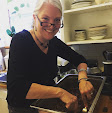
The proprietor.

“She was the cutest one there,” he said. They dated, then moved across the country to work in New York, he at Pino Luongo’s Tuscan Square in Rockefeller Center, a forerunner of market-based restaurants like Eataly, and she at Gramercy Tavern. While it may have sounded glamorous from the outside, they realized that they weren’t able to spend much time together or enjoy the city. Plus they were missing the slower pace of life on the West Coast.

“We realized there’s something about the West Coast lifestyle, it’s closer to a Mediterranean life,” she said.

Thursday, June 05, 2014

Ben Meyer: Making Sustainable Meat Accessible

Image

Ever since the first time I met Ben Meyer, I've wanted to write a story about his passion for local food systems. Today you can read my story about him in The Oregonian.

The first thing to note about Ben Meyer is not his polite Midwestern manners, his oh-so-Portland uniform of stocking cap, flannel shirt and scruffy beard or that he's opened two restaurants in what were then—and still are, to some extent—underserved areas of the city. It's not even that he's been interviewed by the likes of Forbes and the Wall Street Journal wanting to hear about the local pasture-raised beef and pork he features on his menus and in the butcher case.

The key to Meyer is that this evangelist for whole animal butchery, whose walk-in is chock-full of large cuts of dry-aged beef, some as old as 80 days, spent 10 years as a vegan. Growing up in northern Indiana, he said all he knew was industrial agriculture.

"I grew up surrounded by hogs and soy and corn in the Midwest—northeastern Indiana—and basically saw nothing but factory farms, never thought there was anything different," he said.

Already politically active, he became a vegan because he didn't want to support a food system he saw as intrinsically unhealthy for himself, the environment or society. A move to an organic farm on the lush agricultural land of Washington's Vashon Island was eye-opening, and his preconceived notion of what a healthy food system looked like was blown out of the water.

Read the rest of the article, titled "At Old Salt Marketplace, chef Ben Meyer makes whole animal butchery his primary mission," to find out what turned Meyer from a full-time vegan to an evangelist for sustainable, accessible local food systems.

Friday, January 17, 2014

Artisan Profile: Ancient Heritage Dairy

Image

Excerpted from an article I wrote for The Oregonian:

Editor's note: In 2007, Oregonian reporter Leslie Cole profiled Paul and Kathy Obringer of Ancient Heritage Dairy in Scio. Just one year after starting their creamery, their sheep's milk cheeses were beginning to attract attention in Portland and customers were flocking to their booths at local farmers markets. This is the story of their evolution from those beginnings.

Kathy and Paul Obringer were ready to take the next step. It was 2009, and the lease was up on the farm they had rented in Scio, where they had established their tiny Ancient Heritage Dairy, producing sheep and cow's milk cheeses from their own animals. With recipes Kathy had developed based on the bloomy rind Chaource cheese of France, and with romantic names like Valentine, Adelle and Hannah, the couple felt they were at the point where they could move beyond their mom-and-pop roots and evolve into a small business.

Image
Some of the creamery's flock.

The elderly owner of the property, while interested in selling it, was asking $100,000 over market value. Paul was getting fed up with the toll that the wet Willamette Valley weather was taking on the his sheep, the muddy pastures making it hard to keep them clean and healthy. Plus there was the yearly chore of lambing on damp, cold winter's nights that were hard on the ewes and their fragile newborns, not to mention the Obringers themselves, who had to go out at all hours to bring them into the shelter of the barn.

Image
Neil (left) and Hank (right).

Paul said they were in the truck one day looking at property when Hank, his then teenage son who had been Kathy's assistant cheese maker since he was a boy of 12, suggested looking in Central Oregon.

"It was Hank's idea, he said it," Paul recalled. "I'd never said it because (although) I knew I liked it, I thought it was too much of a stretch for them. But then Hank said, 'Let's try it.' and Kathy said, 'Let's do it.' And I said, 'Great!' "

Image
Willow, an aged cheese.

Soon after that they found 84 acres available outside of Madras, 65 of them irrigated, That would provide the ideal dry climate for raising the sheep and growing the alfalfa to feed them. With Kathy's name on the contract, because she was a woman business owner, they easily qualified for a Farm Service Agency (FSA) loan.

Image
Kathy's blue apron hangs in the creamery.

At the same time, they'd met Tony Arnerich, a former Portland restaurateur-turned-investment advisor, who was looking to invest in what he felt was the emerging artisan food culture of Oregon. Tony's son Nick, who was working at Thomas Keller's famed French Laundry in California's Napa Valley, had mentioned a cheese from a Portland creamery that the restaurant was serving.

"When he called that was the connection," Arnerich said, and he immediately went to the farmers' market to try it.

"I've been a food person all my life," he said. "And this guy made world-class cheese. Period."

Shortly after that, he and Paul began talking about Tony's firm, Arnerich Massena, providing expansion capital for the move to the new property.

Read the rest of the article here.

Monday, October 07, 2013

Honey Cookbook Gives Recipes and Insights into Bees

Image

"Throughout my childhood, happiness was honey for breakfast. And when oatmeal wasn't on the menu I slurped at honey combined with melted butter dripping from the nooks and crannies on a toasted English muffin and washed it down with honey-sweetened hot tea diluted with milk." - Marie Simmons, "Taste of Honey"

Image
Marie Simmons, author of more than 20 books on subjects like figs, rice, eggs and muffins, said the best part of writing her latest book, "Taste of Honey: The Definitive Guide to Tasting and Cooking with 40 Varietals," wasn't getting to try dozens of different types from all over the world. It was learning about the insects that produce it and how they turn the nectar from flowers into this ubiquitous sweetener.

A fan of honey for as long as she can remember, before writing the book she already had a collection of six or seven different honeys. During her research, those few jars became what she now calls a "library" of more than 100 jars that she keeps alphabetized on shelves in her Eugene garage.

Read the rest of the article and get the recipes in "Oregon cookbook author Marie Simmons delves deep into honey."

Monday, July 29, 2013

Meatless Monday, Meet Pro-Pasture Fridays

Image

My article on a new campaign to promote local farmers and ranchers who raise their animals on grass publishes online today in the Oregonian's FoodDay section in an article titled, "Farmers make the case for pasture-raised animals with Pro-Pasture Fridays."

And yes, that's my photo of cute piglets napping in the grass (above) adorning the article!

Tuesday, May 28, 2013

Oregon Artisan: Lisa Jacobs of Jacobs Creamery

Image

I've been watching Lisa Jacobs come into her own as a cheesemaker since her very first appearance at the Portland Farmers' Market at PSU. It was a privilege to write this article for the Oregonian's FoodDay section.

Not many cheesemakers can say they gave up a potentially lucrative law career to pursue the joys of 18-hour days with their hands submerged in a vat of curds, or up to their elbows in car grease because their truck broke down after picking up a couple of tons of milk from the dairy.

Image
But Lisa Jacobs of 3-year-old Jacobs Creamery said she was so disillusioned as a third-year law student by what she saw as the life of an attorney that she left to start her own online advertising company. After hiring out most of the work to subcontractors, she found herself with time on her hands and signed up for an intensive three-day cheesemaking class in Massachusetts with Ricki Carroll, a cheesemaker who was also a major character in Barbara Kingsolver's book "Animal, Vegetable, Miracle."

Read the rest of the story.

Friday, April 05, 2013

The Prosciutto Project: Hurry Up and Wait

Image

"Good things come to those who wait."

This old proverb extolling the virtues of patience has been appropriated by advertising agencies—Heinz ketchup and Guinness come to mind—and generations of moms with squirmy kids. (The moms, of course, potently implying that its opposite is also true.)

Image
Katherine meeting her meat.

I'm embarking on a project with Katherine Miller, editor of the Oregonian's FoodDay section, which will test my patience to the limit. That is, we're making prosciutto, the Italian style of dry-curing a whole leg of pork.

The process of dry-curing, I've come to realize, is not like making bacon, which cures for a week in the fridge and is then smoked for a few hours, whereupon it is completely edible. Nor is it like pancetta, which requires a week of curing and is hung in a cool, dark place for a couple of weeks before you can indulge.

Image
Kendra and Ivan of Goat Mountain Pastured Meats.

No, prosciutto is a much, much more protracted process, curing in salt for at least twelve days and hanging to dry-cure for up to a year. Yes, a year. Twelve months. Three hundred sixty five days—you catch my drift. No wonder wannabe charcutiers get wigged out just thinking about it. That's a long time to find out that you've just invested considerable time and money into what has become a big pile of moldy, not to mention potentially lethal, protein.

Image
Eric of Mt. Angel Meat cradling our prosciutto-to-be.

But hey, I thought it would make a good story, not to mention a tasty experiment, so I convinced Katherine we should do it together. Plus I think it helped that she got to meet a couple of my favorite meat farmers, Kendra Kimbirauskas and her husband, Ivan Maluski, of Goat Mountain Pastured Meats in Colton, and canoodle with their placid porkers.

We picked up the 25-lb. leg this morning from Eric at Mt. Angel Meat Co., a USDA-certified meat processor, salted it down, wrapped it in plastic and set it under weights in Katherine's fridge. I'll be able to tell you how it went in a year or so!

Tuesday, January 01, 2013

Things I Loved in 2012

Image

The FoodDay section of the Oregonian published its annual "Things We Love" roundup of favorites from 2012, compiled by its über-talented staff from an avalanche of submissions from contributors. They were kind enough to pick four of mine in the following categories:

Thursday, November 29, 2012

American Meat

Image

The other day I got an e-mail from the editor of the Oregonian's FoodDay section asking if I'd like to cover a screening of a new movie about the American system of meat production. It took, oh, about three seconds for me to check my calendar and respond in the affirmative.

While Stephen Spielberg's latest film, "Lincoln," and Graham Meriwether's "American Meat" both feature compelling storylines and engaging characters, there won't be any screaming headlines about a hot and heavy box office smackdown. And not just because the A-list actors in "Lincoln" and its upwards-of-$65-million budget dwarf the $250,000 Meriwether spent to make his movie about the farmers who raise the meat we put on our tables.

Meriwether is eschewing theaters for a more direct and, he feels, effective way to engage with his audiences.

"We're using a very unconventional distribution model," he said at a recent screening held at Cinema 21 in Northwest Portland. While most filmmakers apply to festivals such as Sundance or the Toronto International Film Festival and look for a distributor to pick up their film, he said his aim was to get "American Meat" directly to farmers. This fall, he premiered the film at the national conference of the Future Farmers of America (FFA), an organization for young people interested in becoming farmers. He's now screening the film at FFA chapters around the country, as well as at select colleges and universities with strong agricultural programs.

Read the rest of the article.

Sunday, October 28, 2012

The Year in Review

Image

I know, I know…2012 isn't even over yet. Some of us haven't even figured out our Halloween costumes yet, much less sussed out the intricacies of the who's-going-where and whose-family-is-going-to-feel-dissed issues surrounding the holidays or the budgetary boondoggle that's looming, and by that I mean Christmas. So what in heaven's name could this be about?

Image
Last year's Crab Cleaning 101.

Well, like the gift and fashion industries, freelance writers are in the out-of-sync position of having to think months in advance about stories. For us, Christmas is already over—editors want pitches about summer. You know, beach parties, outdoor barbecues, that kind of thing. So we huddle over our computers on cold and rain-soaked days trying to imagine what cocktails might be sipped under that beach umbrella or how we're going to sell a story that requires staging an outdoor dinner party in January.

Image
A visit to Bollywood Theater.

My problem right now isn't quite that extreme, but the January 1, 2013, issue of the Oregonian's FoodDay is going to contain their annual roundup of Things We Love from 2012. My deadline is the end of October (yes, two days from now), which will totally leave out all the crazy stuff that's going to be happening in November and December here at GSNW. I'm talking holiday farmers' markets, lots of braising, a pig slaughter, sausage making, gift giving…sheesh!

Image
The controversy over canola.

So if you have any suggestions for items to include on the list or nominations for your favorite post of the last year, do let me know by leaving a comment below. I'd love to hear what you think!

Top photo: spot prawn paella from late 2011.

Tuesday, August 14, 2012

Jooooolia! Top Writers Share Memories.

Image

What better way to celebrate a significant birthday than to share favorite memories about the person being fêted? So to recognize Julia Child's 100th, I asked some of Portland's best food writers about their first impressions of her, as well as what influence she might have had on their own cooking and their choice of a career. Best of all, they share the Julia recipes that they can't do without!

Read Oregon Foodies Cook Up a Batch of Memories of Julia Child. Then check out these recipes:
Illustration by Dave Badders for the Oregonian.

Monday, May 21, 2012

Master of Meat: Dario Cecchini

Image

My profile of storied Italian butcher Dario Cecchini and his recent trip to Portland appears in this week's FoodDay section of the Oregonian.

Image
Cecchini said of this shot, "Two pig."

There was so much to this story that I couldn't squeeze into the article, so I hope to post about it in the future. But for now, you can read what I think of as Part One: "Portland Butchers Learn from an Italian Master of the Craft."

Tuesday, April 10, 2012

The ABCs of CSAs

Image

The one thing that people tend to forget when they sign up for a weekly share in a season's worth of produce from a Community Supported Agriculture farm?

"You actually have to cook," said Katherine Deumling of Cook With What You Have.

Read my article on choosing a CSA in the Oregonian's FoodDay section titled "Get Recipes Ready When Joining a CSA."

Tuesday, March 13, 2012

Dirty Work, Delicious Payoff

Image

I'd heard about Oregon truffles. I'd eaten Oregon truffles. But I'd never had the opportunity to go out and dig them myself. Then the Oregon Truffle Festival invited me to attend this year's celebration, which included going out in the forest with dogs specifically trained to find them, as well as eating my fill of these native treasures prepared by Oregon's top chefs.

Image
Outside. Dogs. Native foods. Great eating. How could I say no?

Shortly after that I got to go out with restaurateur and Oregon truffle guru Jack Czarnecki and get the download on his life's passion. Read the result in my article in today's FoodDay section of the Oregonian, "Dirty Work, Delicious Payoff."

Read about my weekend in Eugene at the festival, including a great under-the-radar B&B and some good eating and drinking!

Tuesday, March 06, 2012

Cold Weather's Bounty

Image

My friend Linda Colwell isn't what you'd call an excitable sort, but when it comes to the goodness coming from the fields of an Oregon winter, all I can say is, "Stand back!"

Image
So when the Oregonian's FoodDay section asked me to put together a meal using products from our winter farmers' markets, I knew just who to call. Read about the winter feast we cooked up (and get the recipes!) in "Cold Weather's Bounty."

Photos by the ever-fabulous Motoya Nakamura.

Tuesday, February 07, 2012

Mascarpone for the Masses


Part of the myth of the classic superhero is that they walk among us, unrecognized, until the moment when their skills are required, whether to save a damsel in distress or to prevent a runaway train from plunging into a ravine. Whether they slip around a corner to strip down to their tights or simply take off as is from the street, they're inevitably paragons of beauty and rectitude.

ImageMy superheroes play just as important a role, even though they rarely get comic books written about them or movie deals based on their life stories. Today's story in the Oregonian's FoodDay, titled "Lessons from a Mascarpone Maestro," is about just such a person.

Marco Frattaroli was born in Rome to his mother, a university professor, and his father, an American earning his medical degree in Italy. He inherited his love of food from his family, since his father's parents had a restaurant in Philadelphia, and his mother's family were from Brescia, in Lombardy, known for its cheeses, salamis and prosciutto.

Image
As a child his family lived and traveled extensively in Europe, then as a young man he came to Portland to go to college at PSU. He stuck around, selling Roman antiquities and, oddly enough, hunting accessories, before deciding he wanted to learn to bake the kind of bread he remembered from his childhood. A stint as an intern in Italy taught him the skills he needed, and he and a friend opened the Tuscan Bakery, one of a small handful of artisan bakeries operating in Portland at the time (others were Pierre’s, Portland French Bakery, Le Panier and Bread & Ink).

He eventually opened Basta's Trattoria in 1992 in a renovated fast food joint, using reclaimed and recycled materials for the interior, with murals by Sandy Sampson, his first wife. Dedicated to local, organic and house-made ingredients, it was quite unusual for its time. And that kind of effort, especially spanning more than two decades, qualifies as heroic, at least in my book.

Video and photos by Randy Rasmussen for The Oregonian.

Monday, January 09, 2012

Things I Loved

Image

The beginning of a new year is a time for "Best Of" lists. Whether it's movies, restaurants, colonoscopy doctors…you name it, there's a roundup of it. One of my annual favorites is the "Things We Love" list in The Oregonian's FoodDay section, because I get to go back through the previous year's posts on the blog and pick out my 15 or 20 favorite items to pitch to my editor.

The FoodDay list includes 100 top picks drawn from a broad list of the section's contributors, all terrific writers who will not steer you wrong. The eight suggestions of mine that made the list include:
There were obviously several I submitted that didn't get included, but feel free to compile your own list of "GoodStuffNW Faves" by going through the archives (at the bottom of the left-hand column) and seeing what we missed!

Thursday, September 01, 2011

Conserving a Resource

Image

We're pretty old school around here. Both Dave and I grew up on opposite sides of the country but both with our noses buried in books—solving mysteries, flying in rocket ships, sailing the seven seas and generally living a much more exciting life than we found in our middle class homes and public school classrooms.

Dave eventually became a newspaperman, working in a real old-fashioned newsroom, with typewriters clacking and telephones ringing and years of accumulated coffee stains and cigarette burns on the desks. And there was always a haze of smoke floating in the air from the cigarettes dangling from the reporters' lips.

We actually met at a newspaper when I was in college and had a summer job in the ad department doing paste-up. Instead of going on dates he'd take me on reporting trips out to surrounding communities. When Mt. St. Helens exploded, we and droves of reporters rushed up to cover the story.

Today we still get two newspapers every day, and a perfect Sunday morning requires nothing more than the Sunday papers and good strong coffee.

I love the special sections in the papers, especially FoodDay in Tuesday's Oregonian, which I've been fortunate to write for in my new-found career as a food writer. So I was surprised, shocked even, when I opened the Oregonian on Tuesday to find that FoodDay, instead of having it's own section, had been merged with that day's Living section. Instead of its usual six pages, it was down to fewer than four. And the usual Living features, the comics and the TV listings were simply tagged on to the end, a bizarre mash-up of both content and style.

FoodDay's editor Katherine Miller, in response to an e-mail I sent expressing my condolences and questions, said "this change has been in the works for several months. FOODday is now four pages (once a month the fourth page will be the back of the section), instead of six. The move was part of the reorganization of the paper's features staff outlined last Sunday in an editorial by Executive Editor Peter Bhatia. This is also a move that many other newspapers have already made. In October I'll be attending the Association of Food Journalists conference in [Charleston, SC], where I'm sure I'll hear many similar stories."

It's a sad development, especially at this moment when Portland's food culture and the bounty of the region is exploding on the national scene. So how can we stop the demise of such an important resource about local food? Subscribe to the paper, write the editor, and let them know that FoodDay is important.

Tuesday, May 31, 2011

A Ramen Renaissance

Image

Ramen is back and it's big, as exemplified by two Portland restaurants, Biwa and the pop-up sensation that is Boke Bowl. Also includes a guide to shopping Asian markets (or any ethnic markets, really).

Read about them in my article, "A Ramen Renaissance," in today's FoodDay section of the Oregonian!

Photo above by Doug Beghtel for the Oregonian. Thanks also to Bruce Ely and Thomas Boyd for their great work!

Thursday, March 11, 2010

Livin' in the Blurbs: News You Can Use

ImageThis week has been big for small-batch coffee roasters. First it was news or, rather, news to some people, that Portland has surpassed Seattle as the big kahuna of coffee in the country. Then it was the cover of the Dining section of the NYTimes trumpeting the news that New Yorkers have a new-found obsession with micro-roasted coffee. And then it was word that the roasts put out by Matt Higgins of Coava Coffee, one of the micro-roasters I profiled in an article for FoodDay last year, have been picked up by online coffee retailer GoCoffeeGo.com. Founded by San Francisco coffee fiends Scott Pritikin and Elise Papazian, the company says it only sells "the ultimate beans from Super-Star Specialty Roasters throughout the country, who are known in their local communities as the 'gods and goddesses' of coffee." Hyperbole aside, Good Stuff NW wishes Matt and Coava the best!

Details: Coava Coffee Roasters, available at Red E, Barista and Crema in PDX.

* * *

ImageSometimes it takes a community to respond to a disaster, and Eastmoreland Market & Kitchen owner Colleen Mendoza is springing into action with "Hands on for Haiti," an art and culinary auction and benefit for Mercy Corps to be held on Thursday, April 1. Some of the city's best chefs (think Tommy Habetz from Bunk, John Stewart of Meat Cheese Bread, Karl Zenk of the Heathman, Ken Gordon of Kenny & Zuke’s and pastry chef Lauren Fortgang of Paley’s Place) will make mini-sandwiches for $1 each, and there will be a silent auction of artworks from the region’s most progressive and talented artists. And tickets for the event are only $10. No foolin'.

Details: Hands on for Haiti, Thurs., April 1, 6-11 pm; tickets $10 available online or at Eastmoreland Market, 3616 SE SE Knapp St. Event will be held at 1035 NW Lovejoy.

* * *

ImageAnd in news you can literally get a charge out of, longtime downtown resto Southpark has put in a charging station for electric vehicles in their parking garage next door. It might be a smart business move, since both Nissan and Mitsubishi have chosen Portland as a test market for their new line of electric vehicles. "Electric vehicles have hit home in Portland and we support and applaud these efforts," said Southpark General Manager Karin Devencenzi. "Our new charging station allows electric car owners to free their mind from any ‘range anxiety’ associated with battery usage, while having access to Portland’s city center."

Details: Southpark Seafood Grill, 901 SW Salmon St.; 503-326-1300. Southpark Garage, 914 SW Taylor St.; 503-228-6758.