Showing posts with label netgalley. Show all posts

Thursday, August 13, 2015

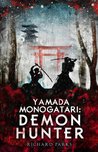
REVIEW: Yamada Monogatari: Demon Hunter by Richard Parks

Image
Yamada Monogatari: Demon Hunter Yamada Monogatari: Demon Hunter by Richard Parks
My rating: 2 of 5 stars

I picked this book up because it was urban fantasy in a Japanese historical setting. I was hoping it would be like the Japanese version of Harry Dresden. I should have looked at the book carefully and noted it was an anthology. What few anthologies I read I rarely enjoyed, and this anthology was no exception.

The good news was that it was a fast and easy read. I devoured the short stories in one sitting. I didn't need to flip to back to the glossary at the end during the reading. Of course, being a manga fan, I was already familiar with some of Japanese culture. For example, honorifics and a loose fashion sense of the Heian period. Of course, there were some things I wasn't familiar with, but I understood them easily from the context. It helped that the paragraphs generally avoided being overly long and the sentences were straightforward.

+ the protag

The bad news was the gritty theme, even if it was very mild. I rolled my eyes at the down-in-the-dumps protagonist. I became disdainful when it was immediately revealed that his impoverishment was of his own making in face of the facts that he owned a noble title and was a skilled warrior, two things his society greatly valued. Yup, any sympathy I may had felt for him eroded away completely, and even when shit hit the fan and smacked his face I remained stoic.

Then, I shook my head in great annoyance when his luck turned worse because of — you guess it — a woman who was a damsel in distress and a femme fatale in a two-for-one bargain. Obviously, it wouldn't be complete without the protag slipping into depression and drinking himself into oblivion.

Thankfully, the drunken depression only lasted for a few short stories and, not to say the protag completely recovered, the protag got a better outlook on life at the end. Though, that's not saying much since he was basically back to square one... maybe square minus one or two since his grief was still ached some. Well, at least when it comes to his work, Yamada is competent and clever. Not to mention his loyal friends.

+ tragic galore

Among other things I didn't like was how most of the short stories ended dismally. In other words, only two short stories, in my opinion, ended happily and I'm using "happily" very loosely. For those who likes their fairy tales and fairy tales-inspired work to be traditionally tragic, you'll see it as a pro. For me who likes happy shit, it's a big con.

The first short story, "Fox Tail," already had my face in my palm, because the stupid kitsune wife could have had a happy life if only she told the truth to her sincerely loving husband. It didn't matter that she couldn't stay in human form for a long time. She only needed to do it in front of humans, and she only needed to do it occasionally since noblewomen are allowed to lead a nun-like life, especially when that noblewoman is part of a powerful clan where spreading rumors would mean to risk one's head. Also, if that one kitsune crone could do it and maintained her deception without any human knowing the better, including her son who she helicopter-parented, the young kitsune wife certainly could.

Anyway, "Fox Tail" didn't ended resolutely, because sooner or later someone got to tell her baby she gave up custody of that he's part kitsune and part human and will have abilities because of his strong kitsune blood when he grows up and weird shit starts to happen around him. I know this first short story is based on a real Japanese fairy tale so the ending had to be that way to remain close to its inspiration... but must it? I would have much preferred for the author to spin it and say this is how things should have ended if the characters had some good sense clobbered into them.

Another thing I didn't like was how stereotypical Japanese some of the characters were. Honor, sacrifice, suicide, blah, blah. The motifs were tiresome. The short stories by themselves were not problematic, but together in anthology, the bigger picture painted was a little problematic for me. It made me think a happy Japanese person was like a mythical unicorn. The motifs could have been part of the gritty theme, but that doesn't make me feel any better.

Conclusion

I rate Yamada Monogatari: Demon Hunter 2-stars for it was okay. For an anthology, it could have have been worse, but at the same time it could have better. Life is unfair, but these characters just lacked good sense and the kind of courage to fight for their happily ever after. Fighting dangerous monsters they're totally okay with, but fighting for one's happiness and dreams is apparently too much.

Readers who love everything about Dresden Files and like some grit will likely enjoy this book. The demon hunting in this book is basically detective work with demons involved, most of them needing their evil ass kicked. In short, this book is your typical male protag Urban Fantasy. Readers like me who like Dresden Files moderately but don't care for grit should look elsewhere. At least with the Dresden Files, there is a little humor whereas in this book there is none.
read more ››

Monday, June 2, 2014

REVIEW: The Plague Forge by Jason M. Hough

Image
The Plague Forge (Dire Earth Cycle, #3) The Plague Forge by Jason M. Hough
My rating: 1 of 5 stars

It sucked. Horribly.

+ the writing

The writing didn't improve an inch. It remained excessively detailed. I swear, if a character went to the restroom to take a dump, the scene would have lasted FIVE full pages. Then, in the next chapter the character would still be shitting and it wouldn't be because of constipation. It didn't matter if there was action, which the book had a lot, the pace moved like molasses. I had less patience for book 3 than for book 2 so I skimmed more. I skimmed a lot. You know it's a bad book when you're skimming the action scenes.

+ the characters

I ceased caring for Skyler. He did improve from book 1. He did less angsting and more doing. Nevertheless, the character growth was nowhere enough for me to give a fuck whether the protag lived or died.

Tania, the second protag, improved a lot from the annoying-as-fuck damsel in distress she was in book 1. However, she regressed a bunch in book 3 by obsessing over Skyler. It was annoying enough to watch unrequited love from Skyler's side towards Tania, it was doubly annoying to watch it from Tania's side towards Skyler. The non-communication suffocated me.

Add in Ana, Skyler's current girlfriend, and a stinky love triangle exploded in my face. I felt bad for Ana because she loved Skyler but Skyler didn't love her as much, not as much as he secretly loved Tania. Honestly, the only reason I believe the two women loved Skyler was because he was the hero of the story and it's standard for heroes to have more than one love interest. In other words, the romance was forced and superficial.

The love triangle grated on my nerves. Tania and Ana seemed to be defined by their love for Skyler. At least with Tania, she was a protag of her own and had a life outside of Skyler. Though Ana was promoted from a minor character in book 2 to a major character in book 3, she existed solely as Skyler's sidekick. Without Skyler, she would have faded completely to the background. Thankfully, relief came in the middle of the big book when shit was so important that they couldn't afford the luxury of even a minute to obsess over Skyler. It was also depressing that it took that long and that much.

Samantha, the one major female character who wasn't a love interest of Skyler's, ceased to be my favorite character. I still liked her, which is hugely more than I feel for Skyler, but she wasn't doing anything that I thought was important shit. All she did was run, hide, and fight. It was pretty entertaining in book 1. But as the series progressed, it became boring. She didn't really serve a big role except to be one of the good guys for Skyler to save.

As for the villains, one of them disappointed me greatly. Blackfield broke character by performing a heroic act. After all that animosity and fighting against our good guys, suddenly he decided to help them towards the end because of, ew, altruism? No. I didn't buy it. I didn't buy the reason given that Blackfield was "varying the pattern," his motto of acting unpredictably to win. There's a thick line between acting unpredictably and acting altruistically, forgetting the fact that you're a despicable villain. What he should have done was backstab our good guys and survive like the cockroach of a person that he was.

As for Grillo, the other villain, he frustrated me, but it was in the sense that he was a great villain and he was kicking our good guys' ass. He didn't disappoint me as it was the good guys who disappointed me because they couldn't match him in war. What few victories the good guys gained were by luck in my opinion.

+ the ending

The ending was the worst offender of the book and overall, the series. It was rushed. It had dei ex machina. To add insult to injury, the epilogue was a letter addressed to the reader, telling the reader everything in one fat infodump. By everything, I mean all the things the book withheld from the reader. The reader learned about the reasons behind the apocalypse on Earth, the apocalypse in a galactic empire, the aliens' mission, and the characters' next adventure. The epilogue revealed the entire series as a prelude to the real story where the characters will fight supposedly evil aliens in a galactic war. A FUCKING PRELUDE. Why the fuck was this series not that story?

My feelings were confirmed in a Goodreads review which said that this trilogy was the first of three trilogies. *facepalm* I doubt that will happen if I have learned anything about series, sales, and publishers.

Conclusion

I rate The Plague Forge 1-star for I didn't like it. My only consolation was that I skimmed and the books were free courtesy of the very nice publisher humoring my requests. This series was essentially an unnecessarily expanded-to-the-extreme version of those prequel short stories you often see in Young Adult series.

If you read book 1 and didn't care for it but have a compulsion like me to know what happen at the "end," read book 3's epilogue. It's the only chapter that matters.

---
Review of book 1: The Darwin Elevator
Review of book 2: The Exodus Towers
read more ››

Thursday, March 13, 2014

REVIEW: One Man Guy by Michael Barakiva

Image
One Man Guy One Man Guy by Michael Barakiva
My rating: 4 of 5 stars

I picked this book up because the book description promised humor and romance, and I love humor and romance. Not to mention the book cover was cheery yellow. Sure enough, the book was accurate as advertised.

I had worried how the theme of homophobia would be presented because I didn't want Alek and Ethan to get hurt. I didn't want to read something sad especially when the book promised humor. I still recall the disappointment of How to Repair a Mechanical Heart. Thankfully, the theme of acceptance put my worries to rest.

+ the characters

As I followed Alek's narration, I couldn't help but think about my teenage years. Alek made several bad decisions such as cutting class and lying to his parents. However, I found it pretty hard to condemn him for his decisions because it would be the pot calling the kettle black. As I judged Alek, I also judged myself. I cringed as my memories threw out all the stupid things I did on the front stage of my mind. I know one does not need the moral high ground to point out something that is outright stupid, but I still cringed regardless.

I had little problem judging Ethan, though. Heh. While most of the blame is upon Alek, Ethan was no innocent. Ethan was awesome for saving Alek from a bully, but it didn't change the fact that he was a bad boy cliche. He was part of a clique called D.O., which is short for Drop Outs and self-explanatory. The D.O. were the last classmates Alek should be hanging out with. If Alek wasn't easily influenced I wouldn't have cared, but he was. Ethan led Alek on the same prospectless path. I liked that Ethan was broadening Alek's world horizon, but they could have done it without delinquency.

Finally, Ethan wasn't sensitive to Alek's needs, which I found highly ironic. Ethan was making the same mistake with Alek as his selfish ex-boyfriend made with him. I didn't care for Ethan for most of the book, but in the end he won my heart as he won Alek's.

Alek and Ethan were flawed enough to be believable, but smart enough to realize their mistakes so the story was not frustrating to read. I liked that they were portrayed as teenagers who made stupid mistakes and not stupid teenagers being stupid.

Honorable mention is Becky, Alek's best friend. I saw the misunderstanding with her a mile away. I'm glad it was quickly fixed. I was relieved she stayed a true friend and supported Alek throughout the book. I loved how bluntly she pointed out that Alek had a crush on Ethan immediately after Alek told her about his new friendship with Ethan. It was funny how Alek could be so oblivious about himself and other people.

+ the plot

In the beginning, Alek's Armenian heritage was the source of his teenage drama. Alek's family was high-maintenance, and they had high expectations for their children, Alek and his big brother Nik. But later Alek came to realize that as much as the heritage was a pain in the neck for him, it was an important part of his identity and pride. Because of Alek, I learned a bunch about the Armenian history, culture, and food — especially the food. Warning: do not read this book on an empty stomach.

The romance was slow and nice for one that had several red flags because Alek made bad decisions. The ending was a HEA, which pleasantly surprised me. The most I expected was an Okay For Now ending, not even a Happy For Now ending, because it is a Young Adult contemporary. It was a little unbelievable how quickly some of the characters reconciled, but I confess I didn't care.

The one thing that book dropped the ball on was the bullying. It was unbelievable that Alek and the bully were on good term after the incident. But based on the many things the book could have dropped the ball on and the overwhelming theme of reconciliation, I let it slide.

Conclusion

I rate One Man Guy 4-stars for I really liked it. I bumped the book up a star because it left a big grin on my face at the end, unlike How to Repair a Mechanical Heart.

For a book that simply promised humor and romance, it delivered a lot more than humor and romance. There were themes of family, friendship, acceptance, and reconciliation to list a few. And then there was the HEA, which was icing on the cake. I can totally imagine the book as a romantic comedy movie.


Book Description

Alek Khederian should have guessed something was wrong when his parents took him to a restaurant. Everyone knows that Armenians never eat out. Why bother, when their home cooking is far superior to anything "these Americans" could come up with? Between bouts of interrogating the waitress and criticizing the menu, Alek’s parents announce that he’ll be attending summer school in order to bring up his grades. Alek is sure this experience will be the perfect hellish end to his hellish freshmen year of high school. He never could’ve predicted that he’d meet someone like Ethan.

Ethan is everything Alek wishes he were: confident, free-spirited, and irreverent. When Ethan gets Alek to cut school and go to a Rufus Wainwright concert in New York City’s Central Park, Alek embarks on his first adventure outside the confines of his suburban New Jersey existence. He can’t believe a guy this cool wants to be his friend. And before long, it seems like Ethan wants to be more than friends. Alek has never thought about having a boyfriend—he’s barely ever had a girlfriend—but maybe it’s time to think again.

Michael Barakiva's One Man Guy is a romantic, moving, laugh-out-loud-funny story about what happens when one person cracks open your world and helps you see everything—and, most of all, yourself—like you never have before.

Goodreads | Amazon
read more ››

Wednesday, March 12, 2014

REVIEW: Please Don't Tell my Parents I'm a Super Villain by Richard Roberts

Image
Please Don't Tell my Parents I'm a Super Villain Please Don't Tell my Parents I'm a Super Villain by Richard Roberts
My rating: 4 of 5 stars

This book was so fun I was downhearted when it ended. Penny and her two friends kept me guessing and excited with their capers. It took a couple chapters before the excitement started, but once it did I savored every page of it.

What I Liked

For characters who got carried away and into deeper trouble when they were trying to get out of it, Penny, Ray, and Claire were marvelously competent. They made Penny the leader of the team because she was super smart. Furthermore, they actually listened to her, avoiding the trap super people on a team commonly fall into in other books of all age categories. Known as The Inscrutable Machine, Penny's team practiced teamwork. They knew when to fight and preen, and when to retreat. They learned from their mistakes and took heed of advice. Not to say they were not reckless because they absolutely were when they could have ceased their mischief at any time. However, they controlled their recklessness greater than I ever expected.

Penny, Ray, and Claire were so mature that I often forgot that they were young teens on the cusp of high school and not full blown teens. I loved that there was never any condescension against their age. Penny and her friends were dangerous kids and the other characters treated them like dangerous kids. The danger was real no matter that the characters were sometimes playful about it.

While I loved the entire team, Penny was my favorite character. I loved how the book presented her as the star in more than just making her first person viewpoint as the exclusive viewpoint of the book. She had issues so it was easy for me to relate to her. One of her issues was living up to her parents' expectations, and that was something I totally understood. She had tenacity so it was easy for me to root for her. Hurray for a kickass heroine! Not only that, it was her super intelligence that made her kickass. I loved that the book made being smart cool and a revered trait of strength.

Finally, I also loved the fact she didn't let her crush on Ray preoccupy her mind. There was a love triangle between her, Ray, and Claire but thankfully, it didn't disrupt their friendship. I loved that the book never made a big deal of the issue and that the issue was kept in the background where it rightfully belonged. The issue popped up occasionally but it always dropped back down in deference to more important priorities, like surviving the next battle. Young Adult protagonists should take notes from this Middle Grade protagonist.

What I Didn't Like

I didn't like Ray's character development. One, it was severely lacking compared to his friends. I learned a lot about Penny and her family, and Claire and her family. But I didn't learn anything about Ray and his family except for the fact that they were vanilla humans and not as rich as his friends' family.

Two, I didn't like how he kicked his human talent of intelligence to the curb once he acquired his superpower. I understood his inferiority complex. Nobody likes feeling helpless and seeing injustice. I only wished he had come to realize his complex and that he was overcompensating. It would have been wonderful if he worked with Penny on her inventions and plans. It was such a shame that he pigeonholed himself as the team's muscle.

The second thing was Generic Girl, one of the superheroes our team fought. It was weird how she appeared practically once and never appeared again till the end like an almost forgotten afterthought. She could have easily been the one to stop The Inscrutable Machine if she persevered, especially when she and Penny knew each other's secret identities. Not to mention the fact that the community of supers worried about her as much as they worried about The Inscrutable Machine. That worry disappeared after it was mentioned once. The plot piece was a loose end, and I didn't like it.

What I Had Mixed Feelings

I worried a bunch about the karma The Inscrutable Machine would reap. They were dangerous kids and they were marvelously competent. However, it didn't change the fact that they were still kids, and they were kids going against superheroes and seriously bad people instead of sidekicks their age towards the end. Not to mention the collateral damage.

It was amazing and unrealistic how the gang prevailed every time. The book description was true to its words. Penny and her friends did always come out on top. That said, it was more delightfully and relievingly amazing to me than it was annoyingly unrealistic.

On one hand, it bothered me that Penny and her friends got off scot-free with some of the characters none the wiser, especially towards the end. On the other hand, I derived enormous amount of entertainment in the book being purely a work of youth escapism. Ultimately, this was the hand that won out.

Conclusion

I rate Please Don't Tell my Parents I'm a Super Villain 4-stars for I really liked it. Totaling 384 pages, the book is big and indulgent. I highly recommend the book if you're looking for a super fun superheroes read.


Book Description

Penelope Akk wants to be a superhero. She's got superhero parents. She's got the ultimate mad science power, filling her life with crazy gadgets even she doesn't understand. She has two super powered best friends. In middle school, the line between good and evil looks clear.

In real life, nothing is that clear. All it takes is one hero's sidekick picking a fight, and Penny and her friends are labeled supervillains. In the process, Penny learns a hard lesson about villainy: She's good at it.

Criminal masterminds, heroes in power armor, bottles of dragon blood, alien war drones, shape shifters and ghosts, no matter what the super powered world throws at her, Penny and her friends come out on top. They have to. If she can keep winning, maybe she can clear her name before her mom and dad find out.


Goodreads | Amazon
read more ››

Friday, February 21, 2014

REVIEW: Shanghai Sparrow by Gaie Sebold

Image
Shanghai Sparrow Shanghai Sparrow by Gaie Sebold
My rating: 2 of 5 stars

For a historical fantasy that contain “Formidable Devices, Fay, Etheric Science, Espionage, Opium, Murder and Bartitsu” — exciting stuff, it was restrained. Blech. Fantasy is supposed to be fantastic, not restrained. I found the book lacking in many ways.

+ the characters

I liked Eveline from the start. She was clever and wisely distrustful. She didn’t let the bad guys break her composure. She didn’t need anyone to tell her how much danger she was in. She knew when she was being bullshited and knew how to bullshit back. In short, she had a functional brain, unlike the many YA main characters I have read recently (Cress, The Seers, Cold Fury, The Pirate's Wish, and Altered to name a few).

I had only one gripe with Eveline, and it’s really more of a grip with the plot than with the heroine. I didn’t expect her to succeed at every turn, but at the climax I wished she had the upper hand. I wished it was pure wit that saved the good guys, not by convenient luck and improvisation. I wanted Eveline to be the heroine in her full glory, but instead she got nudged out of the limelight.

I also liked Beth, Eveline’s friend. Usually, the geek sidekick is a guy, but it was Beth instead, and I found it very refreshing the geek sidekick was a girl for a change. Along with Madeleine, I loved how there were women scientists and how they played a big role towards the end. What I did not love were how the scientists were passive, particularly at the rising action. If Eveline was absent, Beth and Madeleine were up the creek without a paddle.

Speaking of helpless female characters, there were too many for my liking. For a book eulogizing women’s empowerment, it seemed to love the damsel in distress trope. Thankfully, the plot lines for Treadwell and Charlotte wrapped up quickly and kept the angst down.

I hated Holmforth’s viewpoint. He was a big sack of self-loathing and prejudices. Being in his head, even though it was only 3rd person, pushed my limit for the foul character. I had to skim his viewpoint to salvage my enjoyment with the book. Thankfully, his viewpoint ebbed towards the middle of the book and didn’t rise back till the rising action. Just like how the heroine was nudged out of the limelight, so too was Holmforth in his role as the main bad. As a result, his comeuppance did not feel as satisfactory as it should have been. It was more like an afterthought really.

As for Liu, I wanted to like him, but the guy was too mysterious. Mysterious Liu is mysterious. I recognized that was the intention, but it really impeded me from getting to know him. I couldn’t get any sense of him other than the fact that he wasn’t an enemy of Eveline’s. At least, not intentionally. Plus, it didn’t help that he was around Eveline’s age. I kept thinking of him as her love interest. You know you read too many YA when you automatically assign any boy whom the heroine immoderately interacts with as the heroine’s love interest. Finally, it bothered me that the one important Asian character in the entire book and he was mysterious and exoticized.

The only characters who were more mysterious than Liu were the Folks, which the book called the faeries. And they weren’t mysterious as they didn’t have any character development. Throwing out a couple ubiquitous details such as how the Folks have magic and how they’re immortal does not constitute character development. Despite what a big deal they were, the Folks were never more than hazy, shadowy background characters.

+ the plot

I hated the long ass flashback at the third of the book. Seriously, it was really long. It fucking took up 16% of the book. Yes, I counted. I liked Eveline but I did not need to learn in minute detail how she lost her bourgeois family and became a hardened street urchin. I wanted Eveline’s backstory but I did not want it in one constipated infodump of a giant sob story. No. Just no.

In regard to the setting, the sense of England was strong, but the sense of China was pitifully weak. Even though the setting alternated between England and China, it was set in England like 80-90% of the time. The few scenes that did take place in China honestly felt like they could have taken place anywhere else. The book would have been better off set entirely in England and in a Chinatown of England. “Far Eastern steampunk” my ass.

Well, at least there was steampunk because there was not much of anything else. The espionage was underwhelming. The etheric science was nebulous. The historical side was thin. It’s like expecting real fruit juice but receiving some carbonated shit made with 10% real juice. This reader was highly disappointed.

Conclusion

I rate Shanghai Sparrow 2-stars for it was okay. The book was a classic case of all that glitters was not gold. The only thing the book got right was the dynamic heroine. On the bright side, this book was still better than the Spiritwalker trilogy by Kate Elliott beginning with the fact that the book isn’t a dragged out trilogy.


Book Description

Shanghai Sparrow is a Far Eastern steampunk tale of espionage, distant empires and thrilling exploits, with a dynamic heroine.

The British Empire is at war, both within and without.

Eveline Duchen was once a country child, living a life of privilege, touched by the magic that still clings to the woods and fields of Victorian England. Now she is a street urchin in a London where brutal poverty and glittering new inventions exist side by side, living as a thief and con-artist under the wing of the formidable Ma Pether.

Caught in an act of deception, Eveline is faced with Mr Holmforth, a gentleman in the service of Her Majesty’s Government, who offers her a stark choice. Transportation, or an education – and utter commitment to Her Majesty’s Service - at Madam Cairngrim’s school for female spies. The school’s regime is harsh. Eveline has already learned harder lessons. She plans to take advantage of everything they can teach her, then go her own way.

But in the fury of the Opium Wars, the British Empire is about to make a devil’s bargain. Eveline’s choices will change the future of her world, and reveal the truth about the death of her sister Charlotte.

Shanghai Sparrow is set in an alternative England and China. It contains Formidable Devices, Fay, Etheric Science, Espionage, Opium, Murder and Bartitsu and may not be suitable for those of a delicate disposition.

Goodreads | Amazon
read more ››

Sunday, February 9, 2014

REVIEW: Honor's Knight by Rachel Bach

Image
Honor's Knight (Paradox, #2) Honor's Knight by Rachel Bach
My rating: 4 of 5 stars

Every bit as good as book 1, and more; book 2 dazzled me. Every time I thought I knew a character or the situation, the book blasted me with new details and showed me how wrong I was and how little I knew. I know the saying “there are two sides to every story.” I knew it was the message the book was sending. Nevertheless, I still got my ass handed to me.

+ the plot

The book started off slow for me because I didn’t like following memory-wiped Devi. I hate to see beloved main characters in a helpless position. The inexplicable emotions, the strange floating creatures only she could see, the “dreams” she was having. Devi began to doubt her sanity. Who wouldn’t? Thankfully, the torment didn’t last long, and that was when the book really began for me.

Once she quickly regained her memory, she gained some answers from Caldswell. Hurray for answers! I LOVE IT when a series doesn’t make me wait for them. Those answers were the phantoms, those strange floating creatures only plasmex users could see. And somehow she could too, because she was not a plasmex user. The phantoms were invulnerable aliens who traveled around outer space, and occasionally a big one would effortlessly destroy a planet for no discernible reason. The human governments kept it a secret because imagine the panic. The fact that only plasmex users, less than a hundred in existence and very short-lived, could kill these phantoms? Panic.

Devi immediately realized it was the virus she contracted on the alien ghost ship back in book 1 that gave her the special sight. The virus also made her The Most Wanted Person In The Universe. It’s no exaggeration to say she could save the world or bring it to its end. It’s a fucking virus. Book 2 is about what Devi going to do with it as the only carrier. Cue moral choices. Lots of them.

The action was nonstop and BREATHTAKING. My pulse rate and mind was never at rest. I was constantly wondering how the fuck was Devi going to escape her predicament and what was she was going to do next. Every path seemed to be a death trap. One wrong move and BOOM, everyone dies. No do-over.

+ the characters

I loved Devi. Loved her. She was fucking tough as nails. The only time I thought she made a stupid was when she went to a Paradoxian noble for help after everything she had learned about the conspiracy with the phantoms. I swear, her Paradoxian loyalty will be the death of her. Thankfully, things quickly worked out. It was amazing to watch Devi make like a contortionist and pull a Houdini. Go, Devi!

I still don’t really care for Rupert, but I admit he’s growing on me. It helped that Devi immediately stopped being a lovestruck fool when her memory was restored and gave the bastard some deserved asskicking in more than one way.

Mabel being a warrior was a surprise because I should have seen it coming. I knew there was more to that overly cheery, super-competent mechanic. Nevertheless, she still remained an enigma like her cat. In book 1, I learned about Nova and Hyrek. In book 2, I learned about Basil, Ren, Caldswell, and Brenton. Now I understand why Basil is so perpetually cranky. Everything about Ren was tragic all around, and I was grateful the action-packed plot saved me from dwelling on the matter, along with all the other sad matters.

With Caldswell and Brenton, I couldn’t keep from thinking one was the bad guy and one was the good guy. It took me a while to learn that no matter how much I learned about these characters, I wasn’t going to ever get the “full story.” That for all my attempts to judge them and play god, I couldn’t. It didn’t feel right. Matters were so gray. Even loony Maat was sympathetic, and I trust her as far I could throw an elephant.

The only characters that didn’t have my sympathy were the war-loving, man-eating, slave-owning xith’cal race. I cannot imagine in any way they would be misunderstood.

Finally, Anthony. He wasn’t in the book, not even as a passing reference. In book 1, Anthony wanted to help Devi, and she cut him off. During her escape, I would have thought she contact him for help. But no, she went to a Paradoxian noble stranger. Ergh. Kind of a plot hole where Anthony is concerned.

+ the moral choices

Some examples: Is biological warfare ever acceptable? At what point is the cost of saving the world too high and inhumane? Could the cost ever include sacrificing your children? Sacrificing the few for the many, where does the line stop?

That last question was the one I thought about the most. I couldn’t help but feel the characters’ thought process, including lawful Caldswell’s, were distinctly American. To be specific, culturally individualistic. Sacrificing the few for the many, no matter how inhumane, is a no-brainer for some collectivistic cultures. I don’t know how to feel about the lack of representation of that ideology in the book and how the closest thing to such a representation are through the aliens. At any rate, I don’t envy the characters for the responsibilities they’re forced to bear.

Conclusion

I rate Honor’s Knight 4-stars for I really liked it. Book 2 was a thriller science fiction, and I was definitely thrilled. The series got EPIC. Please let the series ends well.

Review of book 1: Fortune's Pawn
 

Book Description

The rollicking sequel to Fortune's Pawn an action packed science fiction novel.

Devi Morris has a lot of problems. And not the fun, easy-to-shoot kind either. 

After a mysterious attack left her short several memories and one partner, she's determined to keep her head down, do her job, and get on with her life. But even though Devi's not actually looking for it trouble keeps finding her. She sees things no one else can, the black stain on her hands is growing, and she is entangled with the cook she's supposed to hate.

But when a deadly crisis exposes far more of the truth than she bargained for, Devi discovers there's worse fates than being shot, and sometimes the only people you can trust are the ones who want you dead.

Goodreads | Amazon
read more ››

Sunday, January 26, 2014

REVIEW: Wallflower by Heidi Belleau

Image
Wallflower (Rear Entrance Video, #2) Wallflower by Heidi Belleau
My rating: 1 of 5 stars

I thought this book would be a fun read. I thought WRONG. It was HORRIBLE. I thought, hey, what could go wrong with a main character who is Asian, an art student, and MMORPG addict, a cross dresser, and more importantly, Asian? Represent! Robert sounded like a cool person. Eeeeecccck. Not if he’s an emo. Oh My Gawd was he such an emo.

+ the main character

Robert Ng sucked. Reason number one, he had a Loser Complex the size of a stinking hill of manure. I would have felt bad for him were it not for the fact that the only reason his life was crappy was because he made it crappy. He had no one to blame but himself. He constantly threw one pity party after another. Rarely did his thoughts ever stray from how much he sucked. Honestly, it would have been a miracle if he spent a few seconds to think that other people might have problems too. It would probably blow his mind if he read the news and learned about all the bad things that happen in the world. Robert used up all my patience by chapter two.

Reason number two, his character development was piss poor. Art student, MMORPG addict, and Chinese descent? These traits were window dressings. The reader only ever see him taking one art class, Introduction to Art Principles. While one art class is enough to make him an art student, he was a poor excuse for an art student. He worked in the video store and moped at home more than he ever did anything as an art student. As for the MMORPG part, playing video game a couple times does not constitute a person an “addict,” especially not someone who played two times in the entire story. As for his Chinese background, the main character could have been switched with a white person and it wouldn’t have made a difference. He may have a Chinese last name and Chinese look but other than that, his character was whitewashed.

Reason number three, and this one pissed me off the most, his character was defined by his transgender status. I understood transgender is a big theme in the story, but it came at the cost of developing Robert as a real person. If Robert wasn’t transgender or decided not to be transgender anymore, he would be a nobody in the sense that the trans part of him, his Bobby identity, was the only thing that mattered and without that he’s nothing. Put it another way, it’s kind of like defining a woman by her fertility status. If she can’t pop out a baby, she’s nothing. People are the sum of their parts, and this was forgotten when Robert was developed as a character. The fact that he was an art student, a MMORPG addict, a Chinese-Canadian, a brother, and a son among other things? It was like these things could matter less because whatever.

+ the transgender theme

Ironically, considering the emphasis of the theme, I thought it could have been executed better. Sometimes it came off as the author’s narration instead of Robert’s narration, and it came off as preachy. It was preachy in the sense that the important messages had to be said point-blank because the reader couldn’t be trusted to learn them from the characters’ action. I felt this diminished the impact of the messages.

I also got the feeling that the one of the reasons Robert became Bobby, his female self, was because he was uncomfortable with his homosexuality and needed a safe way to express it. It seemed like half of the time he became Bobby, he flirted with guys or had lusty thoughts about men. After all, it is hard to be rejected or worse, gay-bashed if one is a pretty girl and not a shy weak gay male. Plus, towards the end he didn’t feel the desire to be excessively effeminate when he tried on an androgynous look and didn’t mind being a man for Dylan.

+ the plot

It wasn’t till the middle of the book that the romance finally started and the emo part was put on a break, if only for a few seconds. One thing that jarred me was the weak sense of time. Where did Robert have the time to play video games, go to college, take yoga with his sister, work in a video store, date Dylan, and most importantly, mope? The answer is he didn’t because some of his roles were window dressing. The one part the plot did get right was Robert working in the video store, Rear Entrance Video, which is the name of the series. I get the feeling that if it wasn’t the name of the series, Robert being a video store worker would have been on the wayside along with the other roles.

My least favorite part of the book was the sexual assault. It felt too much like obligatory external conflict and a very cheap way to push the main character into self-reflection and growth. Yay, another book where rape is used as a plot device. /sarcasm. Well, the bright side was that the bad guy got his comeuppance.

Finally, I didn’t care for the smut. If there was anything that could have redeemed the story for me, a smut freak, it would be the smut. While the sexy times were hot, they were on the low side of hot, even with the sexy dirty talk.

+ what I liked

The only part I liked was Dylan. He had issues but he was likeable and very enjoyable to read about. Not to mention his character development wasn’t whitewashed on an oversight. I would like to say Dylan could do better than Robert but that’s only because I don’t like Robert. I hate to admit it but Robert and Dylan do make a good match.

Conclusion

I rate Wallflower 1-star for I didn’t like it. The first half was unbearable to read. The second half was barely tolerable. I would have enjoyed the book if Robert wasn’t emo. Had he been like Dylan was, confident and couldn’t care less about what other people think (or pretend not to care), I would have enjoyed the book. A kickass crossdresser, now there’s a main character I can get behind with.

Goodreads | Amazon
read more ››

Friday, January 24, 2014

REVIEW: Lockstep by Karl Schroeder

Image
Lockstep Lockstep by Karl Schroeder
My rating: 3 of 5 stars

This was one of my most anticipated books for 2014. I enjoyed the read but I was not wowed as I had hoped to be.

What I Like

+ the world building

The world building confused me, which I should have expected because the book was hard science fiction. It wasn’t till the middle of the book that I finally understood what lockstep was, and I felt giddy when I did. It took some time but it was worth it. I was amazed by how sophisticated and creative the world building was.

It was very interesting reading a world where human civilization had expanded into the endless outer space yet they didn’t have superluminal travel. I must confess; I was resistant to the idea because I really do believe one day — in the far-off future — humanity will have superluminal travel, and I didn’t like reading something that would challenge that belief. Now that I have read this book, I’m not greatly resistant to idea of a world where superluminal might never be possible. I could perfectly imagine how people can live on the same timeline despite the immense distance between worlds, the different planetary cycles, and other forces of time.

One of the things that surprised me was the underlying environmental theme. There is a saying that “money runs the world.” In this distant future, resources run the world — all of the worlds. No matter how far human civilization may have expanded into outer space, the message in the book says we will always be restricted by natural resources and we will fight amongst ourselves over them.

Another thing that surprised me was how there were robots yet humans still had to do menial labor, and some of them, specifically the very poor, even worked for the robots. The idea of lazy robots outsourcing their jobs made me chuckle. It reminded me of the robots in Futurama but without the sassy personalities.

The only thing about the world building that left me thinking was the fate of trillionaires left on Earth. What happened to them after the McGonigals took over? The book never really did say.

+ the main character

I liked Toby. For someone who woke up fourteen THOUSANDS years into the future, discovered he was the heir of an empire and a Jesus-like figure of the empire’s religion, and slapped with the fact that his once-loving family wasn’t too keen on reuniting with him to put it nicely, the guy had a level head on his shoulder. He did panic of course, but he didn’t go into a mood and give up on life. He fought as befitting of his role.

I was very grateful to follow a main character who commanded common sense and caution. I liked the fact that even though he began to have feelings for Corva, he didn’t automatically think what was best for her would be best for him and follow her like a puppy, doing whatever she wanted. In other words, he didn’t think with his dick. The fact that he was careful in whom to place his trust gave me a book erection.

What Could Have Been Better

+ the main character’s father

For someone who played a pivotal role, he was rarely talked about. I recall only three times, and two of those times were very brief. Say what? I would have thought with certainty that the reader would get to learn what happened to him after the rift with his family. All the reader learned was that he remarried and nothing after that. Whether he had other children or if his second wife was still alive, we never know. I still didn’t really understand how everyone else in his first family was still alive, yet he wasn’t, or why his family was famous with a religion built around them, yet he faded into obscurity. Carter McGonigal was a major character, but the book inappropriately treated him like a minor character. It fell into the trap where just because a character is dead a long time ago, it doesn’t mean he’s not important to the story and his influence on the other characters should be any less than a stranger.

+ the ending

It was kind of flat, emotion wise. I liked the happy ending and the reconciliation, but considering what had happened, how human civilization was at stake, and the bad feelings and trade of threats among the characters, the ending felt too neat to be real. I found it hard to believe the revolution happened without bloodshed.

Conclusion

I rate Lockstep 3-stars for I like it. The book description led me to believe the story would be on epic scale, but the only thing truly epic about book was the setting. When I take away the fancy setting, the book is about a broken family. A missing son; a traumatized little brother who grows up to be a tyrant; a typical middle child of a sister whose life became all about her brothers; a grieving mother and an absent workaholic father. The plot was about Toby finding his way, trying to make things right, and saving his family, even if some of them wanted him dead. It’s almost like a literary fiction.

The book was a good read, and I do recommend it but with the caveat that the reader check their high expectations.

Goodreads | Amazon
read more ››

Wednesday, January 8, 2014

REVIEW: The Six-Gun Tarot by R.S. Belcher

Image
The Six-Gun Tarot The Six-Gun Tarot by R.S. Belcher
My rating: 1 of 5 stars

I picked this book up thinking it was an urban fantasy in the Wild West, and what I read wasn’t far off from that impression. It’s a small town fantasy; not a big difference. Where I went wrong was thinking it would be exciting. It wasn’t — at all. The book was goddamn awful. It was so awful it took me 2-3 months to finish, speaking as a reader who in a motivated mood can finish 2-3 novels in a single day.

One chapter in and I already knew this book wasn’t going to be rated more than 2 stars. Two chapters in and I started to feel the urge to DNF. Three chapters, skim, I chanted to myself, skim in the way a woman giving birth chants to herself to push. To say the beginning was slow is an understatement; the beginning was DAMN FUCKING slow.

+ the plot

The ENTIRE BOOK was DAMN FUCKING slow because the flashbacks would not desist. The plot kept flashbacking all the way up to the middle of the fucking climax! The climax, I say! Every time the plot felt the whim to explain, it did so in flashbacks. Like buy 1 flashback, get 2 flashbacks free! And these were NOT short flashbacks. I get the point was to show, not tell, but this was showing beyond ridiculous. (Funny enough, I later read a book that was all tell and no show.) I swear, one-half to two-third of the book was flashbacks.

The multiple viewpoints exacerbated the problem. There were way too many of them as if it couldn’t be decided who were the main characters and who were the supporting characters; everyone needed their own fucking flashback. Let me tell you who the main characters were: runaway Jim, Deputy Mutt, housewife/assassin Maude, and Mayor Pratt. Everyone else needed to back off from the motherfucking stage, especially the angel dudes.

+ the characters

Every. single. character came with a goddamn sob story and a gold-pan full of secrets. “Look at me! Look at me! I have layers. I am complex.” The book wasn’t as pretentious as it just tried too hard. It was done in the belief that only characters with baggage are interesting and worth analyzing for literary value, e.g. Maude with feminism and domestic violence (domestic violence doesn’t discriminate against kickass immortal woman) or Pratt with religion and homosexuality (Mormon and gay, enough said). Characters couldn’t just be characters; they existed only for points to be made or things to be analyzed. Message heard loud and clear and bluntly smashed to the head for good measure.

Ironically, most of the characters were developed in a superficial manner and with self-defeated purpose. For example, Ch’eng, as a Chinese immigrant, lend the book more diversity and showed racism in a thought-provoking way that wasn’t your usual “white people back then were racists.” He was a Chinese mafia boss of the small town and he showed the reader racism on the Chinese side and how racism played a big role in survival on the American frontier, but in a respectful way that didn’t diminish the racism of the white characters and make it into a “but they did it too” whine. It was too damn bad that he got pigeonholed as the Magical Asian to dispense esoteric wisdom to ignorant white people, or in this case, to a white kid (Jim) like in The Karate Kid (the 1984 version). Bzzzzzz, subversion fail. And Ch’eng was only a supporting character. The main characters were greatly more problematic (this review goes in-depth about it).

Anyway, no surprise for me to say I did not connect with any of the characters and cared very little whether they lived or died. If anything, I wished more would die so there would be one less viewpoint I was forced to read, excuse me, skim through. The only character I had a handful of sympathy for was Jim because he was only an ordinary kid stuck in shitty situation forced upon by irresponsible adults. All right, and because Jim was the first character introduced and thus taking all the servings of my sympathy pie.

+ the world building

Not a big complaint in comparison to what has already been complained about, but it’s worth the discussion. I didn’t mind that the world building was Christian-oriented in the way TV show Supernatural or Sleepy Hollow is Christian-oriented. I was, however, disappointed that non-Christian religions were made subordinate to the Christian belief, token in their references, and that all of it comes back to the almighty G. Well, at least the book challenged the idea of blind faith.

Conclusion

I rate The Six-Gun Tarot 1-star for I didn’t like it. The book was ambitious, I can tell you that. It aimed for the moon; however, it missed and hit the fiery fatal sun instead. It was a total DISASTER and read like an unedited, overwritten self-published work.

The ending sucked. It was dreary and it unnecessarily left some things up in the air. It’s like there was a rule in the book that the characters could not simply be happy that they were still alive or have a fresh start. It’s like... what was the point of stopping the apocalypse? How pointless.

Please note that the book is shelved as steampunk on Goodreads, but there’s nothing that is steampunk or even steampunkish in this book.

Goodreads | Amazon
read more ››

Tuesday, November 5, 2013

REVIEW: Light by Nathan Burgoine

Image
Light Light by Nathan Burgoine
My rating: 3 of 5 stars

This book was fun! It’s the second time in a row I used that word in a review, and it’s the second time in a row it’s for a book from a publisher (Bold Strokes Books) I have poor luck with! I want to say “used to have poor luck with” here but let’s not jinx it.

+ the hero

The hero was both a big negative and a big positive. Kieran was a big negative because he acted recklessly a handful of times, and I had half a mind to label him TSTL. He deliberately put himself in danger with little preparation. For example, one does not walk brazenly into a cult on their turf to snoop and then expect to quietly walk back out after one is finished snooping. Keiran did this not once, but twice. Both times, no disguise.

Second to Kieran’s poor sense of danger was his poor sense of discretion. The guy revealed his super-self too easily to other characters after so many years of hiding it ever since he promised his mother on her death bed to keep it a secret as a child. He was very fortunate those characters were genuinely good guys and trustworthy.

Kieran was a big positive because he took the time and effort to practice his superpowers and test the limit of what he could do. Not only that, he beseeched advice from Miracle Woman, an experienced superhero. It was one of those few times where Kieran acted perfectly sensibly. I didn’t expect it; half of it was because Kieran could be so frivolous sometimes and half of it was because super-people in superhero fictions, the many that I have read, rarely explore and practice their power.

I loved how proactive Kieran was. Kieran knew full well that to protect people, he would have to do more than simply just be there to stop whatever disaster there may be. Through online research and old-school snooping, he chased the villains. He searched for their weakness. He used his superpower ingeniously. He also warned the appropriate people.

In short, the guy was a character of contradictions. Sometime he could be so stupid, sometime he could be so smart. I actively liked and disliked him.

+ the other characters

As for the other characters, specifically the good guys, I liked all of them. I liked Karen, Kieran’s pushy female best friend, and Callum, Kieran’s overprotective older brother. I loved the fact that Kieran came from a nice religious Irish family, and that there was none of this disowning-because-gay crap.

Easter, Kieran’s cat, was so adorable and one of the nicest fictional cats I ever met. Hell, I think Easter is the only nice fictional cat I ever met. His cuteness rivaled Pilot’s, Sebastien’s pet dog. I loved how in the story all dogs helplessly love super-people.

+ the villains

I don’t care for books where the villains are homophobes because it touches too much of reality for me to be comfortable with. I don’t like being reminded while I’m reading for fun that there are bigots. I already get that from reading the news on a daily basis, thank you very much. Thus, I was very grateful that the book treated the homophobic villains like common criminals and not like something special the reader must explore in-depth and get close to face-to-face. They were bad guys who were going to hurt people, and that was all the reader needed to know.

+ the romance

Free spirit twink meets benevolent bear. The chemistry between Kieran and Sebastien was ooh la la. They matched so perfectly, and kind of kinky! The two needed to make out more. I took off zero point for this, but it would have been nice if there were smut instead fade-to-black. Just saying.

I also liked the small plotline of a romance between Karen and Callum, Kieran’s best friend and brother, respectively. It’s nice when minor characters are allowed to find their own happiness.

+ the ending

The ending was a bit cheesy. I didn’t think it was necessary how Kieran suddenly decided to officially play superhero, the operative word being “play.” I thought Kieran should have given more thought, some serious heavy-heavy thought, about what it would mean to be a superhero as a person would when they take on a dangerous job, like a police officer or a firefighter.

That said, the ending was very gratifying, if excessive on the saccharine. The bigots got their due, and the good guys got their festival. The book was a mood booster.

Conclusion

I rate Light 3-stars for I liked it. The book was fun, amusing, and lighthearted, considering who the villains were and the themes that were presented. I really liked how there was a direct connection between acceptance of LGBT people and acceptance of super-people, and that it all comes down to acceptance, period. While the ending was completely resolved, it would be marvelous if Light have a sequel.

Goodreads | Amazon
read more ››

Wednesday, October 30, 2013

REVIEW: The Waking Dreamer by J.E. Alexander

Image
The Waking Dreamer (The Waking Dreamer, #1) The Waking Dreamer by J.E. Alexander
My rating: 2 of 5 stars

Good news and bad news. The good news is that the prose wasn’t purple and the plot wasn’t a sea of surrealist drecks as the book description led me to believe. The bad news is that the hero was TSTL and the romance was insta-love. In short: it was a stereotypical YA fiction. Well, the writing is a few notches higher than average, not that it helps.

+ the hero

The story started off with a chapter that really should have been a prologue and not the first chapter. The second chapter was where the story finally began, with the hero’s 3rd person viewpoint. It began with Emmett on an impromptu road trip to Florida, across the country, to find his birth mother. He wanted answers and he wanted to escape his bleak life as an abandoned and neglected orphan. I totally get that, but what I don’t get is why of all times did he suddenly decide to do it less than two weeks before his 18th birthday. How hard it was to just wait until he turn 18 to do it then? He just took the car without his guardian’s permission for the road trip and a real plan. The budget for the trip; he thinks he budget. I think he’s deluded himself into thinking it’s a budget. Basically, it’s like he just woke up one day and out of nowhere decided to go on a self-discovery mission because gosh darn it, he just felt like it, like one would feel the urge to scratch one’s ass because it’s itchy. As I read further into the story, I found out I didn’t need to get anything. Dude was just fucking dumb as a bag of rocks. *facedesk*

Emmett never asked all the questions that he needed to ask, especially when he later found out how important he was in the world of magic. He barely asked a third of the questions in my mind that I thought he should have asked, not just for him, but also for the reader. Oh. My. Fucking. God! He wanted answers and there in front of him were people who can answer them. Why was he not asking them? ASK THEM! I understood the characters were actively on the run for their lives, but there were down times.

Worse, Emmett was never anything but a burden to the people trying to save him and save the world. The least he could have done was to ask how he could help the evil-fighting magic-users as they ran for the lives because they were outnumbered and underpowered. Hello?!!! These people are trying to save your life! Ask for a gun or some magic weapon thingy or, hell, even a fucking first-aid kit to carry. For fuck’s sake.

+ the romance

But oh no, it doesn’t stop there. The nail in the coffin was that he had to go and be infatuated with Amala. She’s attractive and kickass and he’s a teenage boy and a dude in distress; I get it. But love at first sight and jealous of Amala’s best friend, Keiran? Emmett was slowly dying of poison and needed to receive an antidote from someone who was very far away and very inconveniently available. He needed to get his fucking priorities straight.

Thankfully, it was only one-sided on his end.

+ the other characters

As for the other characters, I never connected with any of them. It was because Emmett was too self-absorbed. Since the story was told strictly in his viewpoint, there was perceptible limit to how much the reader was allowed to get to know the other characters. Not that it would have made a difference if there were other viewpoints because most of characters died as soon they were introduced. Yikes, deaths and deaths everywhere. The book really hammered the fact that things were deadly serious, that the fate of humanity was at risk... if only for the reader. The strange thing was that only a few of the characters (the good guys) were affected by the deaths; the rest were not. Hazrat and his faction didn’t seem to digest the news that their peers were dying and the world was going into the dumper. Helloooo, evil abounds. Shouldn’t some preparation for war be in order?

+ the world building

For a book packed with action, the pace was rather slow, particularly in the beginning. And the reason for that was not the occasional dream shit; it was because of the poor world building. I kept waiting to be clued in to what was going on and to learn about the world of magic. The book never went further beyond telling the reader the outline of the world building, and it was very stingy even just telling the reader of the bare basics. Bad guys there, good guys here. Here are factions of the good guys. Here is a gist of what Druids and Bards are. And... yup, that was about it. Twilight, a generic vampire and werewolf paranormal YA fiction, had more world building in half of the book than this book ever had; that’s how scant and bad this book’s world building was. Eugh.

+ the ending

The ending was cliche. I never mind the trope where the hero at the last minute oh-so-conveniently discovers his latent power as the Chosen One and unleashes it to banish evil (temporarily if it’s book 1 like this book is). In fact, it’s a guilty pleasure of mine. Nothing like an old-fashioned battle of Good versus Evil and Good prevails. However, in this book, it was vexing because of how utterly useless Emmett was for the entire book. Yeah, NOW he decide to be useful. Better late than never.

Conclusion

I rate The Waking Dreamer 2-stars for it was okay. While the hero was TSTL and the romance insta-love, I have read far worse when it comes to stereotypical YA fiction. Also, it was a fitting read to celebrate Halloween because of its horror elements. There is your silver lining.

It’s kind of a shame because the story had potential, the cover is gorgeous, and the book website is one of the best book websites I’ve seen. The efforts to make this book great were apparent. Of course, it is only book 1 so maybe things will improve. But, eh, I’m not holding my breath. Improvement rarely happens in stereotypical YA fictions.

Goodreads | Amazon
read more ››

Monday, October 28, 2013

REVIEW: Kings of Ruin by Sam Cameron

Image
Kings of Ruin Kings of Ruin by Sam Cameron
My rating: 3 of 5 stars

Fun, lively, and exciting. This book was better than I expected, and I admit I expected very little due to my poor luck with the publisher, Bold Strokes Books, and to a string of same-old same-old Young Adult fictions with all the publishers. Is there any Young Adult fiction where saving yourself and the world doesn’t take a backseat to the Romance? Because good grief.

Control, The Waking Dreamer, The Trials of Renegade X, Tandem — desist your Romance shit. Yes, that includes the two of you books that I rated 3-stars, which means I like you. Desist. Y’all are series; you can do it, says the crazy person talking to books. Anyway.

What I Liked

+ the couple

Danny was a sensible main character. It was surprising because bad decisions haunted his past so I fully expected him to repeat them, but he didn’t. It was refreshing because, speaking as an avid reader of Young Adult fictions, I rarely come across Young Adult main characters who are sensible. I mean, holy shit. Finally, it was pleasant because it excused the matter that he was in the closet. Rural America, enough said. I loved how Danny skillfully balanced putting his life at risk to figure out what was going on (because ignorance could kill) and knowing when to back off to stay safe.

Kevin was adorably nice despite the fact that he was working that whole mysterious Bad Boy image. I was elated to see a love interest that was only a Bad Boy in appearance and not an asshole because Bad Boys in Young Adult fictions are usually assholes.

+ the romance

Infidelity is a huge pet peeve for me so when it was a bomb of surprise when I didn’t get angry at how Danny used his unwitting girlfriend to disguise as straight. Danny and Laura’s relationship was too casual for me to take it seriously. Danny was at least honest and guilty about his reason for having a girlfriend, and he treated her nicely if one put aside the using-her thing. Equally important was how respectfully the book treated her. I was very happy with how in the process for the reader to gain sympathy for Danny, Laura was never “bitchified.” Laura was a minor character and her relationship with Danny was very downplayed so it would have been easy for the book to do so. But it didn’t, and I was glad. I was free to be happy without guilt; I could ignore Danny’s relationship with Laura, which allowed me to focus on just Danny and Kevin.

Danny may have been in the closet, but his romance with Kevin wasn’t angsty. It was a little angsty in the beginning but it quickly tapered off because Danny was honest and open about his feelings and sexuality with Kevin. I liked how between the two boys there was no dilly dallying with the attraction and the clearing up of misunderstandings. “I like you but I’m in the closet.” “I like you but you appear to be straight.” Talk, talk, talk. “We now know both of us like each other.” OMG, y’all, kiss already. *squee*

+ Danny’s family and friends

Danny may have family issues but I loved how it was obvious for the reader to see beyond Danny’s biased viewpoint that his family was a loving family. His stepfather was a not jerk, and his stepsister was not a bitch. His mother was someone who did really give a shit about her son. I also like how Danny’s friend Eric was a true friend and was also a sensible person like Danny. The only I would have changed is for Danny’s stepsister to be part of the action because she seemed pretty cool, and it would have been nice to read about step-siblings fighting bad guys.

+ the plot

It was fast-paced. I couldn’t believe how quickly I went through the book. The book fully delivered on its promise of car chases and fiery explosions. I was just “Yaaaaaaay!” Homicidal alien-possessed cars, a secret government agency, a national conspiracy; what fun!

What I Didn’t Like

+ the world building

It was shoddily built. I didn’t mind how the human characters have little idea of what the aliens were, or Ruins as the aliens were called, but I did mind how the human characters poorly explained their theories of what they thought the Ruins were. Because of the book description’s failure to mention aliens, I thought they were evil spirits for the entire beginning. Then I spent the middle of the book being confused to learn that was not the case and annoyed with trying to find out what was the case. Though at the end I got a good grasp of what the Ruins were, I wish it hadn’t happened so late. I didn’t see any good reason to withhold the information considering that some of the story was told in Kevin’s viewpoint and not poor ignorant Danny’s.

What I Was Okay With

+ the ending

It was Happy For Now. The romance was unresolved among a few other things. Usually, I would file such an ending under things I didn’t like but I was okay with it, believe it or not. What helped was how Danny didn’t have to hide who he was anymore and was accepted and his family issues were resolved. The book ended on an optimistic note. I was left in a good place where I didn’t feel the urge to demand a sequel so I can get my closure yet I would be elated to read the sequel if there was one. Either way is good for me, and this rarely happens because I’m a fanatic for closure.

Conclusion

I rate Kings of Ruin 3-stars for I liked it. If you took the movie Transformers, focused it on the humans, and made the main characters two gay boys who have the hots for each other, you would get this book. Recommended for readers looking for a light drama and thriller read.

Goodreads | Amazon
read more ››

Wednesday, October 2, 2013

REVIEW: Fortune's Pawn by Rachel Bach

Image
Fortune's Pawn Fortune's Pawn by Rachel Bach (aka Rachel Aaron)
My rating: 3 of 5 stars

This book was great, but there were a few things that could have been done a lot better.

What I Didn’t Like

+ the romance

I did not care an ounce for the romance between Devi and Rupert. Of all the men Devi had met in her life, as someone who traveled a lot and was in a field dominated by men which meant she was surrounded by men at all time, she had to go fall for Rupert who is one of the worst men that she could have fallen for. It’s not because Rupert is a bad person; to the contrary, he’s a fucking Gary Stu. It’s because he cannot be more unavailable for romance. I hated how for most of the book, the romance was one-sided on Devi’s end. In addition, Rupert is a danger to Devi and he can easily ruin her career goal to become a Devastator, a dream she has worked to hell for, because of who he is and his duties.

+ the love interest

Who is Rupert? Well, as I said he is a Gary Stu. He’s tall and handsome. He cooks. He protects Ren, the Captain’s mute little girl. He fights better than he lets on, better than anyone Devi, a super tough heroine who has fought countless people and things, has ever known that it seems so... inhuman. He’s mysterious. *gags* I felt like a wishlist of traits in the perfect marriageable man was being checked off as Rupert was developed as a character, and ironically the dude is not even available for romance so fuck marriage.

Upon revelation, readers learn Rupert is a self-torturous soul who is forced to choose between doing his duties and being with his first love that is Devi. When I learned that, I immediately thought, “Am I reading a science-fiction or a cheesy romance set in a science-fiction?” Oh my gawd, the romance was so cheesy!

+ the romance, part 2

The romance was also forced. Rupert’s reasons for falling in love with Devi were flimsy as straws; it was borderline instalove. Devi was unlike anyone Rupert had ever met. Bitch please! With Devi, I was baffled how a self-proclaimed commitment-phobe could suddenly for the first time in her life not only fall in love but to fall in love with someone, as said before, who could not be more unavailable for romance. Devi could have chosen Anthony who she had known for a long time and trusts and does her favors (which she doesn’t even return), Anthony who loved her and made his intention of wanting a commitment with her clear, Anthony who has the look, the job, and the money, etc. But oh no, Devi had to choose the guy who made it clear he cannot be with her, and she was willing to risk everything for him when he clearly said he could not do the same. Have some self-respect, Devi. Have a fucking bucket of self-respect.

The only silver lining was that Anthony wasn’t pulled along in Devi’s romance shitfest and appeared only twice in the book, both times briefly. No stupid love triangle, at least.

+ the ending

And the ending. What the fuck? Basically, the plot shoved Devi back to step one and now in book two readers will be forced to go through the romance shitfest between her and Rupert ALL OVER AGAIN. No. Just... no. I kind of hope Rupert is one of the characters that gets killed. The ending left a sour taste of what was mostly an enjoyable read if you put aside the romance shitfest.

What I Did Like

+ the heroine

A friend told me a Goodreads reviewer described the heroine as a Kate Daniels in space. Kate Daniels? In Space? I love Kate Daniels! This book turned from “mildly interesting, read it when in a scifi mood” to “very interesting, read it over the weekend.” The description was accurate much to my pleasure. Devi was every bit the kickass heroine I expected. The things that made Devi different from Kate was her ambition, her reverence for her Paradoxian heritage and monarch, her respect towards authority, her fondness for the drink, and her proud attitude towards sex. When Deviana Morris wants some, she gets some, whether it be drink or sex. Screw you, double standard. I loved her unrestrained attitude.

I also loved that she was nobody’s fool. Devi knew when to follow her instincts and when to ignore them for the sake of continual deception and her career. She didn’t put complete trust in the Final World Lock, her Paradoxian armor suit’s black box, and had a backup black box called a Mercenary’s Bargain even though it was illegal as death. The woman was prepared and practical, completely believable as a mercenary.

+ the world building

I wasn’t as lost as I thought I was going to be because the book was hard science fiction with alien races and intergalactic conflicts. It didn’t take me more than a few chapters before I tightly grasped what was going on and who was who and of what alien race and loyalty. The world building was very solidly done. The geopolitical landscape read genuinely like world news you would see on BBC or CNN except the setting is in the distant future and there are aliens in the mix.

You had your intelligent and big-ego-to-match bird-like aliens, the aeons, your hunts-and-eats-other-aliens lizard-like aliens, the xith’cal, your mysterious hardly-ever-seen jellyfish-like aliens, the lelgis. Of course, there are humans, and they separated into Terrans and Paradoxians, the former a republic, the latter a monarchy. But it’s not just humans who have factions, I also got to learn of a few in other alien races. As it is with humans, just because you are of the same species doesn’t mean you share the same loyalty. There were as many intraspecies conflicts as there were interspecies ones.

The world building didn’t say there was a war going on but there were “military conflicts,” government conspiracies, biological weapons, blah blah, the usual shit you read on worlds news, except as you know, with aliens in the mix. That said, sometime aliens do get along with each other as the case is with the Glorious Fool.

+ the other characters

As a reader, I have a pretty hard time tracking characters but this book did not give me any hardship. Every character of the Glorious Fool was distinguishable and memorable. I love the sense of humor which underlaid the character development. Take for example, Hyrek. One would think the last character to be the ship’s doctor, I repeat: the ship’s doctor, is of a race who eats people, but yet there was Hyrek, a xith’cal doctor, a genderqueer xith’cal doctor.

Hell, some of the characters I least expected to like I actually came to like. Nova, full name: Novascape Starchild (yes, really), helped man the ship’s bridge. She was developed as this sheltered girl who came from, um, a religious group to put it kindly if you catch my drift. Of course, I quickly saw that beneath the sweet hippie surface was someone who actually thought for herself and there was a perfectly good reason for the existence of the religious group. Psychics are in the house!

Cotter was the other half of the security team which Devi served on, and dude was a stereotypical sexist thug whose brain was only capable of seeing things to kill and killing them. I expected there to be a lot of drama and spats between Devi and her antithesis of a co-worker, but surprisingly there were none. Cotter was a wee smarter than I thought and didn’t need more than one asskicking lesson to accept the fact that Devi was the top dog. Cotter grew on me. He grew on me more than I thought because what happened to him at the end, I was... sad.

I came to care for all the members of the Glorious Fool, yes including Rupert as much as he annoyed me. Dude did save Devi’s life a bunch of times, and I like Devi alive. With Captain Caldswell, I have mixed feelings to be honest even though there are good reasons to despise him. I have mixed feelings because I have yet to learn his side of the story. I’m not ready to condemn him just on Devi and Rupert’s side of the story alone. But I think this is a good thing because it means his character is dimensional.

+ the plot

Putting aside the romance, I liked everything about the plot. I liked how the plot balanced between the slow times and the fast times. I never felt bored at all. My favorite parts were when Devi tried to uncover conspiracies, and we readers learn what Devi learned was only the tip of the iceberg. I foresee epicness.

There are a lot of things in play, and it could have been confusing, which is why I am really thankful that the book was strictly narrated from Devi’s first person viewpoint.

Conclusion

I rate Fortune’s Pawn 3-stars for I liked it. While the yucky romance cost the book a star, the book remains a great read. I actually think the current book description doesn’t do enough to advertise how action and intrigue-filled the book is. If you’re in the mood for science-fiction promising epicness and love kickass heroines, give a Fortune’s Pawn a try.

Review of book 2: Honor's Knight

Goodreads | Amazon
read more ››

Wednesday, July 17, 2013

REVIEW: The Woken Gods by Gwenda Bond

Image
The Woken Gods The Woken Gods by Gwenda Bond
My rating: 2 of 5 stars

Ancient gods, a secret society, and the end of the world; I expected to be wowed. I was not wowed.

The book described how bad things were (really bad) and how high the stakes were (really high) but I scarcely felt it. Despite all the danger and how any moment they could die, or at least get maimed, if they did not tread carefully, I was never scared for Kyra and her friends like I should have been.

+ the characters

The most I ever felt in the book was some sympathy for Kyra’s situation and annoyance with her father and mother (mostly with her father since it was mostly his fault) for contributing to her predicament. I understood her parents’ reasons but keeping Kyra in the dark was a giant mistake and put her in greater danger. Given her feisty attitude, her father should have known she would go rescue him come hell or high water instead of leaving town like he asked her to. While her parents didn’t make smart decisions, the silver lining was that they were present and had an important role given Young Adult fictions’ proclivity for the Disappearing Parent Syndrome.

In regard to the heroine, I didn’t really care for her. Nothing about Kyra was annoying or proclaimed her a special snowflake, but simultaneously nothing about her was remarkable. I could not decide if she was courageous or foolish, but I did like how determined and decisive she was. Other than that, the girl was bland as can be. Without her equally courageous (or foolish) friends and some luck, Kyra would have achieved very little if anything. I did not have much faith in her.

One of the few things I did like about the book was how her friends, Tam and Bree, stuck by her every step of the way as much as possible. With Tam, I loved how quickly and firmly the book resolved the issue of his failed romance with Kyra and turned their pre-plot breakup into an amicable one with no lingering feelings. I almost thought there was going to be a love triangle between Kyra, Tam, and Oz but the idea was stomped out before any stupid romantic issue could arise. Not to say the book did not have a love triangle; it just didn’t include Kyra. Thank heavens. Furthermore, the romantic interests between Oz and Kyra was low-key. So low-key I can’t firmly call it a romance, and I liked it that way because I needed Kyra and Oz to attend to priorities.

While Tam and Oz and even Justin, Oz’s friend and a secondary character, were useful, Bree was not equally so. I didn’t like how she was treated like a third wheel and at best a cheerleader for Kyra. Attempts to make her relevant and an individual fell a couple steps short of success.

However, she was nowhere near a great disappointment that was Bronson, a leader of the Society, and the gods, supernatural sovereigns the Society protect humanity against. Bronson’s motives and desperation weren’t pushed far enough to a convincing point. The gods, except for Enki and his cohort, were not as awe inspiring and terrifying as they should have been. They were GODS yet their presence was that of the ubiquitous vampires and werewolves from a typical Young Adult paranormal — ordinary.

+ the world building

Enter another issue, one with the world building. I found the world building too simple to be believable. I found it ludicrous that the fear of permanent death is what stopped the gods from ruling the world like they used to and forced them to make peace with the humans and that somehow all of the gods were in agreement. Also ludicrous was how trainees of the Society like Oz and Justin could go head to head against the gods and how relics, as powerful as the objects may be, were all that was necessary to fight them.

Immortal beings with mighty magic and centuries of experience versus mere mortals with relics that have limited functions, the book did a very poor job of persuasion that humans were a sufficient threat to the these supernatural sovereigns. If I wasn’t a staunch reader of Urban Fantasy and seen similar world buildings (e.g. the Kate Daniels series & the Iron Druid Chronicles), I wouldn’t have accepted this world building as plausible. In sum, the world building didn’t hold up to scrutiny.

I did like that the world building strayed from popular mythologies like Greek and Celtic and aimed towards more obscure ones like African (by Legba) and Sumerian (by Enki). The world building had issues but staleness wasn’t one of them.

+ the plot

The issue of plausibility also gushed into the plot. When Kyra joined the Society they never kept her under close watch and regarded her with great suspicion considering recent events where both parties knew that their interests and goals contradicted each other and oh yeah, the tiny little fact that her father betrayed them. It should have been obvious to them, especially to Bronson, that she only joined to infiltrate and betray them too. Yet I saw members of the Society telling her their secrets and hiding place of their relics as if revealing classified information was a weekly function next to Casual Friday.

The Society did not properly act like a secret society and a global NGO with rules and bureaucracy. In another example, I struggled to understand why Bronson was allowed to lead the hunt for Kyra’s father and continued to dictate the Society’s agenda when the betrayer was a member of his own family. No matter how high and influential Bronson’s position was in the Society, there was no way he could have completely avoided incrimination and political implications. The Society should have benched Bronson and conducted an internal investigation like a competent NGO. I was hard pressed to believe that this was the same organization that mightily restrained the gods from taking over the world.

Good thing the book read fast because this was not a good book to have long moments that would allow the reader to ponder and test for foundation problems.

In Conclusion

I rate The Woken Gods 2-stars for it was okay. Pros: the book read fast, avoided YA cliche, which is easier said than done, and strived for mythological freshness. Cons: the book suffered emotional impotence, mediocre characters, and plausibility issues. The book aimed for awesomeness but ended up being dismally average. That said, the book is definitely worth a read. If readers check their expectations the book can be considerably entertaining.

Goodreads | Amazon
read more ››

Tuesday, July 16, 2013

REVIEW: The Exodus Towers by Jason M. Hough

Image
The Exodus Towers (Dire Earth Cycle, #2) The Exodus Towers by Jason M. Hough
My rating: 2 of 5 stars

+ the plot

The first half of the book wore me out. Too many bad things were happening to our heroes for me to deal. The book depended too much on external conflicts to drive the plot much to its detriment. It left little room for me to connect with the characters, i.e. to give a damn for their continual breathing. My weariness would have been mitigated if the prose were not written in a marsh of details that often detracted from the action. I did not need to know every single micro-movement or scenery; less was more. Rare was a scene that I did not skim to get to the point.

In addition, I wished the heroes made smarter decisions. For the example, the book started off with Skyler chancing upon another immune. Instead of properly engaging the new character, he surreptitiously watched her dance like an idiot until his radio, which he forgot to put on silent, blared and alerted her of his presence and soon he was taking gunfire. I will be honest; I half-wanted Skyler to die then.

The last half of the book was better. The external conflicts finally eased up some, and I was allowed to connect to the characters, well, if only to a little extent because the characters were still kind of annoying.

+ the characters

Tania made great strides in the character growth department, no longer the helpless victim. However, she still had a long way to go. Despite being the leader of the new colony, she would often look to others to make a decision and acted more like a figurehead than anything.

As for Skyler, the guy was a natural leader yet he continued to evade taking a strong leadership role. I hated how it was only when things were dire or people were pressuring him did he ever accede to the role. He needed to get over the fact that he couldn’t save everyone and take every bad thing that happened under his command so seriously when some of them are just unavoidable.

Samantha, one of my few favorite characters, had a bigger role in book 2. Yaaay! But to my great dismay she did not assert herself like she did in book 1. Damn it! Apparently, without Skyler she could not properly function as a kickass heroine. She could have acted on her own and gone head-to-head against the main villain but chose not to because she didn’t really know what she was fighting for. At first, it was for her freedom and to rescue Kelly but when things changed and those goals were not her goals anymore she languished. Her character was relegated as the vehicle to learn about the main villain and his secret evil plans. The series skewered one of the few good things it had going on.

In regard to the villains, I did not like that the two new villains were religious nuts and cult leaders. One was enough. Two swatted the book a couple steps down on the ladder of creativity and marred the book with an anti-religious slant. Gabriel and Grillo took the spotlight away from book 1’s main villain. It was convenient that Blackfield was languishing in the meantime instead of maintaining that level of doing everything he could to kill our heroes like he did the entire book 1. Awfully convenient. I was thankful that at least one of the cult leaders was done away by the middle of the book, but it was little consolation in the face of the fact that the other became the main villain of book 2 and cemented the anti-religious slant.

On one hand, I was glad the series finally put forth a capable main villain, unlike Blackfield whose lack of intelligence suited him as at best a minor villain. I said it in my review of book 1 and I will say it again here in my review of book 2: I’m surprised the dude is still alive. On the other hand, I got used to Blackfield and I wished the series stuck to him as the main villain throughout book 2. Some character development on Blackfield towards the end of book 2 markedly elevated his credibility as a boss villain, which bemused me because this should have occurred early in book 1. I guess better late than never.

+ the ending

The ending was a cliffhanger but I didn’t take issue with it. I took issue with the contrived twist that preceded it that left Tania and Skyler in a seemingly hopeless situation as usual to my exhaustion. That betrayal came at no surprise and could have been easily avoidable. The character’s association with Blackfield was a giant red flag; the only bigger red flag would be a floating sign that pointed to the character and said “traitor” in all caps and red text and bitchslapped the surrounding characters to attention.

In Conclusion

I rate The Exodus Towers 2-stars for it was okay. It was definitely better than book 1, but it was still far from good enough to level up the series to a 3-stars for me. Regardless, readers who enjoyed book 1 will continue to enjoy book 2.

Goodreads | Amazon
read more ››