
STOP DENNISTON’S COAL MONSTER

We all deserve to live in a safe climate. Yet Bathurst plans to put this at risk by fast-tracking a massive coal mine that would spew climate pollution equal to New Zealand’s annual emissions.

We’re doing everything we can to stop this carbon monster and push for a just transition, creating thousands of stable jobs for a safe climate future.

Submit story

Why oppose Bathurst's coal mine?

Bathurst Resources has delayed their fast-track application to mine the Denniston Plateau, in a huge win for Denniston and the climate. The delay comes after a huge groundswell of opposition to the biggest coal proposal in Aotearoa's history, and shows that people power is winning against overseas coal company Bathurst Resources. 

As part of dealing a fatal blow to Bathurst's coal proposal, we are compiling hundreds of stories from New Zealanders who oppose the mine. From west coasters who don't want their rivers poisoned, to north islanders suffering from climate-fuelled weather events - the power of story is crucial in the campaign against Bathurst's coal mine.

Find out more about Bathurst's mine proposal and their application delay. 
Sign up:

Hi !

We have your contact info saved from last time, just click the button below to continue.

Not ? Sign out

Millions of people are taking quick, simple actions for climate justice – be one of them. Can we send you emails about important campaigns, stories, and actions?

By taking this action, you are agreeing to our terms of service and privacy policy. You can unsubscribe at any time.

The Bank behind Bathurst

Right now, ANZ Bank can put the handbrake on Bathurst’s coal monster.

Will you take action to pressure ANZ to drop fossil fuel expansion?

Sign our petition

FAQ

What’s going on?

Bathurst Resources is expected to submit a formal fast-track application for a massive Denniston coal-for-export mine.1 Bathurst wants to mine 20 million tonnes of coking coal around Denniston and the wider Buller area, to export to countries like Japan, India, and China.2 The mine proposal was listed in the government’s dodgy fast-track ‘let’s-not-think-too-hard-about-this’ law in 2024 – but mass resistance to the mine proposal has forced Bathurst to delay the application, knowing the mass scrutiny it will face. The fast-track application is expected to be lodged next month – into a sham, undemocratic process that keeps communities in the dark and denied a voice – and bars decision-makers from considering basic environmental and democratic criteria.

There is already enough coal in existing mines to deliver a just transition away from fossil fuels. This single coal mine could belch out carbon pollution on a scale that rivals the entirety of New Zealand’s annual emissions – talk about a carbon monster!3 Building this mine would drill holes in the only climate lifeboat we have.

1 OIA Response from Ministry for Environment
2 Bathurst Resources Report
3
If built, this coal mine would generate at least 53 million tonnes of emissions; shockingly close to NZ’s entire net emissions are just 59 million tonnes. Ministry for Environment: New Zealand’s greenhouse gas inventory;  Parliamentary Library Research

The mine would also enable an array of other coal mines that are already fully or partially consented. Why?

Because the economics of coal mining in the area would become far more attractive, once the Denniston mine established facilities such as an operational haul road and coal washing plant.

Photo of the proposed mines showing the huge area that would be the escarpment extension

A map of the proposed coal area.

Another version of the map showing the proposed mine and what is public vs private land. The majority is on public land.

Another version of the map showing how much of the proposed mine is on public vs private land.

What are the conservation concerns of the proposed mine?

Many rare and threatened animal species live on Denniston and Stockton plateaus, including roroa (great spotted kiwi), fernbirds, western weka and kākā. However, the real magic is in the diversity of smaller animal life unique to the plateau. Rare giant snails like the nationally endangered Powelliphanta patrickensis. Cryptic species such as the West Coast green gecko, ground weta and koura (freshwater crayfish) inhabit rock crevices, streams and shrublands.

The 40-million year old Denniston Plateau is also home to at least 18 plant communities – from bonsai gardens of pigmy pine, manuka and rata to vast sandstone pavements patterned with stunted grasses (You can hear more about the campaign to save the Denniston Plateau in Forest and Bird’s documentary). Unique stalactite bryophytes in streambeds and gully forests are filled with mountain beech, pink pine and mountain cedar. Rare red mistletoe and threatened tussock.4 Boulder fields of acidic rocks and sandstone pavements that are found nowhere else.5

The environmental impacts of coal mining in the area are clear. A recent public sample of Rapid Creek – below nearby Bathurst’s Stockton Mine – recorded not a single species of freshwater insect, an absence that freshwater ecologist Dr Mike Joy said was “pretty strong evidence of a massive impact, of something going on”.

The devastated environment in the Stockton area is indicative of what would happen to Denniston, should the mine proceed.7 Stockton is a barren wasteland, full of toxic lakes and wasteland. Commissioners appointed by the West Coast Regional Council and Buller District Council to consider the Escarpment Mine proposal on the Denniston Plateau wrote that “From the evidence presented to us, it is abundantly clear that large-scale mining is poised to invade the entire Denniston Plateau coal reserves, which, if unchecked, will totally destroy the ecosystems which are present.”8

At the top a Image of beautiful native ngāhere showing a family on a walking track that reads Bathurst resources want to turn conservation land... into this then below Image of Bathurst coal mine in the west coast - no green in sight

4 Chionochloa juncea
5 Forest and Bird: Denniston Plateau Briefing Paper.
6 Newsroom: All of Govts 2024 Coal Earnings spent treating damages at a single mine. 
7 Forest and Bird’s presentation about the conservation impacts of Bathurst’s monstrous coal mine proposal. Check out Forest and Bird’s Denniston ‘bio blitz’.
8 Para 531, ‘decision of commissioners appointed by West Coast Regional Council and Buller District Council’. 26 August 2011.

Who is Bathurst Resources, the company behind the coal proposal?

“BATHURST RESOURCES LIMITED” is the biggest coal operator in New Zealand, with 90% of shareholdings owned by foreign investors. These shareholders profit enormously from coal mining, but less than 1% of that revenue has been invested in the local community. Less than 10% of Bathurst’s revenue goes to New Zealanders in taxes, royalties, or fees— and almost all of that goes not to the coast but to central coffers.9
Bathurst has a long history of rule-breaking and dodgy activities. In 2021, Bathurst was caught with its hand in the coal jar, mining many times more than its consent allowed at the Canterbury Coalgate mine. Forced to close the mine, Bathurst remains tangled in legal battles with a furious Environment Canterbury (ECan). Bathurst has also racked up a criminal collection of 27 infringements for breaching consents – in Coalgate alone. These were mainly related to sediment runoff from the mine, such as into Bush Gulley Creek, a habitat to the critically endangered Canterbury mudfish. ECan said Bathurst’s actions caused a “very serious issue” which left “the waterways or streams vulnerable as there was inadequate protection in place to manage the risk of sediment run-off.” 10 Bathurst has been known to squabble in court to avoid paying royalties—talk about penny-pinching on a grand scale!11

9 In the past five years: Bathurst has invested 0.2% (2024), 0.18% (2023) and 0.05% (2022), 0.17 (2021), and 0.27% (2020) of its revenue in community initiatives. Bathurst has invested 14.8% (2024), 12.1% (2023) and 9% (2022), 4.3 (2021), and 5.7% (2020) of its revenue in tax 14.8%, 12.1%, 9%, 4.27%, 5.7%

This data is company-wide; Bathurst refuses to provide West Coast-specific data.
10 CoalAction Website: Don’t Trust Bathurst
Newsroom: Extracting Facts difficult at coal mine.
Newsroom: Hard hitting coal mine decision appealed.
 It is also worth noting that Bathurst has a partnership with fishing company Talley’s, called ‘BT Resources’. The relationship is complicated (Bathurst and Talley’s are currently at each other’s throats in court) – but BT Resources has been named alongside Bathurst Resources in the mine application.
11 Bathurst Resources Limited & Buller Coal Limited v L&M Coal Holdings Limited – SC 29/2020. Retrieved from Courts of New Zealand and Stuff.co.nz: Mining Investors denied 60 million.

Hasn’t Bathurst tried to mine the Denniston Plateau before?

That’s right. Between 2010 and 2014, Bathurst tried to mine the Denniston Plateau. It was like a game of legal whack-a-mole—every time they tried, someone shut them down. It’s a long story, but Bathurst eventually made a deal with former Conservation Minister Nick Smith. They paid the Department of Conservation $22 million for lost conservation values and were allowed to proceed with the mine – despite criticism from DOC & others that the deal did not align with the objectives of the Conservation Act. However, in another ‘Bathurst bust’, falling coal prices caused the mine to be canned quicker than you can say ‘economic bust.’ Approximately 29 staff members already-hired immediately lost their jobs, and the promised recruitment of up to 100 staff was cancelled.12 The mine has been in ‘care and maintenance’ ever since. Jobs in the mining industry continue to follow ‘boom and bust’ cycles and are highly insecure – even before considering the transition to renewable energy.

Bathurst is also currently digging a new pit in their nearby Cypress (or ‘Happy Valley’) coal mine. Bathurst’s attempts to mine Happy Valley were previously delayed for years, largely due to a long-running ‘Save Happy Valley’ campaign from locals, which included an occupation of the site.13

12 Australian Mining. 2014. Retrieved from Australian Mining Website.
13 Scoop: Save Happy Valley Campaign 
Commons Library: What we do when we lose.

What would the Denniston coal mine mean for the local community?

Bathurst has a history of rollercoaster boom and bust mining, thrilling for shareholders, repeatedly resulting in last-minute job losses for locals. Bathurst’s foreign shareholders have profited enormously from coal mining – but less than 1% of that revenue has been invested in the local community. Less than 10% of Bathurst’s revenue goes to New Zealanders in taxes, royalties, or fees— and almost all of that goes not to the coast but to central coffers.14

Bathurst is also destroying areas of importance to local residents. In 2024, New Zealand taxpayers forked out more money to partially clean up a single Bathurst mine’s acid drainage in the Rapid Creek waterway than the entire coal mining sector brought in through royalties. In fact, the taxpayer is currently on the hook for a whopping $256 million cleanup of a single Bathurst mine. Not only would the mine be an economic drain – there are stories everywhere of polluted streams stripped of life, completely devoid of fish and other organisms. When the awa (rivers) are sick, we are sick as well.

Locals have also raised issues around the housing shortage in the area, saying that many workers have to live in freezing prefabs & holiday camps because there is no housing available. The lack of accommodation also means that Bathurst workers are incentivised to return home, unable to stay on the coast, spending money and stimulating the regional economy.

West Coasters deserve better than relying on erratic boom and bust coal cycles while tourism potential gathers dust. It is difficult to attract people to enjoy the natural environment while that very place is being ripped up in mordor-style destruction. From unique mountain biking to an array of other tourist offerings, the Denniston Plateau and wider area have an opportunity to develop sustainable tourism and good, consistent, clean, unionised jobs for locals.

It’s time for the government to put their money where its mouth is and invest in a community-based, just transition. Bathurst should pay for much of this transition, including re-training of mine workers. From care work, jobs for nature, tourism, and building much-needed homes – there is a bright future for the West Coast if provided with the right support.

Stopping this 30-million tonne mine – and providing certainty for the alternatives above – is one of the changes that would make the biggest difference for people and for the climate.

14 In the past five years:

-Bathurst has invested 0.2% (2024), 0.18% (2023) and 0.05% (2022), 0.17 (2021), and 0.27% (2020) of its revenue in community initiatives.
-Bathurst has invested 14.8% (2024), 12.1% (2023) and 9% (2022), 4.3 (2021), and 5.7% (2020) of its revenue in tax 14.8%, 12.1%, 9%, 4.27%, 5.7%. This data is company-wide; Bathurst refuses to provide West-Coast-specific data. Bathurst Annual Report.
15 Newsroom: All of Govts coal earnings spent treating damages at a single mine.
16 Newsroom: Extracting Facts difficult at Coal Mine.

Is Denniston Bathurst’s only new coal mine being fast-tracked?

No! Bathurst is the majority shareholder in a company called ‘BT Mining’. The other shareholder is Talley’s, which has a long history of environmental infringements and human rights abuses.17 BT Mining is trying to ‘extend’ their Rotowaro coal mine near Huntly. The proposal is to mine a completely separate area – it’s not so much an ‘extension’ as a new mine that would keep producing coal for over a decade.18

17  One News: ‘I don’t want these out there’ – An inside look at Talley’s attempts to shut down a 1 NEWS investigation
One News: Talley’s company guilty of illegally fishing in protected Kaikōura marine reserve.
RNZ: ‘Big problems in the fisheries’: Talley’s boat taken off blacklist.

Stuff.co.nz: Talley’s subsidiary found guilty of trawling in conservation area.
18 Ministry for Environment: Rotowaro Mine Continuation Project

What are the climate impacts of coal?

Burning coal is the biggest single source of carbon dioxide emissions from human activity. Coal mining also releases the potent greenhouse gas methane. Both carbon dioxide and methane are greenhouse gases that warm the planet’s surface and contribute to climate change. An overwhelming 97% of scientists agree that climate change is caused by greenhouse gas emissions from human activity. If 97% of scientists told us that a particular pill would kill us, there’s no way we’d take that pill anyway. But that’s exactly what Bathurst’s Denniston mine would be – a poison pill for the future.

Coal mining has serious air pollution impacts. Air pollution is behind one in every 10 deaths in New Zealand – 3300 New Zealanders die prematurely every year due to air pollution. Studies have shown that exposure to coal can double the standard mortality risk from air pollution.19

To minimise the worst impacts of global warming, we need to be pragmatic, ensuring we deal with the worst offenders first. And without a doubt, the worst offender is coal. Globally, coal is the greatest climate threat we face, contributing more to global warming than any other fossil fuel.

The basic facts of climate change are grim: 80% of fossil fuel reserves need to stay in the ground for us to stay below 2°C of warming, and fossil fuel companies aren’t going to do that without a fight. The impacts of coal, oil and gas are well-known. They choke the air we breathe—air pollution is responsible for one in every ten deaths. They bring destruction to the whenua, the awa and the creatures that call them home. And we all know how they threaten the stability of the climate that we all rely on. No matter how many steak dinners oil lobbyists serve up to Shane Jones, this mega-mine proposal will crumble if we revoke Bathurst’s social license to operate. This mine will also never get built without the certainty that future governments will allow them to keep mining.

19  A 2023 US study on sulfur dioxide emissions by coal power plants (coal PM2.5) terminated that “exposure to coal PM2.5 was associated with 2.1 times greater mortality risk than exposure to PM2.5 from all sources.”
National Library of Medicine: Mortality risk from United States coal electricity generation.
Newsroom: The Invisible Killer: New Zealand’s air pollution crisis

Latest News

Today

Despite promising to submit their application by the end of March, Bathurst’s fast-track application has STILL not been publicly filed – and the election is inching ever-closer!

April 2026

West coast conservation worker climbs tree, blocking Bathurst’s deforestation for 5 five days.

February 2026

350 releases a video rendition of a world in which ANZ decides to drop fossil fuel expansion companies like Bathurst Resources. (We reckon this is the choice ANZ should be making!). Watch the video here.

December 2025

Government reveals the taxpayer is going to have to pay over $250 million dollars to clean up a single Bathurst coal mine. This adds to the economic case against Bathurst mining Denniston.

The ‘Denniston 11’ await their verdict after mine protest.

Bathurst delays mining application AGAIN! Activists celebrate with a festival.

November 2025

RNZ’s ‘The Detail’ examines the Denniston coal mine.

October 2025

Denniston campaign brought to Parliament.

August 2025

More protests erupt outside ANZ branches across Aotearoa.

Mine protestors block Bathurst coal mine for three weeks.

June 2025

WIN – ‘The wheels are falling off’ – Bathurst Resources delays Denniston mining application! 

First week of protests outside ANZ offices in 11 locations.

Just Transition community hui about jobs after coal

April 2025

ANZ begins getting worried about our campaign.

Climbers disrupt Bathurst’s coal mine.

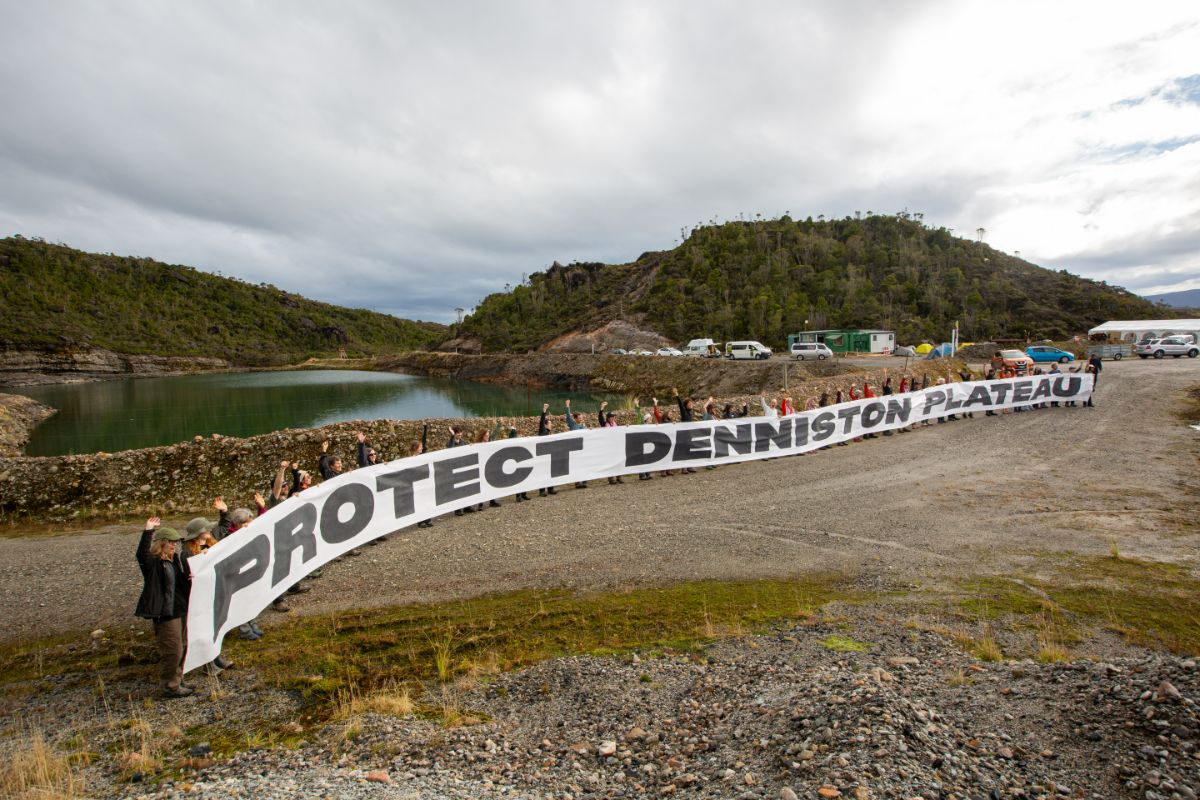
Campaign to protect Denniston launched with large-scale mine protest.


Updates, stories, and commentary from 350 Aotearoa campaigners, volunteers, our network and partners, and issue experts.

Read here