Categories
Festivities India People & Culture

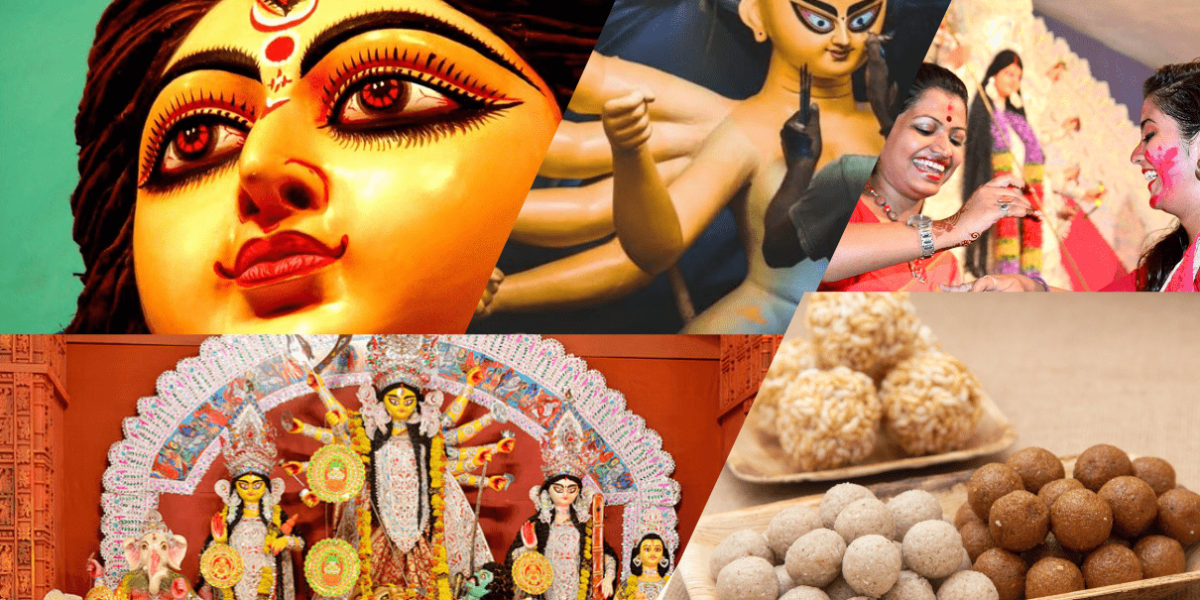
From Mahalaya To Sidoor Khela! 6 Things You Need To Know About Bengalis And Durga Puja

Ya devi sarva bhuteshu, shakti rupena sangsthita
Ya devi sarva bhuteshu, matri rupena sangsthita
Yaa devi sarva bhuteshu, buddhi rupena sangsthita
Namastasyai, namastasyai, namastasyai, namo namaha

With Durga Puja only a week away, the pujo-pujo gondho is everywhere.
I am sure even the last-minute plans have started to take better shapes.

Durga Puja, also known as Sharodotsav is an annual festival that is celebrated during the autumn (Sharat) season around the world mainly in the eastern states of India such as West Bengal, Assam, Odisha, Tripura, Bihar, and Bangladesh. It is a festival where devotees pray to Goddess Durga, the ten-armed goddess. Goddess Durga is associated with protection, strength, and destruction.

To the 266 million Bengalis around the world, Durga puja is more than a festival. It is an emotional roller-coaster with several heaps of happy moments and sadness on the last day. During the nine festival days; every Bengali’s heart echoes to the tune of ‘Dhak’, ‘shonkho’ and ‘uludhoni’.

In this blog, we will share six interesting things related to Durga Puja and the Bengali community:

1) What is Mahalaya and what is its significance?

Mahalaya marks the end of Pitru Paksha Shraddha and the beginning of the auspicious Durga puja festival which falls on Sarvapitri Amavasya (new moon) in the month of Bhadrapada.
It is believed that on this day, Devi Durga starts her descent from her mythological home in Mount Kailash, to visit her maternal home on Earth along with her four children, Lakshmi, Saraswati, Kartik, and Ganesha.

On this day, it is a tradition in every Bengali house to listen to ‘Chandi path’ or the chants of ‘Mahishasura Mardini’ in the wee hours. Radios and television echo with the unified sound of the chants across Bengali households.

Here is a link for you to listen to ‘Mahishasura Mardini’ on Mahalaya by the famous Bengali Playwright, Birendra Krishna Bhadra.

Mahalaya is special for a ritual called ‘ChoukhuDaan’, when artisans do the final touches and paint the eyes on the idols of Durga Maa.
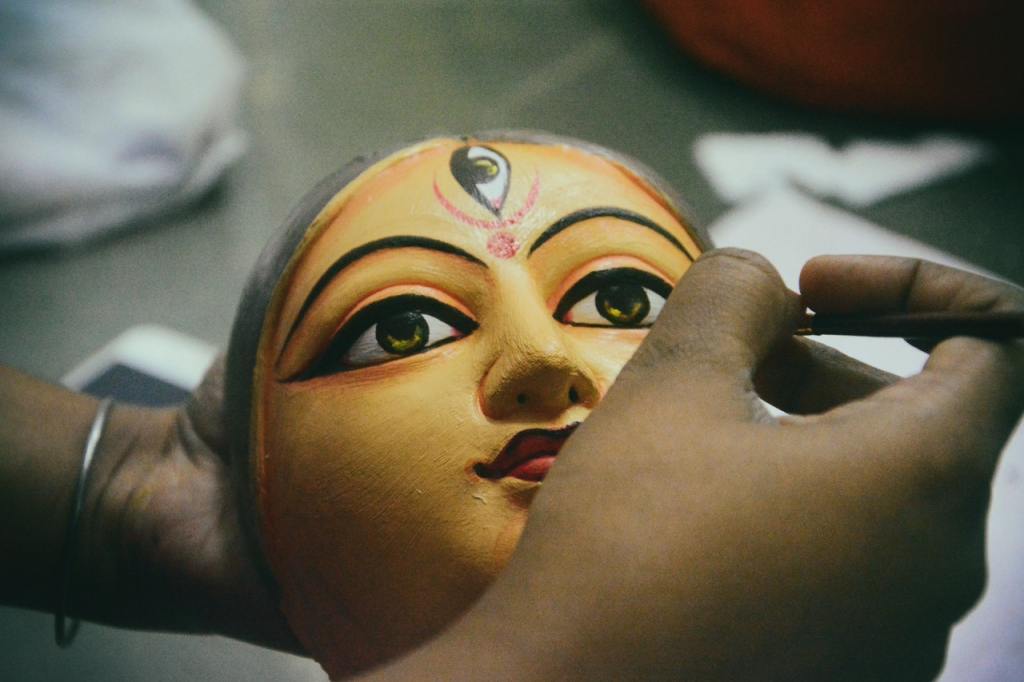
Image
An artist painting the eyes of Durga Maa on Mahalaya.
(Image credits: http://www.pixabay.com)

Mahalaya also marks an important day for Hindus where a ritual called ‘tarpan’ is performed by offering water and food to their dead ancestors.

2) Why is Maa Durga referred to as ‘Mahishasura Mardini’?

Image
Mahishasura Mardini depiction at a pandal

The reference of ‘Mahishasura Mardini’ is related to the birth of Devi Durga. Having received a boon from Lord Brahma that neither a man nor a God could kill him, Mahishasura considered himself immortal and along with this Asura troops were creating havoc on ‘Trilok’ (the three worlds- Heaven, earth, and hell). Hoping to find a solution, The Tridevas (Brahma, Vishnu, and Mahesh) then using their supreme powers together created Devi Durga.
Mahishasura, on the other hand, being blinded by his power was mocking at the very thought of fighting a woman. The battle between the two continued, and when Asura changed to its original form of a Mahish (buffalo), Maa Durga swiftly beheaded him freeing everyone from the havoc of the tyrant.
Hence, Maa Durga came to be known as ‘Mahishasura Mardini’ (The Killer of Mahishasura). The killing scene is what we see as the most common form of Maa Durga idol being worshiped during the auspicious Durga Puja festival.

3) Why soil from brothels is used to make the idols of Durga puja?

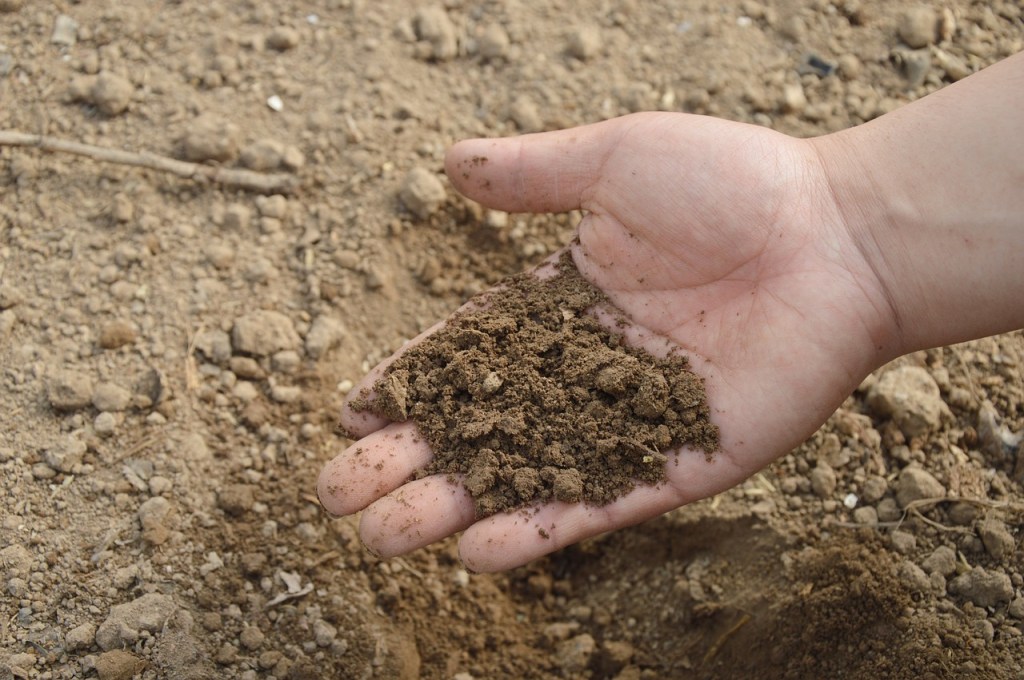
Using soil from brothels, also called ‘Nishiddho pallis’ (forbidden lanes) is a century-old ritual. It includes a collection of ‘punya maati’ (sacred soil) by a priest. According to traditions, a priest needs to obtain this soil from a brothel after begging from a sex worker.
Image

The mud is then mixed with mud from the holy banks of river Ganga, cow dung, cow urine, husk, and straws, which are then used to carve out exquisite pieces of idols by artisans and prayed during the puja.

4) What is the symbolism of the ten arms of Goddess Durga?
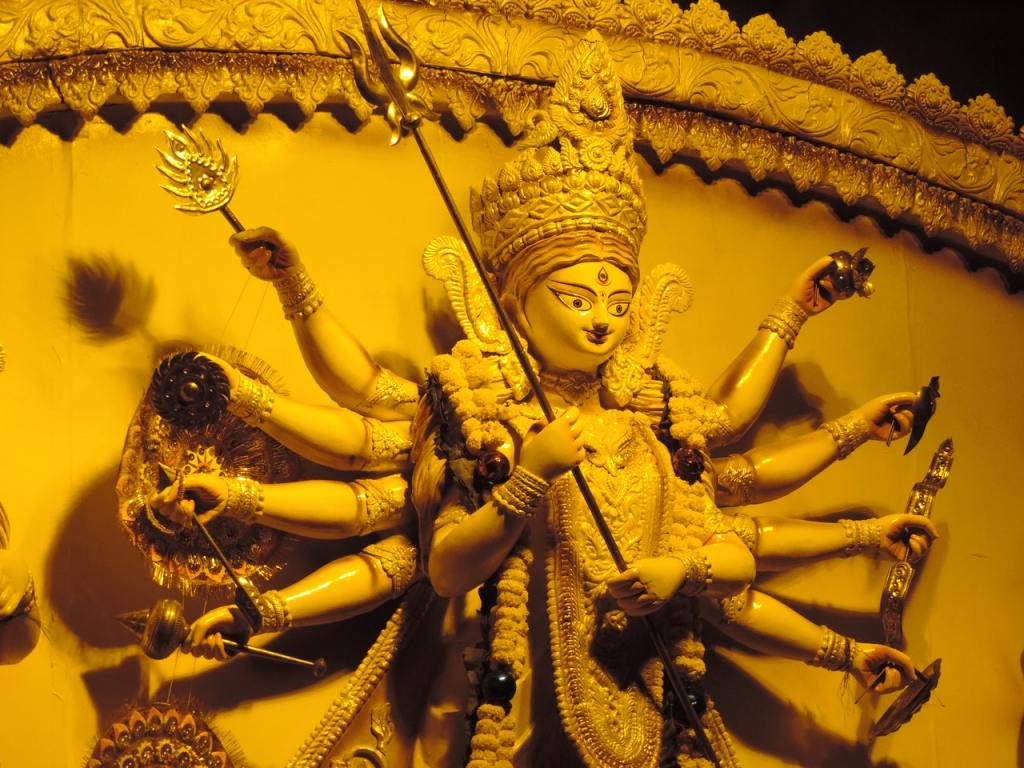
Image

In Hindu Mythology, Goddess Durga is considered to be one of the most powerful avtars symbolizing the victory of good over evil.

Devi Maa’s power is symbolical to each one of us, the strength that lies in us to fight the bad.

Goddess Durga’s ten arms hold various weapons to fight wars against evil, showcasing the strength of shaktis that a human possesses. The ten arms also symbolise that she protects her devotees from eight directions and the sky and the earth.

The ten weapons held by her ten arms were gifted from other gods in heaven (Vaikunth) to help her fight the war against Mahishashur:
i) Trident (Trishul)
ii) Sword (Kharag)
iii) Conch (Shankha)
iv) Bow and Arrow (Dhanuk)
v) Discus (Sudarshan Chakra)
vi) Flame (Agni)
vii) Spear
viii) Snake
ix) Half bloomed lotus
x) Thunderbolt (Vajra)

5) Who do Bengalis eat non-vegetarian when most others fast during Navratri?

The nine-day festive period of Durga Puja is celebrated as Navratri by non-Bengalis and it is a period when people give up eating non-vegetarian food and even strictly refrain from the consumption of alcohol and other such substances.

On the other hand, Bengalis are seen feasting and gorging on non-vegetarian food. Why the difference you ask?
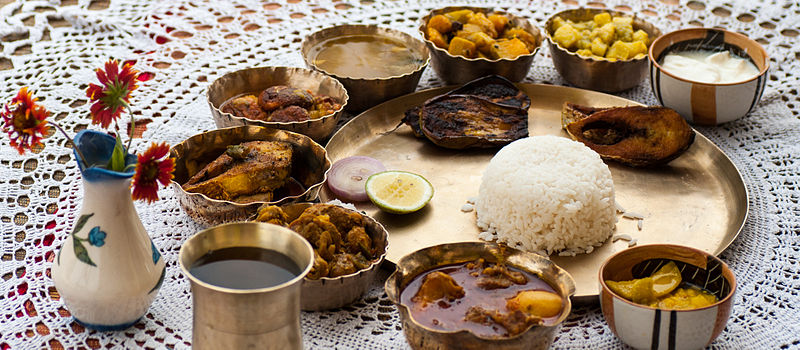
Image
Picture depicting a grand Bengali thali.
Image
Traditional Bengali sweets

Here are a few theories to explain that:

  • During the earlier days, animals were sacrificed and offered to the goddess to appease her. The meat was later distributed to all as prasad.
  • It is believed that Durga Maa and Chandika Devi are fond of meat and wine. As a customary practice in a Bengali household, when a daughter visits her maternal home, it is considered a celebration time and family members prepare the best dishes that they like to feast on- meat, fish, and sweets.
    As per Mythology, Durga Puja symbolizes the celebration when Devi Durga visits her maternal home on Earth along with her four children. Hence the entire community celebrates the time by feasting on their favourite foods.

6) The five days of Durga Puja: Shashti, Saptami, Ashtami, Nabami, Dashami and their significance

Durga Puja is a ten-day festival where the last five days involve rituals and practices.

Image
Image
Pushpanjali ritual at a Durga Puja pandal

During Saptami, Ashtami and Nabami, devotees pay respect to the goddess in pandals through a ceremony called Pushpanjali (shortened to ‘anjali’- floral offerings made to the goddess). Pushanjali is always performed in the scheduled morning hours during which mantras are chanted. It is customary for devotees to fast until Pushpanjali is offered to the goddess.

Shashti (also referred to as ‘Maha Shashti’): The sixth day is referred to as Shashti which marks the entry of Durga Maa into her abode. On this day, Goddess Durga along with her children are welcomed by playing ‘Dhak’ and processions.

Image
Image

In the evening of Shashti, a ceremony called ‘Bodhon’ is performed which is the awakening of the goddess for the seventh, eighth and ninth day of puja. Bodhon is marked by a ceremonial puja during which Durga Maa’s face is unveiled in pandals. The goddess is also gifted weapons on this day to kill the demon, Mahishasura.

Saptami (also referred to as ‘Maha Saptami’): Celebrated on the seventh day, Saptami marks the start of Durga Puja. The day is marked by a ritual called ‘Mahasnan’ involving bathing of the Devi and performing ceremonial aartis. It is believed that Maa Durga started the epic battle against Mahshasura on this day.

Image

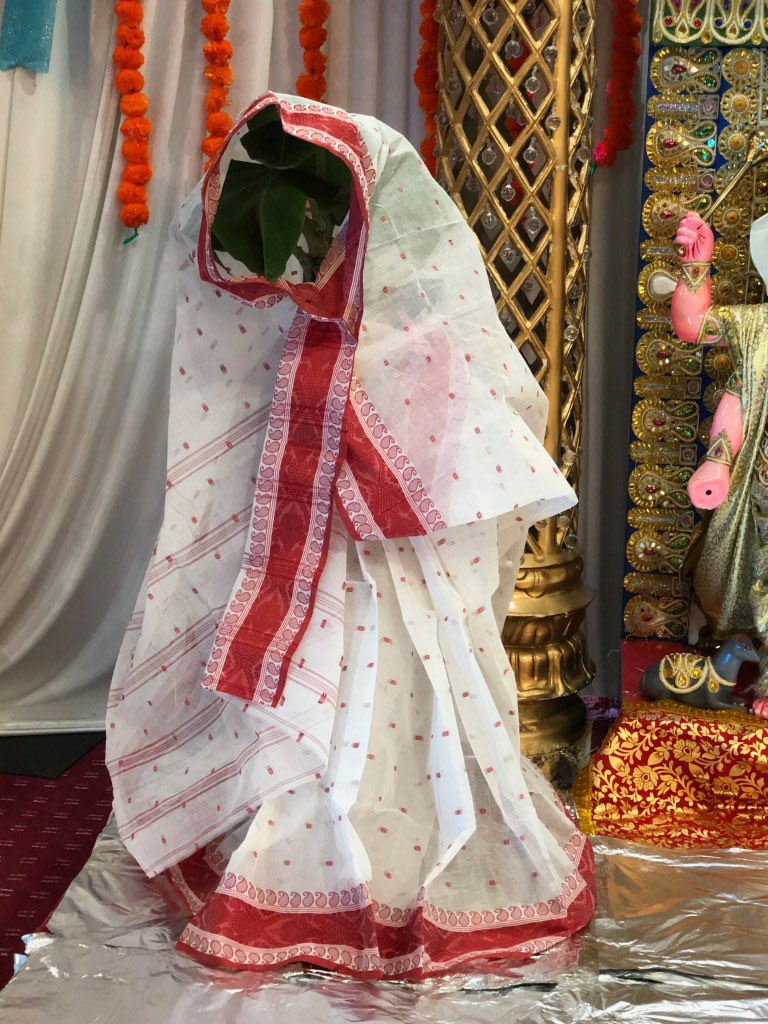
Other rituals performed on Sapatami include ‘Kola bau’ or Navapatrika, and Prana Prathishta.
Image
Kola bau ritual (a banana plant drapped in red and white border saree like a new bride)

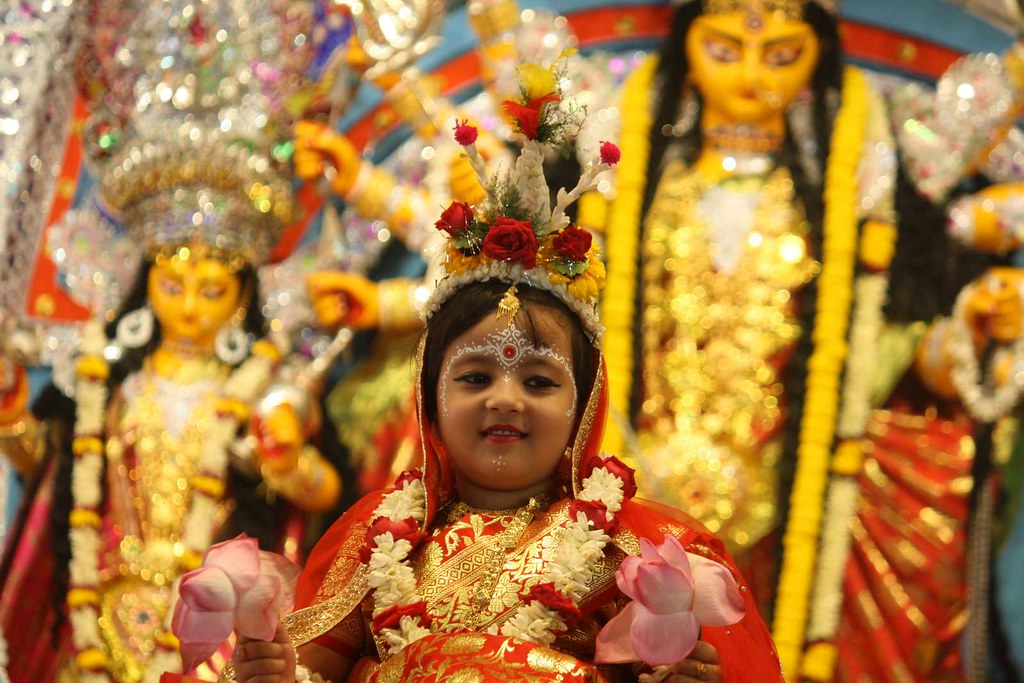
Astami (also referred to as ‘Maha Astami’ or ‘Maha Durgastami’): Falling on Ashtami tithi, the eighth day of Durga Puja is referred as Ashtami or Maha Durgastami. Astami is the day when Durga Puja is in full grandeur. The day is marked by a special puja called ‘Kumari Puja’ where a pre-pubescent girl is worshipped as the living incarnation of the Goddess.
Image

Sandhi Puja is performed as Ashtami ends and Navami begins. It is conducted during the evening hours and marks the time when Devi Maa emerged in her Chamunda form (Chandiavatar) to kill the demons Chanda (Chando) and Munda (Mundo), the two allies of Mahishasura, who attacked her from behind during their epic battle.

Image
Sandhi Puja at Ballygunge Central Club, Kolkata

Nabami (also referred to as ‘Maha Nabami’): The ninth day of the puja is called Navami which is celebrated with a series of pujas including Boli and Homa. Boli is a sacrificial tradition done to appease the goddess. In the present day, a pumpkin or sugarcane is usually used to mark the ritual.
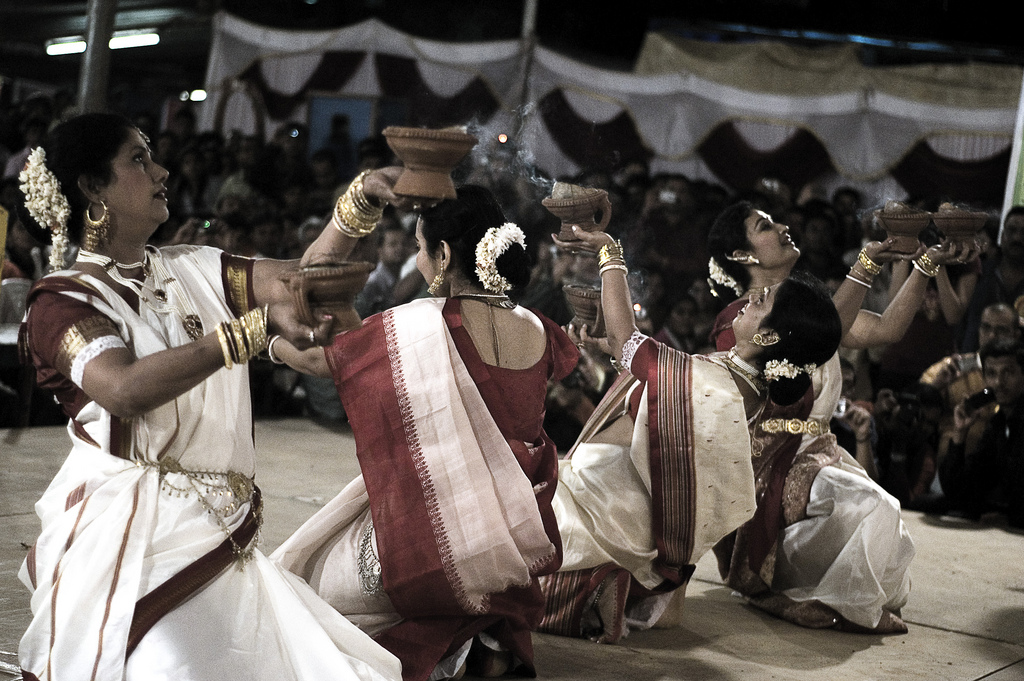
Navami evenings are celebrated with ‘dhunuchi-nach’, a dance form performed using a clay pot incense burner.

Image
Dhunuchi dance performed using a clay pot incense burner
Image
Another picture of Dhunuchi nach (dance)

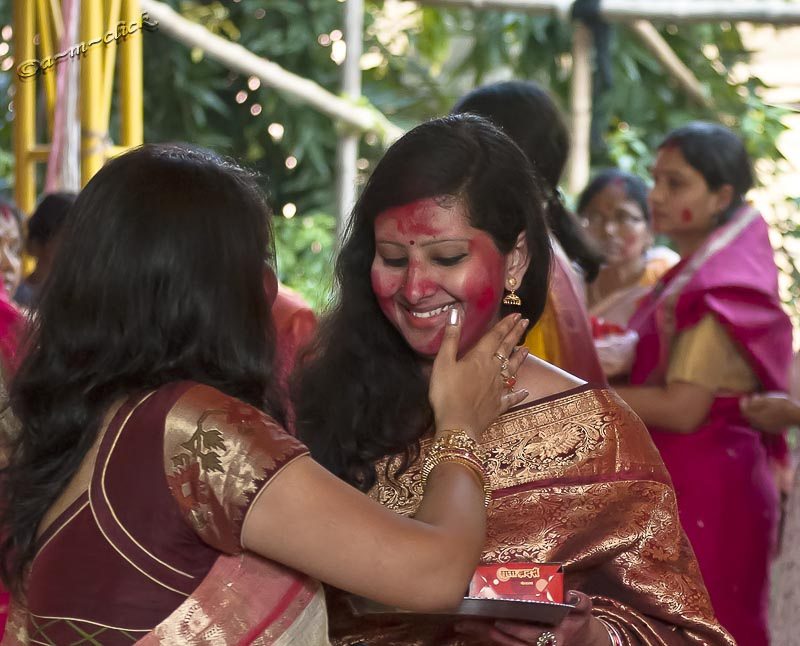
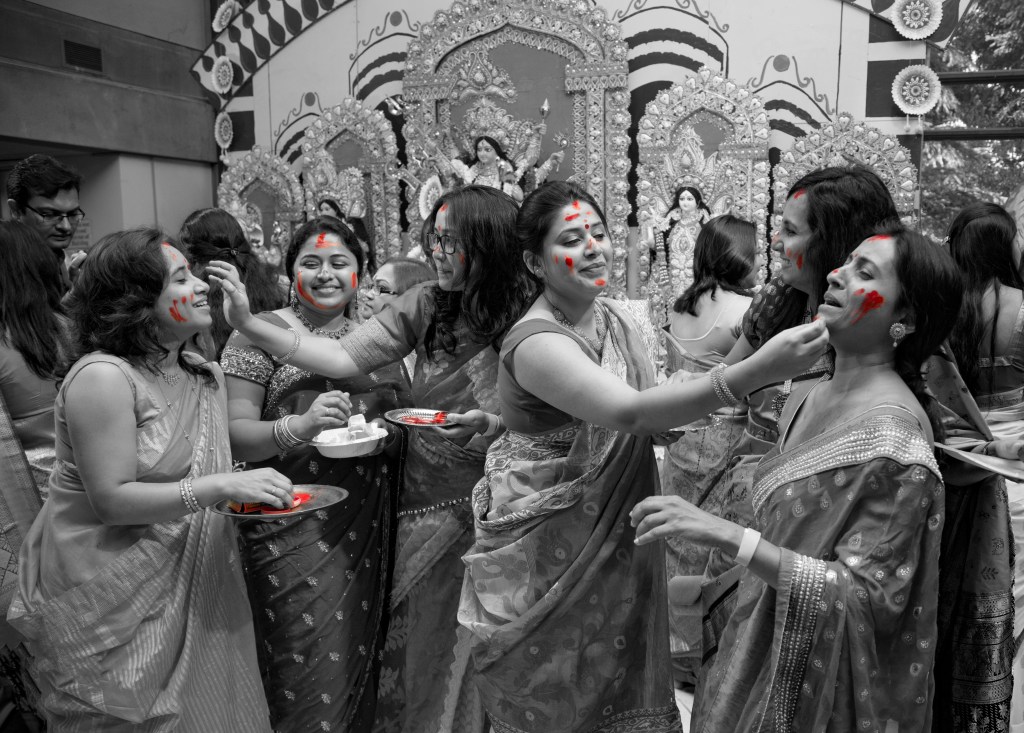
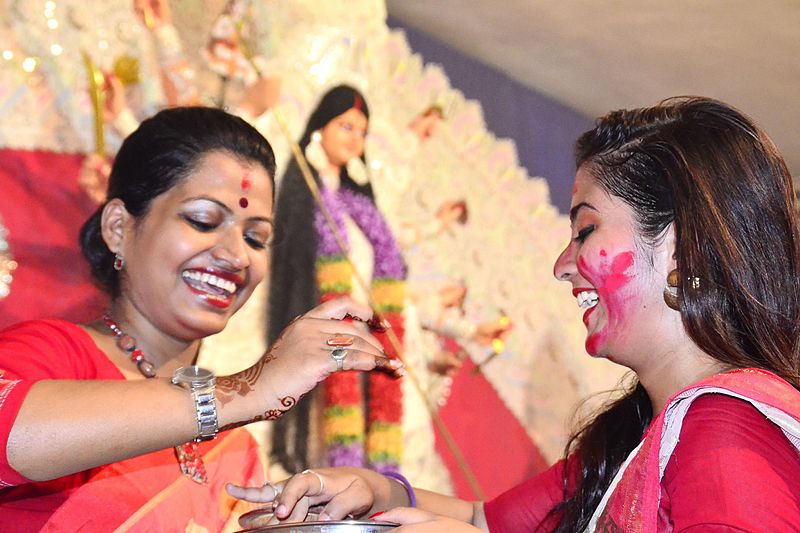
Dashami (also referred to as ‘Bijoya Dashami’): On the tenth day, Dashami also known as Bijoya Dashami (victory on the tenth day) is celebrated symbolizing the victory of good over evil. This day marks the return journey of Devi back home in Kailasha. Rituals such as Sidoor Khela (married women playing with red vermillion) and Bisorjon/ Bhasan (immersion of the Goddess idol) are performed on this day to bid farewell to Durga Maa. Greeting each other ‘Subho Bijoya’ and distributing sweets is customary on this day.
Image
Image
Image

It is an emotional moment for many to see Devi Maa leaving after days of celebrations.

Image
Durga Maa Idol immersion/ bisharjon ceremony

The farewell day ends on a melancholy note with a feeling of emptiness seeing Maa Durga’s bisharjon and a silent prayer from every devotee wishing her to come sooner the following year with the roaring chant, ‘Asche bochor abaar hobe!‘.


Here is a bonus audio track for you to completely immerse yourself in the spirit of Durga Puja.

What are your best memories of Durga Puja? Share with us in the comments below.
Categories
India Places

Nalanda University: the glorious history and the revival story

Nalanda University (Nalanda Mahavihara), located in Bihar, India, has recently been in the news for all the right reasons. The university is fully operational now and open for admissions after a gap of nearly 800 years!

The idea to resurrect Nalanda University was endorsed in 2007 at the East Asia Summit, represented mostly by Asian countries. The revival plans of Nalanda University began in 2010 when the Government of India passed a resolution (Nalanda University Act 2010) to revive the university and listed it as “Institute of National Importance”.

Founded in the 5th century, this ancient university was abandoned in the 13th century (1197 CE) after being sacked and destroyed by Muhammad Bin Bakhtiyar Khalji in 1200 CE. Interestingly, Nalanda was destroyed three times but was rebuilt only twice. In 2016, UNESCO declared Nalanda University a World Heritage site which included several stupas, shrines, viharas and artworks in stucco, stone and metal.

Nalanda University is considered the first residential university in the world. The university is among the greatest learning centres in the ancient world. Before the destruction, the university was an intellectual hotspot providing multiple discourses where scholars came from several countries such as China, Korea, Japan, Tibet, Mongolia, Turkey, Sri Lanka and South-East Asia. The residential campus accommodated 10,000 students and 2,000 teachers.

Traditional sources state the university was visited by both Vardhamana Mahavira and Gautama Buddha in the 6th and 5th centuries BCE. The university occupies an important place in the historical development of Buddhism into a religion and the flourishing of monastic and educational traditions.

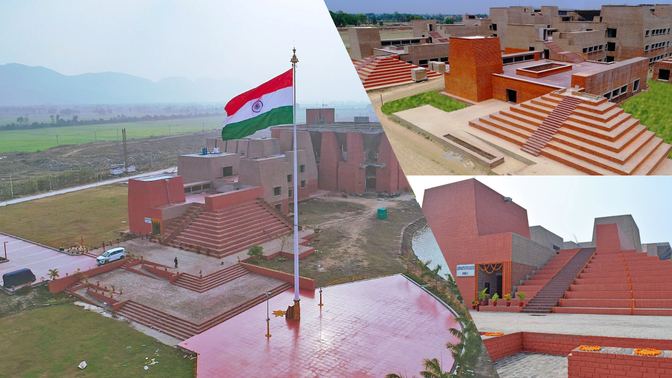
The new Nalanda University’s first academic session began in September 2014 with 15 students. The new Nalanda University spread over 450 acres in its New Campus in Rajgir, Bihar was gifted by the State Government of Bihar in 2011. The campus is complete with state-of-the-art technologies planned as the ancient Nalanda University. The entire campus is carbon neutral and a zero-waste zone (a net-zero sustainable campus) with a perfect blend of tradition and modernity.

Image
Picture Source: NU Facebook page

The foundational philosophy of the university is to recover lost connections and partnerships that existed in Asia.
“The rediscovery of inter-Asian linkages in recent times has led to a resurgence in discovering and building upon a shared history. Nalanda University is envisaged as an icon of this new Asian renaissance: a creative space that will be for future generations a centre of Inter civilizational dialogue.”

The university has five schools namely, School of Buddhist Studies, Philosophy, and Comparative, School of Ecology and Environment Studies, School of Historical Studies, School of Languages and Literature/ Humanities and School of Management Studies. The university offers Masters, PhD programs, Diploma and certificate courses in Buddhism, Sanātana Hindu Studies, languages etc.

The Vision statement of the University says: “It (Nalanda University) must be adapted to the rhythm of Nature where it is located and enrich the lives of the people in the neighbourhood”.

Take a look at the stunning 455 acres campus in Rajgir Hills:

(Picture Source Nalanda University Facebook page)

The iconic university is accepting new admissions on their website!
Would you like to be a part of this historic university?

Categories
Experiences

Experiences From My 2019 Sikkim Trip

My last experience in Sikkim in December 2019 turned out to be a great one.

It was a last-minute pick after our planned Meghalaya trip had to be cancelled amidst the violence in Assam. Trust me it was painful cancelling those round-trip tickets for a journey that we had been planning for a long time.
Call it bad luck, but this wasn’t a new occurrence. So, this time, we decided not to expect much and just go with the flow.

My husband and I wanted to experience snowfall and adorn the view of Kanchenjunga.
After a few Google searches and reviews, we zeroed on Sikkim.

Having experienced a couple of painful times on our previous trips- carrying around heavy luggage, my husband and I wanted to travel light this time. Although we ensured that we pack a few right quality garments to keep ourselves warm.

Our itinerary looked something like this:

Bagdogra> Darjeeling> Pelling> Ravangla> Gangtok> Namchi> Gangtok>
Bagdogra

My husband and I were freezing in the cold the minute we landed in Darjeeling. The temperature drop from 30 degree Celsius in Bengaluru to a 5 was quite a lot for us to handle. We took two to three days to acclimatize with the weather.

The trip was truly magical. Right from the serene view of Kanchenjunga to the mind-blowing local cuisines, to the warmth of the locals, it was an unforgettable holiday.

We booked an Airbnb in Gangtok called Yeshey’s Ark (https://www.airbnb.co.in/rooms/40766331), which is located in MG Marg, a prime location in the capital city. This was going to be our first Airbnb so were a little sceptical initially. But the hosts ensured our experience was worthwhile. It is run by a young couple, who define what genuine hospitality should be like.
Yeshey’s Ark was a home away from home. We had travelled to quite a few places but never experienced this level of hospitality. They went out of their way every time. Right from cleanliness, amenities, food everything or even our lively conversations were more than we could have asked for. Rooms were
spacious and warm, cleanliness is maintained throughout the property. Food is simple, homemade and incredibly delicious, Yeshey, the host cooks for every guest. We were treated with the utmost care and timely help and sort of became like extended families during our stay at the property. They always ensured that we get everything and more than we asked for, round the clock.

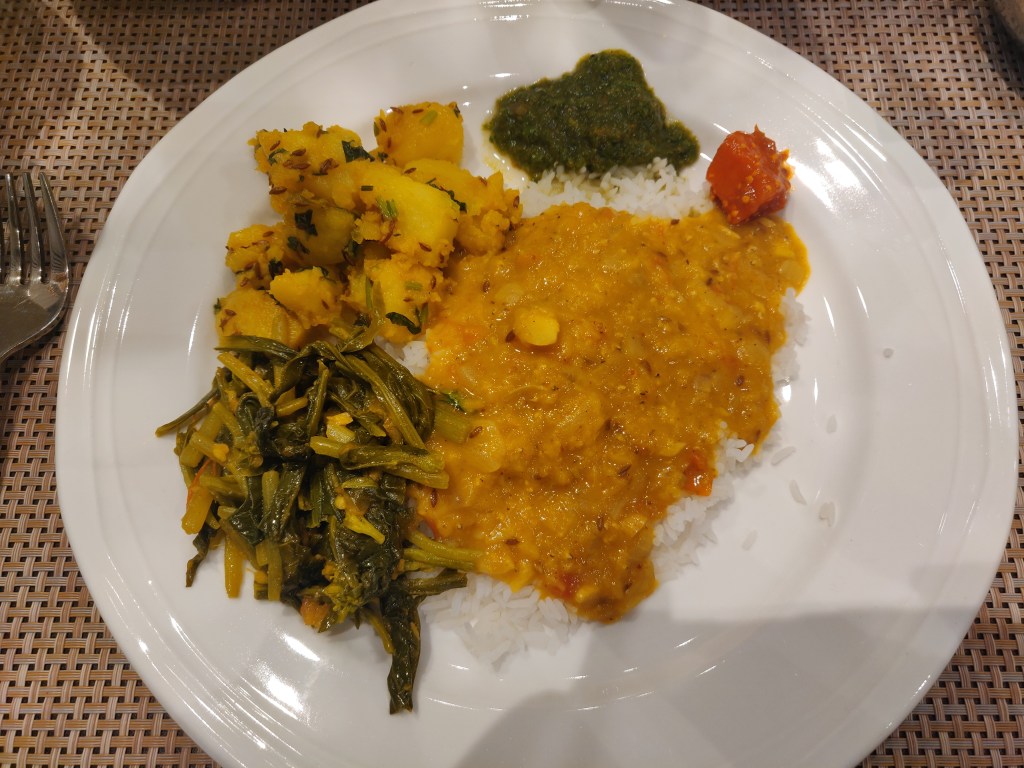
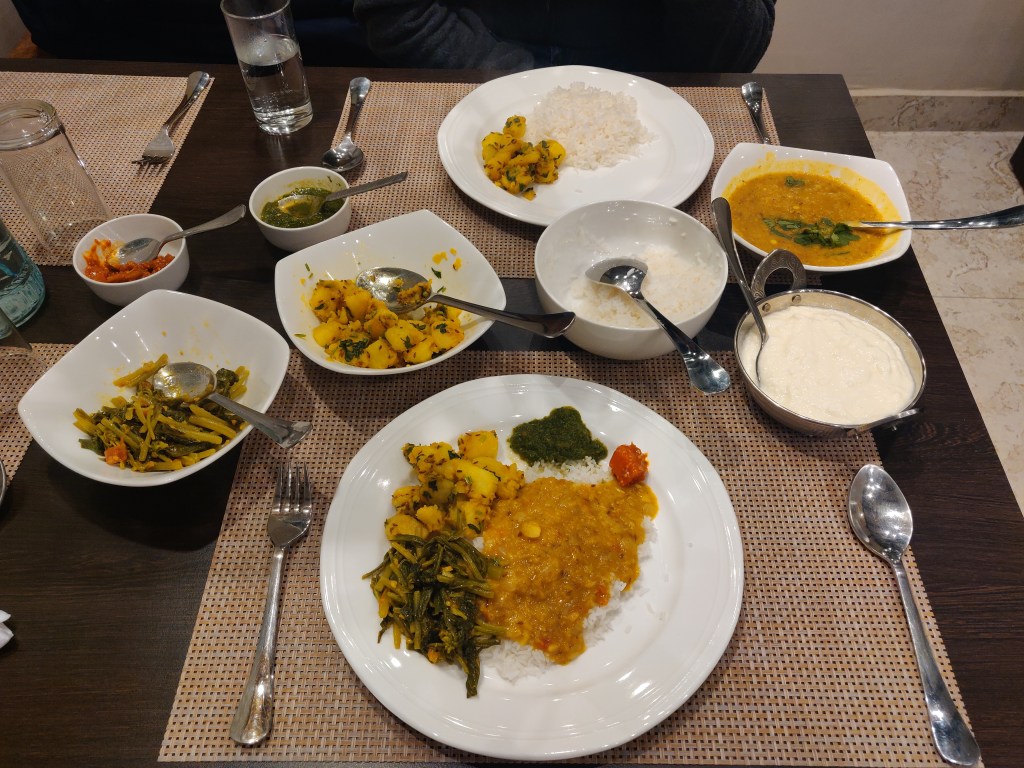
A glimpse of what we ate in Gangtok:

Image
Local thali prepared by our host in Gangtok
Image
Local thali prepared by our host in Gangtok
Image
Local thali prepared by our host in Gangtok
Image
Sel roti served by our host at Airbnb stay- picture from Wikipedia
Image
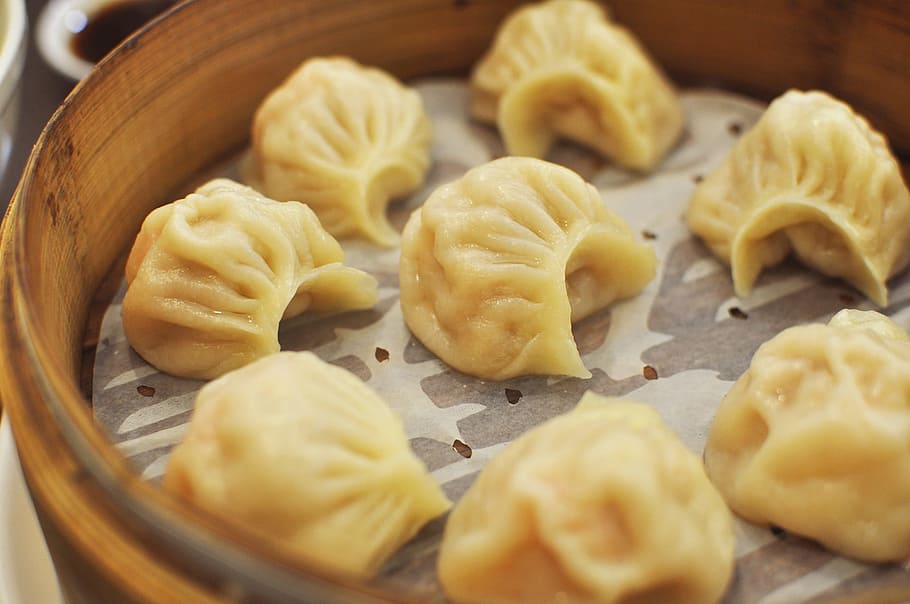
Potato momo served by our host at Airbnb stay- picture from Wikipedia
Image
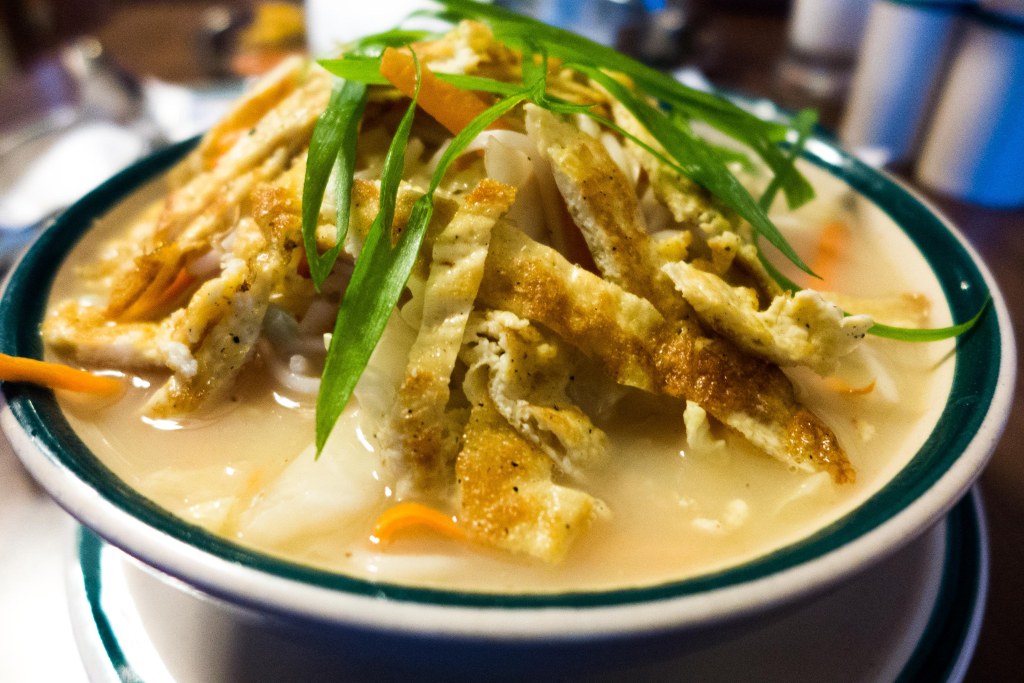
Thukpa prepared by Roshan Daju- picture from Wikipedia
Image
Tasted Himalayan churpi made from yak milk- picture from Wikipedia

The views of Kanchenjunga are breath-taking. Trust me nothing in this world can compare to the sight of rising sun peeking through the Himalayan Range. The views will awaken your inner soul that you never knew existed. We were lucky to see the Kanchenjunga even from our Airbnb. The rich flora and fauna, the
coniferous trees, the beautiful tea gardens, Teesta River, the monasteries, etc.- are all so beautiful. Having grown up in Shillong, I was literally living my childhood days. December made us witness a little of Losoong Festival too.

Image
(View of Kanchenjunga: copyright reserved)
Image
(View of Kanchenjunga: copyright reserved)
Image
(Do-dul Chorten, Gangtok- copyright reserved)
Image
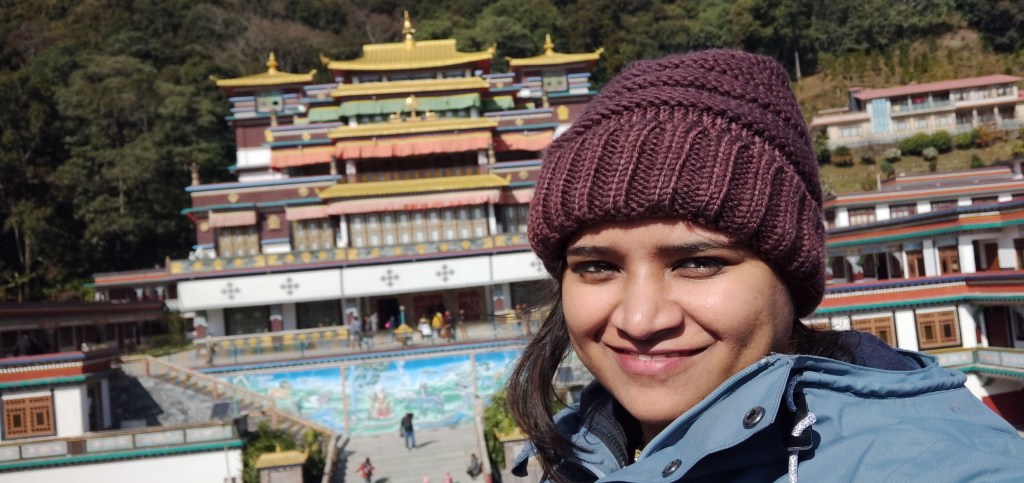
Monstery in Gangtok: copyrights reserved
Image
Painting of Lord Buddha at a local shop: copyrights reserved
Image
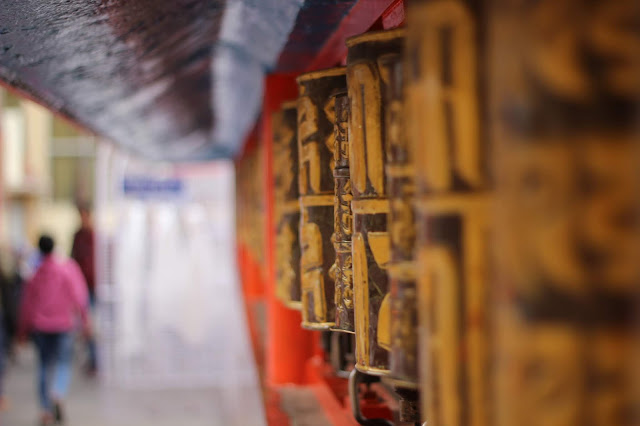
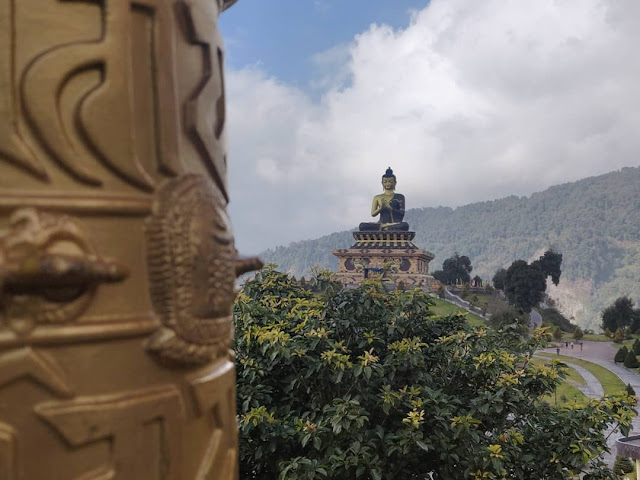
Prayer wheels at a monastery: copyrights reserved
Image
That’s me!
Image
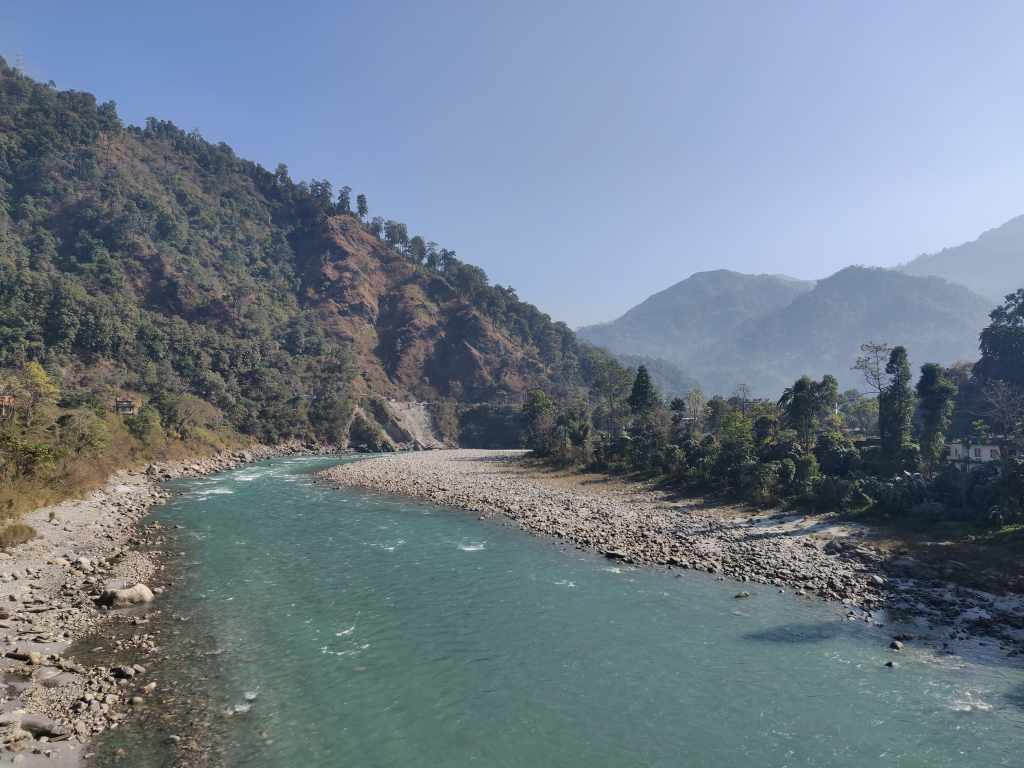
Teesta River, copyrights reserved

Here are some renowned local places we visited during our trip:

At Sikkim Himalayan Zoological Park, we saw Red panda, the state animal of Sikkim.
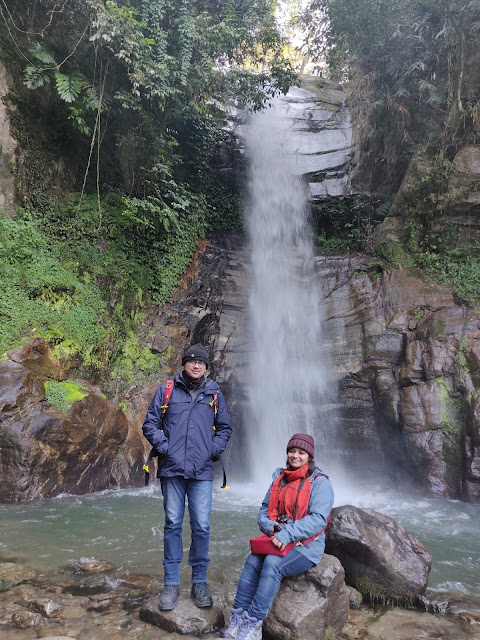
Banjhakri Falls was good too.

Image
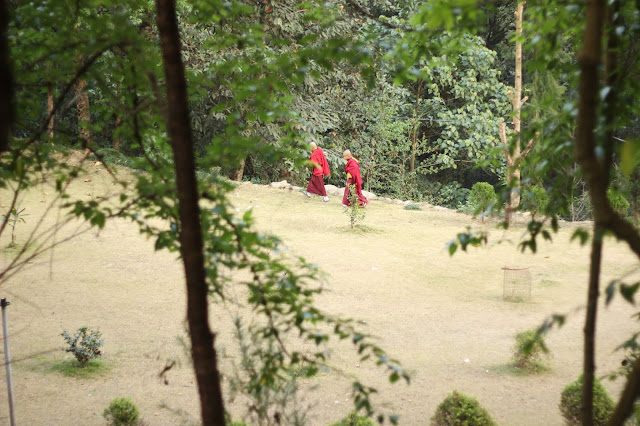
Monks walking at a monastery: copyrights reserved
Image
At Banjhakri Falls

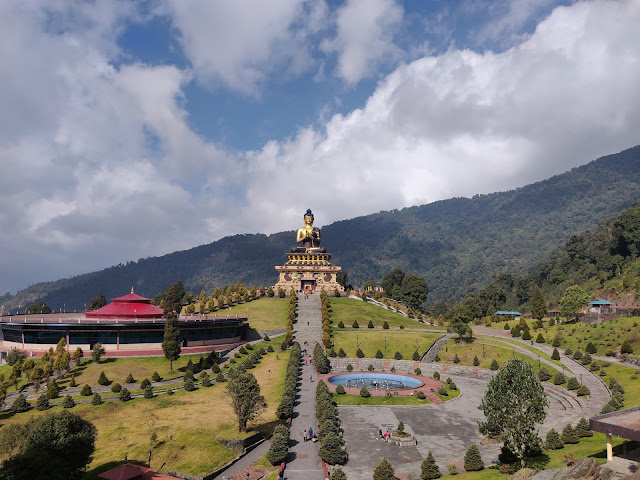
Other attractions near Gangtok we visited were Buddha park in Ravangla and Chardham
in Namchi.

Image
That view ❤ : copyrights reserved
Image
Buddha park at Ravangla: copyrights reserved
Image
Chardham at Namchi, Sikkim: copyrights reseved

This blog will be incomplete without the mention of Roshan Daju, who made our great trip even better. We had hired him for two days for showing us in and around a few destinations in Sikkim. He was warm and friendly, and we instantly bonded.
His electrifying energy and pleasant personality helped us learn and explore Sikkim much better than we expected. He had friends almost everywhere we went – small tea shops to food joints, monasteries, everywhere.
We had to explore a lot in a short period, and he ensured that we experience the best.

Image
Us with Roshan Daju
Image
Roshan Daju

We had hired him only for driving and eventually he had also become

-Our guide ( he was passionately narrating each and every legend he could probably remember). Here is an example below:

-He helped us source local nuts, pickles, local snacks and things we cannot even
pronounce.

– Singer (kept us awake with his sweet vocals during the long travel)
– a photographer (oh! the number of times my husband and I were clicked by him in
thousands of poses- it was embarrassing 😆😆)
-cook (every halt we made he ensured we never left without tasting the local
special- e.g. thukpa- he prepared just for the two of us).

– Zookeeper (had special skills to tame animals so that the animals would pose
for us- this was at Sikkim Himalayan Zoological Park)

Daju took us to a few lesser-known non-touristy spots as well including Paljor Stadium in the central city.

Sikkim was indeed a magical experience, and half of the good times is because of
Roshan Daju.

It was soon time to bid farewell and pack our bags. We said goodbye to everyone
with a heavy heart but a promise to come back soon again.
This may easily be the best trip so far, and it is because of the warmth and
hospitality we experienced. Thank you to all the beautiful people of Sikkim.

Categories
Events Great Men in History India

The Story Of Rakesh Sharma, The First Indian In Space

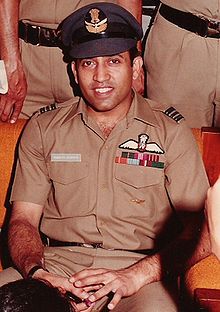
Rakesh Sharma, the first and the only Indian citizen who went to space, turns 73 today. Rakesh Sharma was born on 13 January 1949 in Patiala, Punjab on the auspicious occasion of Lohri.

Image

He joined the National Defence Academy at the age of 17 and was commissioned into the Indian Air Force as a test pilot in 1970. During the India-Pakistan conflict of 1971 (Bangladesh war of 1971) he flew 21 combat missions. He served the Indian Air Force between 1970 to 1990. He retired as a Wing Commander and later joined Hindustan Aeronautics Limited (HAL) serving at Nashik Division and Bengaluru.

In 1982, he was selected to go into space as a cosmonaut for a joint programme between Indian Air Force and Soviet Space Mission called the Soviet Interkosmos space programme. Rakesh Sharma was joined by two Soviet cosmonauts, commander Yury Malyshev and flight engineer Gennady Strekalov, to the space station called Salyut 7, a space station in low Earth orbit.

On April 3, 1984, he made history when he flew abroad the Soviet rocket Soyuz T-11 launched from Baikonur 31/6 (Baikonur Cosmodrome), Kazakhstan. Rakesh Sharma and his team were in space for about 190 hours during which they conducted 43 scientific and technical experiments. He was particularly interested in photographing India from space and studying the effects of yoga on the body under the effect of weightlessness.

Rakesh Sharma was conferred with the Ashoka Chakra, India’s highest peacetime gallantry award. Because of his exceptional contribution, he was honoured with the ‘Hero of the Soviet Union’ upon his return from space. He is also a recipient of the awards, Paschimi Star Ribbon and Sangram Medal for his contribution during the Indo-Pakistan War of 1971.

On his return from space, the then Prime Minister of India, Indira Gandhi, asked him how India looked from outer space; his response was ‘Sare Jahan Se Accha’.

Categories
Events Great Men in History India

Swami Vivekananda’s Iconic Chicago speech of 1893

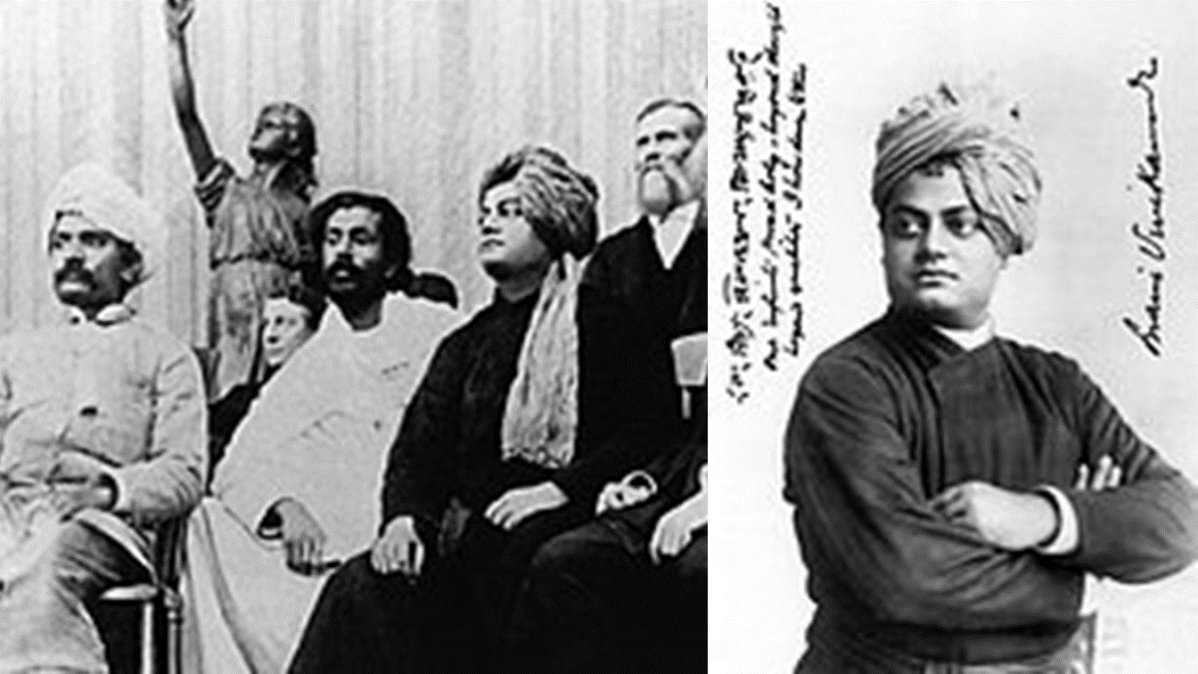
Swami Vivekananda was a Hindu monk, philosopher and a key figure to introduce the Indian philosophies of Yoga and Vedanta to the western world. He is best known for his groundbreaking speech to the 1893 World’s Parliament of Religions.

Image
Swami Vivekananda

Here is the full text of his iconic Chicago speech of 1893:

Sisters and Brothers of America,
It fills my heart with joy unspeakable to rise in response to the warm and cordial welcome which you have given us. I thank you in the name of the most ancient order of monks in the world; I thank you in the name of the mother of religions, and I thank you in the name of millions and millions of Hindu people of all classes and sects.

My thanks, also, to some of the speakers on this platform who, referring to the delegates from the Orient, have told you that these men from far-off nations may well claim the honor of bearing to different lands the idea of toleration. I am proud to belong to a religion which has taught the world both tolerance and universal acceptance. We believe not only in universal toleration, but we accept all religions as true. I am proud to belong to a nation which has sheltered the persecuted and the refugees of all religions and all nations of the earth. I am proud to tell you that we have gathered in our bosom the purest remnant of the Israelites, who came to Southern India and took refuge with us in the very year in which their holy temple was shattered to pieces by Roman tyranny. I am proud to belong to the religion which has sheltered and is still fostering the remnant of the grand Zoroastrian nation. I will quote to you, brethren, a few lines from a hymn which I remember to have repeated from my earliest boyhood, which is every day repeated by millions of human beings: “As the different streams having their sources in different paths which men take through different tendencies, various though they appear, crooked or straight, all lead to Thee.”

The present convention, which is one of the most august assemblies ever held, is in itself a vindication, a declaration to the world of the wonderful doctrine preached in the Gita: “Whosoever comes to Me, through whatsoever form, I reach him; all men are struggling through paths which in the end lead to me.” Sectarianism, bigotry, and its horrible descendant, fanaticism, have long possessed this beautiful earth. They have filled the earth with violence, drenched it often and often with human blood, destroyed civilization and sent whole nations to despair. Had it not been for these horrible demons, human society would be far more advanced than it is now. But their time is come; and I fervently hope that the bell that tolled this morning in honor of this convention may be the death-knell of all fanaticism, of all persecutions with the sword or with the pen, and of all uncharitable feelings between persons wending their way to the same goal.

Categories
Events Great Men in History India

Remembering Lal Bahadur Shastri On His 56th Death Anniversary

Sharing his birthday and ideologies with Mahatma Gandhi, Lal Bahadur Shastri, was born on October 2, 1904, in a small town in India called Mughalsarai, close to Varanasi in Uttar Pradesh.

Lal Bahadur Shastri was the 2nd Prime Minister of India, serving between 1964 to 1966 and was preceded by Jawaharlal Nehru.

A visionary man, his contribution to India’s history is unparalleled and throughout his life, he has been actively involved in the country’s progress. He was a simple, humble and people’s man who served his country with utmost dedication until his last breath.

Image
Image credits: Wikimedia

Lal Bahadur Shastri is said to have died of a heart attack on his trip to Tashkent, Uzbekistan (then the Soviet Union). The unfortunate event occurred on 11 January 1966 during the signing of the peace treaty of Tashkent to end the 1965 war with Pakistan. However, several conspiracy theories are surrounding the event and alleged foul play. Lal Bahadur Shastri’s death is still one of the biggest mysteries of Indian politics.

On his 56th death anniversary, let us revisit some of his most memorable contributions to our nation:

1) ‘Jai Jawaan Jai Kisaan’– a slogan that echoes our hearts even today:
The then Prime Minister of India, Lal Bahadur Shastri gave the slogan, ‘Jai Jawaan Jai Kisaan’ (Hail the soldier, Hail the farmer), in his speech at a public gathering at Ramlila Maidan in Delhi in 1965.

After the death of India’s first Prime Minister, Jawaharlal Nehru, India was attacked by Pakistan. That was a time when India was facing scarcity of food, and farmers and soldiers were distressed. The slogan boosted the morale of soldiers and farmers countrywide to reduce the dependency on the export of goods. The emotions towards the slogan are relevant and reflected even in modern times.

2) Lal Bahadur Shastri played a pioneering role in the White Revolution and Green Revolution of India to make India self-reliant and reduce dependency on the export of goods. His efforts led to an increase in the production and supply of milk and food grains especially in the states of Haryana, Uttar Pradesh and Punjab.

3) Lal Bahadur Shastri’s contribution to India’ freedom struggle:
Lal Bahadur Shastri was only 11 years when he joined the Non-Cooperation Movement on the call of Mahatma Gandhi. He was a great believer in Gandhi’s ideologies and joined the movement in the blink of an eye. He led many freedom activism campaigns and spent seven years in British jails due to his unwavering spirit.

4) A Leader & a Minister with a golden heart- that’s Lal Bahadur Shastri: While serving his term as Railway Minister, between 1952 and 1956, there were two major railway accidents in Andhra Pradesh and Tamil Nadu that killed hundreds of people. Both these times, Lal Bahadur Shastri handed over his resignation to the then Prime Minister, Jawaharlal Nehru.
He took the loss as his responsibility and resigned on grounds of moral grounds.

Do you find such great souls in politics in the present day?

5) Lal Bahadur Shastri actively worked for the betterment of untouchables (Harijans): He dropped his caste derived surname of “Srivastava” while working for the betterment of people. He enrolled himself as a life member of the Servants of the People Society (Lok Sevak Mandal), founded by Lala Lajpat Rai.
His famous quote, ‘India will have to hang down her head in shame if even one person is left who is said in any way to be untouchable.’

A gem of a man, Lal Bahadur Shastri, was awarded the Bharat Ratna posthumously. Vijay Ghat in Delhi, India, is the memorial built in his memory and his final resting place.

Want to share what you know about Shastri ji? Feel free to add your comment.

Categories
India People & Culture

Visiting India? Here Are 15 Things To Keep In Mind Before You Take That Trip

Visiting India? Here are 15 things to keep in mind before you take that trip.

Located in South Asia, India is the seventh-largest country by area and the largest democracy in the world.
Because of its rich heritage and myriad of attractions that the country has to offer, India is one of the most popular tourist destinations in the world. India offers diverse attractions, and experiences to explore- be it waterfront destinations, breathtaking mountainous terrain, or pilgrim destinations.

Here are some things to keep in mind while visiting India, especially when you are travelling for the first time:

1) Do not shake hands with everyone; doing a namaste with folded hands is a better option to greet someone or even bid goodbyes.

Image
Image credits: www.wikipedia.com

2) Do not smile or initiate a conversation with everyone you meet. Make a judgement and then do.

3) Do not step inside a temple or house while wearing your footwear. Also, do not touch anyone or anything with your feet. If it happens by mistake, apologize immediately by saying ‘maaf karna’ or sorry.

Image

4) When travelling in villages and small towns, limit venturing outside beyond 8 pm. Most public places close down by 8 and may not be favourable. Although, it is different for metropolitan cities and bigger towns.

Image

5) Do not change clothes openly in public places. Also, try not to wear revealing clothes. If you are wearing at least knee-length clothing, it is good enough.

Image

6) Be open to bargaining. Bargaining is common in India, and you can grab good deals by doing so, but then, again, do not overdo it.

Image

7) Be open to exploring street food. Stick to hot items and items that do not use ice as you may not be well adjusted to the water quality in India.

Image

8) Carry enough cash with you as you may not always find ATMs or credit cards options around you.

Image

9) You must avoid over-crowded places, or travelling in public places at odd hours. You can guard yourself using the elbow as a shield- a common safety method used to save oneself from unnecessary harassment in public places.

Image

10) Public displays of affection such as hugging, kissing, etc, are frowned upon in most places in India. Be wary of that.

11) Indians eat food with their right hand, and you might like to try it out.

Image

12) Do not be surprised if not everyone understands your accent or the English language. Most Indians speak local languages, and it changes with the region you are visiting. Knowing ‘Hindi’ might help you get through most places.

Image

13) Be open and warm and do not get into unnecessary sensitive discussions of religion, politics, racism, language, culture, economy etc. India is a diverse land, and you will be surprised to see such vast diversity in one country.

Image
Keep in mind to not indulge in unnecessary sensitive conversations.

14) Avoid drinking water from everywhere. Opting for bottled water or carrying your own would be the safest option.


15) Do not hand over or receive things with the left hand. Instead, use your right hand. Using both hands is even better.

Image

A Bonus Tip: Let go of your inhibitions and explore the country with an open mind. You will be amazed at the beauty of India and the people. You will make some beautiful memories to cherish for a lifetime.

Image

P.S. Please check COVID norms and guidelines before making your travel plans.

Did you enjoy reading this blog?

How has your experience been travelling in India? Feel free to share them in the comments below.
Categories
Features

5 Simple Tips To Bring Good Luck And Prosperity At Home This New Year

A new year calls for new resolutions and hopes for a new beginning. Isn’t it?

In this blog, I will share a curated list of easy updates you could make around your house which will boost positivity, prosperity and good luck for your family this year.

For Bringing Positive Energy & money in the house:

Image
Image credits: pexels.com

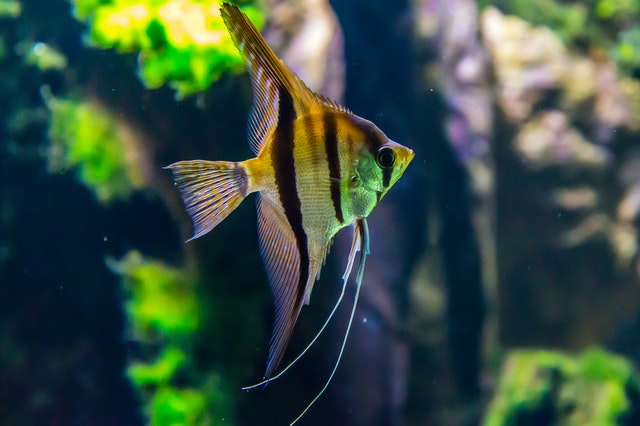
Place small water objects such as an aquarium, water fountain or water garden in the northeastern corner of your house. According to Vastu, circulating water is considered very auspicious and brings positive energy and improves the financial growth of the family.
Please ensure that the water is changed regularly and is not stagnant.

You can own these beautiful tabletop waterfall fountains and add to the aesthetics and auspiciousness of your home 🙂

For Attracting Wealth & Prosperity into your home

Image
Image credits: https://pixabay.com/

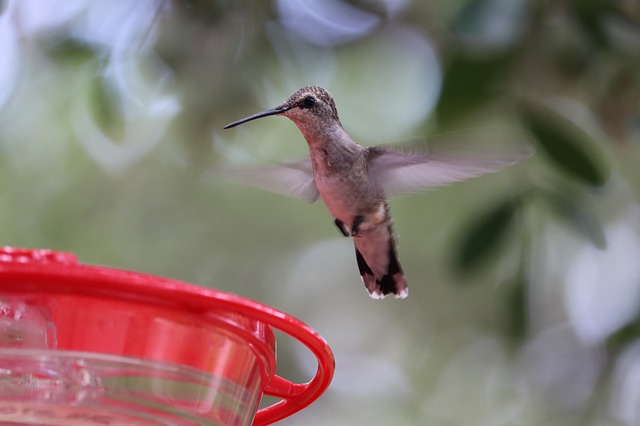
Chirping birds are considered to bring happiness, wealth and prosperity into a home. The best option is placing a bird feeder in the balcony or lawn with ample fresh air, sunlight, fresh air, and open space.
Try to place the feeder in the north, east or northwest direction to multiply benefits.

Check out these cute bird feeders I found for you:

Embracing Good Fortune & Eliminating Bad Energies

Image
Image credits: https://www.pexels.com

Wind chimes are beautiful pieces with magical benefits that find great significance in the world of Vastu and Feng Shui. They are considered to ward off negative energies and misfortune and add positivity and charm to your home.

The chiming melody calms the inhabitants and removes negativity from the house. Position a wind chime in a place that receives a natural breeze- such as a window or a balcony.
However, it is best to avoid hanging wind chimes from doors or even sit or sleep directly under them.

Grab these beautiful wind chimes now.
Remove unnecessary spending with this tip

Image
Image credits: https://www.pexels.com

Check your house for any punctured pipe or leaking taps in the bathroom, kitchen, utility or other areas. According to Vastu, leaking taps and water bring bad luck, and their presence in the house bring unnecessary spending.
Regularly check for any such items and fix them immediately.

You may use doorstep plumbing services such as Urban Company or HouseJoy at a reasonable price.

For a quick fix, you may try the below:

Killing germs and harmful pollutants from the air

Image

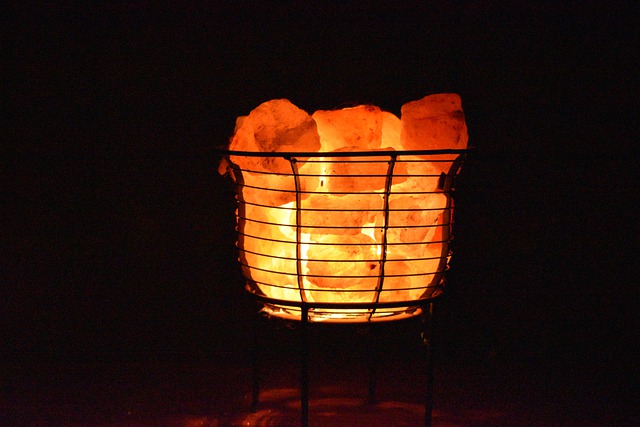
A simple and effective way to uplift your mood, and clean the air around you is by installing a Himalayan Salt Lamp. Himalayan Salt Lamps purify the air, absorb positive ions from the atmosphere, and energise us by increasing the serotonin levels in our body.

Invest in a Himalayan Salt Lamp, and trust me you won’t regret it.

Do you have any interesting decor tip to share with us? Comment and let us know.
Categories
Experiences India People & Culture Places

Looking To Go Back In Time? Visit This Magnificent UNESCO World Heritage Site in India!

If you are a lover of historical grandeur, architectural marvels, and exemplary construction, you must visit Hampi in India.

Located in the Bellary district of Karnataka, India, and on the southern banks of the Tungabhadra River, Vijayanagar (present-day Hampi) was the capital of the Vijayanagar Empire in the 14th century. Hampi was declared a UNESCO World Heritage Site in 1986.
Hampi is famous for the Group of Monuments (ruins) spread over 4000 hectares that include more than 1600 remains of ‘forts, riverside features, royal and sacred complexes, temples, shrines, pillared halls, mandapas, memorial structures, gateways, defense check posts, stables, water structures, etc’. The unique Hindu style of architecture and splendor of the erstwhile Hindu Kingdom of Vijayanagar Empire is reflected in the excellent workmanship that has survived the test of time.
Even in the ruined state, Hampi’s charm will take you back in time and you will fall in love with it.

Historical and Religious Significance of Hampi

Based in the Deccan Plateau of South India, the empire of Vijayanagar was named after the capital city of Vijayanagar, currently seen as Hampi ruins. Vijayanagar Empire was established in 1336 by the brothers Harihara I and Bukka Raya I of the Sangama dynasty to fight the Muslim invasion in South India. The empire reached its peak under the rule of Krishna Deva Raya. During his reign, the kingdom flourished in all aspects- socially, economically, art and literature, religion, architecture, etc.

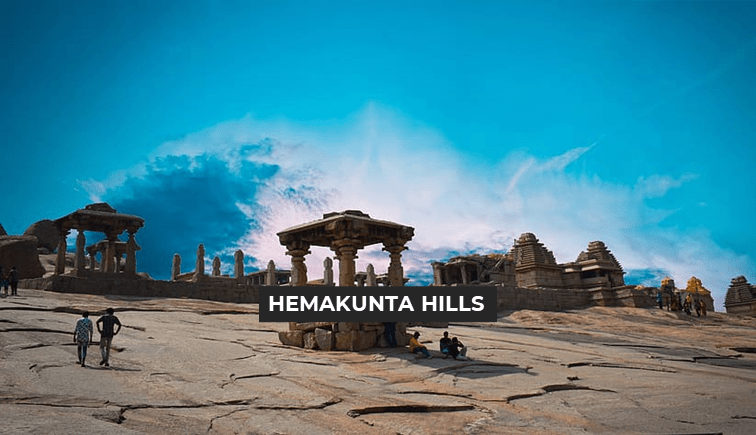
Hampi finds mention in the Hindu epic, Ramayana, and even the Puranas as Pampa-kshetra, Kishkindha-kshetra, or Bhaskara-kshetra and holds high value among Hindu devotees. This was the place where Rama and Lakshmana met Hanuman, Sugriva, and the monkey army who helped in searching Sita. The Hemakunta Hills in Hampi was the place where Lord Shiva’s consort, Parvati, is said to have pursued her ascetic, yogini lifestyle to convince Shiva to marry her.

Some important facts about the Architectural Marvels of the erstwhile Vijayanagar Empire:

  • The structures at Hampi are comprised of royal and religious significance including Hindu and Jain temples, and marvelous throne platforms to witness festivals and other events.
  • There are more than 1600 remains of ‘forts, riverside features, royal and sacred complexes, temples, shrines, pillared halls, mandapas, memorial structures, gateways, defense check posts, stables, water structures,’ etc covering an area of 4000 hectares.
  • Some of the prominent structures include Virupaksha Temple, Vijaya Vittala Temple, Hazara Rama Temple, Lotus Mahal, Elephant’s Stables, Queen’s Bath, etc.
  • The Vijayanagar architecture drew a lot of influence from Indo Islamic region which is visible in structures such as the Elephant Stables, Queen’s Bath, etc.
  • Most of the structures at Hampi are made up of lime mortar, granite, and burnt bricks.

Must-visit places and a suggested itinerary for Hampi

Day 1:

Part 1: Start the trip on a fresh note

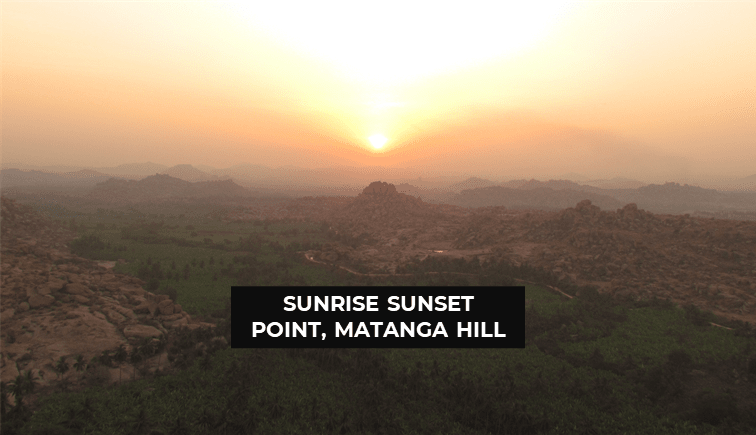
1) Sunrise Sunset Point, Matanga Hill

Image
Image credits: www.pixabay.com

Directions to reach: https://goo.gl/maps/WMmb4tk2oZdQGazZ9
Experience the spectacular panoramic views of Hampi while enjoying the rays of the sun.

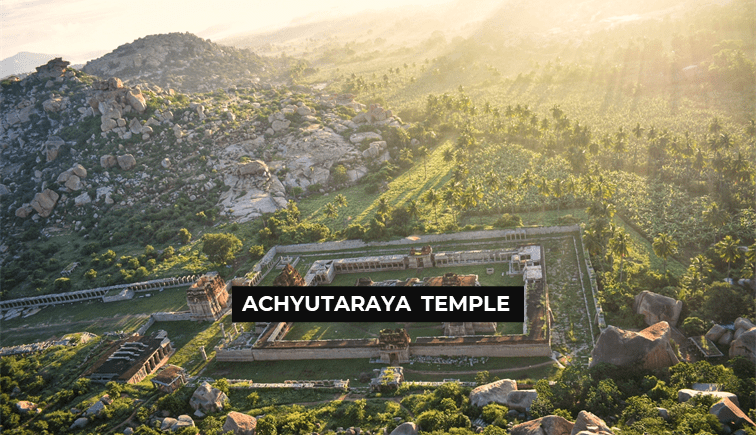
2) Achyutaraya Temple

Image
Image credits: www.pixabay.com

Dedicated to Lord Venkateshwara, Achyutaraya Temple (originally named Tiruvengalanatha) was built in the 16th century by Achyuta Deva Raya.
Visit this temple to witness the magnificence and grandiosity of the Vijayanagar Empire.

Directions to reach: https://goo.gl/maps/vmESE98mVB6FNBXd9

Part 2: Feel the Royal Vibe of Hampi

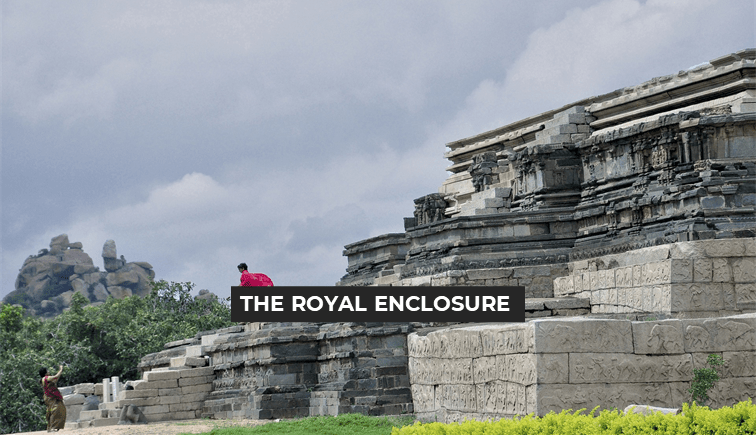
1) The Royal Enclosure

Spread over 59,000 square meters, the Royal Enclosure was the seat of power of the Vijayanagar Kingdom comprising more than 45 buildings.

Image

Directions to reach: https://goo.gl/maps/sf5XY7msCn4Td4YA6

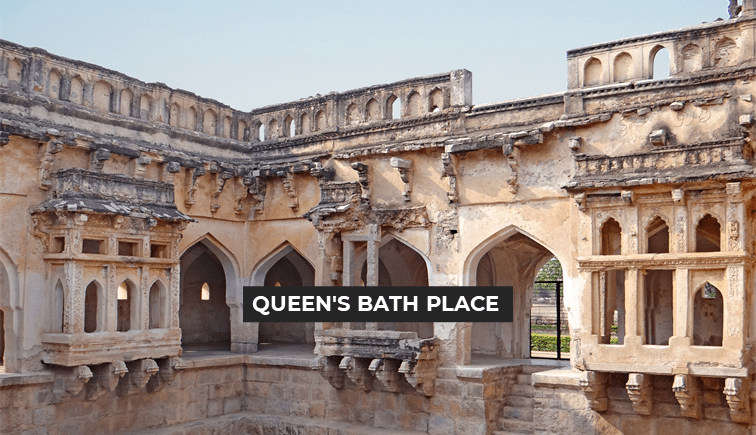
2) Queen’s Bath Place

Located close to the Royal Enclosure, Queen’s Bath Place was constructed for the women of the royal family.

Image

Directions to reach: https://goo.gl/maps/AdEkXjrLf3shYycV8

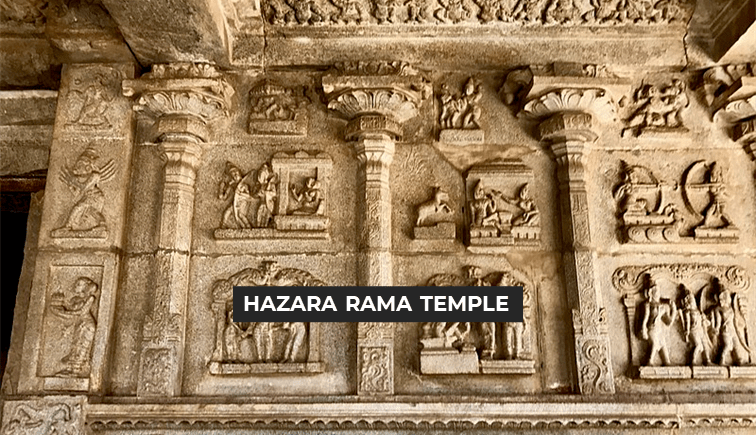
3) Hazara Rama Temple

Hazara Rama Temple was constructed in the 15th century and is the only temple situated in the core zone of the Royal Enclosure. This temple is dedicated to Lord Rama, an avatar of Lord Vishnu, and is known for the sculpted friezes depicting the Ramayana.

Image

Directions to reach: https://goo.gl/maps/g6b3qYx5PBE67DvRA

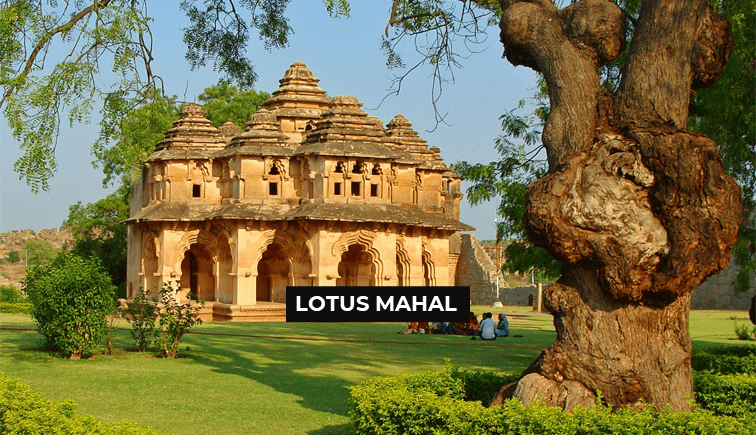
4) Lotus Mahal Hampi

Image

Directions to reach: https://goo.gl/maps/u4fLdnNg4ATApJrR7

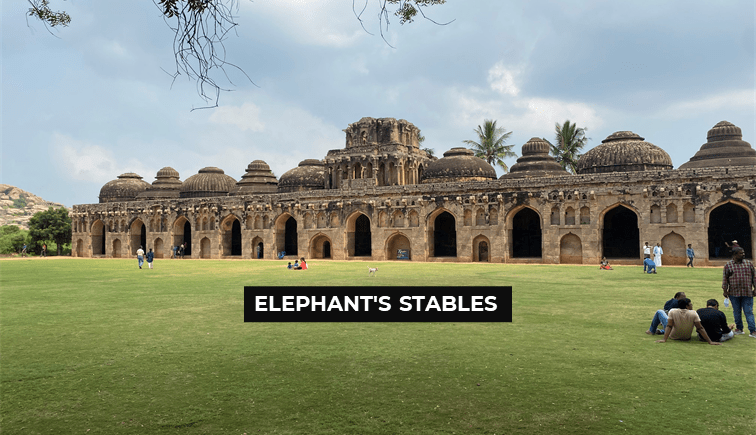
5) Elephant’s Stables

Image

Directions to reach: https://goo.gl/maps/vwVJVpDNsveAjC4B8

6) Zenana Enclosure

Directions to reach: https://goo.gl/maps/ofzYDpvN4RWVtVcY9

7) Octagonal Bath

Directions to reach: https://goo.gl/maps/iy1nB7812XdYHXcY8

Day 2: Explore the Rich Religious History of Hampi

1) Sree Virupaksha Temple, Hampi

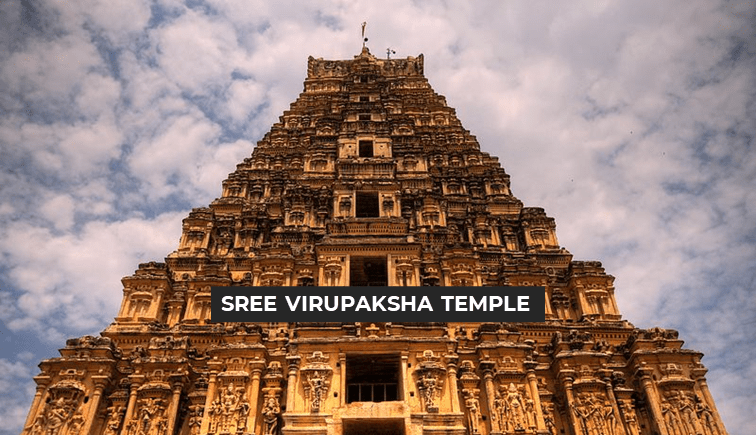
On the second day, you can explore the Rich Religious History of Hampi and start with the Sree Virupaksha Temple, dedicated to Lord Virupaksha, a form of Shiva. Offering prayers at this centuries-old temple is a whole different experience.

Image

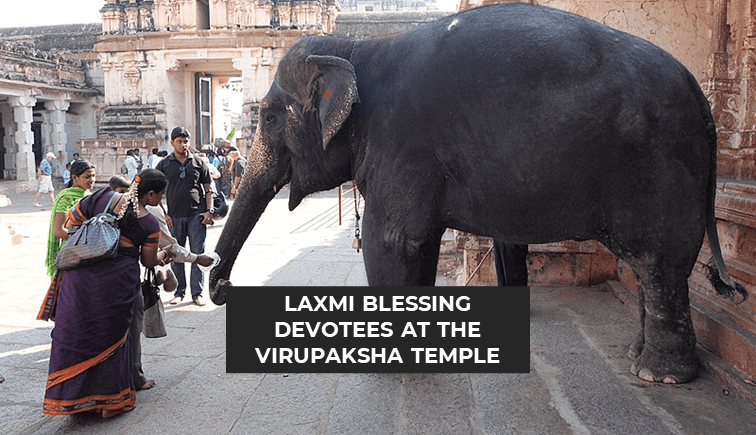
Don’t forget to get blessings from Laxmi at the temple.

Image

Directions to reach: https://goo.gl/maps/ogEtXZ43XXSPozDT6

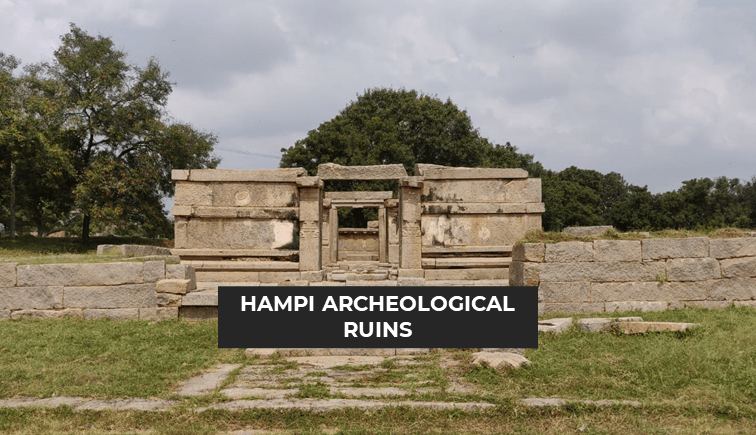
2) Hampi Archeological Ruins

Image

Directions to reach: https://goo.gl/maps/Vh6Wj3isPCYxyfAa8

3) Shiva Temple

Directions to reach: https://goo.gl/maps/KNLd5WAGL7BsYkPq6

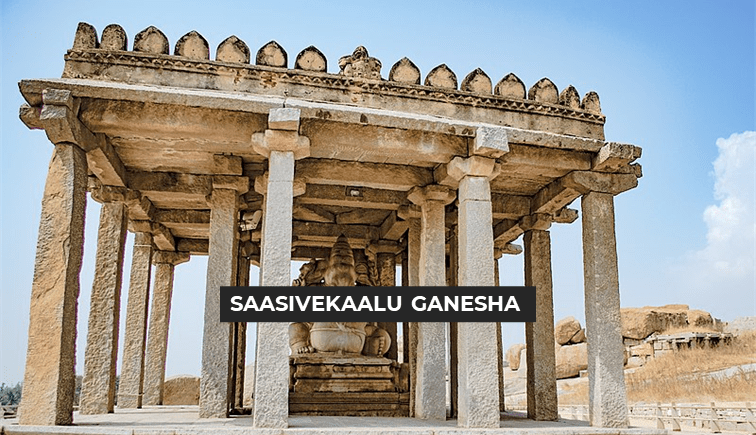
4) Saasivekaalu Ganesha

Image

Directions to reach: https://goo.gl/maps/crr8VwRbjqHSsvg76

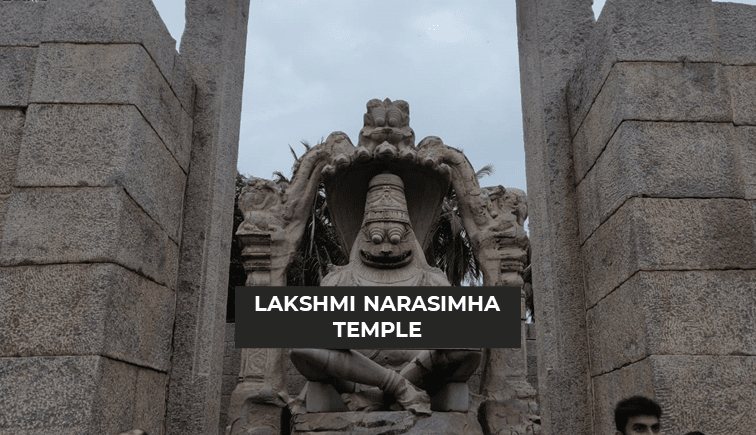
5) Lakshmi Narasimha Temple

Image

Directions to reach: https://goo.gl/maps/LTrKcbX7eHYtjHDv8

6) Hemakuta Hill Temple

Image

Directions to reach: https://goo.gl/maps/vGeL2dzfi2iajbcH8

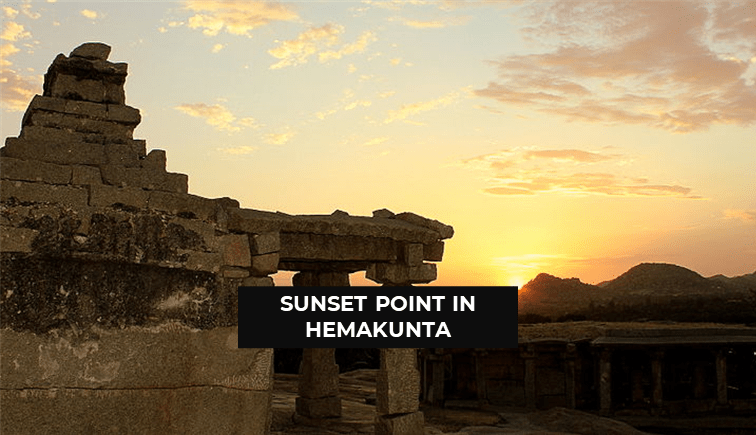
7) Sunset point Hemakuta

Image

Directions to reach: https://goo.gl/maps/Z5896AobRotCoPLAA

Day 3: Immerse yourself in the historical marvel of Hampi

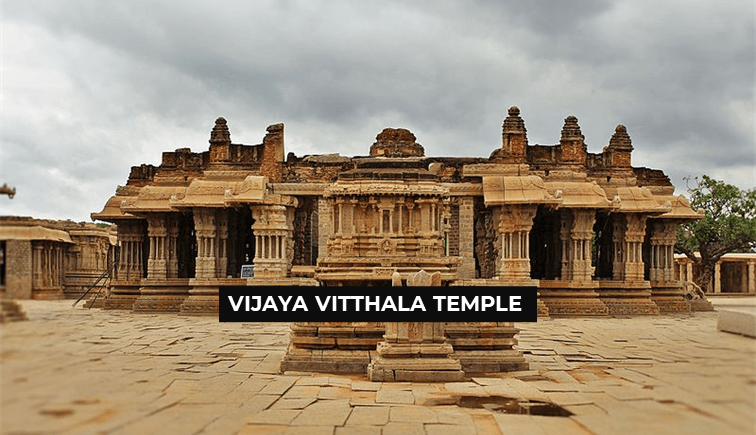
1) Vijaya Vitthala Temple

Your Hampi visit will be incomplete without visiting the Vijaya Vitthala Temple. Vijaya Vitthala Temple is located in the northeast of Hampi on the south of the Tungabhadra river.

Image

Directions to reach: https://goo.gl/maps/aSAgJqh8z7ukJcRo6

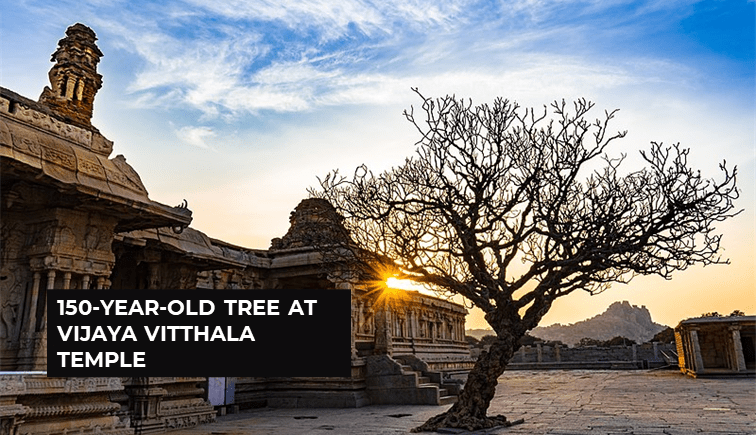
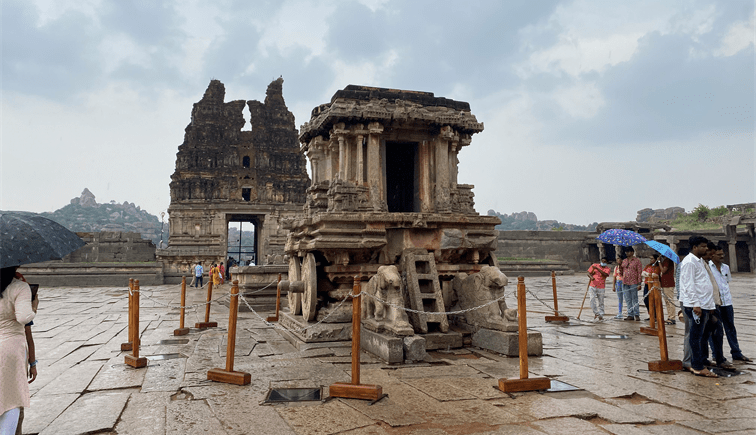
Witness the moving Stone Chariot and the musical pillars. Do make a note of this 150-year-old tree on the premises.

Image

2) Stone Chariot, Hampi

Image

Directions to reach: https://goo.gl/maps/f7Vk7U129fVSa2Bf7

3) Musical Pillars of the Vitthala Temple

Directions to reach: https://goo.gl/maps/uygkUxzTfc4bQMhe7

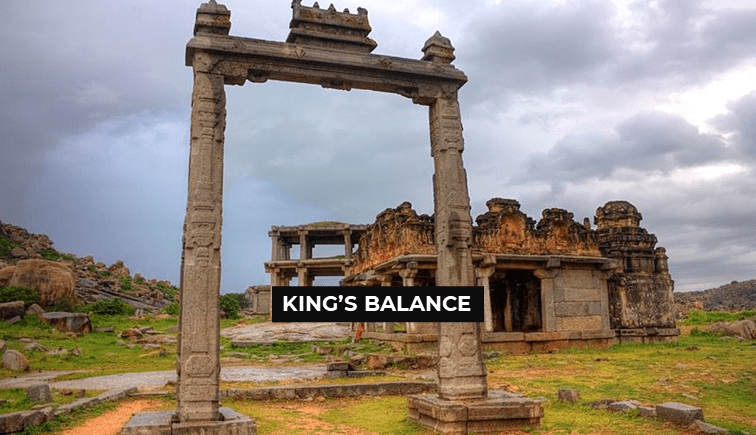
4) King’s Balance

Image

Directions to reach: https://goo.gl/maps/7KadKJ3KoU7Aq3XK8

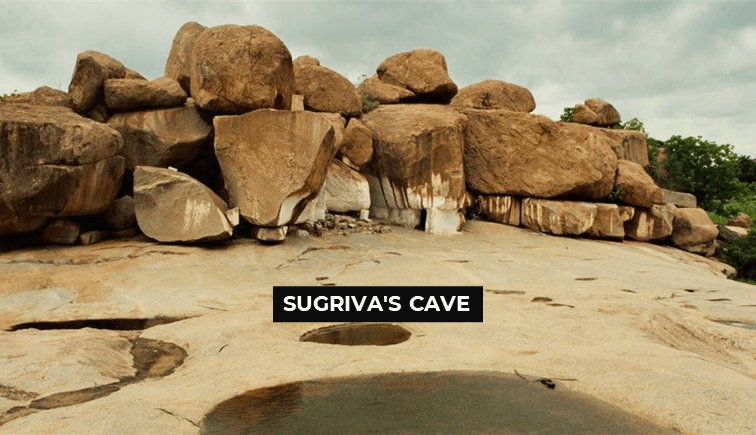
5) Sugriva’s cave

Located close to Vijaya Vitthala Temple, is Sugriva’s cave, which finds mention in the Ramayana. This was the place where Lord Rama and Lakshmana met Hanuman, Sugriva, and the monkey army who helped in searching for Sita.

Image

Directions to reach: https://goo.gl/maps/ibFvUQBvSju5CHNi9

6) Nammalvar Temple

Directions to reach: https://goo.gl/maps/BErE2Sd4N68mPeLt5

7) Kudure Gombe Mantapa

Directions to reach: https://goo.gl/maps/7JbpHDr6bDzYRwUc8

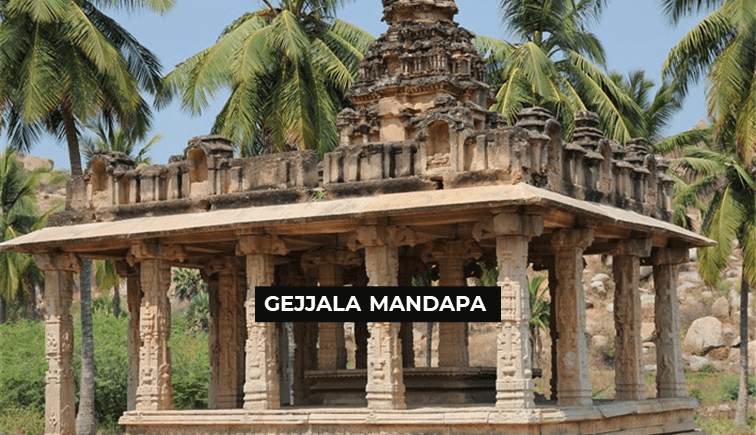
8) Gejjala Mandapa

Image

Directions to reach: https://goo.gl/maps/aNQFQLgHmsMpLrGQ7

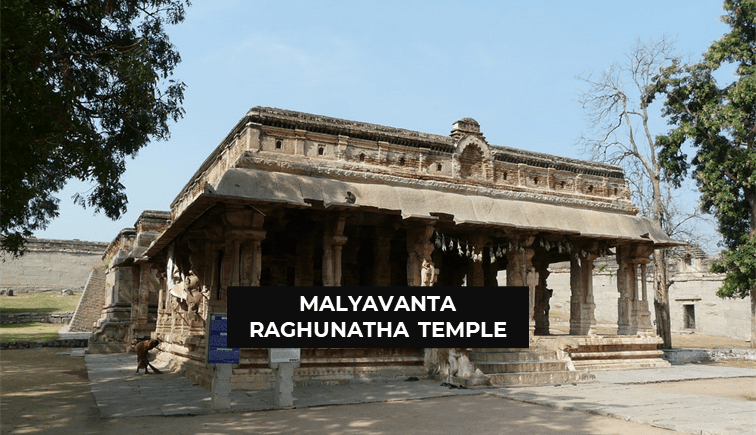
9) Malyavanta Raghunatha Temple

Image

Directions to reach: https://goo.gl/maps/jkJE65puK8vUgZPR7

Other Places to visit:

goo.gl/maps/4myVQgxs3WCLxWGG6(opens in a new tab)

Hampi Archeological Museum in Kamalapura

Directions to reach: https://goo.gl/maps/CzKnYBzizWQ9DsXF7

Atal Bihari Vajpayee Zoological Park

Directions to reach: https://goo.gl/maps/ZdKLzKQt3gk5qJZq6

Daroji Sloth Bear Sanctuary

Directions to reach: https://goo.gl/maps/4myVQgxs3WCLxWGG6

Suggested Places to Eat in Hampi:

1) Mango Tree Restaurant
2) Happy Hampi Cafe
3) Gopi Guesthouse And Roof Restaurant
4) Laughing Buddha
5) Archana Guesthouse Riverview & Roof Restaurant
6) Hampi’s Top Secret Restaurant
7) Chillout Bamboo Restaurant
8) Hampi Paradise Restaurant
9) Tamarind Tree Restaurant
10) Funky Monkey restaurant

Suggested Places to Stay in Hampi:

Category: Cozy and Budget-friendly

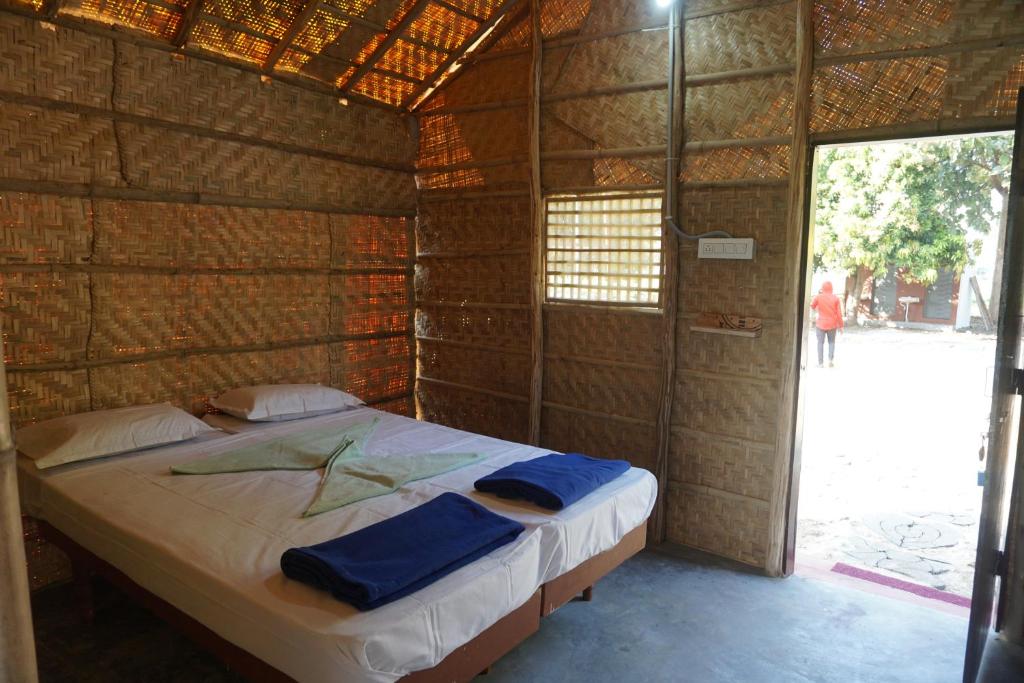
1) Wanderlust Hampi
https://g.page/wanderlust-hampi?share
Price: INR 1500 onwards

Image

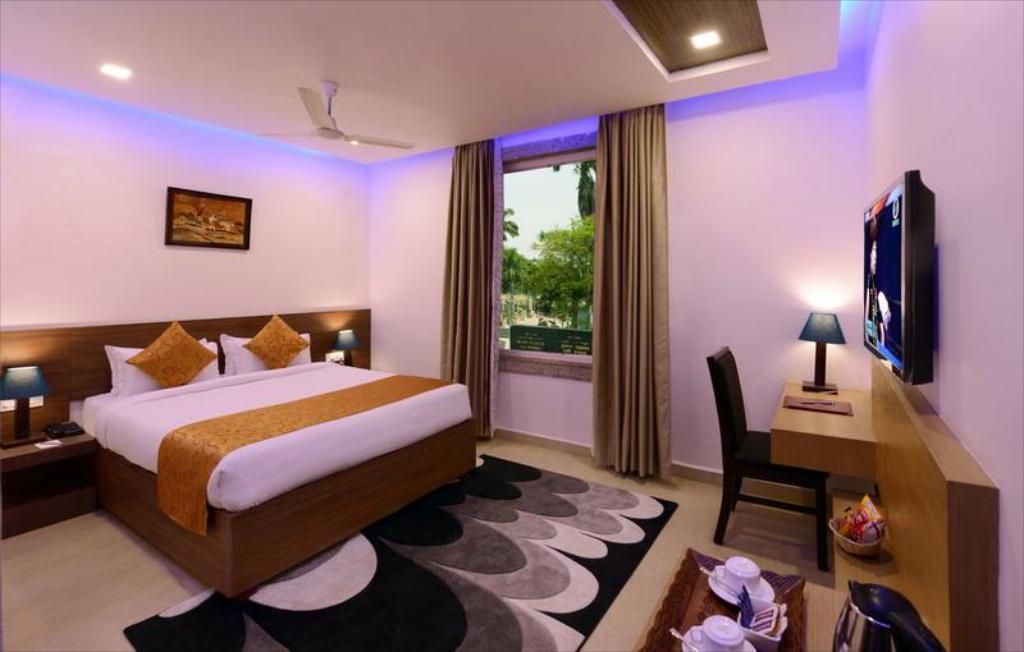
2) Clark’s Inn Hampi, Kamalapur
https://goo.gl/maps/VNqUEVPnryCTMTYC8
Price: INR 2000 onwards

Image

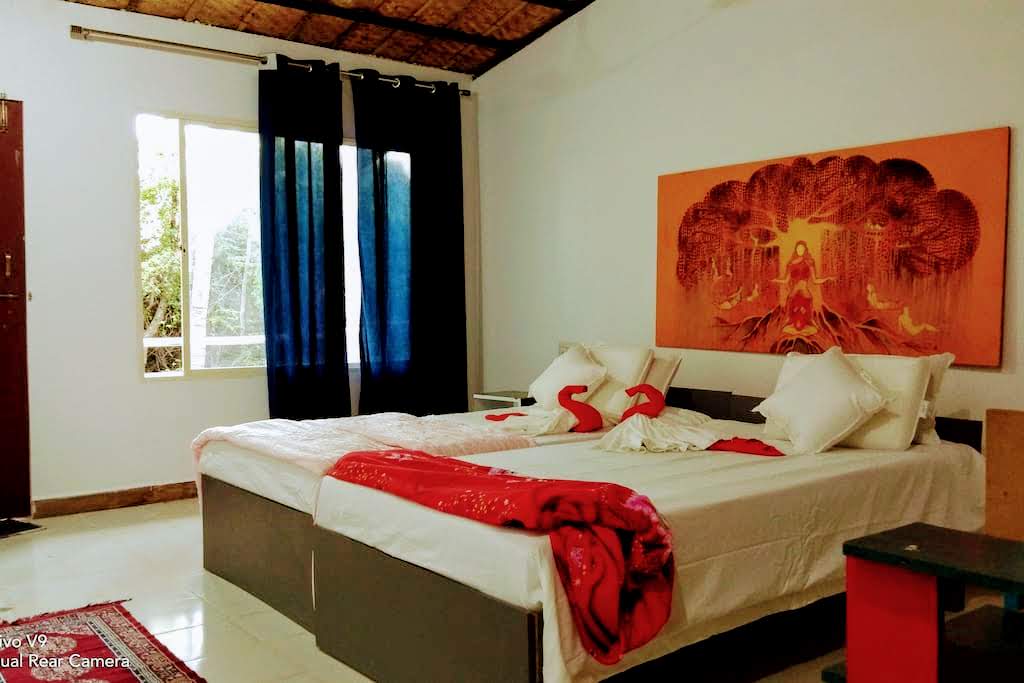
3) Lotus Riya Homestay, Kadiramapur
https://goo.gl/maps/oxnzpExnNpPeod9i8
Price: INR 3000 onwards

Image

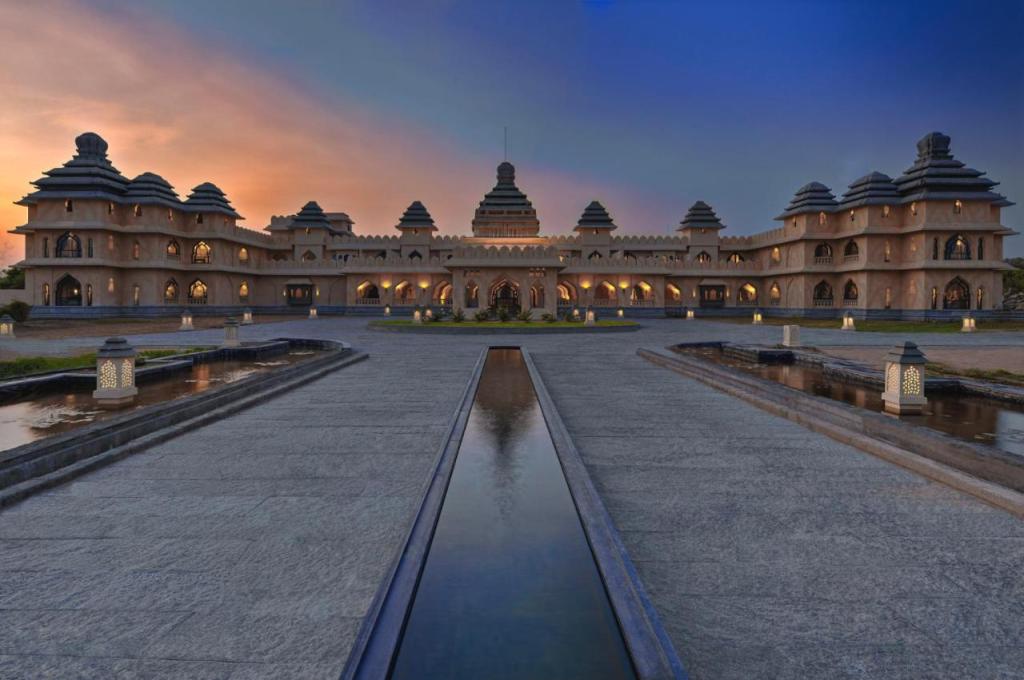
4) Kishkinda Heritage Resort, Sanapur
https://www.google.com/travel/hotels/s/CVTwV
Price: INR 3500 onwards

5) Little banana homestay, Hosapete
https://goo.gl/maps/FSKxsNB9nwKwwauLA
Price: INR 2200 onwards

Image

6) Shankar Homestay, Kadirampura
https://www.google.com/travel/hotels/s/6YJ5U
Price: INR 6500 onwards

7) Vijayshree Resort & Heritage Village
https://g.page/vijayshreeofficial?share
Price: INR 6000 onwards

8) Royal Orchid Central Kireeti, Station Road
https://g.page/RoyalOrchidCentralKireetiHampi?share
Price: INR 5,500 onwards

9) Heritage Resort Hampi
https://g.page/heritage-resort-hampi-hampi?share
Price: INR 5,500 onwards

10) Abhi Homestay, Kadirampura
https://g.page/abhi-homestay?share
Price: INR 1500 onwards

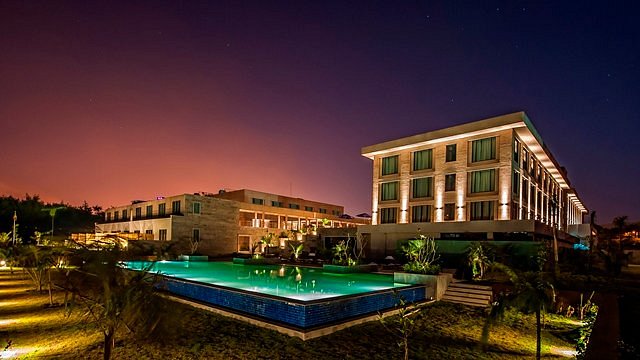
Category: Luxury

1) Evolve Back, Kamalapur
https://goo.gl/maps/vFzrp4TggHDcD7YY7
Price: INR 23,000 onwards

Image

2) WelcomHeritage Shivavilas Palace Hotel
https://g.page/ShivavilasPalaceSandur?share
Price: INR 23,000

Image

3) Hyatt Place, Hampi
https://g.page/HyattPlaceHampi?share
Price: 6,000 onwards

Image

All in all, Hampi is a great place for a short vacation, especially with family and friends. The best time to visit is between November to February when the average temperature is 16°C. Summers are hotter when temperatures may reach even up to 40°C, so kindly plan your trip accordingly.

Here is a video listing out the Must Visit Places & 3 Day Itinerary for easy reference.

Have you been to Hampi yet?
Share your experience with me in the comments.

Categories
India Language

60 Easy and Useful Hindi Phrases To Learn Before Visiting India

India is a hotspot of rich cultural heritage.
The country has 22 regional languages spoken in different states of the country and has about 447 languages spoken overall, which is the fourth-highest number of spoken languages in the world.

The good news is that you need not learn all of these 22 languages. ‘Hindi’ is the most widely spoken language here and you can easily get your way if you are good with a few common phrases. Please note you need not know the Hindi translation of every word, you may easily replace the subject in a sentence with its English counterpart and still be understood.

Here we list out 60 such common phrases which will come in handy when you visit India:

Greetings:
Hello: Namaste (with folded hands)
My name is ‘John Doe’: Mera naam ‘John Doe’ hai OR Main ‘John Doe’ hu.
I am from ‘Mexico’: Main ‘Mexico’ se hu
Please: Kripiya
Thank You: Dhanyabaad
How are you?: Aap kaise hai?
I am good: Main thik hu
Nice to meet you: Aap se milke accha laga
What is your name?: Aap ka naam kya hai?
No worries: Koi baat nahi

60 Easy and Useful Hindi Phrases To Learn Before Visiting India
Image credits: www.wikimedia.org

General conversations:

Image
Image credits: www.pixabay.com

Yes: Haan
No: Naa OR Nahi
Okay: Thik hai
Sorry: Maaf kijiye
Sorry, I made a mistake: Maaf kijiye, ek galti ho gayi.
I don’t understand: Mujhe samajh nahi aaya
I dont know: Mujhe pata nahi
No problem: Koi baat nahi
This is right: Yeh thik hai
This is wrong: Yeh galat hai
This is good: Yeh accha hai
This is not good: Yeh accha nahi hai
This is bad: Yeh bura hai.
This is beautiful: Yeh sundar hai
You are beautiful: Aap sundar hai
You are good: Aap aache hai
You are very good: Aap bahut acche hai

Addressing people:
A general way to call male: Sir OR Bhaiya (meaning brother) OR Uncle
A general way to call any female: Mam OR Didi (meaning sister) OR Aunty

Image
Image credits: www.pexels.com

Asking for help:
Do you speak English?: Kya aap Angrezi bolte hai?
Can you help me?: Kya aap meri madad kar sakte hai?
I lost my ‘phone’: Mera ‘phone’ kho gaya hai
Do you have a ‘pen’: Kya aap ke paas ‘pen’ hai?
I am thirsty. Can I get some water?: Mujhe pyaas laga hai, thoda paani mil sakta hai?
I am hungry. Can I get some food?: Mujhe bhook laga hai, thoda khaana mil sakta hai?

Transport & asking for directions

Which way is ‘Red Fort’?: Kaunsa raasta ‘Red Fort’ jaata hai?
Does this car/bus/train go to ‘Red Fort’?: Kya yeh car/bus/train ‘Red Fort’ jaati hai?
Please let me know when the next stop comes: Kripiya agla stop aaye toh mujhe bata dena
Please let me know when ‘Chandni Chowk’ stop comes: Kripiya ‘Chandni Chowk’ stop aaye toh mujhe bata dena
Please stop the car: Kripiya car ko rokiye.
What time will the bus reach ‘Chandni Chowk’?: Yeh bus kitne baje ‘Chandni Chowk’ pohochegi?
What time will the bus start?: Yeh bus kitne baje shuru hogi?
Please stop here: Kripiya yahan rok dijiye
Please go a little ahead: Kripiya thoda aage chaliye.
Please dont push: Kripiya dhhhakka naa de.
Stop: Rukiye (with respect)/ Ruko
Dont stop: Rukiye mat (with respect)/ Ruko mat
Is there a restaurant/ food joint nearby?: Yahan paas mein koi khaane ki jagah hai?

Image
Image credits: www.pexels.com

Shopping:
What is the price of this? Iska daam kitna hai?
Please reduce the price: Daam thoda kam kijiye
This is good: Yeh accha hai
This is not good: Yeh accha nahi hai
Do you accept cash or card? Aap kya accept karte hai? Cash ya card?
Can you show me some more options? Kuch aur options dikhaaye.

Image
Image credits: www.pixabay.com

At a hotel:
Is there a hotel room nearby? Yahan paas mein koi rehne ki jagah hai (koi hotel hai)?
Do you have a room available for two people? Kya aapke hotel mein do logo ka kamra available hai?
Do you have any other rooms? Aapke paas koi aur room available hai?
Is there a room with a balcony? Koi balcony wala room available hai kya?
I need hot water in the shower. Bathroom mein garam paani chahiye. Geyser available hai naa?

Image
Image credits: www.pixabay.com

Heading to India and need help? Connect with us and ask us anything!

Categories
People & Culture Places

10 Bizarre Superstitions From Around the World

Superstitions are long-standing popular beliefs rooted in historical, regional, or religious circumstances which although rejected by modern science are followed by cultures around the world.

In this blog, we share a few such popular and some unheard superstitions from around the world:

1) Cantonese and the fear of number ‘4’ (tetraphobia)

Image
Cantonese in Malaysia
Credits: https://commons.wikimedia.org/

Unlike the West, where the number 13 is associated with bad luck, Hongkongers consider numbers ‘4’, ’14’, and ’24’ to be unlucky. In Cantonese, the number ‘4’ is associated with death, the number ’14’ sounds like ‘must die’, and the number 24 sounds similar to ‘easy to die’.

Believers go to great lengths to avoid these numbers in phone numbers, house numbers, addresses, bus numbers, business cards, IDs, and even floors.

Do you know why Chinese smartphone maker, OnePlus has model names in the series 3, 3T, and 5, avoiding the number 4? Well, now you do!

2) Peepal trees and the myths in India

Image
It was a Peepal tree where Lord Buddha is said to have attained enlightenment
Credits: https://commons.wikimedia.org/

Peepal or the Bodhi tree is considered sacred by many, especially among people following Hinduism, Buddhism, and Jainism.
It was a peepal tree where Lord Buddha is said to have attained enlightenment.

The tree is large and evergreen, sometimes growing up to 100 feet in height (30 meters), and the diameter of a fully grown tree may reach 10 feet (3 meters). The trees have a long lifespan ranging between 900 to 1500 years.

There are several myths about the Peepal tree in India. It is forbidden to plant the tree anywhere in the house. It is also considered that cutting the tree brings negativity and bad luck to a family, and causes pain to the ancestors as it is believed to be the abode of Lord Brahma (the Hindu Creator God).

Sitting or resting under a Peepal tree during the night is discouraged as it is believed that ghosts reside under the tree at night. Those who did try to do so have complained of being hallucinated and seeing evil spirits.

3) Picking names and purchasing things for newborns only after their birth

Image
Credits: http://www.pixabay.com

In some cultures, it is believed that buying, opening, or receiving items for a newborn before the baby’s arrival attracts evil spirits and brings misfortune and even miscarriage.

For the same reason, it is considered inauspicious to think of names for the baby before birth.

4) Don’t spill salt or olive oil in Italy

Image
Credits: http://www.pexels.com

Italians love olive oil and salt dressing in their food.
In ancient times, oil and salt were expensive items to buy, and only a few families could afford them. These items are still associated with money and good fortune and are believed that if salt or oil drop even inadvertently, it could bring misfortune and loss of money to the family.
If this happens, one needs to quickly pick up the salt grains and throw them behind the shoulders three times with the left hand to lift the jinx.

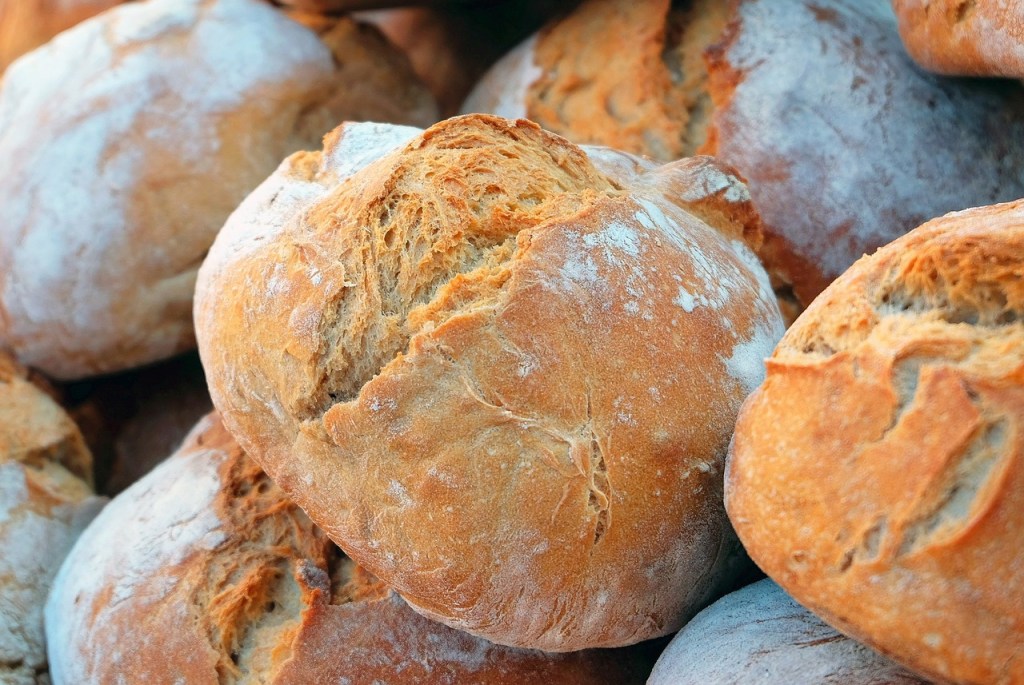
5) When in France, never place a bread upside-down!

Image
Credits: http://www.pixabay.com

The French relate laying bread upside down with bad luck! The explanation for this superstition dates back to medieval times.

On a day of execution, the executioner did not have time to pick bread for himself, and a baker who reserved a loaf for the executioner placed it upside down to distinguish it from the rest of the bread. Customers would avoid touching the bread in the fear of catching an evil eye.

The tradition stayed back and is practiced even today and is applicable even for a piece of baguette.

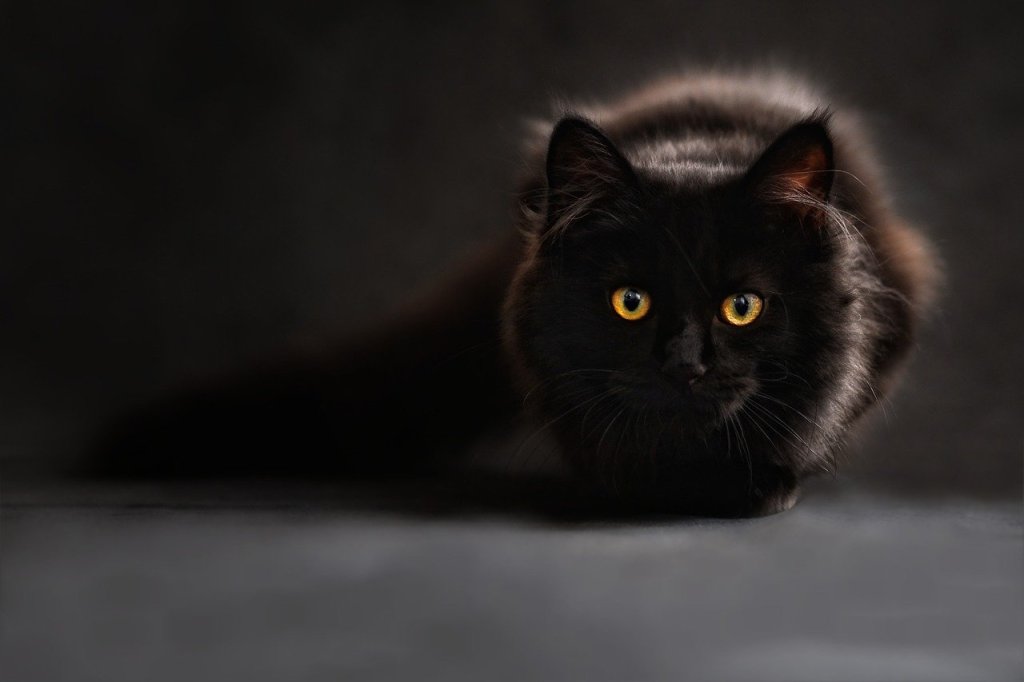
6) Black cats bring bad luck or good luck?

Image
Credits: http://www.pixabay.com

Contrary to the popular belief of associating black cats with negativity and bad luck, many cultures consider that black cats bring good luck.
Owning a black cat or even spotting one is considered to bring luck in some Asian countries, the UK, Scotland, and even France.
Some cultures even consider dreaming of a black cat to be auspicious.

7) Killing a spider brings bad luck in Finland

Image
Credits: http://www.pixabay.com

Spiders are regarded as mystical creatures around the world.

While some cultures connect spiders to witch’s evil companion; many European cultures consider spiders a symbol of luck, happiness, wealth, and all things good. Spiders entering the house are an indication of wealth coming into the house, bringing good luck, and joy. In countries like Finland, killing one is considered extremely bad.

8) Stepping on or over books is a big no-no!

Image
Credits: http://www.pexels.com

In countries such as Nepal and India that follow Hinduism, books are worshipped as a form of Goddess Saraswati, the goddess of learning and knowledge.

Whenever someone steps over or on a book by mistake, they bow their heads and seek forgiveness. Not doing so shows their disrespect for the goddess, and, are said to lose their knowledge.

9) Bird pooping can bring good luck!

Image
Credits: http://www.pixabay.com

There are several superstitions around bird poops. While talking about it might gross you out, several cultures consider it to be lucky!
It is said that if a bird defecates on your head, it brings you good luck, happiness, and good fortune.

10) Superstitions around whistling

Image
Credits: http://www.pexels.com

Whistling is related to superstitions across many cultures- whistling indoors is considered to bring bad luck and poverty.
Whistling in the dark is considered a summon call for the devil and an invitation for evil spirits. In Japan, whistling in the dark is believed to be a call for snakes to come out.

What are some superstitions followed in your part of the world? Share your thoughts in the comments below.