
Home

View more videos from the UCLA Brain Research Institute

EMPOWERING COLLABORATIVE AND
DIVERSE NEUROSCIENCE RESEARCH,
EDUCATION AND OUTREACH AT UCLA.

Education

The BRI co-ordinates a large portion of neuroscience educational programs on campus.

Research

With about 300 members and about 800 open source labs, abundant opportunities exist to connect with fellow researchers and create innovative projects.

Outreach

The BRI educates and inspires K-12 students that are traditionally underserved to pursue higher education and a career in neuroscience.

Member Publications

Joshua T Trachtenberg. Competition, inhibition, and critical periods of cortical plasticity. Curr. Opin. Neurobiol. 2015 44-8

Yang Qu, Andrew J Fuligni, Adriana Galvan, et al. Buffering effect of positive parent-child relationships on adolescent risk taking: A longitudinal neuroimaging investigation. Dev Cogn Neurosci 2015 26-34

Jacob G Dubroff, Robert K Doot, Mary Falcone, et al. Decreased Nicotinic Receptor Availability in Smokers with Slow Rates of Nicotine Metabolism. J. Nucl. Med. 2015 1724-9

Chase S Linsley, Viola Y Quach, Gaurav Agrawal, et al. Visible light and near-infrared-responsive chromophores for drug delivery-on-demand applications. Drug Deliv Transl Res 2015 611-24

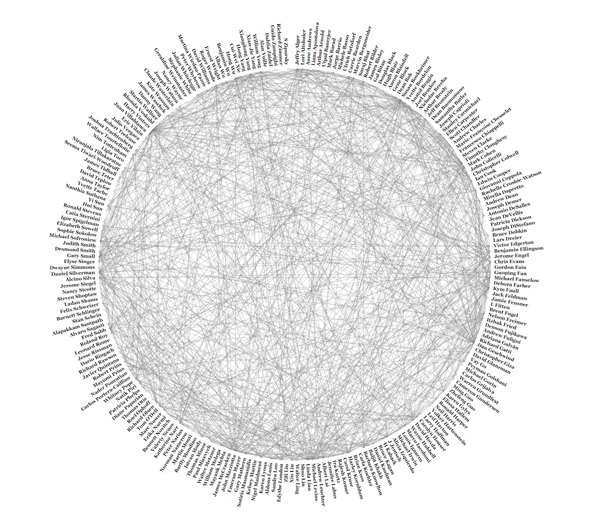
publications connections

Member News

Joint Seminars In Neuroscience

New Member Short Talks

June 9th, 2026

New Member Short Talks 


Upcoming Events/Seminars

Sunday
Monday
Tuesday
Wednesday
Thursday
Friday
Saturday
28
29
30
01
02
03
04
05
Current Date
06
07
08
09
10
11
12
13
14
15
16
17
18
19
20
21
22
23
24
25
26
27
28
29
30
31
01

The UCLA Brain Research Institute (BRI) is a catalyst for education, outreach, and research collaborations among current and future scientists, engineers and clinicians who seek to understand the healthy and diseased brain.

UCLA is rated the #1 Public University in the country.

What makes BRI exceptional?

BRI Calendar Image July

Image of the Month

Image: Dendrites and proximal axon arboration of pyramidal neuron (white) in the prefrontal cortex of a 5xFAD mouse. An axonal spheroid frequently associated with plaque burden in mouse models of Alzheimer’s disease is visible in the upper left corner in adjacent with amyloid plaques (green) and microglia (red).

By:
C.Y. Daniel Lee and Chris Park, X. William Yang Lab

#1 Educational Program

UCLA is ranked the #1 public education program in the country by US News. Programs are diverse, affordable, and mission driven.

Over 300 +

Members

80

Doctoral Students

Over 20

Courses

Life Changing Research

The BRI provides multiple mechanisms to invigorate research programs and support collaborations bringing together investigators from complementary fields. These mechanisms include

Over 300 +

Members

Over 1000

Publications Per Year

Over $ 1 Billion

Federal Funds UCLA Receives

Outreach That Impacts Our Communities

The BRI aims to extend scientific knowledge into the community and inspire elementary and secondary school students to explore a career in neuroscience

Over 40

High School Students per year do research with BRI.

Over 500

K-12 students per year visit UCLA Labs

Over 1000

K-12 Students Involved