
If your team uses Confluence Server as a central wiki for project documentation and also maintains a customer-facing or internal knowledge base in Document360, keeping both platforms in sync manually is repetitive work. By connecting Confluence Server and Document360 through Zapier, you can automate this: whenever a new page or blog post is created in a Confluence space, Zapier automatically creates a corresponding article in Document360.
If you use Confluence Cloud rather than Confluence Server, you can connect it to Document360 using a pre-built Zapier template: Try this Zap →
When to use this integration
- Your team creates project pages or blog posts in Confluence Server and wants those entries to automatically appear as articles in Document360 without manual copying.
- You maintain parallel documentation in both Confluence (for internal team use) and Document360 (for a wider audience) and want new Confluence content to trigger article creation in Document360 automatically.
- You're migrating content from Confluence Server to Document360 gradually and want new content created during the transition to land in both platforms simultaneously.
Before you begin
- You must be logged into your Zapier account.
- You must have a Confluence Server account with access to the space you want to monitor.
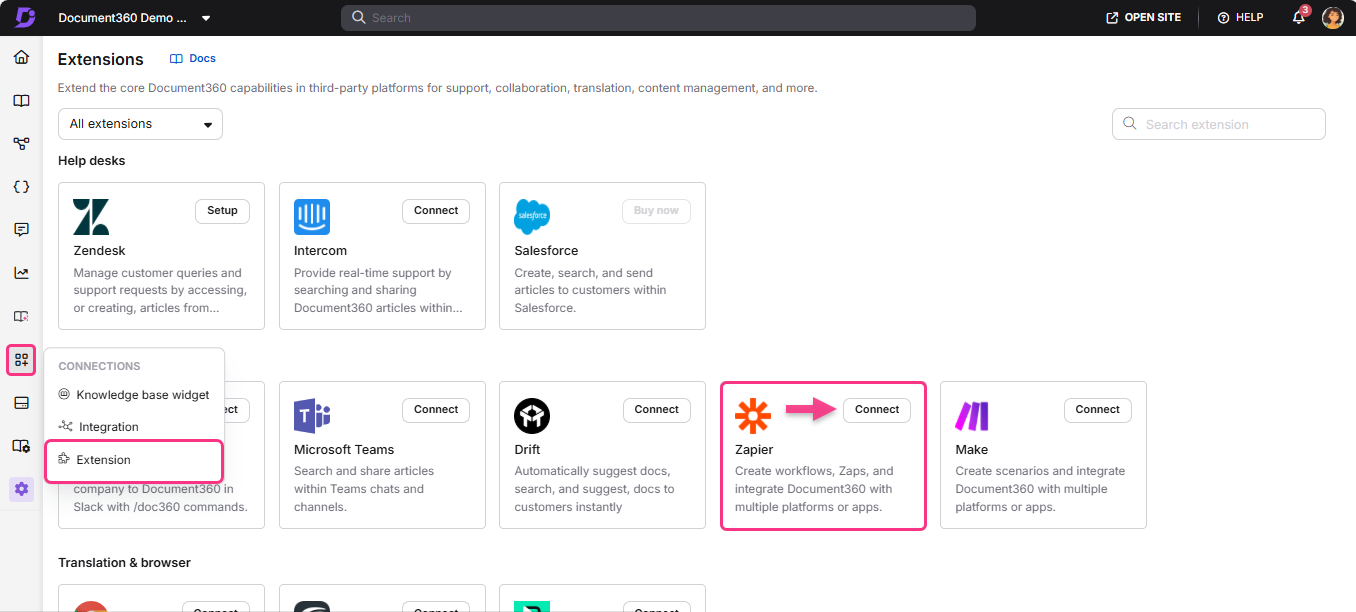
- You must have your Document360 API token ready. To generate one, navigate to Connections > Extensions , locate the Zapier tile, and click Connect to copy the token.
How to set up the Zap
Step 1 — Create a new Zap
- Log in to your Zapier account.
- From the left navigation menu, click Create then select Zaps.
- A new Zap is created with a Trigger and Action flow.

Step 2 — Connect Confluence Server as the trigger
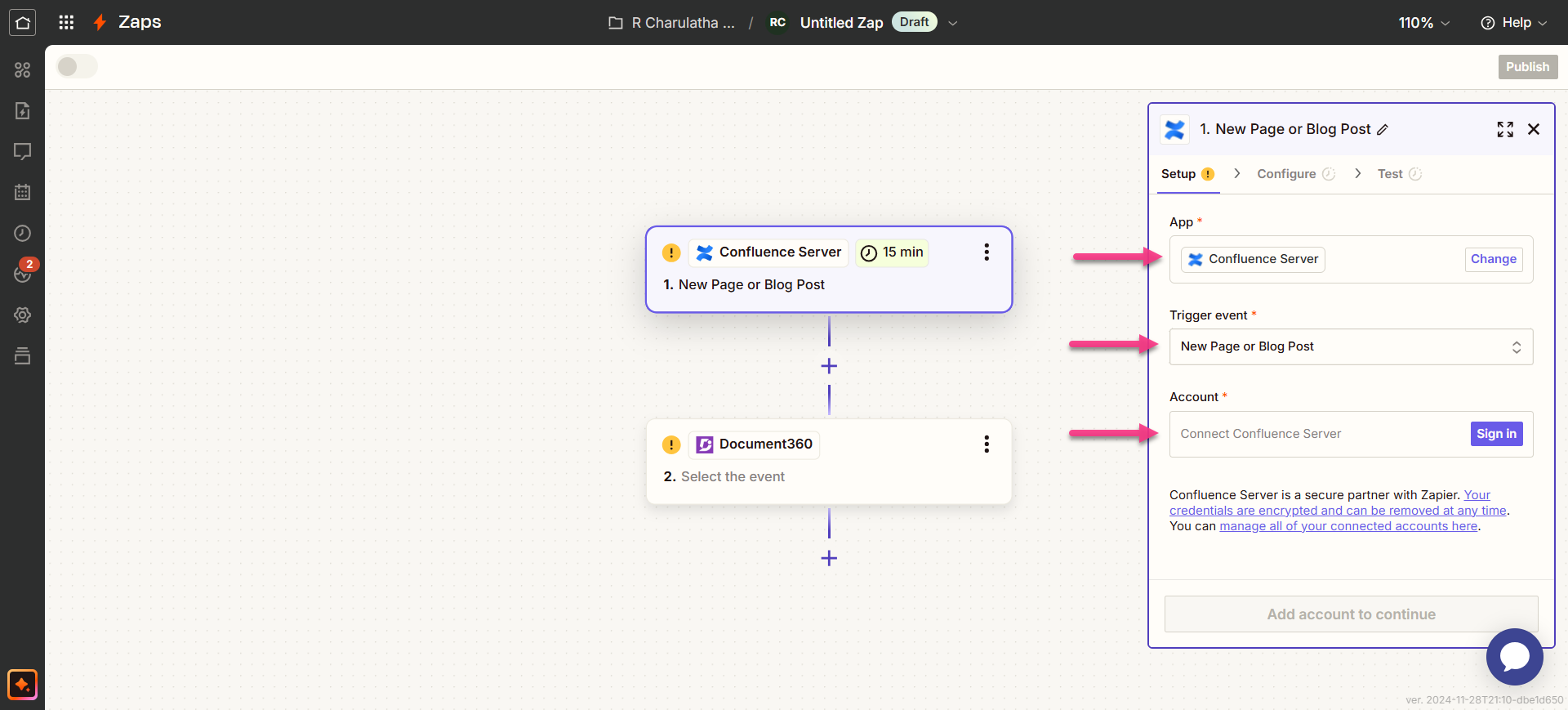
- In the Trigger field, choose Confluence Server.
- In the Trigger event field, select New Page or Blog Post.
To change the trigger app later, click Change in the Trigger field.
- Click the Account field — a Sign-in panel appears.
- Enter your Confluence site's base URL, account email, and API token, then click Yes, Continue to Confluence Server.
- Click Continue. Zapier runs a test to confirm the trigger is correctly configured.
- In the Trigger configuration panel, select the space you want to monitor.
- Choose the content type — either Blog post or Page — depending on what should trigger the Zap.
- If you have a newly created space that doesn't appear in the list, click Refresh list to update it.
- Click Test trigger, then click Continue.
Step 3 — Connect Document360 as the action
- In the Action field, choose Document360.
- On the Setup panel, select the desired event in the Event field.
- Click the Account field — a Sign-in panel appears.
- Enter your sign-in credentials and click Allow.
To generate the API token from Document360:
- Navigate to Connections > Extensions in the left navigation bar of the Knowledge base portal.
- On the Zapier extension tile, click Connect.
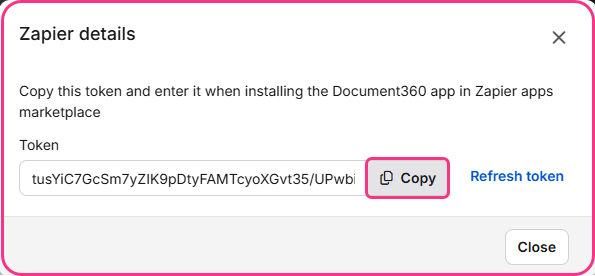
- Click the Copy icon to copy the token.
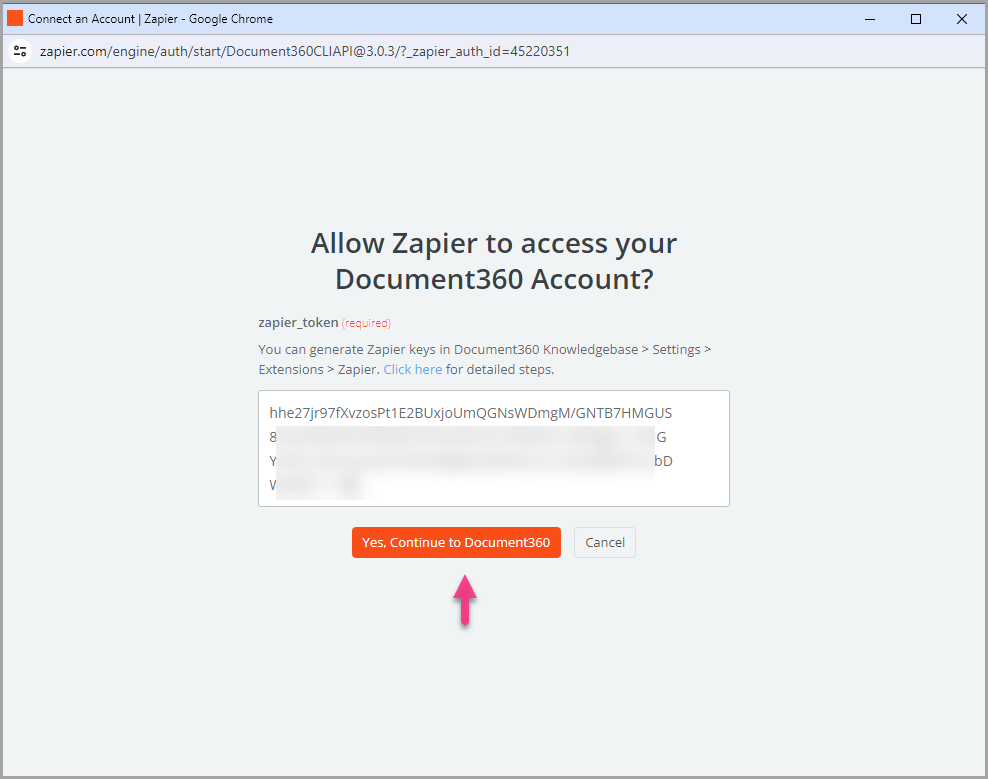
- Head back to the Zapier panel and paste the API token into the field.
- Click Yes, Continue to Document360.
- You can find the connected Document360 project on the Connect Document360 account page. To use a different account later, click Change.
- Click Continue.
Step 4 — Map the fields
- Map the required fields for the Document360 article:
| Field | Description |
|---|---|
| Version | Select the workspace in your Document360 project where the article should be created. |
| Language | Choose the language within the selected workspace. |
| Category | Select the category where the article will be created. |
| Publish | Set to True to publish immediately. Set to False to save as a draft. |
The Continue button is only enabled after all required fields have been mapped.
- Click Continue.
Step 5 — Test and publish the Zap
- In the test section, click Test step.
- If successful, you will get the message A Document was sent to Document360.
- In your Document360 portal, you'll find a new article titled after the Confluence page or blog post, located in the category you selected.
- Head back to the Zapier setup panel and click Next, then click Publish.
- You will see a success message: Your Zap is on. Click Manage your Zap to go to the Zap overview page.
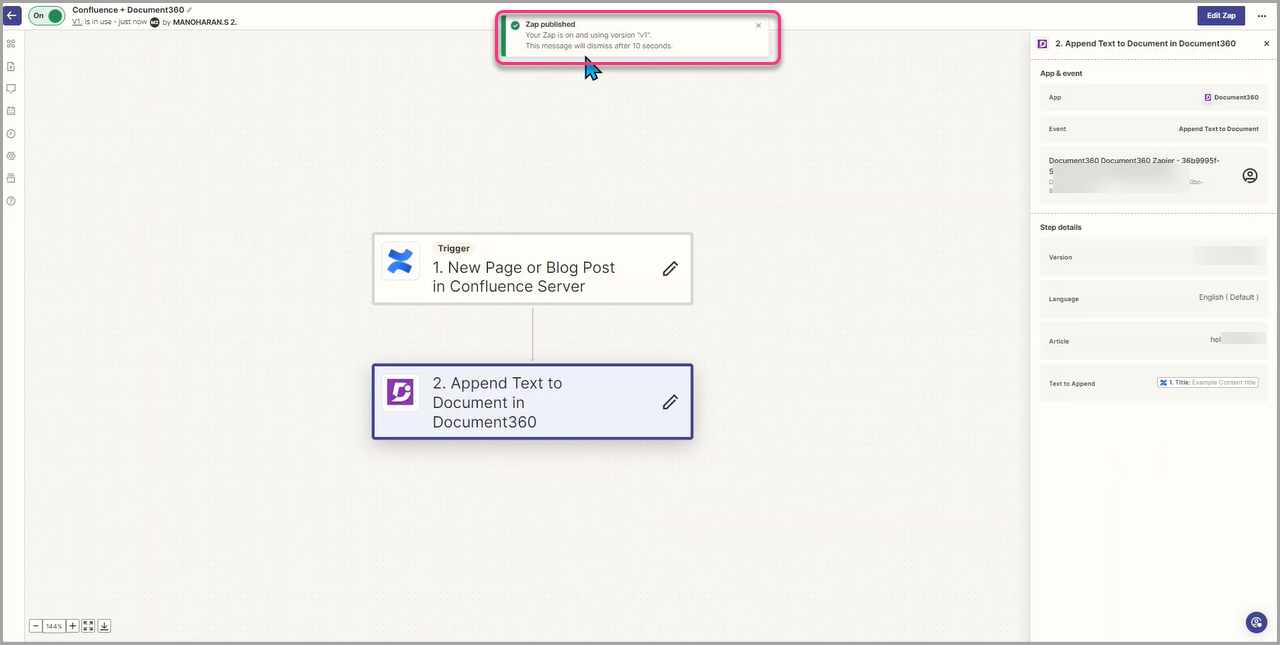
Zap overview
Once active, you can view and manage the Zap from the Zapier dashboard. The overview page shows the trigger, action, and run history for the Zap.
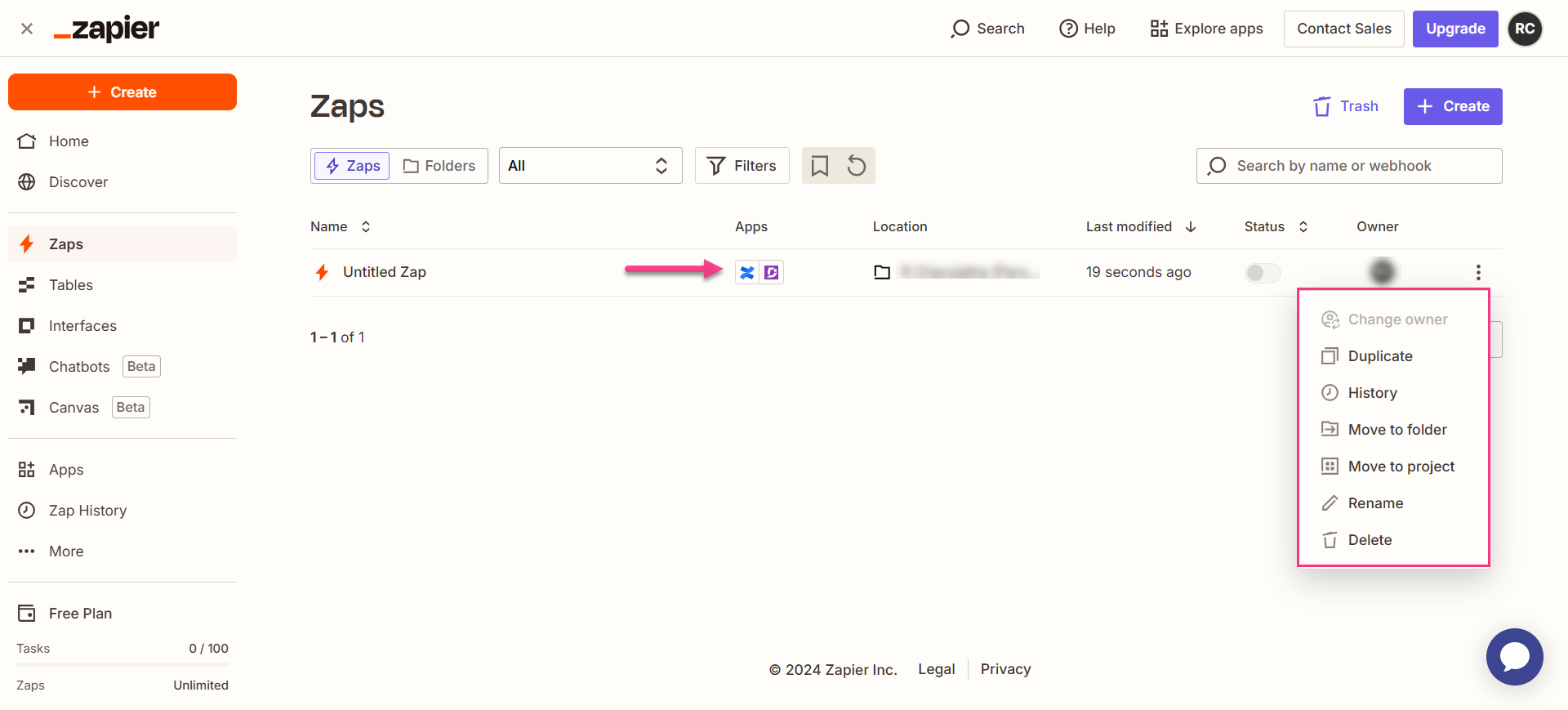
How to delete a Zap
- Navigate to the Zapier dashboard. A list of all existing Zaps is displayed on the overview page.
- Click the Zap actions () icon to the right of the Zap you want to remove and click Delete. The Zap is permanently deleted.
Best practices
- Monitor a specific Confluence space rather than your entire Confluence instance. Pointing the Zap at a single space makes it easier to control which content flows into Document360 and avoids pulling in unrelated team pages.
- Set Publish to False when mapping fields so that Confluence-sourced content lands in Document360 as a draft. Confluence pages often contain formatting or internal references that need cleanup before they're ready for a public knowledge base.
- Map the Confluence page title to the Document360 article title field so the article name in Document360 matches the source. This makes it easier to trace articles back to their Confluence origin and keep both platforms aligned.
