You can't beat Fuji

Uploaded image

That's not exactly true. Nikon colours are rich and realistic, particularly the later full frame models - and so are photos from the little Ricoh GR III. Maybe the GR II is the same, but I haven't tried it.

And no camera system likes harsh, contrasty light.

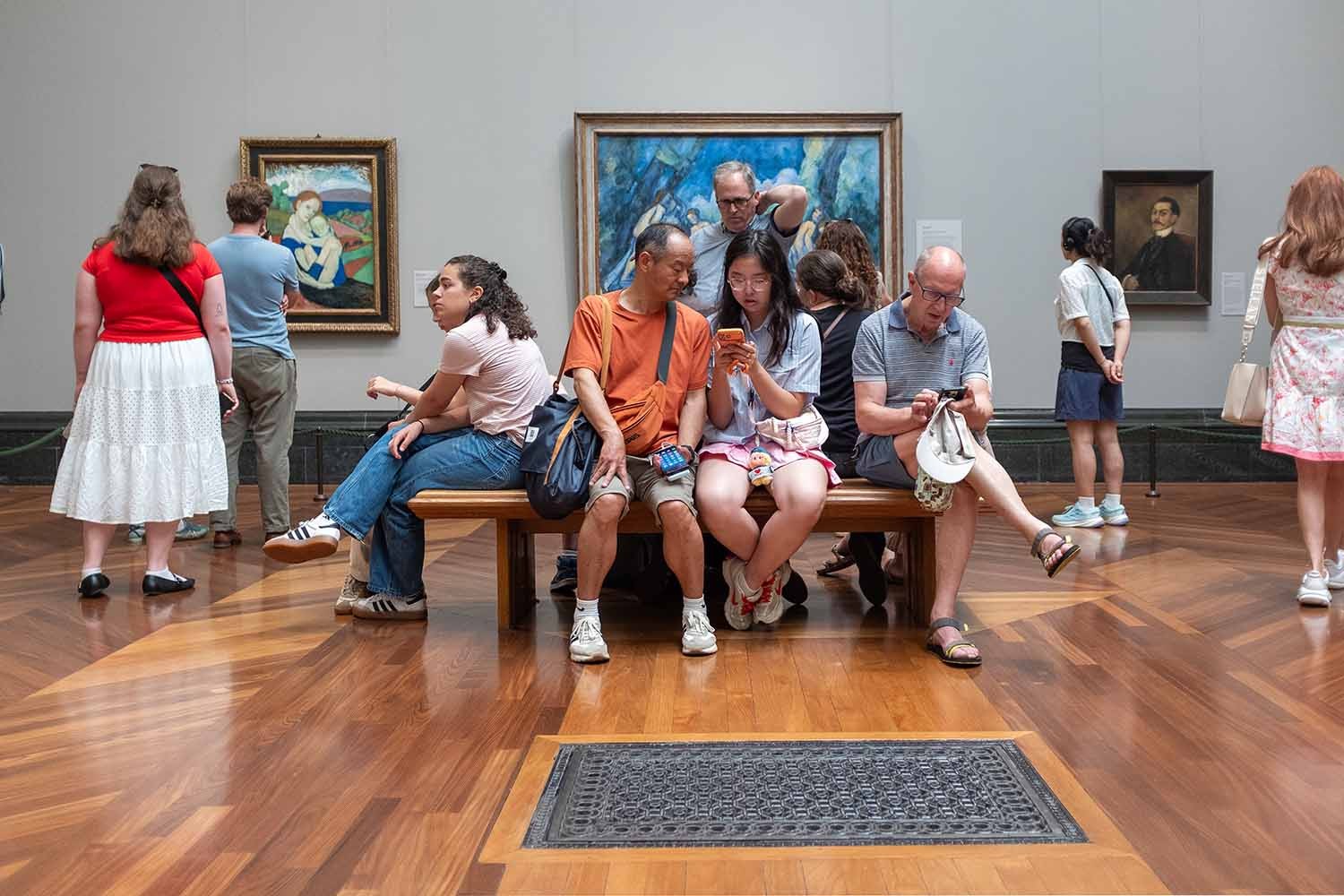
But for something like this room in the National Gallery and a quick shot that balances colour - you'd have to go a ways to do better than Fuji.

Fuji X100F - 1/60th at f2 and ISO 800

In case you are unfamiliar with Pagecord - click the photo to see it bigger.

Inside and Outside

Of all the sensations that a person might feel, feeling inside of something or outside of something is the strongest and most central because it defines the person.

How to explain it in a way that is universal and can be recognised by everyone?

Longing

Longing indicates an as yet unsatisfied desire. If it is not strong it is not really a desire. We have many desires that are desires in name only. Our attachment to them is partial and relatively unimportant. We measure importance on a simple scale - how much does my continued existence depend upon it?

Desires that are desires in name only are like turning over stones on a beach. We have some small expectation of being rewarded or surprised. But we have also many other thoughts on our minds.

While turning over stones, looking for something good we can be asking in our minds, how far is it back to the car; will the water under the soles of my shoes get in and soak my feet; is the weather turning and should I make a move soon.

Then the suppressed questions that bother a person but which are so present that they are felt like a vague distaste or and itch - how much am I enjoying myself; to what extent am I filling in time like all the innumerable times that I have filled in time?

A real desire concentrates the mind and the emotions so that the object of the desire is the most important thing in existence.

I that state we know that everything will change for the worse if the attempt to achieve the desire is abandoned.

Being committed to achieving the desire is as important as achieving it.

The problem, and there is a problem, is to discern the desire that is so fulfilling that it will not be satiated once it is realised.

After all, we know that many desires that seemed important turn out to disappear with the wind once they are realised.

This is where the notion of inside and outside that is the title of this piece, becomes clearer. A lot of moving closer to the goal is based on faith. Knowledge and experience are there, but until a person has rebuilt themself from the inside out and stands on his or her own two feet, fully committed to the goal before them because they have tasted what it feels like standing there and experiencing, then they are not fully experiencing. That is not to say that they have nothing.

They have sparks of understanding and feeling. They are more committed than they were. With every step they are more committed than they were But there is a world of difference between that, and of being rebuilt from the ground up. Then it is true to say that the desire is inside them and they are inside the desire, inside to the point the person and the desire and the goal are one.

Who doesn't want it? In this 'so-so' life where things are 'kind of interesting'?

And who doesn't fear it because of what he feels he may have to leave, give up?

What is at risk here? Independence?

I am going to detour for a while and come around to answer the question of what is at risk?

Looking at human progress, the pace of change has increased and increased ever more quickly. The changes in the past hundred years are phenomenal compared to the previous hundred years, and to the hundred years before that. And when we go back only a few steps it seems like everything was static for generations.

After the horrors of the Second World War, the European Powers declared basic human rights. The very fact that they felt they had to, was to counter the 'I was only following orders' defence of those on trial for war crimes. Under this new rule, a person could not claim that they had to follow someone else when to do so was against their conscience.

At the same time, over the next decades up to the present it has become at the very least unfashionable to claim authority over another human being. Of course we have laws and we give authority to judges, and policemen, and tax inspectors, and driving test examiners. But outside of this, each person is his or her own moral conscience.

Along with that, God and a transcendent or higher authority is no longer there. For some it is an absurd universe that just 'exists'. For others, scientists, what we don't know today we will know tomorrow.

Whichever way we look at it, we know that in this modern world, for those who do not acknowledge a higher authority, then any claim to a higher authority is seen as oppresive and esentially meaningless.

So now, to circle back to the question of what is at risk when a person and their desire and the goal become one, what is at risk is the individual's claim to be king.

It is so very convenient for a person to be able to deny a higher authority because to do so is an almost perfect mask for selfishness.

Don't try this at home.

Don't try this, not in actuality. Just imagine you hold your breath for fifteen minutes.

You would be dead.

You are not king and nor am I. We are totally and completely dependent on the environment around us.

So where do we get the idea that we are top of the totem pole?

It is the voice inside that tells us that we are the king, that we are the most precious, that you and you alone must be and will be at the head of the line for whatever is being handed out.

And if we have concealed that under a veneer of civility, it is because we know that this is the way to achieve the most harmony among people with least risk to ourselves. We have learned to be more clever in achieving our objectives.

And underneath the harmony, if harmony is shattered, there is terrifying destruction. We know it is there. In some parts of the world the illusion of peace holds and in other places the reality of aggression and destruction has come marching in, breaking up everything in its path. Then we see that peace is precious but the peace that can be broken is not built on capable enough foundations.

What is at risk in fulfilling a desire that can truly say that the person, the desire, and the goal are one, is selfishness. That truth is contained in one statement in the Old Testament: 'Love your neighbour as yourself'

Who is your neighbour? He or she is the person who agrees that this is the way to open a door to a shared reality that is effectively the Garden of Eden.

It is not - what is mine is mine and I will respect what is yours is yours. That has never worked. Sooner or later by luck or skill the table will be tilted in one person's favour and soon the more favoured will rule the other.

What the rule is, is the opposite of this - it is that what is yours is yours and what is mine is yours because I care for your welfare and much as my own and as much as you do. And you do the same for me.

And if we gather together then the flame of desire will be stronger than that of any one of us and we can all stand together like a rope made of many strings.

The most pressing need for a person who feels that need, that desire, is to find like-minded people and put himself in that environment.
Change

In the days when communities were close knit and stable for generations, how did individuals view themselves?

What was like when people lived in villages and grew up together in a community?

In that environment people could get as close to others in the community as with their own family. Maybe people thought of everyone as a big extended family.

They would notice strangers immediately, and how they affected the balance of things.

Within living memory we have seen how individual expression has ballooned, And everything is getting faster and faster.

There was a time when change was not expected: Now we expect change.

Change and varieties of expression are part of us now.

All these varieties of expression fill a need and a desire or they wouldn't have taken off like they have.

So what is it like to be an individual now? With so many billions of people on the planet, it is easy to say that many people are redundant, irrelevant. They are not needed to keep the species going or to develop new ideas or methods or technologies.

At least for the time being, they are not needed despite falling birth rates below the replacement rate worldwide.

In fact the current occupants of the planet are needed mostly so that they continue to buy things.

For the person in that position it is not a very satisfying feeling

Add to that the feeling that things are getting worse, not better generally.

People see that money is getting tighter and they think maybe the planet is going down the drain. Or at least things are not getting better for most people, even if a few are doing unbelievably well.

It is getting tougher for people to find meaning in their lives.

How do people find meaning in their lives when they feel irrelevant?

Or to put it the other way around, and it really is a question - what is the origin of the need to feel relevant, meaningful, and significant?

The psychologist Viktor Frankl says that the meaning of life is in how a person responds to life as it comes to meet them.

That may be so. But in a crowded world the bottom can get knocked out of a person's will to act responsibly. They might feel that it simply doesn't matter how they react to life, the whole structure is an irrelevant to them.

It gets worse. How does a person even know which of their responses are truly theirs? We are all influenced by our environment, and what is to say that the environment is working for us and not against us?

Frankl also said that meaning - as in 'this means something to me' must be found and cannot be given (much less imposed) from outside.

Who doesn't recognise the fear of losing one's way - of being swept up in a convincing story and then being attached to a cause where attachment fills a need greater than an examination of the truth.

Eric Hoffer writes about this in The True Believer, which is well worth reading.

One thing is certain is that when man lacks the support of the family, the community, the village - he is on his own.

Without the village to rely on, we have to live with uncertainty, and in its nature uncertainty is unpalatable.

That's where a more fundamental science of connection enters.

Are You That Guy?

Are you that guy?
When there's a group of people and they are relaxing and talking about something, do you feel a distance between you and them? Do you feel that somehow madness has crept into the room because it's all nonsense? Does what they are saying and the way they are saying it simply not interest you?

If you try to get a bit deeper into a conversation do you feel like you are suddenly on the gangplank over the water and the others are back on the ship? Are you basically always disatisfied and looking for something to really fire you up?

Dissatisfaction is the opposite of self-satisfaction. Dissatisfaction is a deficiency, a need. Is it being met?

Does sex interest you? Does money interest you? Yes of course.

But beyond those is there a void?

Does spiritual talk grab your interest but you are wary and you don't know what to do with it?

If you are that guy, try authentic Kabbalah, guaranteed to confuse and annoy you and put you through the wringer. Over and over again. But come out fresh and for the first time - you understand what happiness is.

Transcend worlds, climb ladders.

You know it's the real deal when the thing that changes is YOU.

And remember folks, it's all a gift.

Where can you find out more?

Here - Kabbalah Revealed with Tony Kosinec - Full Course

"This course is a journey into understanding life and how all its pieces come together. It aims to give you genuine, scientific answers to all the questions you've ever had about life, and most importantly, what you can do about it. Also, it aims to give you tools to upgrade the way you think about and perceive reality, essential knowledge about your nature and how to restore its purpose, and help you attain self-realization."

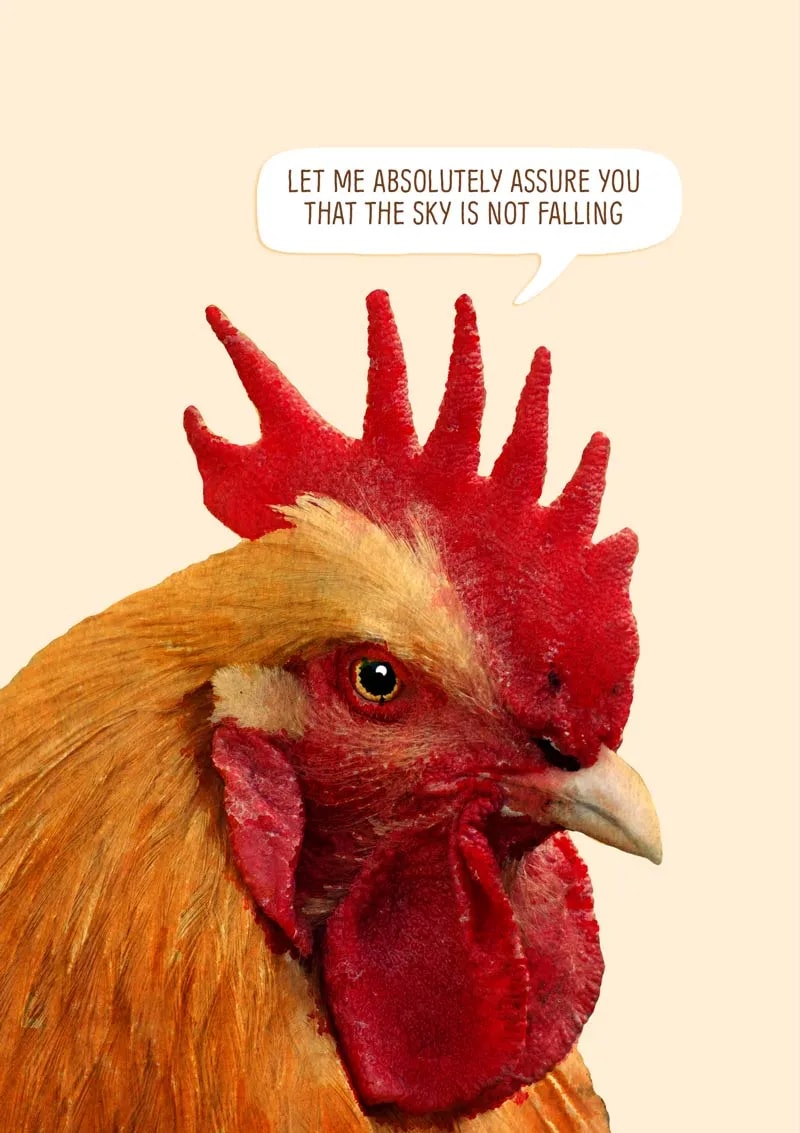
The Sky Is Falling

Let Me Absolutely Assure You


But of course the sky is falling. The ground upon which we stand and upon which we rely for our peace of min, is shifting under our feet. The Earth has been pushed and pulled and now it is responding in kind. 

This is the mindset we have in the early part of the 21st century. And naturally, it only adds to the sense of insecurity and unease that people throughout the world are feeling.

Certainly the threat of disaster will push people along to trying to avert it. And some people think that is a laudable way to get people to solve the problem of climate change.

The problem in that is that the argument implies that all the polluting we do is OK or at least not as important as climate change and that as long as the consequence of our actions is that we do not cause climate change, and famine and total societal breakdown, etc. – then we can keep on polluting the way we do.

And if you don’t think that way, there are plenty of people who do.

I Have A Different Argument

I have a different argument on the ‘why’ of what we should do. What I mean is that there may be a bit of wiggle room for argument about exactly what effect that man is having on global warming and how the planet will respond in the medium or long term.

Climate scientists constantly revise their models because the planet is more complex than the models of it and it keeps ‘outwitting’ the those who model it.

But what is not in doubt is that we are destroying the Earth and ourselves with pollution. 

How many pieces of plastic are in the seas, in your body?

So don’t let arguments about global warming deflect from the fact that we should clean up the mess we are making irrespective of climate change.

And stop making more mess.

To stop polluting the planet doesn’t or shouldn’t need the justification that we are facing climate disaster.

Think about it. A tree does not need to justify its existence. We, however, do need to justify destroying it, whether or not at some point down the road the fallen tree will get its innocent revenge by releasing CO2 and killing the planet.

Careful housekeeping – looking after the place and not treating it like a rubbish tip – is simply good manners and a show of gratitude for the benefits we receive from the place we live.


Asteroid 99942 Apophis

We don't expect things to stay the same. We expect change. We expect changes to come faster and faster.

We think we're probably not too far from a huge shift in technology that will bring about something really big. It could be anything - rocket propulsion, energy supply, ways of communicating.

At the same time, we don’t think we have an assuredly better future.

We think the future may well be worse than today. We know that a lot of it comes from waste, negligence, and greed, because that's the way things are.

We think that untangling the mess will fail because for every person who wants to solve the problem there are those who have a vested interest in keeping things the way they are. And they are more powerful than those who want to correct things.

And even if those elusive advances in technology happen, we question whether they will help us. We already wonder about that with AI.

Do we have enough time?

Asteroid 99942 Apophis will pass within 32,000 km of Earth on April 13, 2029. That's closer than geostationary satellites.

If you are in the right spot when it passes, you will be able to see it with the naked eye.

The diameter of the Earth is about 13,000 km, so 99942 Apophis will pass about at a distance that is just two-and-a-bit times the diameter of the Earth.

That's pretty close.

In 2004 when 99942 Apophis was first seen, observers thought there was a high probability it would hit Earth.

Now NASA thinks there is no risk of impact for at least a hundred years.

That's not very comforting. A hundred years is not very long when we are talking about The End.

Let's say that in seventy years the impact was judged certain, with no way to avoid it.

Can you imagine how that would knock the wind out of people's sails? How much would people care about carrying on as before - making money, aiming for success, paying the mortgage?

How would authorities impose order when every year was bringing The End nearer?

99942 Apophis is named after Apophis, the Egyptian god of chaos and destruction.

Someone has a sense of humour.

OK, Forget The Catastrophe

OK, let's assume 99942 Apophis isn't going to hit - not in one hundred years and not ever.

That's a relief.

Now think back to the days when communities were closeknit and stable for generations, how did individuals view themselves?

What was it like when whole villages grew up together and made decisions together in a community? And not decisions like whether to paint the town hall, but life and death decisions about crops and animals and defences and disease.

Everyone was part of their extended family. If anyone needed anything then they would turn to the community The State would be far-off and remote.

They would be cautious about strangers because they threatened the balance of things.

Within living memory we have seen how the individual and individual expression have ballooned like crazy.

In the great plagues of Europe, death and disease increased the price of labour and adventurers returned from foreign countries and made themselves rich, and everyone couldn’t wait to run to the city and be anonymous.

So what is it like to be an individual now? With billions of people on the planet, it is easy to say that most people are redundant, irrelevant. They are not needed to keep the species going or to develop new ideas or technologies.

At least for the time being, most people are not needed, despite falling birth rates being at or below the replacement rate worldwide.

In fact the current occupants of the planet are needed mostly so that they continue to buy things.

How satisfying is it to think that? Better not to think about it at all.

But if a person does, where do they find meaning in their lives when they are irrelevant?

In a crowded world the bottom can get knocked out of a person's will to act responsibly. They might feel that it simply doesn't matter how they react to life, the whole structure is irrelevant to them.

It gets worse. How does a person even know which of their responses are truly theirs?

We are all influenced by our environment, and what is to say that the environment is working for us and not against us?

We fear of losing our way, of being swept up in a convincing story, of being attached to a false cause?

When communities cease to exist, when man doesn't have the support of the family, the community, the village, then he is on his own.

We have to live with uncertainty, and uncertainty is unpalatable.

And with the loss of religion, any claim to a higher authority is looked at as meaningless, or oppressive, and the ultimate arbiter becomes the individual himself.

The message of the Second World War was that a man cannot absolve himself of responsibility for his lack of humanity. He cannot say in his defence that he was just following orders.

Within the law, the individual is king. the individual decides what is right and wrong.

How convenient that the individual can appeal to his own conscience above all other claims to authority.

Is it anything more than a convenient smokescreen, a mask for selfishness?

Selfishness means others have no intrinsic value. They are only valued for what they can do for us.

There is no downside in trying to ignite a spark of caring for everything into a flame. It's an experiment that needs other people who feel similarly; people that a man aspires to be like. If he finds them he might be able to find a bigger meaning.

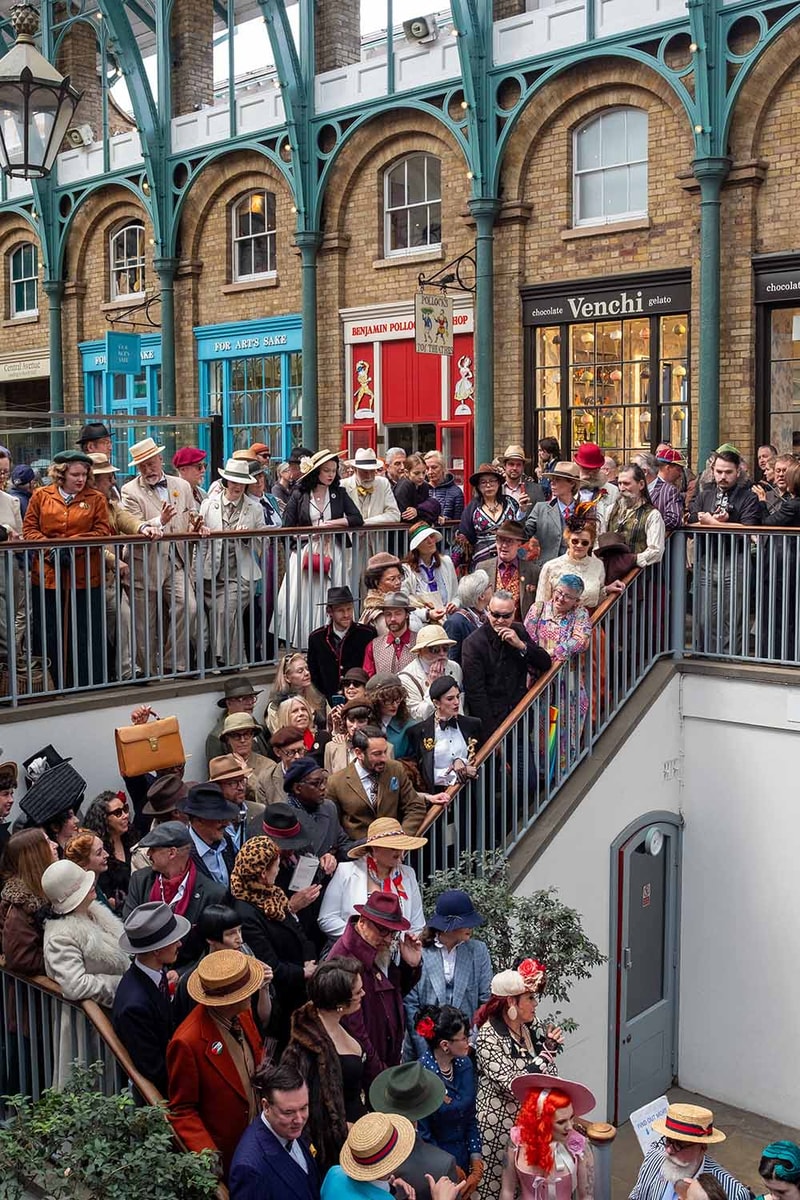
Flaneurs Gathering

Flaneurs at Covent Garden

There is no collective noun for flaneur.

It is not surprising. The archetype flaneur is a solitary observer of the human condition.

What would happen if two flaneur dressed so similarly that they might be twins, and then met by chance?

They would laugh together because they are flaneurs, and the detached observer has a sense of humour.

Theodor Herzl wrote for a newspaper – elegant essays observing society – until the antisemitism that began in France and spread to Germany took him on a different course.

Oscar Wilde was the quintessential flaneur in his observations and in his dress. And he says so himself.

When he was sentenced to two years hard labour for gross indecency, and was transferred to Reading Gaol, he wrote De Profundis, a letter to the young man who was a trigger to his downfall.

…The gods had given me almost everything.  But I let myself be lured into long spells of senseless and sensual ease.  I amused myself with being a flâneur, a dandy, a man of fashion.  I surrounded myself with the smaller natures and the meaner minds.  I became the spendthrift of my own genius, and to waste an eternal youth gave me a curious joy.  Tired of being on the heights, I deliberately went to the depths in the search for new sensation.  What the paradox was to me in the sphere of thought, perversity became to me in the sphere of passion. 

Desire, at the end, was a malady, or a madness, or both. I grew careless of the lives of others.  I took pleasure where it pleased me, and passed on.  I forgot that every little action of the common day makes or unmakes character, and that therefore what one has done in the secret chamber one has some day to cry aloud on the housetop.  I ceased to be lord over myself.  I was no longer the captain of my soul, and did not know it…

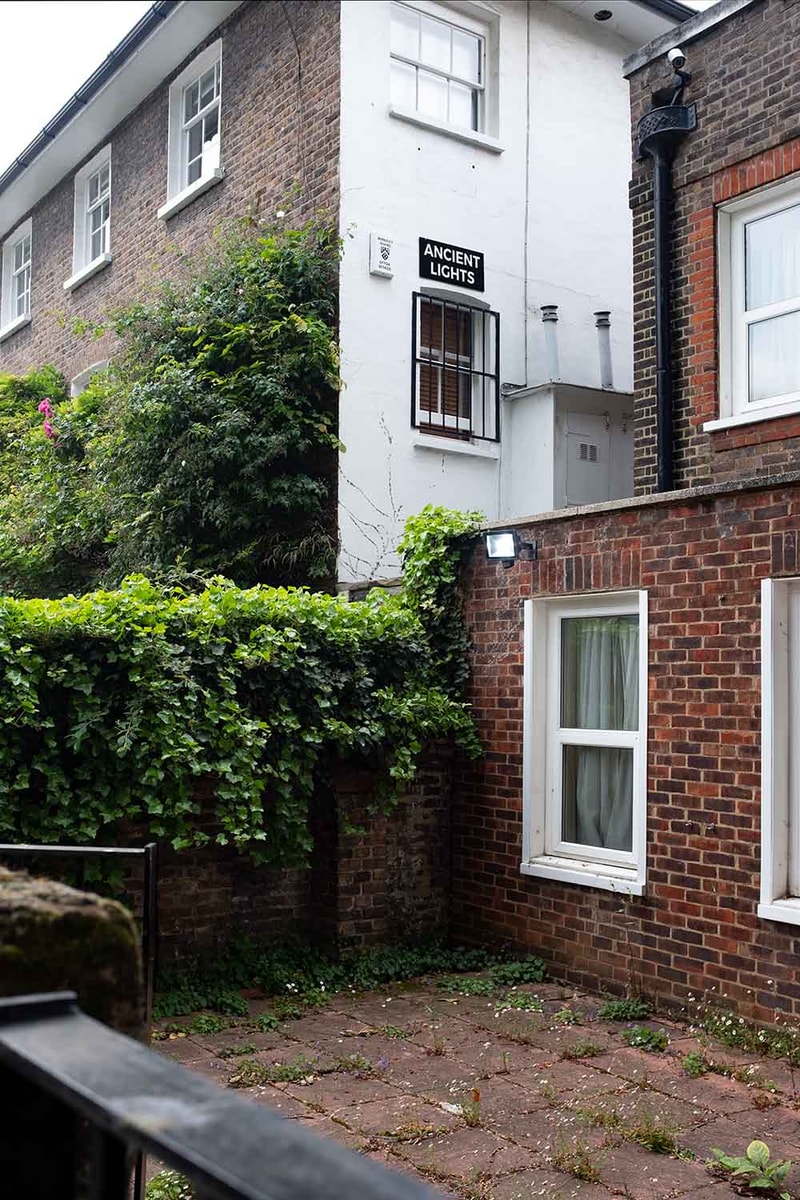
Ancient Lights

Ancient Lights
Ancient Lights

'Ancient lights' is a doctrine in English property law providing a right to light, where a property owner who has enjoyed natural light through a window for at least 20 years can legally prevent neighbours from blocking it. Formalised by the Prescription Act 1832, this law ensures 'adequate illumination,' often marked by signs on older buildings to warn developers.

You can see the sign above the window on the white flank wall of the building here.

The big question is how to measure the adequacy of illumination to determine whether a proposed obstruction compromises 'adequate illumination?' There is a science and a convention with rules that enable professionals to calculate to what extent a building may have its illumination compromised. The calculations involve the angle of the sun at different times of the year, the height and distance of proposed adjoining buildings, etc.

When submitting plans for a development to the Local Authority, where the development overlooks existing buildings, you will sometimes see a document that sets out the what and the why of how the proposal does not compromise light, whether an 'Ancient lights' sign has been displayed or not.

Move, Damn You

They say a person can be themselves but they cannot see themselves. In fact, they say that there is no certainty that a person can be themselves. It depends on the environment in which they operate.

And for that, they say that many people do not choose their environment. They find themselves in an environment and go along with it, making choices that are not really theirs and not really being themselves. Perhaps not ever.

They settle at a certain level or give up and switch off. The light goes out of their eyes and they stop seeing how they are struggling inside. They would move if someone or something opened the door for them and if they had enough determination. But the doors are closed, too heavy to move. So they don't.

How can we even live if we don't make all the mistakes and lives that make up a life lived?

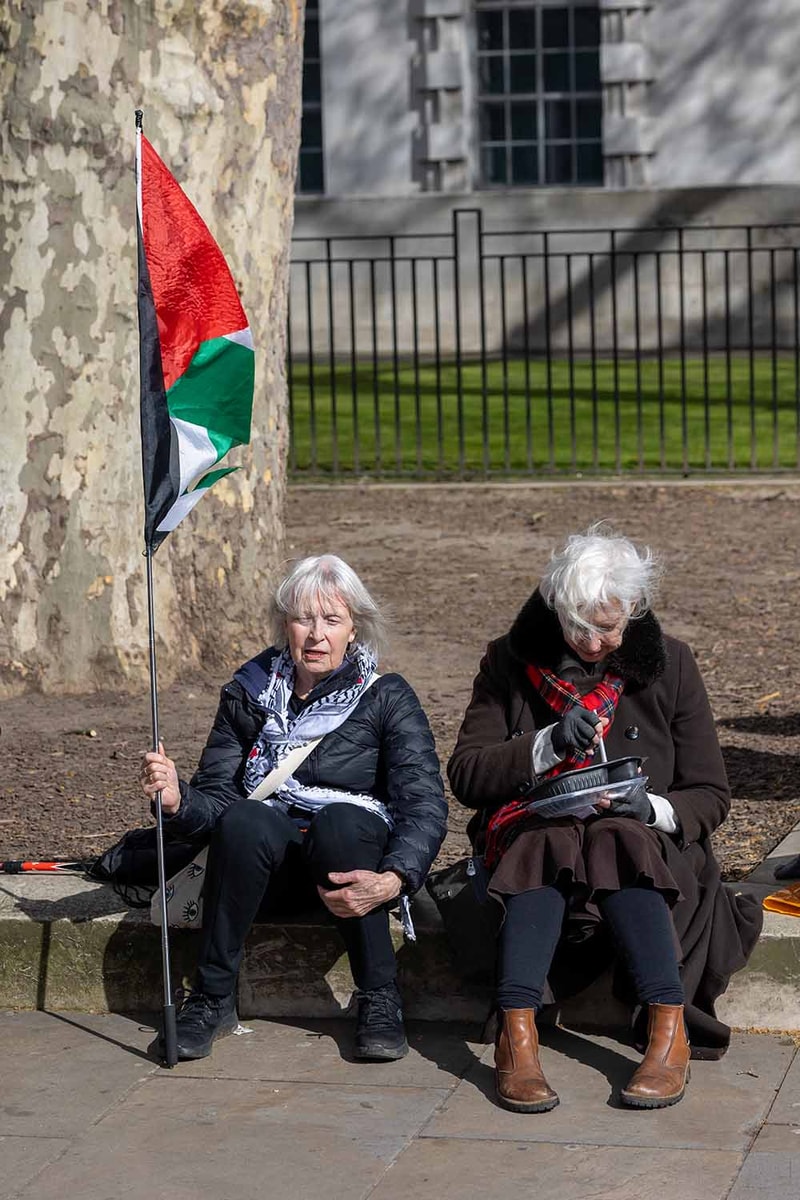
Two Women On Whitehall

Whitehall 28 March 2026

Two women seated, one eating, both middle aged and almost certainly English and solidly middle class, one wearing a keffiyeh and holding a flag.

I recognise the patterns of my own positions in this. And then I rein myself in and think how people are entitled to take up a cause, including one I think is misguided and that they don’t know what they are supporting.

And if I were to mention October 7th, what would I hear in return? It’s as though the rape, torture, and murder of that day was a blip justified in an otherwise virtuous story.

The March was billed as being against the Far Right, and there were people from unions representing care workers, educators and other sectors, and people in favour of refugees and the contribution they make to British society.

In amongst the union flags, thought, I must have seen over a couple of hundred huge Palestinian flags and endless people wearing keffiyehs, and people chanting freedom for Palestine, and more people with signs opposing supposed Israeli genocide and similar accusations.

I’d say the anti-Israel faction all-but hijacked the march and the narrative of the union supporters and people holding up pro-immigrant banners. Somehow 'the far right' became conflated with Israel. Ironic, really.

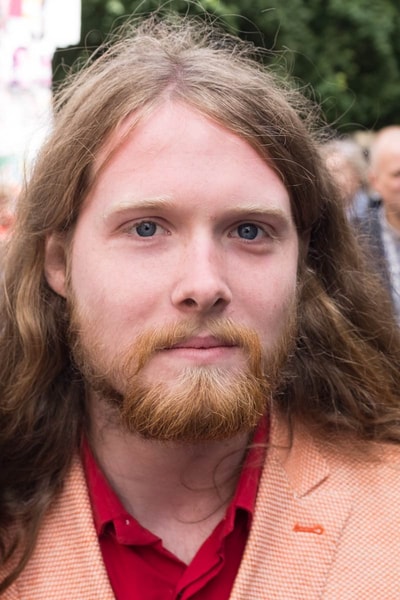
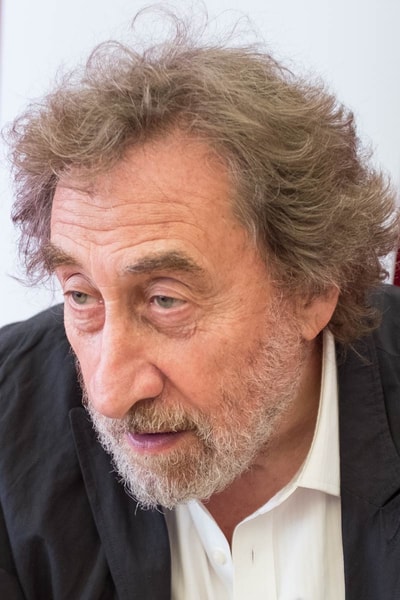
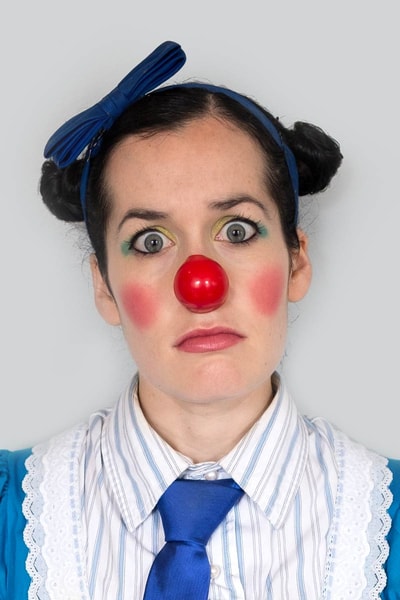
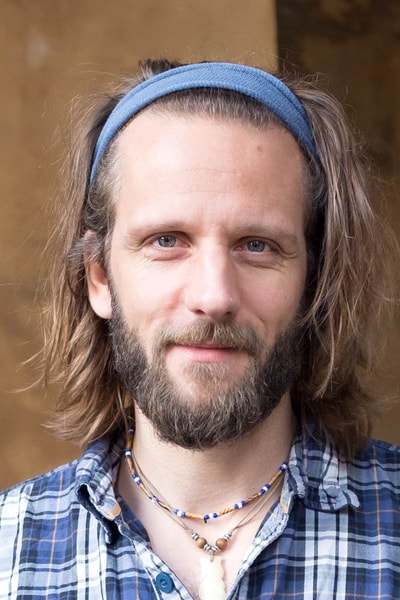
Hey! A Gallery Of Portrait Photos

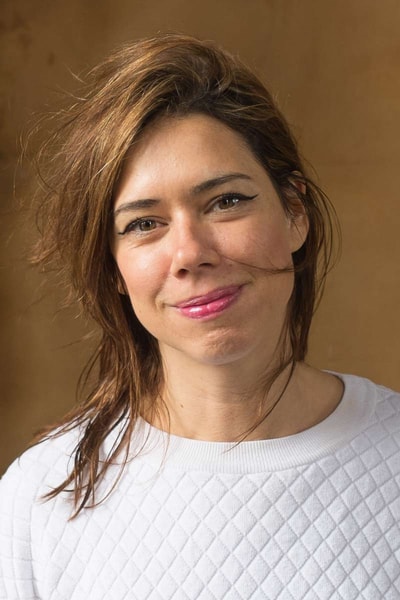
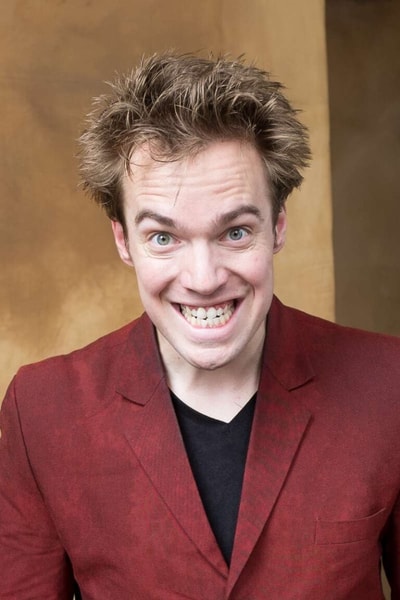
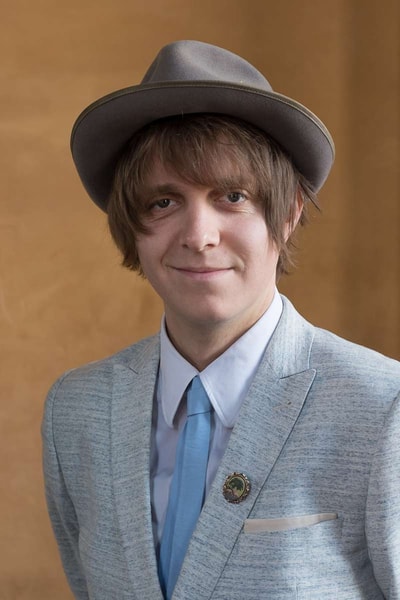
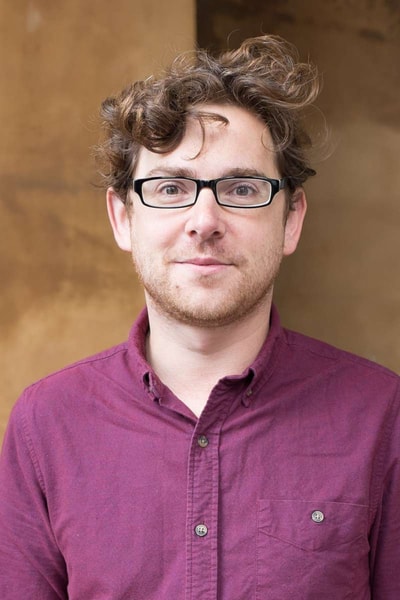
Olly from Pagecord just wrote that it is now possible to create a gallery of photographs - so I am testing it with some photos from my site at Photographworks.

That's a site that has been through changes. First I reviewed Nikon cameras and lenses. Then I scrubbed that and wrote more generally about the photographic process. And recently I junked it once again and rebuilt it with just portrait photos.

Photographworks is not to be confused with my other Photographworks site, which is a hosted solution where I write at least a couple of times a week as a diary in photographs. Check 'em out!

Statement on Iran

To those who may wonder at President Trump’s position in Iran, you can see it clearly from his speech in Riyadh in 2017.

So what is happening now is not a surprise but a step on the way of a stated objective.

This is an extract from his speech, the part that he addressed to Iran,

Starving terrorists of their territory, of their funding, and the false allure of the craven ideology will be the basis for easily defeating them. But no discussion of stamping out this threat would be complete without mentioning the government that gives terrorists all three — safe harbour, financial backing, and the social standing needed for recruitment. It is a regime that is responsible for so much instability in that region. I am speaking, of course, of Iran.

From Lebanon to Iraq to Yemen, Iran funds arms and trains terrorists, militias, and other extremist groups that spread destruction and chaos across the region. For decades, Iran has fuelled the fires of sectarian conflict and terror. It is a government that speaks openly of mass murder, vowing the destruction of Israel, death to America, and ruin for many leaders and nations in this very room.

Among Iran’s most tragic and destabilising interventions, you’ve seen it in Syria. Bolstered by Iran, Assad has committed unspeakable crimes, and the United States has taken firm action in response to the use of banned chemical weapons by the Assad regime, launching 59 missiles at the Syrian air base from where that murderous attack originated. Responsible nations must work together to end the humanitarian crisis in Syria, eradicate ISIS, and restore stability to the region and as quickly as possible.

The Iranian regime’s longest suffering victims are its own people. Iran has a rich history and culture, but the people of Iran have endured hardship and despair under their leader’s reckless pursuit of conflict and terror. Until the Iranian regime is willing to be a partner for peace, all nations of conscience must work together to isolate it, deny it, funding for terrorism, cannot do it, and pray for the day when the Iranian people have the just and righteous government they so richly deserve.

Drought

Actually, there is something else to say, something that doesn’t hit the headlines. Iran is not the only country in the region to suffer drought, but Iran’s problems are off the scale.

Here is an update I wrote just a few days ago:

The drought continues. Authorities have started rationing water at night and President Masoud Pezeshkian has discussed evacuating the capital.

Iran invested heavily in large-scale dams in the late 20th century, and there are over 500 dams in the country. As of now, though, roughly 64% of the reservoirs are empty and nineteen major dams across the country are at less than 20% capacity.

The drift from the countryside continues. Because of drying wetlands and the inability to sustain farming, approximately 31,000 villages, nearly 45% of Iran’s rural settlements, are now deserted

Fire Horse Year

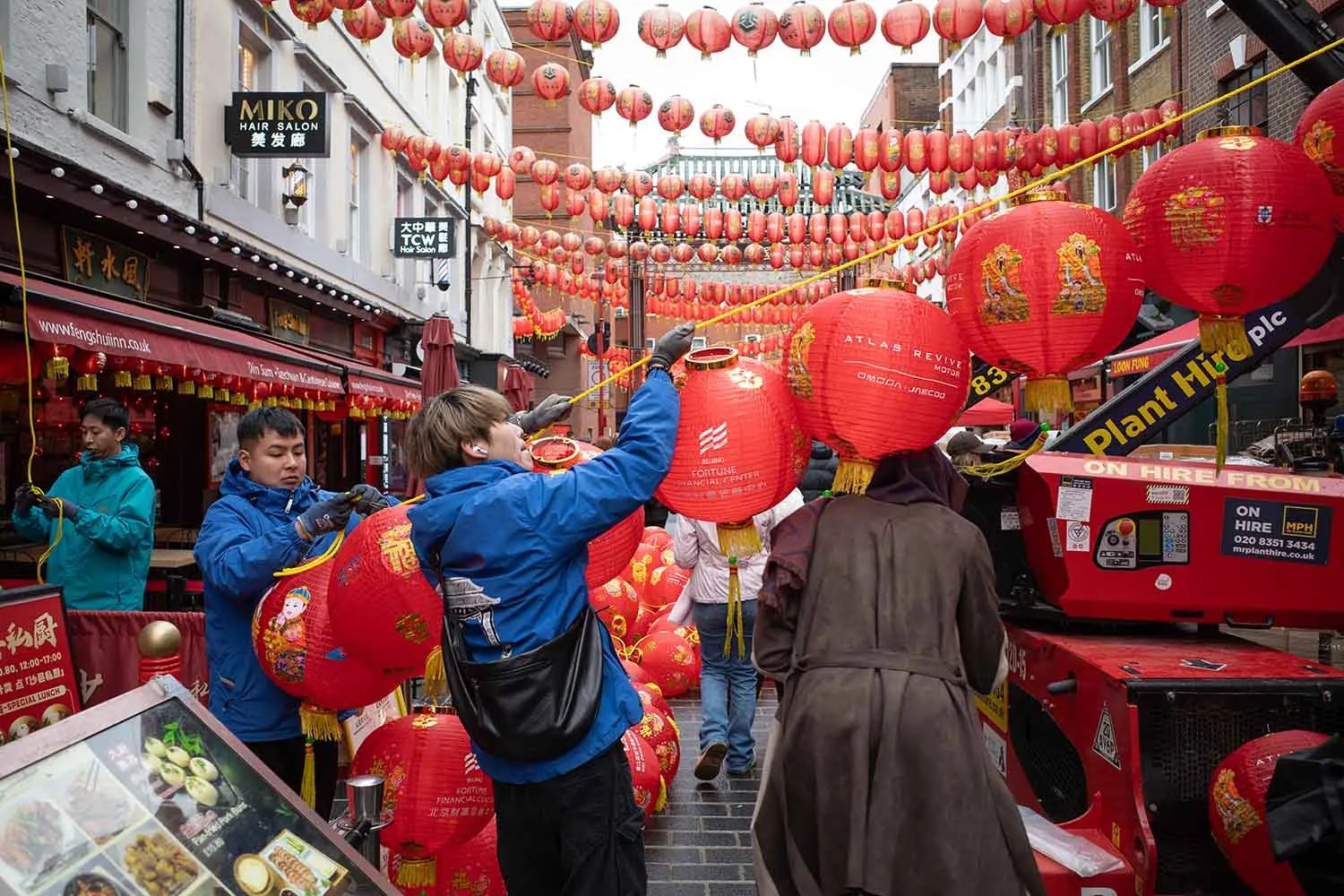
Chinatown London
Chinatown London

Chinese New Year (Year of the Fire Horse) in 2026 falls on Tuesday, 17 February.

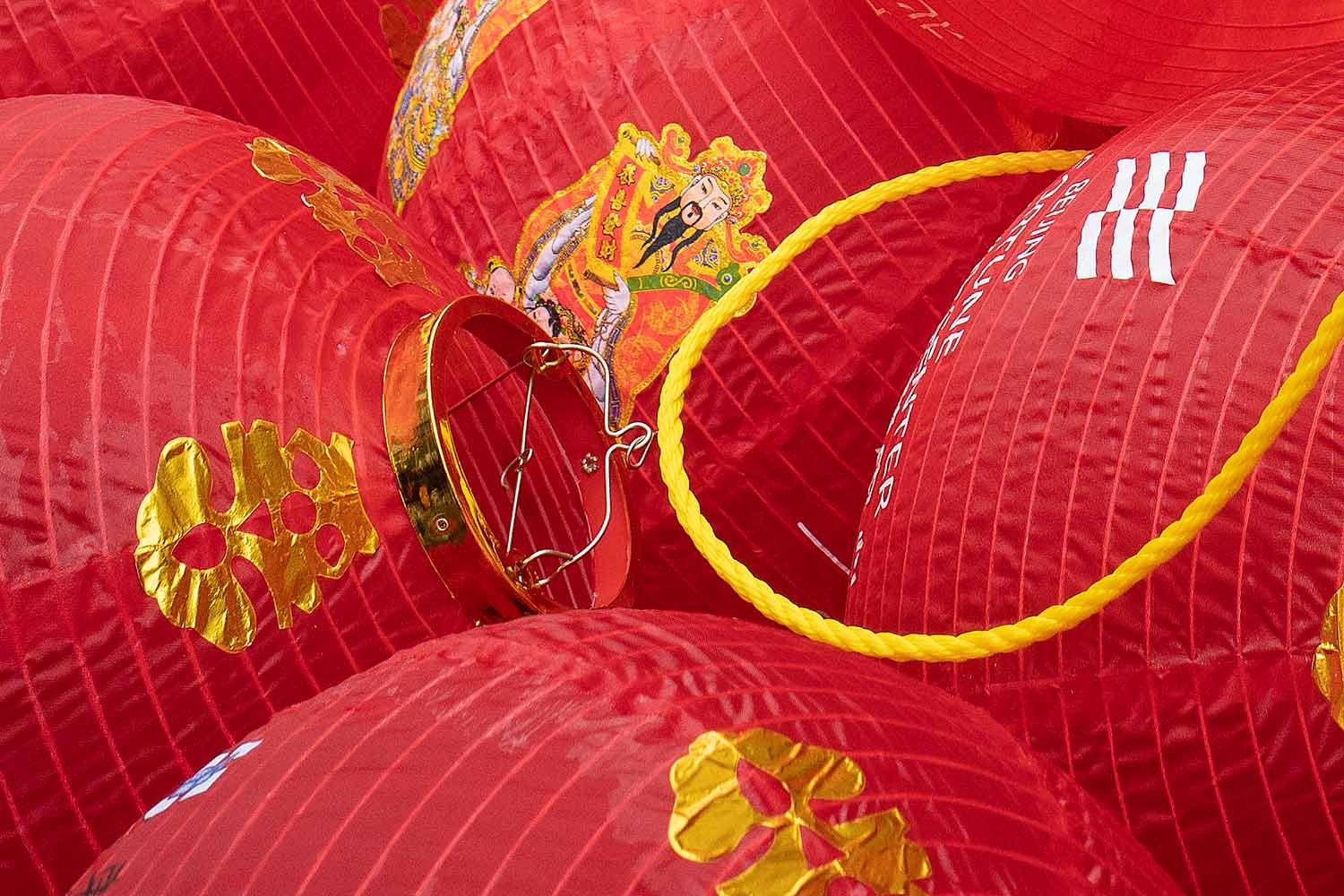
In preparation for it, the Chinese community in London has been putting up new lanterns. Lots of them.

You see lanterns strung up in Chinatown all year, and they didn't look to my casual eye as though they are in need of replacing, until I saw the old ones on the ground after they were taken down. 

I took photos over two days - the first when I was with some other photographers and we happened to walk through Chinatown. The second time a couple of days later when I was walking to Covent Garden and came through Chinatown.

It got me thinking about the new year and how decision makers in China regard astrology and signs that are above normal calculations.

We might think that in the 21st century we have left astrology behind. But how about in China?

The Fire Horse

The Fire Horse (Wu Wu) is one of the personalities in the sixty-year cycle of the Chinese Zodiac. In traditional Chinese metaphysics, the Horse is associated with the element of fire.

The year of the Fire Horse combines the fire of the Horse with the Fire element to make double fire, double energy.

The last year of the Fire Horse was sixty years ago.

In 1986 China was in a state of high-energy transformation. The student demonstrations began that year and eventually led to the Tiananmen Square confrontation in 1989 and the crackdown. Some estimates put the dead at 10,000.

Hu Yaobang, the General Secretary of the Communist Party was a favourite of the reformers. The authorities blamed him for being too soft on the students.

The decision to remove him was finalised in late 1986. His death three years later was the catalyst for the 1989 Tiananmen Square protests.

Now in 2026, the Chinese leader Xi Jinping has dismissed two of China's most senior generals and basically torn apart the command structure of the armed forces.

Does Xi Jinping consider astrology? Is it in his DNA?

Does he think now is a good time to act and invade Taiwan because of the energy of the Fire Horse?

How might his calculation be affected by the recent actions of President Trump? It is not hard to think that Xi Jinping might consider President Trump to be less predictable than President Biden or President Obama. Maybe a falling out about strategy is what led to the removal of the generals.

Whither now, China?

Chinatown London
Chinatown London

Had Marie Antoinette Not Been Guillotined

If Marie Antoinette had not been guillotined she would have faded from history along with other Royals who are all forgotten.

But she was guillotined, and very publicly. And she he gave women the Marie Antoinette style that has come down through the centuries to fashion today.

The Victoria & Albert Museum staged an exhibition devoted to her with her dresses and shoes, and the story of her life and the very blade of the guillotine that took her life.

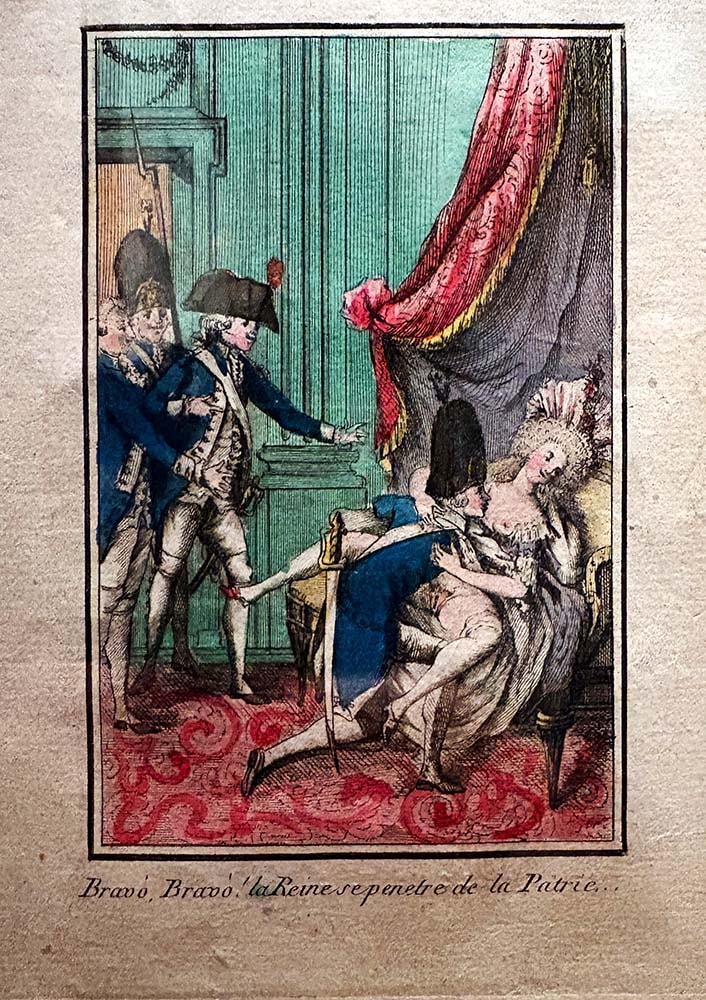
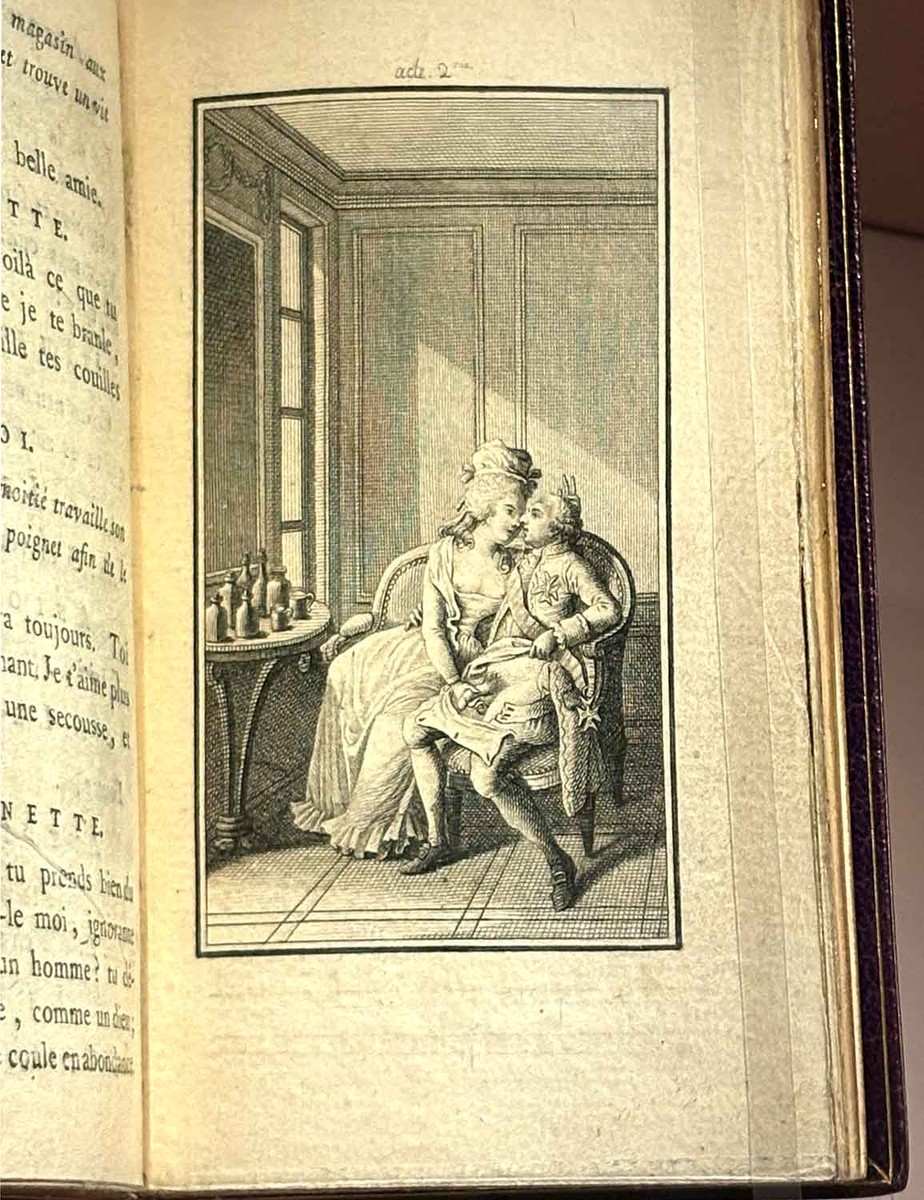
But what else was on show were scurrilous little books with drawings of her being penetrated in her boudoir by soldiers, with her genitalia exposed, and others showing her fingering the King.

In the lead up to the revolution it was all designed to make her more vulnerable to attack.

Marie Antoinette Being Rogered
Marie Antoinette Fingering The King

The book, now in the British Library, is entitled The Amorous Day, or the Last Pleasures of Marie Antoinette - A comedy in three acts, and portrays her as immoral while asserting dominance over a powerless king.

The aim was to bring her down, and finding any way into lowering her in the estimation of people was fair game. Beneath it, the main fear that brought down Marie Antoinette was the suspicion that she was a treacherous, foreign-born spy actively conspiring with Austria to destroy the French Revolution.

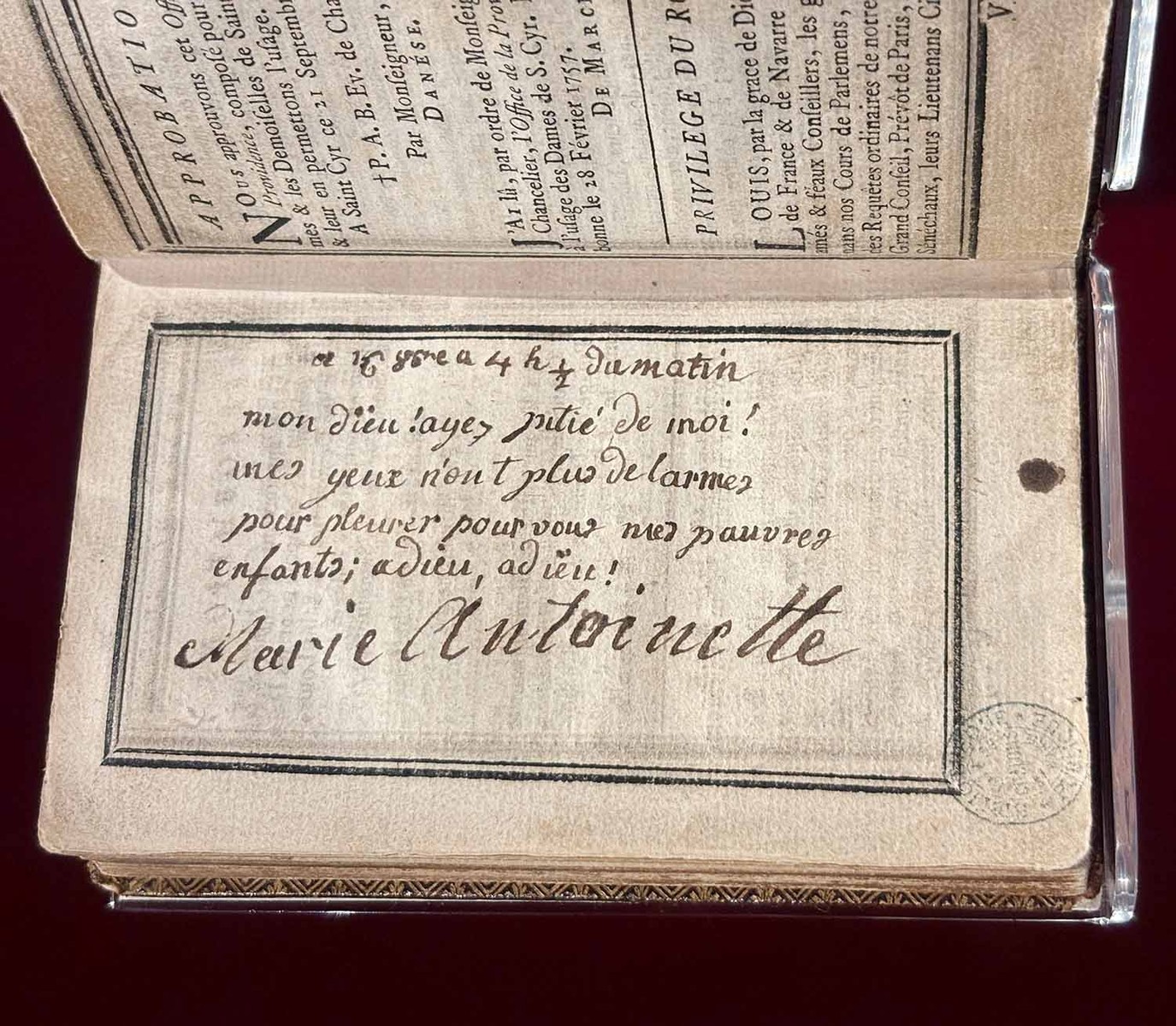
But guillotined she was, and here is her last entry

God have pity on me
God have pity on me

Click any image to see it bigger.

The Photographer Lee Miller: Part Two

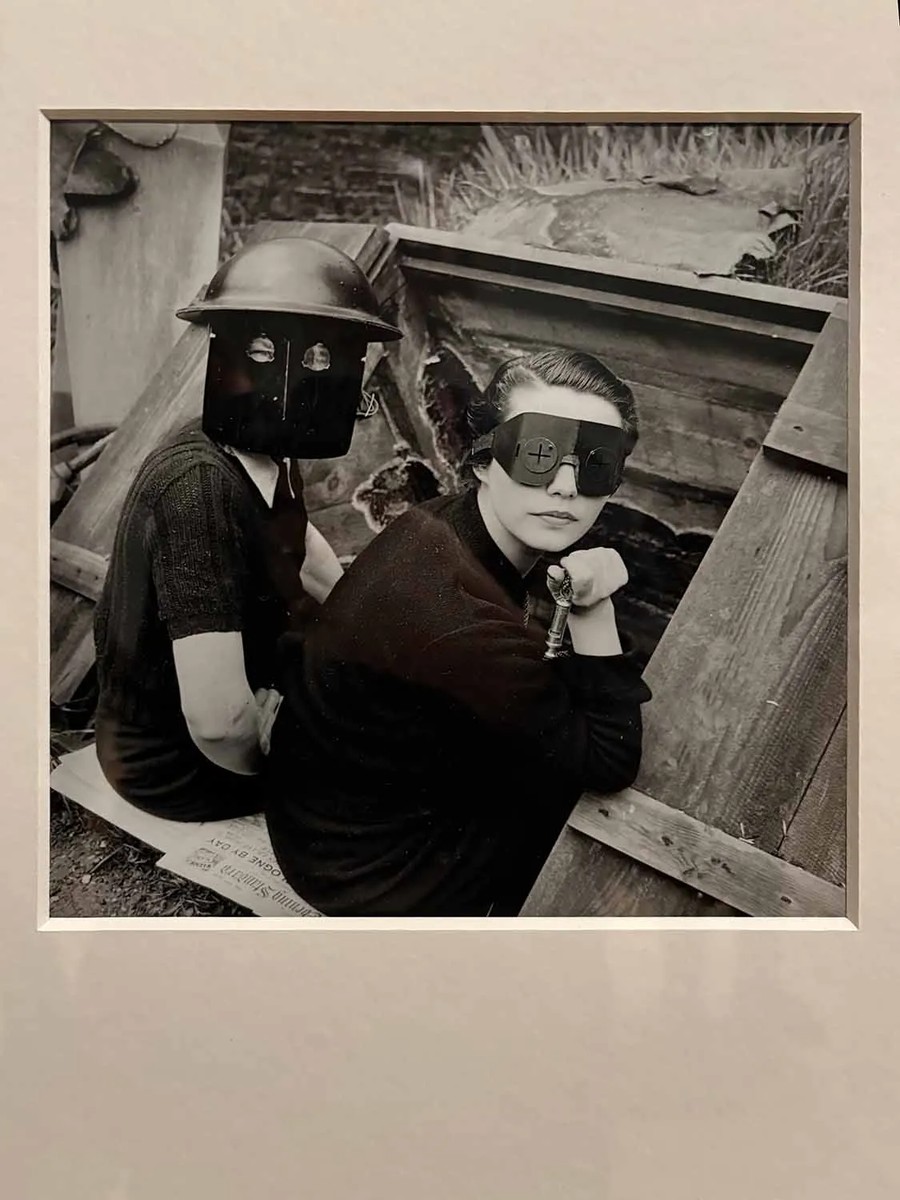
Photo by Lee Miller 1941

This is a striking photograph, isn’t it.

I have known Lee Miller’s photos for years, and I know this photo very well because it is so striking. You feel there is a story there.

Until I saw the photo in the Lee Miller exhibition at the Tate I thought Miller had photographed two women doing their bit for the war effort spotting German planes approaching the coast.

But it was only on reading the text accompanying the photo in the Lee Miller exhibition that I understood how it was taken.

It was really a fashion shoot.

The photo, entitled Fire masks, was shot in 1941 outside the air raid shelter in Miller’s Hampstead garden. The scene is staged for Vogue and the two women are wearing rubber and tin masks used by air-raid wardens to protect against fire bombs.

I can see that one woman is holding a whistle that was issued to Air Raid Wardens to warn people about an impending raid, telling them to get to the shelters.

Anderson shelters were made of corrugated iron half sunk below ground to take the force of a blast. This one may have been covered over with earth to give it more protection.

Whether this is a standard shelter or not, when World War II started 1939 there were around one and a half million Anderson shelters in people’s gardens. and another two million were put in people’s gardens over the course of the war.

Was the threat of German bombing raids real?

The answer is in the numbers. More than 40,000 people were killed in bombing raids in 1940-41 alone, during what is known as the Battle of Britain.

Add to that the deaths from flying bombs – V1s and then the later V2 rockets and the number was over 50,000.

One in eight houses were made uninhabitable by bombs from German bombing raids in WWII.

The main targets of German raids were London and Liverpool and that’s where the majority of casualties were. 

Elizabeth Miller Eloui

Elizabeth Miller Eloui

Miller’s War Correspondent’s pass recites her name as Elizabeth Miller Eloui. The name Eloui is from her husband, Aziz Eloui Bey, an Egyptian businessman previously married to Nimet, who was a model for Man Ray just as Miller was at one time.

Eloui Bey left Nimet for Lee Miller and the two married in 1934 and moved to Cairo.

She got bored and went to Paris, and in 1937 she met the surrealist painter Roland Penrose.

Then in June 1939, Miller left Eloui Bey and moved in with Penrose in London, and in 1947 Miller and Eloui Bey divorced.

But throughout the war she was Elizabeth Miller Eloui but her byline and photos were under the name Lee Miller.

Vogue

Vogue, the fashion magazine, is the ‘Arm or Service’ named on her war correspondent pass. How funny – a fashion and design label named as the authorisation for a war correspondent.

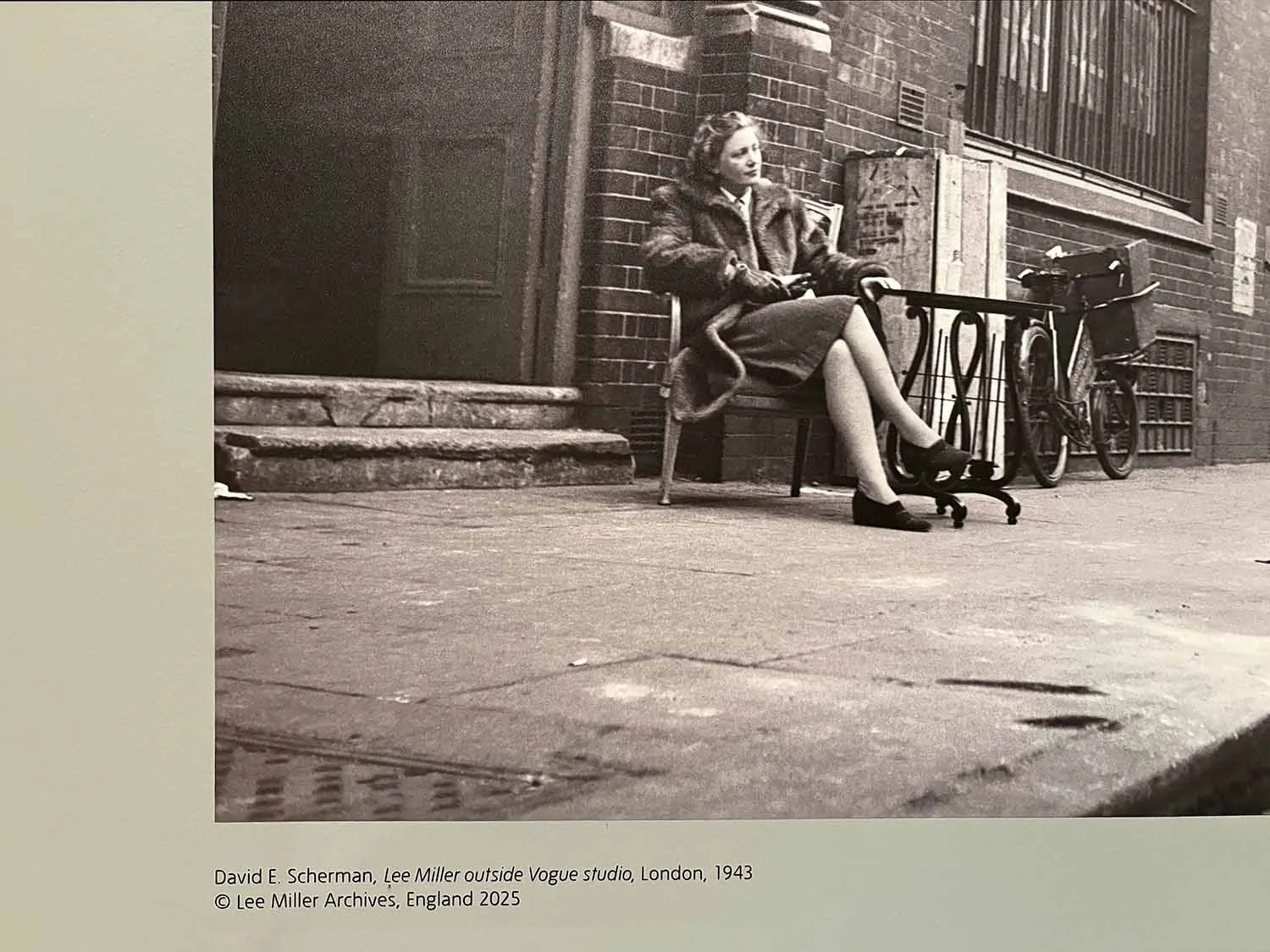
Lee Miller at Vogue Offices

Before she left for mainland Europe, Miller worked at Vogue’s offices, which were bombed and firebombed. This photo was taken by David Scherman, with whom she travelled across Europe as correspondents. She photographed him in Hitler’s bath and he photographed her in the bath. A little f**k you to Hitler.

Part One is here: