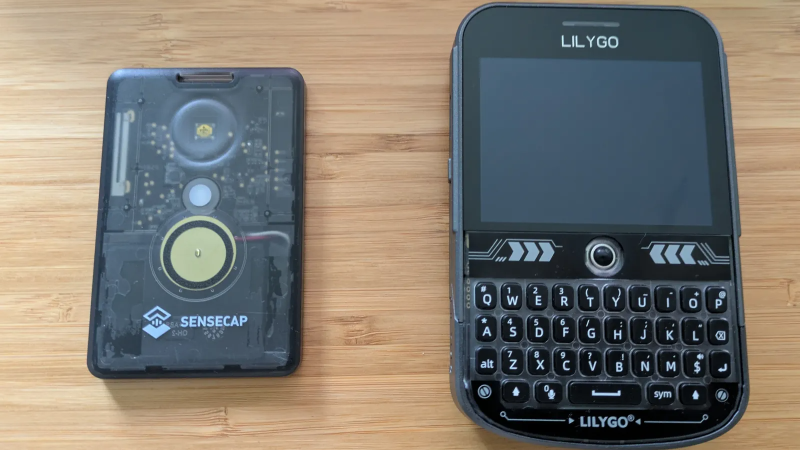
No, we’re not talking about cultural appropriation of Japan’s most famous form of short poem–this is the other Haiku, the open-source descendant of BeOS, which now has a fully-native meshcore chat client called Sestriere, thanks to the efforts of one [Atomozero]. Of course you’ll need a LoRa radio to act as a modem, but anything that speaks USB serial– which is any of the ESP32-based offerings on the market–should work.
This is interesting in that we don’t see many desktop applications leveraging LoRa networks– meshtastic or meshcore– so for one to appear for the relatively-obscure BeOS derivative is just neat. It’s also a nice peice of work: the chat window is full featured, organizing your contacts, and communicating not just with text but emojis and reaction GIFs. GIFs seem a bit extravagant for LoRa bandwith, but apparently it works. There are also Codec2-based voice messages, another thing that we didn’t expect to see over LoRa, since most ‘chat’ projects restrict themselves to text messaging.

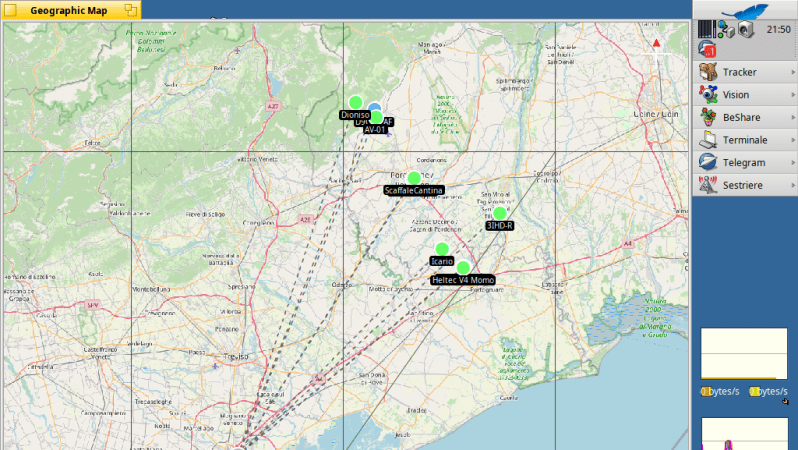
The software will also map all the nodes with which you are in contact, both diagrammatically and geographically, overlaid on OpenStreetMap tiles. The network map conveniently colour-codes your contacts by the link quality, but what’s even more interesting is the WireShark-inspired packet sniffer built into the software to let you keep a really close eye on traffic on the mesh network.
Neither Haiku or MeshCore are to everyone’s tastes, but as an OS it is a worthy daily driver, even if you have to jump through some hoops to install it if you have a UEFI-only system.
If you need more range, try a Yagi.