
2026 Proton Saga review - all the good & bad in full detail


Sell your car to Carro, get paid in 24 hours

Latest Stories

  • MCE Auto Hub in Serendah opens – Tier-1 auto vendor’s RM50m plant to design, produce electronics

    MCE Auto Hub in Serendah opens – Tier-1 auto vendor’s RM50m plant to design, produce electronics

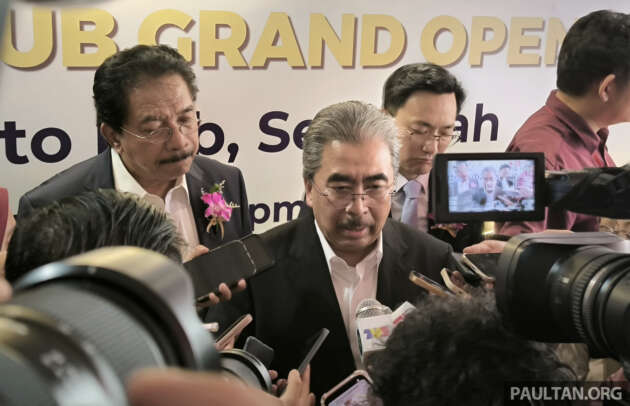
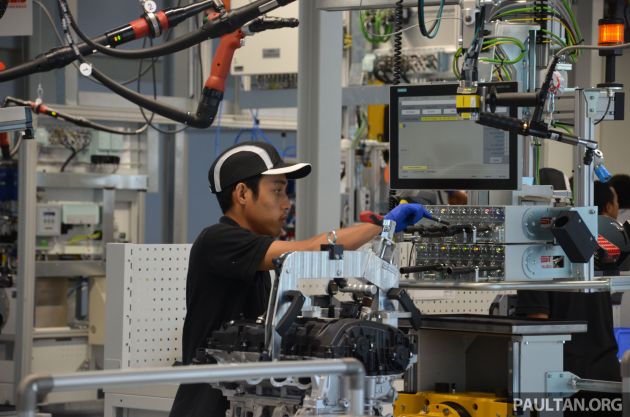
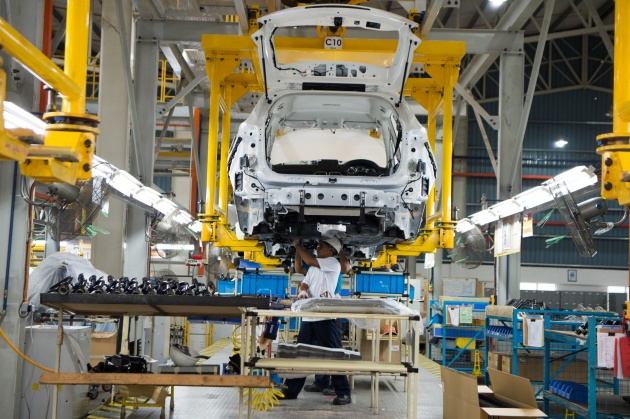
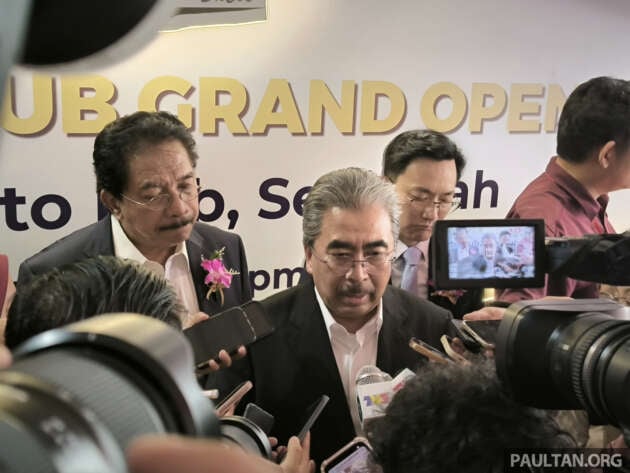
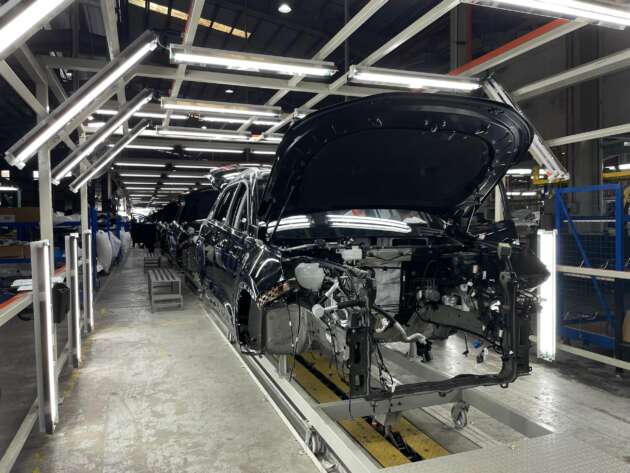
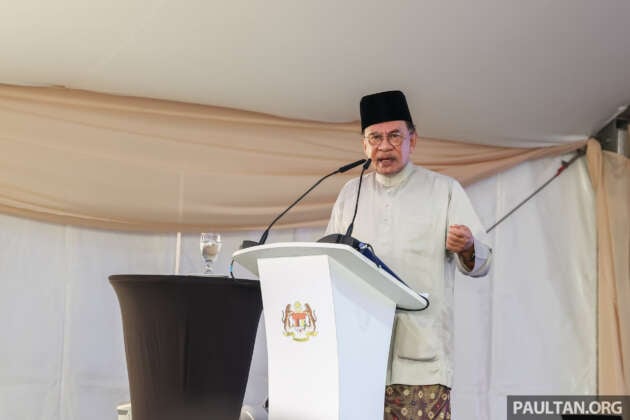
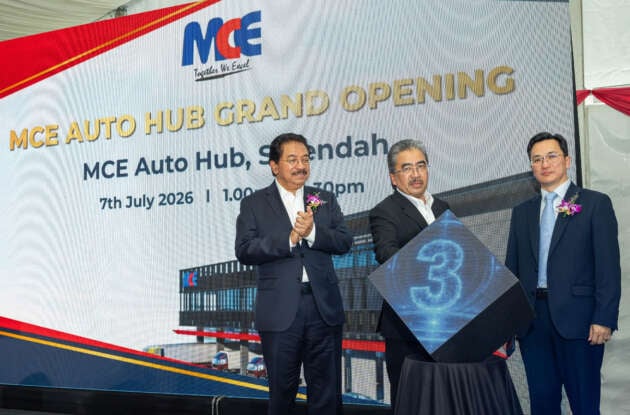
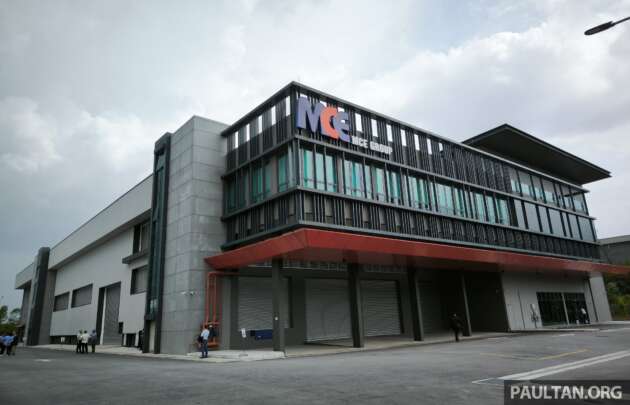
    MCE Holdings officially launched the MCE Auto Hub yesterday afternoon in a ceremony officiated by minister of investment, trade and industry Datuk Seri Johari Abdul Ghani. The RM50 million manufacturing facility is located in the UMW High Value Manufacturing Park in Serendah, Selangor.

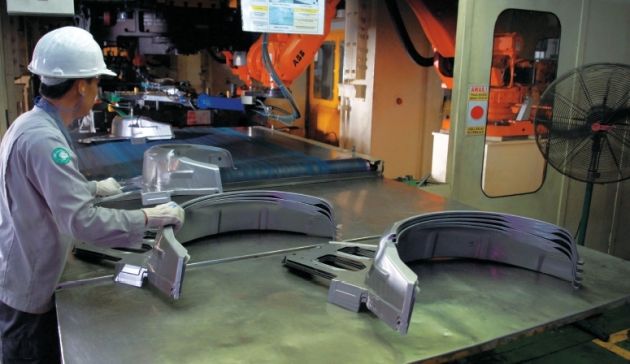
    The Bursa-listed Tier-1 automotive supplier says that MCE Auto Hub will strengthen its design, engineering, manufacturing and R&D capabilities.

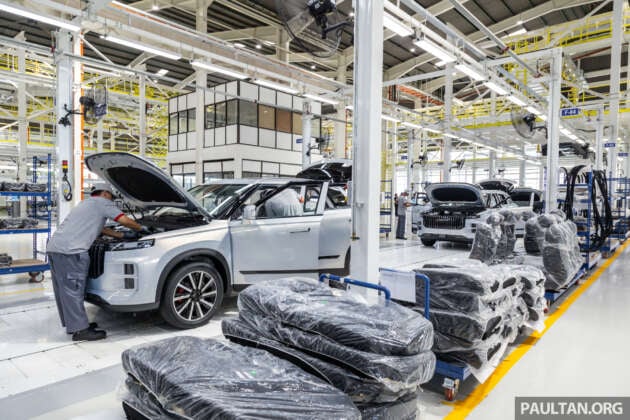
    Described as the company’s primary manufacturing and engineering hub, the eight-acre facility forms the first phase of MCE’s long-term investment plan of up to RM200 million and will more than double the group’s production capacity in automotive electronics and mechatronic solutions.
    MCE Auto Hub in Serendah opens – Tier-1 auto vendor’s RM50m plant to design, produce electronics

    “This investment marks a significant step in the continued development of Malaysia’s automotive industry and is a reflection of the confidence in both MCE Holdings and Malaysia’s future. In a highly competitive industry, it is imperative that local suppliers continue to pursue manufacturing excellence by cultivating engineering expertise, innovation and technology,” Johari said.

    “From our first contract supplying remote alarms and central locking systems for the domestic market in 1990, MCE has continuously invested in strengthening our capabilities. Over the years, we have expanded our portfolio from traditional automotive components into more advanced automotive electronics and mechatronic solutions,” said Goh Kar Chun, group MD of MCE.

    “Today, we serve customers across Malaysia, ASEAN and the United States, supplying increasingly sophisticated automotive electronics and mechatronic solutions. The MCE Auto Hub is the next step in that journey and reflects our confidence that Malaysian engineering, talent and manufacturing capabilities can compete on the world stage,” he added.

    Designed as an Industry 4.0-ready plant, the MCE Auto Hub incorporates clean room production areas and tightly controlled manufacturing environments required for increasingly advanced automotive electronics for both ICE and EVs. With this Serendah facility operational, the Johor-based group now employs 680 staff, including 90 engineers. MCE’s other facilities are in Johor Bahru and Port Klang.

    “We believe the future of Malaysia’s automotive industry will be built through stronger collaboration between carmakers, Tier-1 suppliers and local ecosystem players, including semiconductor and E&E companies. Working together, we can create more opportunities for Malaysian-developed technologies to be integrated into automotive applications and supply chains, while strengthening Malaysia’s position as a regional hub for automotive electronics,” Goh said.
     
  • Range Rover Velar successor to debut by early next year; internal combustion engine version to follow

    Range Rover Velar successor to debut by early next year; internal combustion engine version to follow

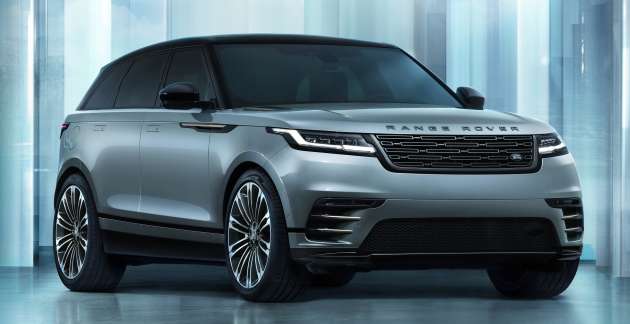
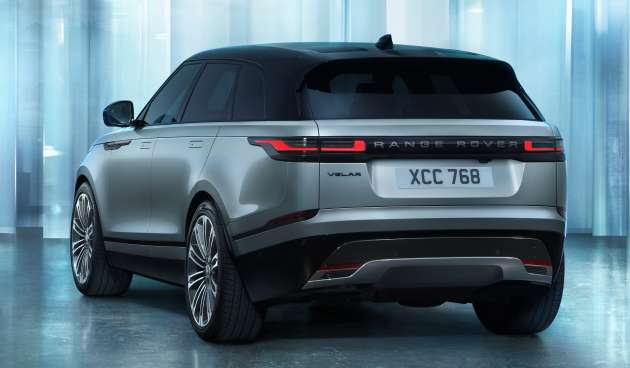
    2024 Range Rover Velar facelift

    The successor to the Range Rover Velar could make its debut within the next six months, reported Autocar, suggesting that the new model could officially emerge by early next year.

    Facelifted in 2023, the Velar officially made its debut in 2017, and its next-generation successor will be the first all-new model from JLR since the Range Rover Sport premiered in 2022. The Velar successor will be preceded by the L460 Range Rover Electric and the Jaguar Type 01, before the group’s higher-volume products such as the aforementioned Velar successor and the Land Rover Defender Sport.

    The Velar successor and the Defender Sport will be the first models to be built on the group’s new EMA platform, which is focused on battery-electric power. However, this has since been confirmed to be able to accommodate hybrid powertrains.

    Range Rover Velar successor to debut by early next year; internal combustion engine version to follow

    The manufacturer has said that the upcoming, smaller Range Rover model “is planned to provide flexibility in the future through a full hybrid electric vehicle propulsion offering,” and the hybrid powertrain for the new model is said to be a “unique new addition to JLR’s propulsion portfolio,” suggesting it is unrelated to the ICE units currently offered by the group.

    Spy images of the upcoming Velar replacement show a vehicle that departs from the traditional high-riding, two-box SUV outline, and adopts a rather sleeker roofline in the vein of the Polestar 4 when viewed in profile. Camouflage foil on the rear of the car, aft of the roof suggests a solid panel in place of a traditional glass window, like the Polestar 4.

    Technical details for the EMA platform have yet to be confirmed by the manufacturer, though it has been said to feature 800-volt electrical hardware as specified in the Range Rover Electric.

    Batteries for the EV successor to the Velar will come from the battery factory in Somerset currently under construction, which will supply the Halewood plant where the new mid-sized EV SUV will be built, as well as Solihull, where the Range Rover Electric and Jaguar EVs will be built.

     
  • 2026 Geely Preface L90 teased – based on Galaxy Starshine 7 with 1.5T and 2.0T petrol, i-HEV hybrid

    2026 Geely Preface L90 teased – based on Galaxy Starshine 7 with 1.5T and 2.0T petrol, i-HEV hybrid

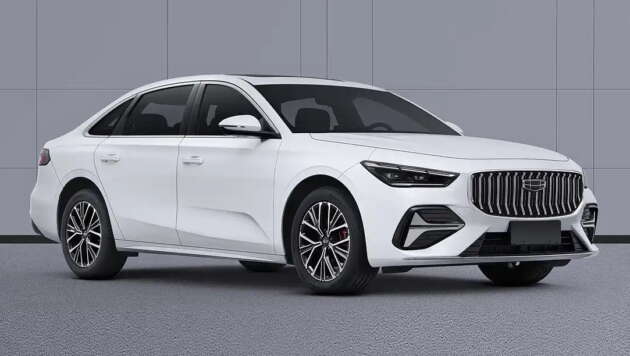
    Geely is set to replace the Preface/Xingrui after nearly six years on the market with a second-generation model, slated for a reveal on July 10. Like the new Emgrand, the large sedan – which will receive the L90 suffix – will be based on a Galaxy new energy vehicle (NEV), in this case the Galaxy Starshine 7.

    A teaser photo of the side profile corresponds to images from a Chinese ministry of industry and information technology (MIIT), showing a design very similar to the Starshine 7, albeit with a revised front end with a more angular six-point grille and an X-shaped bumper. The rear has also been tweaked with different full-width taillights and twin trapezoidal tailpipes.

    Preliminary specifications reported by Autohome indicate that the Preface L90’s dimensions will be all but identical to the Starshine 7, measuring 4,956 mm long (two millimetres shorter), 1,915 mm wide and 1,505 mm tall, with a wheelbase stretching 2,845 mm.

    The big difference, of course, can be found under the bonnet. Whereas the Starshine 7 is a plug-in hybrid, the Preface L90 is available with a choice of turbo four-cylinder petrol engines carried over from the outgoing model – a 181 PS/290 Nm 1.5 litre unit and a 272 PS/400 Nm 2.0 litre mill. Both are expected to be mated to a seven-speed dual-clutch transmission, as is the case for the current car.

    Also set to be carried over is the i-HEV hybrid, which retains the Starshine 7’s 111 PS/136 Nm 1.5 litre naturally-aspirated engine, 190 PS/240 Nm electric motor and 11-in-one single-speed dedicated hybrid transmission (DHT) but dispenses with the large 28.3 kWh battery. The powertrain, introduced on the Preface just this year, delivers a quoted combined fuel efficiency figure of 25.1 km per litre (3.98 litres per 100 km).

    The i-HEV system is set to make its way into a Proton this year – the national carmaker showcased the FutureMotion HEV at the recent Kuala Lumpur International Motor Show (KLIMS). The powertrain, with a detuned 163 PS electric motor, is expected to debut in a new A-segment SUV, widely tipped to be called the Saga Cross.

     
  • Chevrolet Takata airbag recall for Cruze, Orlando, Sonic, Trax – send to Honda Malaysia service centres

    Chevrolet Takata airbag recall for Cruze, Orlando, Sonic, Trax – send to Honda Malaysia service centres

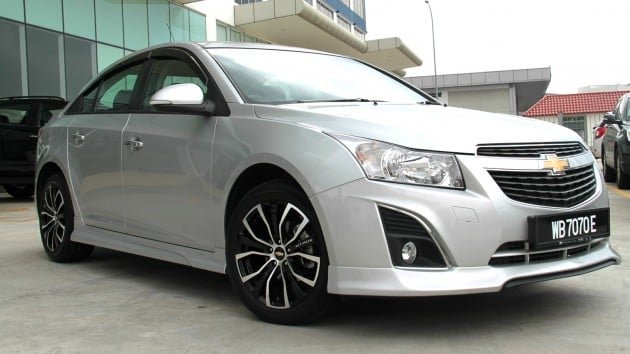
    Four years ago, Chevrolet issued a recall for 3,725 units of Chevrolet and Saab vehicles in Malaysia to replace potentially faulty Takata airbag inflators. A reminder for this was sent out in 2023, and now, Chevrolet Sales Thailand (CST) has sent out another communication for the Malaysian market regarding the recall campaign, which remains ongoing.

    In its statement, the company said that this is the final opportunity for owners to replace the Takata airbag replacement for free while the current local support arrangement in Malaysia remains available until December 2026. The replacement is performed free of charge.

    Once the current Malaysia-based support arrangement concludes, owners who have not yet completed the repair will need to access the free replacement through designated service locations in Singapore (Alpine Motors) and Thailand (Autosales, located in Yala).

    It said that the current reminder was being made as the recall campaign for the affected vehicles has seen a lower-than-expected response rate since it was launched around mid-2022. The company had already stated back in 2023 that because the affected vehicles were not new, it had been difficult to trace customers and owners due to outdated customer data, but the latest outreach is an effort to get word to owners of these vehicles.

    To recap, the recall affects the following models:

    • Chevrolet Cruze (model year 2010–2015)
    • Chevrolet Orlando (model year 2013–2015)
    • Chevrolet Sonic (model year 2013–2014)
    • Chevrolet Trax (model year 2017)
    • Saab 9-3 (model year 2007)

    As highlighted previously, the affected vehicles may be fitted with driver airbag inflators that contain non-desiccated PSAN (phase-stabilized ammonium nitrate) propellant tablets, which may experience alteration after exposure to high temperature and daylight temperature cycles in a high humidity environment.

    As a result, the inflator may rupture if gas generation exceeds the ability of the inflator to vent the gas. This can result in an increased rate of pressurisation and peak pressures that can exceed the mechanical strength of the inflator, causing the housing to rupture.

    Like it was when the recall was first made, the local replacement programme is being carried out in collaboration with Honda Malaysia (HMSB) through selected authorised dealerships. However, this will conclude in December 2026, and the brand is encouraging owners to use HMSB’s local network before the arrangement ends.

    To support affected vehicle owners in Malaysia after December 2026, CST will continue to make information on available recall remedy options and customer contact channels available through the CST recall website. You’ll find all the details you need about the recall campaign here, as well as the list of Honda dealerships that are providing the free replacement service.

     
  • Gov’t will ensure sufficient petroleum from Jul to Dec

    Gov’t will ensure sufficient petroleum from Jul to Dec

    The Malaysian economy ministry has said that the government will continue ensuring there are secure and sufficient levels of petroleum from July to December, Bernama reports.

    It said that as of June, the nation’s oil and fuel supplies remained stable and sufficient for domestic demand, following the government’s proactive measures implemented in phases since disruptions began in the Strait of Hormuz on February 28.

    Brent crude oil prices, which peaked at US$144.50 (RM590) per barrel in early April, declined to US$99.29 (RM405) per barrel between June 1 and 5, reflecting increasingly positive market sentiment following progress in peace negotiations.

    Gov’t will ensure sufficient petroleum from Jul to Dec

    “The government is, however, not taking the situation lightly, as physical supply constraints and declining global inventories persist,” the ministry said in a written reply on the Dewan Rakyat website today.

    “The government has implemented several measures to safeguard oil supply security, including diversifying petroleum supply sources, optimising domestic fuel supply through biodiesel, preventing leakages through enforcement, and carrying out data-driven monitoring,” it added.

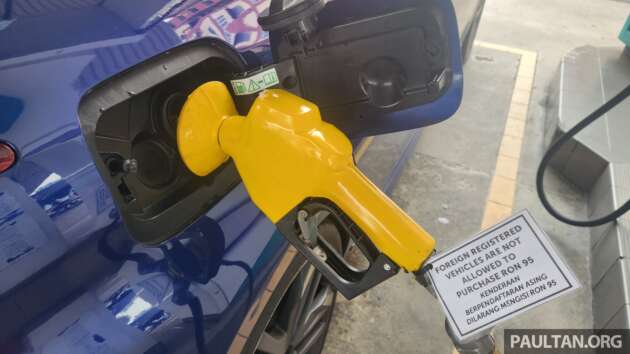
    From just RM700 million in January, Malaysian fuel subsidies ballooned to RM5 billion in March before peaking at RM7.5 billion the following month, due to the rise in global oil prices brought about by the ongoing West Asian conflict. The government is currently projected to spend RM2 billion and RM1.5 billion a month to subsidise RON 95 petrol and diesel respectively.

     
  • VinFast VF2 launched in Vietnam – budget city EV with 41 PS, 210 km NEDC EV range; priced at just RM29k

    VinFast VF2 launched in Vietnam – budget city EV with 41 PS, 210 km NEDC EV range; priced at just RM29k

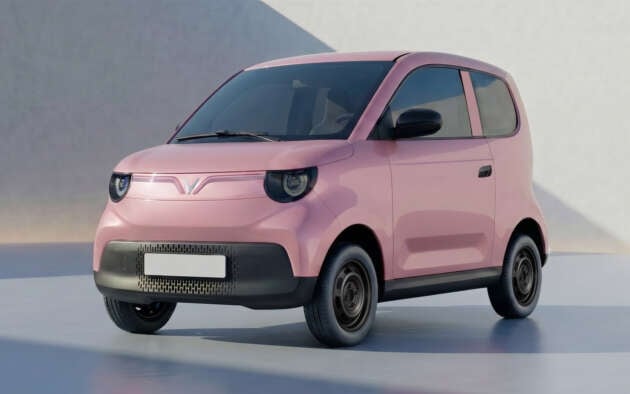
    Vietnamese automaker VinFast has unveiled the VF2, a four-seat electric city car designed to make car ownership more accessible for consumers in its home market. Priced at just 188 million Vietnamese dong (about RM29k), the VF2 will be open for bookings on July 15 this year, with deliveries expected to commence later in September 2026.

    In terms of specifications, the VF2 is equipped with an 18.3-kWh battery pack that powers a rear electric motor rated at 41 PS (40 hp or 30 kW) and 65 Nm of torque. Given these figures, the performance is modest, with the VF2 capable of a top speed of 80 km/h and a range of up to 210 km following the NEDC standard.

    Drivers will have Eco and Normal driving modes to choose from, while DC fast charging is at a peak of 24 kW to get the battery from a 10-70% state of charge in approximately 34 minutes. VinFast also touts MacPherson struts front and rear, and the electric vehicle (EV) comes with a driver’s airbag, ABS, traction control and EBD.

    The VF2 can be considered as VinFast’s attempt at emulating other compact EVs like Geely’s Panda Mini EV and Wuling’s Mini EV. Measuring 3,090 mm long, 1,496 mm wide, 1,663 mm tall and with a wheelbase of 2,065 mm, the VinFast model has comparable dimensions to those cars and features a similar boxy design.

    As for the interior, it is as barebones as they come, with highlighted features being a seven-inch driver information display, manual air-conditioning, manually-operated seats and two integrated speakers with FM radio. The rest of the kit list includes near-round LED headlamps and 13-inch alloy wheels made to look like steelies.

    VinFast says the price of the VF2 includes the battery as well as ten free charging sessions per month at V-Green public charging stations nationwide through February 10, 2029. It notes that the objective of this is so the ownership cost of the VF2 is comparable to that of a premium motorcycle.

    To make it even more affordable, customers who place a non-refundable deposit of VND10 million (RM1.6k) between July 15 and 17 will receive a discount of VND8 million (RM1.2k). The deposit can be transferred to immediate family members, including parents, spouses, children, siblings or to companies owned by the person placing it.

     
  • JPJ eBid: VRK and CFJ number plates up for bidding

    JPJ has announced that VRK and CFJ are the next number plate series to go up for bidding on its online auction platform, JPJ eBid.

    WP Kuala Lumpur’s latest running number series is ‘VRK’, and it will open for tender on July 11. The bidding period on JPJeBid is five days, ending 10pm on July 15. As usual, the results will be out the following day. The whole process is online now, as it has been for some time, and bidders will get the good (or bad) news via email.

    Also available on JPJ eBid is the Pahang series ‘CFJ’. The bidding period starts on July 18, and will close at 10pm on July 22. Results will be out the day after the auction closes.

    New car coming soon and want a nice number plate for the new ride? Why not DIY and skip the reseller’s markup and runner fees? If you have never bid for a number yourself, check out our step-by-step guide on how to navigate JPJ eBid and the techniques needed to get your preferred number at “retail price”.

     
  • Protectionism without competition is a liability, foreign investors welcomed to support local industry – MITI

    Protectionism without competition is a liability, foreign investors welcomed to support local industry – MITI

    Speaking at the launch of the MCE Auto Hub in Serendah today, minister of investment, trade and industry Datuk Seri Johari Abdul Ghani said that locally assembled (CKD) vehicles’ local content must include value creation, and that the rise of CBU (fully imported) vehicles puts the supplier ecosystem in Malaysia at risk.

    While the aforementioned safeguarding measures are crucial, the minister also said that the protection of the Malaysian automotive industry without permitting competition will become a liability.

    “We are cognisant that that protection without competitiveness will inevitably become a liability. Industries insulated from competition rarely become global leaders, as success must come from continuous innovation,” the MITI minister said.
    Protectionism without competition is a liability, foreign investors welcomed to support local industry – MITI

    “This is precisely why our approach to foreign investment remains transparent. We welcome foreign automotive players to establish and expand their presence in Malaysia, to coexist and complement our domestic ecosystem,” he continued.

    Whenever he is approached by an investor asking for approvals, Johari says he tells them that Malaysia is “not a place only to sell cars. We want you to come and bring all the technologies, all the components, so that you can use Malaysia as a hub,” he said.
    “I can understand that no investment can give you 100% localisation on day one, but at least, after some time being here in Malaysia, we want a substantial component of car manufacturing to involve real and effective localisation,” he added.

    Protectionism without competition is a liability, foreign investors welcomed to support local industry – MITI

    The ministry of investment, trade and industry was accused of protectionism through its new policy for fully imported EVs that it confirmed in May. This stipulated that any EV being imported must have a minimum declared cost, insurance and freight (CIF) value of RM200,000, and a minimum power output of 180 kW (which is equivalent to 245 PS or 241 hp).

    In March this year, MITI issued a statement following a news report indicating that the ministry imposed terms on BYD for its CKD local assembly plans, which the Chinese conglomerate could not agree to.

    In the initial report cited, Johari stated the need to protect the local auto industry. “You must also remember that both Proton and Perodua have 50% local content in their cars, and Proton sells about 150,000 cars a year [while] Perodua sells about 350,000, which is a lot, and these two companies built much of the existing ecosystem for the auto industry in Malaysia. So, we have to protect them.”

    In its response statement, MITI stated: “Together, Proton and Perodua have channelled billions into the Malaysian vendor ecosystem, supporting thousands of SMEs, skilled employees, and communities across the country. This is the industrial standard we are working to replicate.”

     
  • Don’t just see Malaysia as place to sell cars, car brands must have effective localisation plan – MITI

    Don’t just see Malaysia as place to sell cars, car brands must have effective localisation plan – MITI

    Continuing his speech at the launch of the MCE Auto Hub in Serendah today, minister of investment, trade and industry (MITI) Johari Abdul Ghani doubled down on his ministry’s insistence that carmakers increase the localisation of their CKD locally assembled vehicles, saying that they should not see Malaysia as simply a place to sell their wares.

    He added that beyond approving cars for sale, MITI is seeking foreign partners that can bring advanced technologies, global scale and specialised engineering that can “enrich our industrial base,” while also creating opportunities for technology transfer and deeper integration with local suppliers.

    “Every time investors come to see me – especially in the automotive sector – asking for approvals [for their new cars], I always tell them, ‘This country is not a place only to sell cars. We want you to come and bring all the technologies, all the components, so that you can use Malaysia as a hub,'” Johari said.

    Don’t just see Malaysia as place to sell cars, car brands must have effective localisation plan – MITI

    The minister continued, saying that while he understands that no investment can bring 100% localisation, he still expects established players to incorporate “real and effective localisation” into a substantial portion of their local manufacturing. This, he says, is to support the vendors involved in the local supply chain and the workers they employ.

    “Some of [the investors] ask me, “Datuk, we are here to bring in our cars, we want the government to give import duty, excise duty, sales tax [incentives].” I say, ‘If you want that [without localisation], then we didn’t need to build this ecosystem.’ We already have 730 companies that are involved in this supply chain. We have 700,000 [jobs] that we have created over the years. You just imagine, if everything comes from overseas, what’s going to happen on this 730 companies and 700,000 employees in this country?”

    Johari said that it is critical for Malaysia to develop capabilities in design and engineering, software and electronics, battery technologies, ADAS and intelligent mobility solutions to continue supplying the automotive industry in the future. “It will take five years, it will take ten years, we don’t care why you have to start somewhere, and the government must be together with the industry player to work this strategy together for the future of this industry,” he added.

     
  • Minimum price, export requirements are set not to deter new car brands, but to grow local vendors – MITI

    Minimum price, export requirements are set not to deter new car brands, but to grow local vendors – MITI

    Much has been said recently about the ministry of international trade and investment’s (MITI) recent statements regarding the country’s automotive policies, including that on a minimum price for fully-imported CBU EVs as well as defined requirements for manufacturing licences, which some have argued limits the entry of new players as well as the scope of investment and growth for the sector.

    The ministry has explained the reasons behind this, stating that the point behind a minimum price for fully-imported electric vehicles coming in after July 1 is to steer things towards local assembly, effectively developing the local automotive ecosystem, including the supply chain, through CKD operations.

    This also aligns with the path for new manufacturing licences and the conditions listed for it, as explained in the ministry’s statement in March when it addressed the topic of BYD’s planned CKD factory.

    Minimum price, export requirements are set not to deter new car brands, but to grow local vendors – MITI

    Designed to ensure that local assembly capacity moves towards sustainable, higher-end value segments and to avoid the displacement of the established local vendor ecosystem, these salient points were reiterated by MITI minister Datuk Seri Johari Abdul Ghani again today during the launch of the MCE Auto Hub in Serendah, Selangor.

    “When we set parameters such as domestic sales thresholds or minimum pricing structures, the intention is not to deter investors. Rather, it is to create a predictable and stable market environment in which local vendors can grow, while foreign investors also have a clear and sustainable path to profitability,” he said in his speech.

    “At the same time, we are clear about the conditions attached to new manufacturing licenses. Technology transfer, supplier development, skill creation, and export capabilities are not a barrier to investment. Instead, they are the foundation of genuine industrial partnership,” he explained.

    Minimum price, export requirements are set not to deter new car brands, but to grow local vendors – MITI

    He added that while vehicle exports would help fuel that growth, Malaysia should not seek to compete on volume alone on a broader regional context. “We must seek and build our comparative advantage in higher value-added segments, particularly in order for us to become the ASEAN hub for automotive intelligence,” he said.
    “This includes finding our niche in automotive electronics, semiconductor integration, and complex mechatronics—industries that generate higher wages, deeper technological capability, and long-term economic resilience,” he added.
     
  • MITI working on simplified NCM customised incentive mechanism to build real local industrial capabilities

    MITI working on simplified NCM customised incentive mechanism to build real local industrial capabilities

    The ministry of investment, trade and industry (MITI) – together with its agencies MIDA and MARii – is currently refining the New Customised Incentive Mechanism (NCM) to ensure that investments into the auto industry will build ‘real industrial capabilities’.
    It will be a simplified version understood by all, from industry players to government agencies, said MITI minister Datuk Seri Johari Abdul Ghani. NCM has been in the works for some time now.

    “First, we will simplify the NCM so that every player will understand it very well. When I talk to KSU (MITI’s secretary-general), deputy KSU, and the deputy CEO of MIDA, they all understand. Not only must the industry out there understand, but we must also ensure that the industry players themselves know exactly how to calculate it. We need to simplify things we have introduced, or introduce something new,” Johari said at the launch of the MCE Auto Hub in Serendah, Selangor this afternoon.

    MITI working on simplified NCM customised incentive mechanism to build real local industrial capabilities

    “The simplified NCM aims to encourage the localisation of critical technologies as opposed to essential manufacturing components. The greatest value in tomorrow’s automotive industry lies in critical components such as design and engineering, software, electronics, battery technologies, advanced driver assistance systems (ADAS) and intelligent mobility solutions. As such, these are the capabilities Malaysia intends to nurture,” he explained, adding that even if it takes time, ‘we don’t care’.

    Does this mean that the more of these ‘critical technologies’ are done in Malaysia, the more incentives the car company will get? Anyway, it does sound like MITI, under Johari’s watch, will be more strict with what constitutes local content.

    “It is equally important to ensure that local content genuinely means local value creation. Looking only at Tier 1 suppliers no longer provides an accurate picture. We must trace value creation throughout the supply chain, from Tier 1 to Tier 2 and Tier 3, to ensure that incentives reward genuine Malaysian capabilities rather than imported content disguised as localisation,” the Titiwangsa MP said.

    “To complement this and track any leakages, MITI will additionally measure export performance on a net basis to reward investors accordingly,” he added, hinting at audits. I think we can all get behind a more transparent framework that’s also more stringent but it must apply fairly to all, without special exemptions.

     
  • All carmakers must have local content, CBU rise puts Malaysian supplier ecosystem at risk – MITI’s Johari

    All carmakers must have local content, CBU rise puts Malaysian supplier ecosystem at risk – MITI’s Johari

    Malaysian investment, trade and industry (MITI) minister Datuk Seri Johari Abdul Ghani today said in a speech at the launch of the MCE Auto Hub in Serendah that the government wants carmakers in Malaysia – not just Proton and Perodua – to have local content in their vehicles, and that the rise of fully-imported (CBU) vehicles puts Malaysia’s supplier ecosystem at risk.

    “(Proton and Perodua) collectively contribute approximately more than RM15 billion in local purchase value. For many locally-assembled vehicles today, the government wants them to incorporate substantial Malaysian-made content, supported by an increasingly sophisticated supplier base.

    “We want every assembly plant coming into this country – not only local car manufacturers – to put a real effort to make sure that there is involvement of local content in every aspect in Malaysia,” he said, adding that the local content must include value creation and not merely be imported parts disguised as localisation.

    The MITI minister also said that Malaysia currently has approximately 730 specialised automotive vendors that support an ecosystem which employs over 700,000 people and which contributed RM84 billion to the nation’s gross domestic product (GDP) last year.

    All carmakers must have local content, CBU rise puts Malaysian supplier ecosystem at risk – MITI’s Johari

    Referring to the Chinese wave (especially EVs) in recent years, he said: “During this period, Malaysia’s trade deficit in motor vehicles as well as parts and components has widened significantly, from RM13 billion in 2020 to RM33.8 billion in 2025.”

    “Without a strategic and forward-looking response, there is a real risk that imports could further dominate the market and mount increasing pressure on our domestic supplier ecosystem. We must safeguard the over 700,000 jobs that support this ecosystem,” he added.

    The integration of local vendors into carmakers’ supply chains would enable Malaysia to progressively move up the value chain beyond simply assembling imported kits to higher-value activities like engineering, systems integration and component development, Johari said.

    “In a broader regional context, Malaysia should not seek to compete on volume alone. Our ambition is to become the ASEAN hub for automotive intelligence, which includes finding our niche in automotive electronics, semiconductor integration and complex mechatronics. Those are the industries that generate higher wages, deeper technological capability and long-term economic resilience,” he added.

     
  • Local content in CKD cars must include value creation, not imported parts disguised as localisation – Johari

    Local content in CKD cars must include value creation, not imported parts disguised as localisation – Johari

    Datuk Seri Johari Abdul Ghani has said that local content used in locally-assembled (CKD) vehicles must generate value throughout the Malaysian supply chain.

    “Looking only at Tier 1 suppliers no longer provides an accurate picture. We must trace value creation throughout the supply chain – whether they are Tier 1, Tier 2 or Tier 3 – to ensure that incentives reward genuine Malaysian capability rather than imported content disguised as localisation,” the head of the ministry of investment, trade and industry (MITI) said in his speech at today’s launch of the MCE Auto Hub in Serendah, Selangor.

    Johari added that vehicle manufacturers are encouraged to strive to increase the amount of local content in their products. “If you can bring 10%, tell us when you can bring 20%. How do you bring the local content to 20%? If you already have 20%, how do you bring it to 30%? If you already have 30%, how do you bring it to 40%?” he said.

    Local content in CKD cars must include value creation, not imported parts disguised as localisation – Johari

    “When you reach that level, I – as minister – will go around the world to promote your product. That’s what I want to do because this can be considered a Malaysian-made product even though the brand is owned by all of you. This is what I want to do to ensure that we consistently build our capabilities locally,” he added.

    Raising local content in vehicles assembled here is nothing new and has always been the focus of the government. The issue of local content was also brought up by MITI in its statement on BYD’s CKD factory.

    Johari’s statement is aimed at vehicles that have a vast majority of their components imported from overseas but put together in Malaysia, which does not benefit local suppliers as they may be relegated to supplying basic components like batteries or minor trim pieces. This also limits potential knowledge transfer as they are not involved in supplying more advanced components, which jeopardises the Malaysian supplier ecosystem.

     
  • Perodua QV-E amasses 1,700 bookings – HLIB

    Perodua QV-E amasses 1,700 bookings – HLIB

    A Hong Leong Investment Bank research report on MBM Resources has revealed that the Perodua QV-E has collected 1,700 bookings, according to the New Straits Times. The EV was ‘relaunched’ on June 15 with lower pricing – RM63,499 + RM215 a month for nine years (battery leasing), or RM87,499 if you want to own the whole thing. These prices include a RM6,500 rebate that runs until end-September.

    The report does not say if the 1,700 bookings are all-time (since the original December 1, 2025 launch) or since June 15, but according to paultan.org Car Sales Data, only 182 QV-Es have been registered as of May, including 40 showroom and test drive cars. Over 72% of these registrations were in April and May (June figures not out yet), which is before the price went down.

    The report also says that Perodua currently has a circa-43,000 order backlog (a far cry from 220,000 once upon a time) and the Traz has received encouraging demand (9,242 registered all-time according to paultan.org Car Sales Data).

    It added that it expects the government’s matching grant programme for the scrapping of old cars to switch to a new national-brand car (up to RM2,000 + up to RM2,000), plus tax exemptions for Perodua taxis, to spur demand, and that Perodua’s after-sales volumes have been improving. Not sure if you should buy this or the Proton eMas 5? See our comprehensive buyer’s guide here.

     
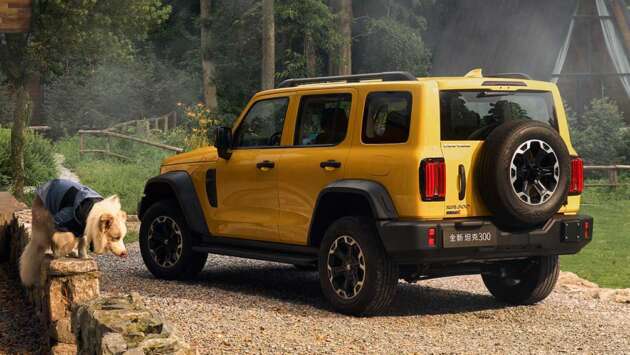
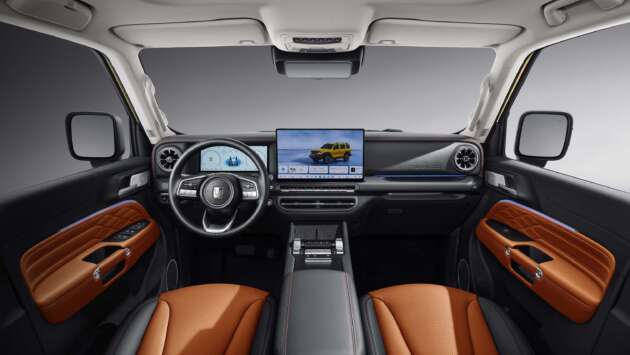
  • 2026 GWM Tank 300 facelift in China – only 300L Hi4-T, Hi4-Z PHEVs are longer, up to 200 km WLTP EV range

    2026 GWM Tank 300 facelift in China – only 300L Hi4-T, Hi4-Z PHEVs are longer, up to 200 km WLTP EV range

    Having revealed the car last week, GWM has released concrete details of the new facelifted Tank 300 ahead of its Chinese-market launch on July 19. As was hinted at, the big mechanical revision only applies to the plug-in hybrid models, which have been renamed the 300L. And this time, the “L” really means long.

    The 300L’s dimensions are exactly as was listed in a filing with China’s ministry of industry and information technology (MIIT), measuring 4,886 mm long, 1,984 mm wide and 1,927 mm tall – 126 mm longer, 54 mm wider and 24 mm taller than petrol and diesel models. But it’s the wheelbase that has grown significantly; at 3,010 mm, it’s a whole 260 mm longer.

    The wheelbase stretch is the result of the front axle being brought forward, but it wasn’t done to fit a larger engine as previously thought. Rather, it was to provide space to fit the new road-biased Hi4-Z powertrain, which has a much larger battery than the existing, more off-road suitable Hi4-T.

    GWM Tank 300L (left) versus the standard Tank 300

    Under the bonnet, you’ll still find a 2.0 litre turbo petrol four-cylinder that produces 245 PS at 6,000 rpm and 380 Nm of torque from 1,700 to 4,000 rpm. But in place of a conventional 4×4 drivetrain sits 245 PS/400 Nm front electric motor and a 272 PS/415 Nm rear motor, as well as a locking rear differential and a three-speed dedicated hybrid transmission that allows the system to apportion power from both power sources.

    This results in a ridiculous (especially for a body-on-frame SUV) total system output of 761 PS and 1,195 Nm of torque, enabling the Hi4-Z to sprint from zero to 100 km/h in just 4.2 seconds. The sizeable 59.6 kWh NMC battery sits within the wheelbase and enables a WLTP-rated range of 200 km, and combined with the 77 litre fuel tank, the overall range stretches to 1,122 km. It also has a higher DC fast charging power and can be topped up from 30 to 80% in the same 16 minutes as the Hi4-T despite the larger battery.

    As for that Hi4-T, that remains the same as before, with the 2.0 litre mill being paired with a 177 PS/495 Nm motor, a nine-speed auto and a mechanical driveline with locking centre and rear diffs. It makes a sum total of 421 PS and 750 Nm of torque, and with an unchanged 37.1 kWh NMC battery it delivers a WLTP EV range of 105 km. Total range is slightly shorter than the Hi4-Z’s at 913 km, due to the smaller 70 litre fuel tank.

    2026 GWM Tank 300 facelift in China – only 300L Hi4-T, Hi4-Z PHEVs are longer, up to 200 km WLTP EV range

    Besides enabling a bigger battery to be fitted, bringing the front wheels forward has also resulted in a shorter front overhang. As a result, the approach angle has increased from 33 degrees to 38, although the departure angle remains the same at 34 degrees. No mention of the breakover angle, but the longer wheelbase will have almost certainly affected it. Ground clearance has been increased by ten millimetres to 235 mm to help mitigate this effect.

    The regular Tank 300 retains its 2.0 litre turbo petrol engine and nine-speed auto, making the same 220 PS and 380 Nm; there’s no power boost as previously reported. The 2.4 litre turbodiesel, meanwhile, has been uprated slightly, although only to 184 PS (previously 181 PS) with peak torque holding station at 480 Nm.

    Although the 300L’s longer nose is visible in the side profile, it has been disguised by fender vents just ahead of the front doors. The car also gains a beefier new front bumper with integrated driving lights and tow hooks. Both these items were previewed by the rugged Hooke concept at Auto Shanghai last year.

    2026 GWM Tank 300 facelift in China – only 300L Hi4-T, Hi4-Z PHEVs are longer, up to 200 km WLTP EV range

    The 300L also gains several M6 threaded holes on the outside and tripod-style 1/4-inch threaded holes on the inside, allowing owners to mount accessories such as lights and action camera mounts. This is supported by six auxiliary switches on the roof console for powering those accessories at up to 300 watts each (1,040 watts total). The rest of the changes are shared with the regular 300, including a new grille that ditches the rectangular T logo in favour of the large “Tank” script.

    Inside, the 300 gains a larger 15.6-inch infotainment touchscreen running GWM’s latest Coffee OS, joining the rest of last year’s updates that include rectangular centre air vents, a steering column-mounted gear selector and a new centre console with increased storage. The steering wheel also returns to a three-spoke design, jettisoning the oddly cutesy two-spoke design from the 2025 model.

    Driver assists have also been upgraded on the 300L with a new roof-mounted lidar sensor and additional exterior cameras. These enable the PHEVs to offer highly-automated city and highway driving functionality and enhanced park assist, joining the usual alphabet soup of aids.

     
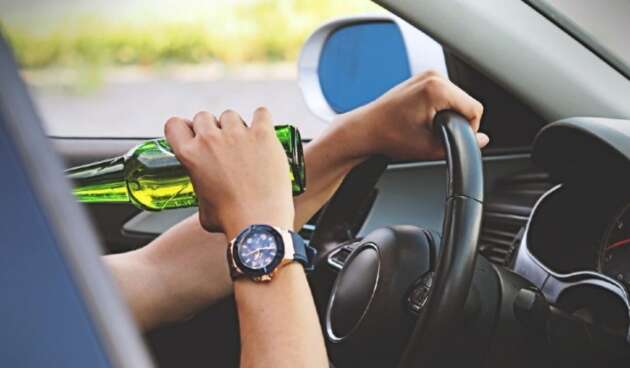
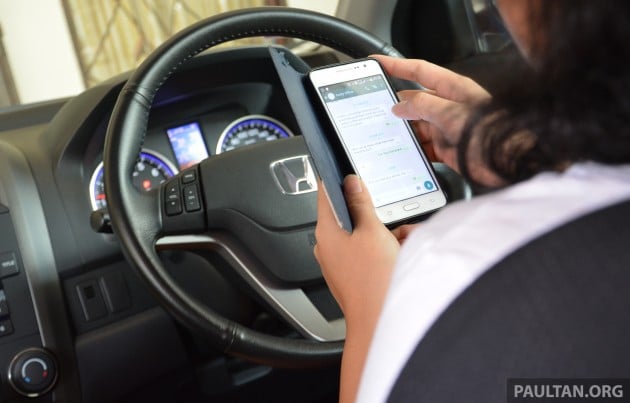
  • Singapore to penalise drivers holding mobile phones, lower alcohol limits, tighten penalties with new law

    Singapore to penalise drivers holding mobile phones, lower alcohol limits, tighten penalties with new law

    Singapore’s ministry of home affairs (MHA) is aiming to reduce traffic fatality rates in the country with the Road Traffic (Miscellaneous Amendments) Bill, which is set for its first reading in parliament today. According to the ministry, traffic fatality rates in Singapore increased by about 24% between 2021 and 2025, while traffic violations rose by about 38%. The new law, when passed, serves to address the issue by tightening enforcement and penalties for traffic offences.

    One of the amendments listed by the MHA include increasing the maximum imprisonment penalty for first-time offenders convicted of dangerous driving causing grievous hurt from the current five years to seven years. Repeat offenders will see 13 years instead of 10 years previously, while those guilty of careless driving causing grievous hurt will face imprisonment of either two years (first-time offender) or four years (repeat offenders), both unchanged from before.

    Should the driver be found guilty of committing dangerous or careless driving while drink driving, they will face additional penalties on top of those mentioned above. With the revision, they face an additional 18 months in jail (previously one year), while repeat offenders face an additional three years and six months.

    The ministry is also lowering prescribed alcohol limits to determine drink driving, with the limit for breath tests set to be revised to 15 micrograms of alcohol per 100 ml (previously 35 micrograms), while it is 30 milligrams of alcohol per 100 ml (previously 80 milligrams) for blood tests. For context, Malaysia’s prescribed alcohol limits are 22 micrograms per 100 ml for breath, 50 mg per 100 ml of blood and 67 mg per 100 ml of urine.

    Singapore to penalise drivers holding mobile phones, lower alcohol limits, tighten penalties with new law

    “No one accidentally drinks and drives,” the MHA said in its release, and the tightened alcohol limits are said to bring Singapore in line with comparable jurisdictions such as Taiwan, Japan and South Korea. Another amendment involves the breath test process so that the result recorded immediately at the scene is used as evidence.

    Before this, traffic police officers that suspect a driver of drink-driving will first carry out a preliminary breath test at the scene before administering an evidential grade breath test at the police lockup. The ministry explains that the change is necessary as the time difference between the two tests can result in a lower alcohol reading than the actual level at the time of driving.

    On a related note, the Bill introduces a new offence of driving with the presence of controlled drugs, intoxicating substances or psychoactive substances detected in a driver’s blood specimen. Leeway is given if the driver consumed the drugs according to a legal prescription for medical purposes, and the driver did not know that such consumption might impair driving.

    Singapore to penalise drivers holding mobile phones, lower alcohol limits, tighten penalties with new law

    Another area that sees revision involves mobile phones. “Today, making out an offence of using a mobile communication device while driving requires proof that the driver was operating any communicative or other functions of the device, such as texting or calling, while holding the device in his hand and driving the vehicle. This means that the offence can only be enforced manually, as officers must verify that the driver was operating the device,” the ministry said.

    With the Bill, there is no longer a need to prove that the driver was operating the device. Instead, it will be an offence as long as a driver holds a mobile phone in his or her hand while the vehicle is moving. This amendment will also allow traffic police to enforce the offence using cameras or based on photographic or videographic evidence submitted by members of the public. “This change will not affect the use of mounted devices, which will not be an offence. Drivers may also hold their devices while the vehicle is stationary,” the ministry added.

    In Malaysia, it is an offence to use a mobile phone while driving a vehicle unless it is used with a hands-free kit or holder. You are legally considered to be driving even when the vehicle is completely motionless, so long as you are on a public road. This includes while stopped at a red traffic light or in gridlock traffic. The offence is applicable by the physical act of holding or supporting the device with your body, the latter including placing the mobile phone on your lap.

     
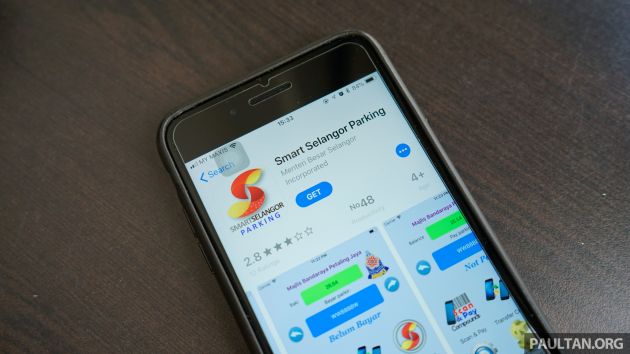
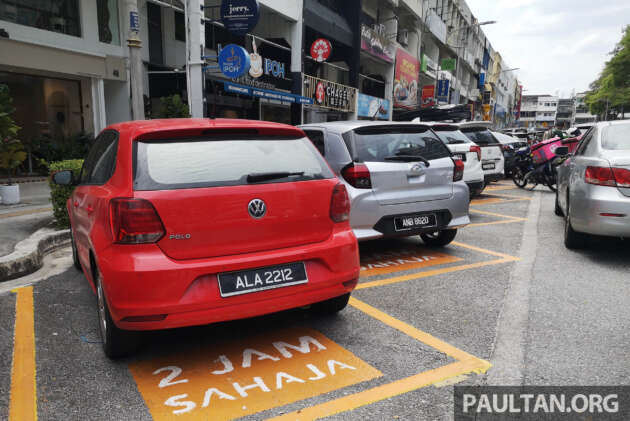
  • Selangor Intelligent Parking – MBPJ still holding out on deal, wants guarantee that its revenue won’t drop

    Selangor Intelligent Parking – MBPJ still holding out on deal, wants guarantee that its revenue won’t drop

    Almost a year after the Selangor state government announced that a newly appointed concession company would take over public parking fee collection and enforcement for four local councils (PBTs) in the state, one council is still holding out on the privatisation agreement, reports The Star.

    While street parking under the purview of the Subang Jaya city council (MBSJ), Shah Alam city council (MBSA) and Selayang municipal council (MPS) is now operating under the Selangor Intelligent Parking (SIP) system, the Petaling Jaya city council (MBPJ) remains independent of it.

    Petaling Jaya mayor Datuk Mohamad Zahri Samingon confirmed that MBPJ still had not signed the agreement with the concessionaire, which is ITMax subsidiary Selmax, citing lack of clarity from state advisories.

    Selangor Intelligent Parking – MBPJ still holding out on deal, wants guarantee that its revenue won’t drop

    “MBPJ has not signed the privatisation deal because we have requested information from the state advisory chamber. We already wrote in, but there has been no reply, and so we are waiting for the black-and-white view,” he told the publication,

    Despite a verbal agreement reportedly reached during a closed-door meeting last September, Mohamad Zahri’s stand remains unchanged, that MBPJ will not sign a deal until there is an ironclad guarantee its revenue will not drop below current levels.

    Last year, the mayor said the council pulled in a whopping RM13.8 million annually in parking revenue, the highest among all local councils in Selangor. Under the proposed SIP scheme, that lucrative stream would be sliced up, with 50% going to Selmax, 40% to local councils and 10% to Menteri Besar Selangor Incorporated (MBI).

    Selangor Intelligent Parking – MBPJ still holding out on deal, wants guarantee that its revenue won’t drop

    Reiterating what he said last year, that the council’s main focus was to have that income remain the same or increase, Mohamad Zahri stated that MBPJ was finalising the profit-sharing percentage and would ensure that all details are clearly codified before a formal commitment is made.

    MBPJ’s continued resistance to the agreement follows a severe disruption to the SIP platform caused by a cyberattack on June 30, which managed to hack into into the operator’s system and crippled parking payment services for users both inside and outside Selangor. The system came back online on July 2.

     
  • Police detain social media figure for street racing

    Police detain social media figure for street racing

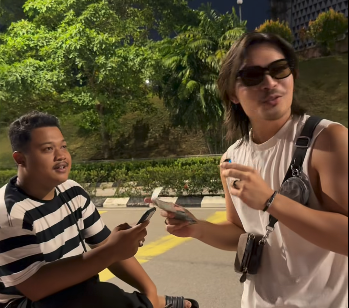
    In a search for social media clout, user boypadu99 found out the hard way Malaysian Traffic police take a dim view of street racing. Posted on his social media page, he is seen challenging riders outside of the National Stadium to a race, for a RM100 stake if they win.

    The incident is believed to have occurred at Jalan Hang Jebat on July 3, between 11.00 p.m. and midnight. The video was then uploaded on Facebook, where it garnered widespread attention.

    Based on information received, an investigation team from Traffic police (JSPT) traced and detained the suspects, two local men aged 22 and 24 years, on July 6 at JSPT Kuala Lumpur HQ. Two Yamaha motorcycles were also seized along with other miscellaneous items for further investigation.

    The case is being investigated under Section 42(1) of the Road Transport Act 1987 for dangerous riding and in a manner posing a danger to others. JSPT said in a social media post strong action will be taken against any individual racing on public roads, or posting social media of risky acts on the road

     
  • Gov’t to discuss alleged petrol station losses during fuel subsidy transition with oil companies – Anwar

    Gov’t to discuss alleged petrol station losses during fuel subsidy transition with oil companies – Anwar

    It was reported back in December 2024 that some 3,500 petrol stations in Peninsular Malaysia sustained losses amounting to RM181 million when diesel was first floated in June 2024.

    Now, according to Ipoh Timur MP Howard Lee Chuan How, who brought up the issue today in the Dewan Rakyat, petrol station operators are apparently incurring losses of between RM40,000 and RM50,000 as a result of the transition to the enhanced fuel subsidy mechanism, Bernama reports.

    “With regard to the issue raised, I will ask the Second Finance Minister (Datuk Seri Amir Hamzah Azizan) to help obtain further details and also hold discussions with the oil companies,” answered prime minister and finance minister Datuk Seri Anwar Ibrahim.

    Gov’t to discuss alleged petrol station losses during fuel subsidy transition with oil companies – Anwar

    “So far, they have given their full cooperation. Otherwise, it would not have been possible for us to implement the targeted RON 95 petrol and diesel subsidies effectively. If there are any shortcomings that have been highlighted, God willing, we can discuss them and work towards a good solution,” he added.

    Anwar also said that the government earlier decided not to rush the implementation of diesel subsidy reforms as the more complex situation in Sabah and Sarawak (higher diesel consumption, greater distances and fewer petrol stations than in Peninsular Malaysia) needed to be taken into consideration.

    The finance ministry revealed yesterday that nearly 200,000 owners of diesel pick-up trucks and SUVs – the latter officially categorised as jip by the road transport department (JPJ) – have been approved for an additional 100-litre monthly quota. They can now buy up to 300 litres of B10/B15 diesel per month at a subsidised RM2.10 a litre.

     
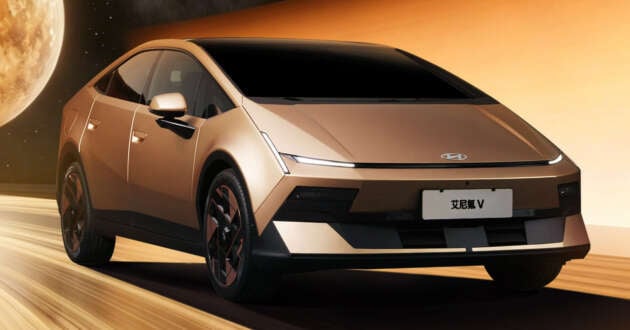
  • Hyundai Ioniq V in China – more details of cyberpunk-style EV; 800V, two LFP batteries, up to 620 km CLTC

    Hyundai Ioniq V in China – more details of cyberpunk-style EV; 800V, two LFP batteries, up to 620 km CLTC

    Hyundai has revealed the body colours that the Ioniq V will be offered with when it goes on sale in China. This comes a few months after the electric vehicle (EV) was presented in production guise at this year’s Auto China (also known as Auto Beijing) in April.

    Prior to its reveal, the Ioniq V was previewed by the Venus concept that made its debut earlier in the same month. At the time, the South Korean automaker introduced its all-electric Ioniq brand in China as it aims to build its EV presence in the country, which also saw the Earth concept being presented.

    According to IT-Home, the Ioniq V was designed by a local Chinese team and leans heavily into the cyberpunk aesthetic. With its bold lines, sharp edges and fastback shape, the sedan looks rather futuristic and is complemented by minimalistic lighting, frameless doors and zany wheels. No pop-out door handles here because of China’s regulatory requirements.

    The available colours include three matte options (Radiant Gold, Magnetic Force, Ceramic White), four pearl hues (Digital Purple, Cybernetic Green, Quantum Silver, Phantom Black) and a sole solid finish also called Ceramic White.

    Inside, you’ll find a simple dashboard design headlined by a 27-inch, 4K widescreen display as well as a pillar-to-pillar head-up display. There is also an octagonal-shaped steering wheel, infotainment powered by a Qualcomm chip as well as ADAS functions developed by Momenta.

    In terms of dimensions, the Ioniq V measures 4,900 mm long, 1,890 mm wide, 1,470 mm tall and has a wheelbase of 2,900 mm. It is built on the E-GMP architecture with an 800-volt system to enable fast charging.

    Regulatory filings indicate the Ioniq V will come with CATL battery packs, starting with a 53.5-kWh lithium iron phosphate (LFP) unit for between 520 and 540 km following the CLTC standard. This powers an electric motor rated at 190 PS (188 hp or 140 kW).

    There will also be a variant with a 66.8-kWh LFP battery and a more powerful electric motor serving up 228 PS (225 hp or 168 kW) and between 620 and 650 km. Chinese media outlets report the platform will also be capable of handling an EREVE (extended-range electric vehicle) in the future.


Sell your car to Carro, get paid in 24 hours


Latest Fuel Prices

PETROL
BUDI 95 RM1.99
RON 95 RM3.37 (-0.10)
RON 97 RM4.00 (-0.10)
RON 100 RM6.45
VPR RM7.68
DIESEL
BUDI RM2.10
EURO 5 B10 RM3.97 (-0.10)
EURO 5 B7 RM4.17 (-0.10)
Last Updated Jul 01, 2026

Latest Videos


Tools