








AU is a public research university with the main campus located in Aarhus, Denmark, and other campuses located in Jutland and Seeland. It is the second largest and second oldest university in Denmark. The Department of Environmental Science, located at Risø near Roskilde, conducts problem-oriented research, spanning environmental ecology, chemistry, and physics, as well as interactions between the environment and society in economic, political, and social terms.
The Department also performs research-based public administration and provides research-based advice. The Section of Atmospheric Environment, Group for Atmospheric Measurements, carries out work in the field of physical and chemical processes that control the level and trend of air quality development and atmospheric deposition. The group undertakes national air quality monitoring, and it is active in the area of research, consultancy, monitoring, and teaching. The research focuses on the impact of air quality on human health, nature, the aquatic environment, and interaction with climate.
The Department of Public Health, located in Aarhus, works to promote public health, conducting research into the health challenges facing society – to promote health and to prevent, treat and alleviate disease. The research unit Environment, Occupation, and Health investigate the interactions between humans and the environment, indoors and out, and by identifying factors that may contribute to the development of e.g., allergies and respiratory ailments.

AlveoliX is a Swiss-based start-up founded in 2019 with a young and multidisciplinary team of 14 people united under the same goal: “Make organs-on-chips the new standard for preclinical decision-making and the leading alternative to animal experiments”. We aim to improve fundamental research and accelerate drug development, by replacing animal studies and decreasing any potential risks for patients during clinical testing and after approval. In the future, we also hope to be able to develop individual and preventive therapy thanks to personalized medicine.
AlveoliX’ Organs-on-Chip is used to better predict human responses in preclinical drug development and to gain more insight into human biology. They mimic organ-specific microenvironmental cues such as mechanical forces and 3D multicellular structure to simulate the in vivo situation. Thanks to this technology, we can build healthy, diseased, and personalized models to test molecule safety (drugs, pollutants, cosmetics, etc.) and drug efficacy helping to replace poorly predictive and ethically questionable animal models.
Envirometrics specializes in the field of environmental protection and sustainable development, in 11 countries, providing consulting services to the private and public sectors, since 2002. The main areas of activity are environmental monitoring and measurements, climate change mitigation and adaptation, health and safety at work, and management systems. The constant investment in developing our workforce qualifications and in acquiring state-of-the-art equipment is the competitive advantage of the company.
Today, ENVIROMETRICS has an experienced multidisciplinary team, many of whom obtain master’s degrees and PhD, to respond on time to the increased demands of the industry. Furthermore, it cooperates with Research Institutes and Universities and participates in the implementation of research proposals and projects in national and European programs (HORIZON2020, GSRT). In addition, is a member of the most important business and commercial chambers.

We advise companies on the management of their R&D&I financing, through the design and implementation of actions aimed at boosting their technological and economic development. These actions focused on the integral treatment of R&D&I tax incentives and the management of calls for public grants and subsidies, resulting in an improvement of the companies' profit and loss accounts.
Our eagerness to achieve excellence in all our services has led us to assume the leadership of the sector, both at the national and European levels, thus promoting an ambitious internationalization plan with a clear objective: to help our clients in the generation of value.
UHasselt is a young, innovative, and independent university. At Uhasselt, within the Centre of Environmental Sciences at Hasselt University, Prof Dr Tim Nawrot heads the Environmental Epidemiology research group. In the framework of an ERC grant (2012), he has initiated the ENVIRONAGE birth cohort, which aims to understand human ageing and the development of health and diseases and their interaction with the environment by carrying out prospective epidemiological follow-up from the newborn stage.
He is part of the EU EXPoSOMICS (FP7), the STOP (H2020), HBM4EU consortium (H2020), AURORA (H2020), and ATHLETE (H2020) projects. He has considerable publications in environmental epidemiology and public health research and is active in several advisory bodies, including the EU summit on air pollution (Vilnius Declaration).
He has fully exploited the arsenal of epidemiology study designs (time-series, case-control, case-crossover, and prospective cohort studies) to answer important questions concerning the aetiology and/or pathophysiology of a relatively broad spectrum of outcomes including cardiovascular, respiratory, cancer, and perinatal outcomes.
Within the LEARN project, he leads tasks aiming at understanding the relation between indoor air quality in schools, including both chemical and microbiological determinants, and cognition in children by gathering data across different parts of Europe.
At IMEC The Netherlands it is our mission to develop targeted innovations with a real impact on people’s lives. Here, IMEC joins forces with research institutions, governments and businesses to leverage its world-leading R&D for high-impact projects in nano- and digital technology.
The international IMEC organization boasts more than 5,000 expert scientists, a unique infrastructure that includes a 2.5-billion-euro 300mm semiconductor pilot line, and an ecosystem of more than 600 world-leading industry partners, and a global academic network.
At IMEC the Netherlands a team of more than 200 researchers from 25 different nationalities work together on the latest innovations. The activities of IMEC the Netherlands are spread over two research centres with specific objectives. Holst Center This independent research and innovation centre is jointly operated by IMEC and TNO. It develops technology that responds to global societal challenges and contributes to new micro-electronics and sensor technology solutions in the fields of health & vitality, energy & climate, mobility & industry 5.0.
OnePlanet Research Center This multidisciplinary collaboration of Wageningen University & Research (WUR), Radboud University, Radboud university medical centre, and IMEC uses the latest chip and digital technologies to create a society in which everyone can live a healthy life and has access to healthy and sustainable food.

Located in Braga (North of Portugal) was founded by the governments of Portugal and Spain under an international legal framework to perform interdisciplinary research, deploy, and articulate nanotechnology for the benefit of society. INL aims to become the worldwide hub for nanotechnology addressing society’s grand challenges.
The Research and Technology activities are focused on six clusters: Health, Food, Energy, Environment, ICT, and Future Emerging Technologies, which complement each other and provide a base for interdisciplinary interactions between our research. The full-fledged nanotechnology laboratory enables leading research of the highest international standard.
INL facilities allow access not only to their infrastructure and systems but also to microsystems and nanotechnology experts and their knowledge with considerable flexibility. Access is open to both internal and external users. The user facilities provide support throughout all research and development chains in cleanroom processes (device modelling and design, process integration and device fabrication, packaging, and testing) as well as in advanced microscopy and spectroscopy, X-ray diffraction, and scattering techniques, photonics and bioimaging, and magnetic resonance imaging.
Another impacting factor is the heterogeneous set of techniques available under the same roof leading to competitive integration of different technologies and rapid prototyping thus paving the way to methods and devices with performances out of reach of a given single technology.

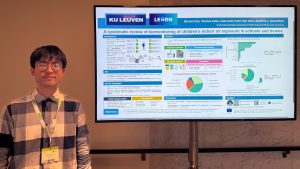
KU Leuven is a research-intensive university that boasts a rich tradition of education and research that dates back six centuries. Currently, it is the largest university in Belgium in terms of research funding and expenditure. Its Department of Public Health and Primary Care is a multidisciplinary department with a focus on community health, best practices, and health policy.
In this department, the Centre of Environment and Health and its two laboratories for Occupational and Environmental Toxicology and Occupational and Environmental Hygiene are involved in the LEARN project. The KU Leuven team leads the exposure assessment work package and will contribute to the toxicological analysis of indoor air pollutants in school environments.

MANN+HUMMEL is a leading global company in filtration technology. Under its two business units, Transportation and Life Sciences & Environment, the Ludwigsburg-based Group (Germany) develop intelligent filtration and separation solutions that enable cleaner mobility, cleaner air, and cleaner water.
Thus, the 1941-founded family-owned company makes an important contribution to clean earth and the sustainable use of limited resources. In 2021, over 23,000 employees at more than 80 locations generated a turnover of €4.2 billion.

NIA is the cross-sectoral, responsible voice for nanotechnology value chains and the global commercial eco-system. NIA supports innovation and commercialization of the next generation of nanotechnologies and promotes their safe and reliable advancement.
Eindhoven University of Technology (TU/e) educates students and advances knowledge in science & technology for the benefit of humanity.
It integrates education and research to enable its students and scientists to become thought leaders and to design and achieve the unimaginable.
In close collaboration with its public and private partners, it translates basic research into meaningful solutions.
TU/e embraces and lives its four CORe values: Curious, Open, Respectful and Responsible.

The research group SMIT, established at the Vrije Universiteit Brussel in 1990, is specialized in fundamental, applied, and contract research in the area of ICT and media, markets, and policy. With currently a staff of an interdisciplinary team of over 100 researchers, SMIT-VUB is a major research centre in Europe for policy and socio-economic research relating to ICT and media.
SMIT-VUB specializes in social scientific research on media and ICT, with an emphasis on innovation, policy, and socio-economic questions. SMIT-VUB research combines user, policy, and business analysis with both quantitative and qualitative research methodologies, focusing on two programs: data & society and media & society. A continuing dialectic between theory and empirical research is one of the centre’s high-level objectives.
For the LEARN project, SMIT-VUB has built up a track record in several citizen science projects for the development of (inclusive) engagement and communication strategies, collaborative governance with public government, evaluation of citizen science tools in terms of usability and user experiences, and the set-up of participatory policy-making processes (PAR4P-method).
In addition, SMIT-VUB is leading the working group on ‘engagement and communication’ for citizen science projects funded in Flanders (Belgium) within the knowledge centre SCIVIL.