PowerTime is the complete personnel scheduling software for law enforcement, emergency communications, fire, and EMS. Keep responders informed, reduce time spent scheduling, and maintain proper staffing levels.
Gives you time back: Stop spending hours manually building paper schedules. Digital scheduling and reporting streamlines processes for time off, open shifts, and shift swaps — and can save you 700+ hours per year.
Keeps everyone informed: Provide a real-time view of the schedule and notify staff of critical updates, schedule changes, and more — anytime, anywhere.
Reduces staffing errors: Set minimum staffing and mandatory rest periods to ensure you have coverage andreduceburnout—soyouandyourstaffcanservewithconfidence.
Manages compliance for you: Access audit trails of all schedule changes, overtime form submissions, and approvals —andexportcriticaldatainreportswithoneclick.
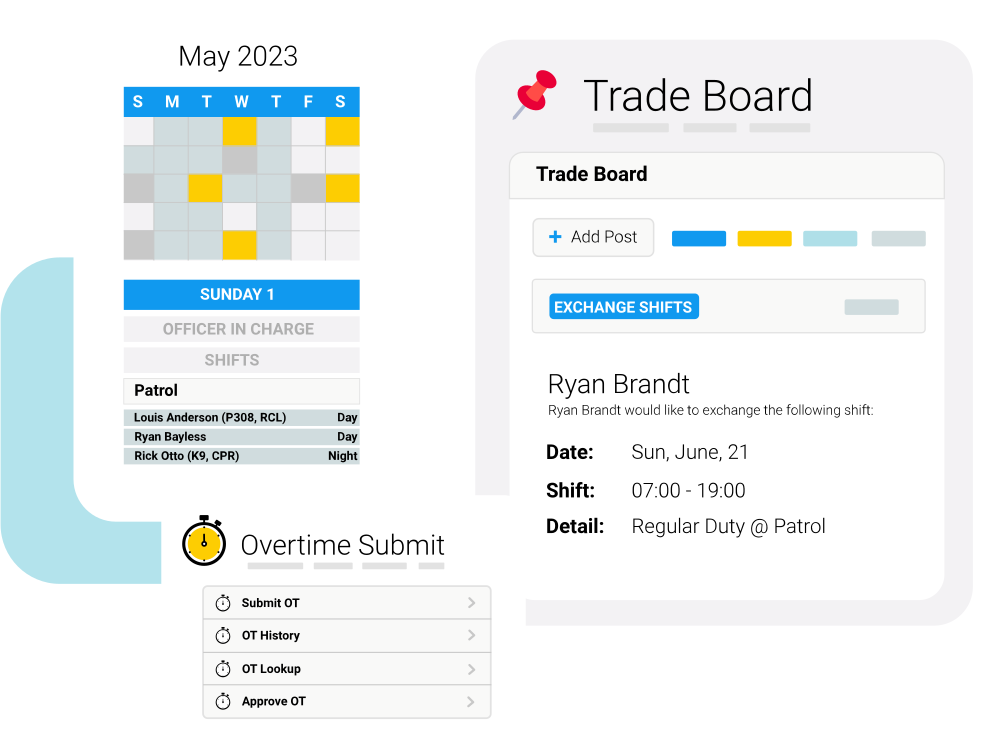
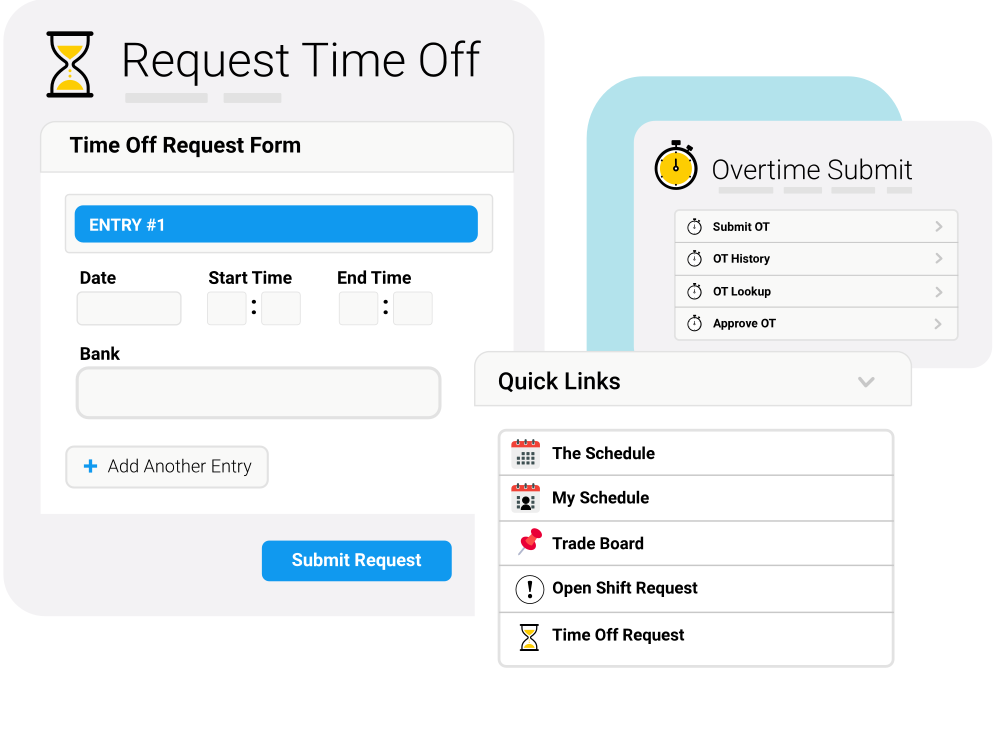
PowerTime is a scheduling system that displays alerts and schedule information on a dashboard upon login. Users can view who is working day shift, taking time off, or out for court. The system provides an agency-wide schedule accessible to all users showing the most current information. Schedule settings are configurable to change colors and labels. Multiple schedule views are available including calendar and day view that can be set as defaults. Users can view their personal schedule from any location. The platform includes a time off request form accessible from work or home. Open shifts are posted and users can view, filter, and request available shifts. The system supports submission of agency-specific overtime codes and hours from any location. Users can view and verify their timesheet to confirm shifts, time off, and overtime entries are accurate.
View the full agency schedule and details from mobile. Receive push notifications and see activity alerts when logging into the app. Request time off on the go. Supervisors can approve time off requests from any location. Desktop functionality available on mobile app.
Take a Tour Through PowerTime
See how PowerTime makes scheduling easy. Here you will view the schedule, time off, and open shifts. Get started below!
Gone are the days of painstakingly checking paper schedules to make sure all employee shifts are covered. With PowerTime you have real-time scheduling and reporting from one location. So, your team can easily maintain scheduling processes across your organization including shift trades, PTO, timesheets, and more. Plus, long-term schedules take less time to setup with templating tools that allow you to publish schedules as far into the future as you need to.
Keep responders informed
Communicate schedule updates to your entire organization via email or text message to automatically notify staff of important changes. Employee schedules can be accessed from any device, anytime. See how the mobile app works >>
View the full agency schedule and details from mobile. Receive push notifications and see activity alerts when logging into the app. Request time off on the go. Supervisors can approve time off requests from any location. Desktop functionality available on mobile app.
Law enforcement agencies face unique hurdles—from 24/7 rotations to complex court appearance tracking. PowerTime is the specialized law enforcement / police scheduling software designed to handle your agency's specific policy and compliance needs.
Get a real-time view of the schedule for the day, week, or month and make edits from wherever you are.
Minimum Staffing
Ensure sufficient staffing 24x7 with open shift updates for administrators and employees.
Time Off Requests
Employees submit time off requests from wherever they are and receive real-time updates.
Overtime
Streamline the entire process of open shifts due to minimum staffing or special events.
Notifications
Email and mobile notifications sent automatically for efficient communication throughout.
Payroll Exports
Timesheets and exports populate with scheduling data and approvals offering a seamless pay period end.
"[PowerTime] software has saved our department huge amounts of time. Schedules self-perpetuate, and overtime requests are time-stamped for fairness.The communication blast feature is extremely useful for last-minute coverage needs. It’s as if they thought of everything."
Lt. McKim - Ephrata Police Department
Sharpen your scheduling skills
Explore our blogs for all-things scheduling: tips, best practices, and industry trends.
Law enforcement agencies can build 24/7 shift coverage without burnout by using policy-based scheduling, cumulative hour caps, rest period rules, and real-time visibility into both on duty shifts and off duty details. The goal is to maintain minimum staffing while preventing forced overtime, back to back assignments, and fatigue-related risk.
Choosing between an 8 hour, 10 hour, or 12 hour patrol shift schedule is one of the most important workforce management decisions a law enforcement agency can make. Research from the National Policing Institute suggests that 10 hour shifts often provide the best balance of officer wellness, fatigue reduction, and overtime control, while 12 hour shifts are popular because they offer more consecutive days off. Traditional 8 hour shifts provide consistent coverage but can generate significantly more overtime. Understanding the advantages and drawbacks of each scheduling model can help agencies improve officer retention, reduce fatigue related risks, and better manage staffing costs.
Comparing public safety software platforms? See how PowerDMS by NEOGOV, Vector Solutions, Lexipol, and Command HQ compare on policy, training, and compliance.
How to Choose the Right Off Duty Management Software Funding Model
Public safety agencies typically choose between two funding models for off duty management software: vendor funded and agency funded. Vendor funded models recover platform costs by charging administrative or transaction fees directly to the private employers who hire off duty responders. Agency funded models bill the public safety department directly based on actual platform usage or a flat annual software subscription. The optimal choice depends on state regulations, local ordinances, cost recovery requirements, and administrative goals. As municipalities modernize secondary employment programs, leaders must balance compliance, fiscal responsibility, responder wellbeing, and operational efficiency to select a sustainable software approach.
Yes. PowerTime was built specifically for public safety. Schedule templates make it easy to create and maintain complex schedules. They allow you to build out each employee’s shift or rotation and publish them out as far as you need to. Tools in the Calendar Editor are flexible enough to handle any kind of day-to-day edits like splitting up an overnight shift, moving a shift to time off, or creating an open shift.
Yes. Each screen gives you the option to print but we also have over 200 reports you can export and print as well. These are useful if you want to view specific information in a certain format. You can export reports that have information such as the schedule for the whole month, a week, or one day.
PowerTime generates a payroll file that will export all employee hours (regular, approved time off by bank, overtime by code) for the pay period in a CSV file. These can be opened in Excel and easily imported by most payroll systems. So with a few clicks, you can export hours from PowerTime and either send them off to finance or import them right into your payroll system. Our implementation team will work with you to configure your file to what you need.
PowerTime has electronic overtime forms for when an officer works outside of their normal schedule. You choose what type of OT it is (internal overtime, grant work, special assignments, extra duty, etc.), when the hours were worked, etc. Then, when hours are exported for payroll, it will split all the overtime coded hours out into separate columns. This makes it easy for billing vendors, reporting for grants and for allocating different rates to different types of work.
Absolutely. PowerTime is mobile friendly and works on all devices. You can also download the mobile app for iOS and Android devices from the Google Play Store or App Store. You will have accessibility to nearly all the features in the system right there on your smart phone or tablet.
Yes. We have automatic notifications that can be sent out through email, text, and PowerTime(internal) Message. There are settings for each notification, so you can decide whether everyone should receive them or not. They will automatically go out, for example, when someone’s time off has been approved or an open shift request has been declined.
Yes. Our team of implementation specialists will provide your initial setup, plugging in all of the essential information for your organization so that we can train you on the basics. If you’re nervous about switching, you’re not alone. We have been doing this for over 20 years and have found success partnering closely with you through the transition.
Law enforcement agencies can build 24/7 shift coverage without burnout by using policy-based scheduling, cumulative hour caps, rest period rules, and real-time visibility into both on duty shifts and off duty details. The goal is to maintain minimum staffing while preventing forced overtime, back to back assignments, and fatigue-related risk.
Choosing between an 8 hour, 10 hour, or 12 hour patrol shift schedule is one of the most important workforce management decisions a law enforcement agency can make. Research from the National Policing Institute suggests that 10 hour shifts often provide the best balance of officer wellness, fatigue reduction, and overtime control, while 12 hour shifts are popular because they offer more consecutive days off. Traditional 8 hour shifts provide consistent coverage but can generate significantly more overtime. Understanding the advantages and drawbacks of each scheduling model can help agencies improve officer retention, reduce fatigue related risks, and better manage staffing costs.
Comparing public safety software platforms? See how PowerDMS by NEOGOV, Vector Solutions, Lexipol, and Command HQ compare on policy, training, and compliance.
How to Choose the Right Off Duty Management Software Funding Model
Public safety agencies typically choose between two funding models for off duty management software: vendor funded and agency funded. Vendor funded models recover platform costs by charging administrative or transaction fees directly to the private employers who hire off duty responders. Agency funded models bill the public safety department directly based on actual platform usage or a flat annual software subscription. The optimal choice depends on state regulations, local ordinances, cost recovery requirements, and administrative goals. As municipalities modernize secondary employment programs, leaders must balance compliance, fiscal responsibility, responder wellbeing, and operational efficiency to select a sustainable software approach.
%20-%20Cover.jpg)
%20-%20Cover.jpg)