The Machine Intelligence Research Institute exists to maximize the probability that the creation of smarter-than-human intelligence has a positive impact.
In AI 2027, we predicted that AI would take over the world or irreversibly concentrate power.
In AI 2040: Plan A, we've laid out our positive vision for what should happen instead.
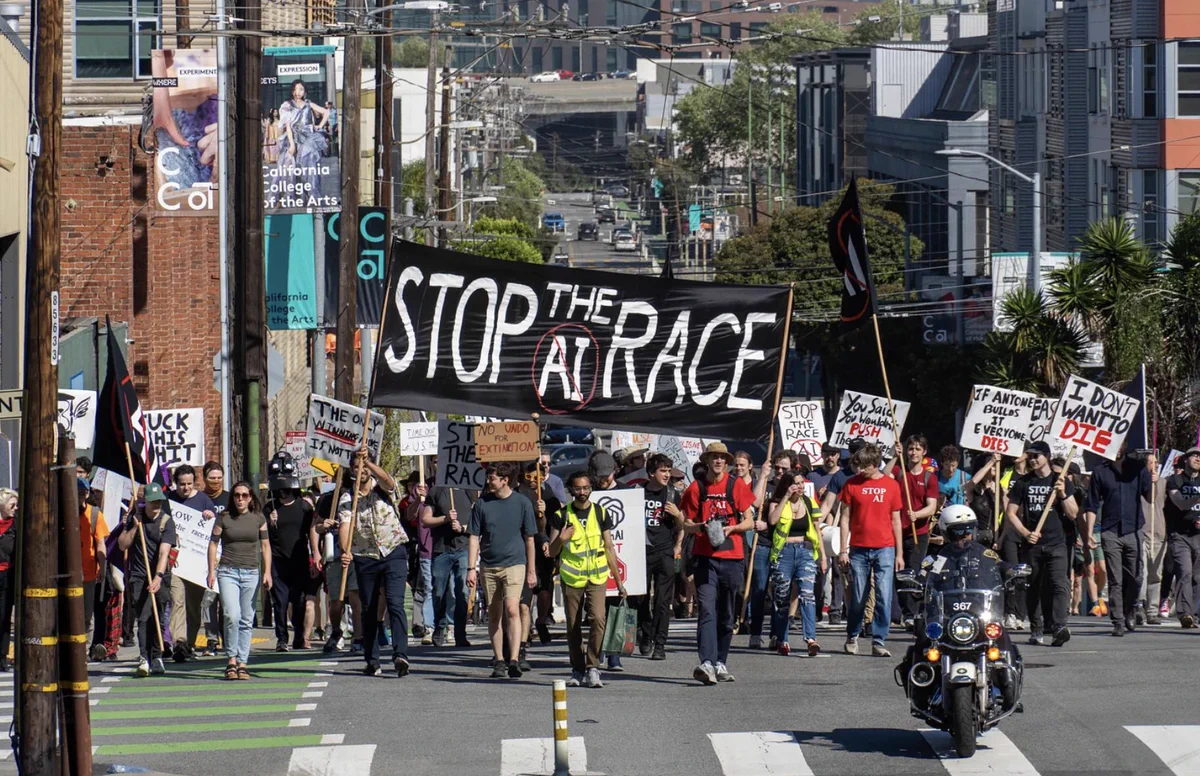
Last March, Evitable helped @MichaelTrazzi and others organize the Stop the AI Race protest ~200 people.
Onlookers honked and cheered.
Images were featured in major media outlets like The New York Times.
This Saturday, July 11, we're going to fill the streets again!
Be there!
If Boeing said its new plane had a 1% chance of crashing, it would never leave the ground.
AI researcher Nate Soares (@So8res) sums up the AI industry on superintelligence: "We have no plan. Our engineers don't know what's going on inside this thing. First time ever trying it.
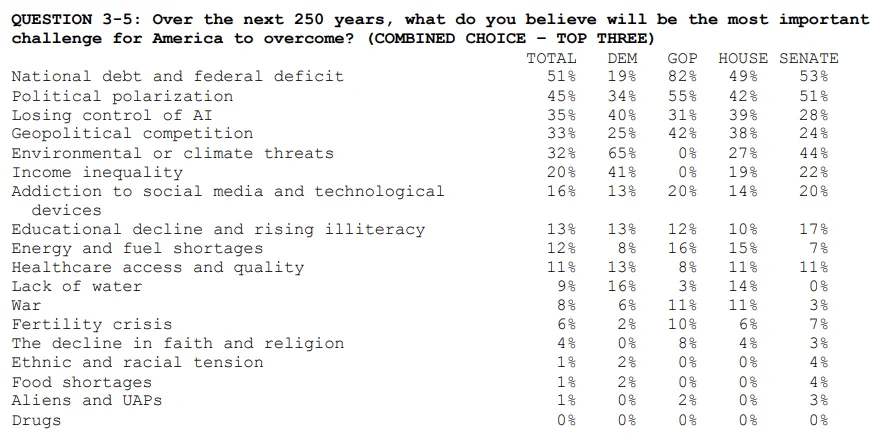
Interesting poll of Hill staffers from @PunchbowlNews. 250 years is a long time! But interesting to see that "losing control of AI" is top 4 for both parties' staffers.
The AI CEOs all give the same excuse: "I have to be in this race because if I don't do it, the next guy will do it worse."
By their own estimates, there's a 10-25% chance it kills everyone.
"They're YOLOing it."
AI researcher Nate Soares (@So8res) on @PeterMcCormack's show:
Interesting poll of Hill staffers from @PunchbowlNews. 250 years is a long time! But interesting to see that "losing control of AI" is top 4 for both parties' staffers.
I'm thinking about this more this morning, and the current state of AI policy discussion reminds me of China Miéville's _The City and the City_. That book is set in a city, variously called Beszel or Ul Qoma, where two cultures overlap in physical space, but have elaborate
Cyber alone isn’t enough; the models will have a wide range of powerful capabilities that come with agentic and autonomous use. But DC really is laser focused on cyber, because it’s what spooked them.
Why did MIRI fail to solve AI alignment, and what should humanity do now?
I spoke with Nate Soares (President of MIRI) about superintelligence, extinction risk, P(doom), global governance, and why his proposed solution is simple: stop the race before we cross the point of no
New MIRI post, a summary of six new papers by the technical governance team for the International Conference on Machine Learning: Assessing distributed training, verifying research restrictions, retaining the option to halt, and several ways to verify chip use.
"The idea that a company could rival a nation may seem farfetched, but even setting aside the potentially gameboard-flipping implications of AI, there is historical precedent. Mukunda draws a parallel to the British East India Company, chartered at the turn of the seventeenth
New pod with Nate Soares, @So8res, author of "If Anyone Builds It, Everyone Dies".
We discuss:
- Risk of superintelligent AI
- How AI is grown, not built
- Why we lose control
- The builders' own odds
- Can we still stop?
Full episode in thread 👇
"But the elephant being ignored is Anthropic itself. It, and other frontier labs, are racing towards superhuman AI, dragging Chinese copycats along for the ride. The U.S. should take steps to make it harder for China to access dangerous capabilities, but this is not enough; our
“If this is all marketing hype — most of it from companies with trillion-dollar initial public offerings on the line — it’s a heck of a bluff, and we should call them on it."