
Today marks 17 years since NASA's Lunar Reconnaissance Orbiter (LRO) began orbiting the Moon and collecting detailed data about its surface.
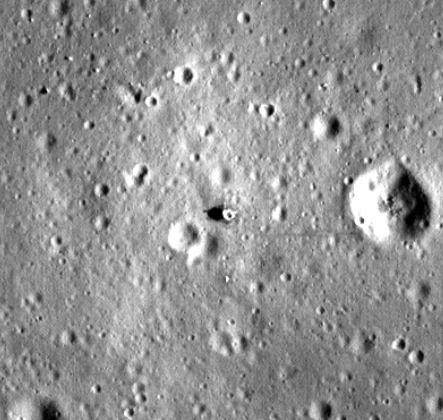
Here's one of our favorite spots as seen by LRO: the Apollo 11 landing site featuring the descent stage of the lunar module at center!
This is the NASA History Office's official X account. We're happy that you share our passion for aerospace history.
- Bonus: You can experience the Apollo 11 traverse mapped over the course of Armstrong and Aldrin's moonwalk: lroc.im-ldi.com/featured_sites…
- 19 years ago today: Space Shuttle Atlantis' main landing gear touches down at Edwards Air Force Base in California concluding a two-week assembly mission to the International @Space_Station. Sunita Williams, a flight engineer on the Expedition 15 crew, returned to Earth on
- NASA History Office repostedSummer, summer, summertime ☀️ June 21 is the summer solstice for folks north of the Equator. This is when the Northern Hemisphere reaches its maximum tilt toward the Sun and has its longest stretch of daylight all year. go.nasa.gov/4oDA3WY
- The two-part Viking 1 spacecraft reached Mars orbit 50 years ago today. A few days later, the images it returned of the proposed Viking 1 landing site were met with both elation and shock. Mars as viewed by Viking 1's cameras did not look like the planet Mariner 9 saw. The
- On this day in 1983, Sally Ride launched aboard Space Shuttle Challenger on STS‑7, becoming the first American woman to fly in space. Beyond this historic milestone, Dr. Ride's passion for inspiring young people to explore science and math is part of her lasting legacy.
- NASA History Office repostedPerseverance is only the second vehicle to travel the distance of a marathon on another planet, following NASA's Opportunity rover, which accomplished the feat in 2015.
- Flashback to Feb 1981 when NASA was preparing to launch the world's first reusable space vehicle. Space Shuttle Columbia stands at @NASAKennedy on the evening prior to the Flight Readiness Firing of the orbiter's main engines. STS-1, completed on Apr 14, 1981, marked the
- On the 21st day of its mission in Mars's north polar region, NASA's Phoenix Mars Lander used its scoop OTD in 2008 to reveal lumps of white ice under the surface of the rusty soil. Scientists watched how the ice sublimed over 4 days, concluding that it was likely water ice.
- NASA History Office repostedHave you ever wanted to have your name 'Roman' a million miles away? Now you can! Send your name along the Nancy Grace Roman Space Telescope, scheduled to launch Aug. 30, 2026! Sign up here: go.nasa.gov/4ejkRcR Submissions close July 12.
- On its final approach to Saturn, NASA's Cassini spacecraft captured our first closeup of Phoebe OTD in 2004 at a distance of just 2,068 km. Phoebe is unlike Saturn's other moons: It orbits Saturn at a distance almost four times greater than its nearest neighbor, has an inclined,
- The Spirit rover (Mars Exploration Rover A) left our planet to begin the journey to its new home OTD in 2003. This view captured 20 years ago at the beginning of 2006 shows rippled sand deposits of the "El Dorado" ripple field in Gusev Crater on Mars. Designed for a 90-day
- Congratulations to the newly announced crew for Artemis III! We are thrilled that these four distinguished astronauts will be “carrying the fire” for our next mission toward establishing a long-term human presence on the surface of the Moon.Replying to @NASAIntroducing your Artemis III crew: NASA astronauts @AstroKomrade, @Astro_AndreD, and Frank Rubio and @esa astronaut @astro_luca.
00:00 - Happy birthday to the first astronaut to drive on the Moon, David Scott! 🥳 Scott flew on the Gemini VIII and Apollo 9 missions before landing on the Moon in 1971 for Apollo 15. ⬇️ 60 years ago in March 1966, Scott before the Gemini VIII launch


