Log inSign up
Chandra Observatory
NASA
78.1K posts
Image
user avatar
Chandra Observatory
NASA
@chandraxray
Official Twitter account of NASA’s Chandra X-ray Observatory. Operated for NASA by Smithsonian (SAO). Verification: nasa.gov/socialmedia Legal: s.si.edu/legal
In orbit
chandra.si.edu
Joined January 2008
198
Following
418.6K
Followers
  • user avatar
    Chandra Observatory
    NASA
    @chandraxray
    11h
    🌟Find out more about the discovery, including videos & images, at: chandra.si.edu/photo/2026/m83/
    user avatar
    NASA
    @NASA
    11h
    Sparkly, swirly, and surprising 🌌 @chandraxray data shows that this galaxy, Messier 83, is unusual. Over 20 of its supernova remnants – remains from star explosions – vary drastically in X-ray brightness. Typically, the remnants' brightness would fade slowly over time.
    A straight on view of the spiral galaxy Messier 83. There is a brilliant white and yellow pool of light at the center. From that light, hot pink clouds corkscrew out in wide, sweeping arches. The galaxy is covered in a faint grey haze, and flecked with red, green, blue, white, and yellow dots. Credit: Credit: X-ray: NASA/CXC/SAO; Optical: NASA/ESA/AURA/STScI, Hubble Heritage Team, W. Blair (STScI/Johns Hopkins University) and R. O'Connell (University of Virginia); Image Processing: NASA/CXC/SAO/A. Jubett, L. Frattare and P. Edmonds
    7.1K
  • Chandra Observatory reposted
    user avatar
    NASA
    @NASA
    Jun 16
    Super! 💫 Data from @chandraxray has uncovered possible remains of a supernova in the middle of our Milky Way galaxy. If confirmed, this supernova piece would be one of the closest to our galaxy’s central black hole that we have ever found. go.nasa.gov/4aT7pvb
    A photo of the site where the potential remains of a supernova. The photo shows an amorphous blob of red light with a spot of blue in the lower center. The background is a diffuse star field in black space. Credit: X-ray: NASA/CXC/UCLA/Z. Zhu et al.; ESA/XMM-Newton; Optical: PanSTARRS; Radio: MeerKAT; Infrared (JWST): NASA/ESA/CSA/STScI; Image Processing: NASA/CXC/SAO/L. Frattare and P. Edmonds
    1.9M
  • user avatar
    Chandra Observatory
    NASA
    @chandraxray
    Jun 15
    When astronomers pointed NASA's Chandra at nearby galaxy M83, the last thing they expected to find was a population of supernova remnants appearing to dramatically change in brightness. More on the discovery: chandra.si.edu/photo/2026/m83/ #AAS248
    Image
    00:00
    25K
    user avatar
    Chandra Observatory
    NASA
    @chandraxray
    Jun 15
    Visual Description: A video showing a composite image of the nearby galaxy Messier 83 on the left, and short timelapse videos of two curious supernova remnants hidden inside on the right. In the composite image, Messier 83, or M83, is shown to have a spiral structure, viewed
    3.7K
  • Chandra Observatory reposted
    user avatar
    NASA Marshall
    NASA
    @NASA_Marshall
    Jun 13
    Astronomers may have found a new supernova remnant near the center of the Milky Way galaxy using data from @chandraxray. If confirmed, this would be one of the closest supernova remnants to the supermassive black hole in the Galactic Center! 🔗go.nasa.gov/4vQqHcX
    This release features a composite image of colorful, overlapping clouds, which suggests to astronomers that a supernova remnant may be buried in gas near the center of our Milky Way galaxy.

Set against a backdrop packed with distant stars and other specks of light are two distinct, overlapping clouds. The larger, visually dominant cloud, is red and multifaceted. It has an irregular shape, and features patches of different textures, including pockets that resemble wispy smoke, tangles of faint red veins, and clear streaking lines. This large cloud of expanding gas represents radio data from the MeerKAT telescope in South Africa.

Overlapping with that red cloud is a cloudy blue blob representing X-ray data from NASA's Chandra X-ray Observatory and ESA's XMM-Newton. Astronomers suggest that this blue blob of X-ray emissions is the remains of a massive star destroyed by a supernova.
    216K
  • user avatar
    Chandra Observatory
    NASA
    @chandraxray
    Jun 11
    Astronomers may have found one of the closest supernova remnants to the supermassive black hole at the center of our Milky Way galaxy. It's expanding at about 3.2 million kilometers per hour (2 million mph) and is at least 1,700 years old. 💥More: s.si.edu/sgrc26
    This composite image of colorful, overlapping clouds, suggests to astronomers that a supernova remnant may be buried in gas near the center of our Milky Way galaxy.

Set against a backdrop packed with distant stars and other specks of light are two distinct, overlapping clouds. The larger, visually dominant cloud, is red and multifaceted. It has an irregular shape, and features patches of different textures, including pockets that resemble wispy smoke, tangles of faint red veins, and clear streaking lines. This large cloud of expanding gas represents radio data from the MeerKAT telescope in South Africa.

Overlapping with that red cloud is a cloudy blue blob representing X-ray data from NASA's Chandra X-ray Observatory and ESA's XMM-Newton. Astronomers suggest that this blue blob of X-ray emissions is the remains of a massive star destroyed by a supernova.
    29K
  • user avatar
    Chandra Observatory
    NASA
    @chandraxray
    Jun 4
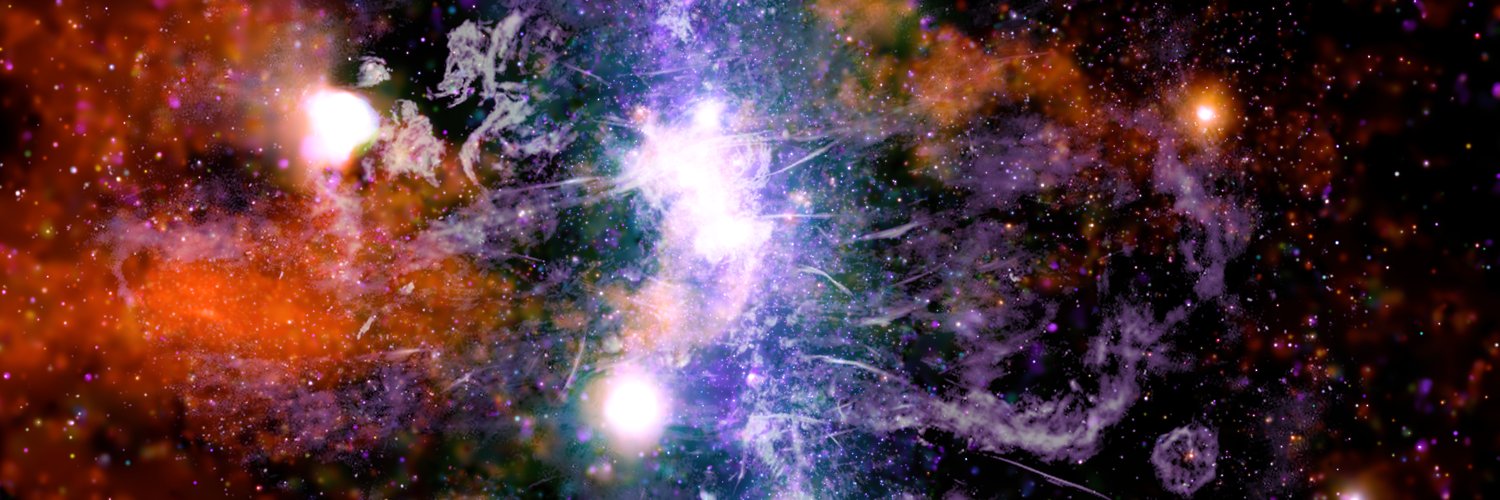
    The supermassive black hole at the center of our galaxy, Sagittarius A*, is blowing a hot cosmic wind — something scientists have been hunting for over 50 years. ⚫More on the discovery at: chandra.si.edu/photo/2026/sgr…
    This image centers on a bright, pinpoint white glow marking Sagittarius A* (Sgr A*), the supermassive black hole at the heart of the Milky Way, surrounded by a turbulent, cloud-like environment. Radiating outward from the center is a luminous swirl of blue X-ray emission from NASA's Chandra X-ray Observatory, forming a soft, irregular halo that is brightest near the core and fades into darker shades toward the edges. Interwoven with this blue glow are thick, patchy structures in orange, tracing colder gas mapped by radio observations from ALMA. These orange regions form a partial ring and clumpy arcs around the center, but notably break open to reveal a wide, cone-shaped cavity where little to no orange emission appears. This hollowed-out region is instead filled with the blue X-ray glow, emphasizing the contrast between hot and cold material. The scene feels dynamic and layered, with the interplay of blue and orange just a few light-years from the galaxy’s core.
    24K
  • user avatar
    Chandra Observatory
    NASA
    @chandraxray
    Jun 1
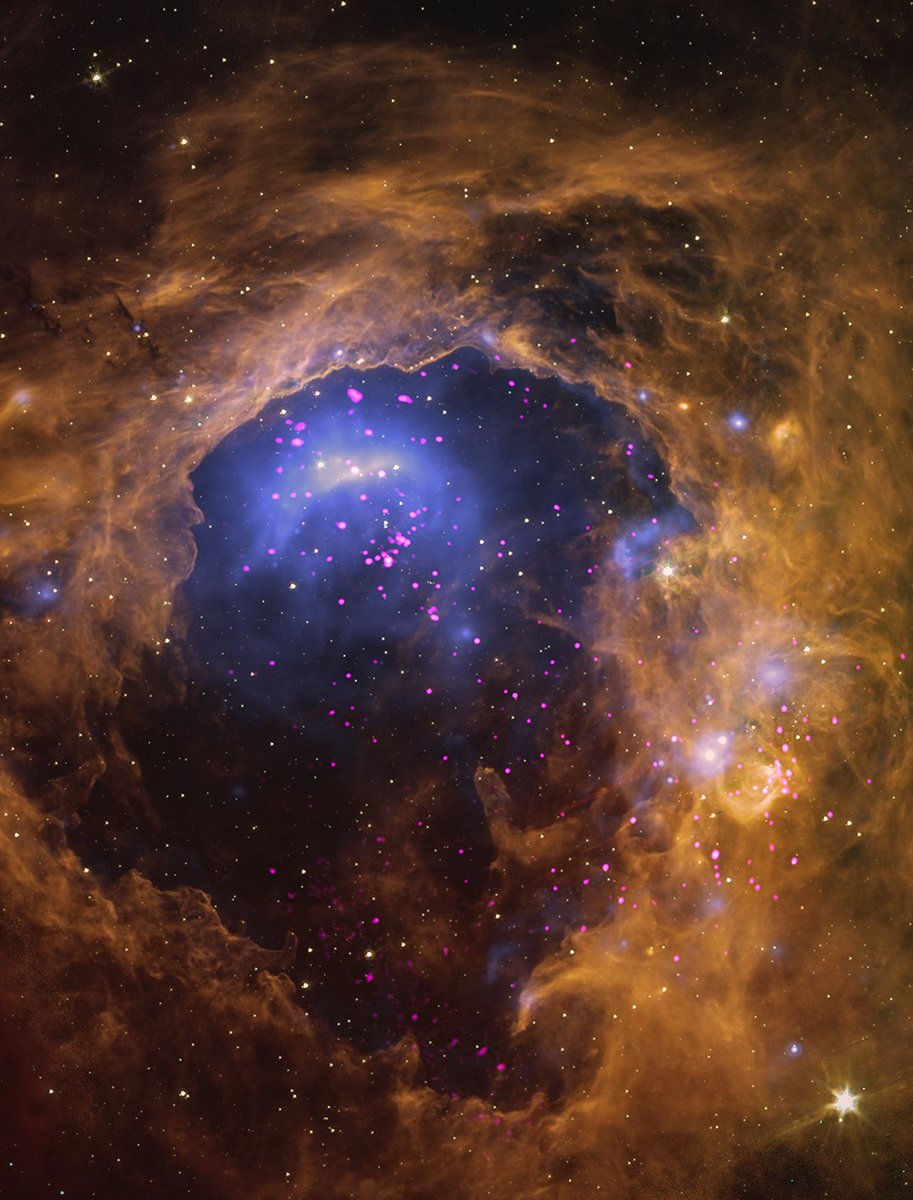
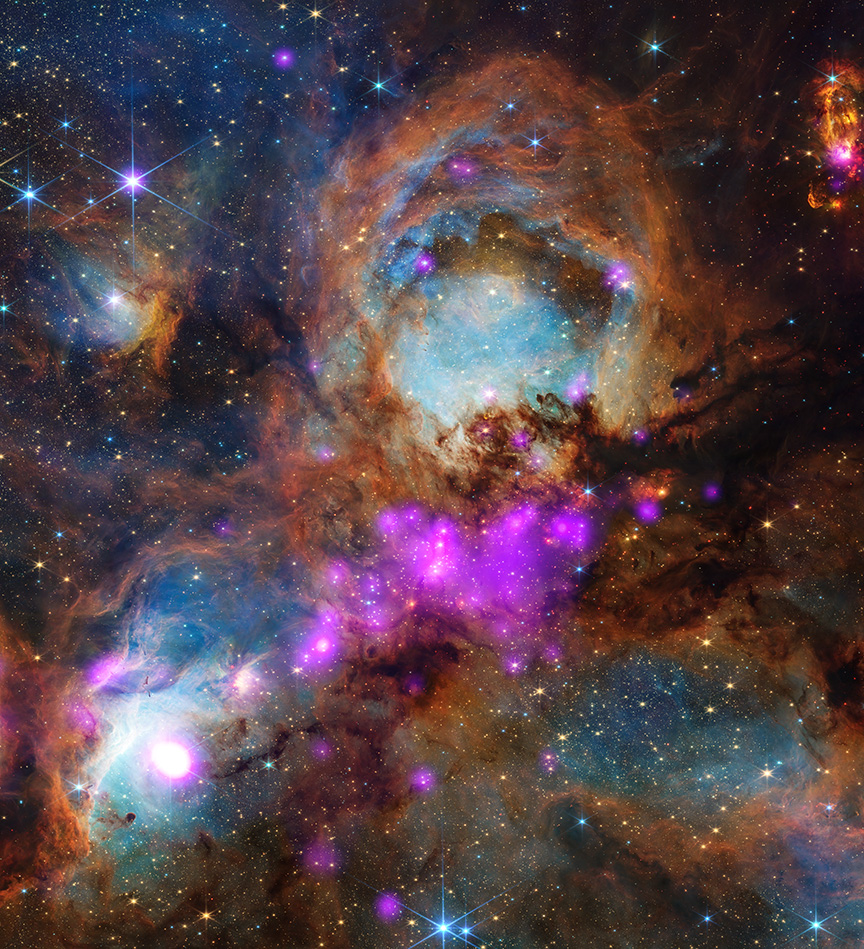
    Some of our galaxy’s youngest, hottest, and most massive stars blaze to life in the nearby Carina Nebula. Winds from these powerful stars can carve out bubbles of hot gas, producing dramatic shapes in the surrounding clouds of colder gas and dust.✨
    This composite image features two star clusters, viewed through a churning tunnel of golden cloud. The cloud creates a border around the entire image, like a thick swirling smoke ring. Beyond it, in the open center, is a vast field of neon purple specks. These specks are young stars observed by Chandra. Within the central field, two cluster groupings are suggested by separate swirls of faint, steel blue mist. One sits near our upper left. The other is near the bottom right, partially obscured by the golden yellow ring cloud.
    34K
  • Chandra Observatory reposted
    user avatar
    NASA Marshall
    NASA
    @NASA_Marshall
    May 29
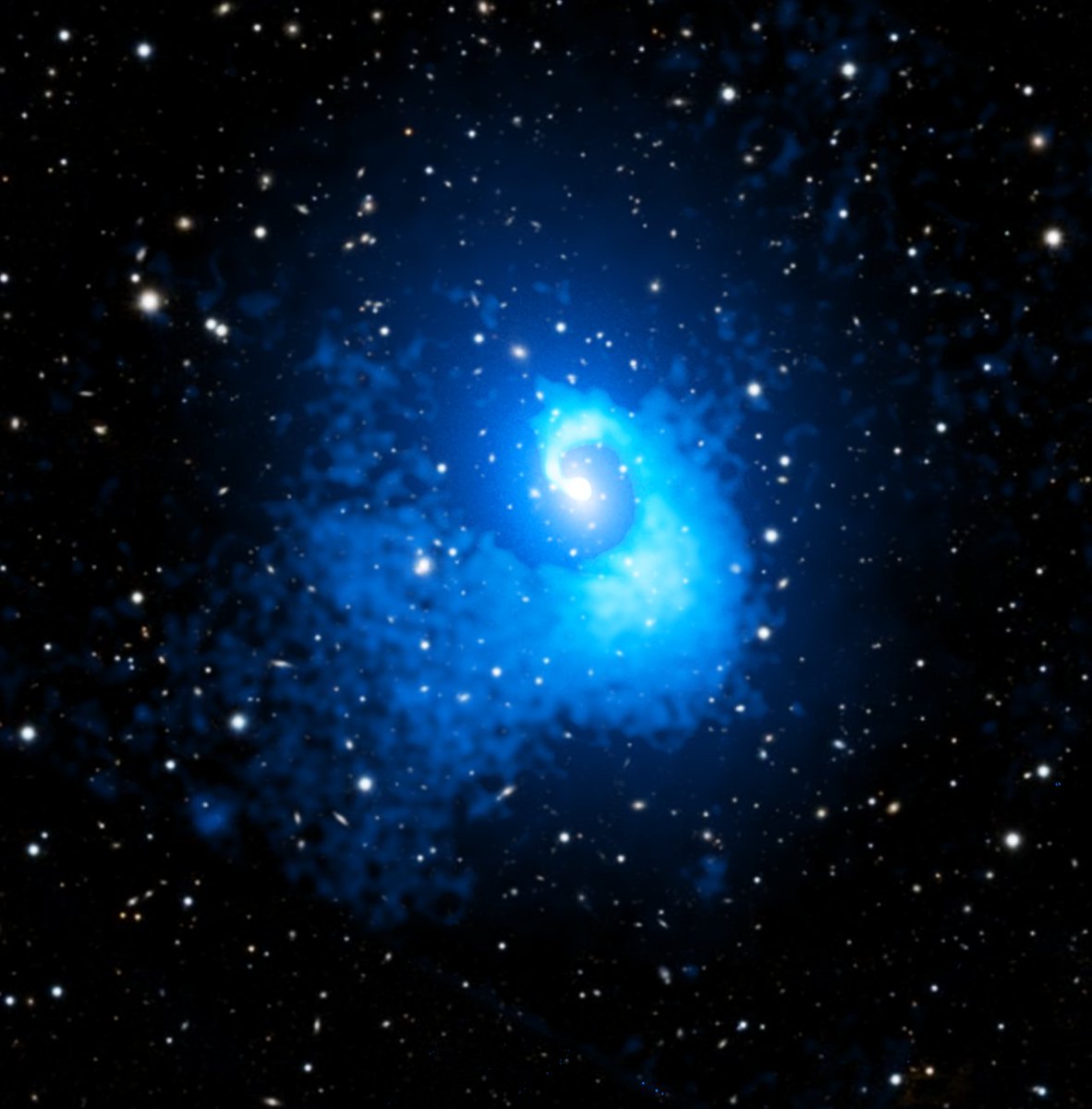
    The “most relaxed galaxy cluster in the universe” wasn't always so calm 🌀 New observations from @chandraxray show that Abell 2029 is still settling down after a collision with another smaller cluster about four billion years ago. More: go.nasa.gov/4egC1bd
    This release features a composite image of a galaxy cluster with a unique spiral shape, giving it the appearance of a giant galactic seashell floating in the star-speckled blackness of space.

In this composite image, the surrounding stars and individual galaxies appear white, captured in optical light from Pan-STARRS, a telescope in Hawaii. But much of the spiraling cluster is rendered in neon blues, representing X-ray gas observed by Chandra. This super-heated gas fills the space between galaxies, giving the cluster its spiral shape when observed by scientists using an X-ray telescope.

Here, the blue spiral begins as a pale blue dot at the center of the cluster. The spiral stream of light and dark neon blue gas then widens as it moves away from the center of the cluster, gently corkscrewing one full rotation as it extends two-million lightyears into the distance.

Credit: X-ray: NASA/CXC/CfA/C. Watson et al.; Optical: PanSTARRS; Image Processing: NASA/CXC/SAO/N. Wolk and P. Edmonds
    40K
  • user avatar
    Chandra Observatory
    NASA
    @chandraxray
    May 15
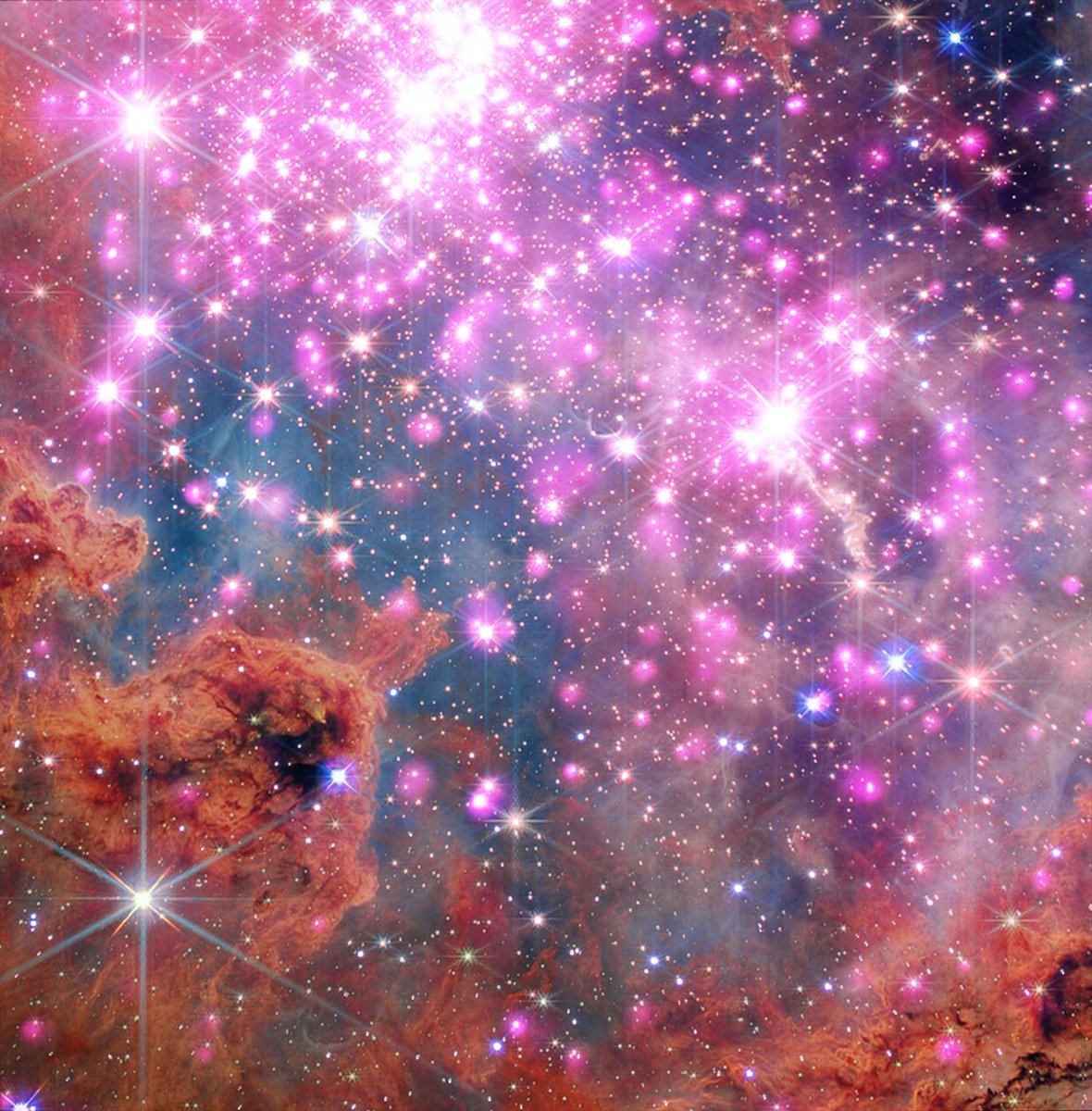
    Westerlund 2 is a young cluster of thousands of stars located about 20,000 light-years from Earth. This close-up image, roughly 12 light-years across, combines observations from NASA's Chandra X-ray Observatory & @NASAWebb.✨
    This is a composite image of the young star cluster known as Westerlund 2. Here, scores of gleaming white specks ringed in neon pink are scattered across the image in a band that stretches from our lower right to our upper left, and beyond. Clouds of brick-orange dust enter the image from our lower left, and spread along the bottom edge of the frame, showing off the raw materials of this active stellar nursery.
    103K
  • user avatar
    Chandra Observatory
    NASA
    @chandraxray
    May 14
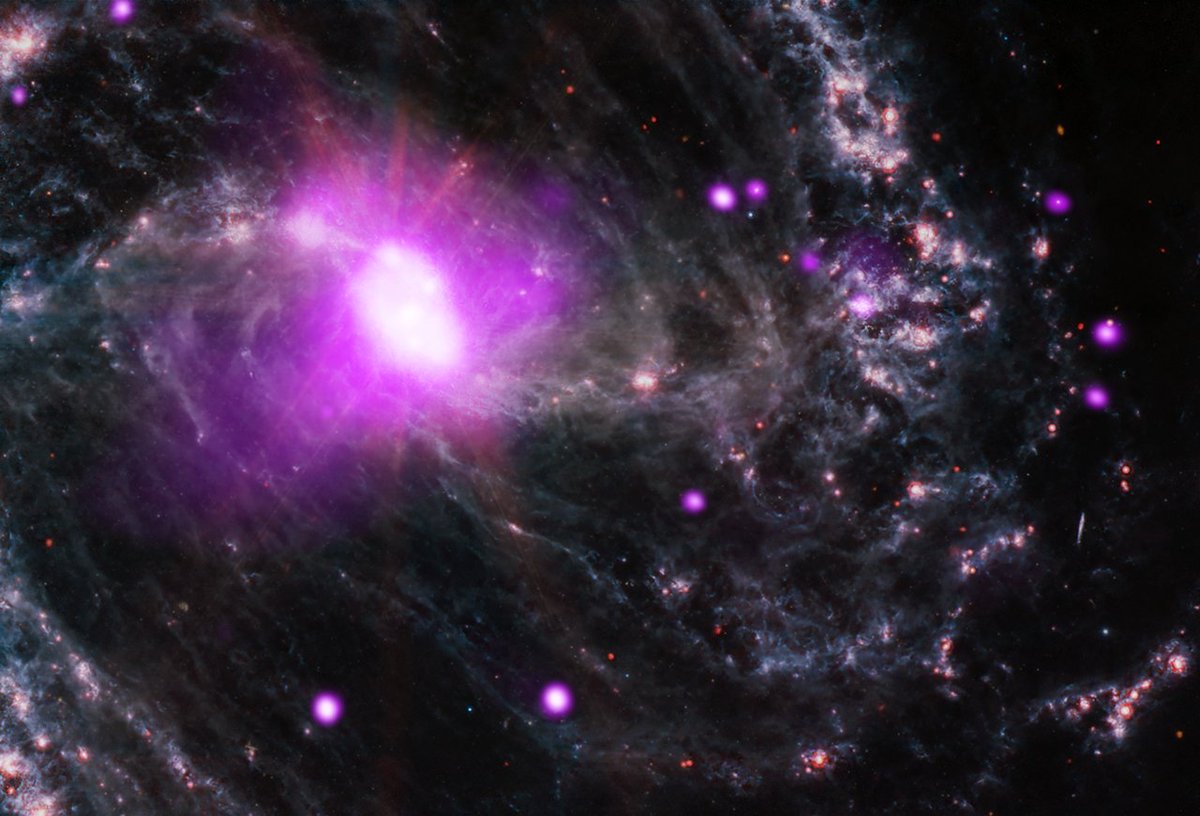
    At the heart of galaxy NGC 1365, a supermassive black hole is basically feasting at an all‑you‑can‑eat buffet in this image from Chandra and @NASAWebb. Located about 60 million light-years from Earth, this gobbling black hole has a mass of roughly 2 million suns... and growing.⚫
    A close up image of spiral galaxy NGC 1365 and the supermassive black hole at its center. Here, the galaxy is shown at a dramatic angle, as if the bright pink core is gazing past our right shoulder. Swirls of pale, grey-blue material, resembling waves in a dark ocean, spiral toward the radiant pink core, which hangs at our upper left. Glowing pink circles, and flecks of red, dot the churning spiral galaxy.
    85K
  • user avatar
    Chandra Observatory
    NASA
    @chandraxray
    May 12
    Sometimes described as "the most relaxed galaxy cluster in the universe," Abell 2029 had a wild past according to new observations from NASA's Chandra X-ray Observatory. More at: chandra.si.edu/photo/2026/a20… 🌀
    This is a composite image of galaxy cluster Abell 2029, a galaxy cluster with a unique spiral shape, giving it the appearance of a giant galactic seashell floating in the star-speckled blackness of space.

The surrounding stars and individual galaxies appear white, captured in optical light from Pan-STARRS, a telescope in Hawaii. But much of the spiraling cluster is rendered in neon blues, representing X-ray gas observed by Chandra. This super-heated gas fills the space between galaxies, giving the cluster its spiral shape when observed by scientists using an X-ray telescope.

Here, the blue spiral begins as a pale blue dot at the center of the cluster. The spiral stream of light and dark neon blue gas then widens as it moves away from the center of the cluster, gently corkscrewing one full rotation as it extends two-million lightyears into the distance.
    22K
  • Chandra Observatory reposted
    user avatar
    NASA
    @NASA
    May 8
    A-meow-zing 😻 @NASAWebb and @chandraxray joined forces to deliver this view of the Cat's Paw Nebula. Different wavelengths combine to reveal young stars at the center of these dusty clouds.
    A colorful section of the Cat\u2019s Paw Nebula. Four circular areas are shown in the center of the image, each glowing blue. Rusty wisps of dust are interspersed amongst them. Luminous blotches of purple decorate the dust, as well as diffuse yellow and blue stars. Credit: X-ray: NASA/SAO/CXC; Infrared: NASA/ESA/CSA/STScI; Image Processing: NASA/CXC/SAO/J. Major
    1.9M
  • Chandra Observatory reposted
    user avatar
    Hubble
    NASA
    @NASAHubble
    May 4
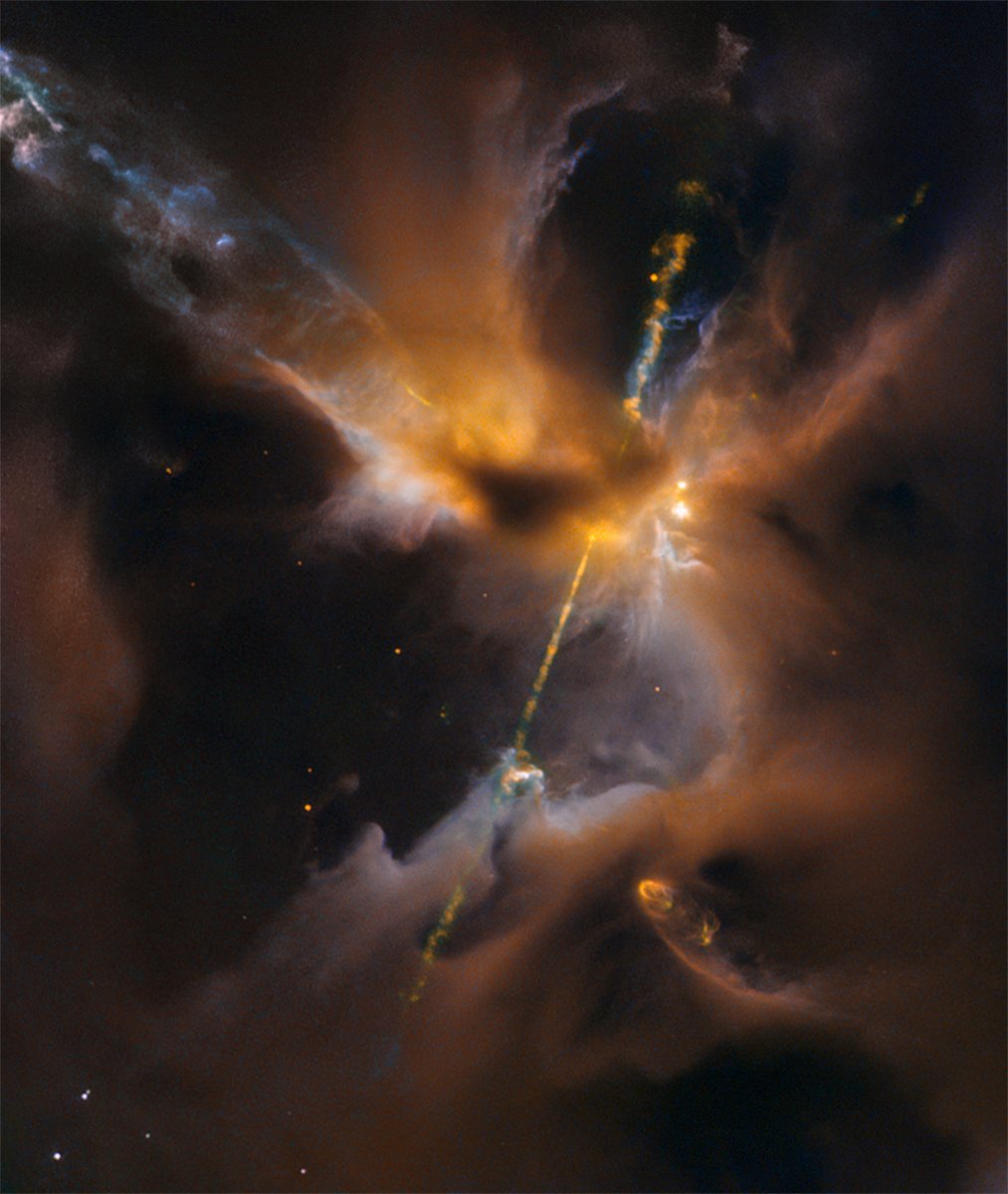
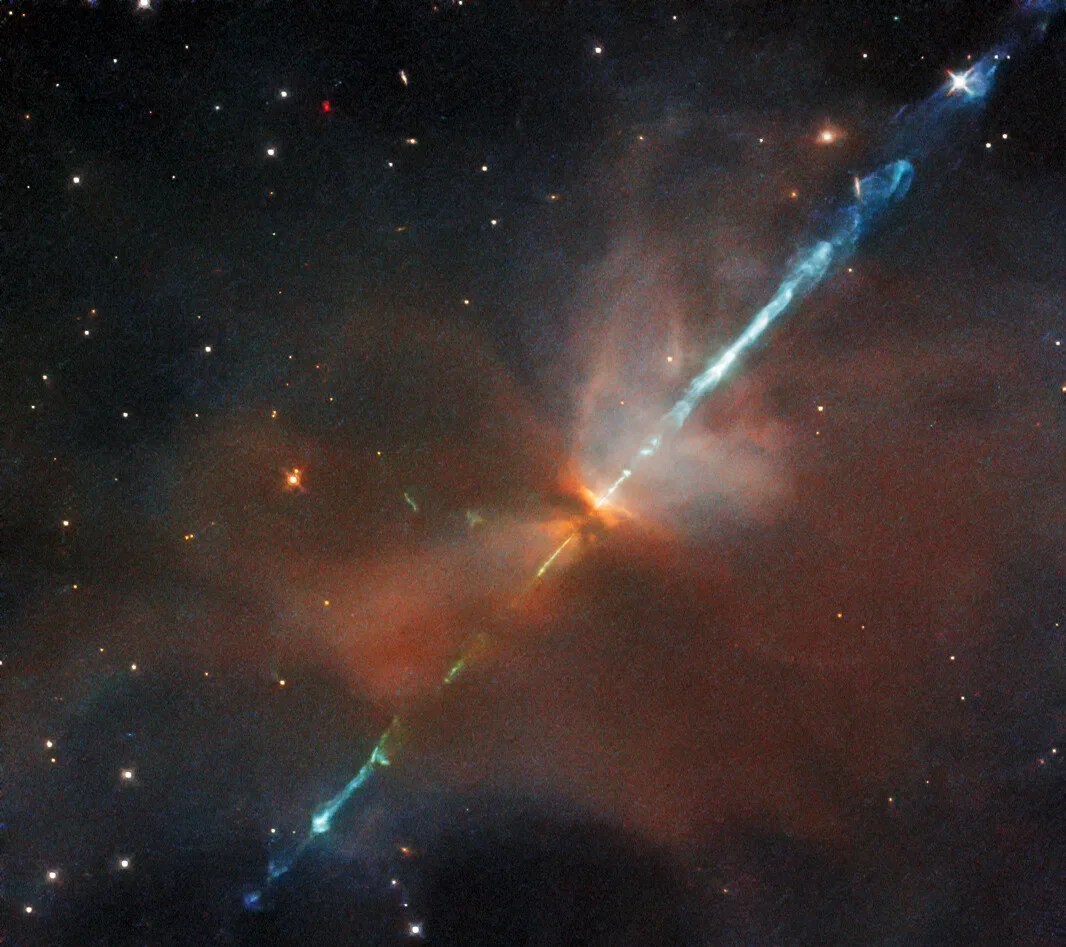
    The force awakens in newborn stars. Hubble captured some cosmic "lightsabers" far, far away. These are actually young stellar jets, colliding at fast speeds with nearby gas and dust. Happy Star Wars Day from the Hubble team!
    A cloudy region of space glows orange with the light of a jet arcing diagonally through the image.
    A reddish haze of gas and dust is pierced by a diagonal blue filament, against the black backdrop of space.
    336K

New to X?

Sign up now to get your own personalized timeline!

Create account

By signing up, you agree to the Terms of Service and Privacy Policy, including Cookie Use.

Terms·Privacy·Cookies·Accessibility·Ads Info·© 2026 X Corp.
Don't miss what's happening
People on X are the first to know.
Log inSign up
Advertisement
Advertisement